
Purpose of this site
To give an overview of what was happening at RAF Wickenby during each week in World War 2, including details of missions and casualties. Two squadrons operated from RAF Wickenby during WW2, 12 Sqn from September 1942 and 626 Sqn from November 1943. A total of 1143 aircrew lost their lives serving at RAF Wickenby. More information can be found using the link in the top panel ^
The Posts for each week in WW2 are at the bottom of this page.
History of RAF Wickenby
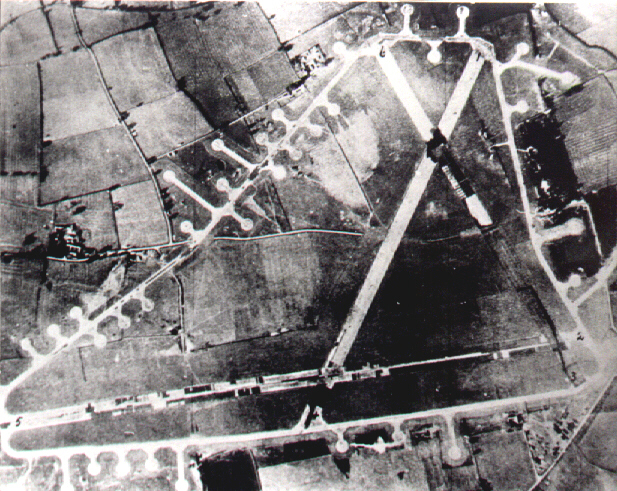
Construction Begins
Construction began in late 1941 and the airfield followed the standard Bomber Command layout, having three concrete runways and a perimeter track. The main runway 09/27 ran east/west along the southern side with the other two runways 03/21 & 16/34, crossing towards the north of the site with thirty six aircraft dispersals around the perimeter track. Two hangars of the steel T2 type were erected one to the north of the airfield and one to the south of the main runway, a third hangar of the B1 type was built later in 1943 and this was located at the north end of the technical and domestic site which was situated on the eastern side extending towards the village of Holton cum Beckering. The bomb storage area was constructed in a slight depression at the south west corner of the airfield. Building was completed in September 1942 and the airfield came under the control of No 1 Group Bomber Command and initially opened as a satellite station to RAF Binbrook. Later in December 1943 RAF Wickenby became No 14 Base substation to RAF Ludford Magna. Unlike most other RAF Stations, RAF Wickenby never had its own Station Badge.
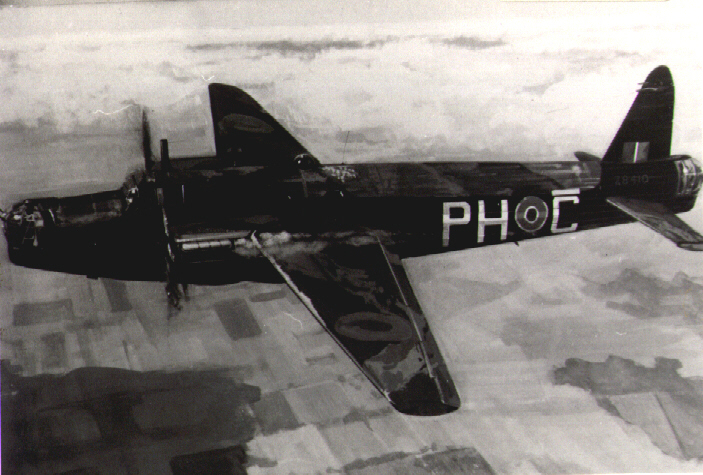
12 Squadron Moves In
During September 1942 under the Station Commander Wg Cdr Dabinett, 12 Squadron moved to RAF Wickenby from their base at RAF Binbrook, bringing with them their Wellington Bombers in which they flew a number of missions. In November 1943, 12 Squadron became the second Squadron in 1 Group to be equipped with the AVRO Lancaster and on 12 January 1943 they were able to put nine Lancasters in the air as part of a force of 72 medium and heavy bombers which attacked an oil refinery in Essen.
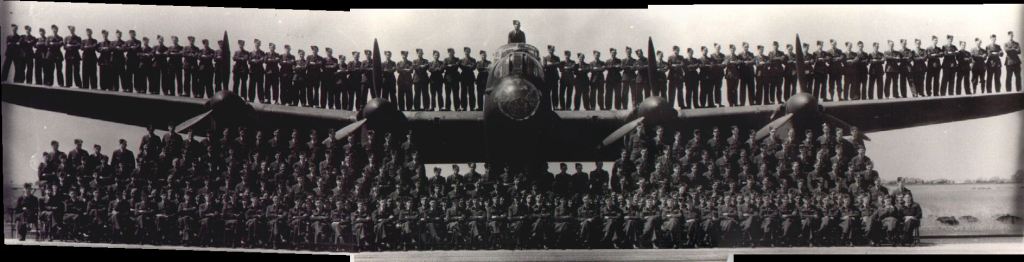
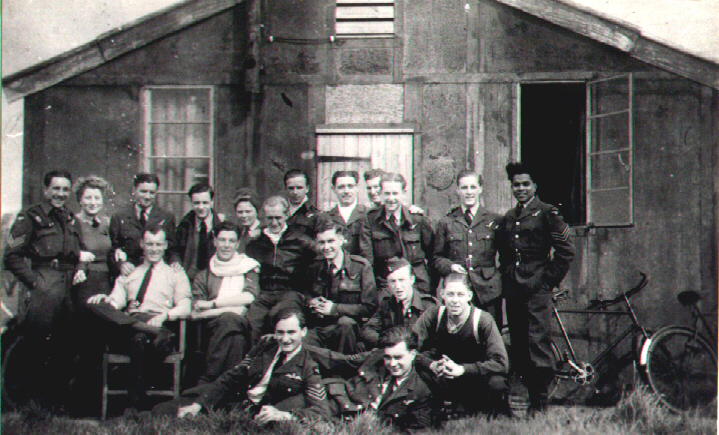
626 Squadron Formed
On 7 November 1943 626 Squadron was formed by the expansion of 12 Squadron’s C Flight. To accommodate the extra personnel generated by the formation of the new Squadron, a new dispersed site was built to the south of the airfield. This site would accommodate both air and ground crew and it covered a large area between the villages of Fulnetby and Rand.
The two Squadrons took part in many major raids on enemy targets such as Mailey le Camp, Nuremburg and also Bomber Commands’ last main operation of the war on 25 April 1945 when 14 Lancasters from Wickenby were part of the force which attacked the SS Barracks in Berchtesgaden. Following this final mission the two Squadrons took part in Operations Manna & Exodus when they dropped food to the Dutch and helped with the repatriation of POWs.
Last Losses
Wickenby suffered its last losses on 4 April 1945 when three aircraft failed to return from an attack on an oil refinery in the Luzendorf area of Germany, the total number of men who died whilst serving at Wickenby during the conflict was 1147 – 1143 aircrew and 4 groundcrew (3 killed when a bomb exploded prematurely in the Bomb Dump and one killed by an aircraft that slewed off the runway).
In September 1945 12 Squadron moved to Binbrook and in October 1945 626 Squadron was disbanded. Following the departure of the Lancasters, 109 Squadron Mosquitos moved in but they left only a few weeks later in November 1945 when all flying ceased.
Posts
ALL POSTS
- 4-10 Jan 43
- 11-17 Jan 43
- 18-24 Jan 43
- 25-31 Jan 43
- 1-7 Feb 43
- 8-14 Feb 43
- 15-21 Feb 43
- 22-28 Feb 43
- 1-7 Mar 43
- 8-14 Mar 43
- 15-21 Mar 43
- 22-28 Mar 43
- 29 Mar-4 Apr 43
- 5-11 Apr 43
- 12-18 Apr 43
- 19-26 Apr 43
- 27 Apr-3 May 43
- 4-10 May 43
- 11-17 May 43
- 18-24 May 43
- 25-31 May 43
- 1-7 Jun 43
- 8-14 Jun 43
- 15-21 Jun 43
- 22-28 Jun 43
- 29 Jun – 5 Jul 43
- 6-14 Jul 43
- 15-21 Jul 43
- 22-28 Jul 43
- 29 Jul – 4 Aug 43
- 5-11 Aug 43
- 12-18 Aug 43
- 19-25 Aug 43
- 26 Aug-1 Sep 43
- 2-8 Sep 43
- 9-15 Sep 43
- 16-22 Sep 43
- 17-23 Sep 43
- 24-30 Sep 43
- 1-7 Oct 43
- 8-14 Oct 43
- 15-21 Oct 43
- 22-28 Oct43
- 29 Oct – 4 Nov 43
- 5-11 Nov 43
- 12-18 Nov 43
- 19-25 Nov 43
- 26 Nov-2 Dec 43
- 3-9 Dec 43
- 10-16 Dec 43
- 17-23 Dec 43
- 24-30 Dec 43
- 31 Dec – 6 Jan 43
- 7-13 Jan 44
- 14-20 Jan 44
- 21-27 Jan 44
- 28 Jan-3 Feb 44
- 4-10 Feb 44
- 11-17 Feb 44
- 18-24 Feb 44
- 25 Feb – 3 Mar 44
- 4-10 Mar 44
- 11-17 Mar 44
- 18-24 Mar 44
- 25-31 Mar 44
- 1-7 Apr 44
- 8-14 Apr 44
- 15-21 Apr 44
- 22-28 Apr 44
- 29 Apr – 5 May 44
- 6-12 May 44
- 13-19 May 44
- 20-26 May 44
- 27 May – 2 Jun 44
- 3-9 Jun 44
- 10-16 Jun 44
- 17-23 Jun 44
- 24-30 Jun 44
- 1-6 Jul 44
- 7-13 Jul 44
- 14-20 Jul 44
- 21-27 Jul 44
- 28 Jul – 3 Aug 44
- 4-10 Aug 44
- 11-17 Aug 44
- 18-24 Aug 44
- 25-31 Aug 44
- 1-7 Sep 44
- 8-14 Sep 44
- 15-21 Sep 44
- 22-28 Sep 44
- 29 Sep-5 Oct 44
- 6-12 Oct 44
- 13-19 Oct 44
- 20-26 Oct 44
- 27 Oct-2 Nov 44
- 3-10 Nov 44
- 10-16 Nov 44
- 17-23 Nov 44
- 24-30 Nov 44
- 1-7 Dec 44
- 8-14 Dec 44
- 15-21 Dec 44
- 22-28 Dec 44
- 29 Dec 44 – 4 Jan 45
- 5-11 Jan 45
- 12-18 Jan 45
- 19-25 Jan 45
- 26 Jan – 1 Feb 45
- 2-8 Feb 45
- 9-15 Feb 45
- 16-22 Feb 45
- 23 Feb – 1 Mar 45
- 2-8 Mar 45
- 9-15 Mar 45
- 16-22 Mar 45
- 23-29 Mar 45
- 30 Mar – 3 Apr 45
- 4-10 Apr 45
- 11-17 Apr 45
- 18-24 Apr 45
- 25 Apr – 1 May 45
 RAF Wickenby - This week in history - World War 2
Excellent place to visit. I have been there many times over the last 30 years. Thank you for your work.
LikeLike
thankyou as a private airfield for maintaining a museum to remember the losses incurred by the people who served at wickenby during W11. P J Lyons 23 Rear Gunner 12th SQD is just one them who volunteered for this role in W11. He was a Londoner who would have experienced the blitz in London. His sister was my mum, both are reunited together with their mum & dad in woodlands cemetery. Thank you David Gay
LikeLike
Pete, I can’t begin to thank you enough for the kindness and courtesy you showed to the friends and family of Lancaster JB141 on our visit for the commemoration of the tree at Wickenby. Your extensive and well presented knowledge together with the quality of exhibits at the museum warrants another visit in the not too distant future. Thanks also to the great team at the cafe
LikeLike
My Best Friend Lois Blythe late parents John and Glendora met at RAF Wickenby during WWII John flew over 30 sorties as a bomb aimer in Avro Lancaster 1943/44 They married in August 1947 and were married for 61 years. John died in August 2008 and Glendora died in January 2011. Me and my husband Glyn visited the RAF Wickenby Museum with Lois in 2016 and Ann the curator at the time gave us a guided tour of the museum and talked about the wartime journal written by John Blythe (A copy of which is held in the museum}
LikeLike