8-14 October 1943

Overview

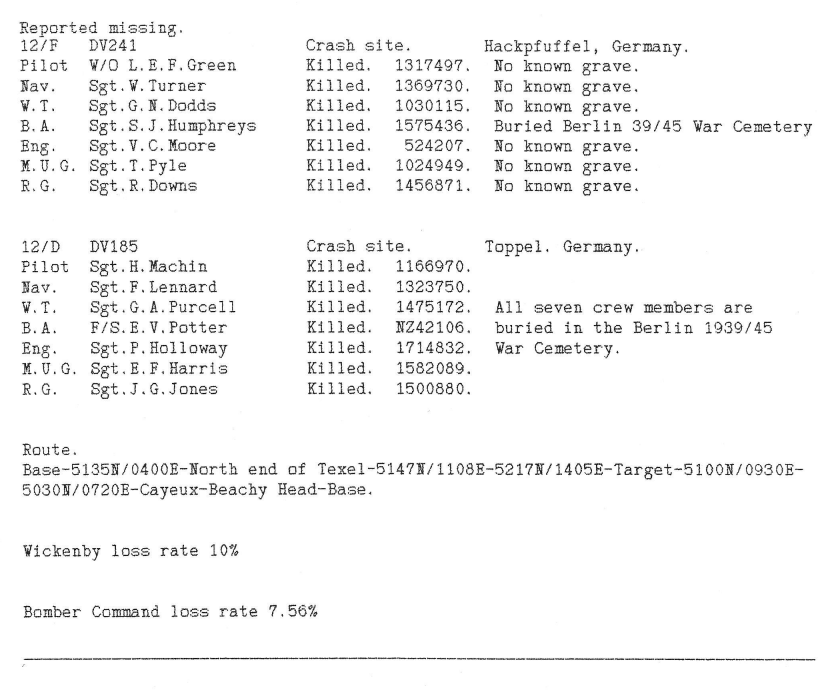
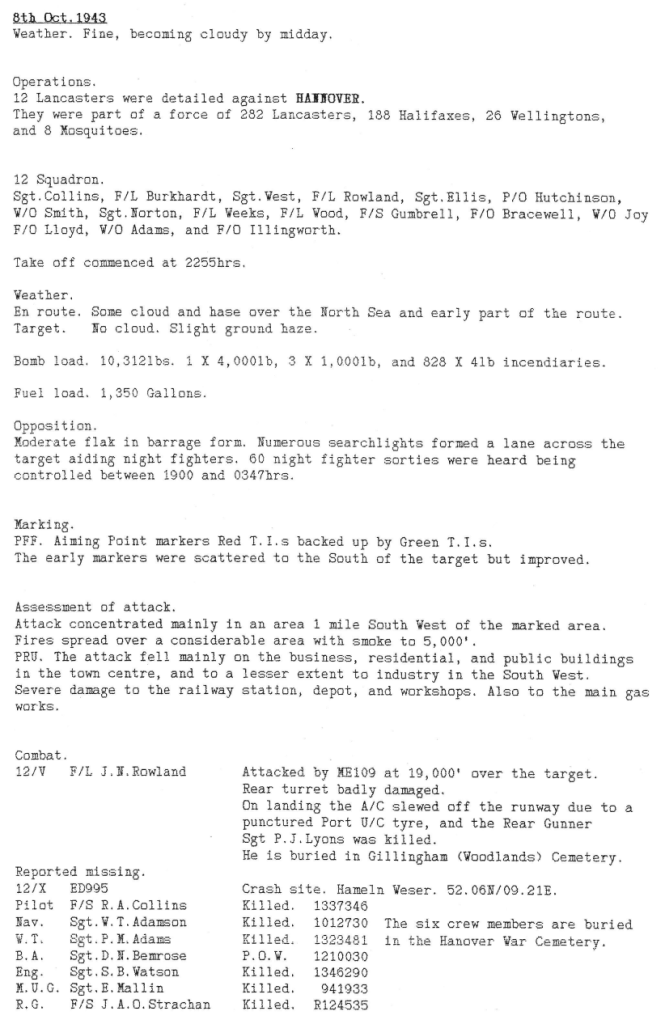
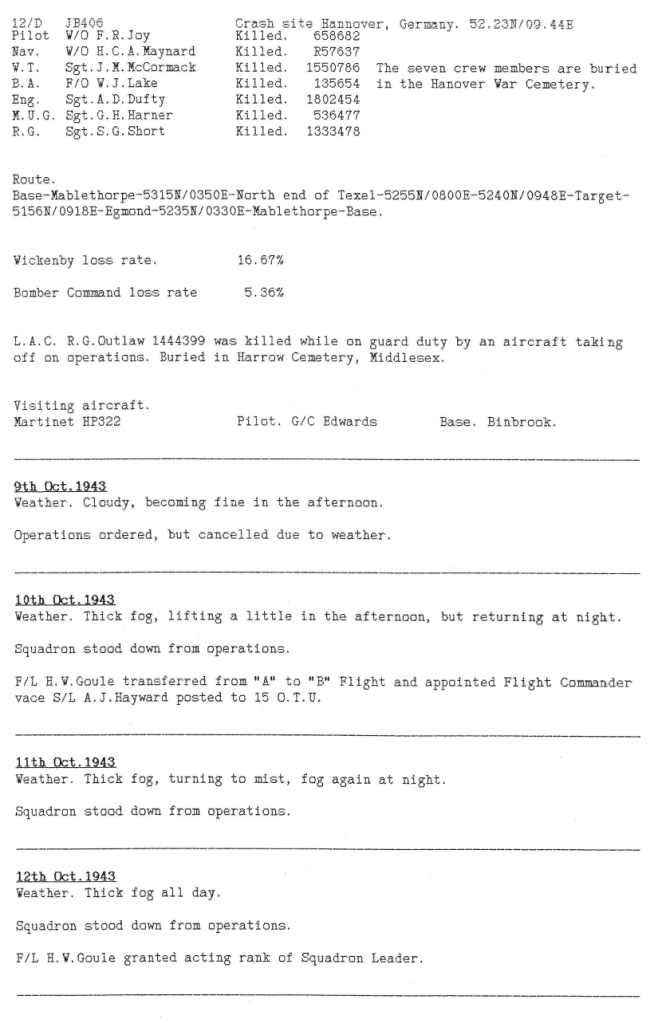
Only one mission flown this week, to Hannover, however it resulted in the loss of 2 aircraft, with 13 crew members being killed, and one aircraft crash landing with a dead rear gunner. The Station Diary also mentions the death of Leading Aircraftman R.G. Outlaw, who was on guard duty when a Lancaster taking off sheared left and decapitated him. The crew were unaware this had happened until they landed. The Lancaster had a tendency to pull left on take off and the pilot had to apply right rudder to counteract it, not always successfully.

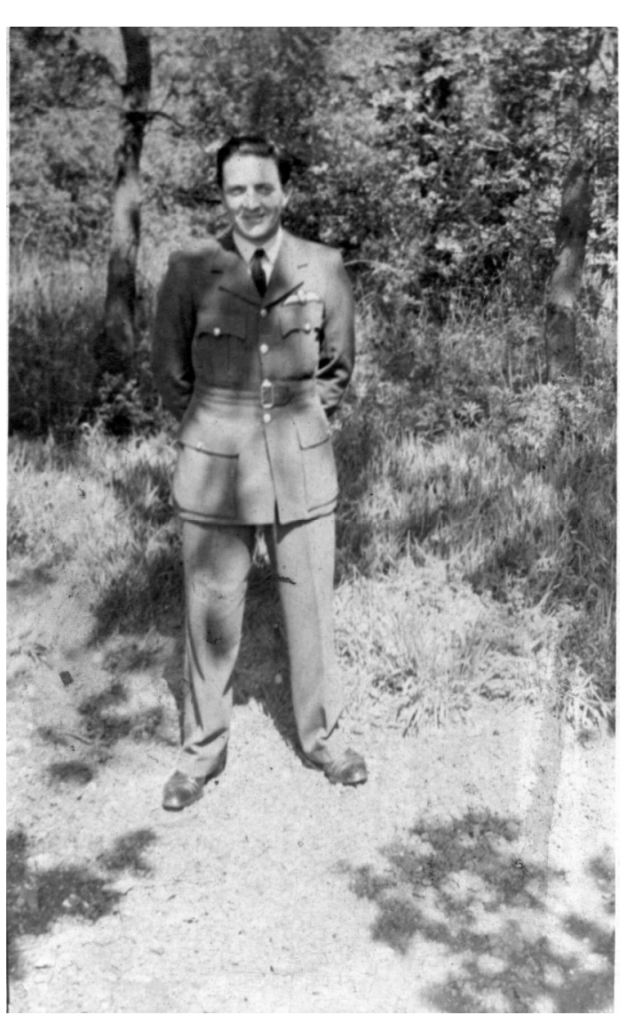
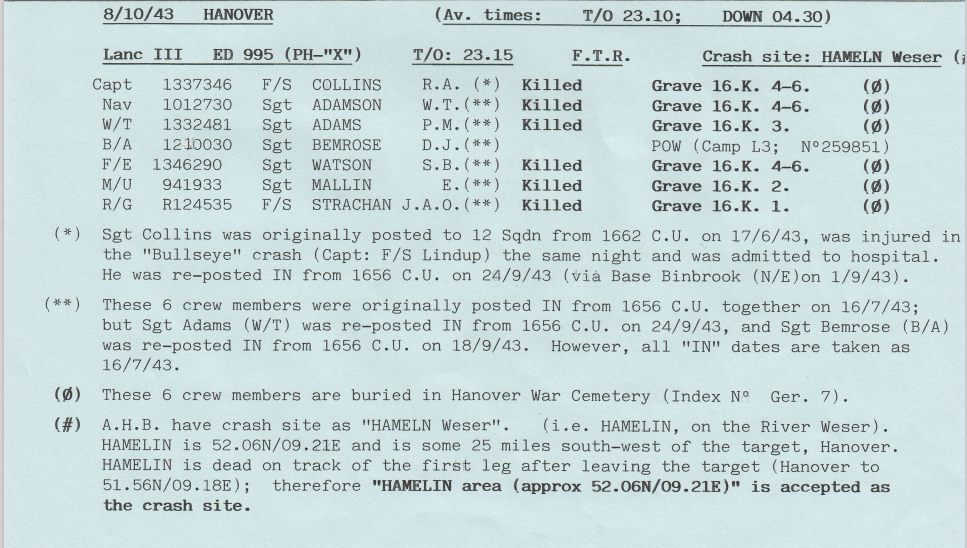
Flight Sergeant Ronald Collins, the pilot of one of the aircraft lost attacking Hannover had previously survived a crash near Wickenby during a training flight on 17th June 1943 and had only recently returned to duty following his serious injuries.
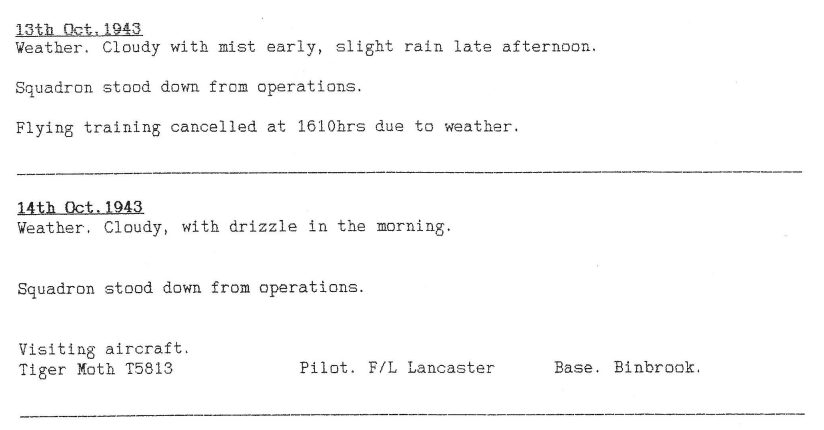
Extract from Station Diary
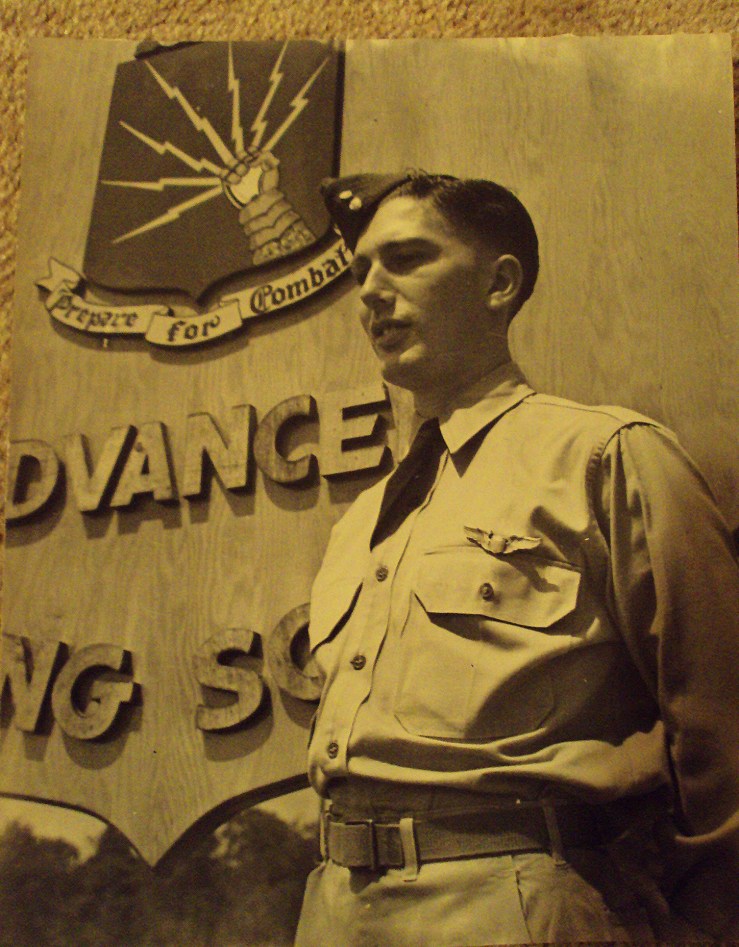
Flight Sergeant Ronald Collins, killed during the mission to Hannover – this photograph was taken in the USA in 1942 during his flying training
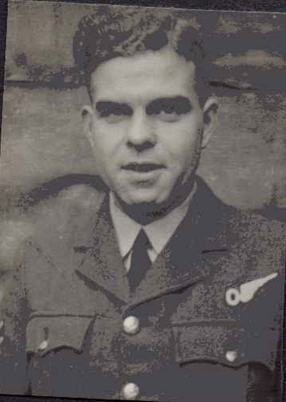
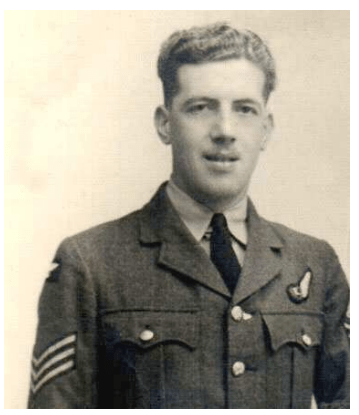
Sgt Peter Bemrose, the bomb aimer in Flight Sergeant Collins’ aircraft, who was the only survivor of the crew and became a prisoner of war

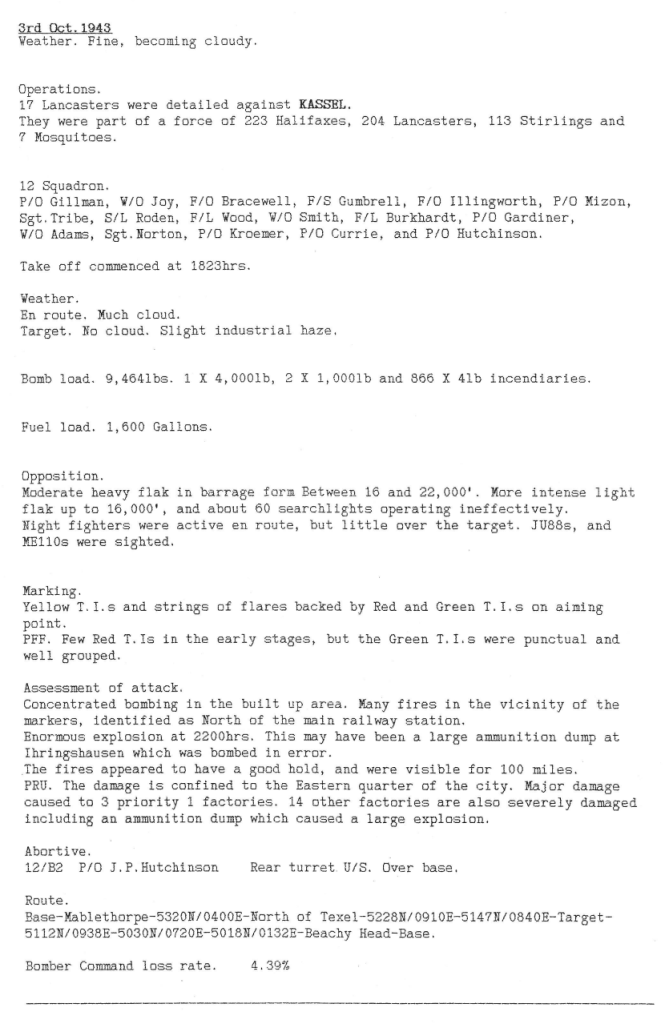
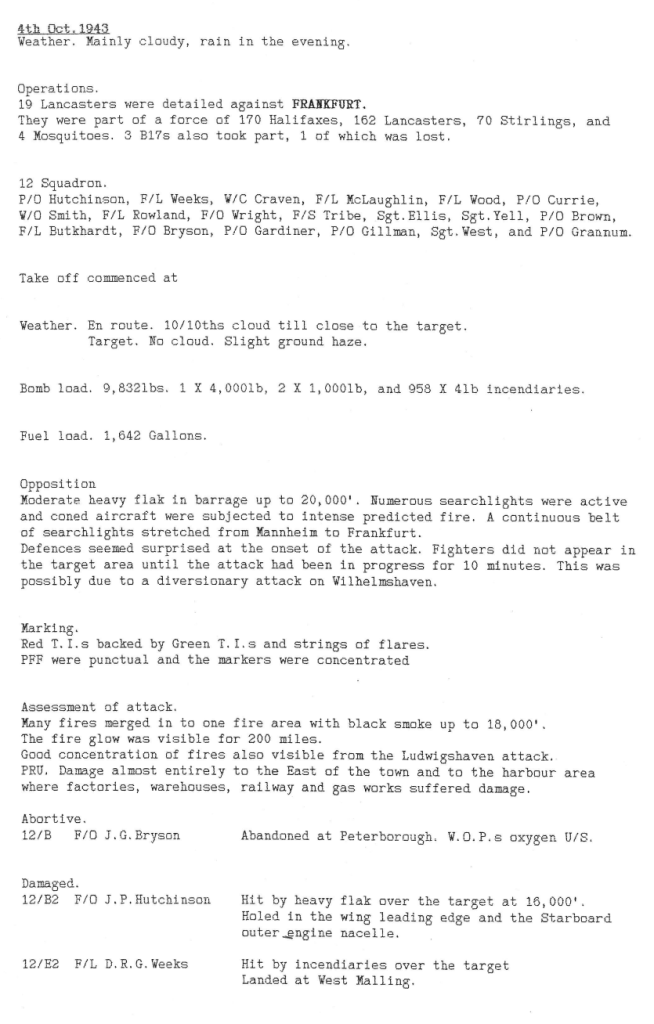
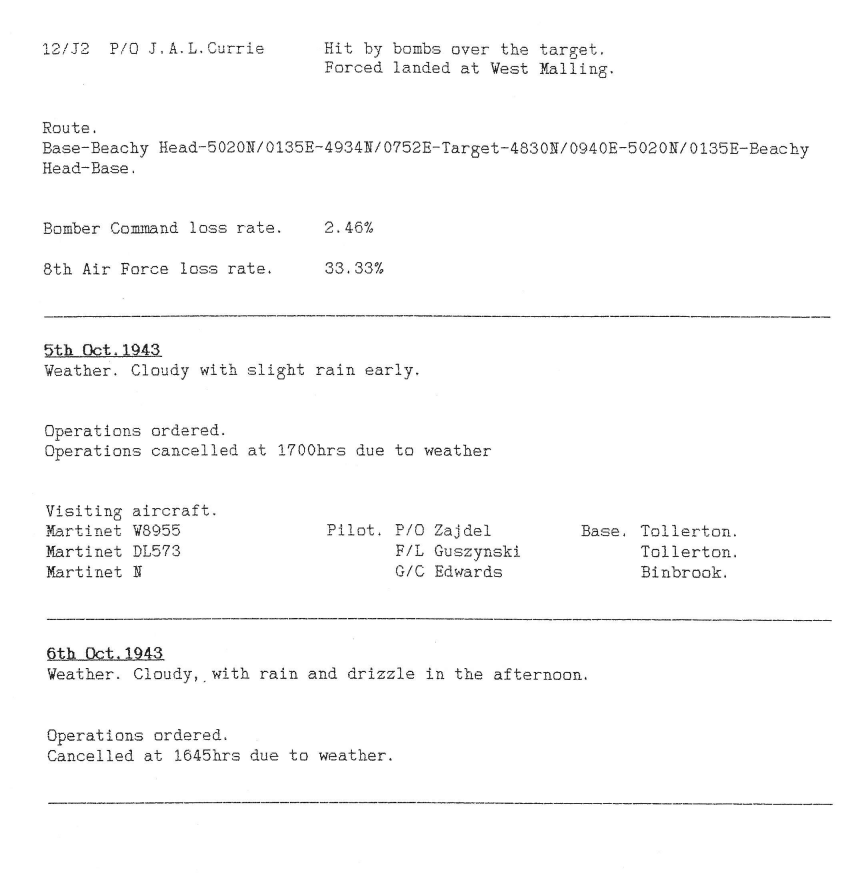
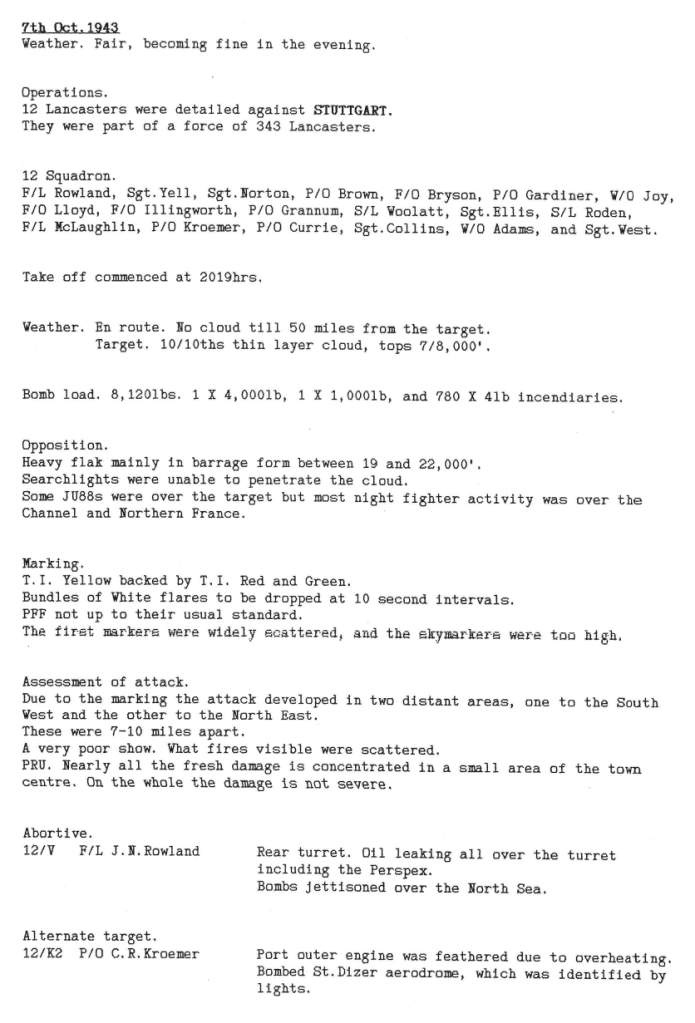
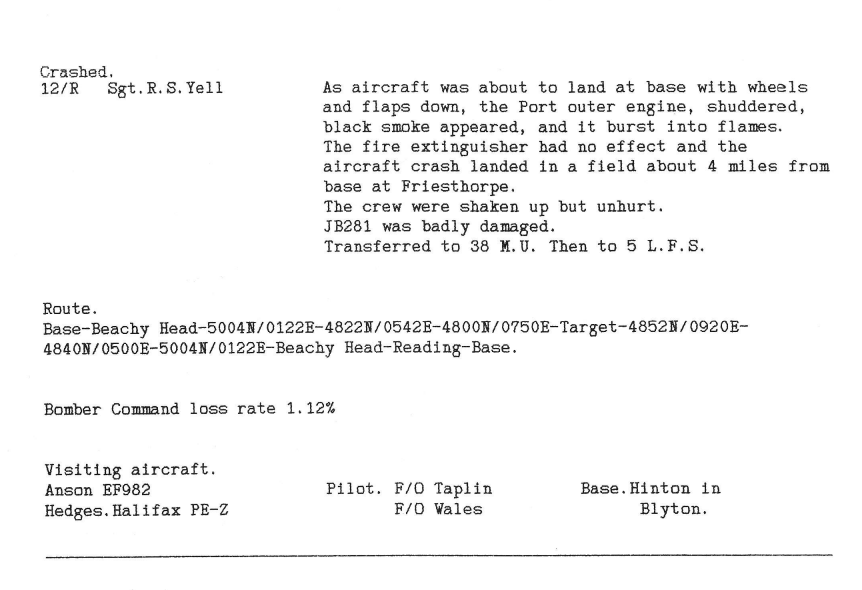
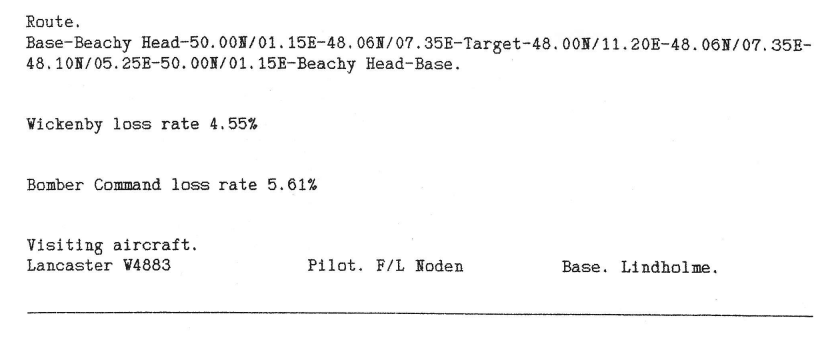
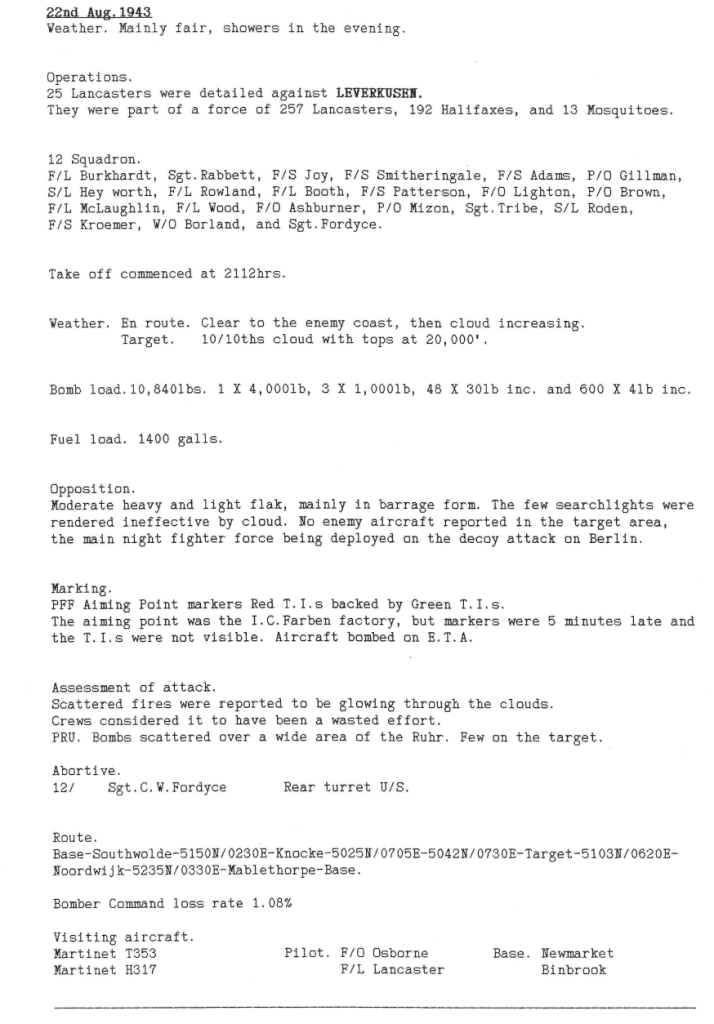
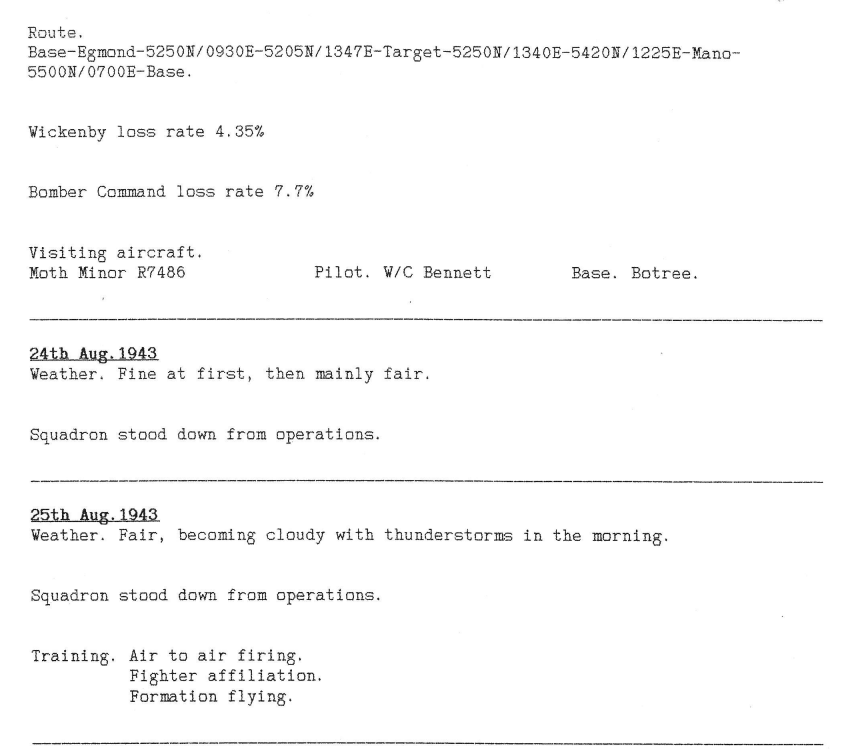
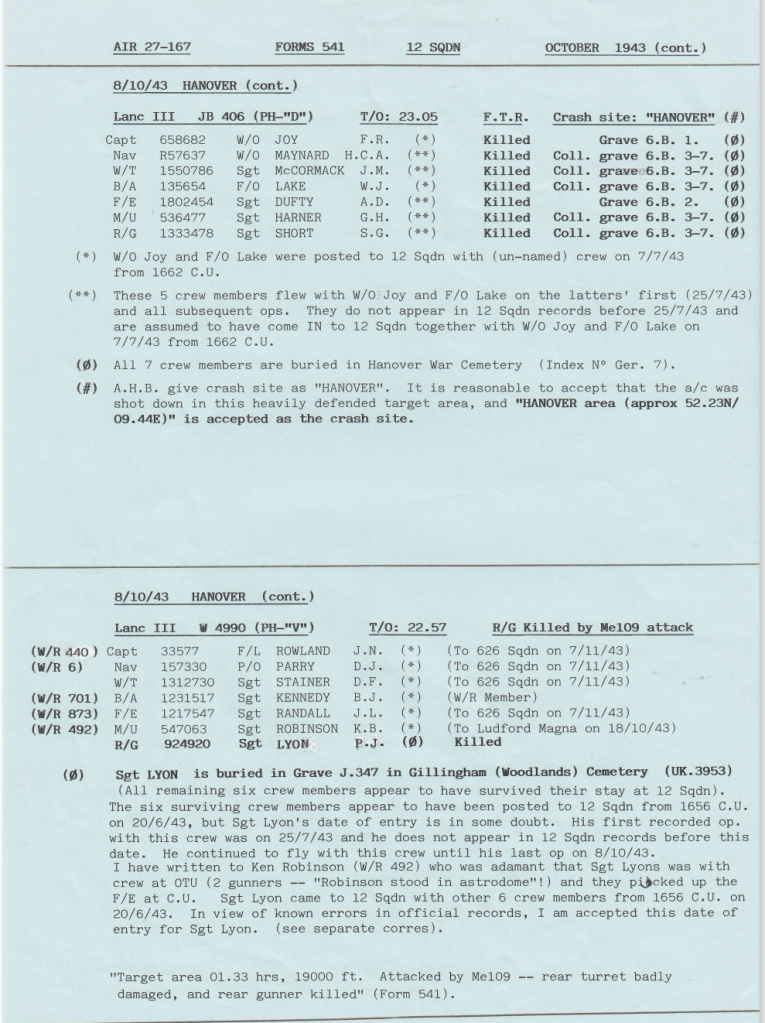
Extract from Appendix to 12 Sqn Operational Record Book
1-7 October 1943

Overview

A busy week for 12 Sqn, taking part in attacks on 5 targets in Germany; Hagen, Munich, Kassel, Frankfurt and Stuttgart, but only losing one aircraft and crew, with another lost on landing but with no casualties.

It is interesting that a number of aircraft had to abandon their missions due to rear turret failure, mostly caused by issues with either the hydraulic operating system freezing due to the low temperatures at the heights flown or by issues with the ammunition supply. Another observation in the extract from the Station Diary below is the mention of aircraft returning with either bomb or incendiary damage from aircraft flying above them – this time both managed to return safely, but this wasn’t always the case. My final observation is that a number of aircraft were “coned” by searchlight when flying over London – not what you wanted having successfully returned from a mission over enemy territory!

Extract from Station Diary

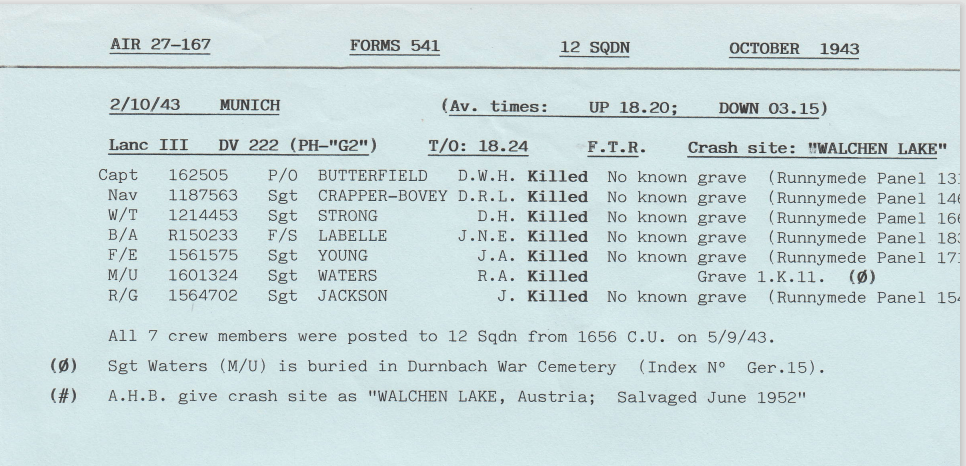
In 2003, German and Canadian researchers found the remains of Pilot Officer Butterfield’s aircraft, lost during the attack on Munich, in the Walchensee lake, about an hour’s drive from Munich. They photographed what remained of the aircraft and also discovered the remains of Sgt Labelle, the bomb aimer. The site is now a designated war grave.

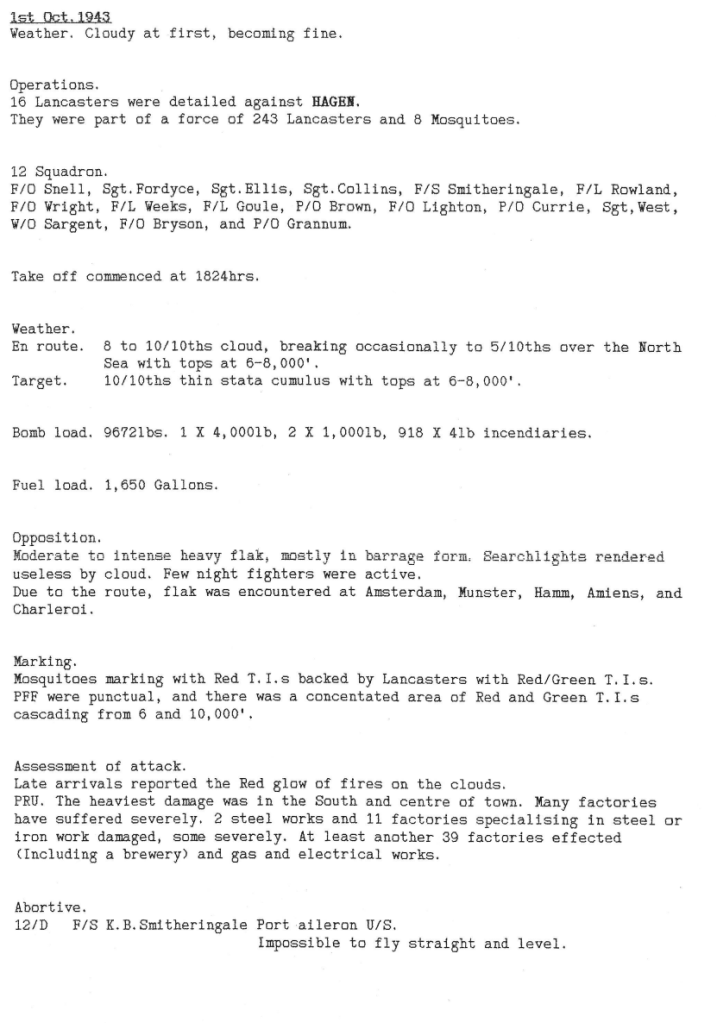
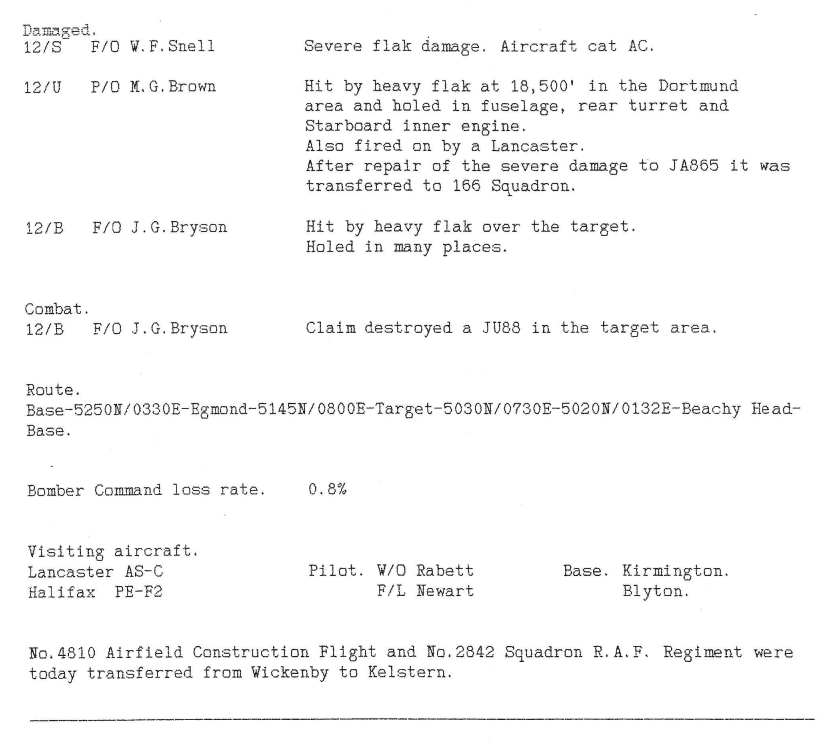
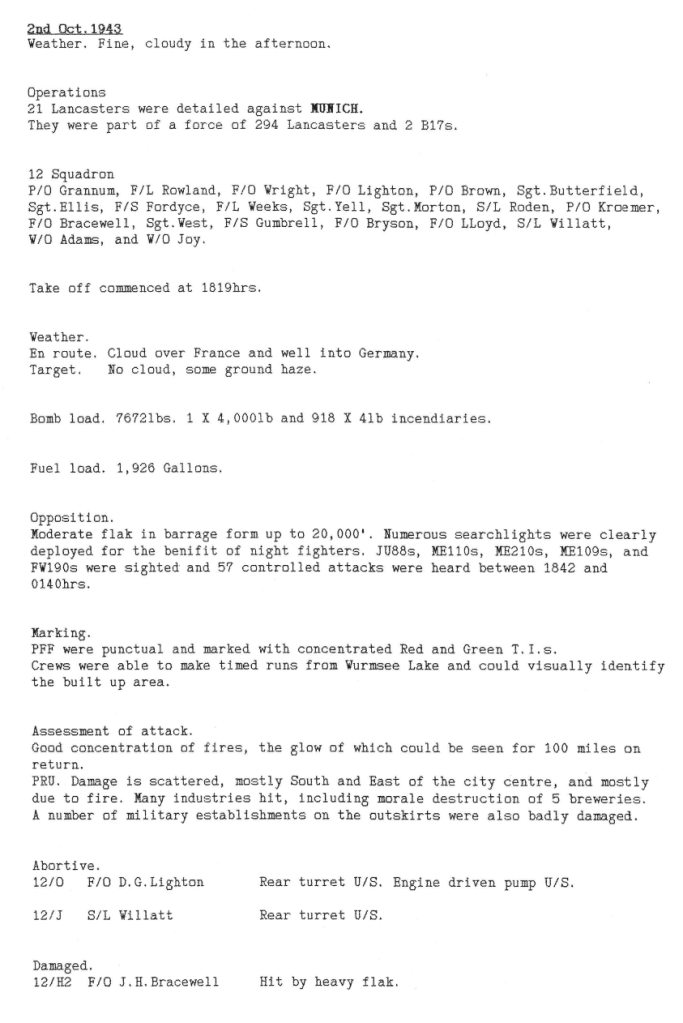
Extract from Appendix to 12 Sqn Operational Record Book
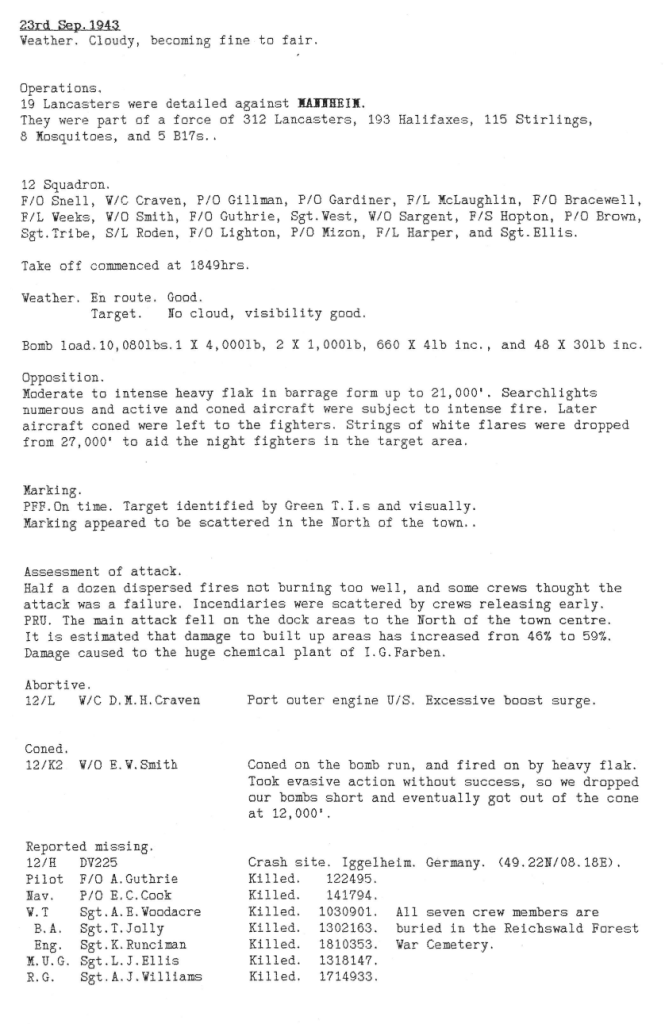
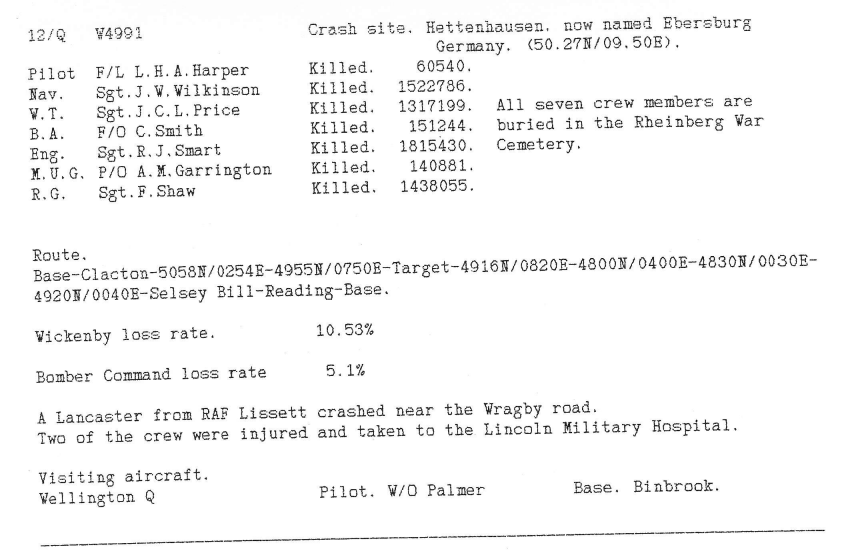
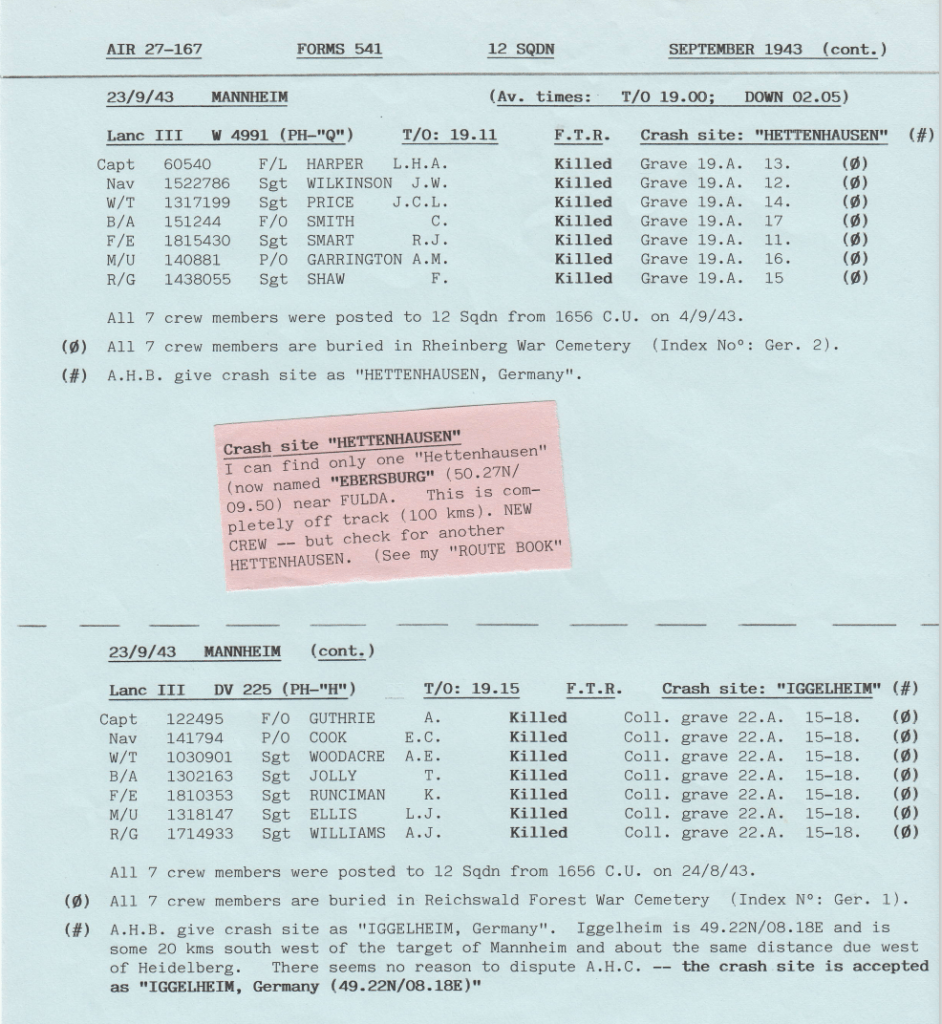
24-30 September 1943

Overview

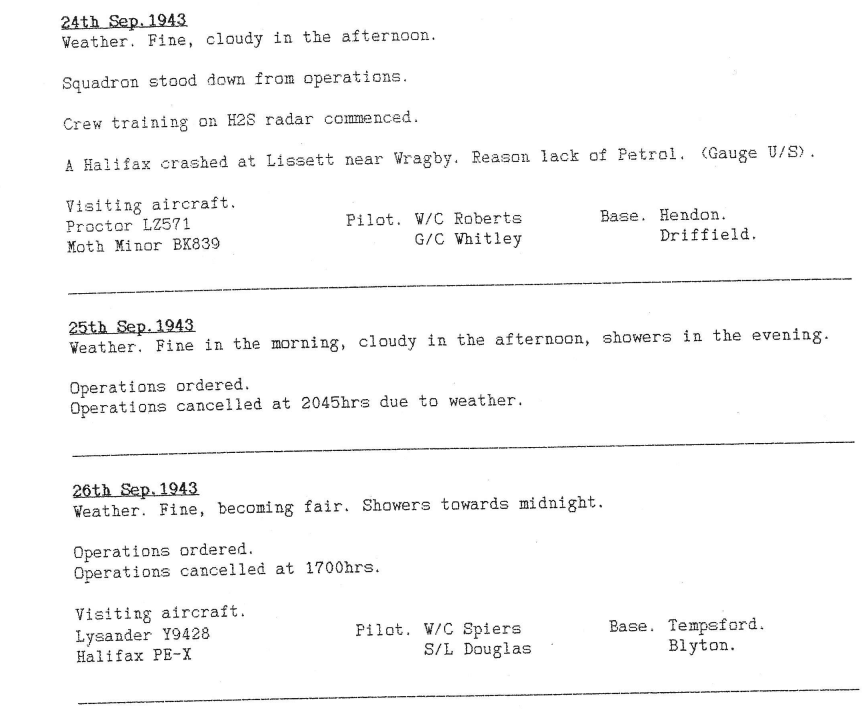
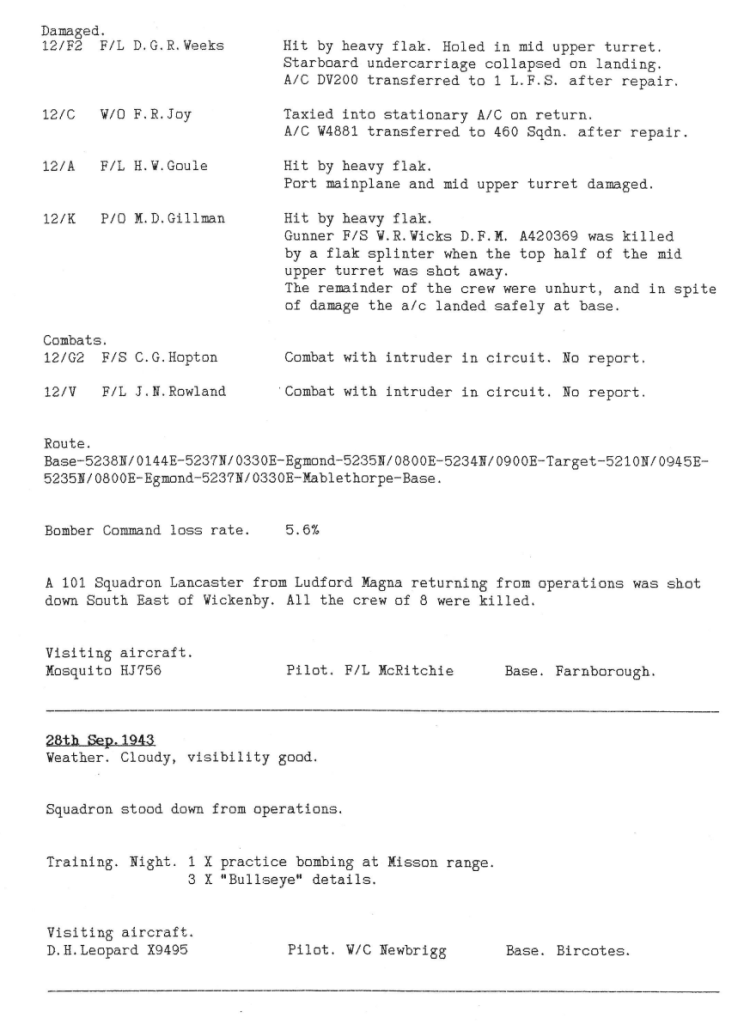
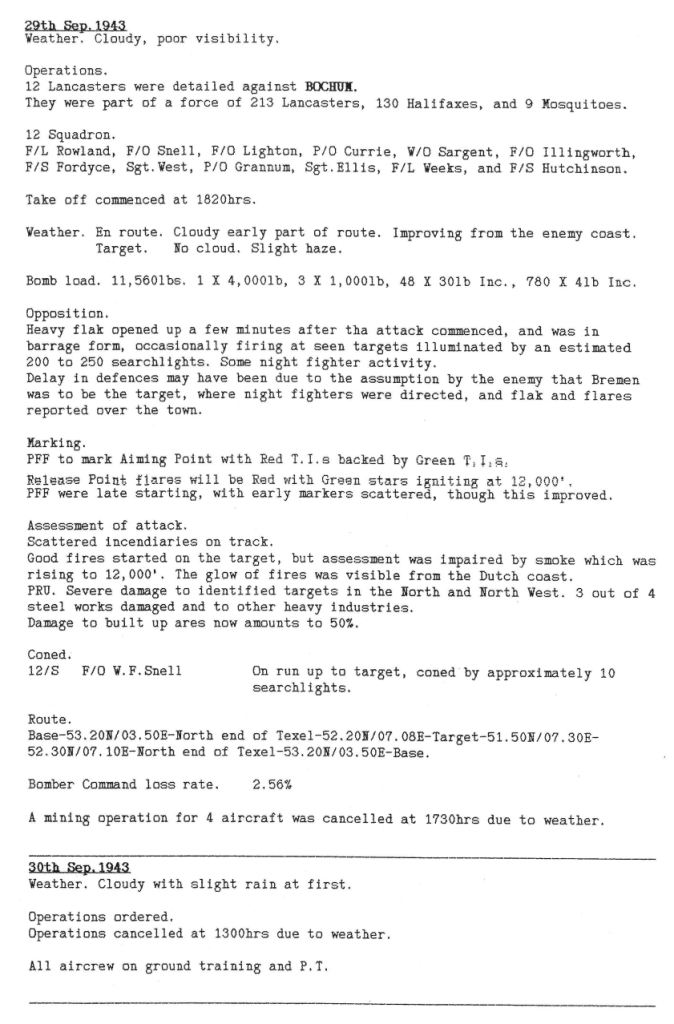
12 Sqn took part in 2 operations this week, Hannover and Bochum in Germany – no aircraft were lost, but one crew member was killed by flak in the attack on Hannover. Although flak was a danger to RAF bombers, only 25% of aircraft losses over enemy territory were caused by flak – the other 75% were the result of either night fighters or mechanical problems.

Extract from Station Diary

Extract from Appendix to 12 Sqn Operational Record Book

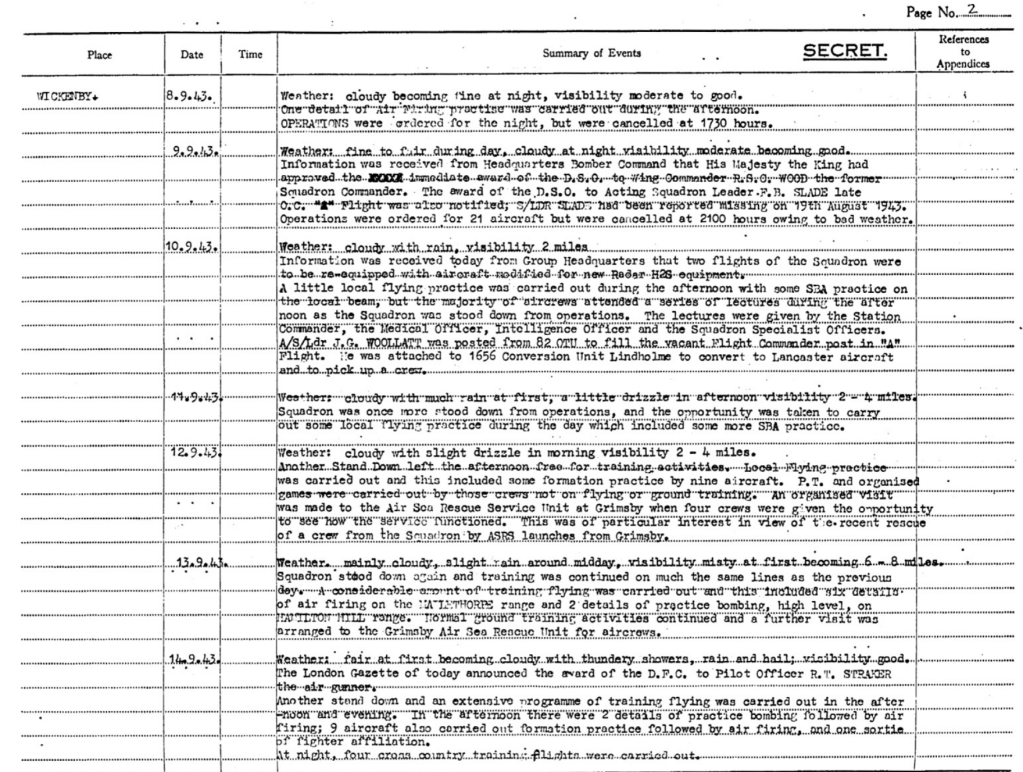
2-8 September 1943

Overview

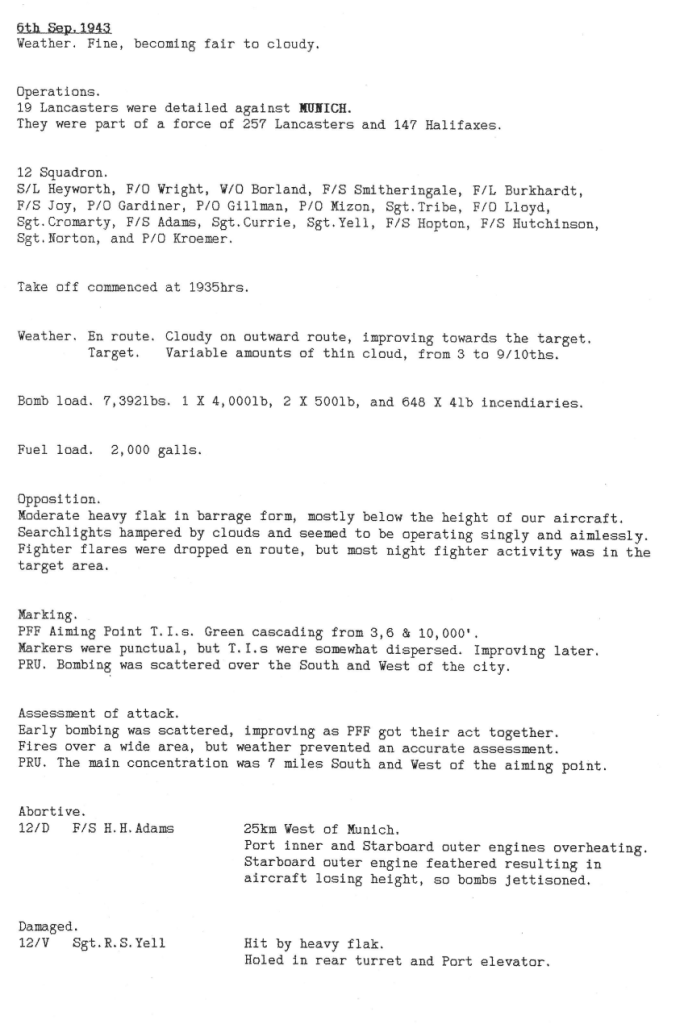
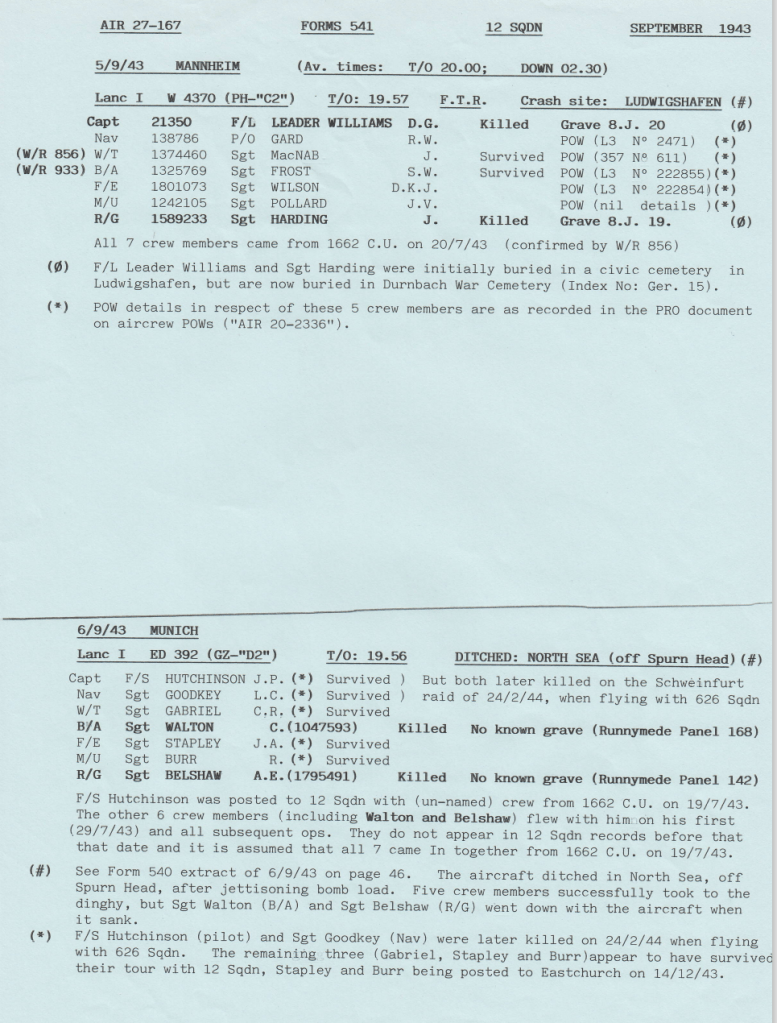
This week, attacks were concentrated on targets in Germany – Berlin, Mannheim/Ludwigshafen and Munich – apart from 2 aircraft which dropped mines off the coast of Brittany. 2 aircraft were lost and 4 aircrew killed, one of the aircraft ditched in the North Sea and 5 of the crew were rescued.

Extract from Station Diary

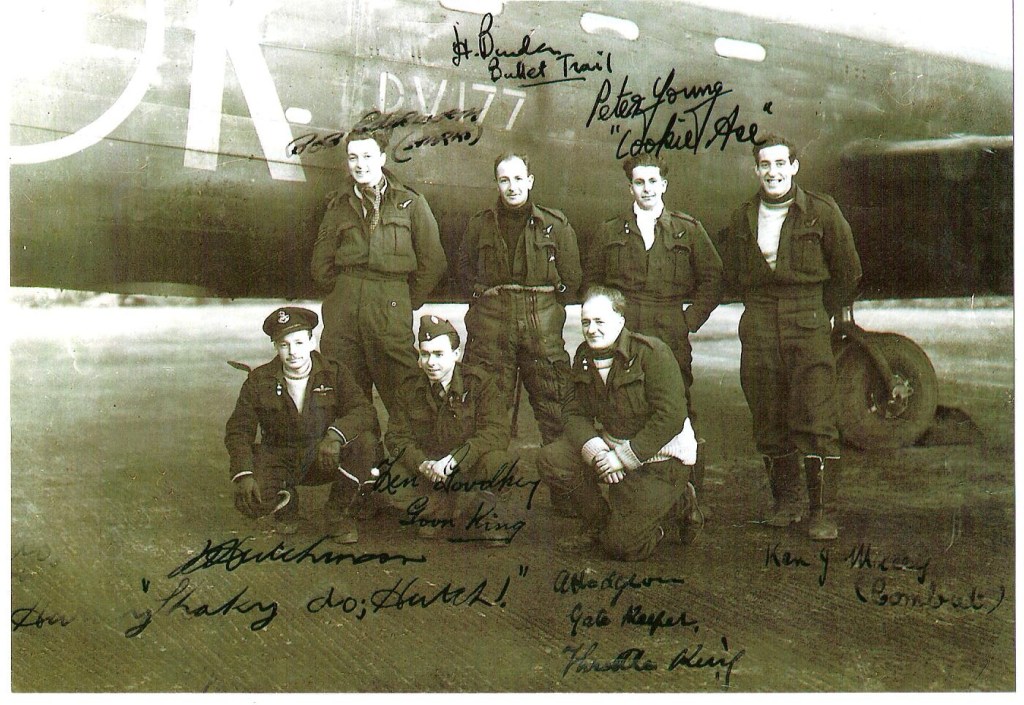
Flight Sergeant Hutchinson and 4 of his crew who ditched in the North Sea on the mission to Munich on 6th September – Back LtoR R Edgeworth, W/O – H Binder, AG – P Young, bomber – H Macey, A/G, Front LtoR J Hutchinson, Pilot – L Goodkey, Nav – A Hodgson F/Eng (Please note that the bomb aimer and the rear gunner drowned and have been replaced in this picture). Unfortunately, this crew were all killed, near the end of their tour, during the attack on Schweinfurt on 22nd February 1944

Extract from Appendix to 12 Sqn Operational Record Book
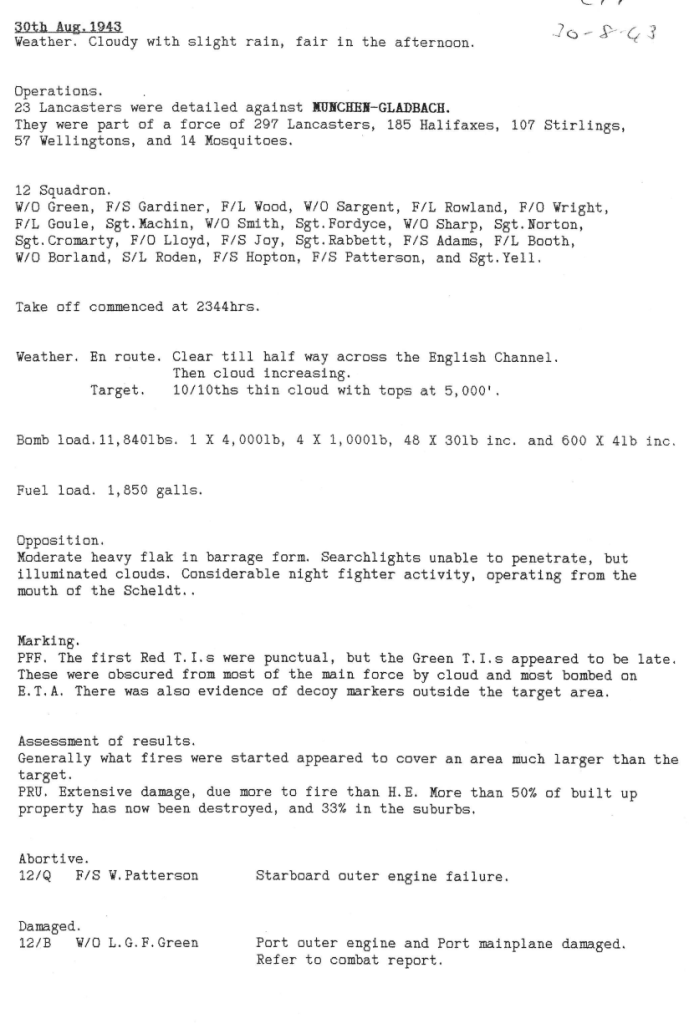
26 August – 1 September 1943

Overview

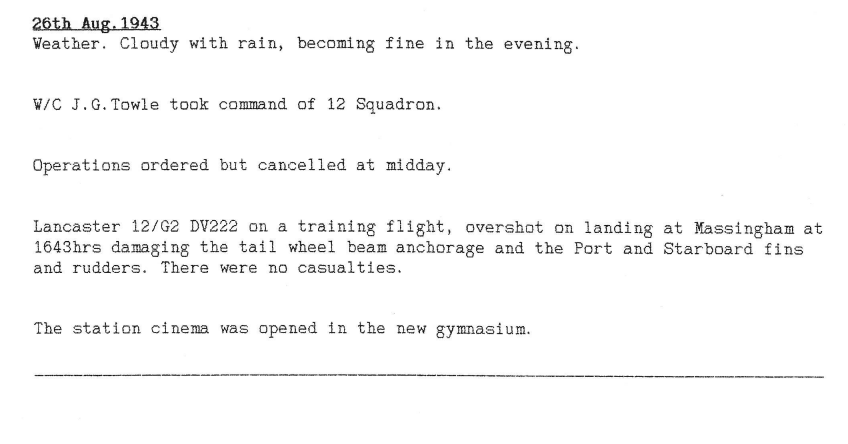
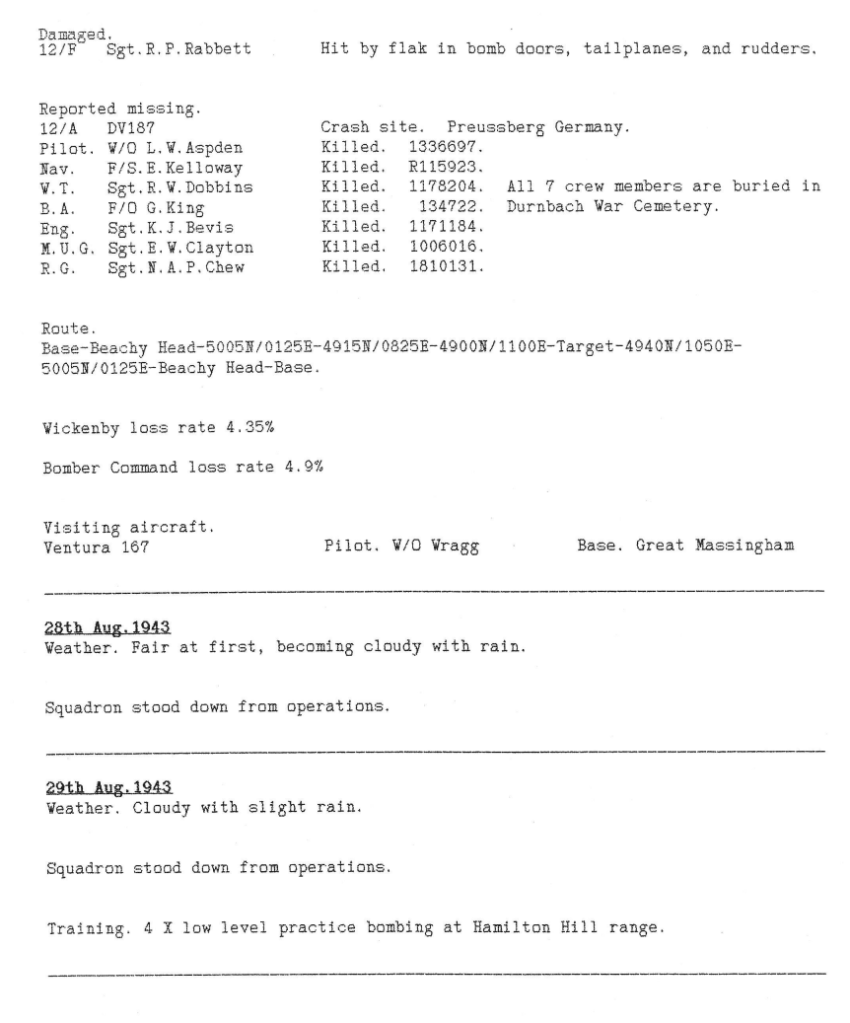
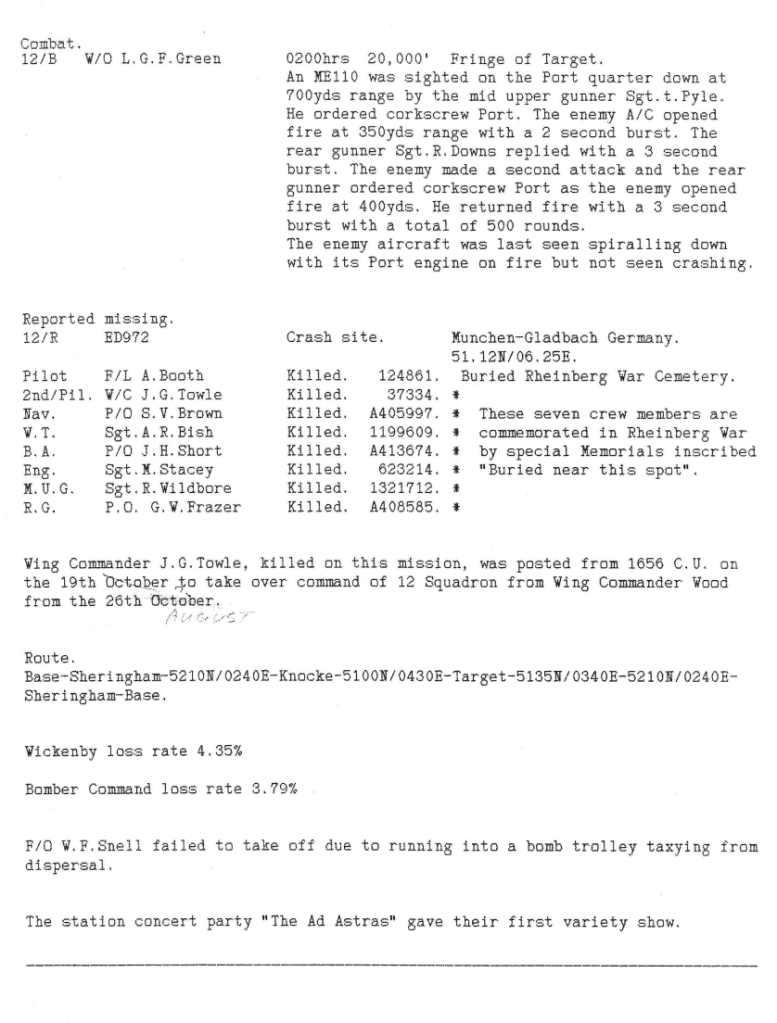
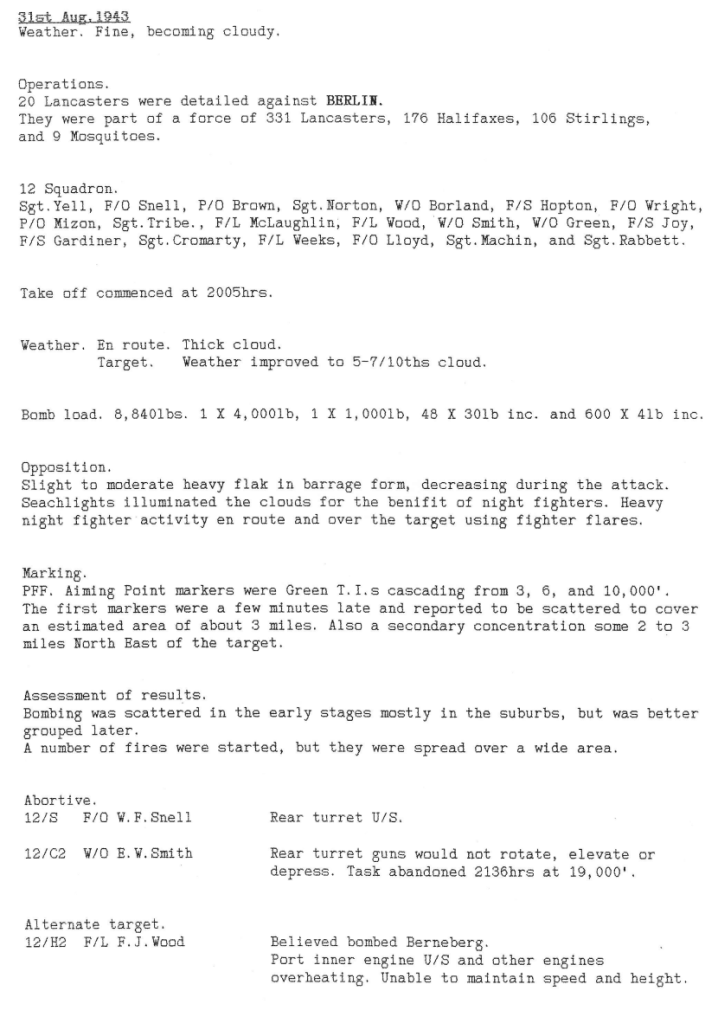
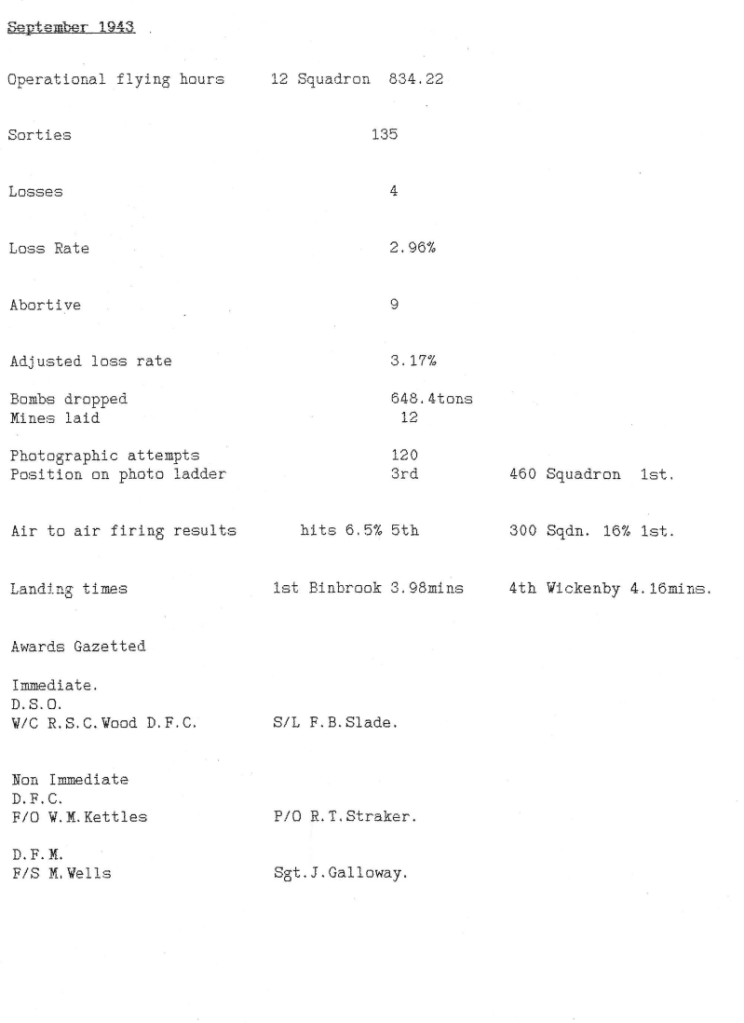
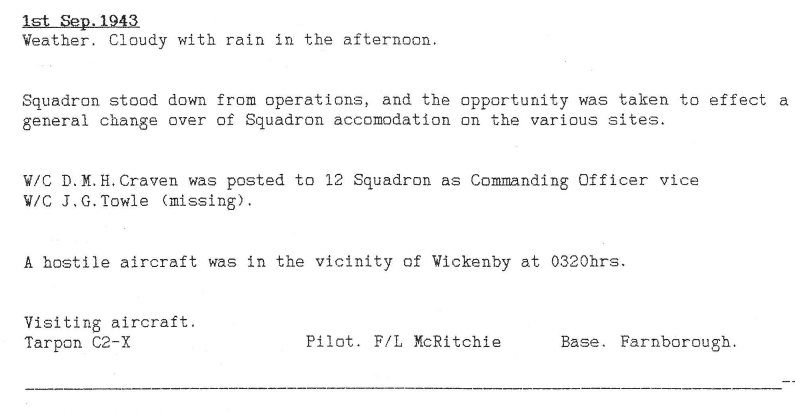
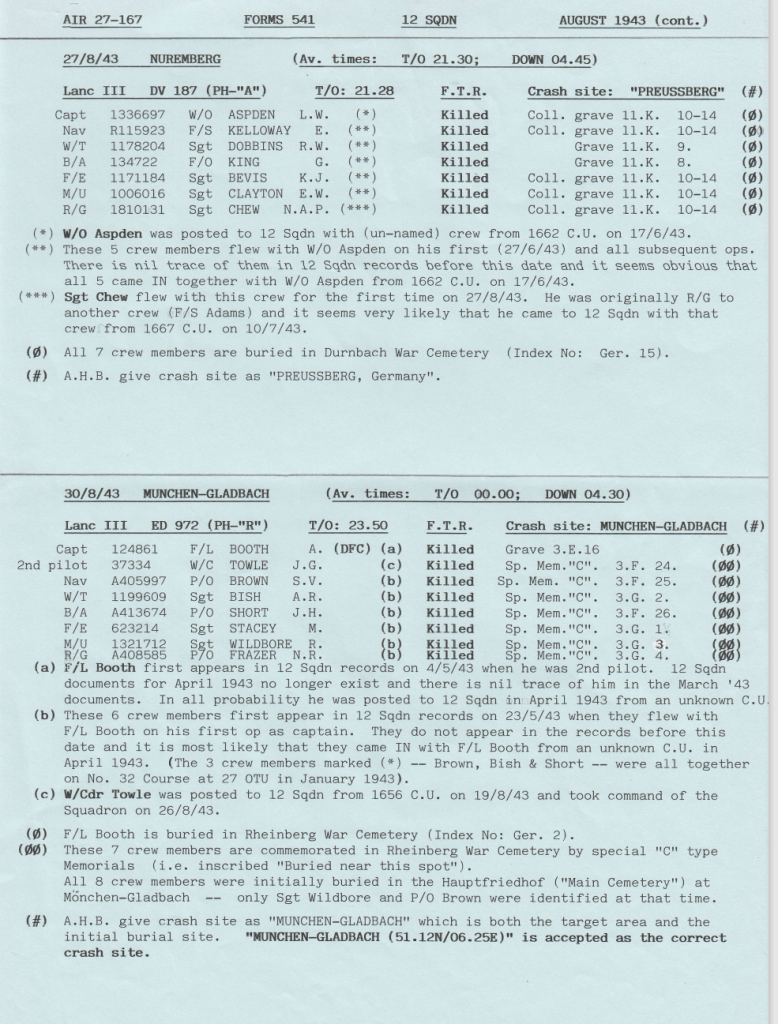
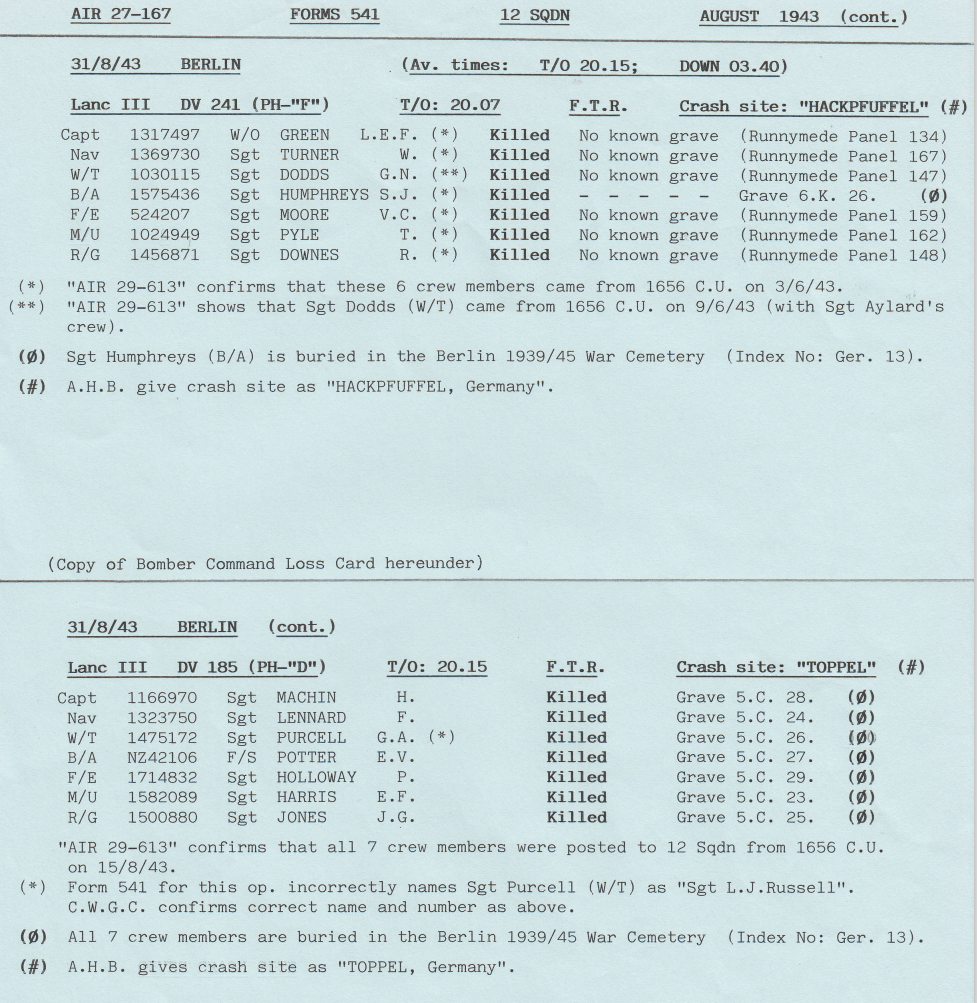
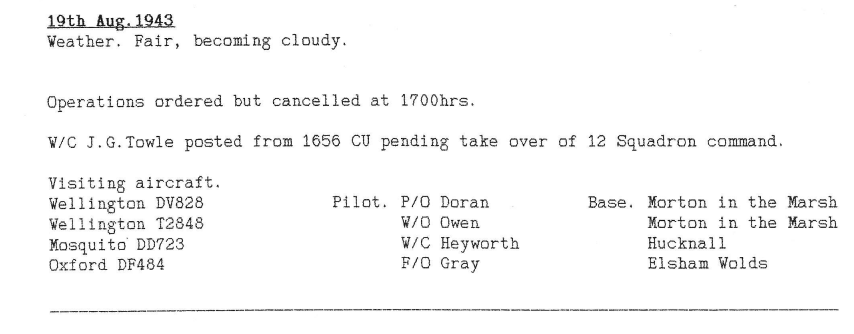
12 Sqn took part in 3 operations this week, to Nuremberg, Monchengladbach/Rheydt and Berlin, loosing 4 aircraft and all their crews. Wing Commander Towle, who was killed as the second pilot during the attack on Monchengladbach, had only been posted in to command 12 Sqn on 19th August and this was his first mission with his new command. This was also the start of what would become the Battle of Berlin, which Air Chief Marshal Harris believed could, if successful, lead to the end of the war. Events were to prove him wrong.

Extract from Station Diary

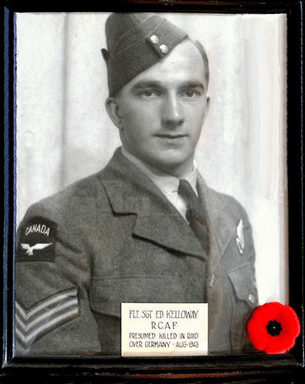
Sgt Edward Kelloway, aged 20, from Port Arthur, Ontario, Canada. He was the navigator in WO Aspden’s crew, killed in the attack on Nuremburg.

Extract from Appendix to 12 Sqn Operational Record Book
19-25 August 1943

Overview

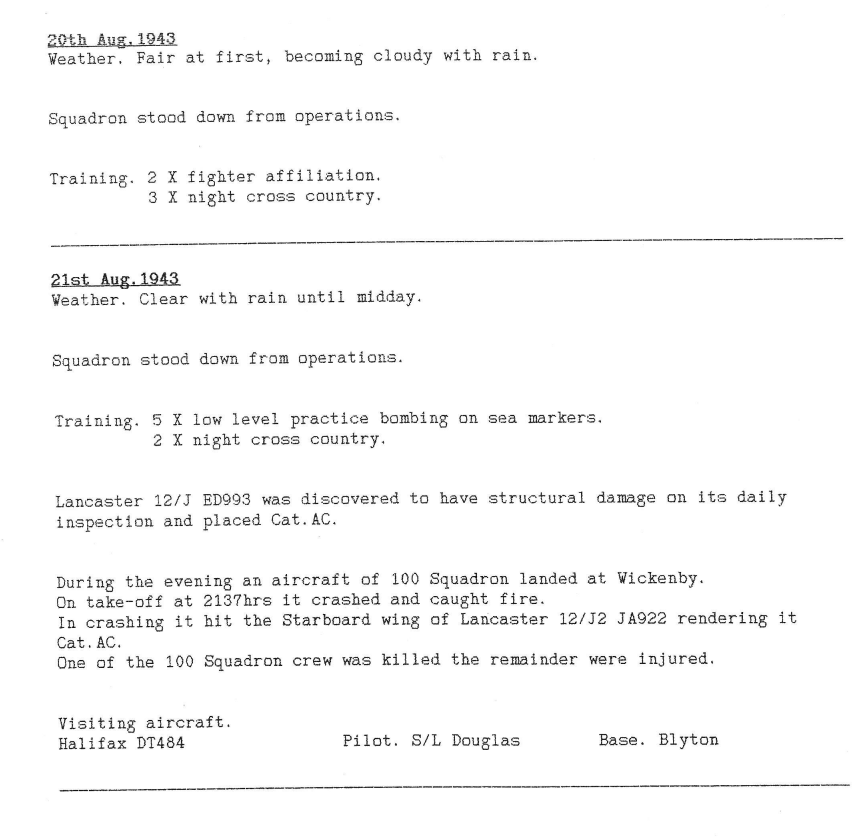
Only 2 missions this week, to Leverkusen and Berlin – the start of the week coincided with a full moon period, so no missions were flown as this gave too much advantage to German night fighters. It also saw the recommencement of attacks on Berlin, which would culminate in the Battle of Berlin later in the year. One aircraft and all the crew were lost this week.

Extract from Station Diary

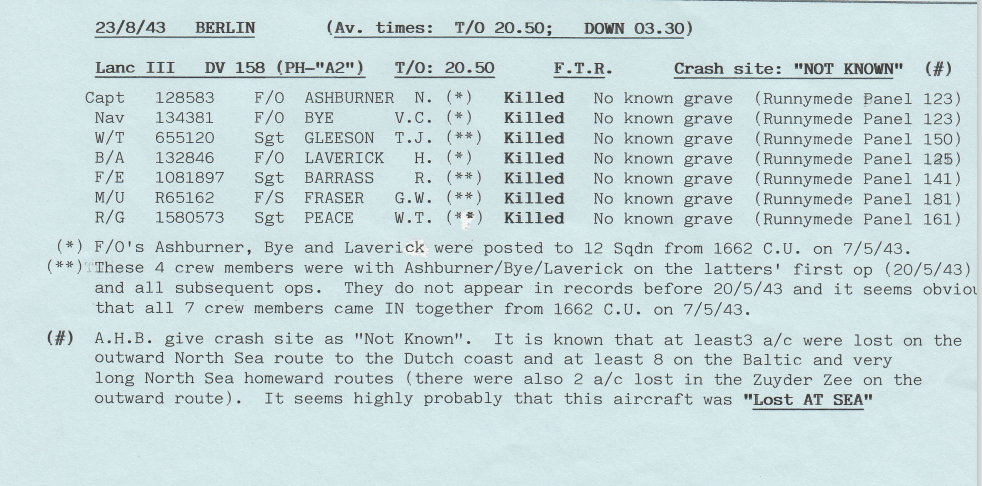
Flying Officer Norman Ashburner, aged 27, the son of Thomas & Elizabeth Ashburner of Urswick, Lancashire. He was the pilot of the only 12 Sqn aircraft lost during the mission to Berlin on 23rd August. He died with all his crew.
Sgt Richard Barras, the Flight Engineer in Fg Off Asburner’s crew.

Extract from the Appendix to 12 Sqn Operational Record Book
12-18 August 1943

Overview

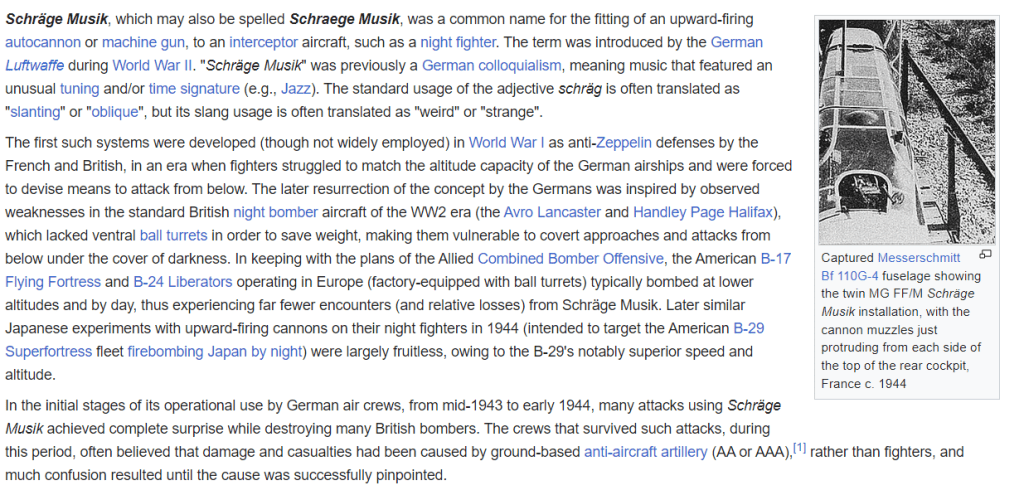
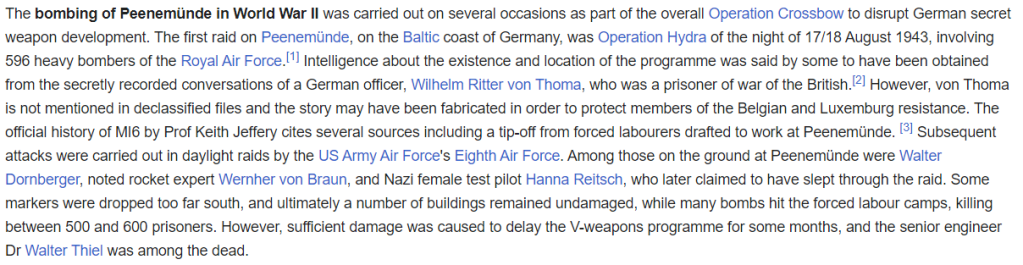
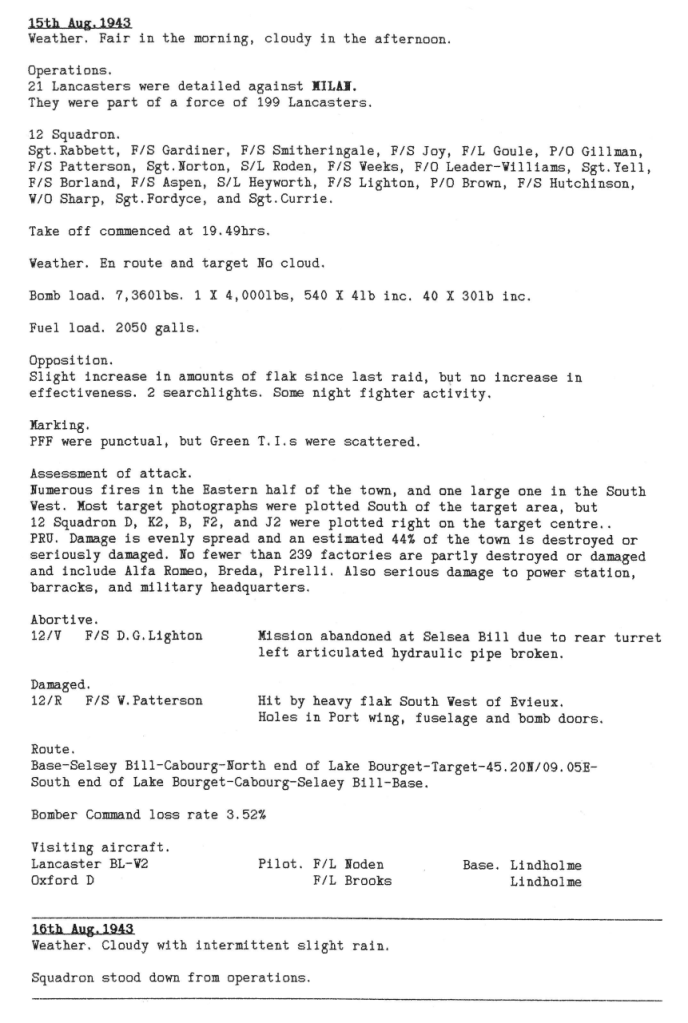
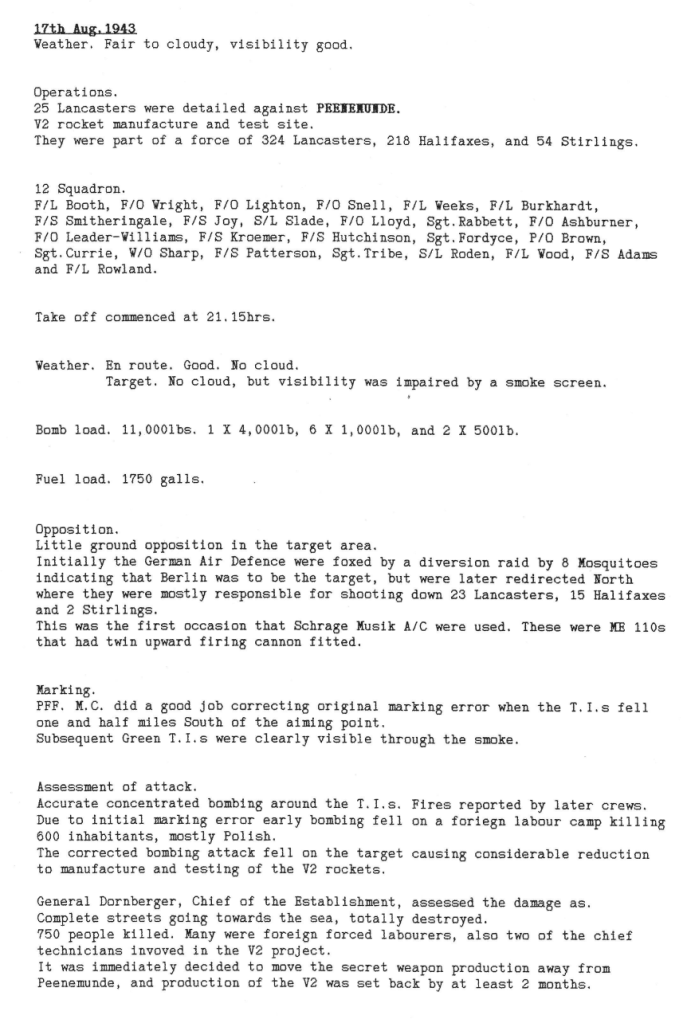
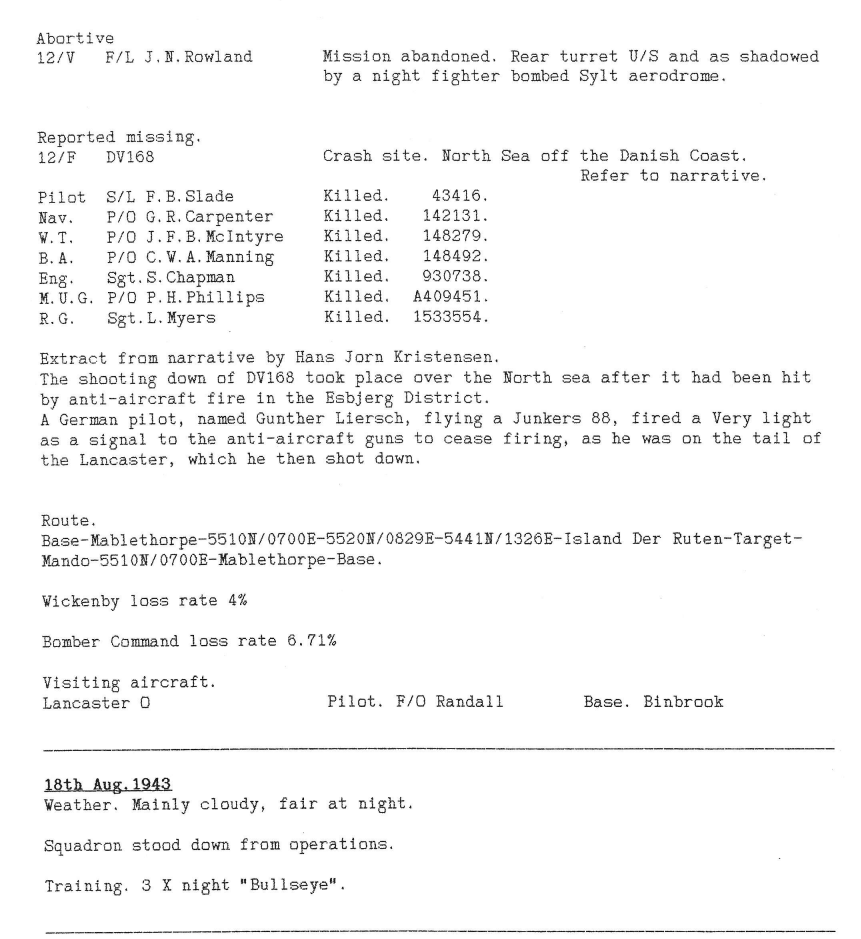
This was the week of the Peenemunde Raid against the German V1 and V2 rocket site on the Baltic coast, which also found the first use of upward firing cannons on some German night fighters (see Schrage Musik item below) and the final attacks on Italy by Bomber Command during the war.
Wikipedia
Wikipedia

Extract from Station Diary

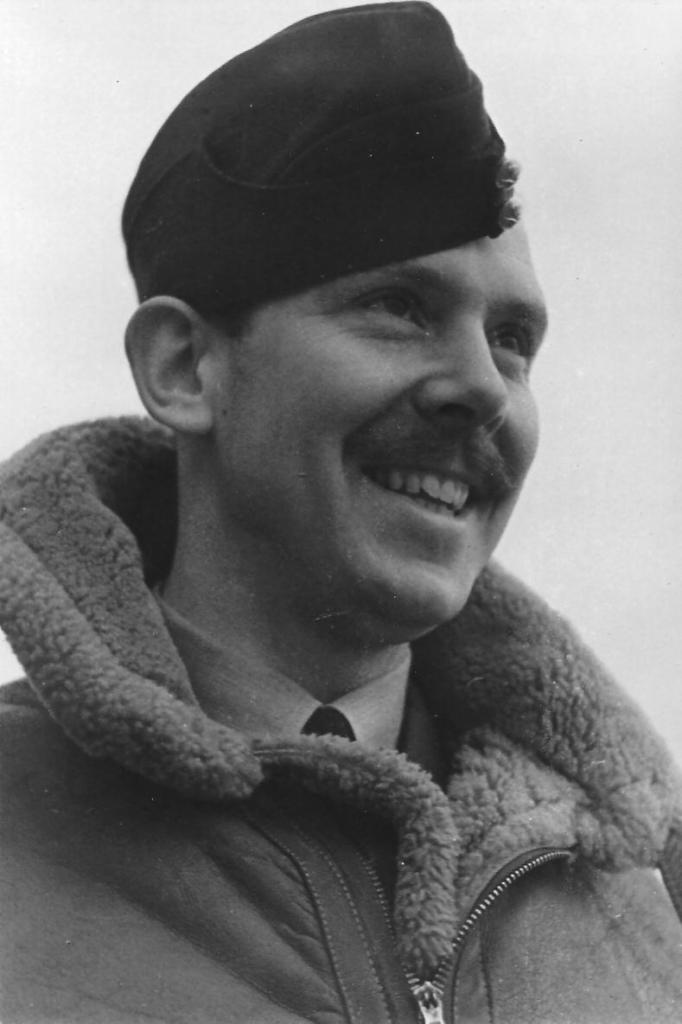
Sqn Ldr Fraser Burstock Slade DSO, aged 31, OC “A” Flight, who was killed with all his crew on the Peenemunde raid

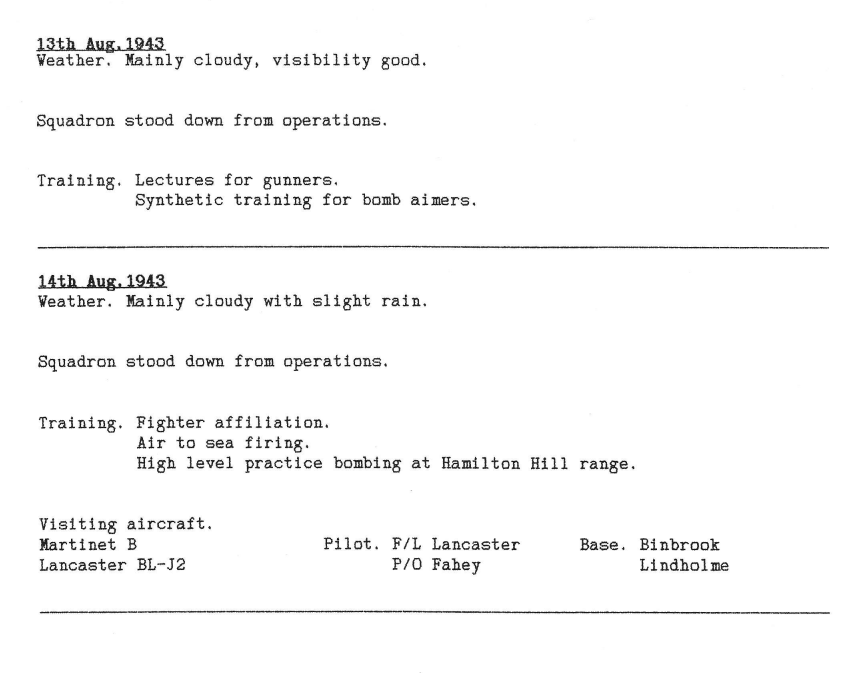
Extract from Appendix to 12 Sqn Operational Record Book