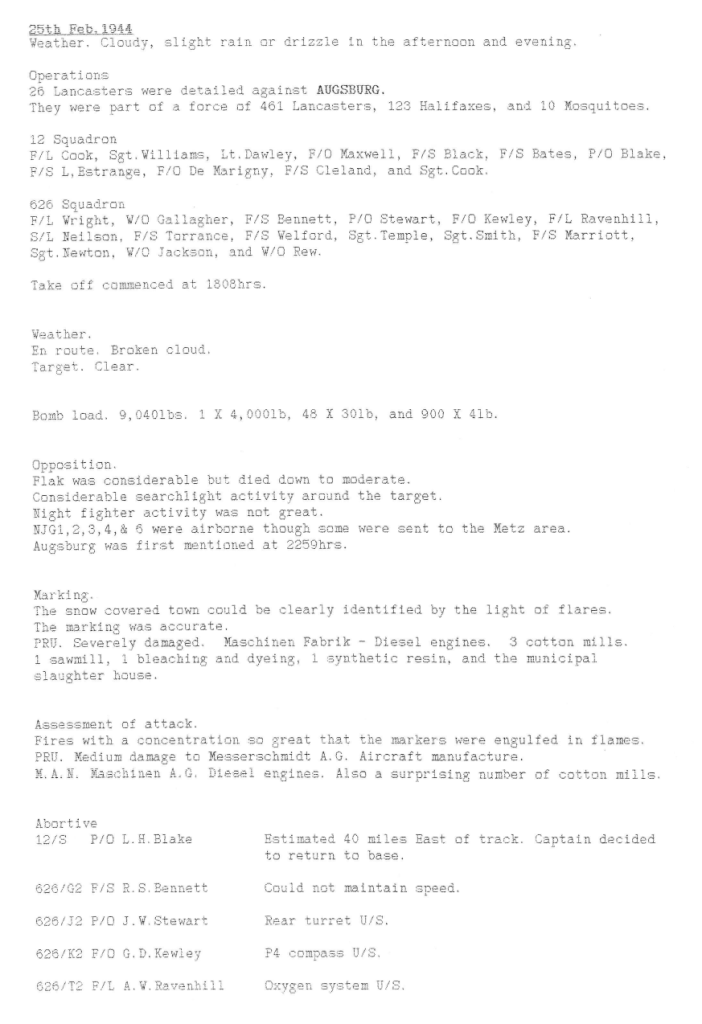
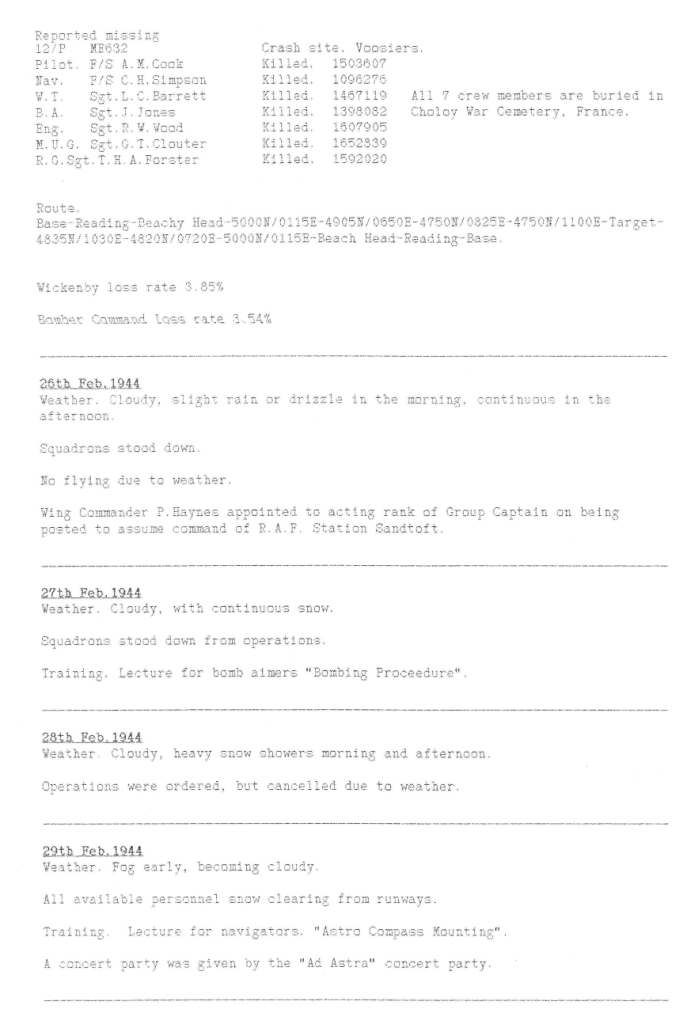
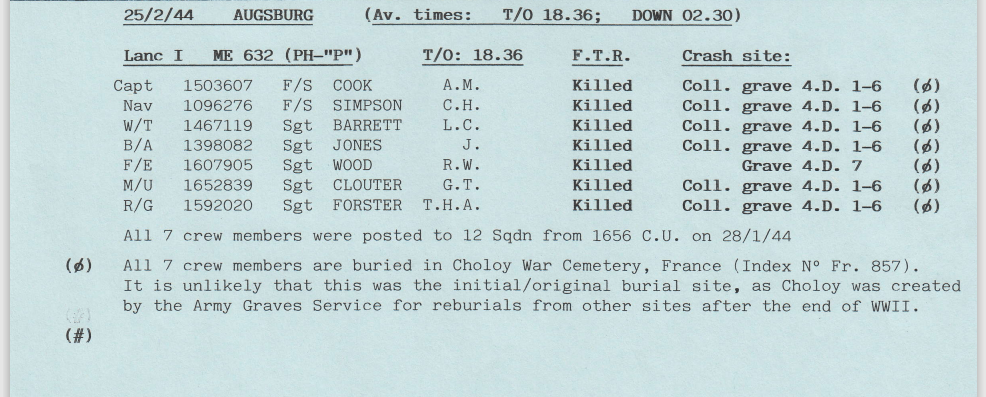
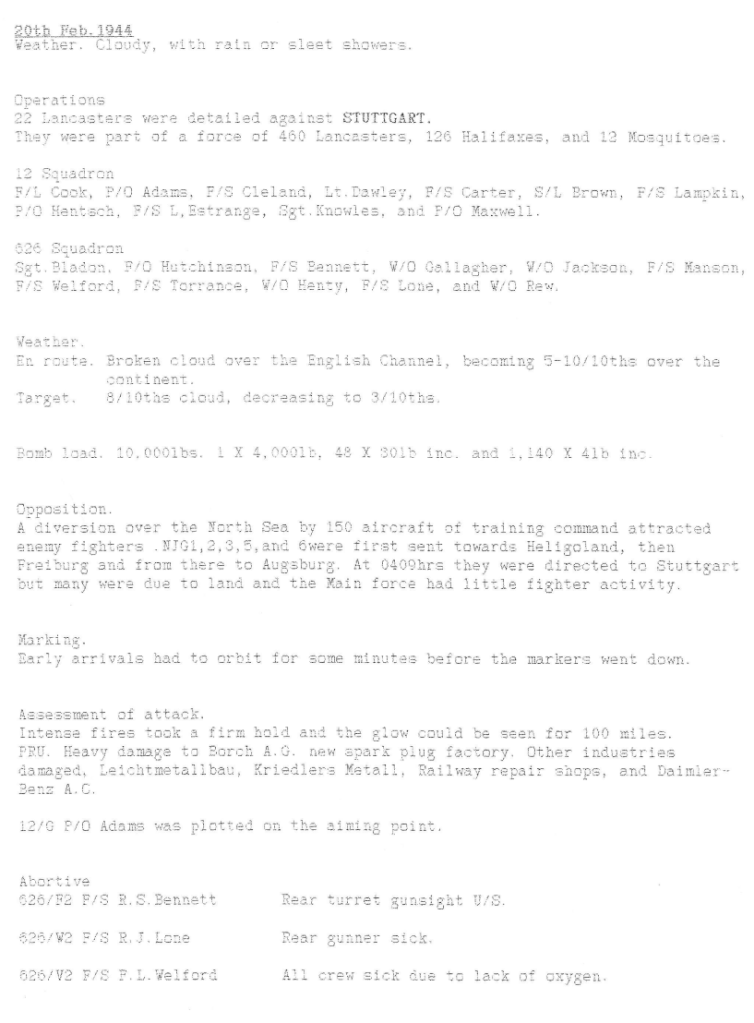
Aircraft from Wickenby took part in 2 raids during this week, to Augsburg and Stuttgart, with one aircraft and all its crew being lost.
The Augsburg raid was very accurate and more than 2000 tons of bombs were dropped which destroyed the centre of the old town, with about 700 people being killed and 90,000 bombed out. Augsburg had not been attacked before and had very light defenses, which, with the clear weather over the target led to accurate Pathfinder marking.
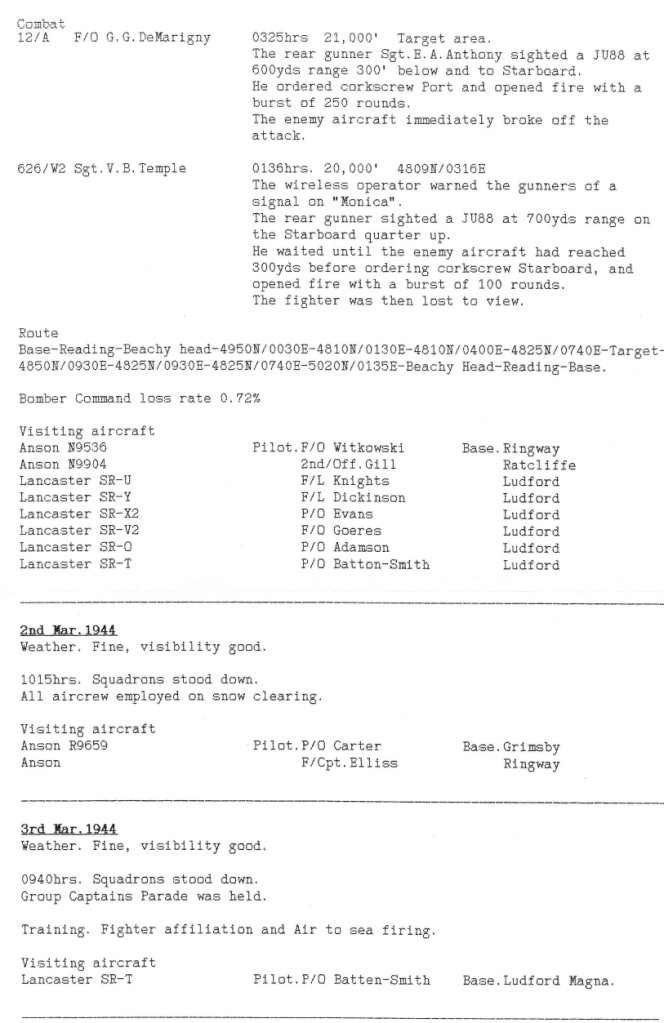
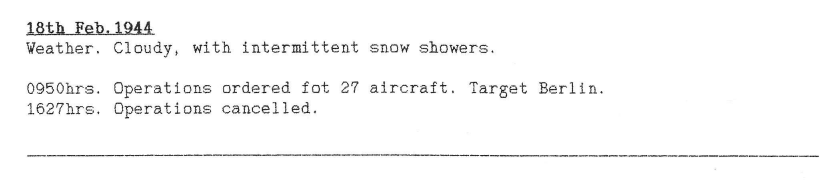
Extract from Station Diary
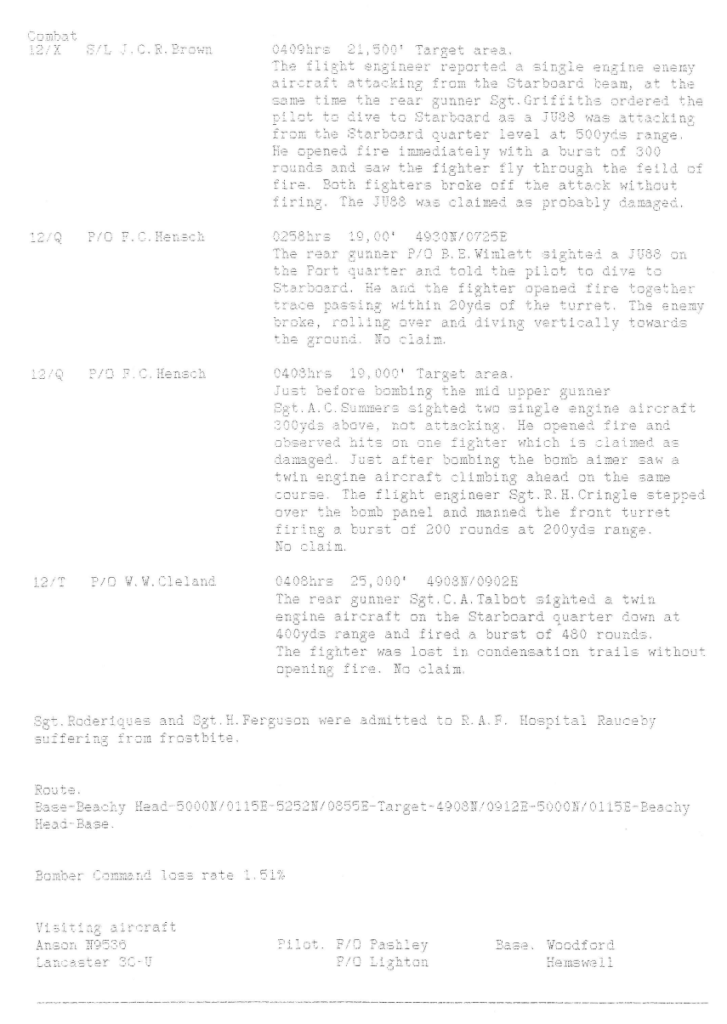
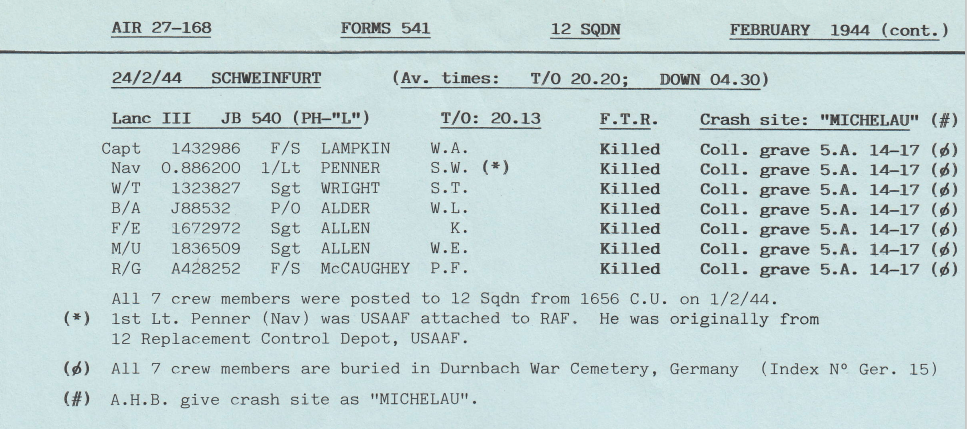
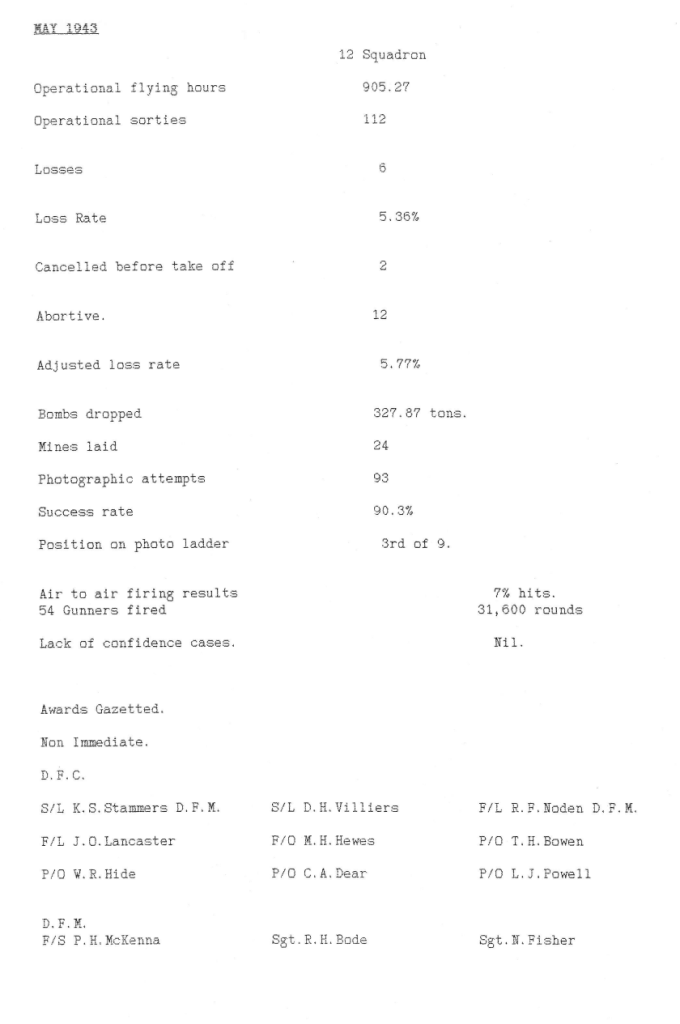
Extract from Appendix to 12 Sqn Operational Record Book
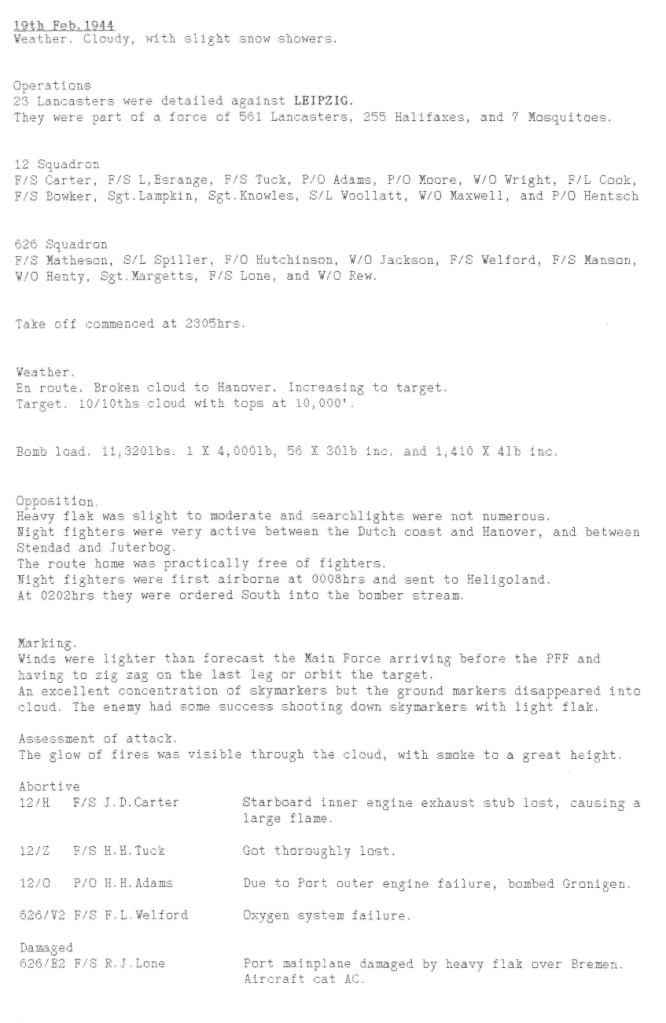
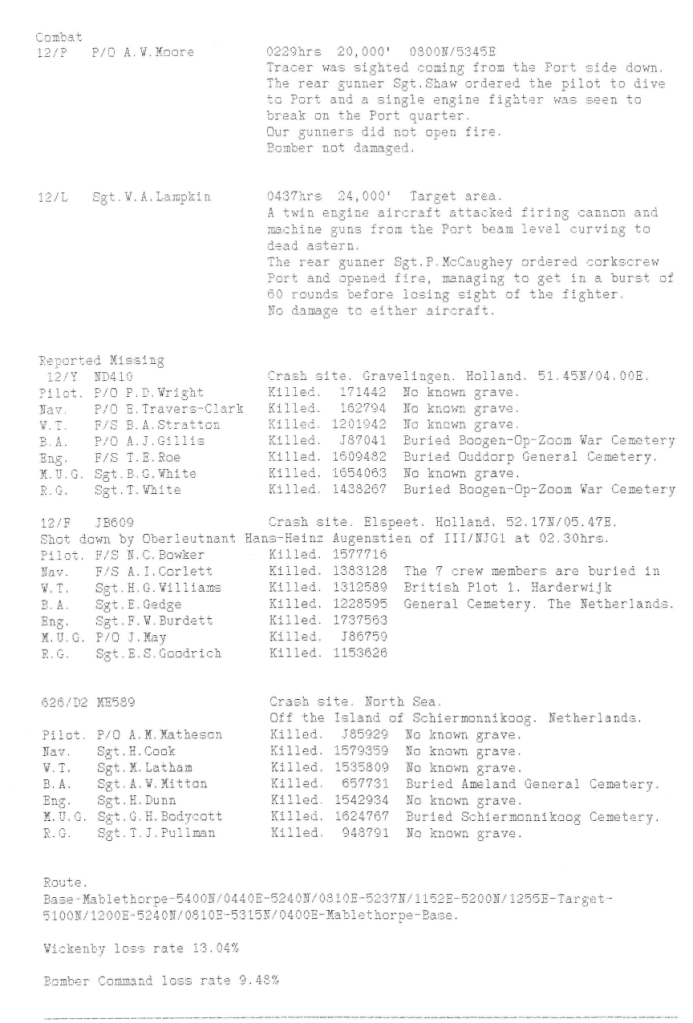
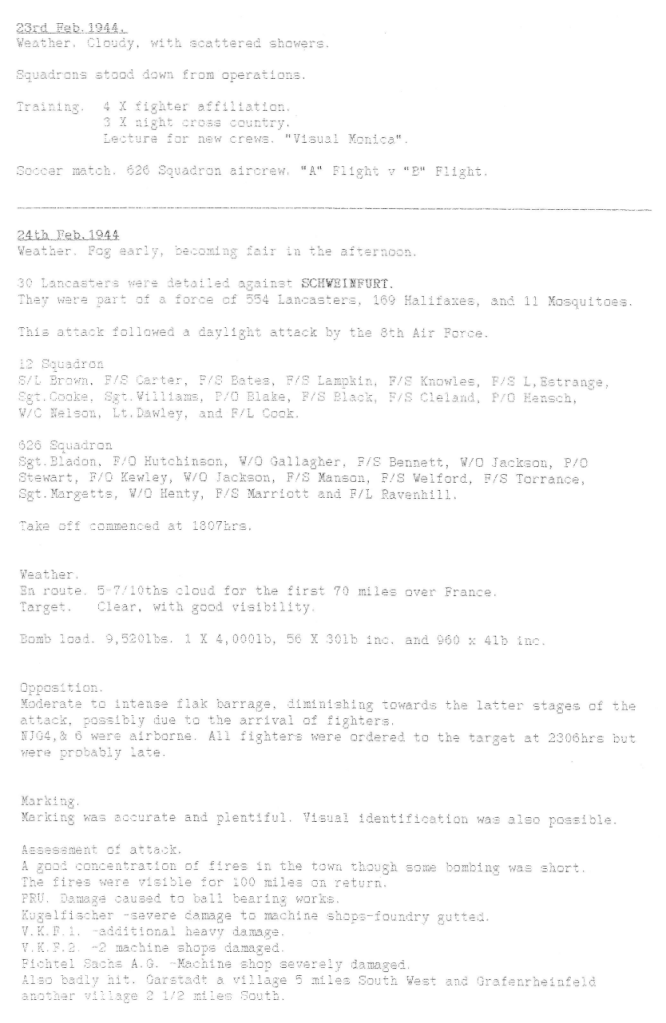
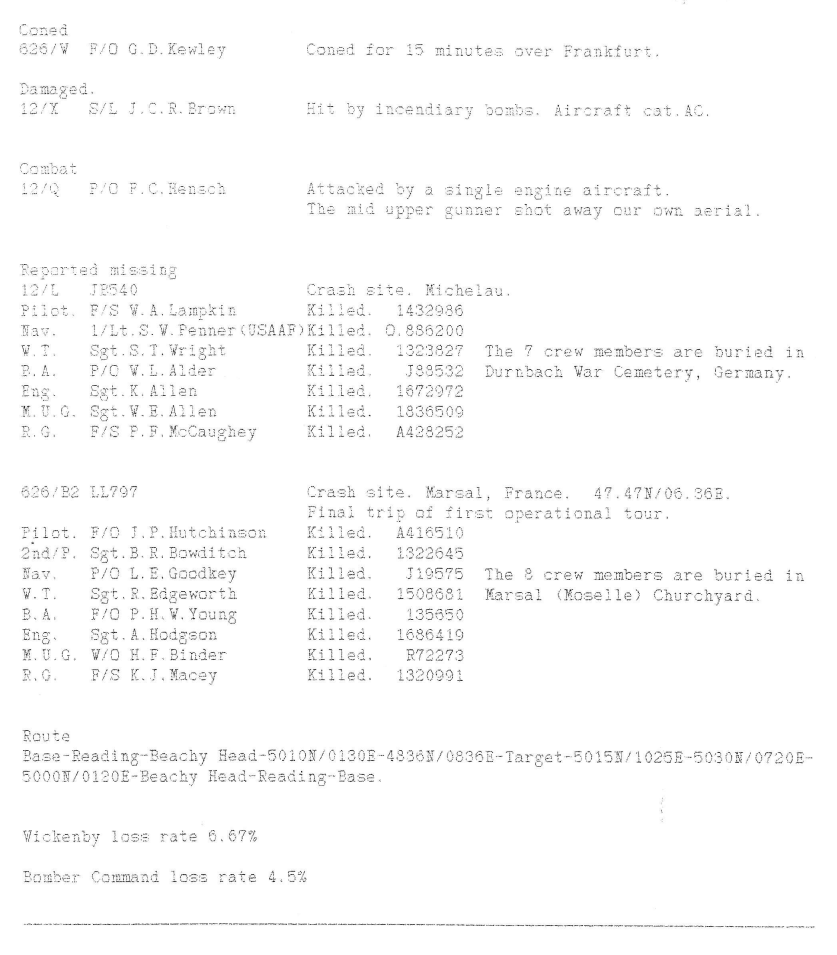
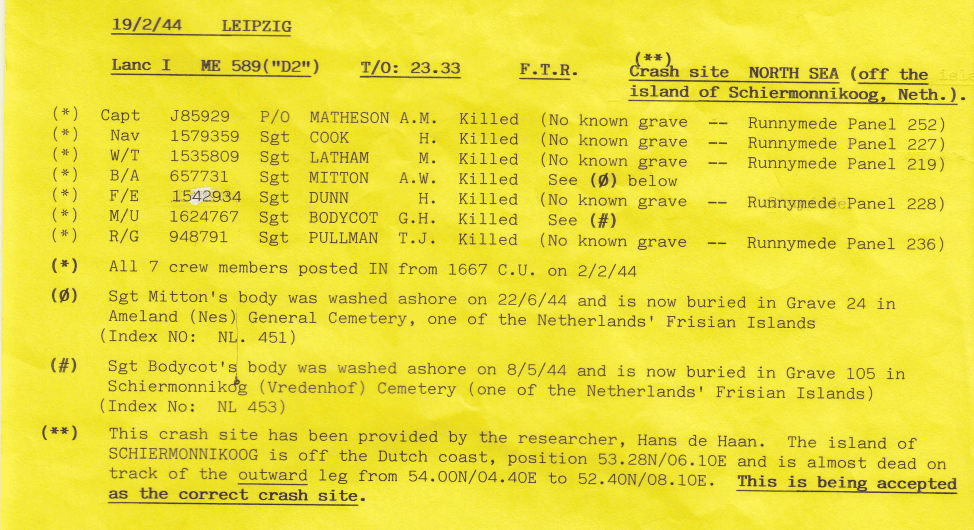
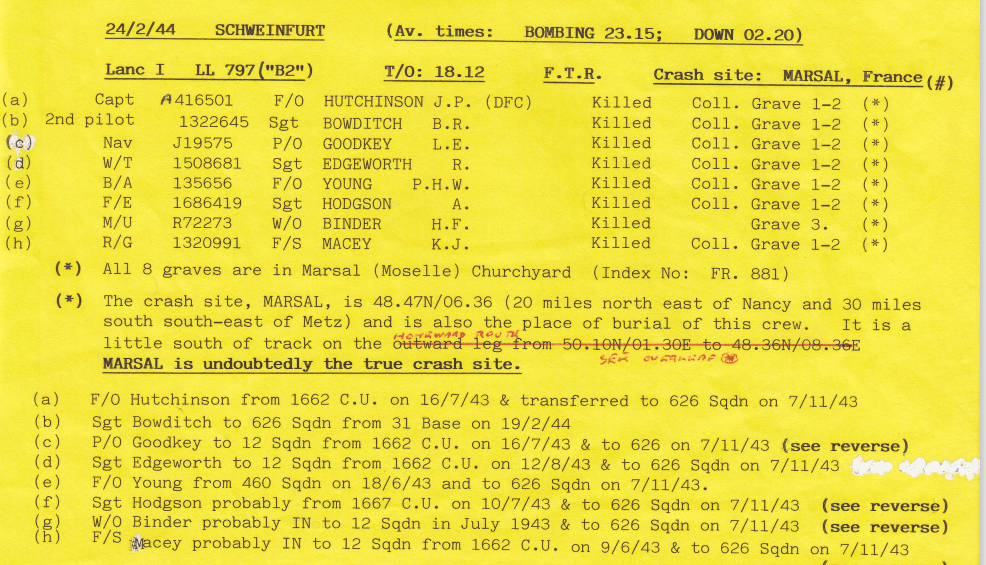
Another bad week for Wickenby aircrews – following attacks on Leipzig, Stuttgart and Schweinfurt, 5 aircraft and all their crews were lost. The attack on Leipzig was particularly expensive for Bomber Command, 44 Lancasters and 34 Halifaxes were lost, 9.5% of the force sent. German fighter controllers were not fooled by a diversionary attack on Kiel, therefore the bomber stream was under attack all the way to the target.
Extract from Station Diary
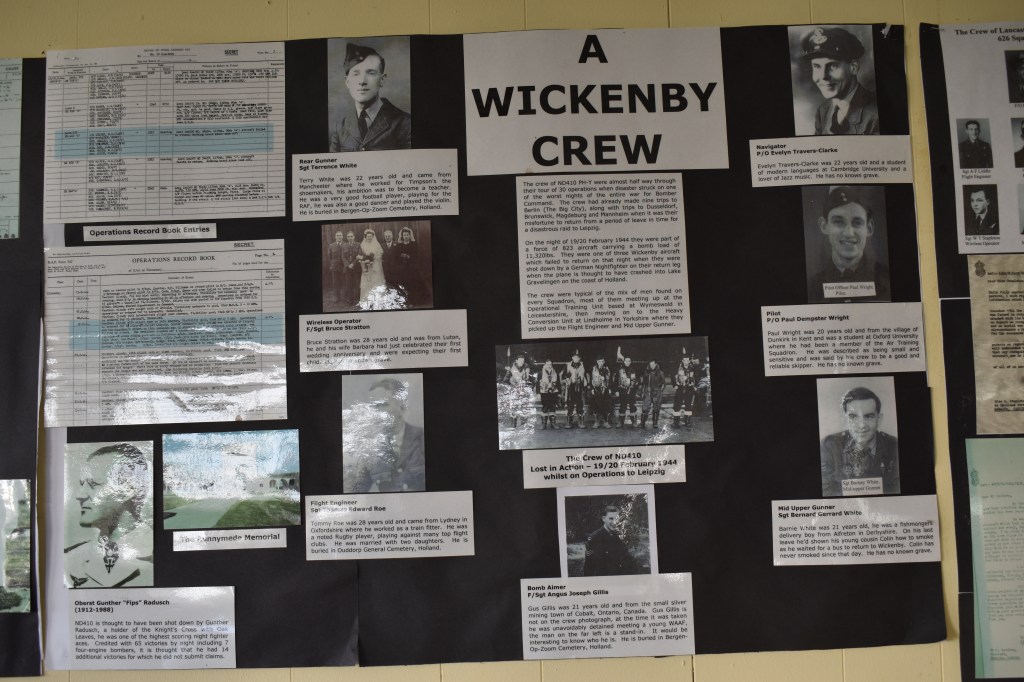
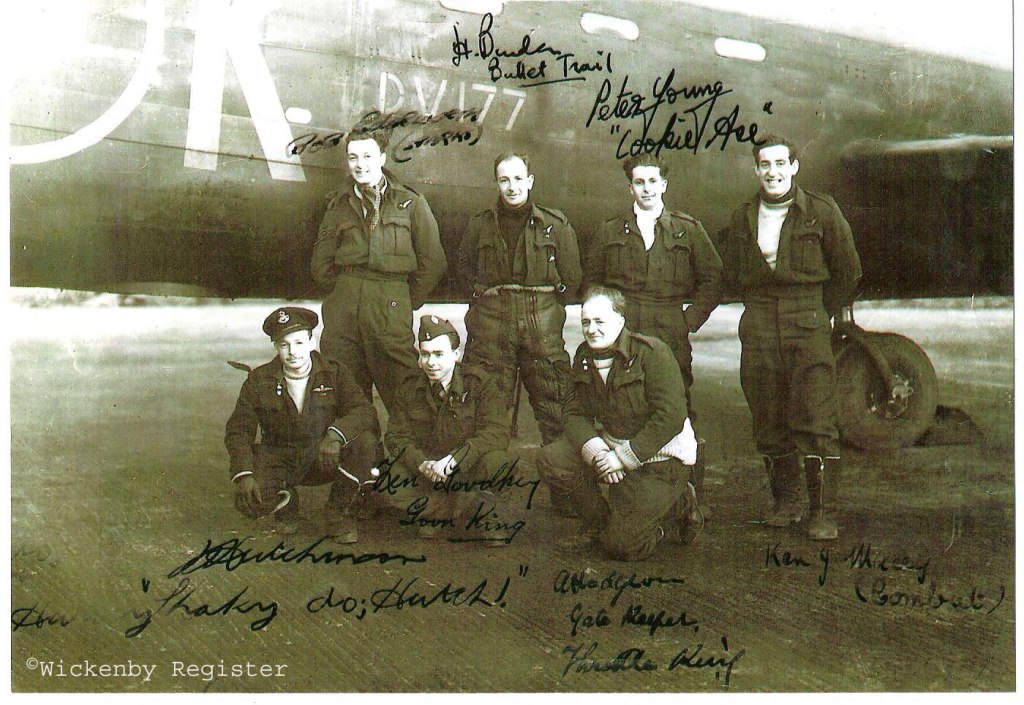
This display is on a wall in the museum at RAF Wickenby and tells the story of the crew of pilot Fg Off Paul Wright who were all killed during the attack on Leipzig on 19 February 1944 The crew of Fg Off Jack Hutchinson’s aircraft who were all killed on the night of 24/25 February 1944 – Back L to R R Edgeworth, W/O – H Binder, AG – P Young, bomber – H Macey, A/G, Front L to R J Hutchinson, Pilot – L Goodkey, Nav – A Hodgson F/Eng . Jack Hutchinson, DFC, aged 23, was the son of George Pierce Hutchinson & Ruby May Hutchinson of Gleneig, South Australia and was one of the founder members of 626 Sqn having transferred from 12 Sqn on its formation
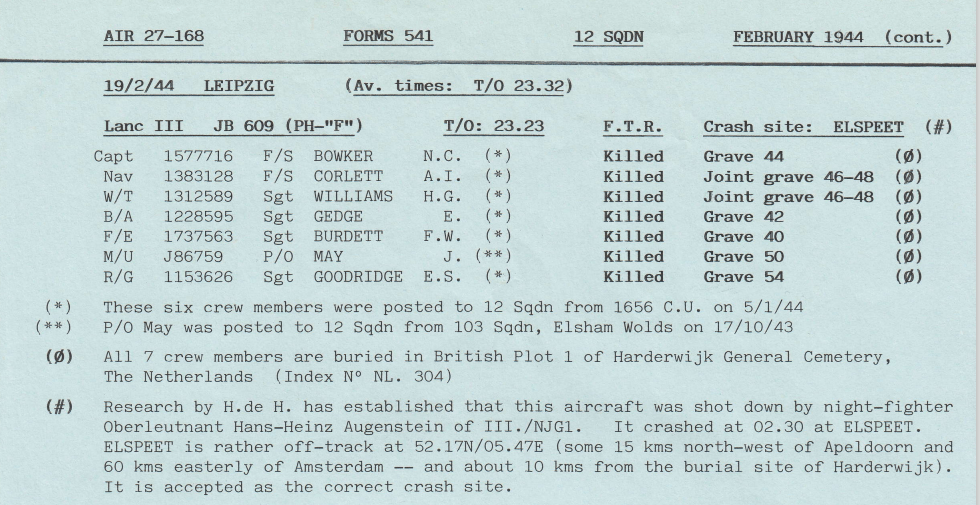
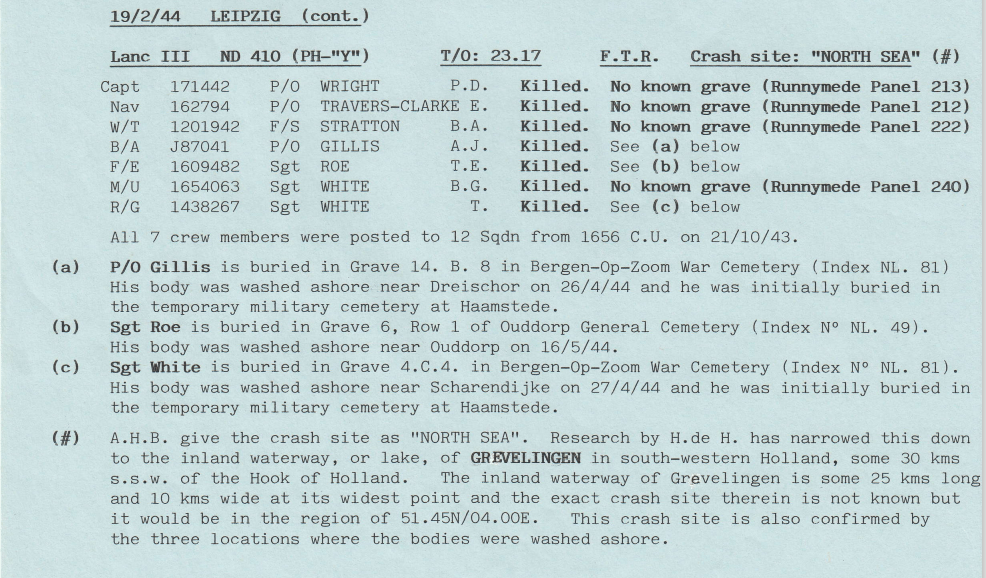
Extract from Appendix to 12 Sqn Operational Record Book
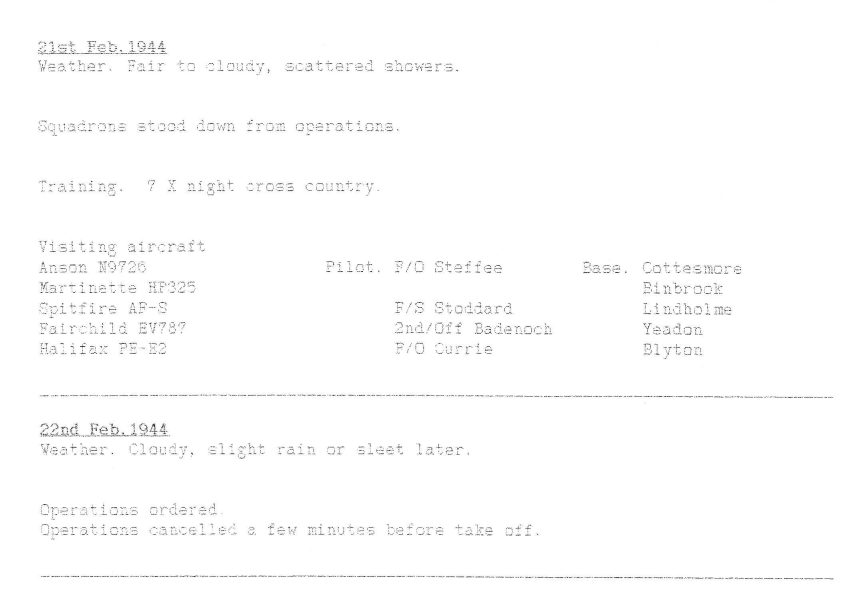
Extract from Appendix to 626 Sqn Operational Record Book
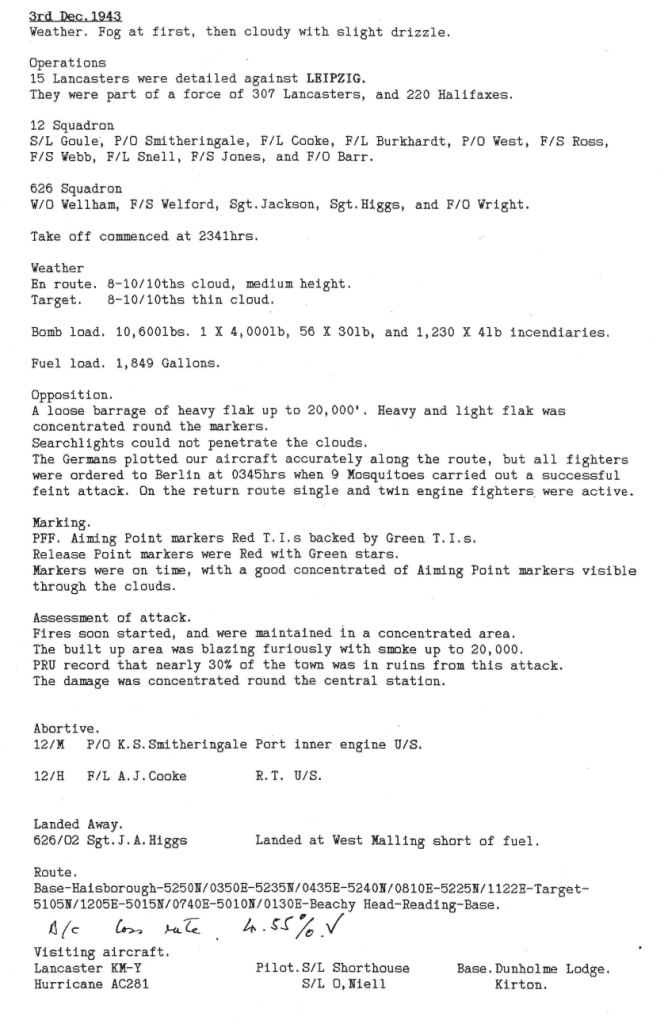
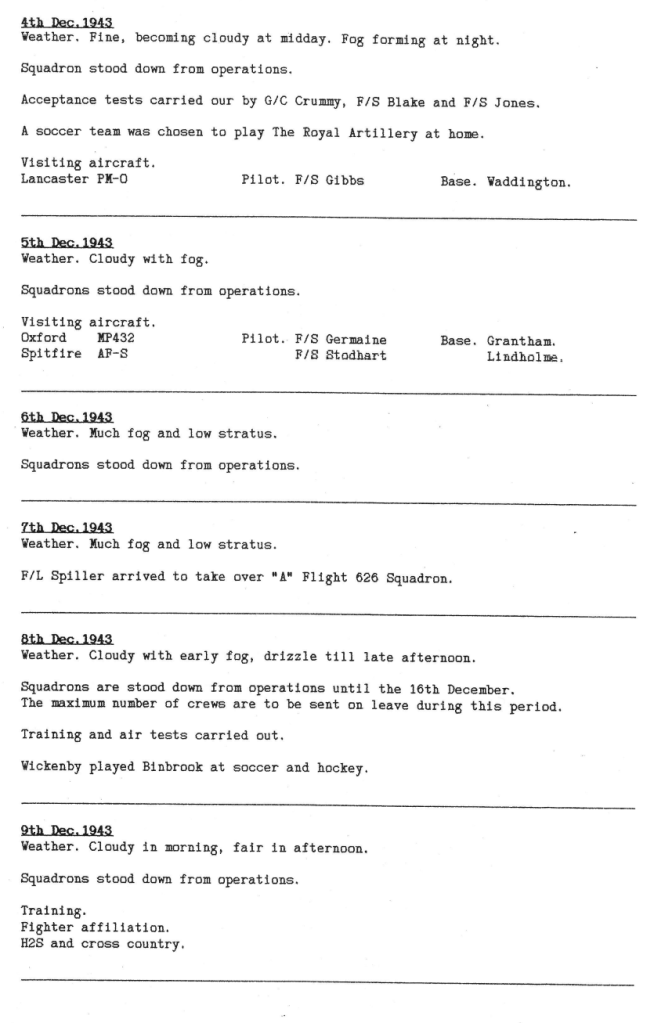
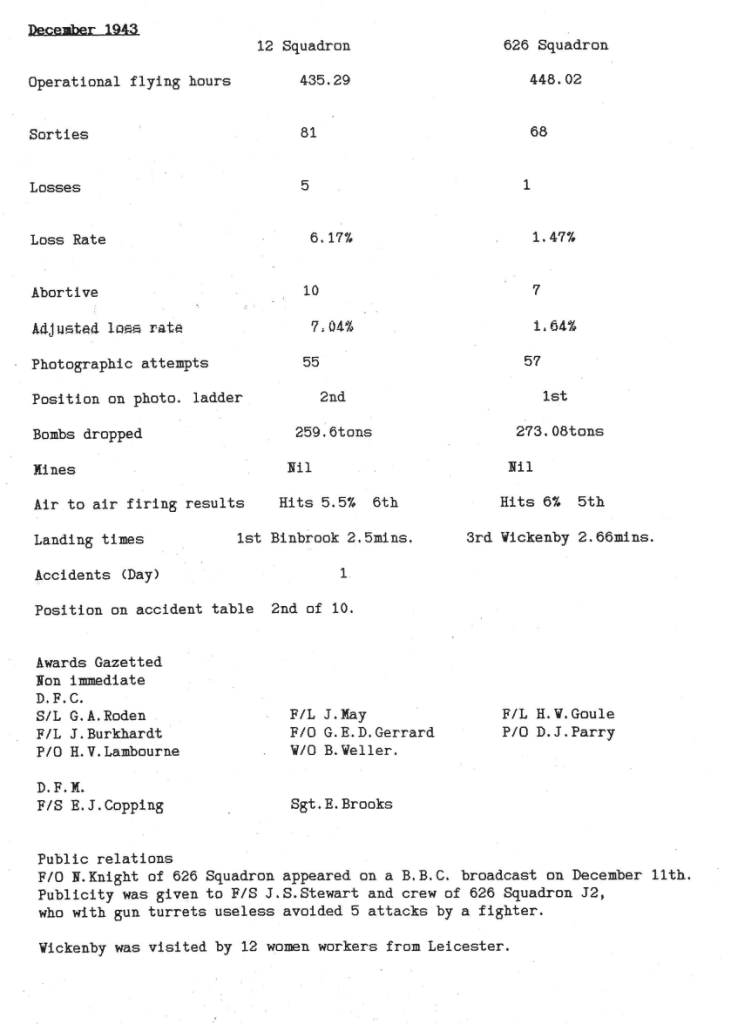
Only one mission for RAF Wickenby crews this week, to Leipzig on 3/4 December – there were no losses of casualties. The Squadron’s were stood down from operations on 8th December until 16th December and many were sent on leave.
The raid on Leipzig was a distant inland target, but the Pathfinders successfully found and marked it and this was the heaviest raid that Leipzig had during the war, at least 600 people being killed and over 400 injured.
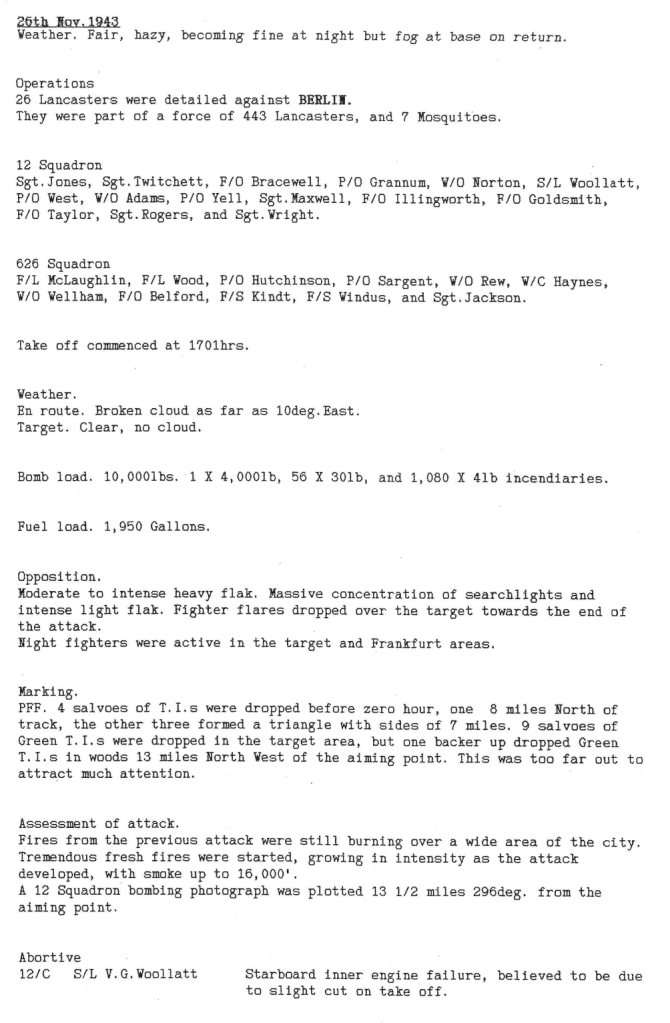
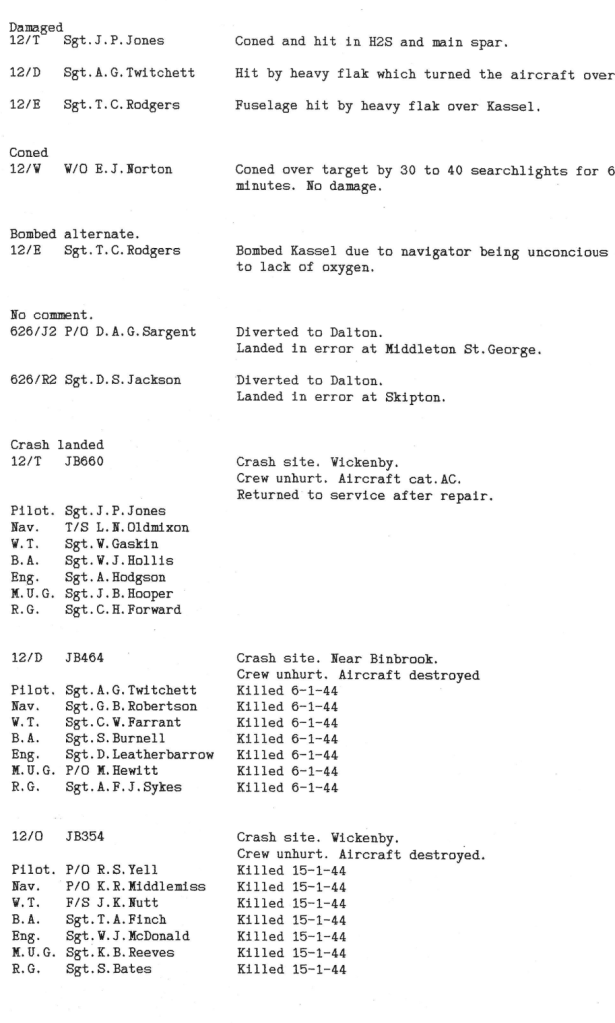
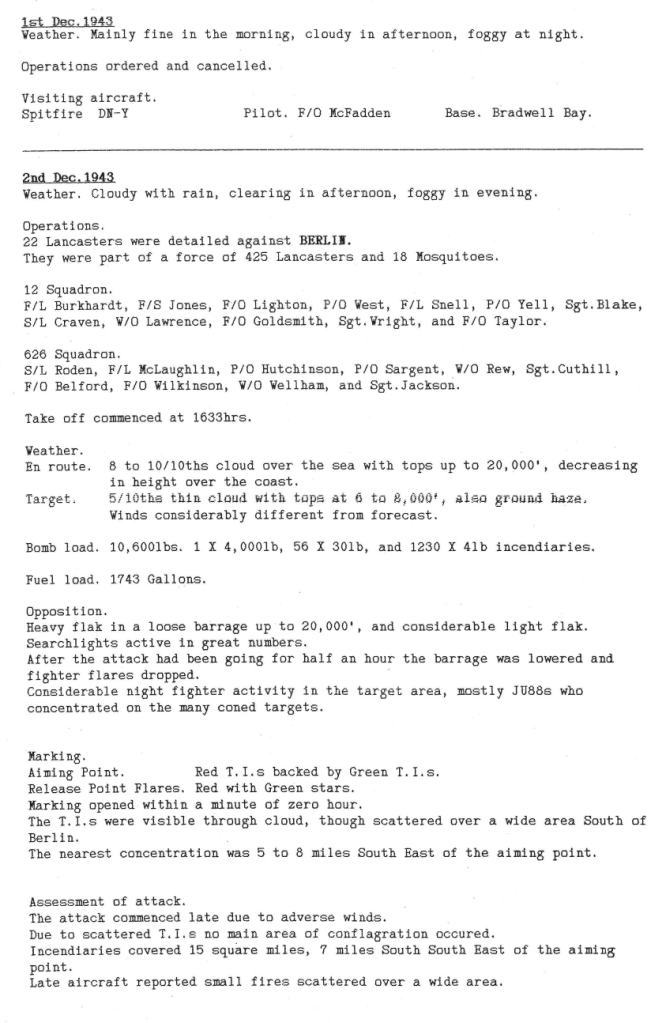
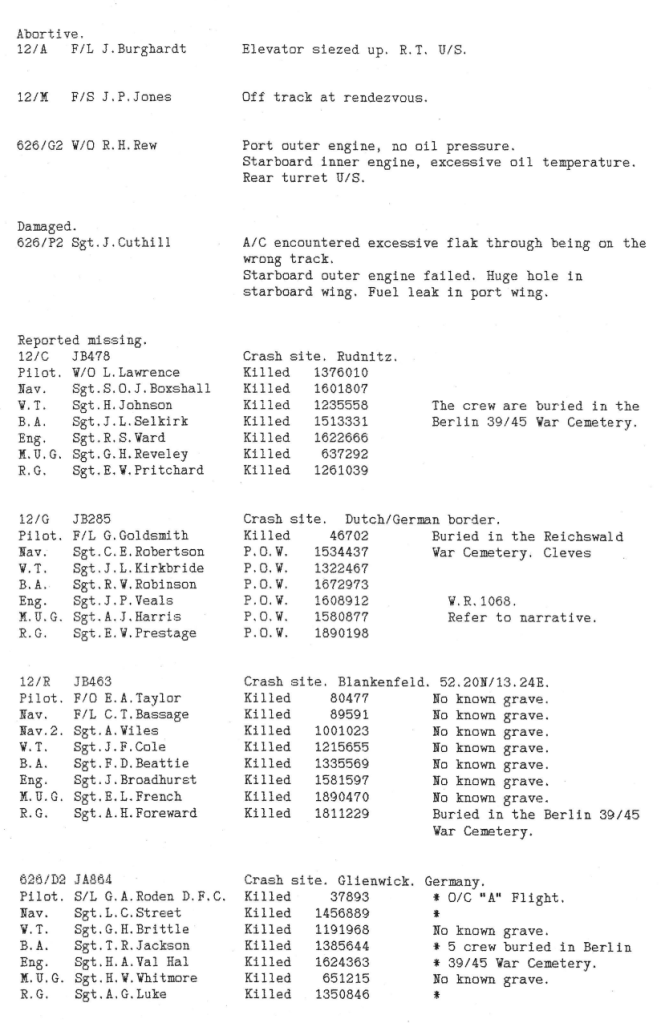
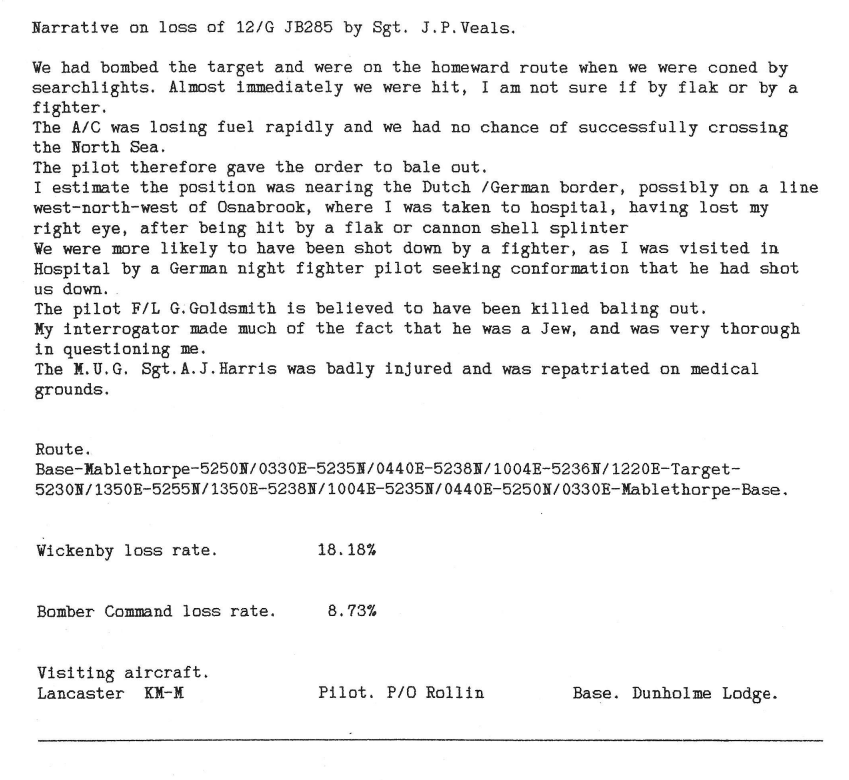
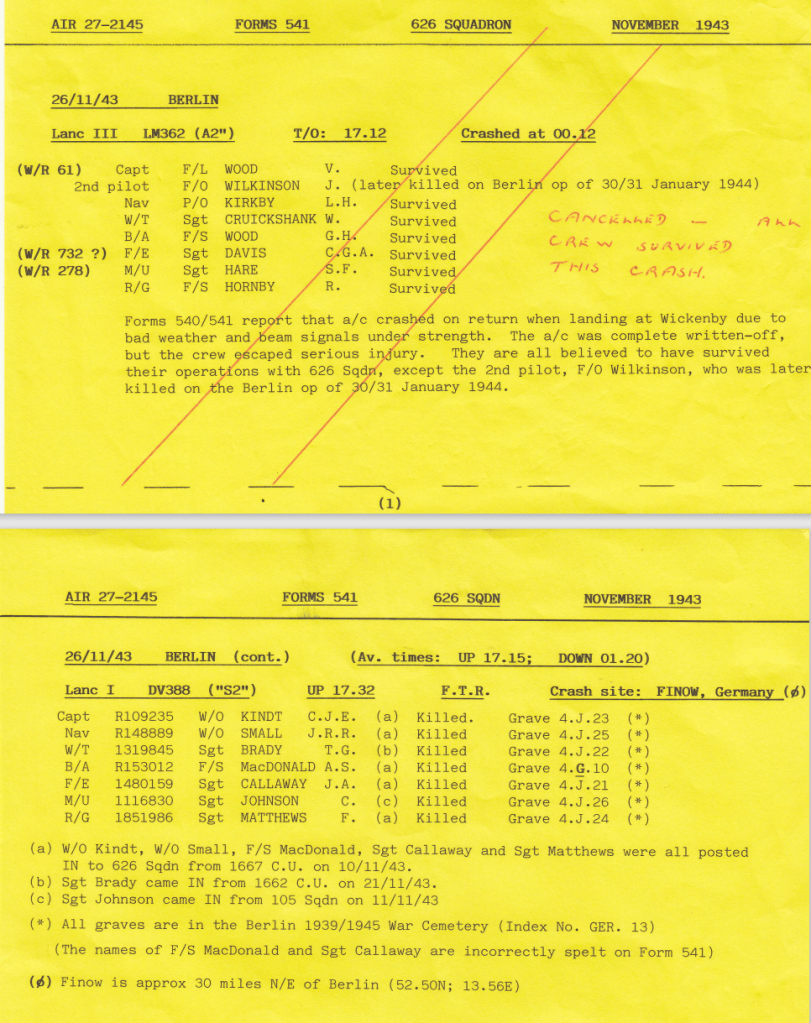
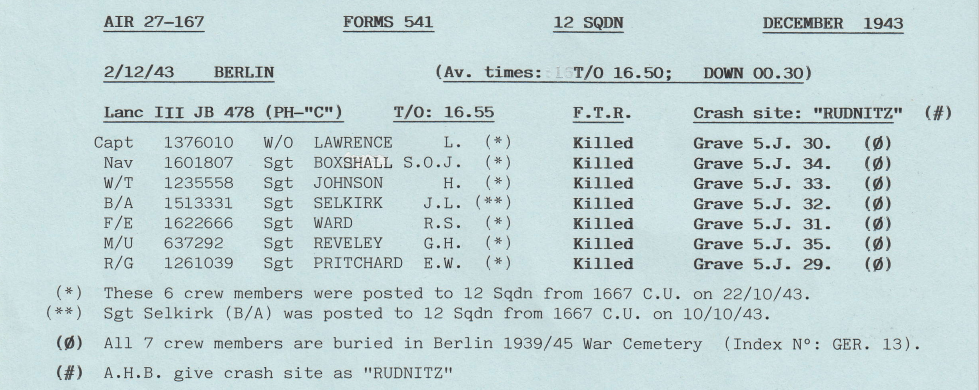
The battle of Berlin was in full swing and, although only 2 missions were flown this week, both to Berlin, 12 and 626 Sqn’s lost 10 aircraft with 36 aircrew killed and 6 becoming POW’s.
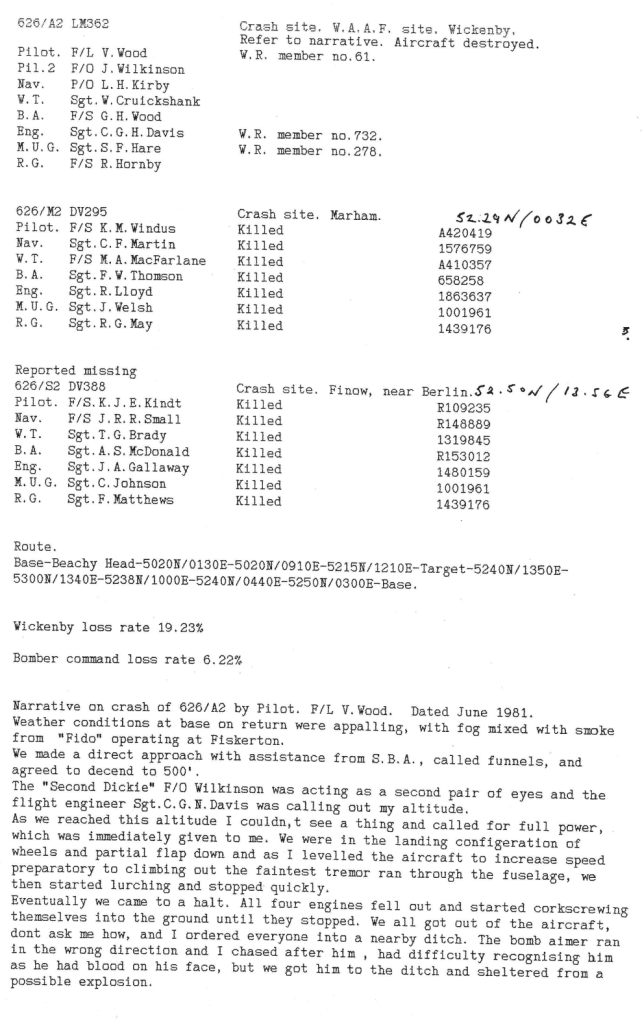
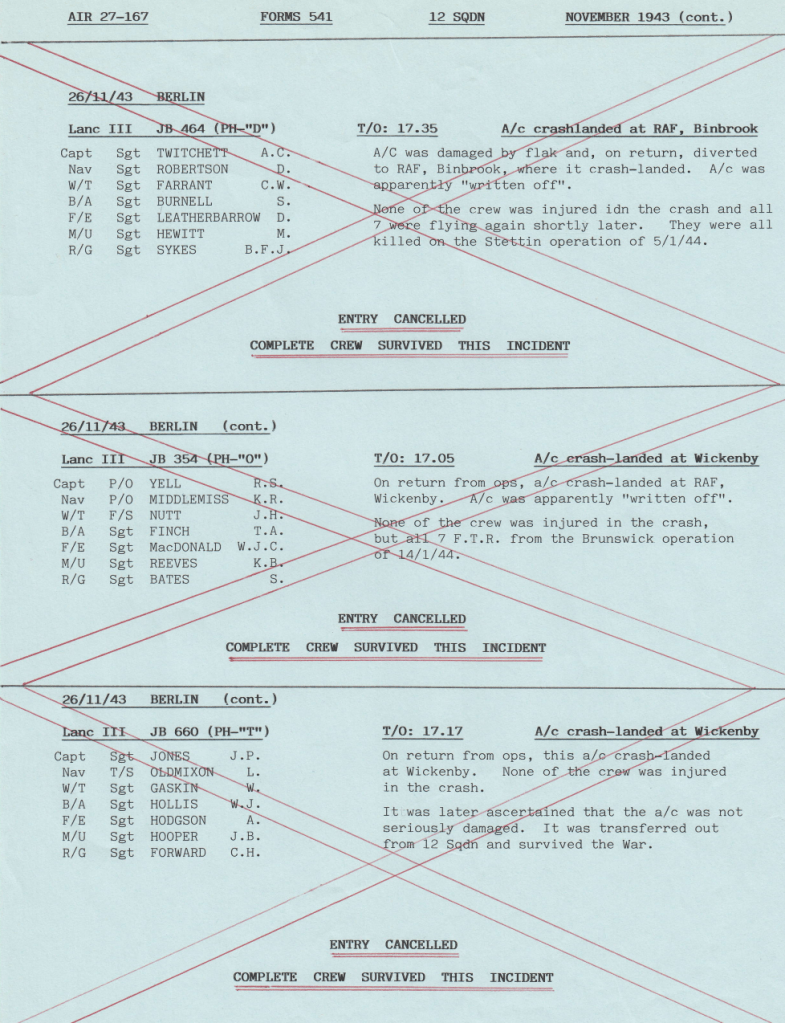
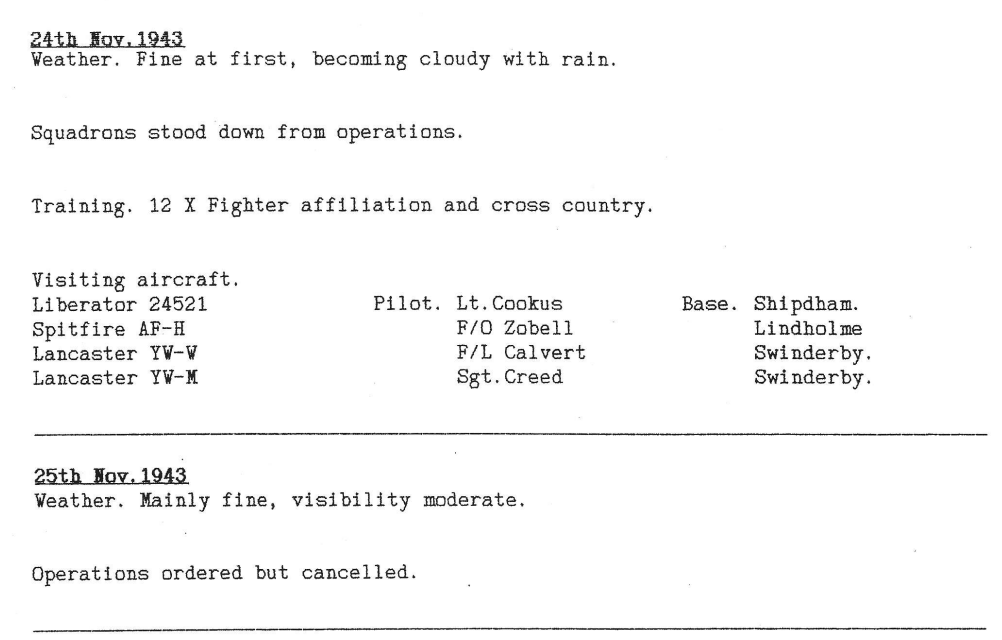
On returning from the attack on 26/27 November, 4 aircraft crashed on landing, 3 at Wickenby and one at RAF Binbrook – this was almost certainly due to fog over the airfields, as mentioned in the Station Diary below.
During the 3 Berlin raids at the end of November, 4.330 people were killed on the ground and 417,665 lost their homes for more than a month and 36,391 for up to a month.
Extract from Station Diary
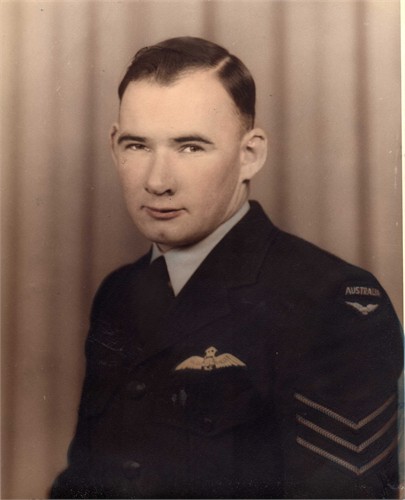
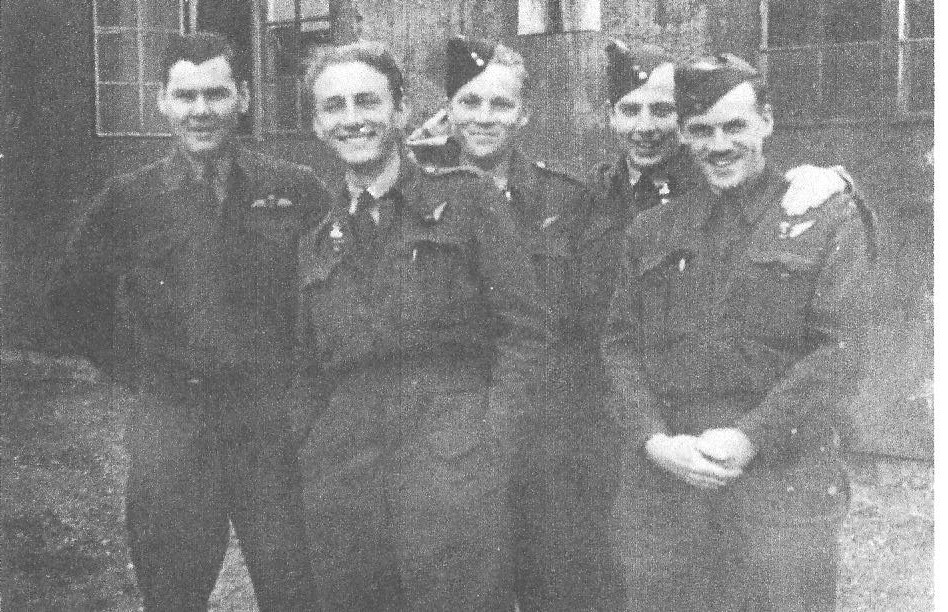
Flight Sergeant Keith Windus, aged 24, the son of George Henry & Pearl May Windus of Gumble, New South Wales, Australia, who was killed when the aircraft he was piloting crashed at RAF Marham, following the attack on Berlin on the night of 26/27 November 1943.Members of the crew of Warrant Officer Kindt, who were all killed during the attack on Berlin on 26/27 November 1943 – LtoR: F/Sgt Cecil Kindt RCAF – Pilot, Sgt Tommy Brady – WOP, Sgt Frank Matthews – RG, F/Sgt Roy Small RCAF – Nav, Sgt Stewart McDonnell RCAF – BASix members of the crew of Warrant Officer Leonard Lawrence, who were all killed attacking Berlin on the night of 2/3 December 1943 – LtoR: Sgt Gill, Sgt Fisher, Sgt Quinn, F/Lt Kitney, Sgt Lawrence, Sgt Boxall
Extract from Appendices to Squadron Operational Record Books
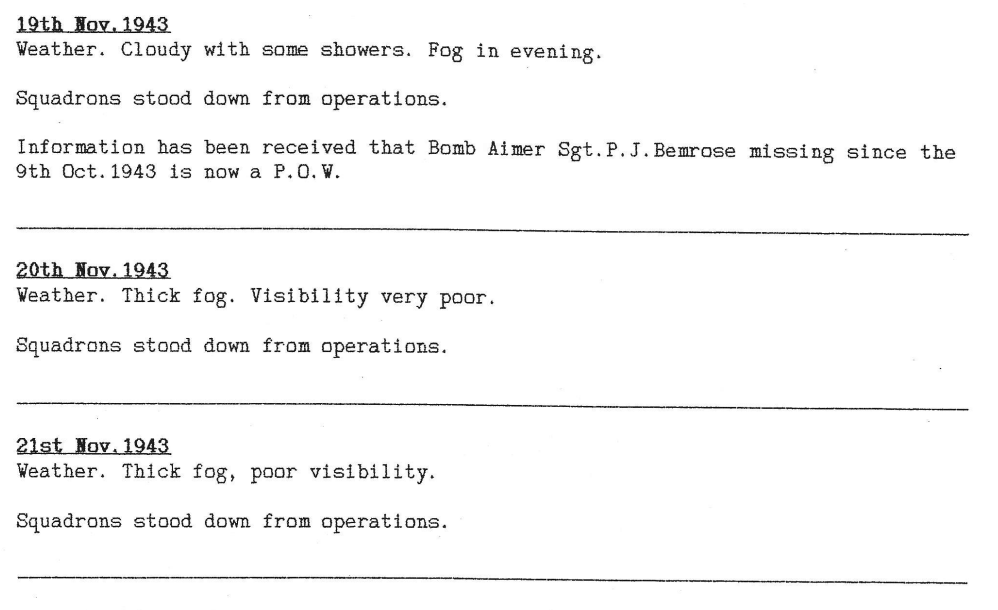
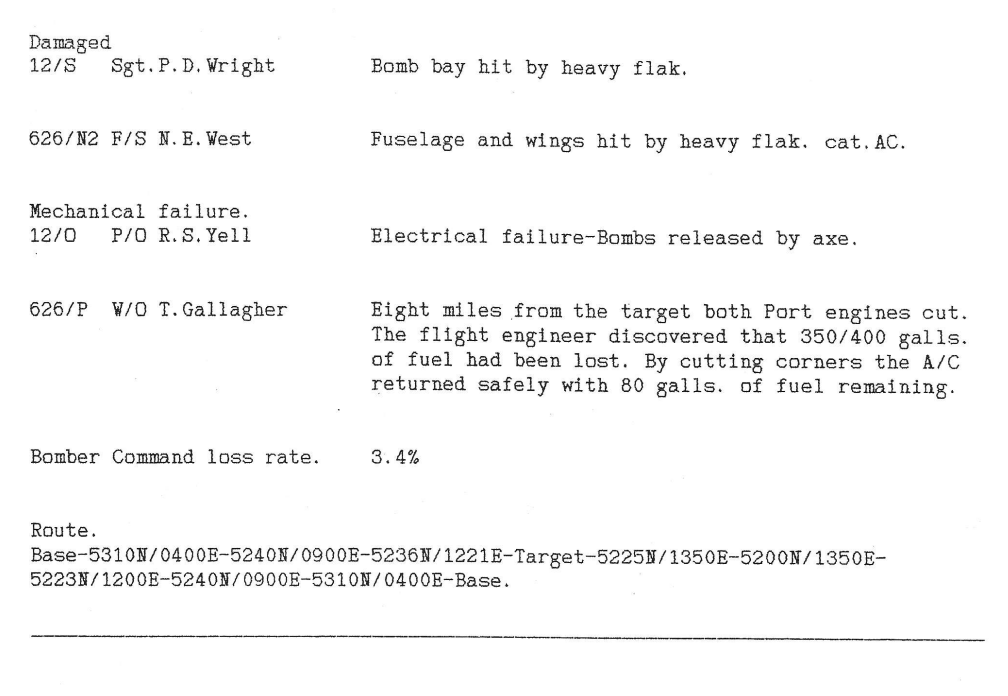
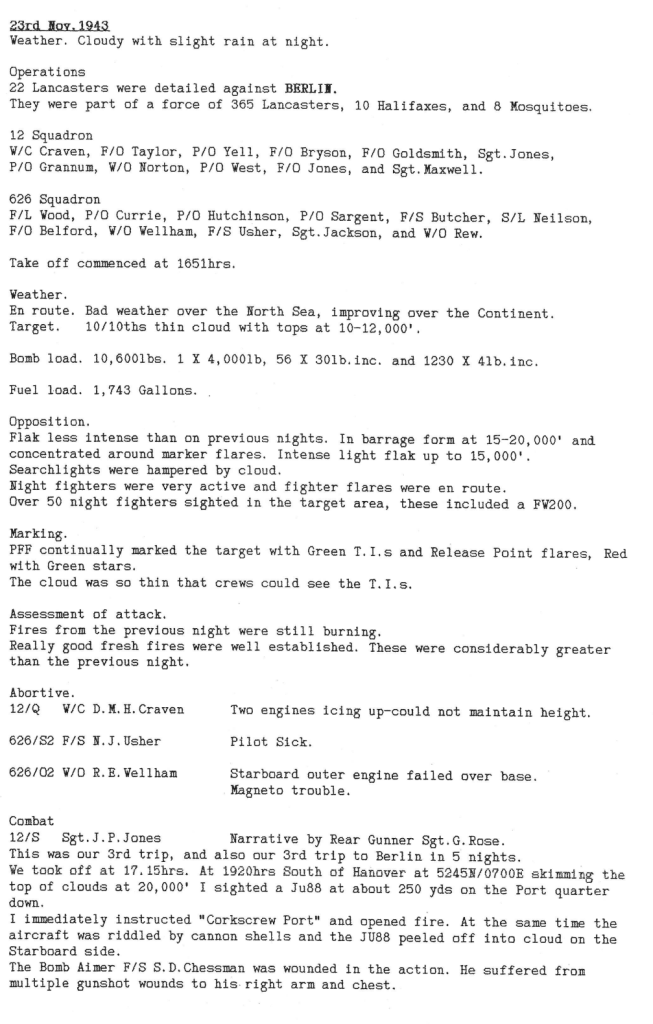
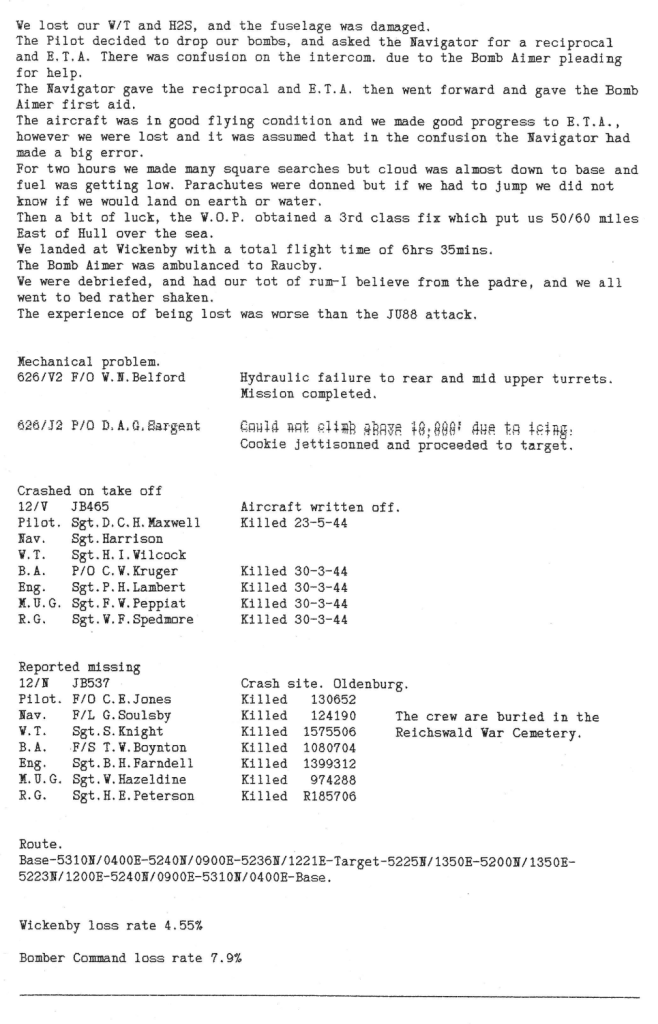
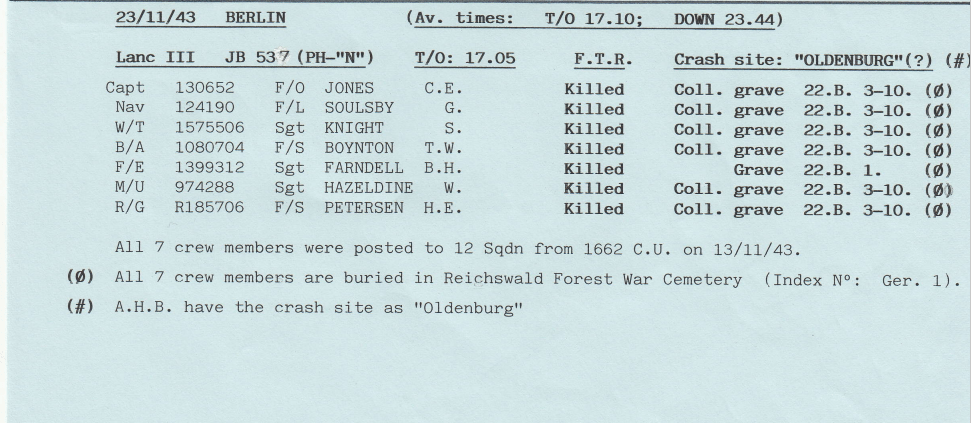
Aircraft from Wickenby took part in 2 raids to Berlin on consecutive nights during this week with 2 aircraft lost and 7 aircrew killed. One of these aircraft crashed on takeoff but there were no casualties.
The raid on 22/23 November was the largest so far on Berlin with 764 aircraft taking part and it was the last that Stirling’s were sent to Germany. Over 2,000 people were killed on the ground and over 175,000 were bombed out, 500 being killed in one shelter alone after a direct hit.
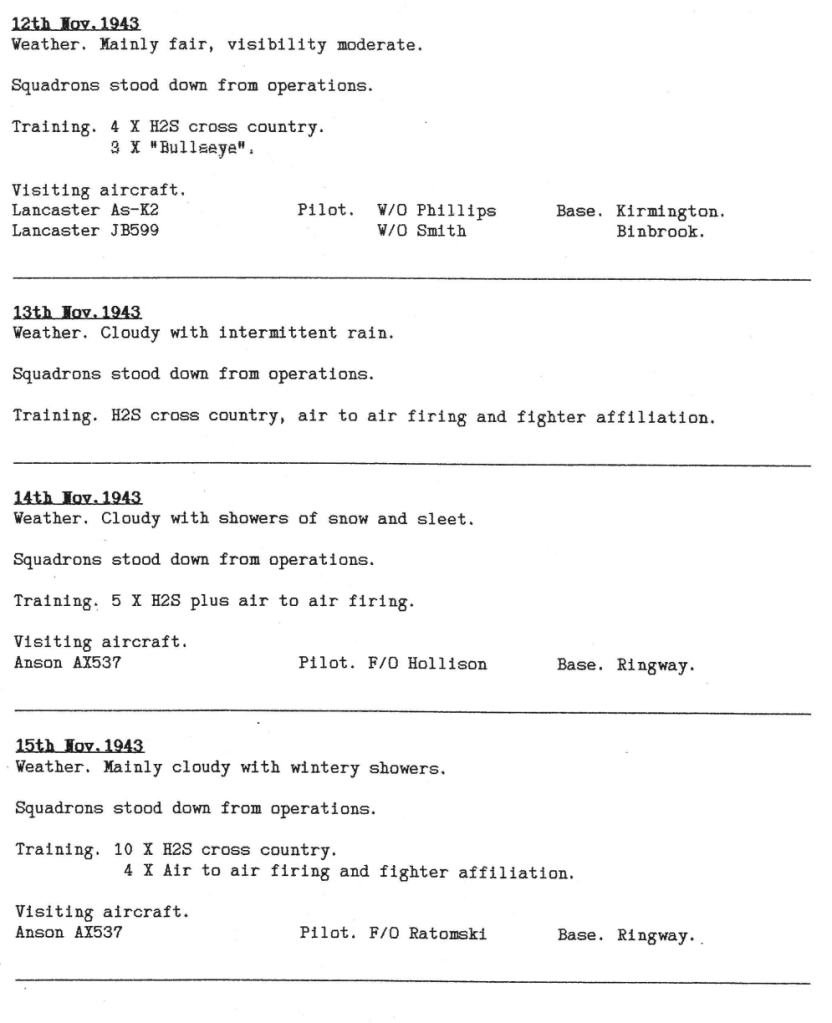
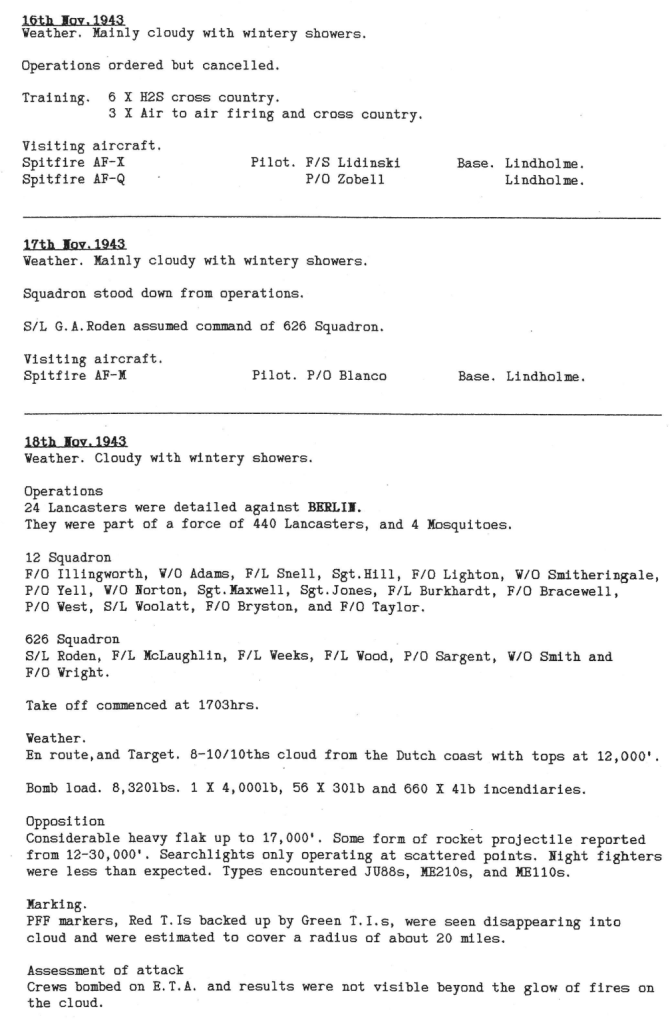
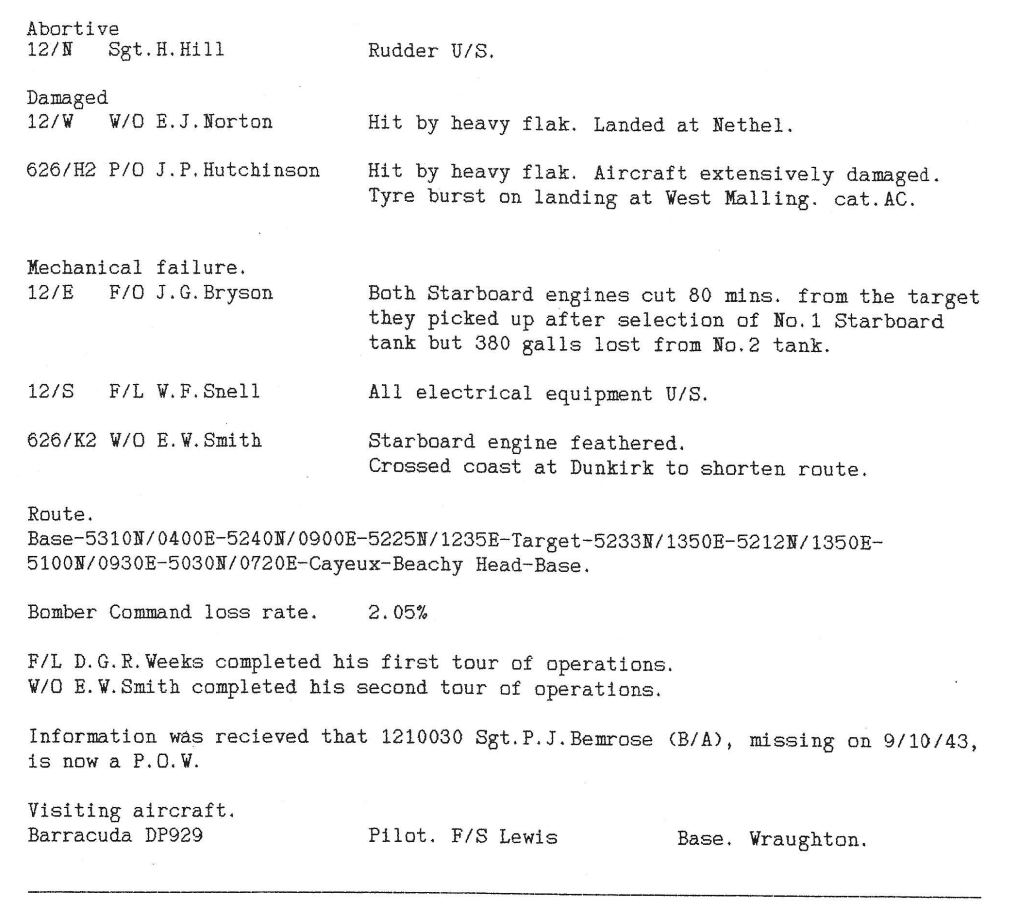
This week is considered to be the beginning of the Battle of Berlin, with the first raid being on 18/19 November, which both 12 and 626 Sqn’s took part in – fortunately with no casualties. This battle will be a common part of our reports until the end of March 1944.
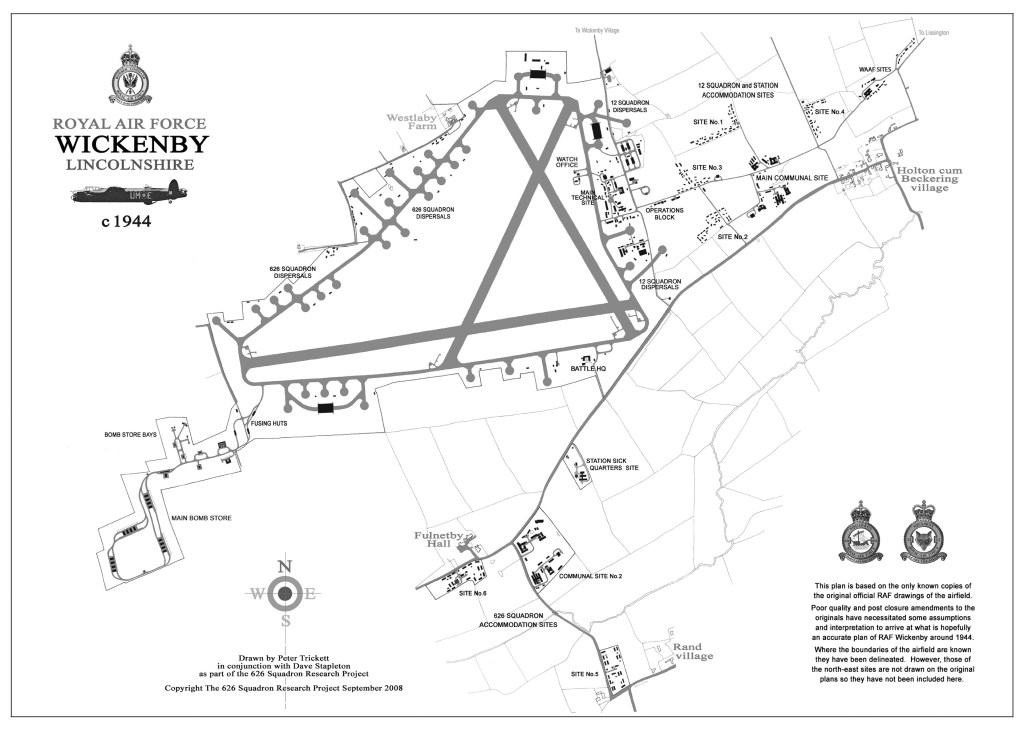
I think it would also be useful for people to have a view of what the airfield looked like when both squadron’s were operating – this map was compiled using blueprints from the RAF Museum in Hendon, high level photographs of the time and local knowledge of the area around the airfield.
Many of the buildings, especially those to the east of the airfield marked “Main Communal Site” are still standing and accessible, although it is on private farm land. The whole airfield was over 650 acres in size and was built from the end of 1941 to September 1942 when 12 Sqn arrived.
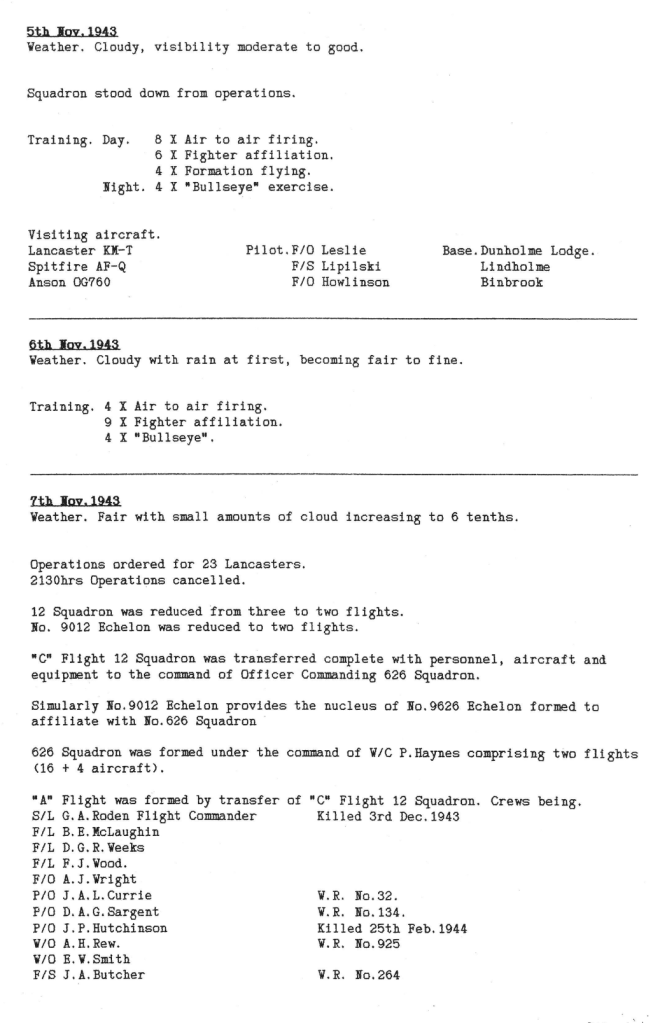
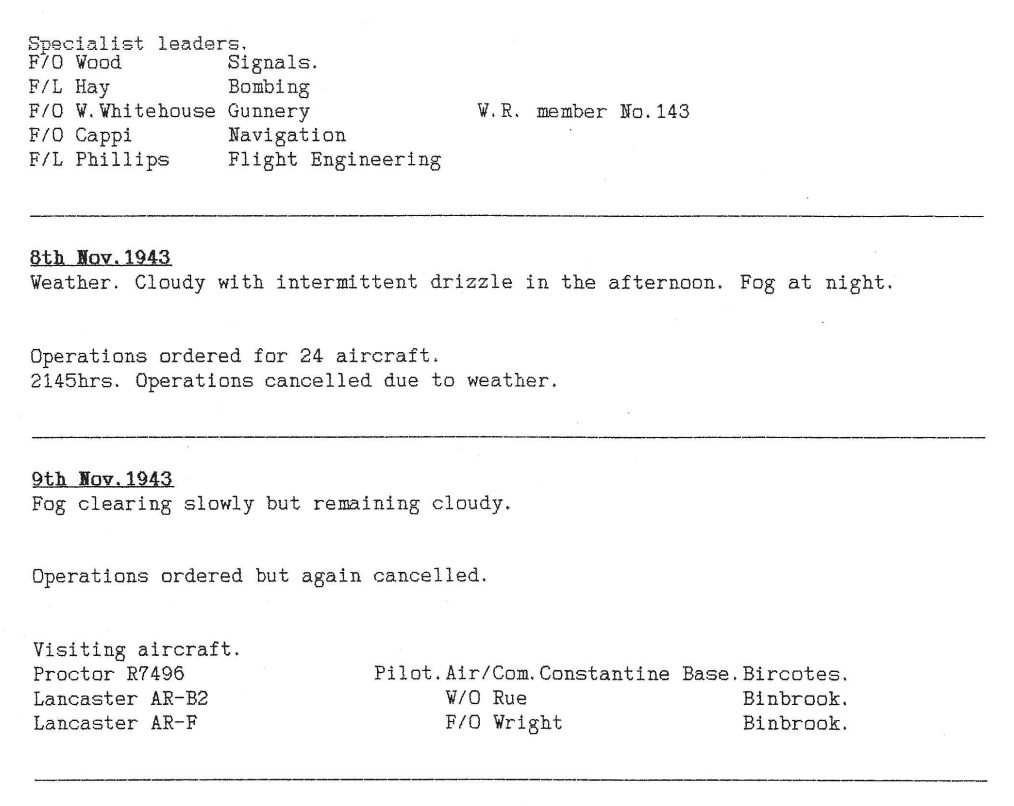
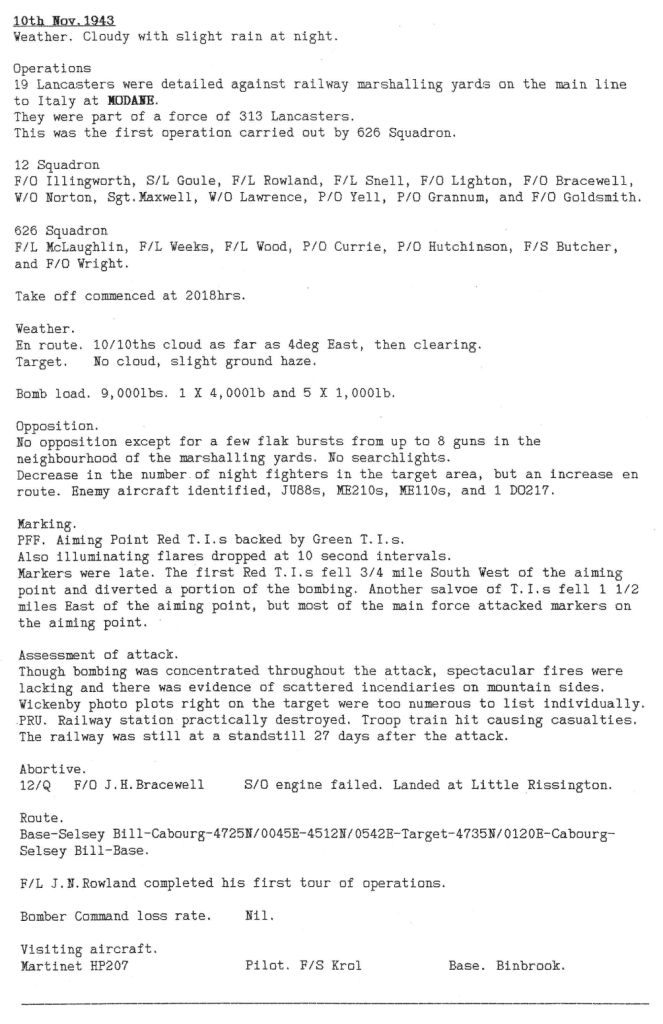
626 Sqn were formed on 7th November, to consist of two flights of eight aircraft, with four spares. The initial ‘A’ flight was formed by taking ‘C’ flight aircraft, aircrews and groundcrews from 12 Sqn with the remainder comprising crews straight from training and a few more experienced crews from other squadrons. A list of the first crews is in the Station Diary extract below. The commanding officer was Wing Commander P Haynes. Their first mission was to Modane in the French Alps on 10th November, which was a successful attack on the railway line and tunnels of the main line from France to Italy. There were no casualties.
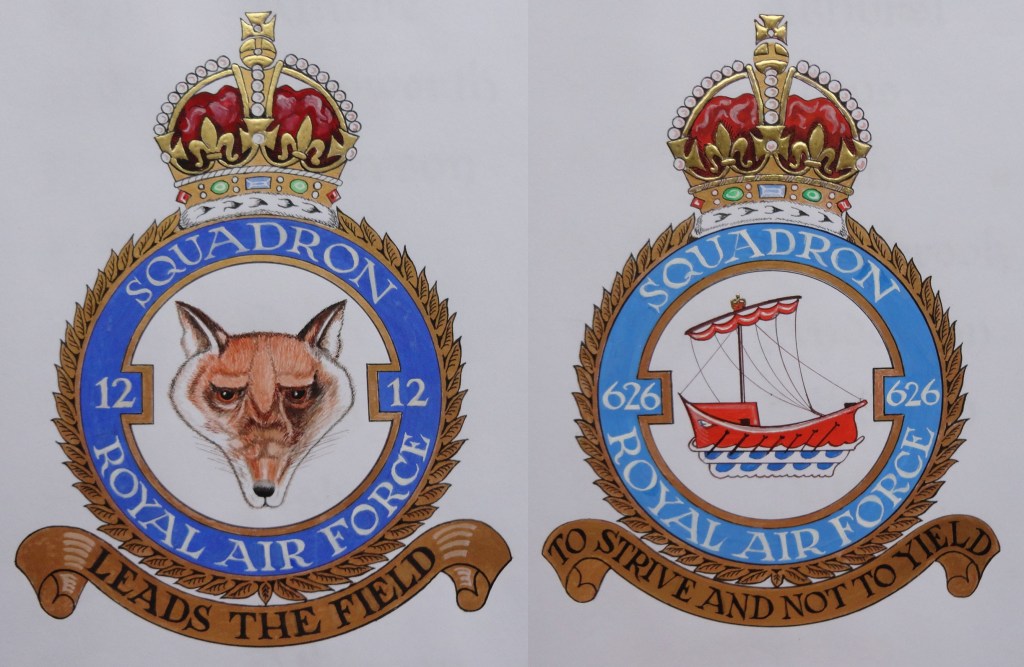
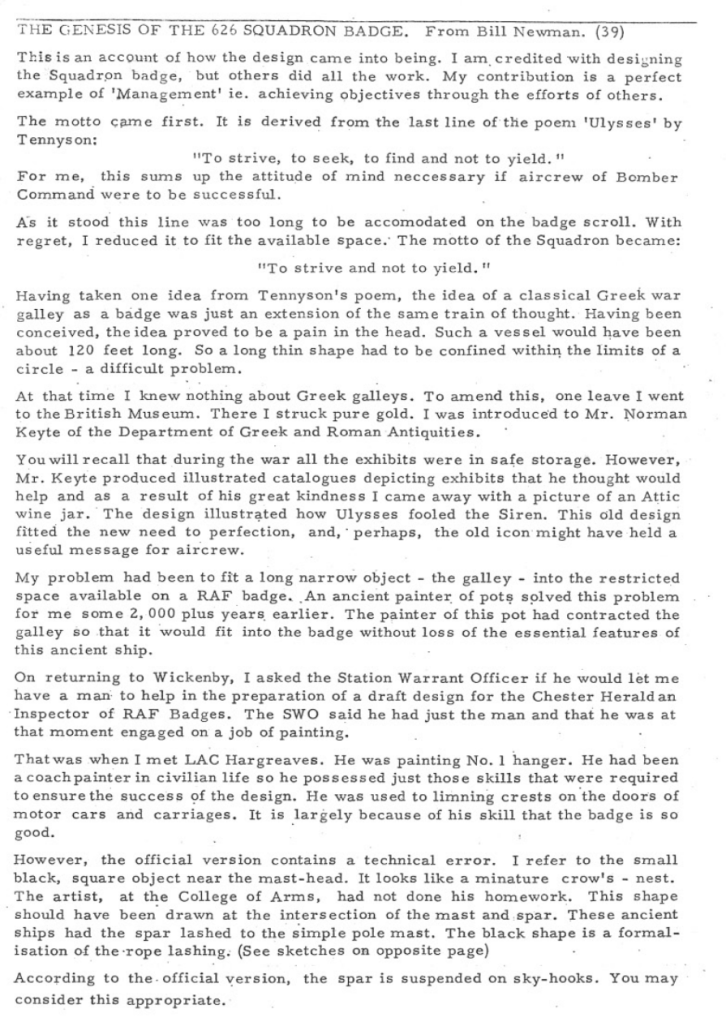
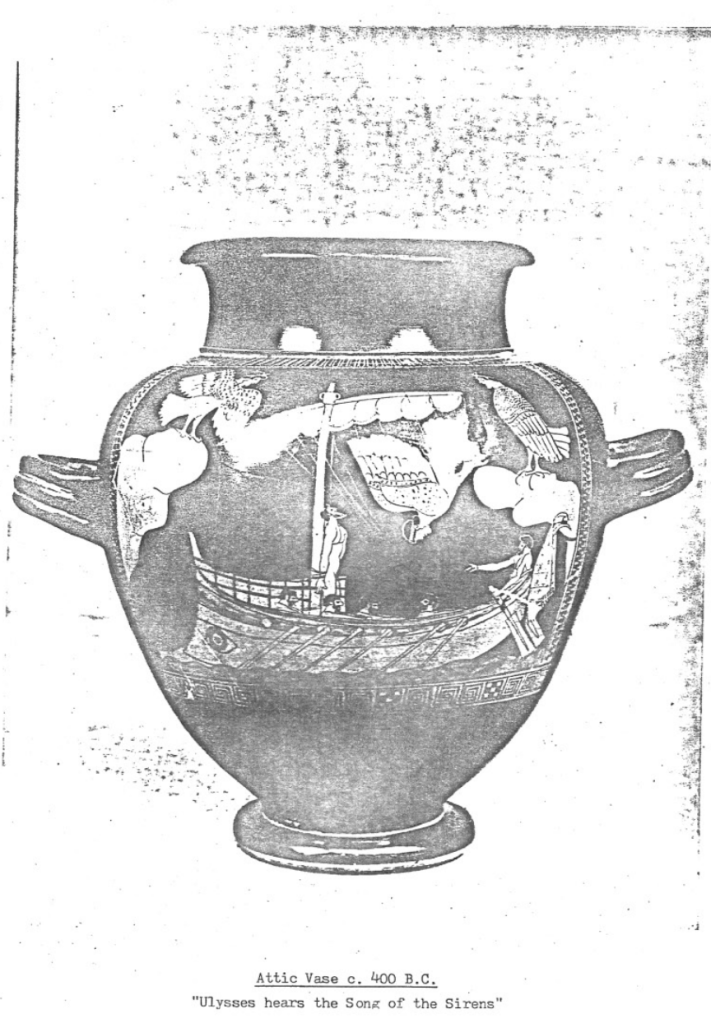
I’ve included an account from Flying Officer Bill Newman about how the 626 Sqn badge and motto was developed and designed.
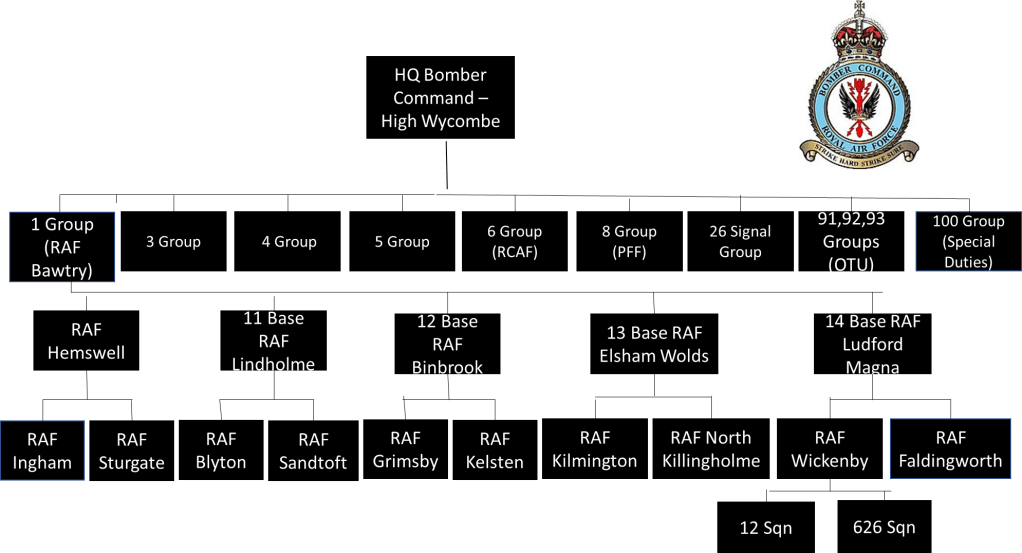
A very quiet week for 12 Sqn with no missions flown and no casualties. It may help readers to understand the chain of command for Bomber Command, from the Commander in Chief down to 12 and 626 Sqns at RAF Wickenby. Below is a chart I’ve put together that helps to explain it. Bomber Command was broken down into Groups, commanded by an Air Vice Marshall, then to Station Bases, commanded by an Air Commodore then to individual Stations, commanded by a Group Captain, and finally to the squadrons, commanded by a Wing Commander, based on those stations. As can be seen, RAF Wickenby was part of 1 Group and the Base Station was Ludford Magna, just outside Market Rasen.
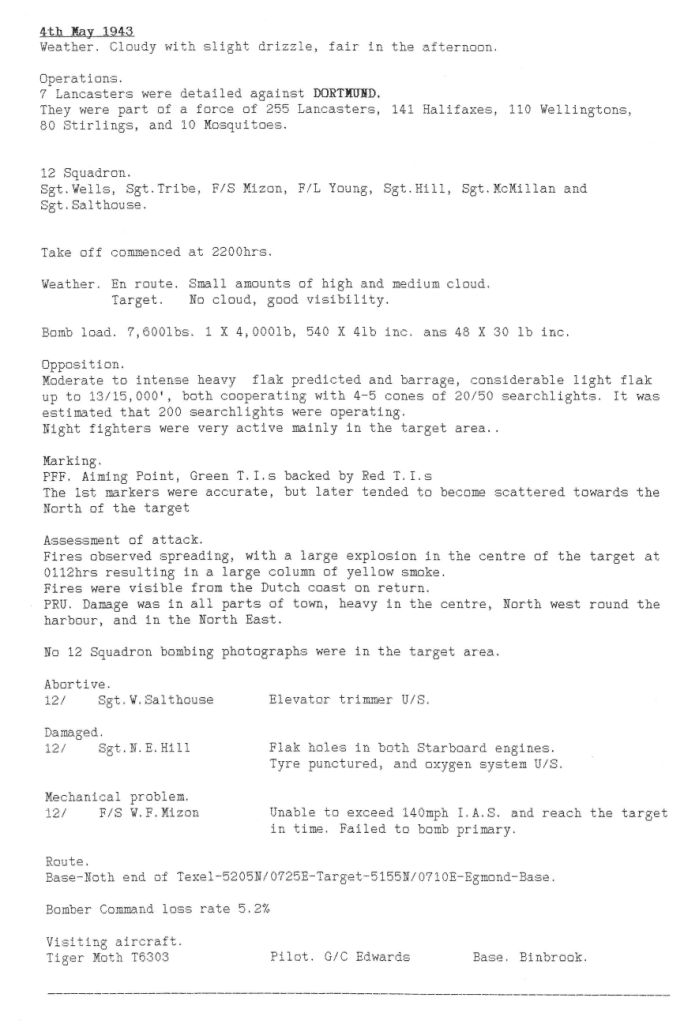
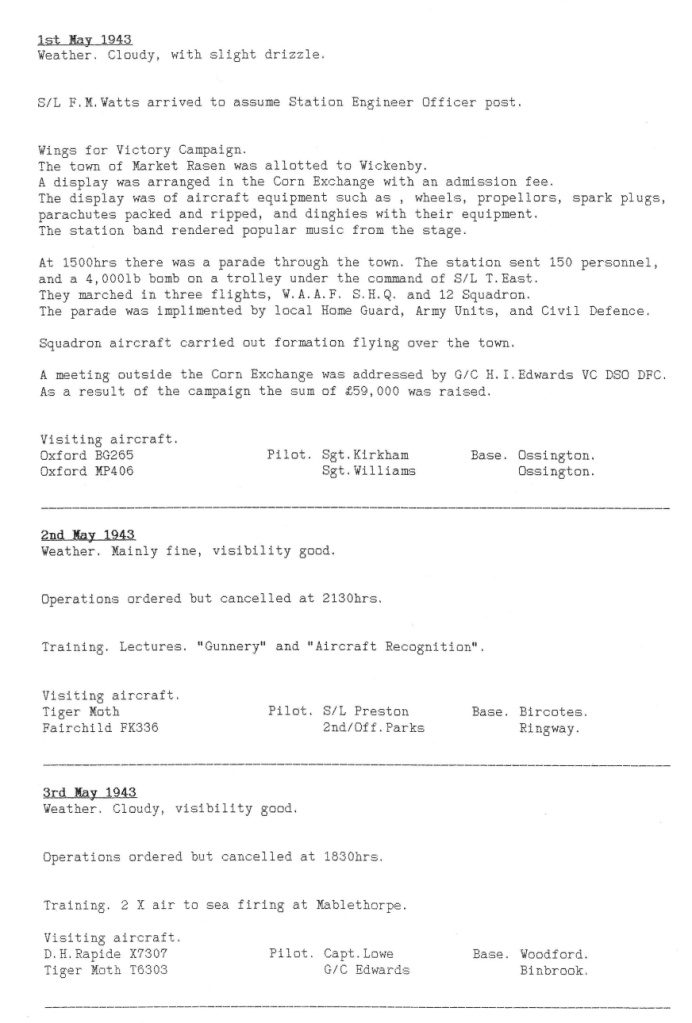
Following the heavy losses of the previous week, 12 Sqn only took part in one operation this week, to Dortmund, in the Ruhr, on 4/5 May – there were no losses. Apart from the “1000 bomber raid” on Cologne in 1942, this was the largest raid of the war so far, 596 aircraft and the first major attack on Dortmund. Pathfinder marking was accurate and the majority of the main force bombed within 3 miles of the target which resulted in severe damage in the central and northern parts of the city. 693 people were killed and 1,075 injured, another new record.
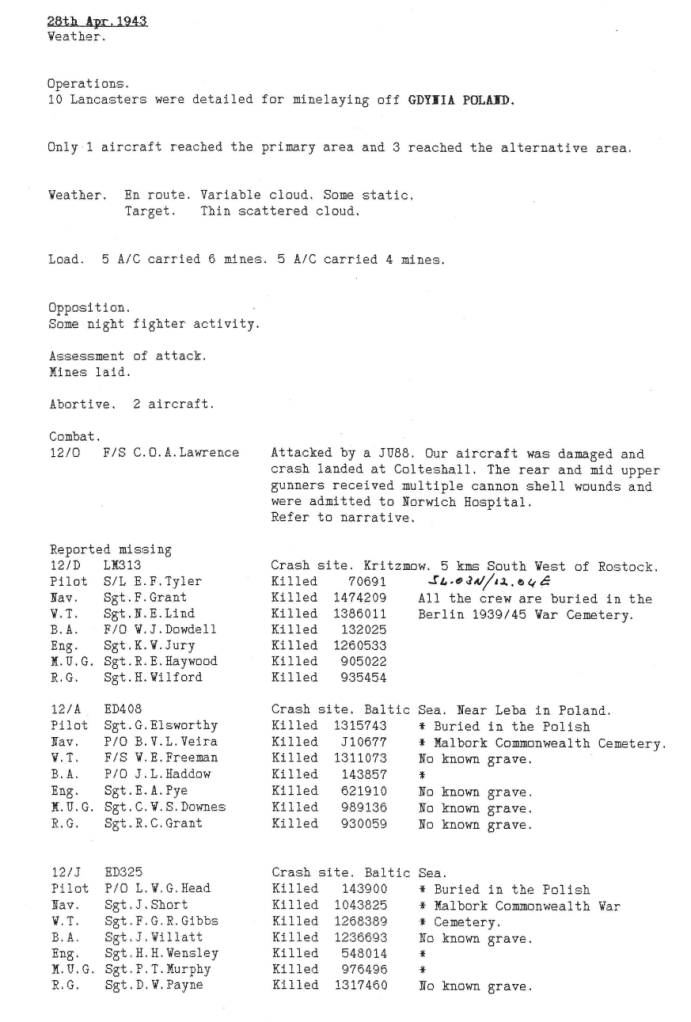
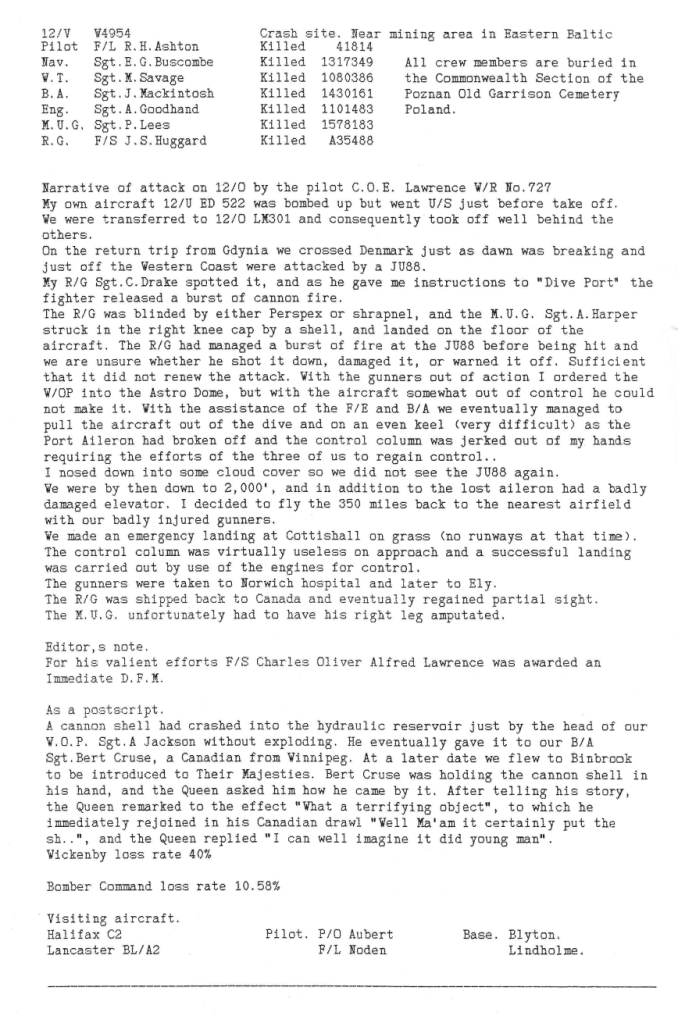
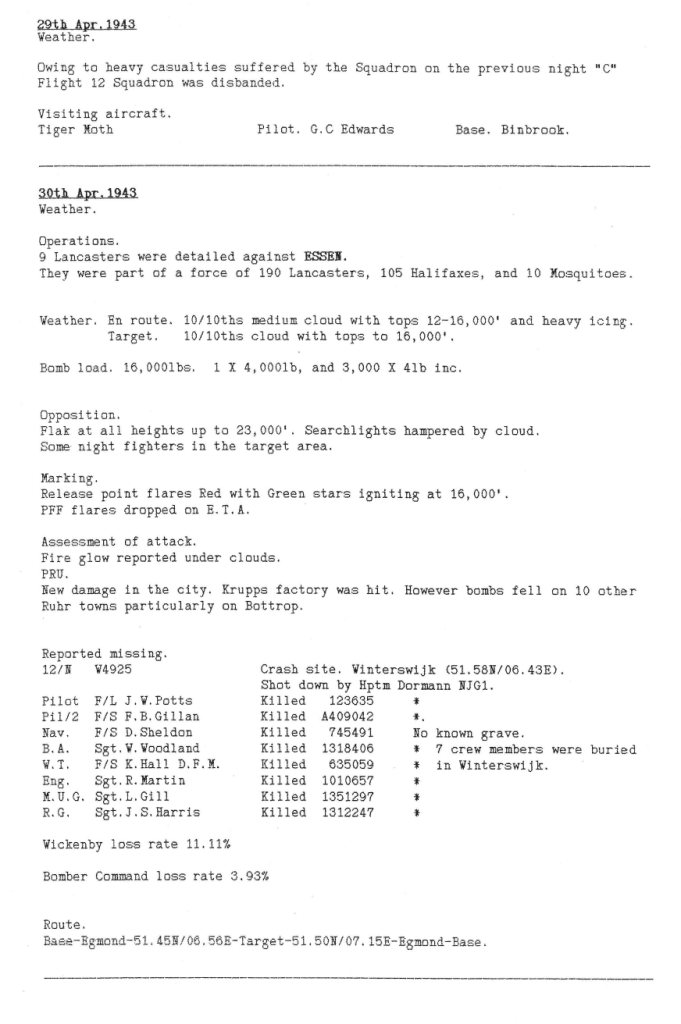
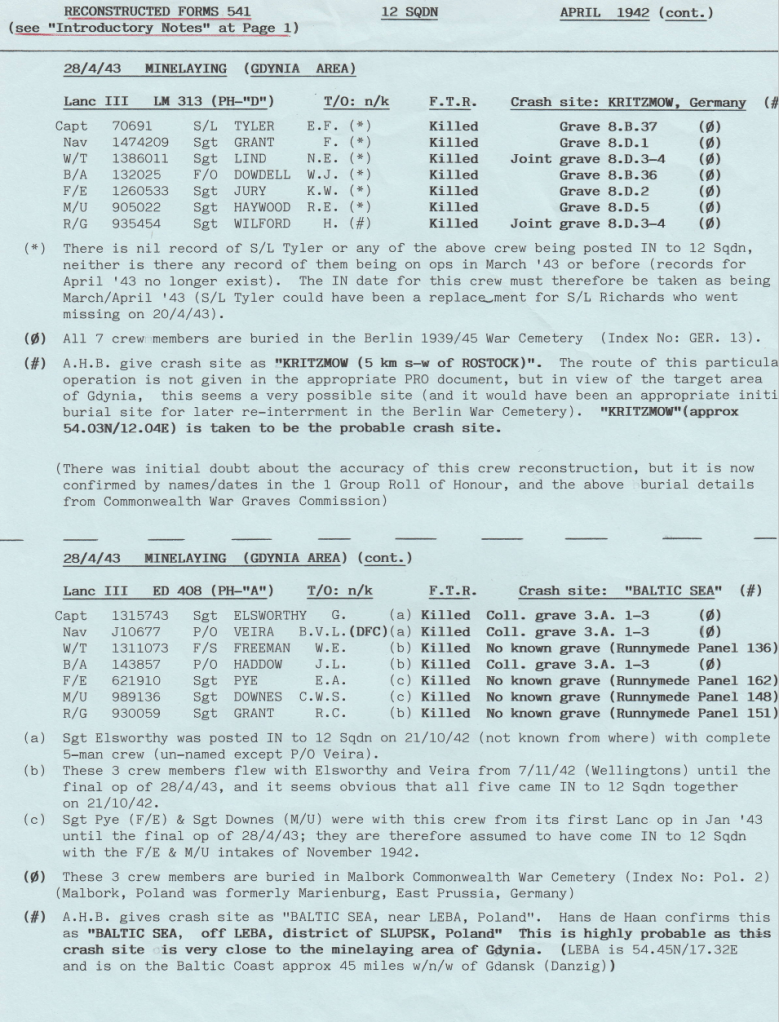
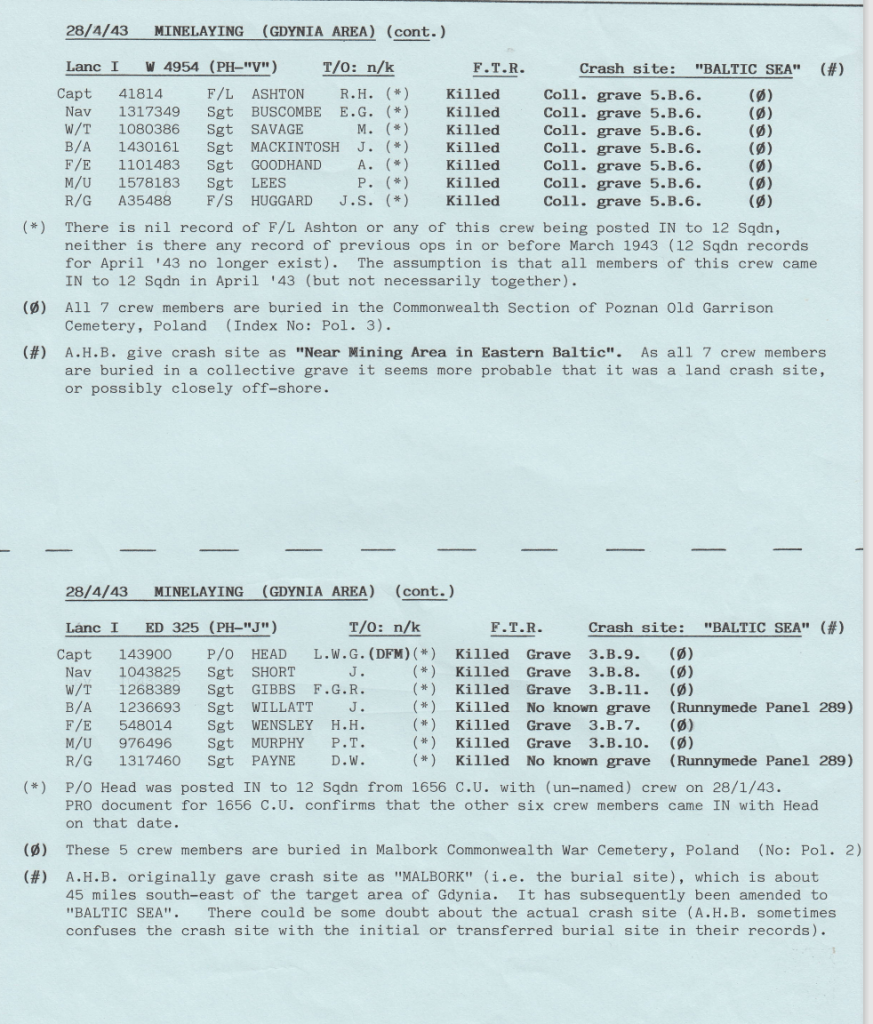
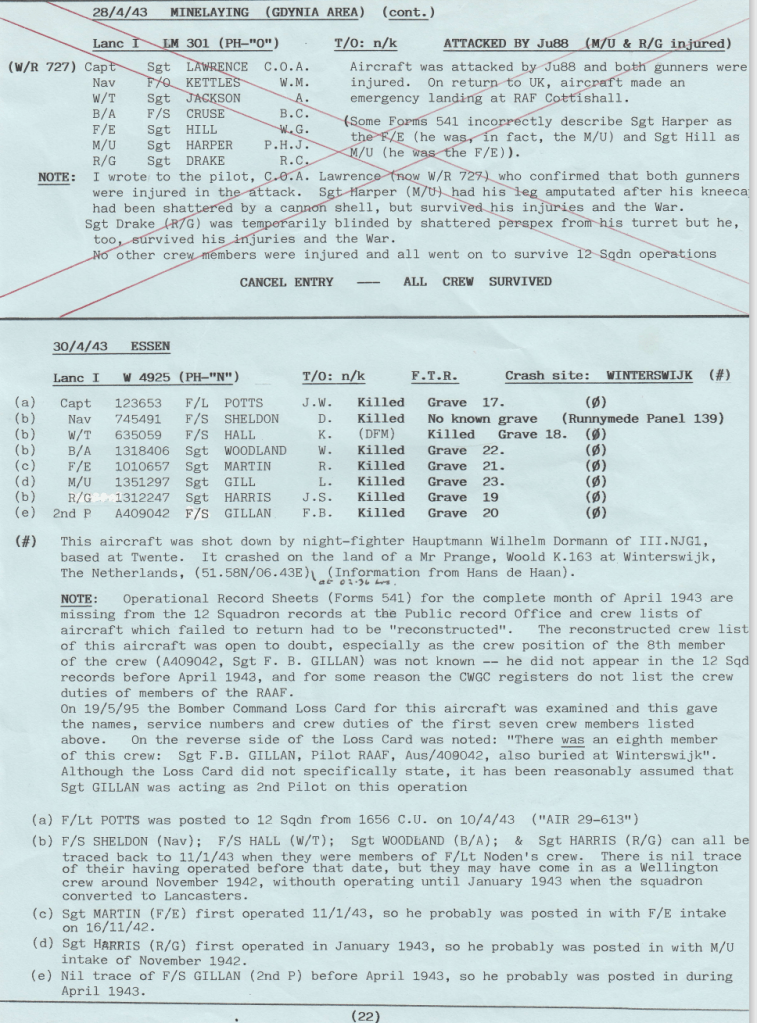
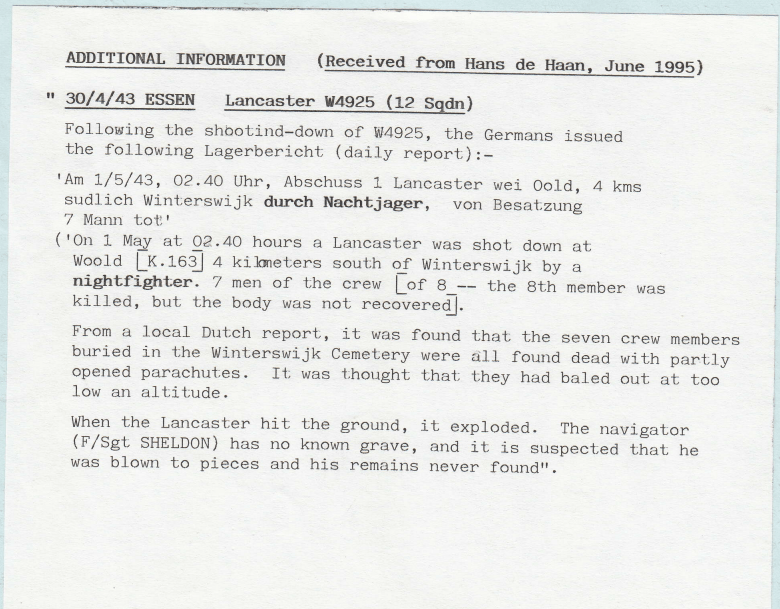
A terrible week for 12 Sqn, with 5 aircraft and all their crews being lost on operations, with a sixth so badly damaged it was scrapped on its return – 2 of its crew being so badly injured they played no further part in the war. These losses caused the disbandment of “C” Flight of 12 Sqn, at least for the time being. The minelaying operation on 28/29 April was the heaviest loss of aircraft for Bomber Command during the war, but the number of mines laid was the highest in one night.
Also of interest is the support given to RAF Wickenby by the local population, especially Market Rasen, only a few miles from the camp, who raised £59,000, a considerable sum in 1943 and certainly enough to pay for a Lancaster and training for some of her crew.
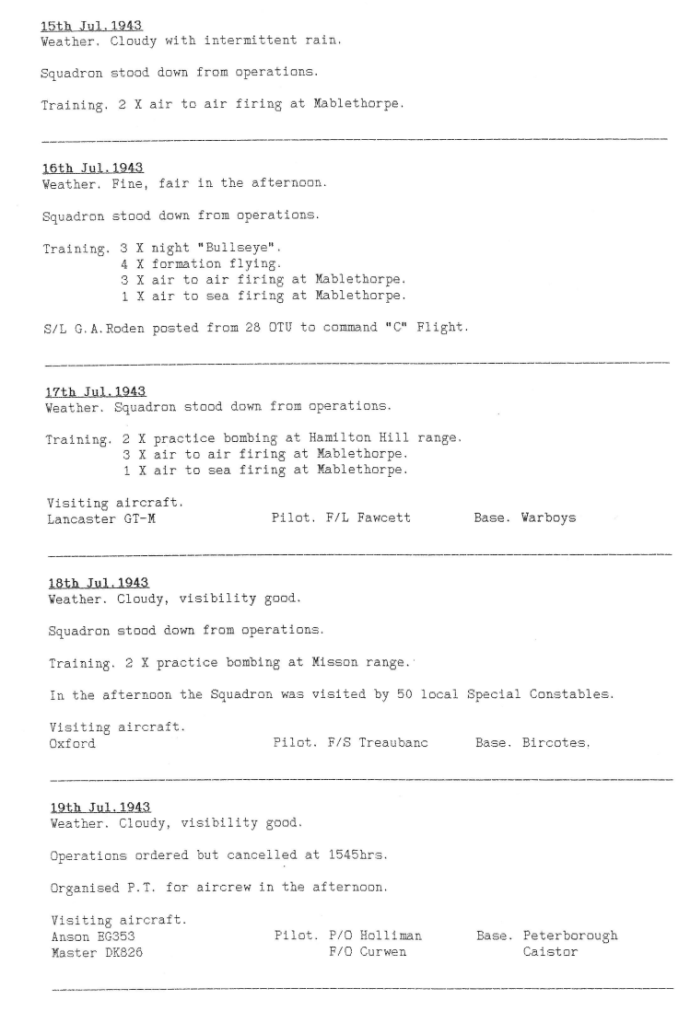
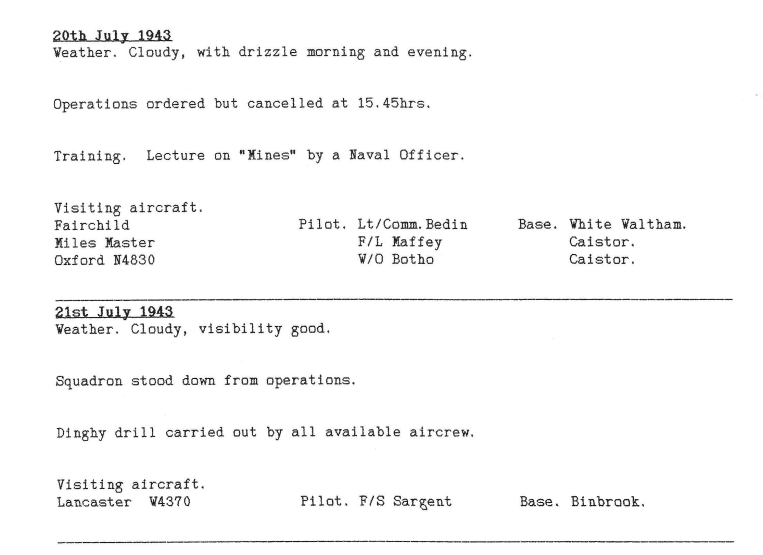
Extract from Station Diary
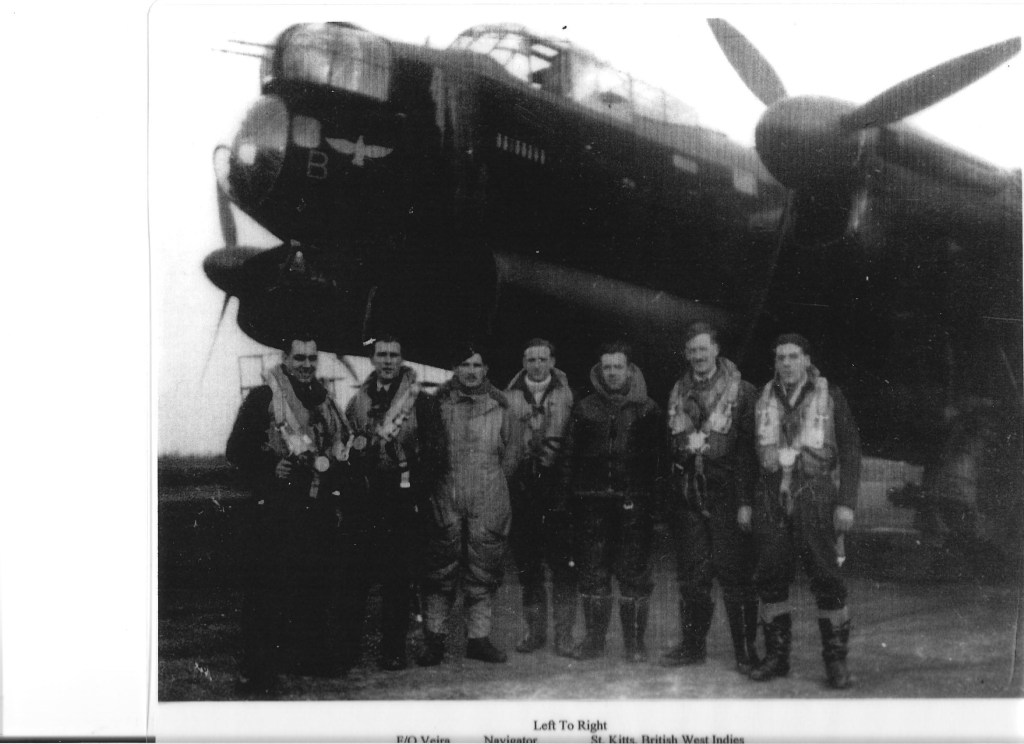
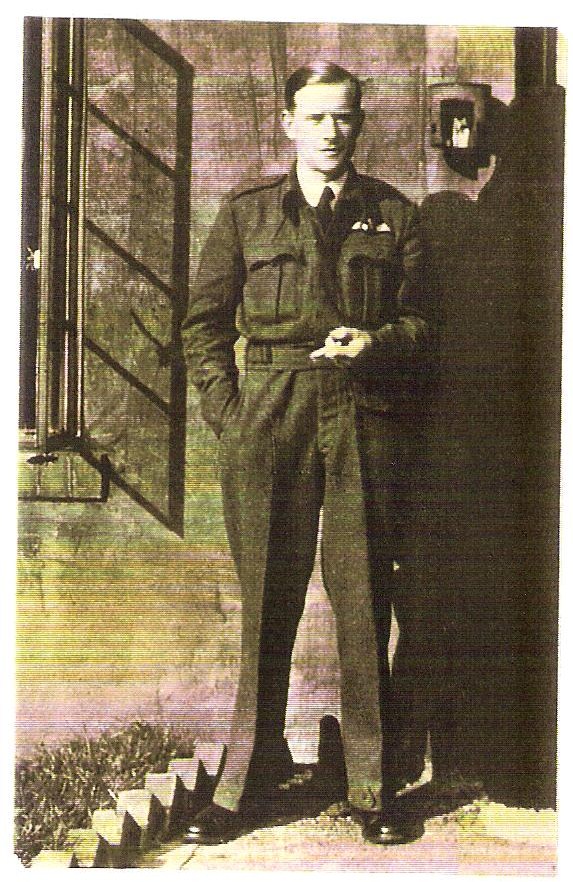
The crew of Sgt Elsworthy, who were killed on 28 April.L to R: Fg Off Veira – Nav, F/Sgt Freeman – WO, Sgt Grant – AG, Sgt Elsworthy – Pilot, Sgt Downes – AG, Sgt Haddow – BA, Sgt Pye – FE – all killed on 28/29 Apr 1943. Fg Off Basil Vernon Lancelot Veira was from St Kitts but was serving with the Royal Canadian Air Force – he had previously won the DFC.Flt Lt James Wallace Potts, aged 29, the son of Andrew Alexander Potts & Mary Elizabeth Potts of Auckland City, New Zealand. He held a masters degree from the University of Canterbury in New Zealand. Killed with all his crew attacking Essen on 30 Apr/1 May 1943Sgt Leonard Gill, 22, the son of Ernest & Emily Gill of York. He was the mid-upper gunner in Flt Lt Potts’ aircraft.
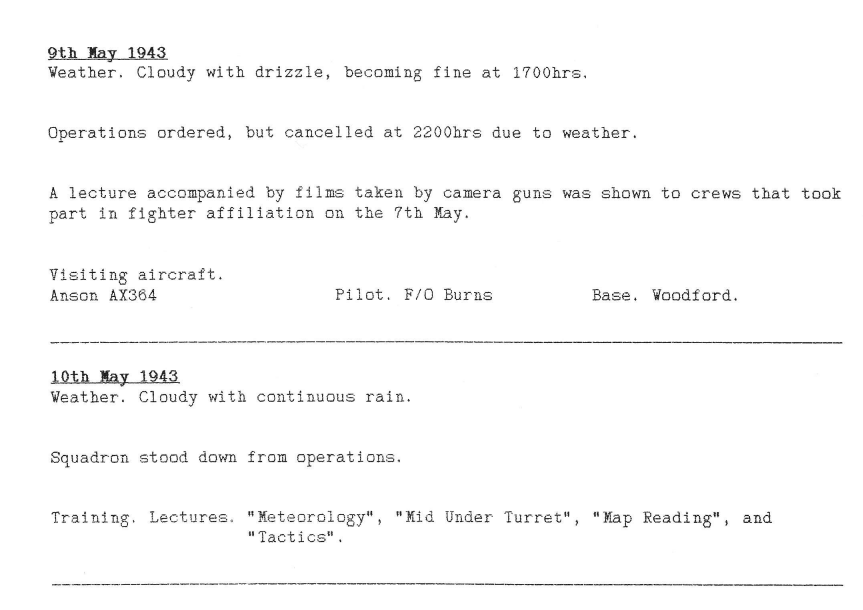
Extract from the Appendix to the Operational Record Book for 12 Sqn














 RAF Wickenby - This week in history - World War 2