25 Apr – 1 May 1945

Overview

This week saw the last operational bombing attack from RAF Wickenby, to Berchtesgaden, where Hitler’s “Eagle’s Nest” chalet was built. It also saw the start of Operations Exodus and Manna (see below). There were no losses.

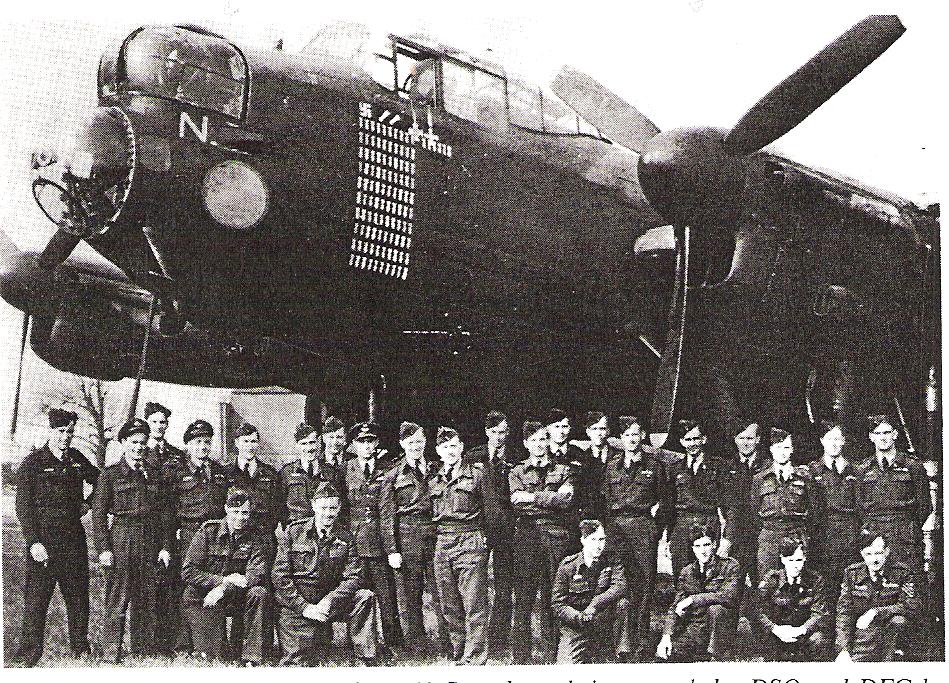
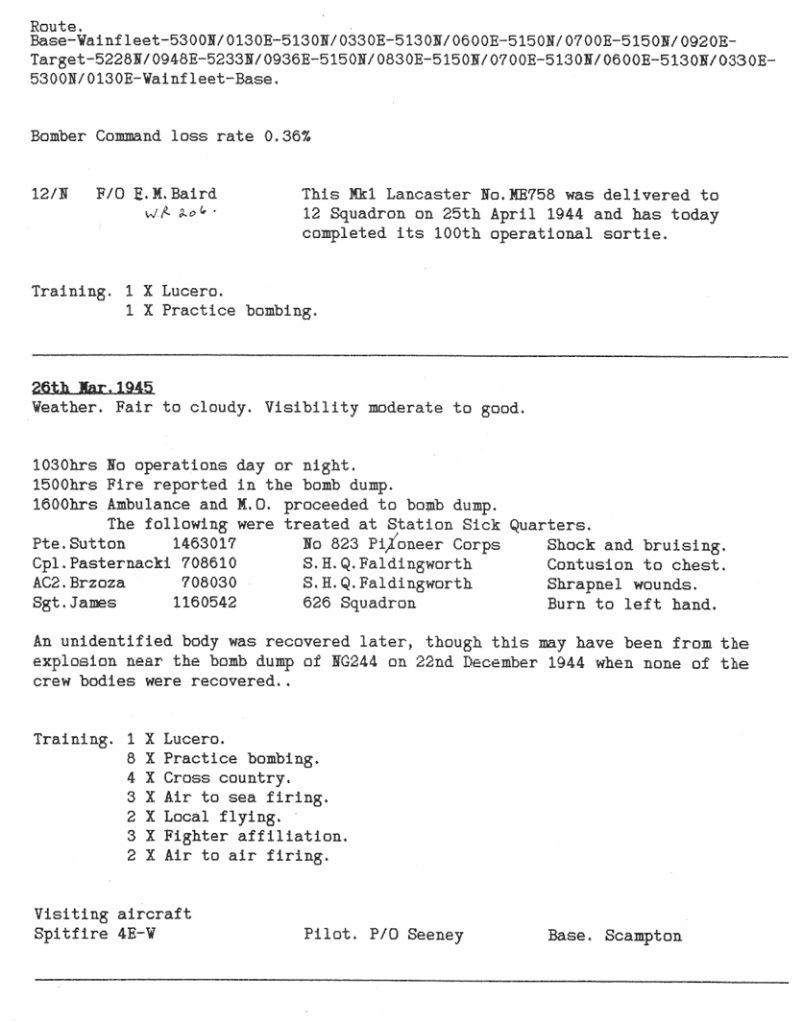
Additionally, Lancaster ME 758, PH-N “Nan” completed 106 operational flights having dropped more than one million pounds of bombs.

Op Exodus

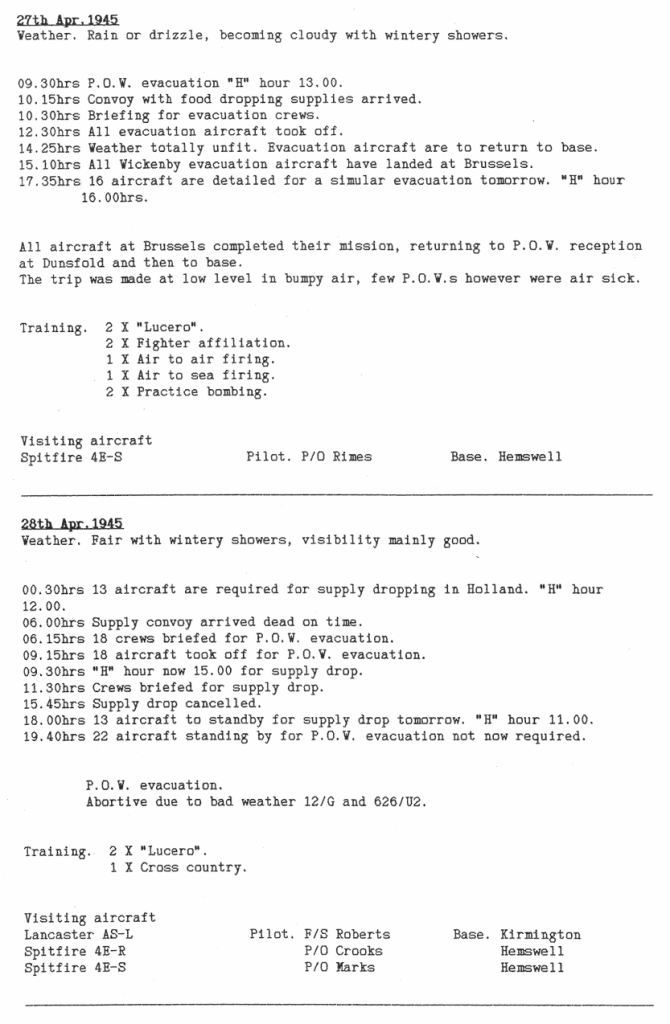
Bomber Command Lancasters now started flying to Brussels, and later to other airfields, to collect British prisoners of war recently liberated from their camps. 469 flights were made by aircraft of 1, 5, 6 and 8 Groups before the war ended and approximately 75,000 men were brought back to England by the fastest possible means.

Op Manna

A large pocket in Western Holland was still in German hands and the population was approaching starvation; many old and sick people has already died. A truce was arranged with the local German commander and Lancasters of 1, 3 and 8 Groups started to drop food supplies for the civilian population. Pathfinder Mosquitoes “marked” the dropping zones. 2,835 Lancaster and 124 Mosquito flights were made before the Germans surrendered at the end of the war and allowed ships and road transport to enter the area. Bomber Command delivered 6,672 tons of food during Operation Manna.
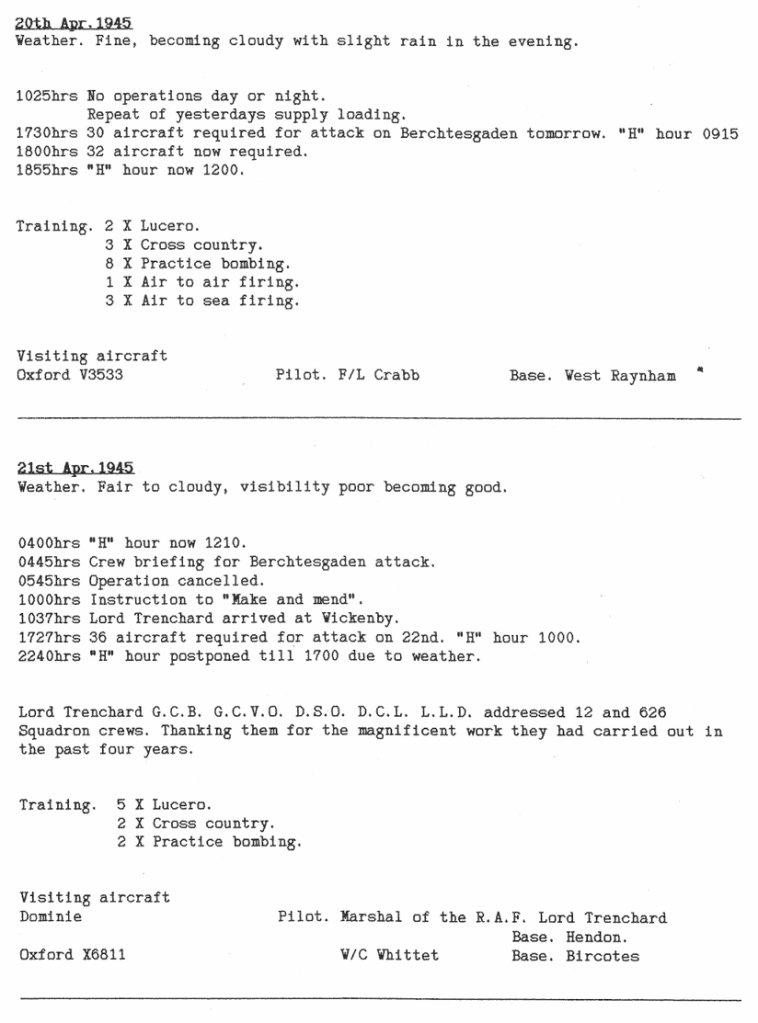
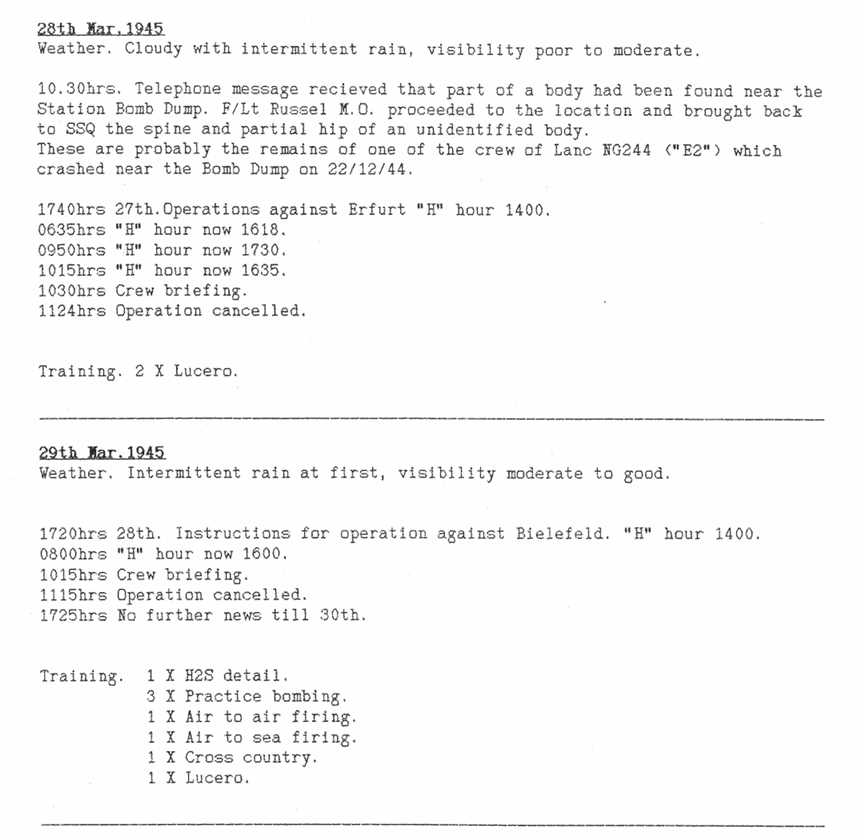
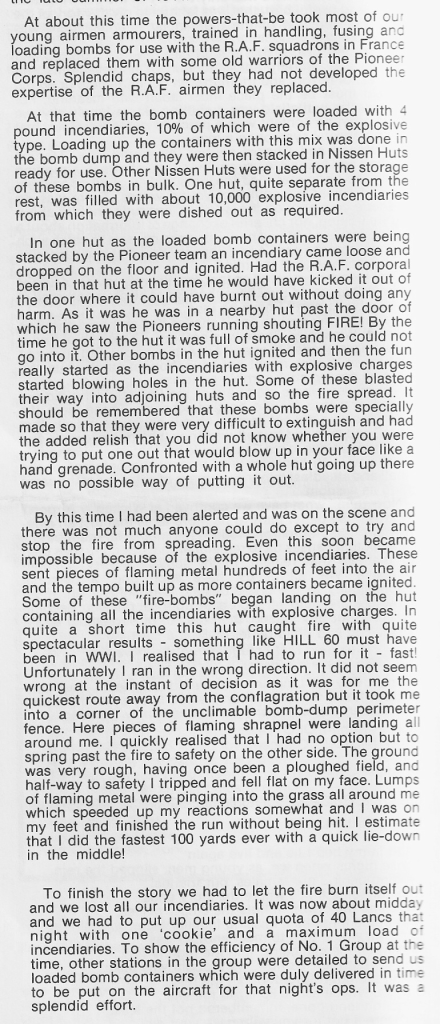
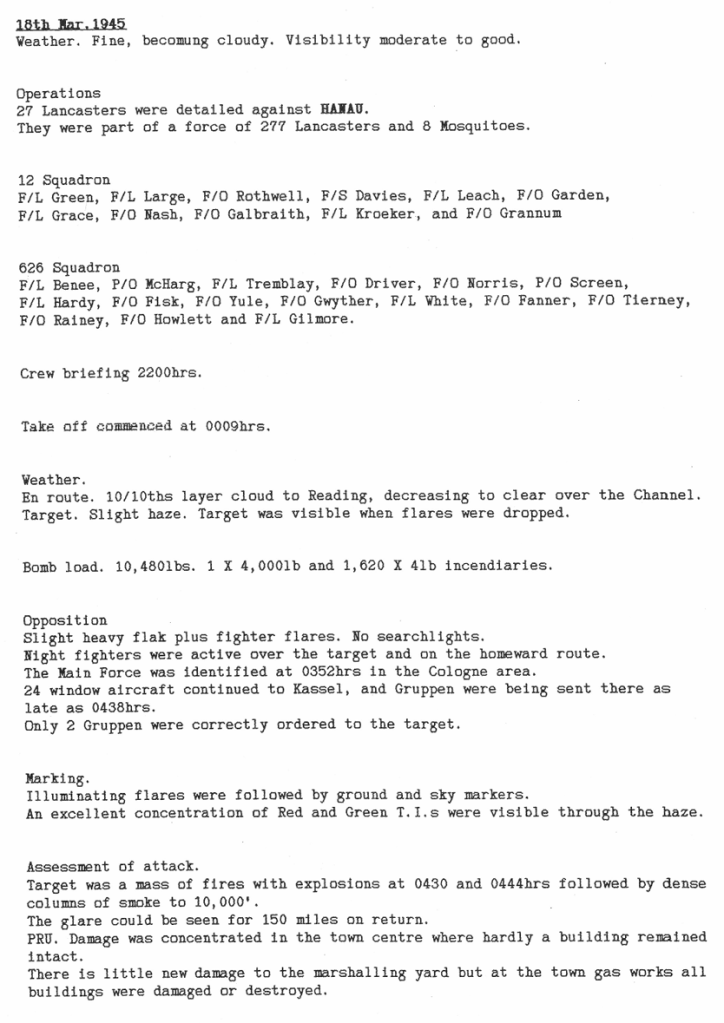
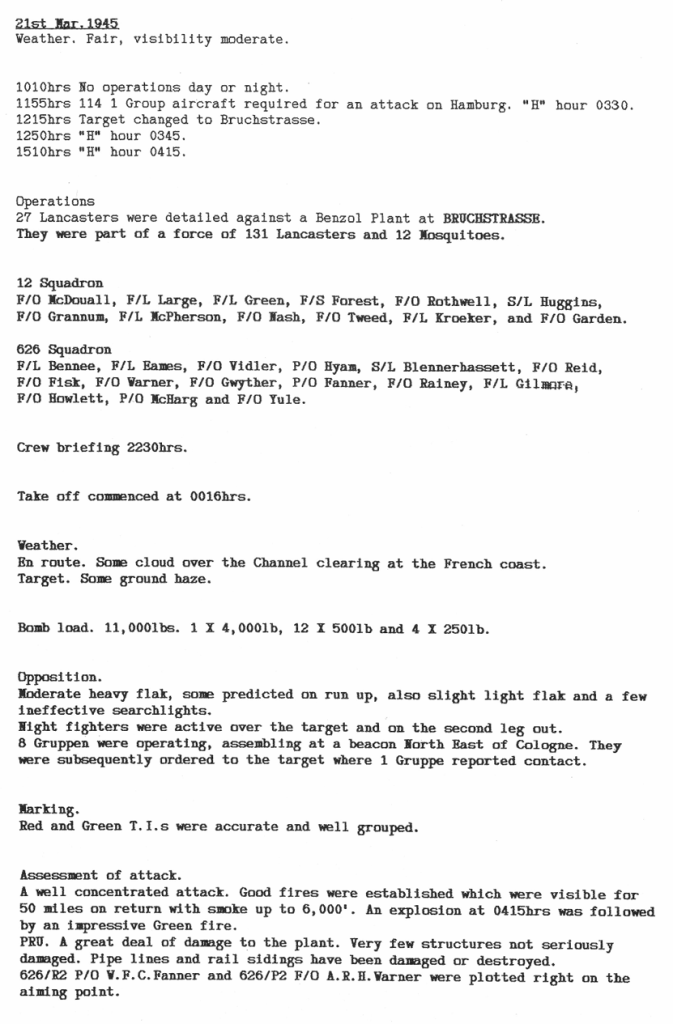
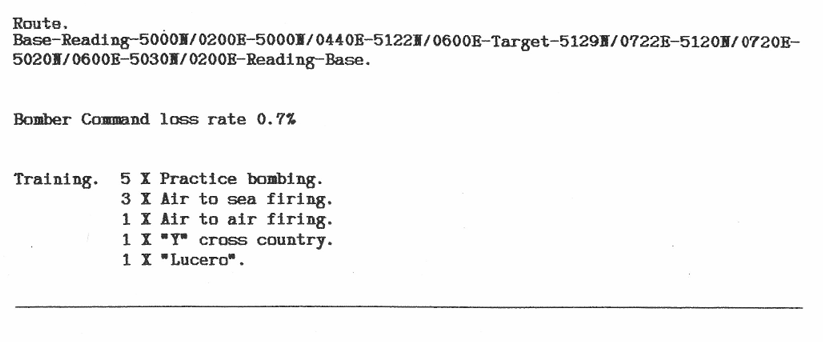
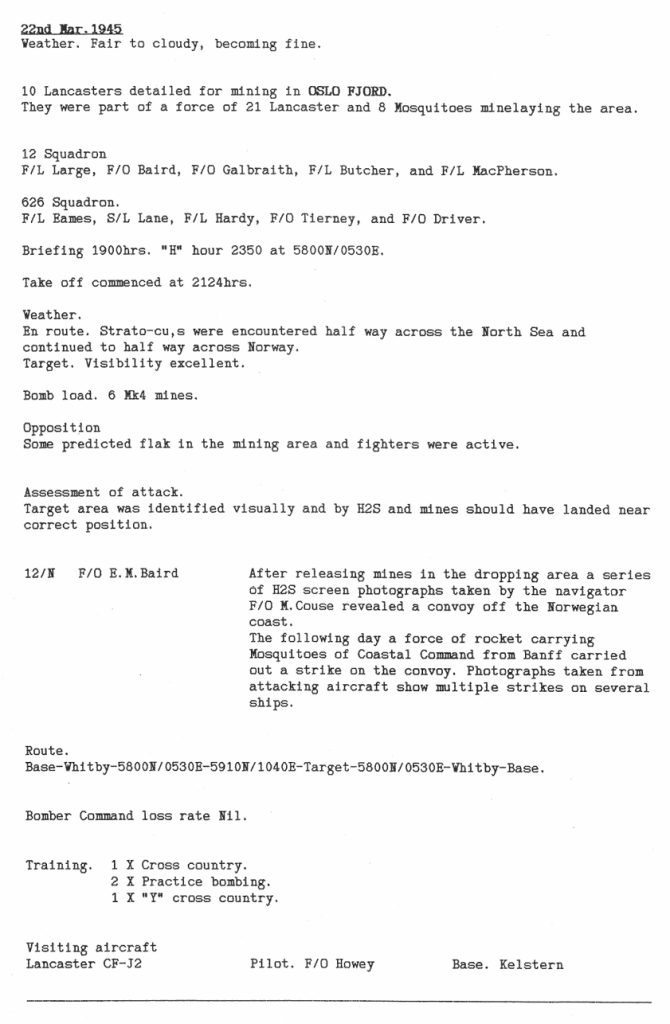
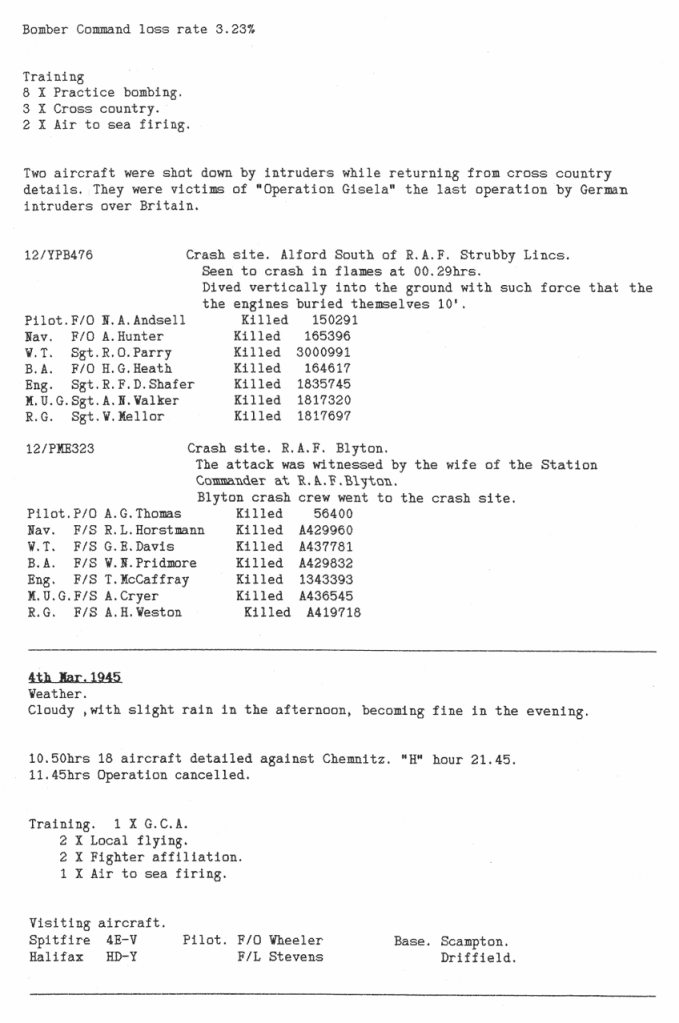
Extract from Station Diary
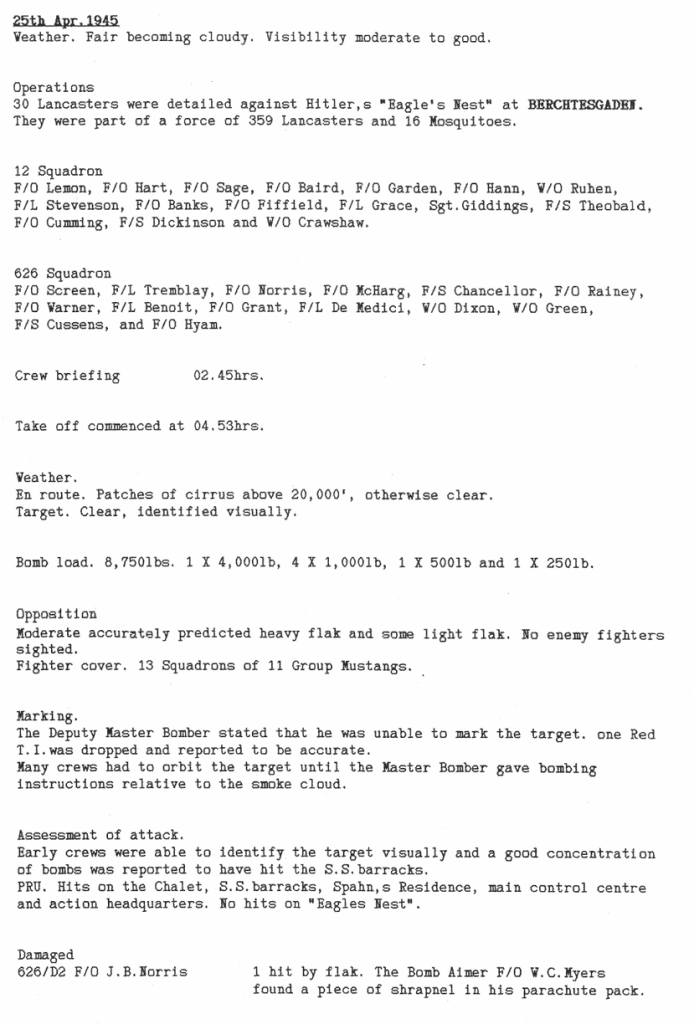
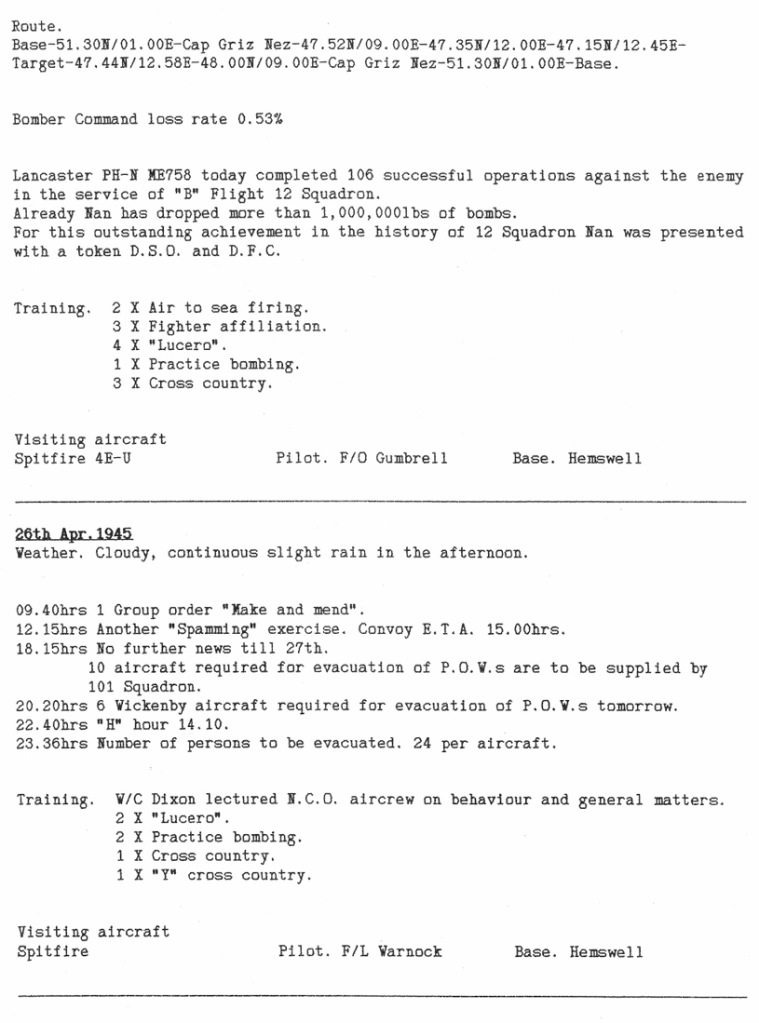
Lancaster ME758 PH-N being awarded DSO and DFC

18-24 April 1945

Overview

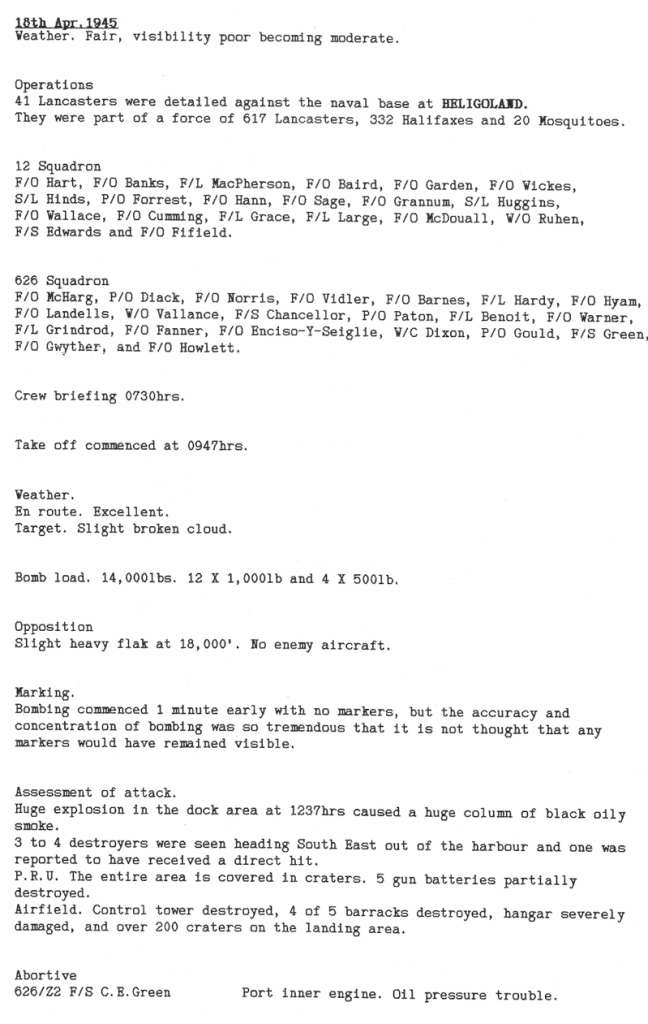
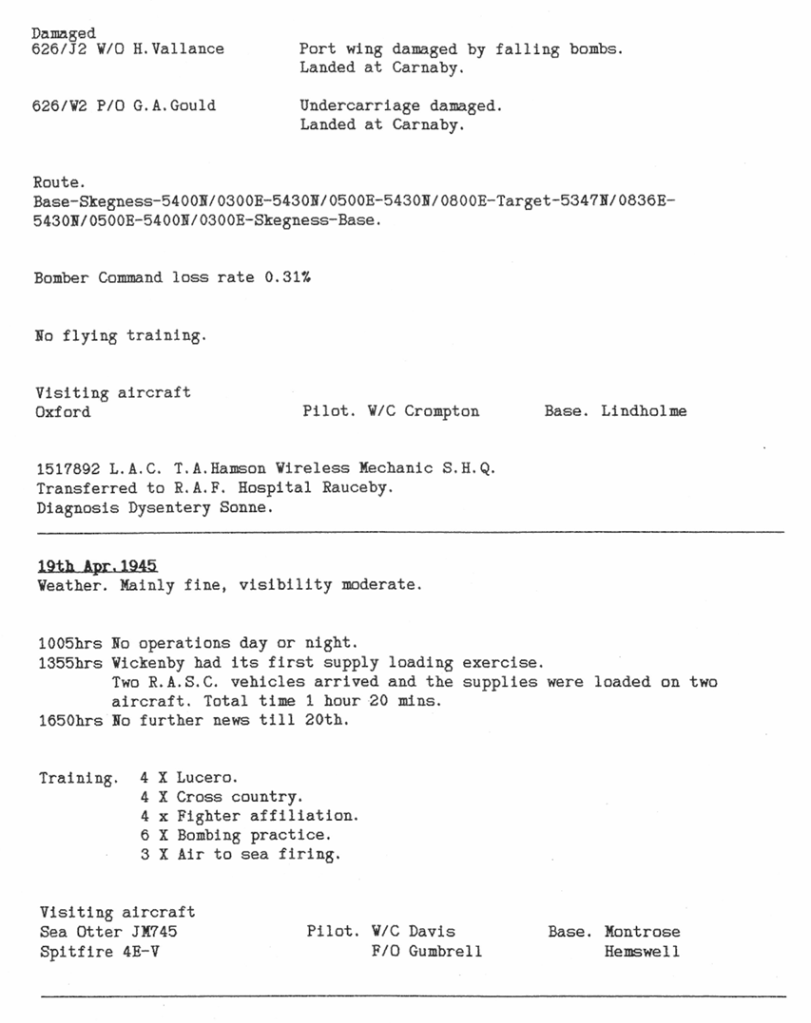
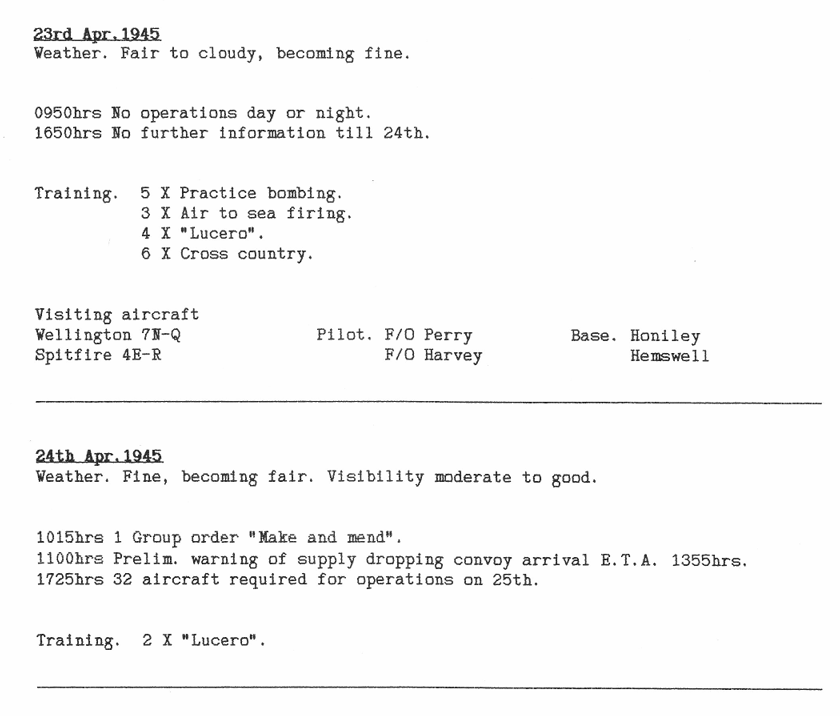
There were 2 operations this week, to the island of Heligoland and the port of Bremen. Both raids were carried out in daylight due to the decimation of the Luftwaffe by long range fighter escorts. The attack on Bremen was in preparation for the ground assault by the British XXX Corps, which successfully captured the city a few days later – the first major German port to be captured.

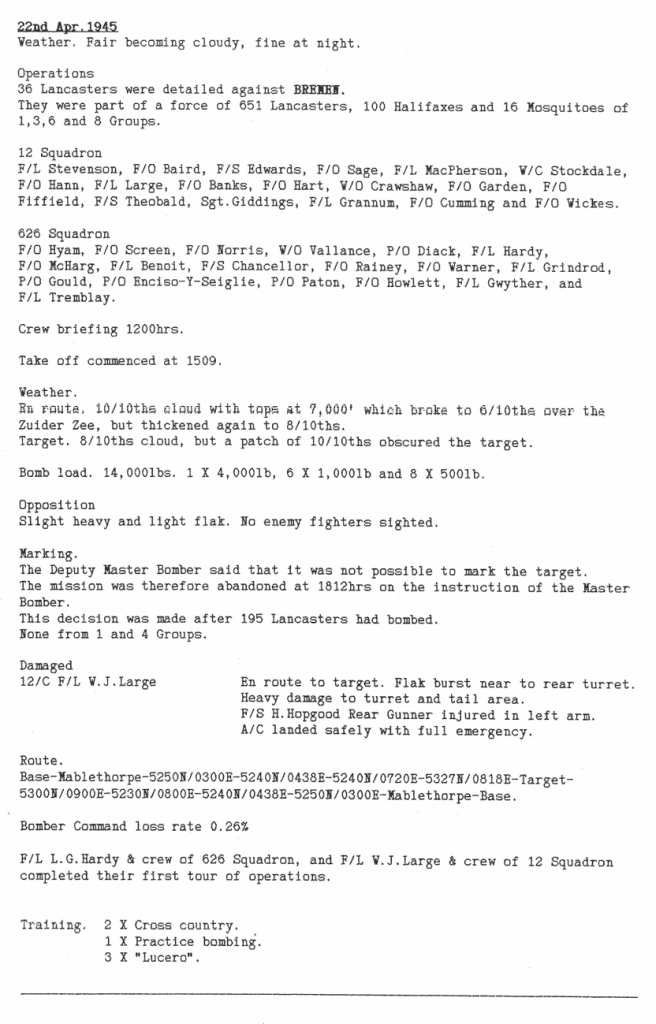
Extract from Station Diary
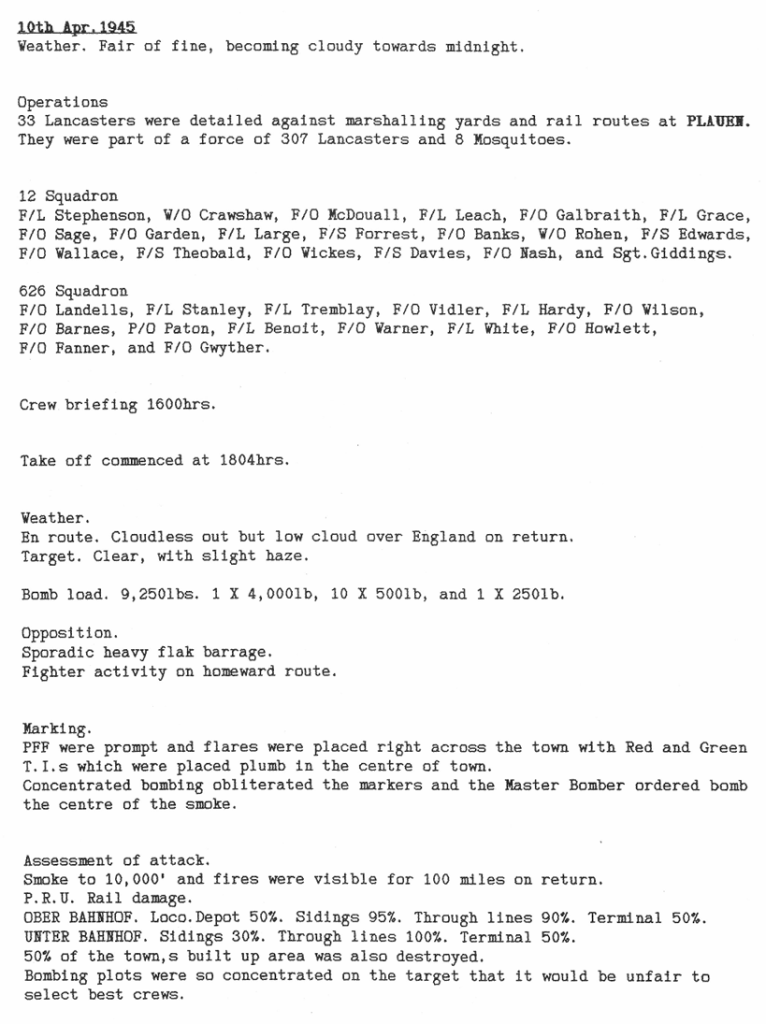
4-10 April 1945

Overview

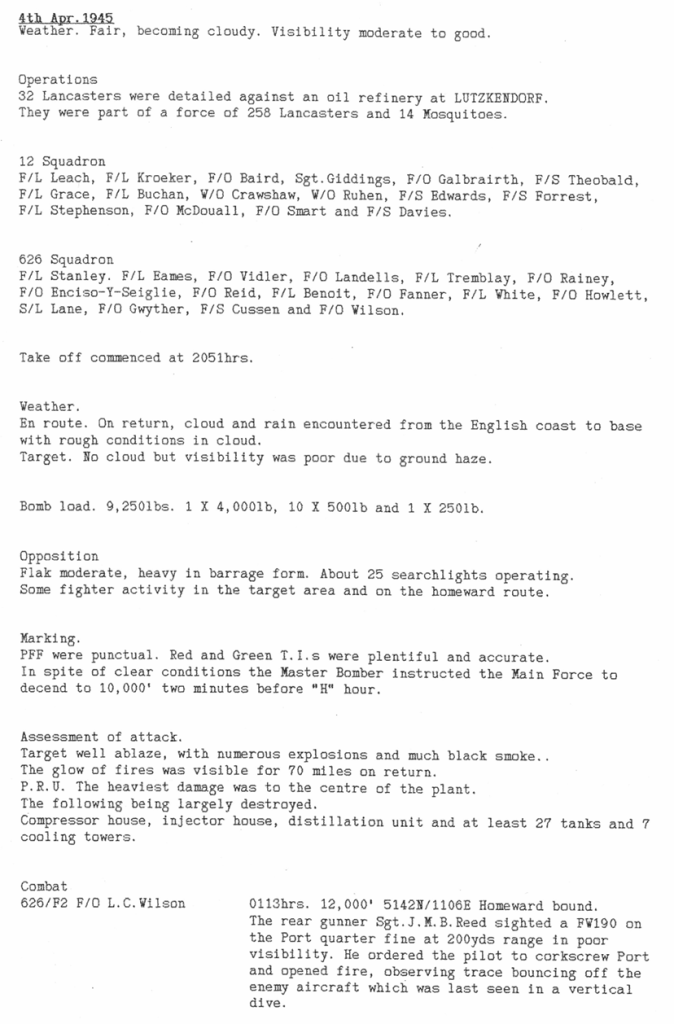
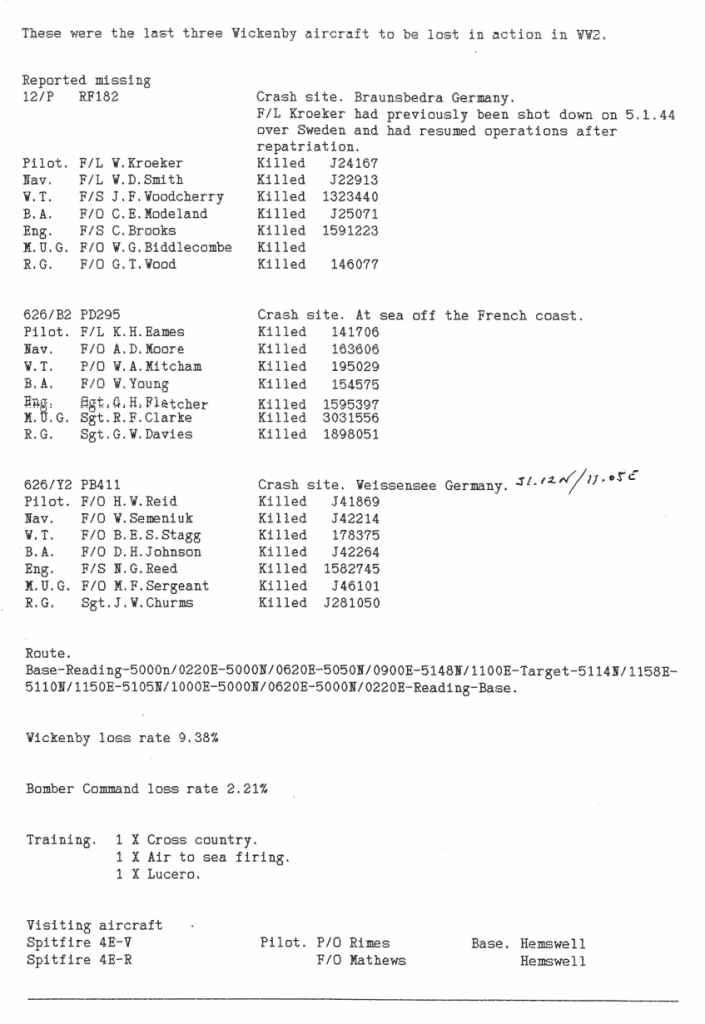
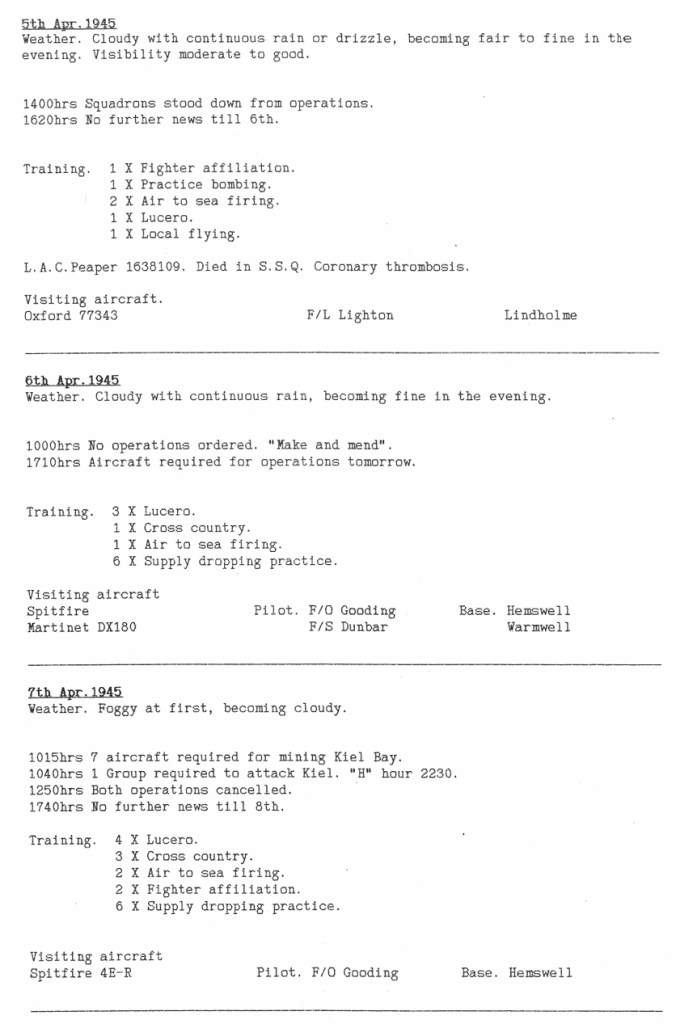
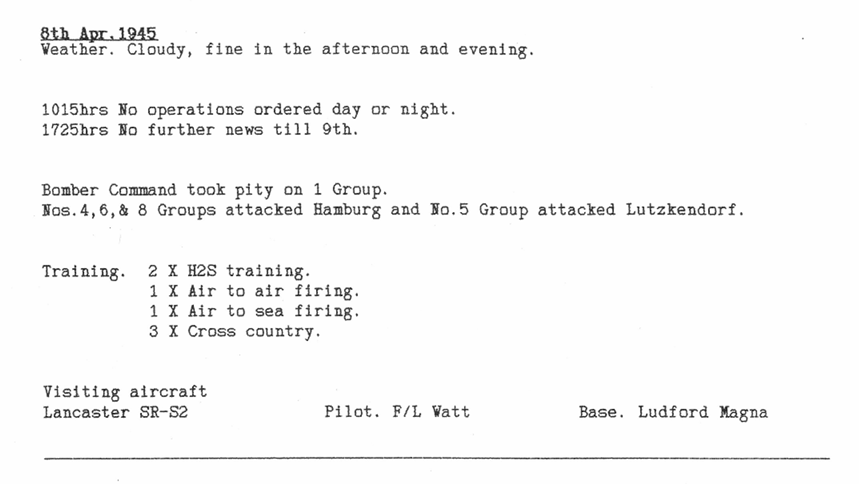
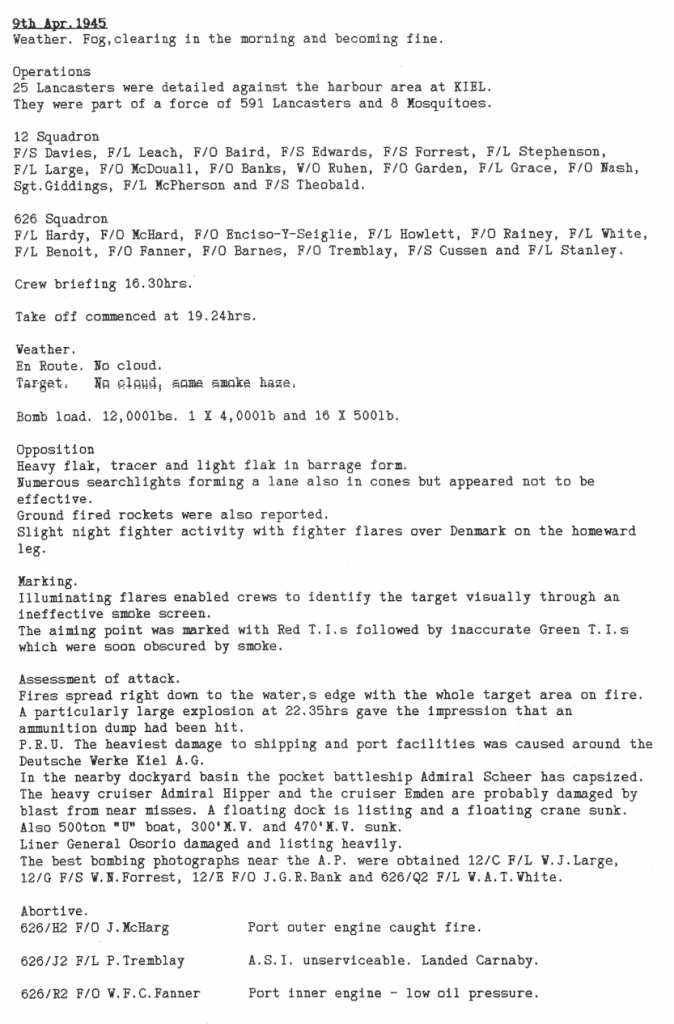
Wickenby squadrons were involved in 3 operations this week, to Lutzkendorf, Kiel and Plauen. The Lutzkendorf raid, on oil refineries, resulted in the loss of 3 aircraft and 21 aircrew – the last aircrew losses from Wickenby during the war.

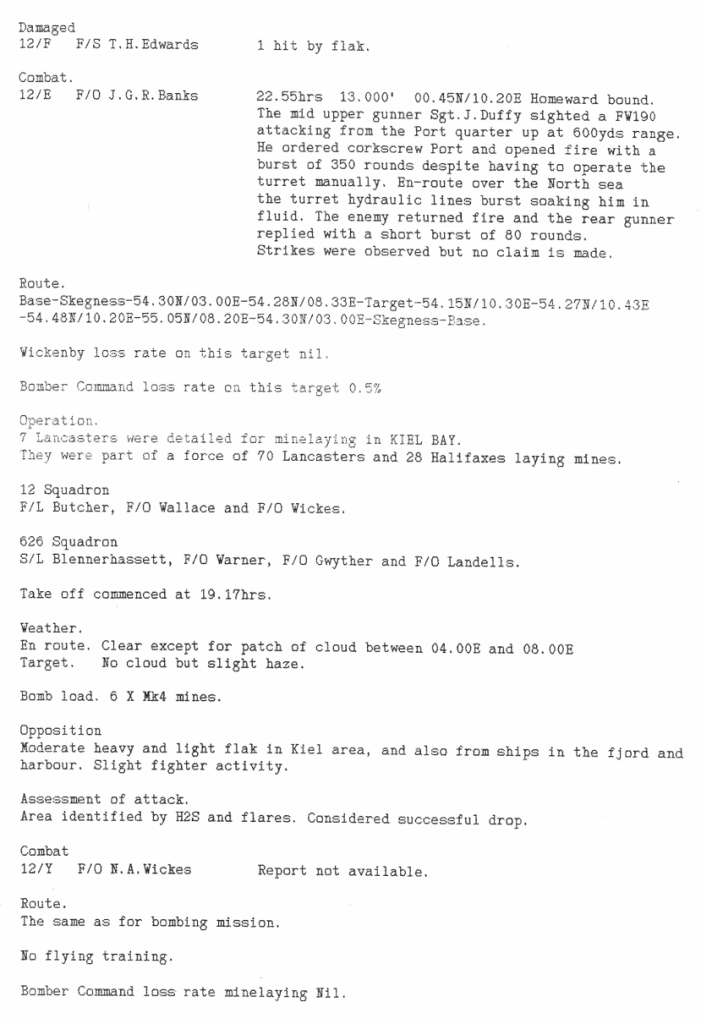
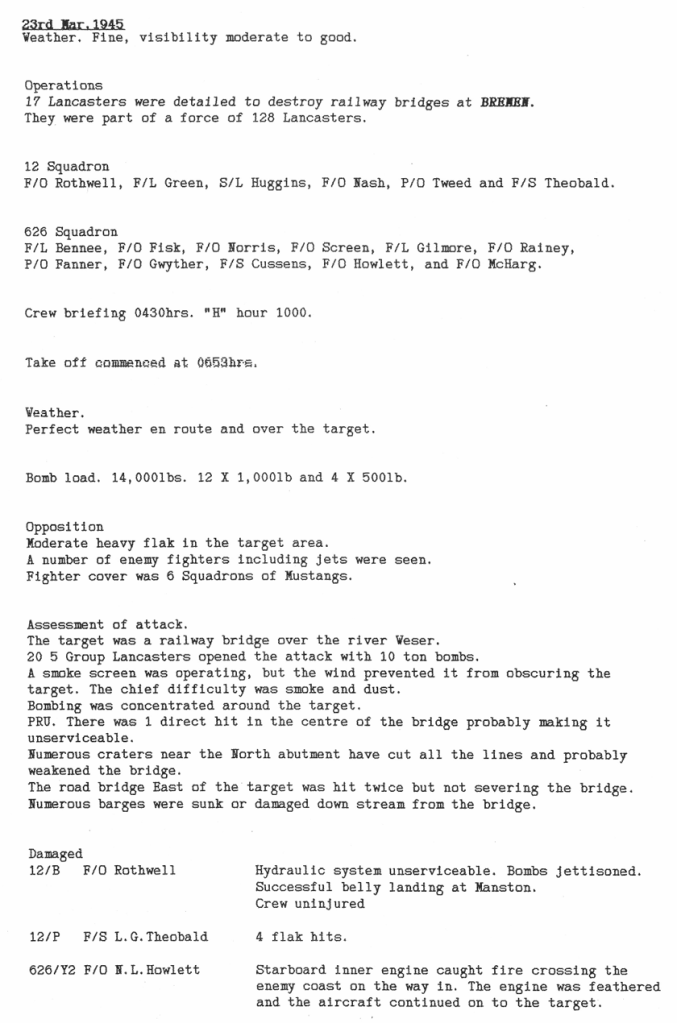
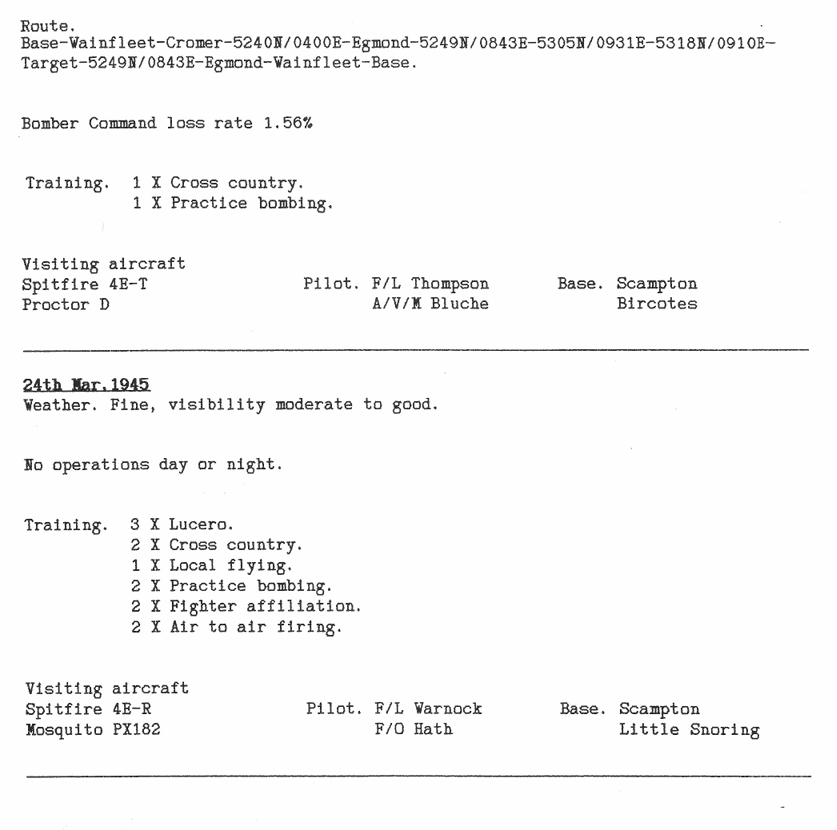
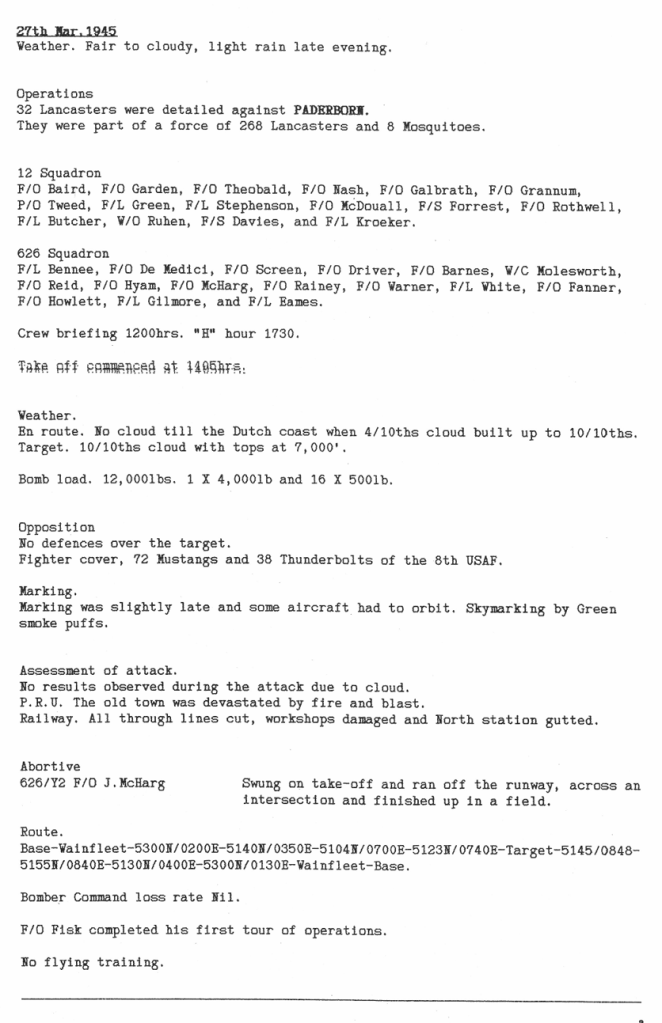
Extract from Station Diary
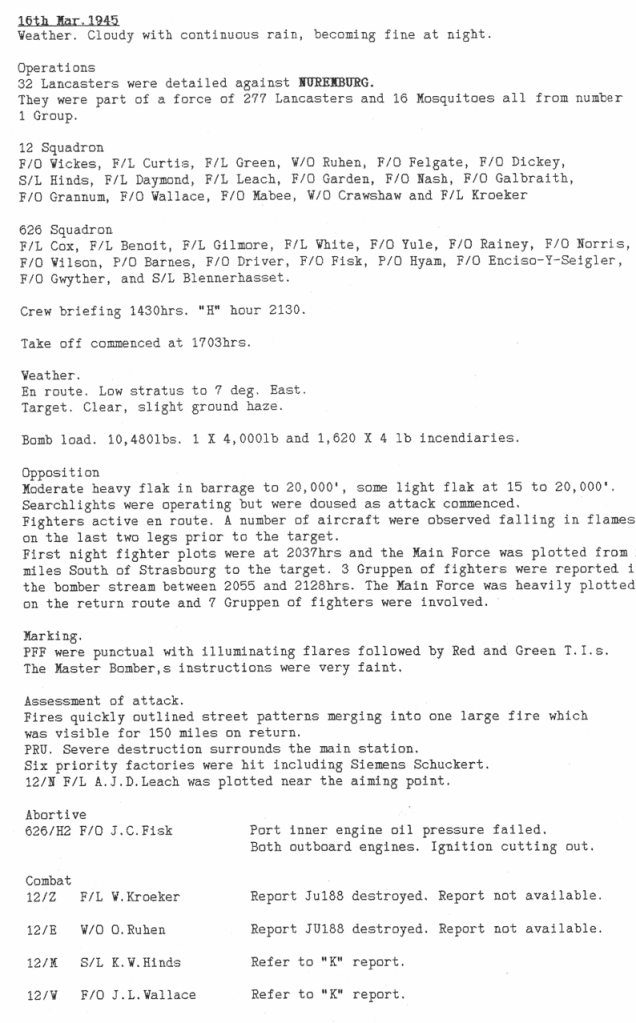
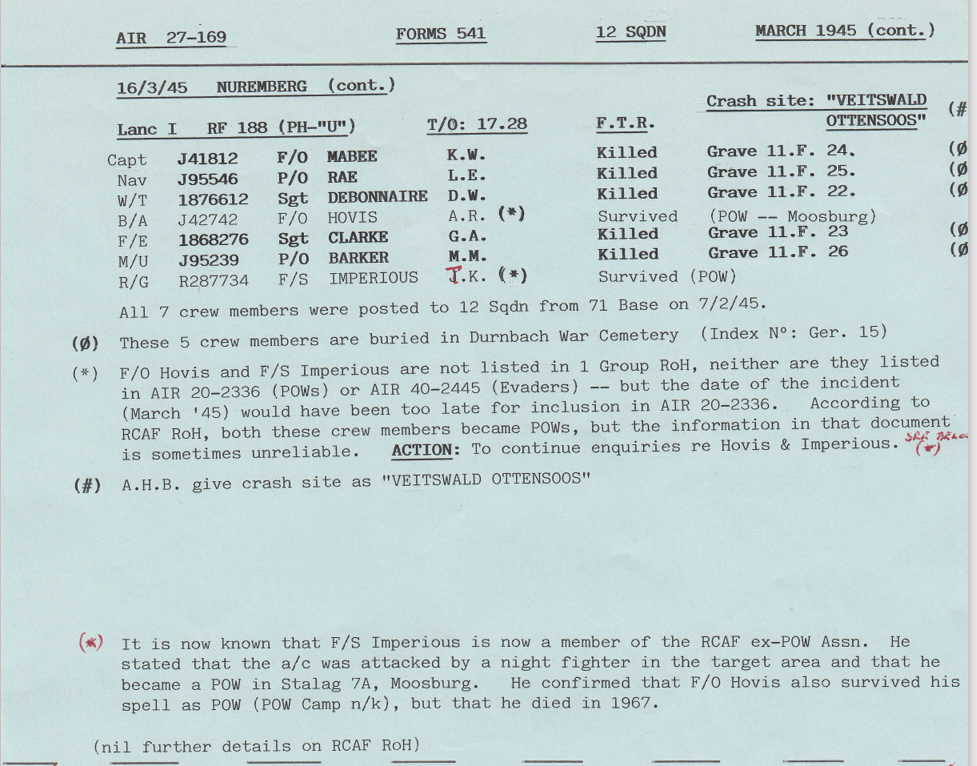
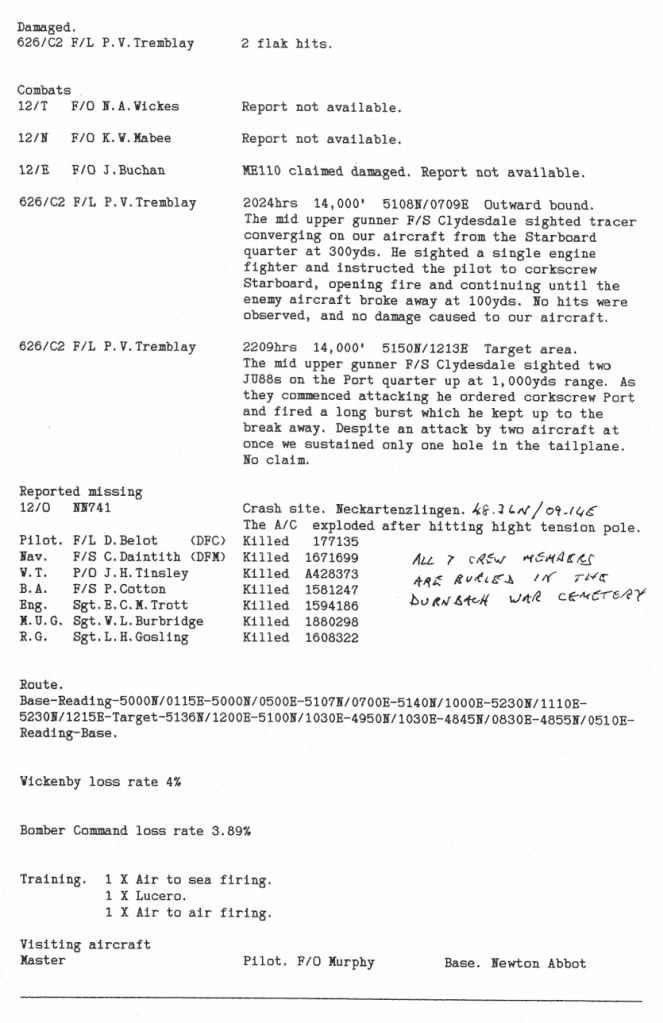
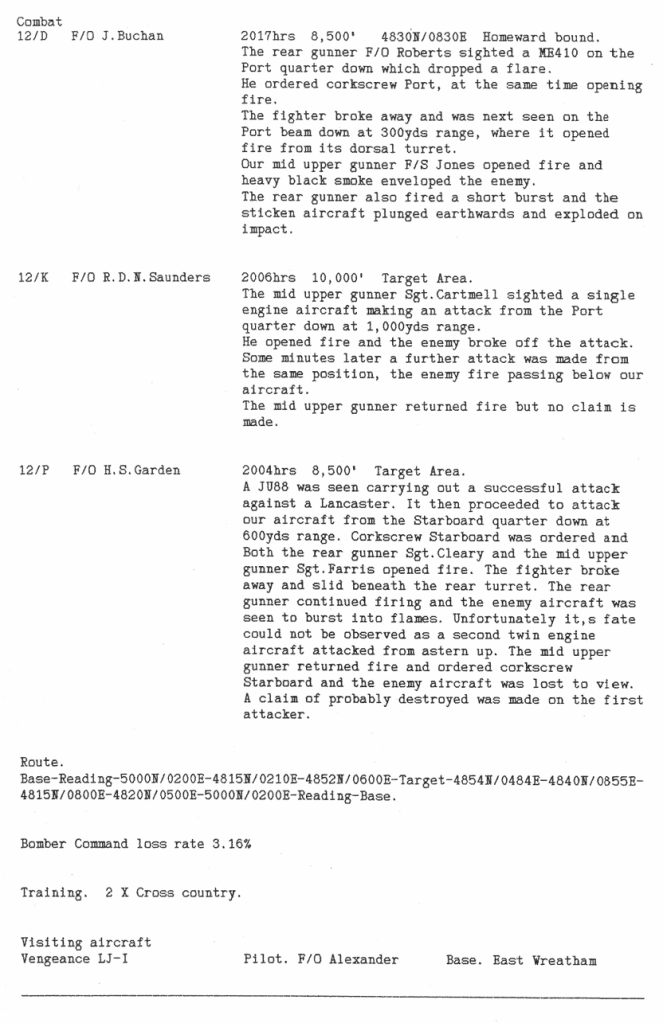
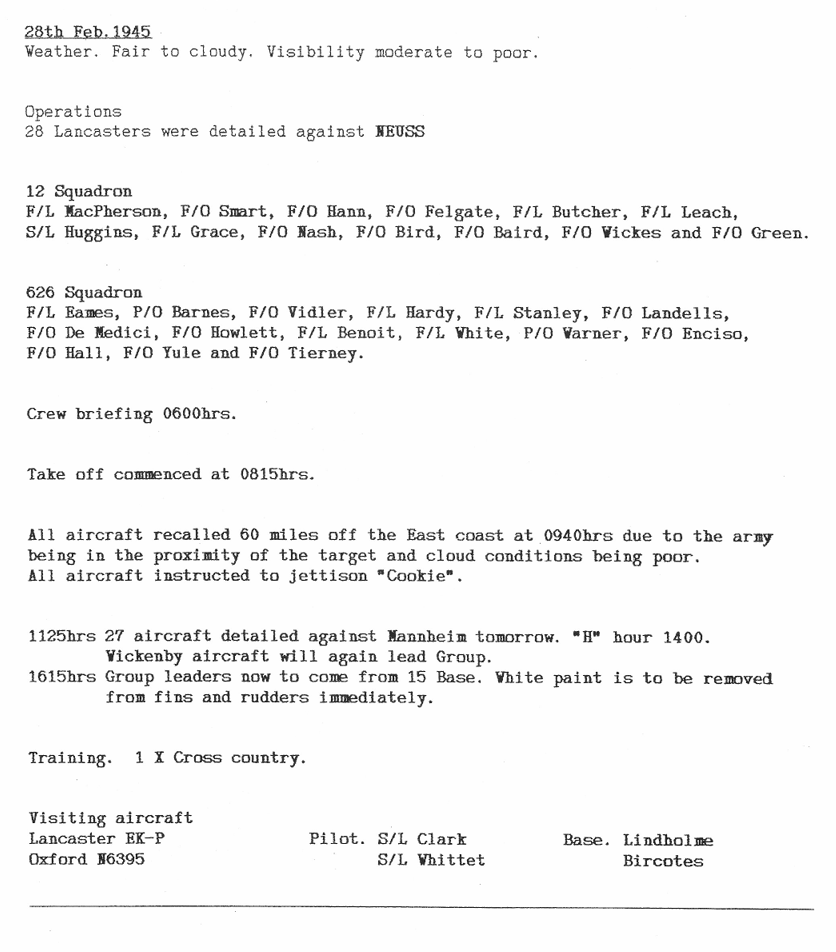
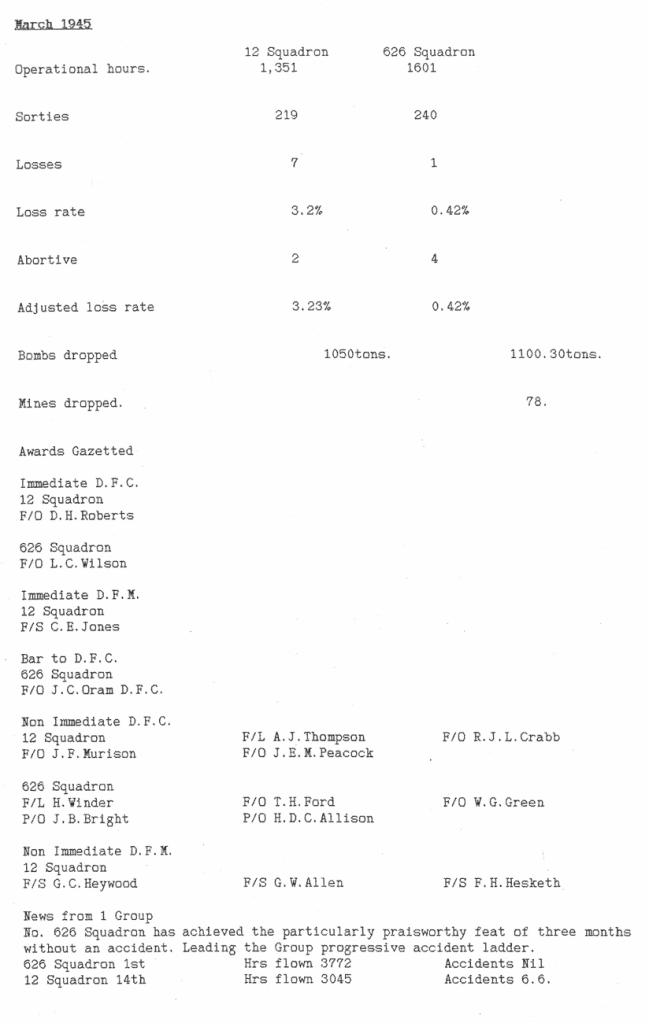
Extract from 12 Sqn Appendix to Operational Record Book

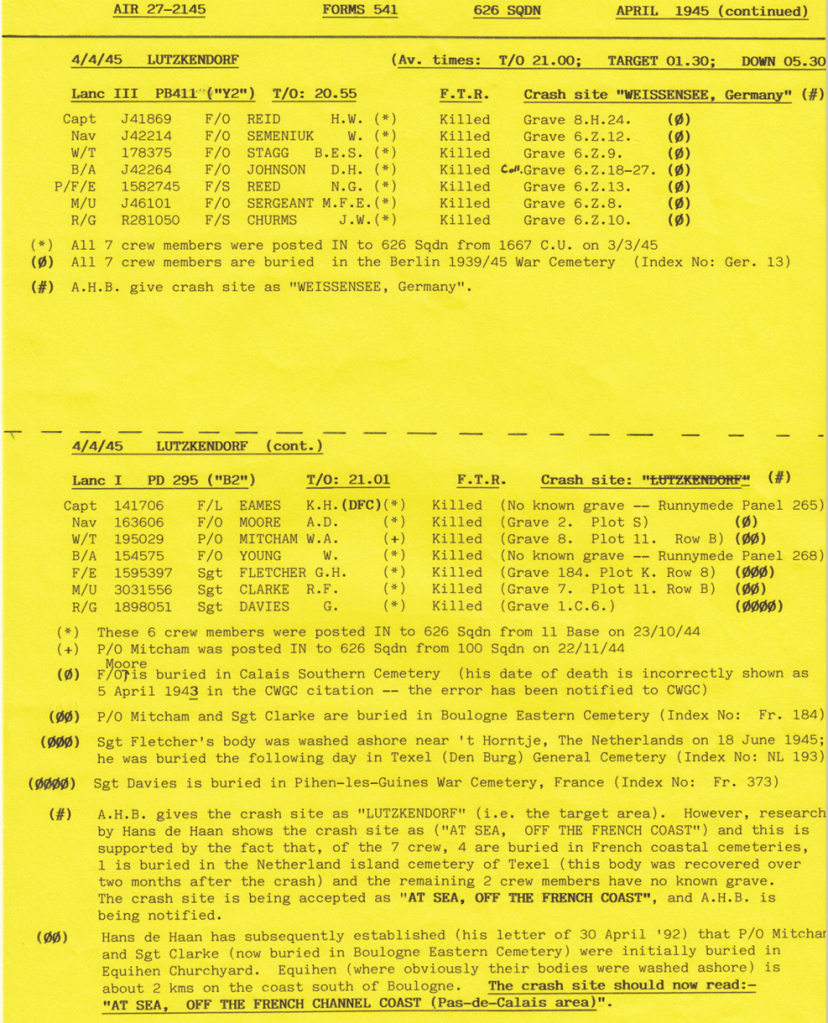
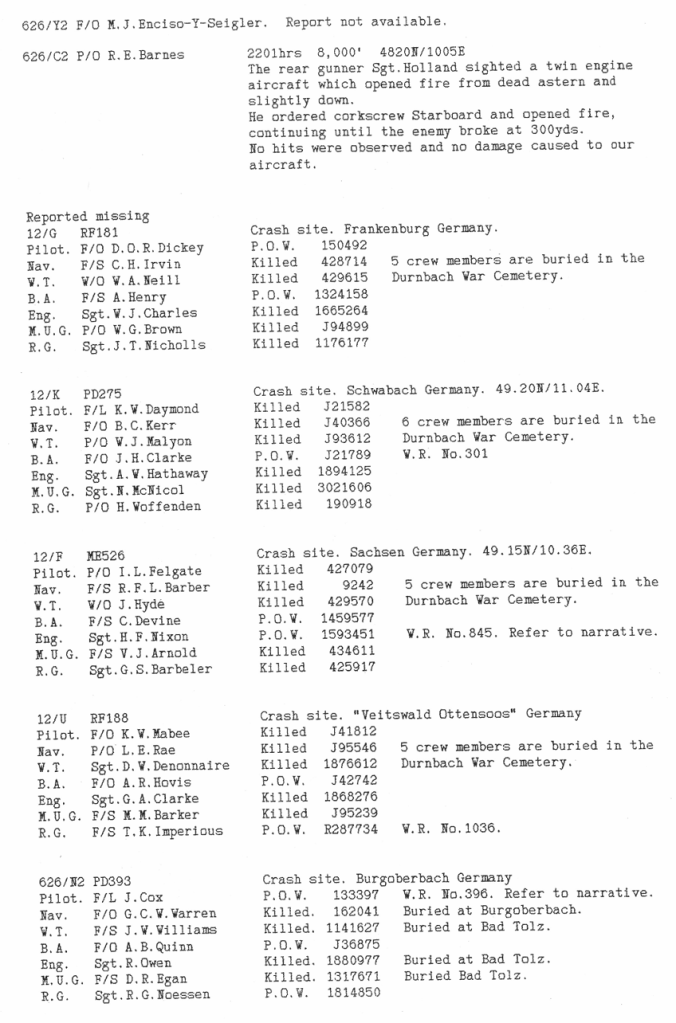
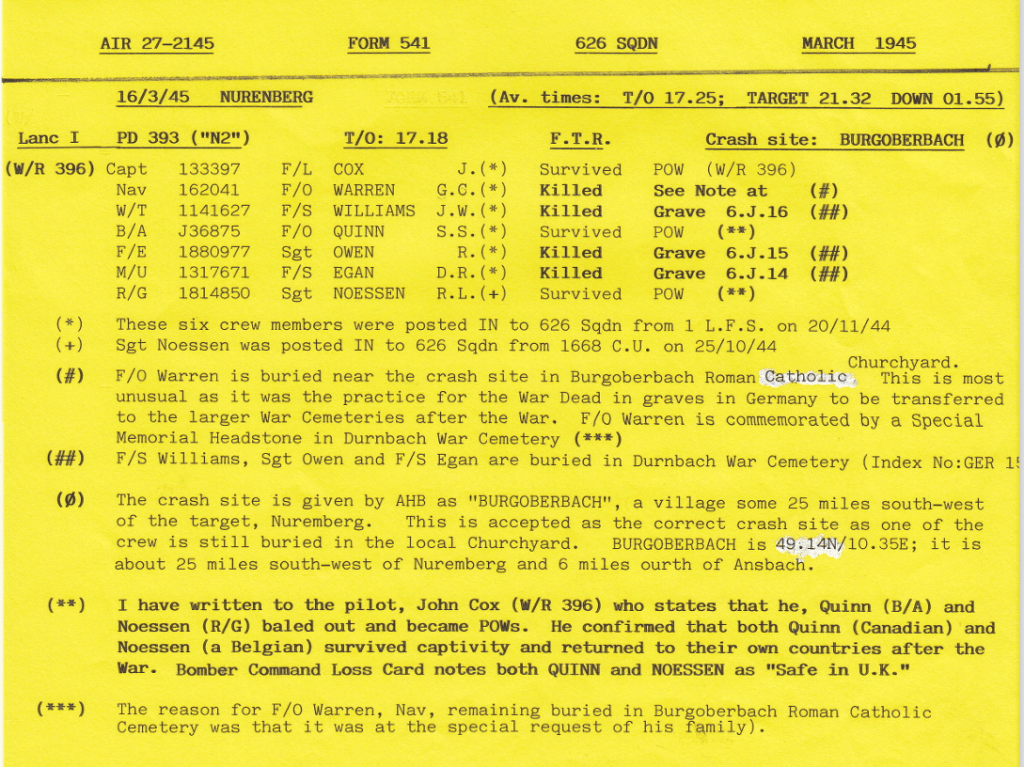
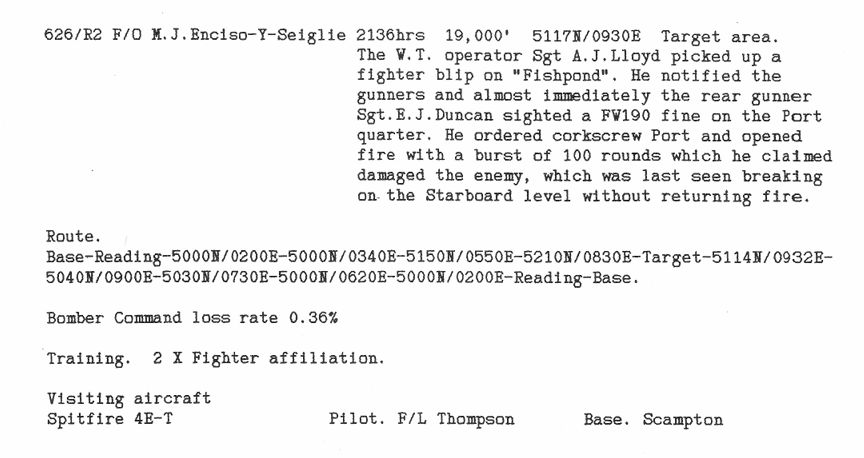
Extract from 626 Sqn Appendix to Operational Record Book

16-22 March 1945

Overview

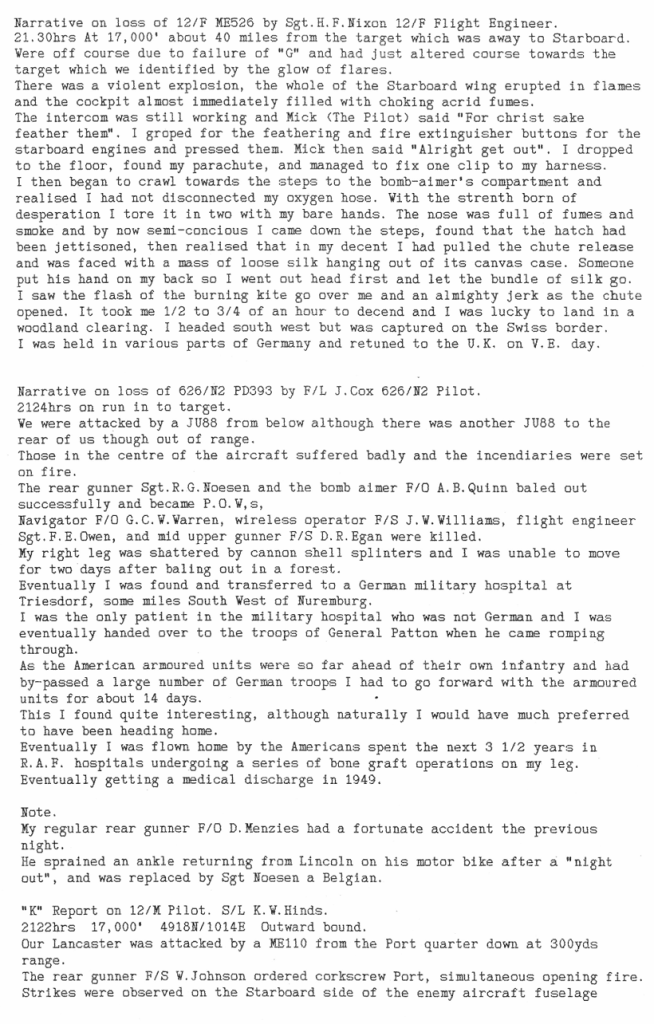
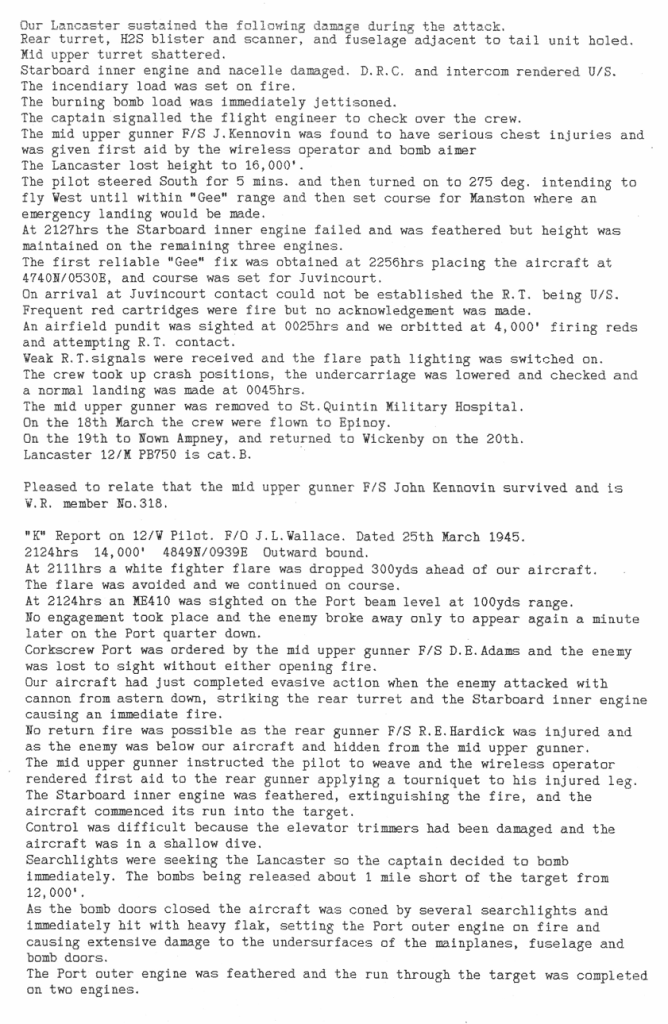
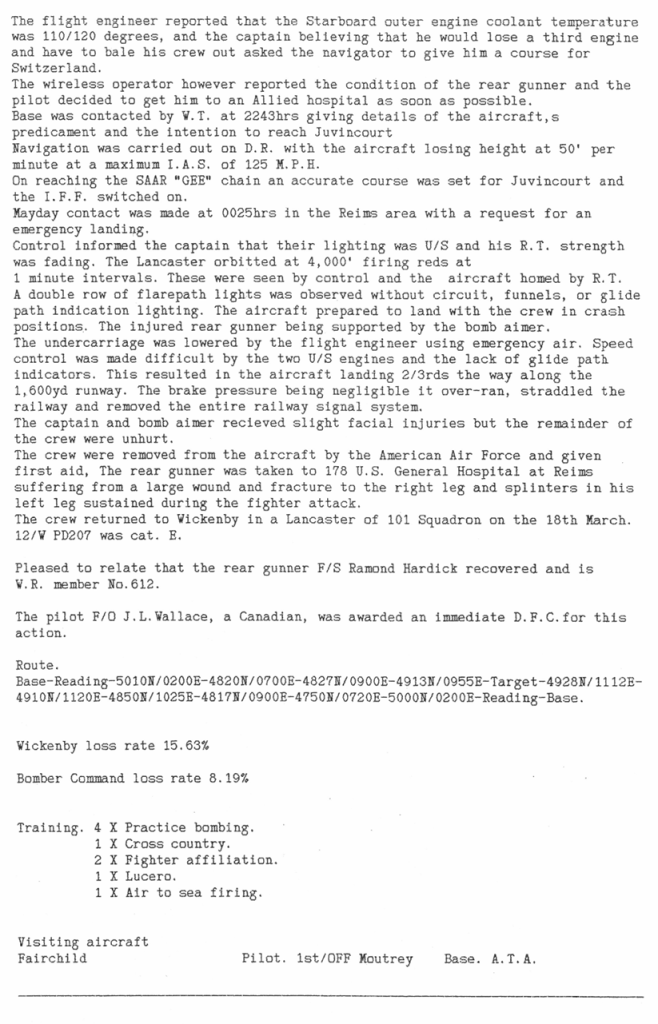
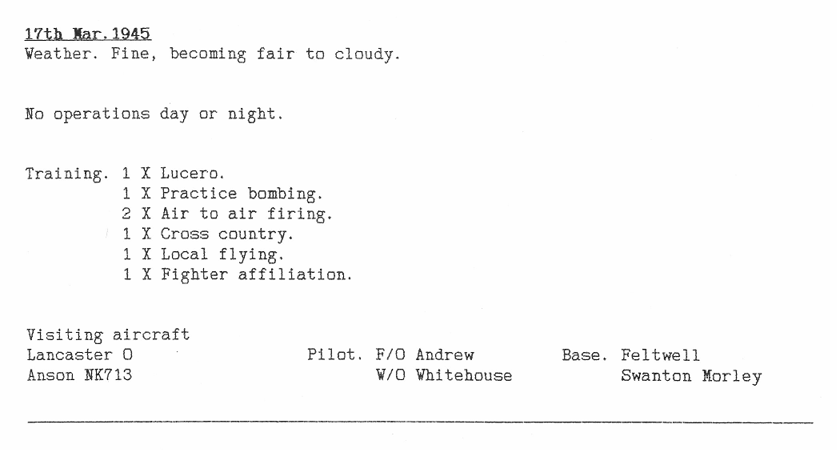
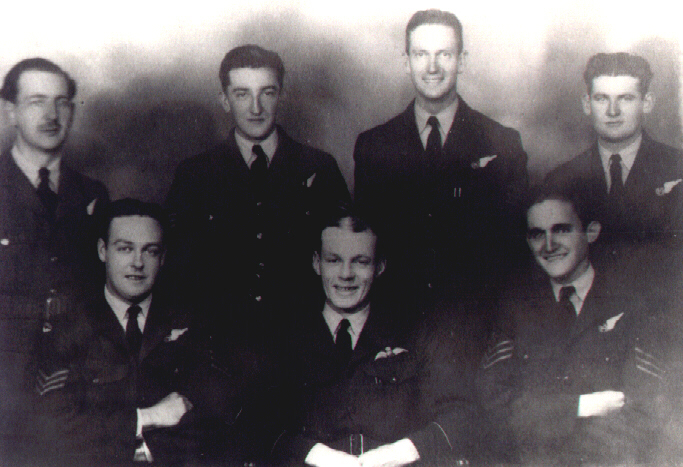
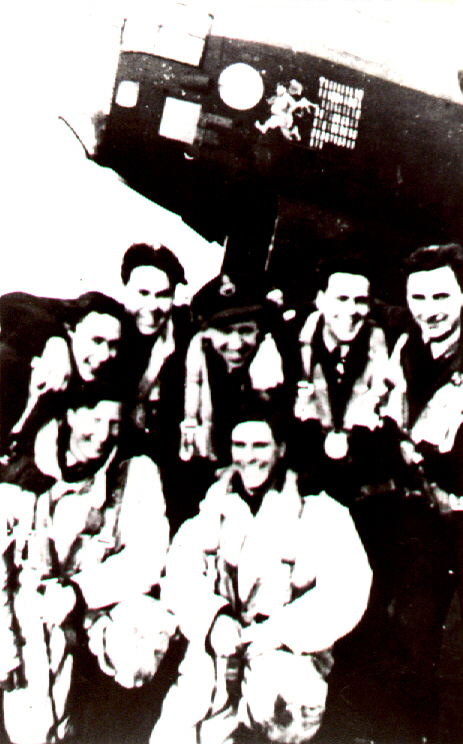
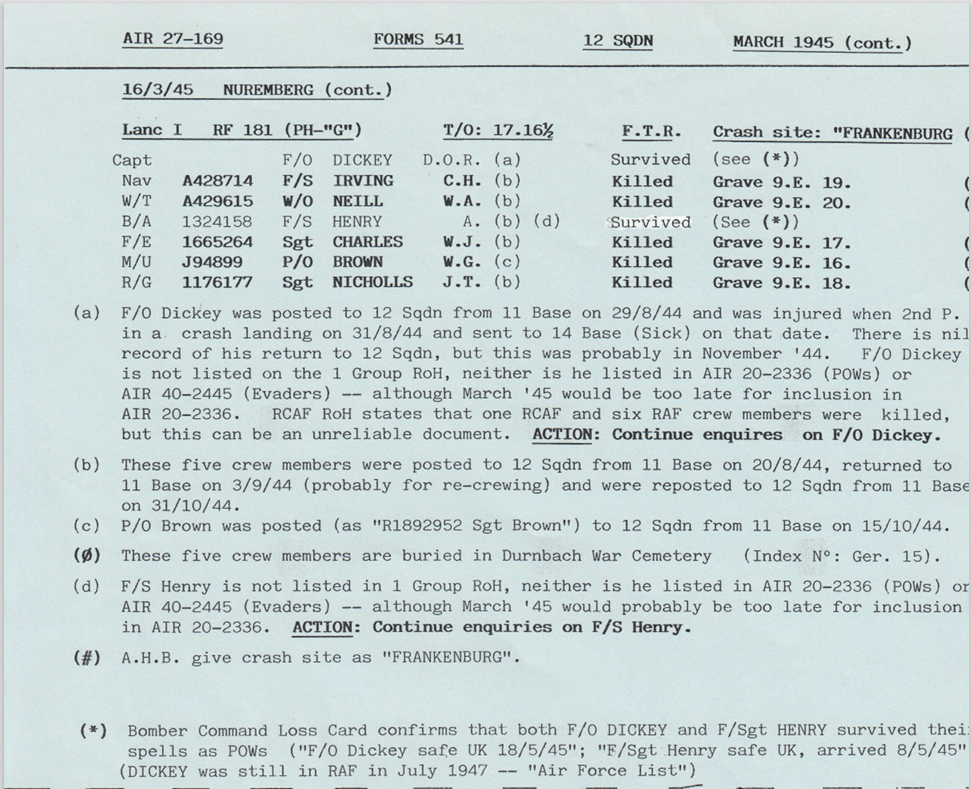
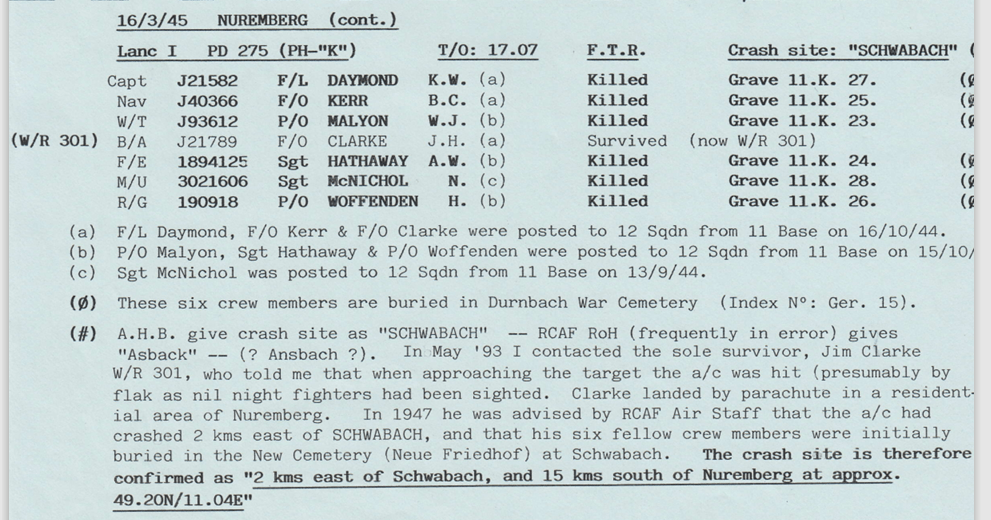
This week saw one of the worst nights, for casualties, of the war for RAF Wickenby, with 5 aircraft being lost during the attack on Nuremburg – 25 aircrew were killed and 10 became POW’s – there are some detailed accounts from survivors in the Station Diary section below. Attacks were also made to benzol plants and minelaying in the Baltic and Oslo Fjord.

Extract from Station Diary
The crew of Pilot Officer Ian Felgate, the son of John Murchison Felgate & Millie Fay Felgate of Trayning, Western Australia, which included 4 other Australians, who were shot down during the attack on Nuremburg on 16 March 1945. Only the flight engineer and the bomb aimer survived as POW’s. Top L to R, F/Sgt C Devine – B/A, W/O H Nixon – F/E (845), F/Sgt T Lamprell – Nav. F/Sgt V Arnold – M/U, Bottom L to R F/Sgt G Barbeler – R/G, F/O M Felgate – Pilot, F/Sgt J Hyde – W/Op
The crew of Fg Off Keith Mabee, RCAF, who were shot down on the Nuremburg raid. Five were killed and 2 became POW’s.

Extract from 12 Sqn Appendix to Operational Record Book

Extract from 626 Sqn Appendix to Operational Record Book

2 – 8 March 1945

Overview

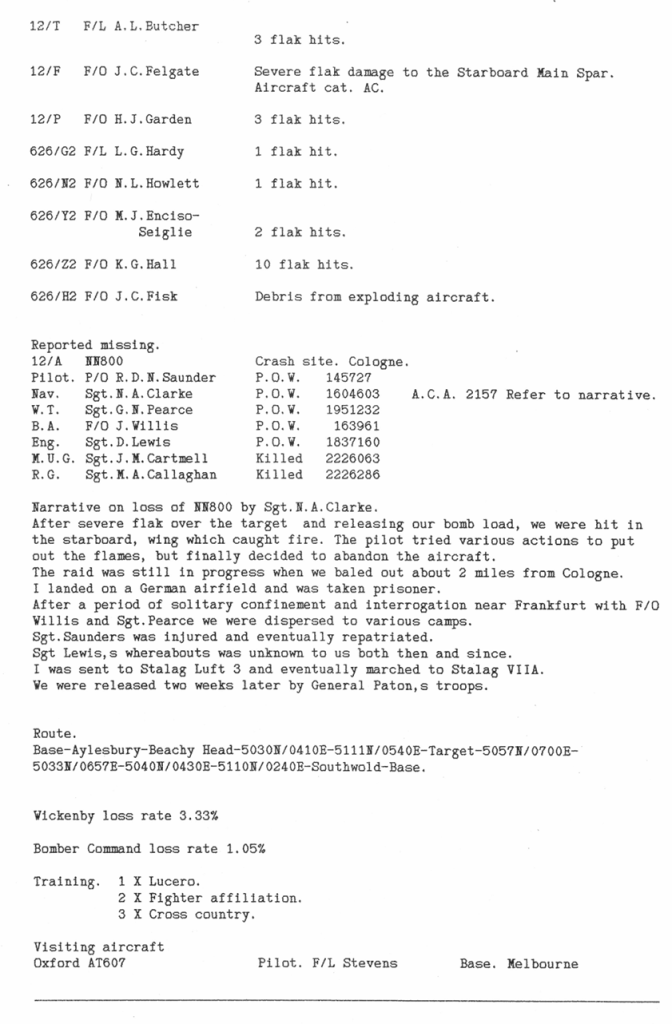
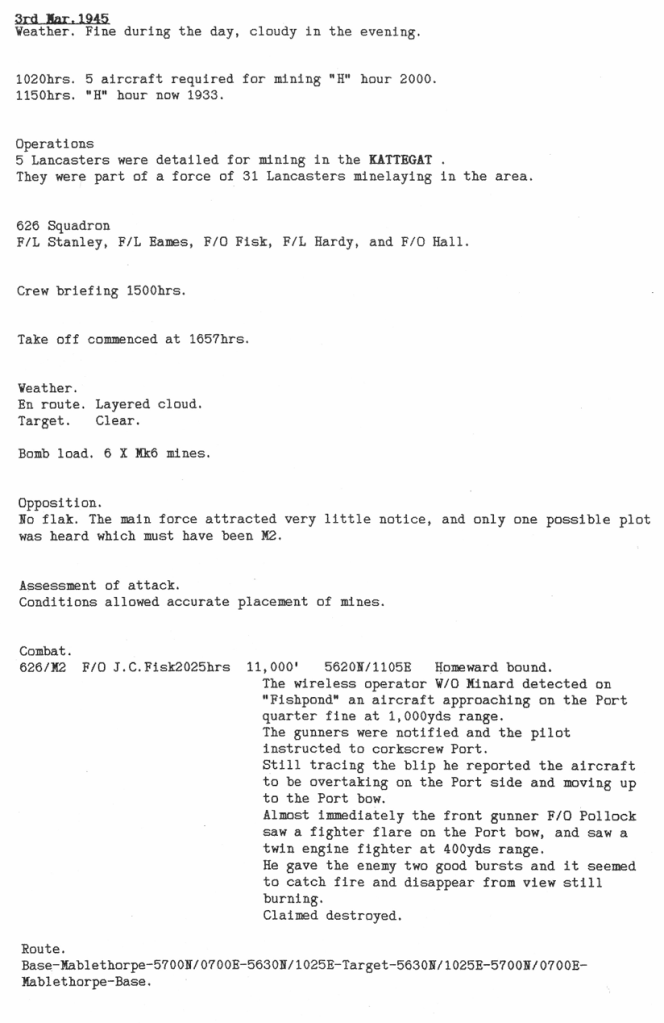
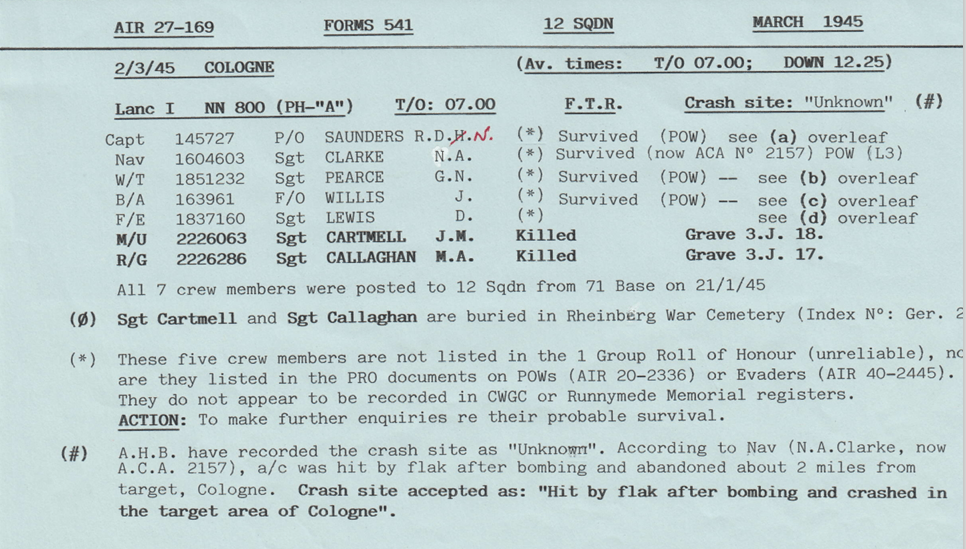
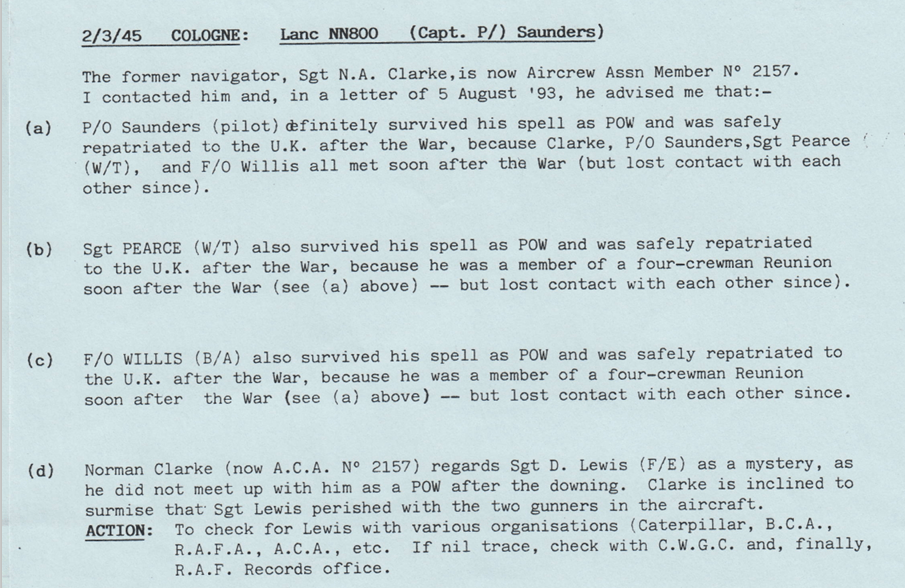
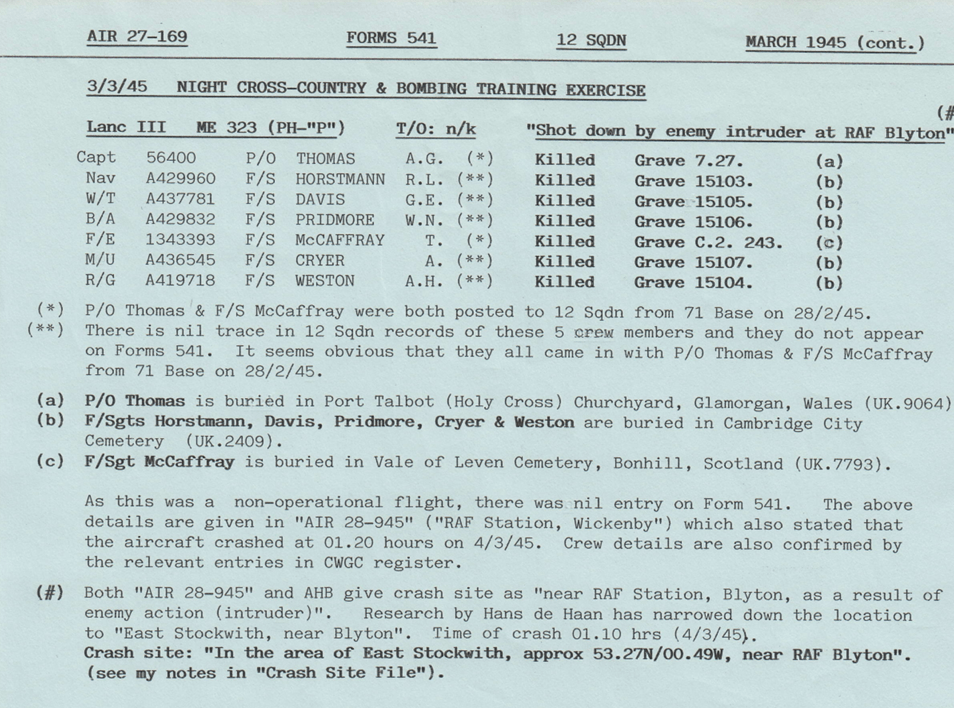
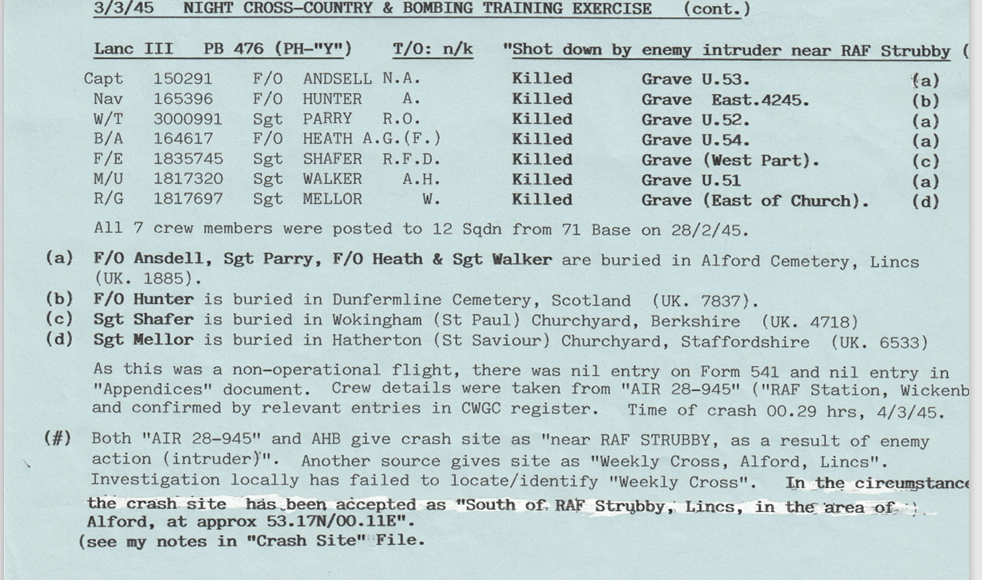
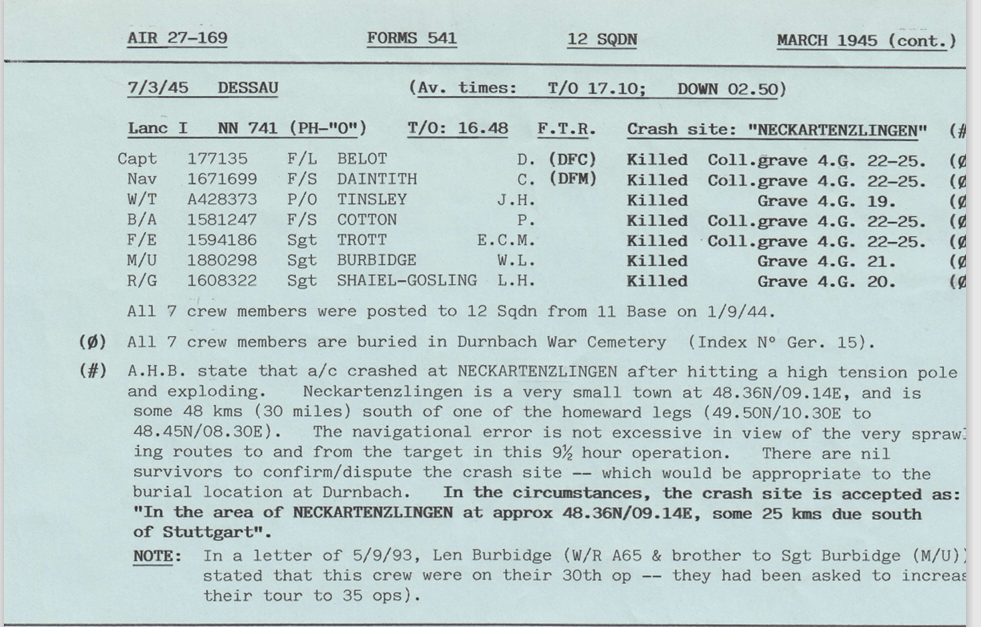
A busy and costly week for RAF Wickenby, attacks were made on Cologne, Chemnitz, Dessau and Kassel as well as minelaying in the Baltic Sea. There was also a big attack by German night fighters over eastern England on the 3 March, which resulted in 2 Wickenby aircraft being shot down. The total losses for the week were 4 aircraft lost, 23 aircrew killed and 5 becoming POW’s.

The mission to Cologne was the last one the RAF carried out to that city as it was captured by American forces 4 days later.

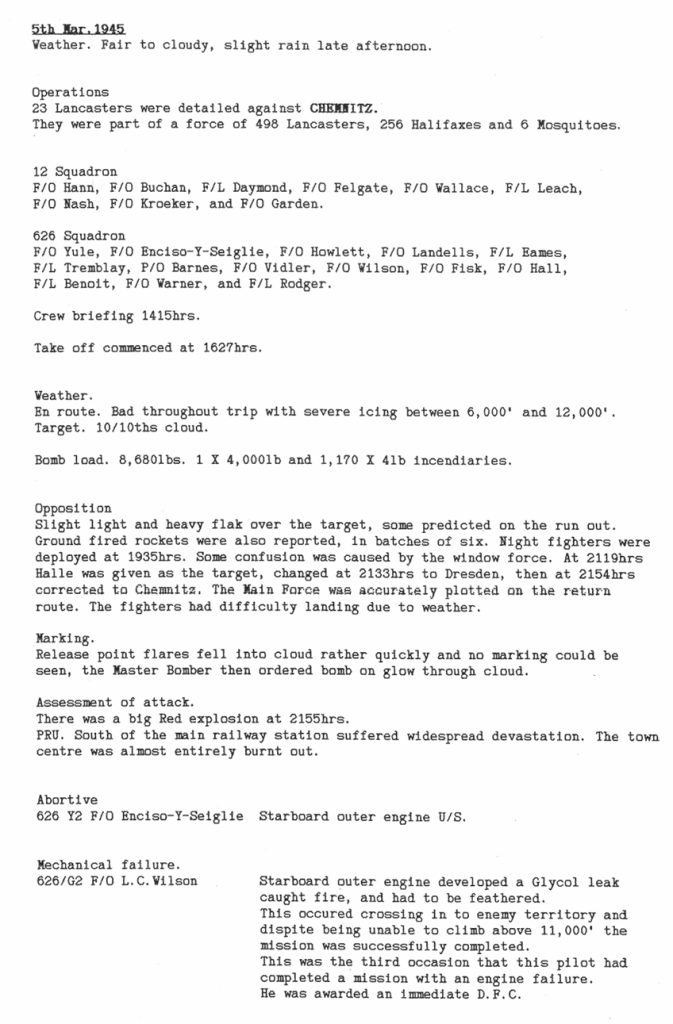
The German night fighter attack was called Operation Gisela, and lasted two and a half hours – during that time 13 Halifaxes, 9 Lancasters, one Fortress and one Mosquito were shot down. The Germans also straffed anything that moved on the ground, killing 17 civilians and wounding 12 seriously. Five German aircraft were lost over England and 3 more crashed returning to their home bases. One crew of four (with a ground engineer who hitched a lift) were killed shooting up a civilian car, near Welton, driven by a member of the Royal Observer Corps, hitting overhead wires and crashing onto the car, killing the driver Mr J.P. Kelway and all the crew. The crew are buried in Scampton village church cemetery.

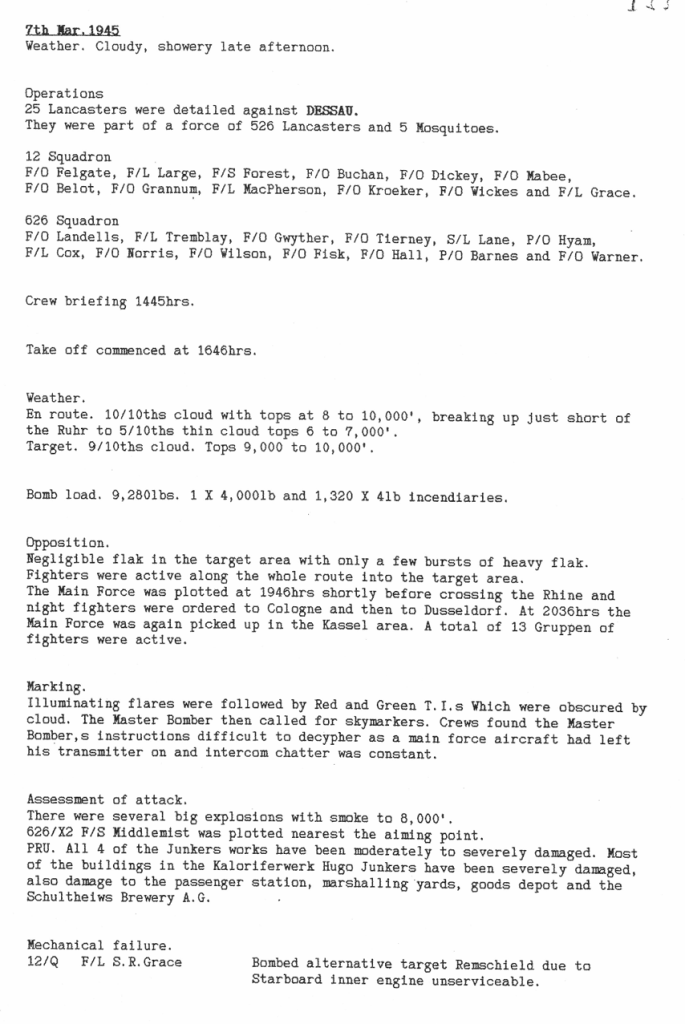
Extract from Station Diary
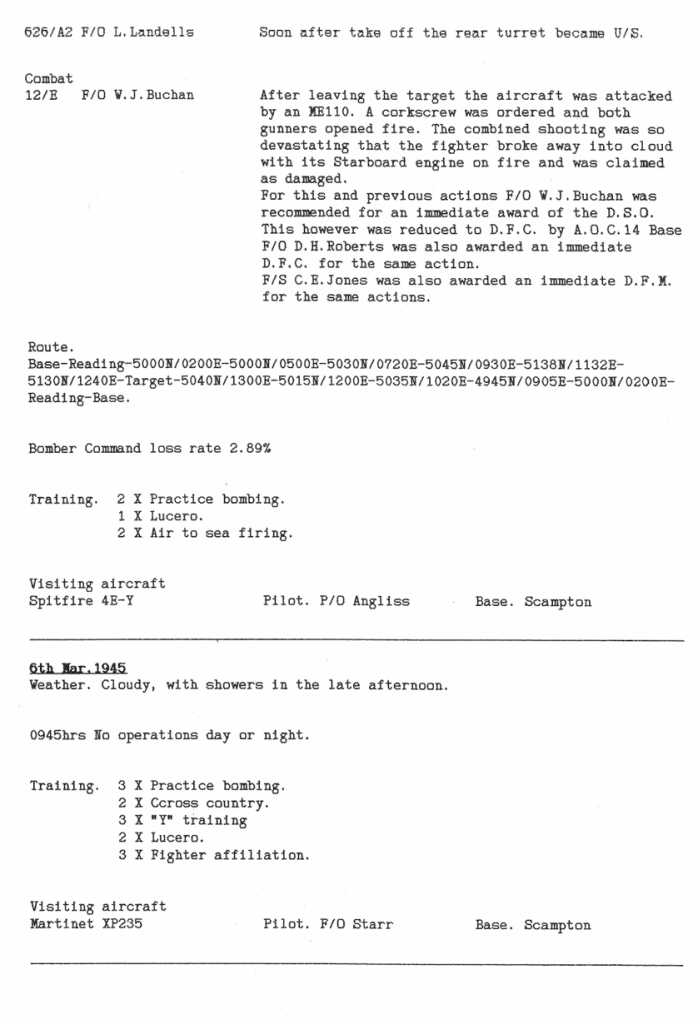
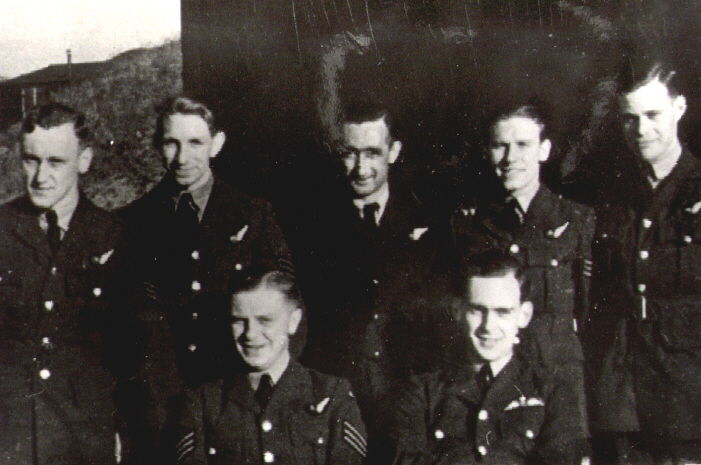
Flt Lt Denis Belot DFC and his crew, who were all killed during the attack on Dessau on 7 March 1945

Extract from 12 Sqn Appendix to Operational Record Book

23 February – 1 March 1945

Overview

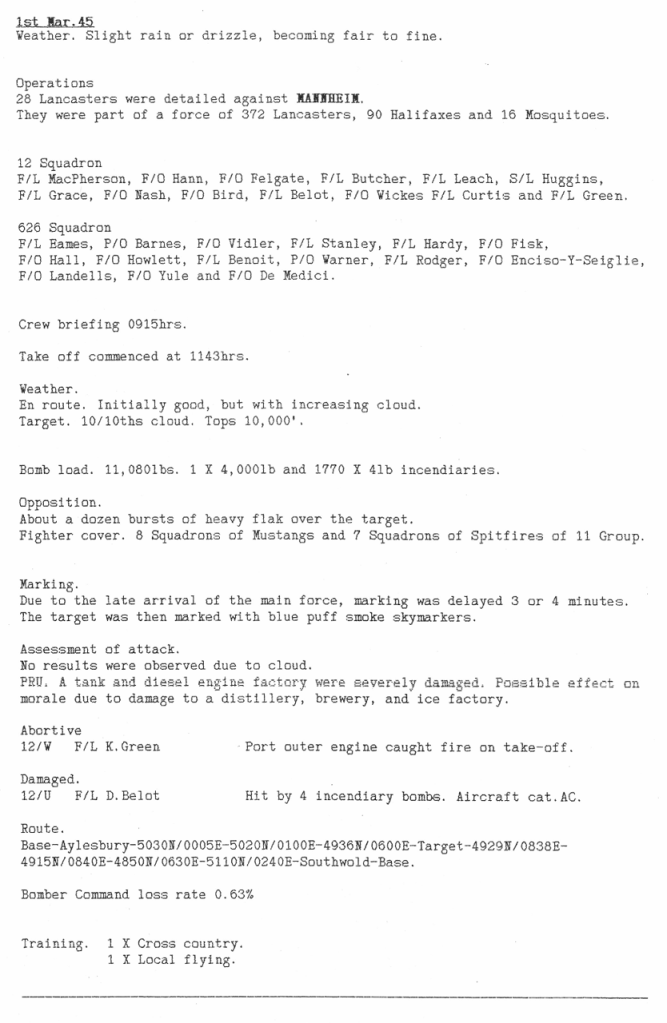
Attacks continued on German targets this week to Pforzheim, Neuss and Mannheim. The Pforzheim mission was the first to that town and was devastating, destroying more than 80% of the buildings and killing 17,000 people, the third largest total after Hamburg and Dresden. The Master Bomber, Captain Edwin Swales DFC, a South African, received the last Bomber Command VC of the war during this raid.

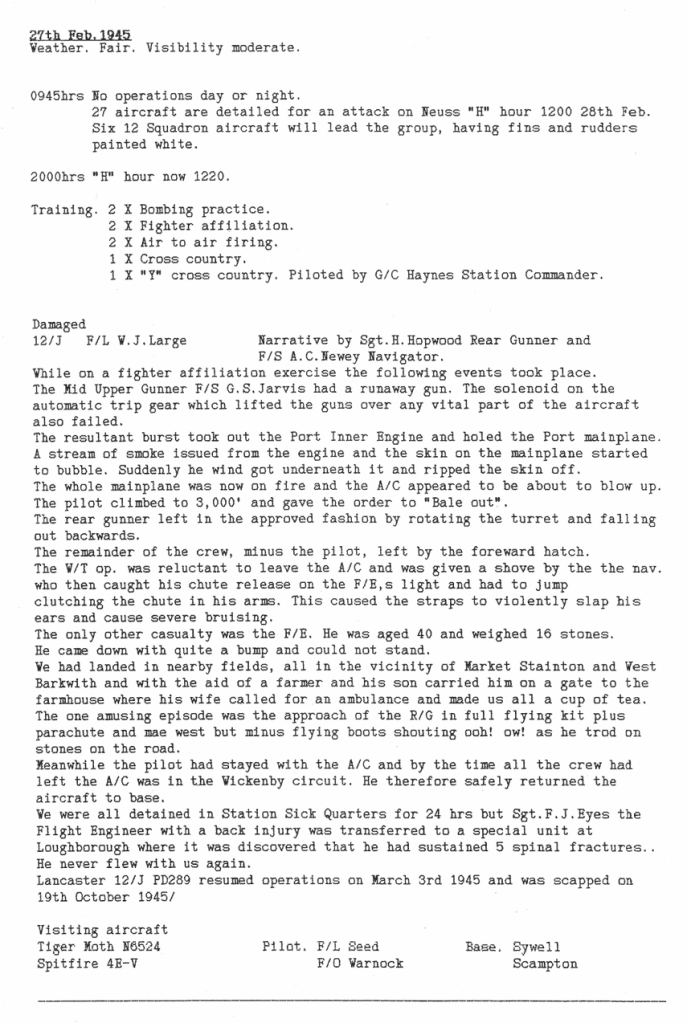
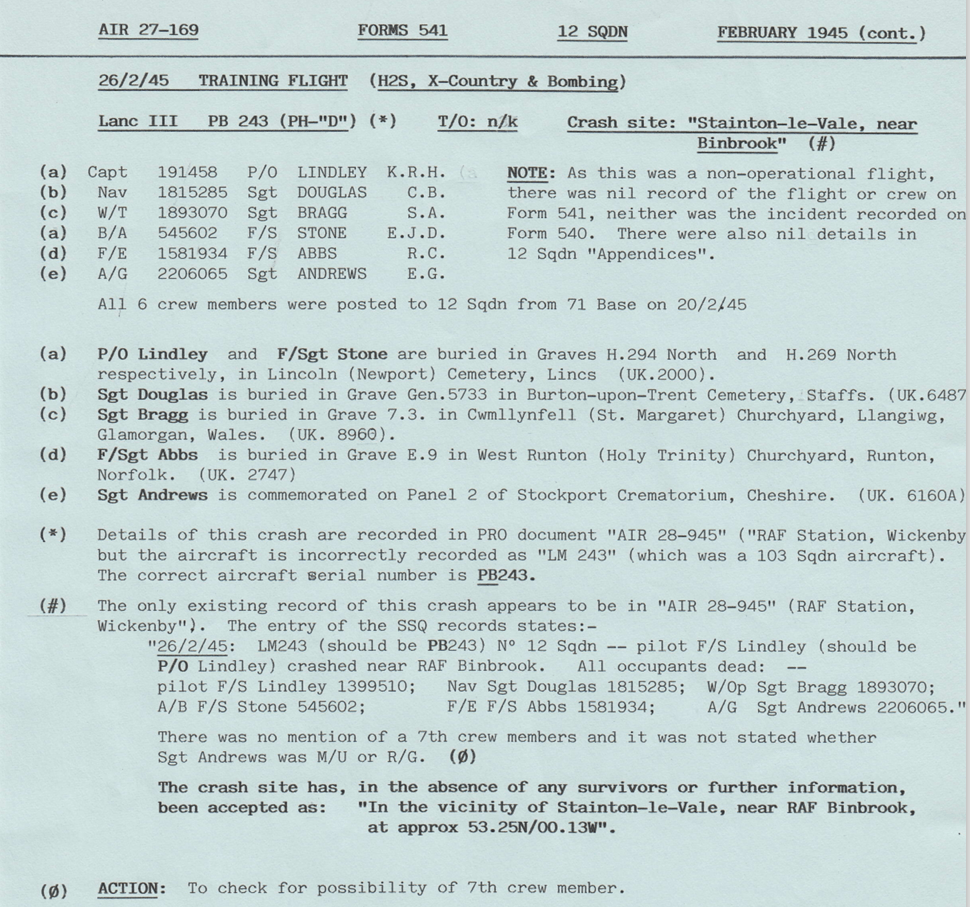
Only one aircraft was lost this week, on a training flight, with 6 aircrew killed, but one other was seriously damaged, following an out of control rear turret (see Station Diary below), whose machine guns caused all the crew but the pilot to bail out. The Flight Engineer was so seriously injured he did not fly again.

Extract from Station Diary
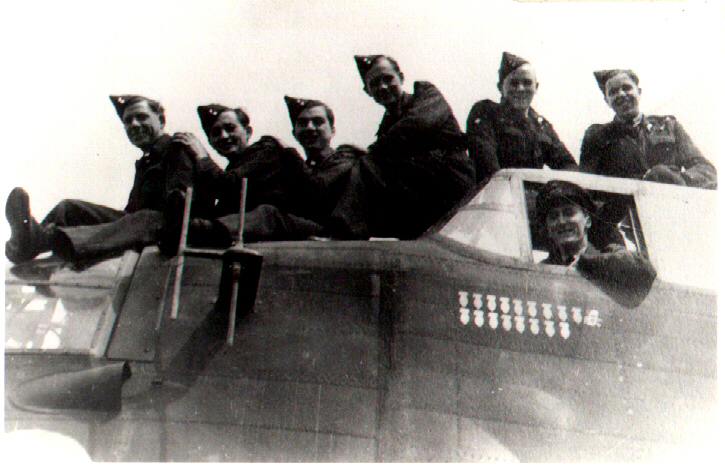
Flt Lt Large and his crew, who were involved in the incident with the out of control rear turret (see above) – L to R, J Gant – B/A, J Jarvis – M/U, D Mackey – F/E (63), A C Newey – Nav (424), H Hopwood – R/G, W Raycraft – W/T (83), J Large – Pilot (in cockpit)

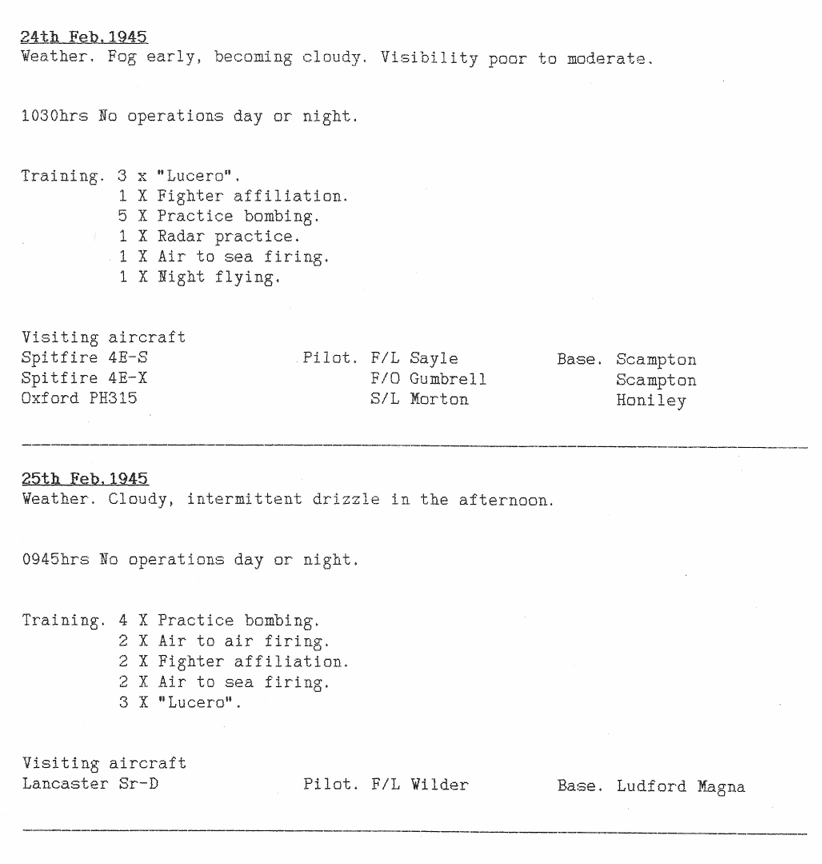
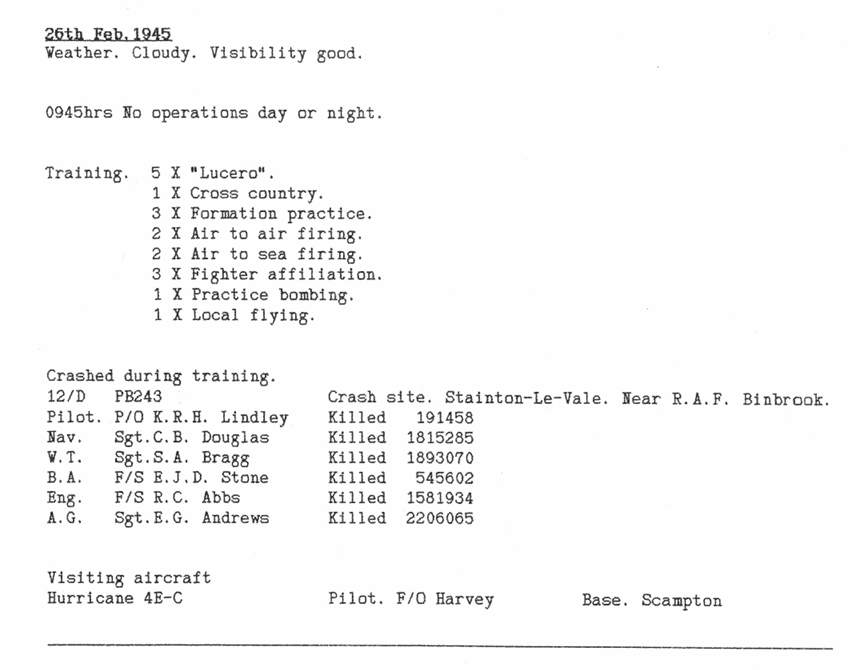
Extract from Appendix to 12 Sqn Operational Record Book

16-22 February 1945

Overview

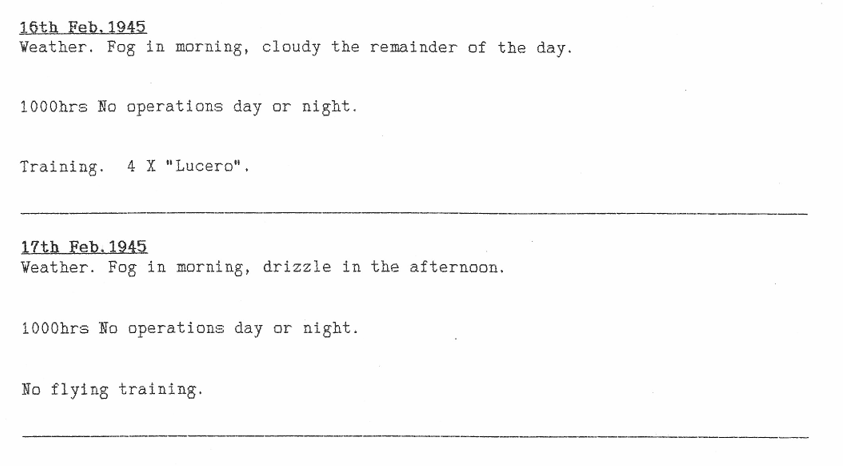
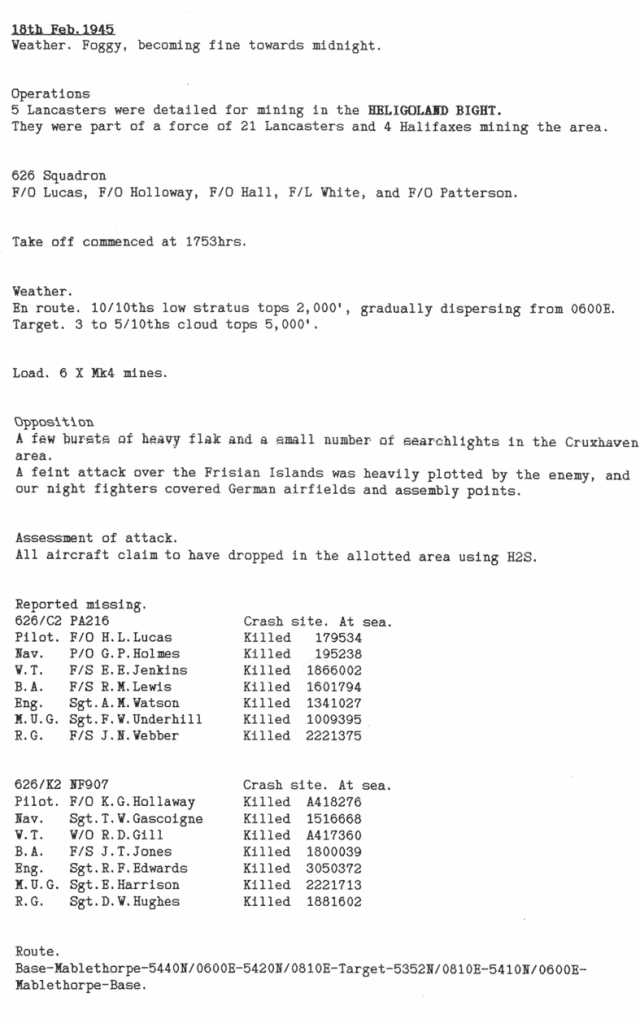
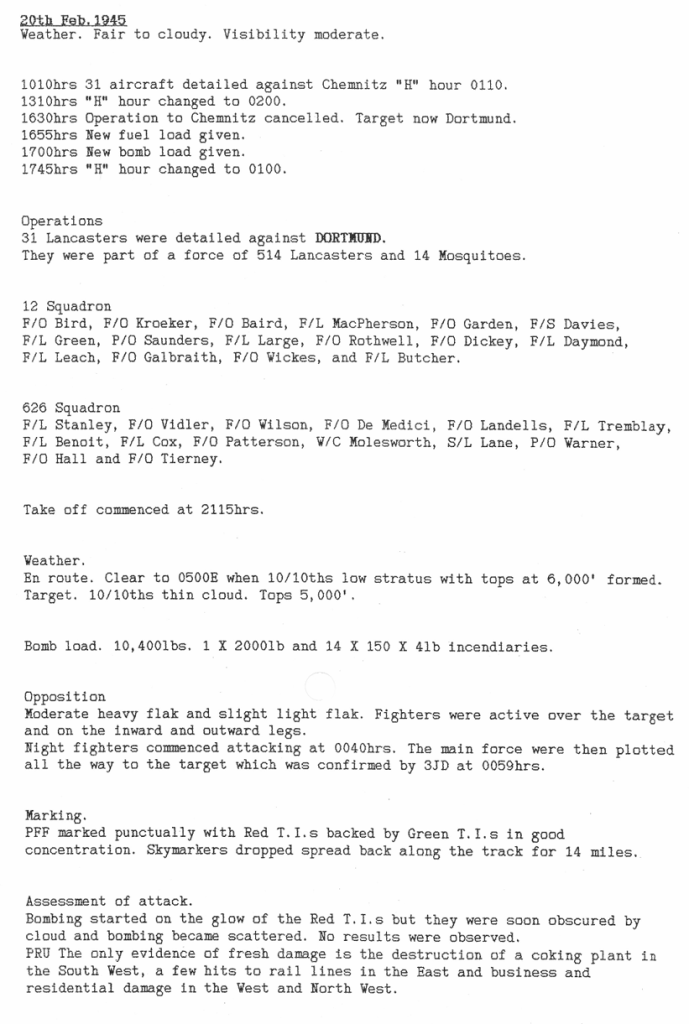
There were 3 operations this week, all to targets in Germany- minelaying in the Heligoland Bight, and bombing attacks on Duisburg and Dortmund – 4 aircraft were lost, 27 aircrew were killed and one was believed to have evaded capture, all these casualties were from 626 Sqn.

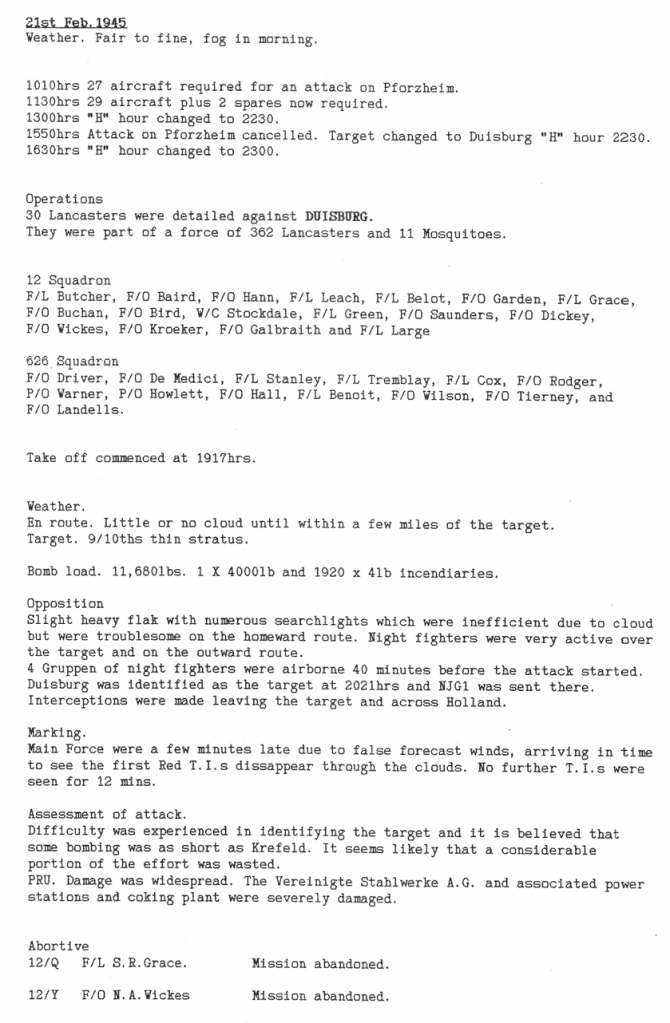
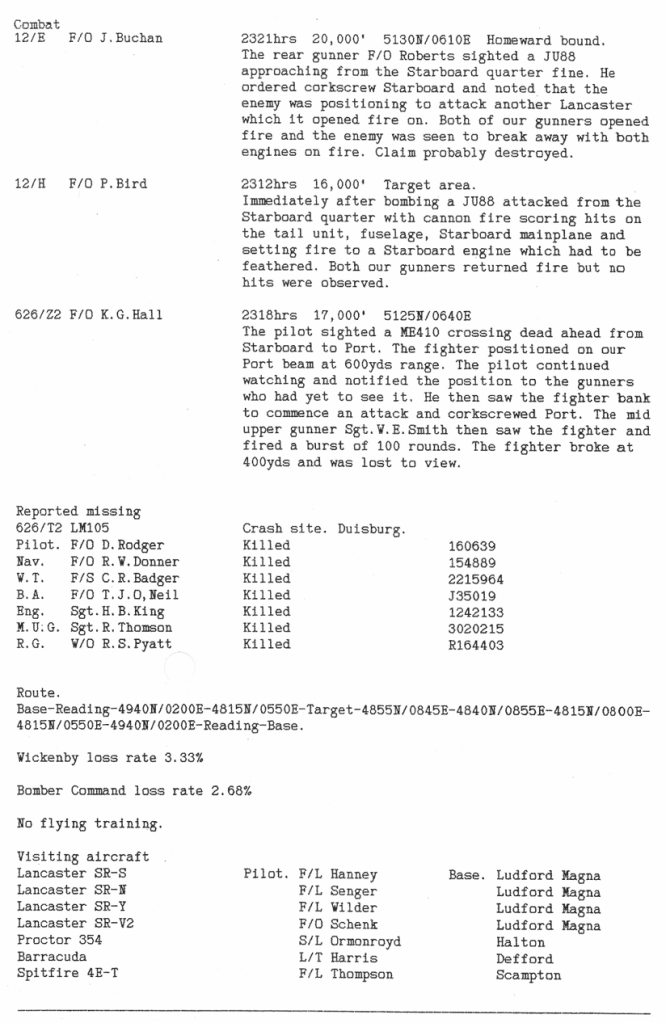
Extract from Station Diary
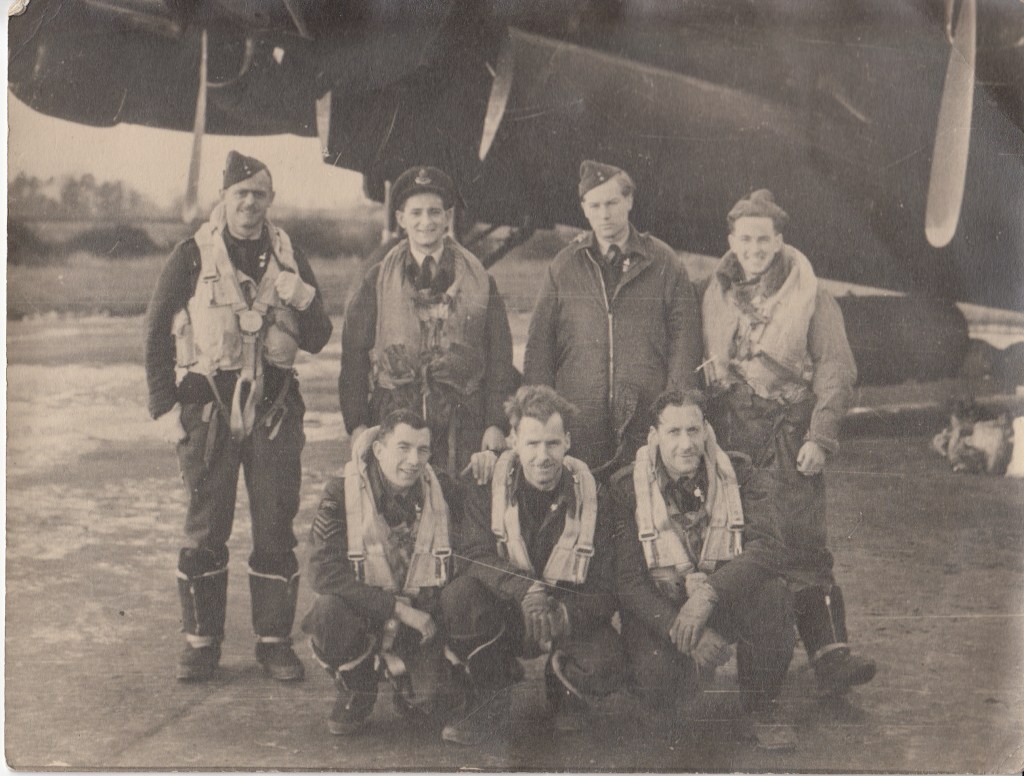
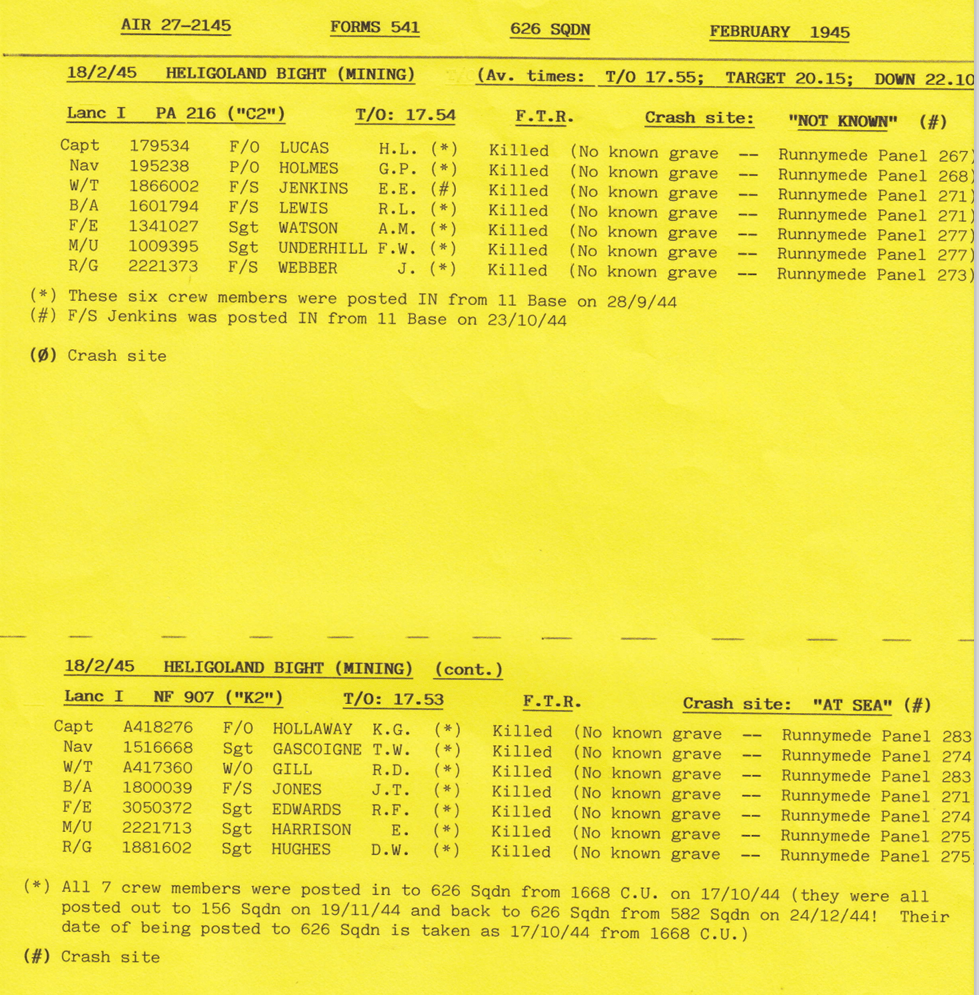
Fg Off Harold Lucas and his crew, who were all killed during a minelaying operation on 18/19 February 1945
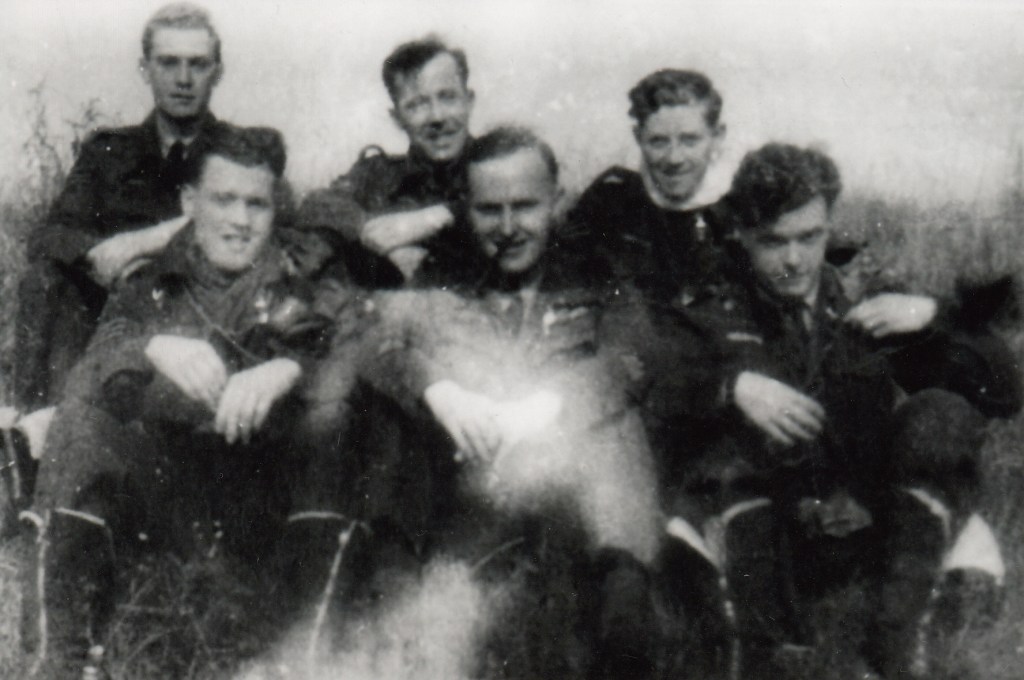
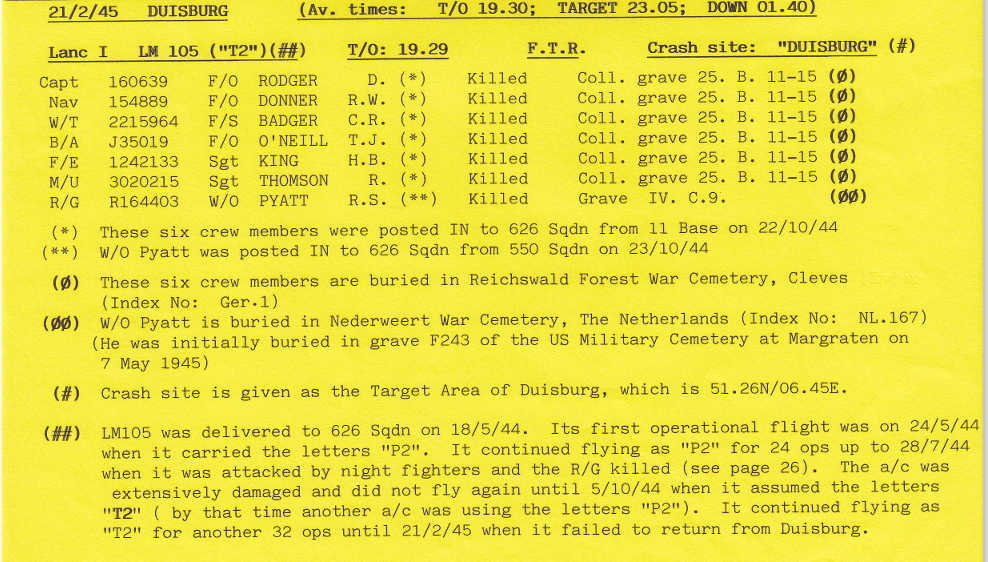
Fg Off Donald Rodger and his crew, who were killed during an operation to Duisburg on 21/22 February 1945

Extract from Appendix to 626 Sqn Operational Record Book

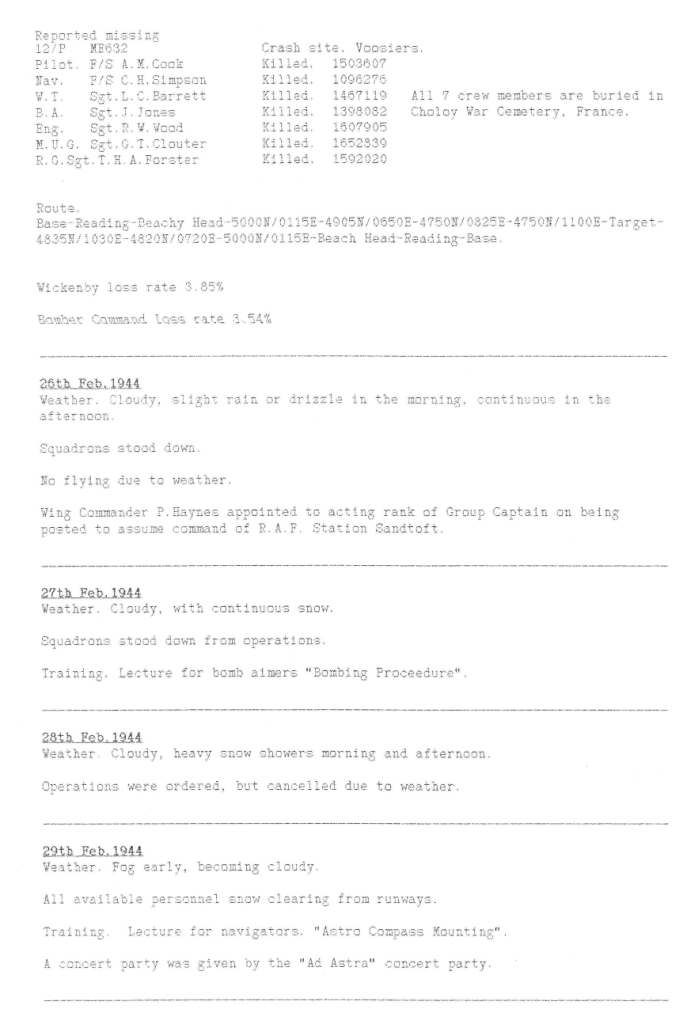
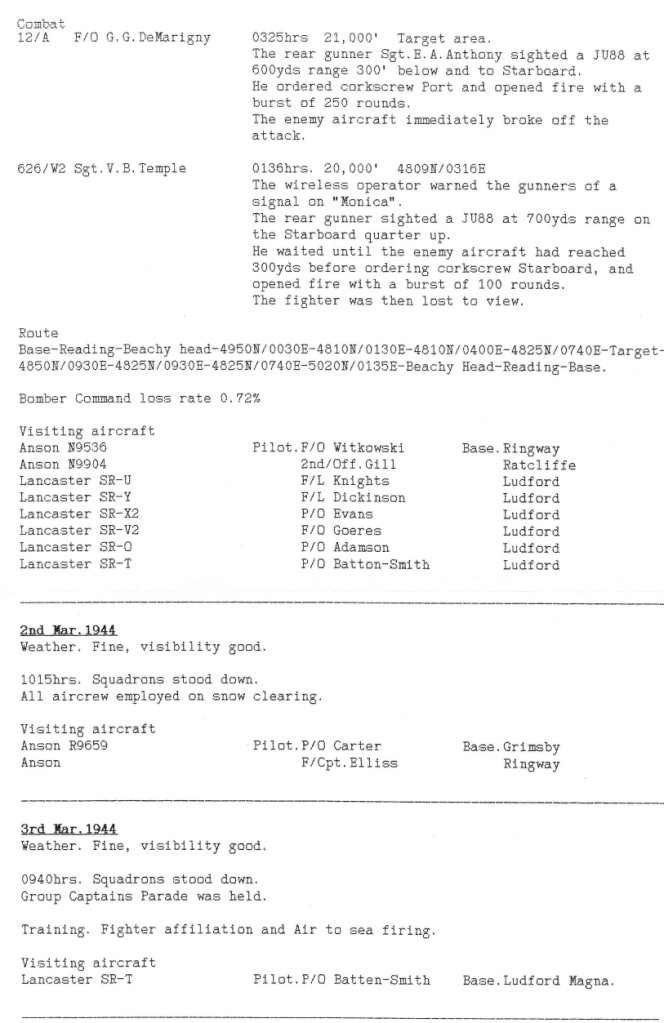
25 February – 3 March 1944

Overview

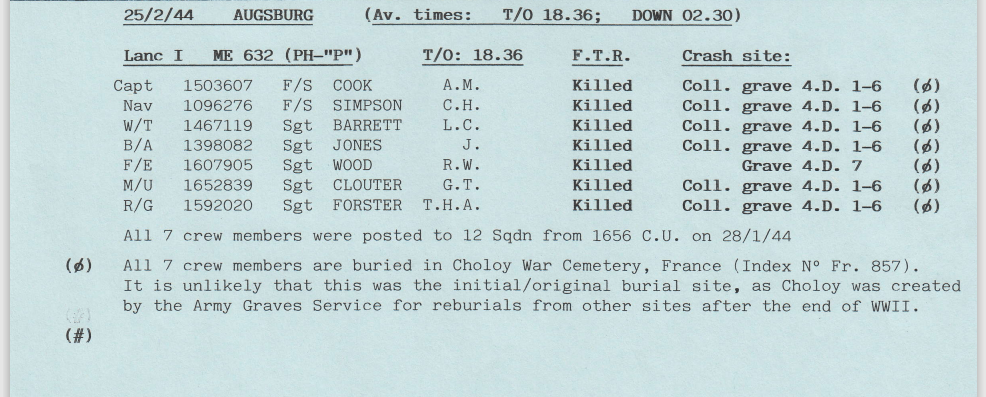
Aircraft from Wickenby took part in 2 raids during this week, to Augsburg and Stuttgart, with one aircraft and all its crew being lost.

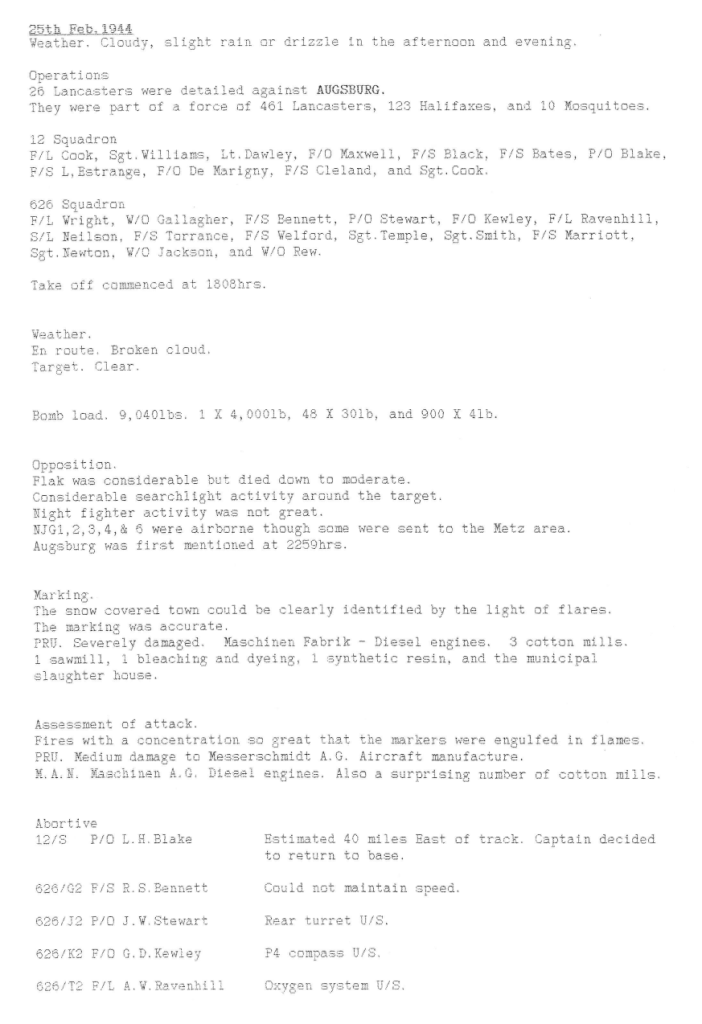
The Augsburg raid was very accurate and more than 2000 tons of bombs were dropped which destroyed the centre of the old town, with about 700 people being killed and 90,000 bombed out. Augsburg had not been attacked before and had very light defenses, which, with the clear weather over the target led to accurate Pathfinder marking.

Extract from Station Diary
Extract from Appendix to 12 Sqn Operational Record Book