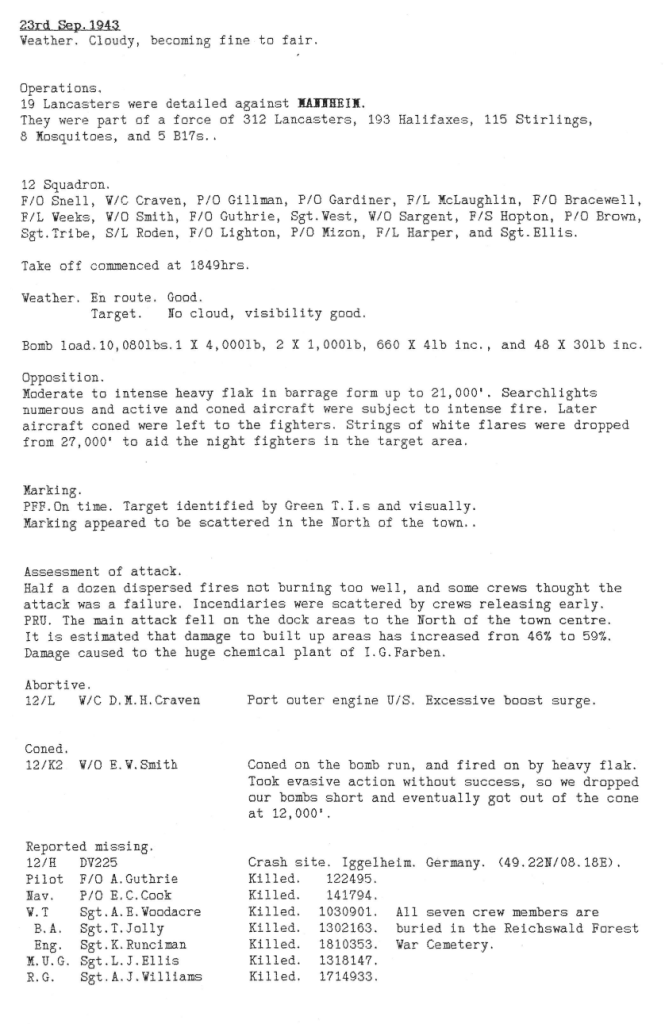
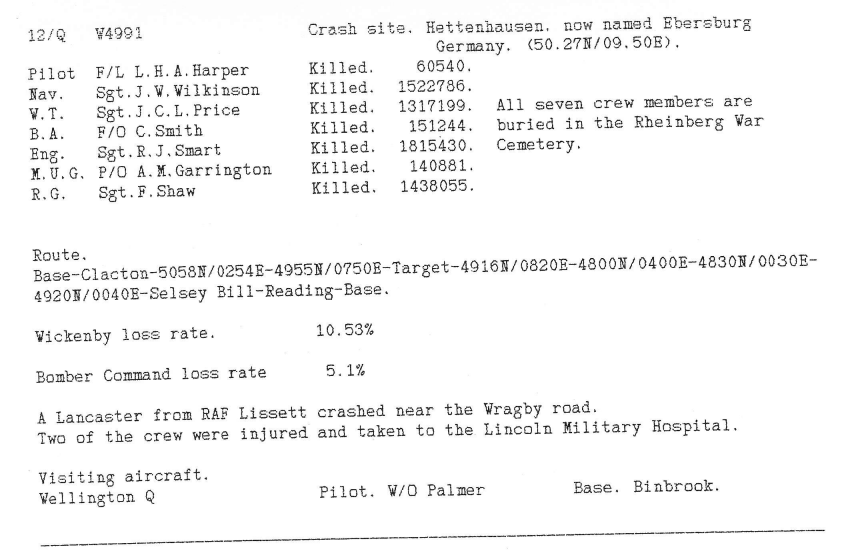
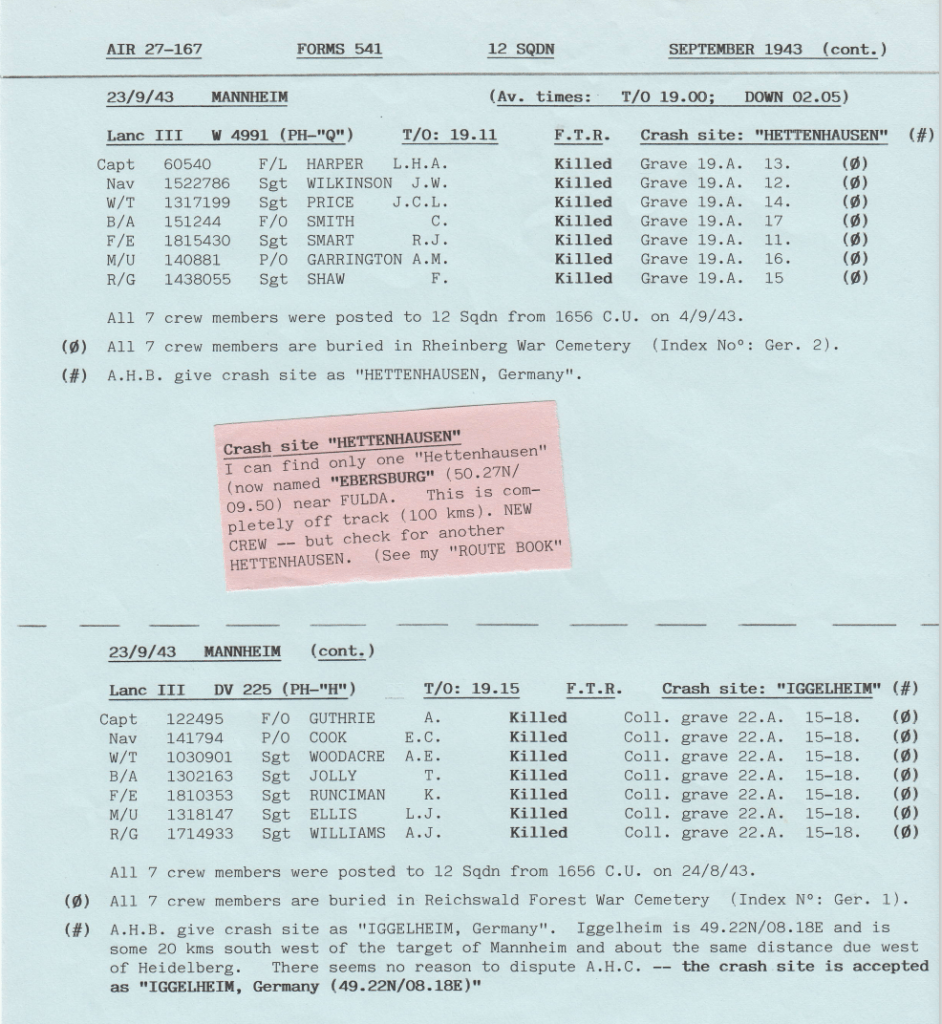
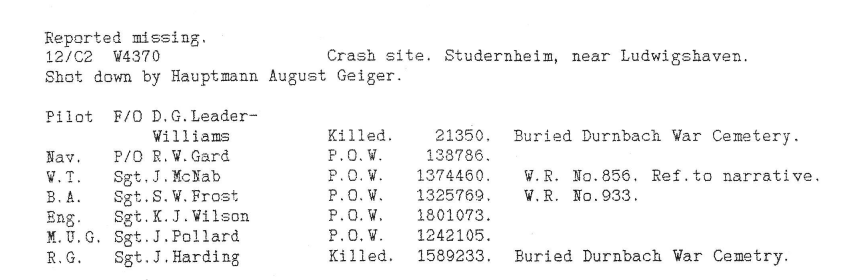
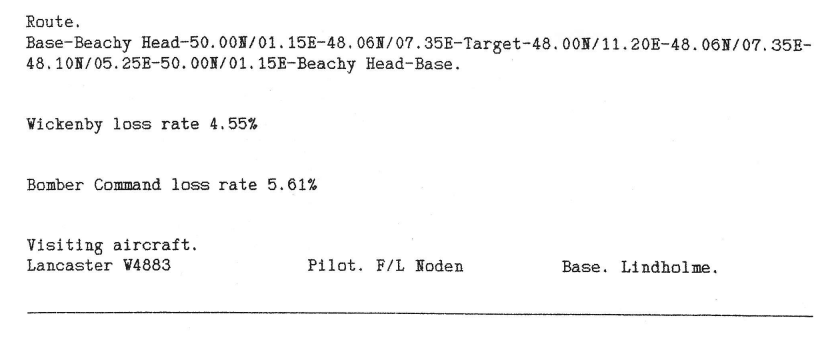
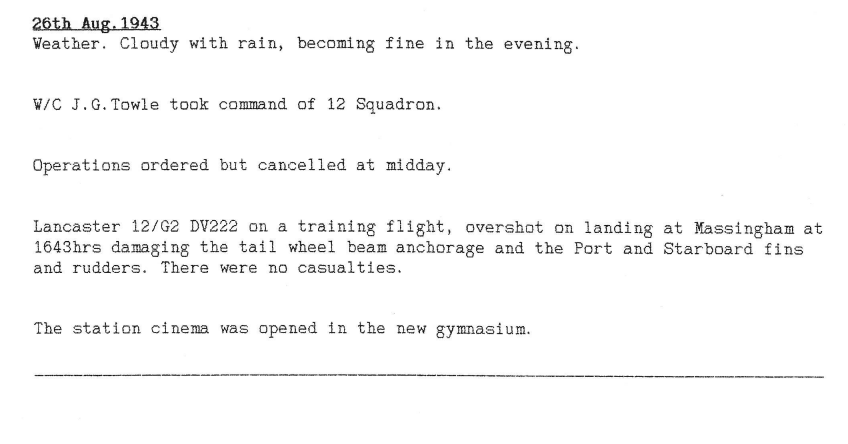
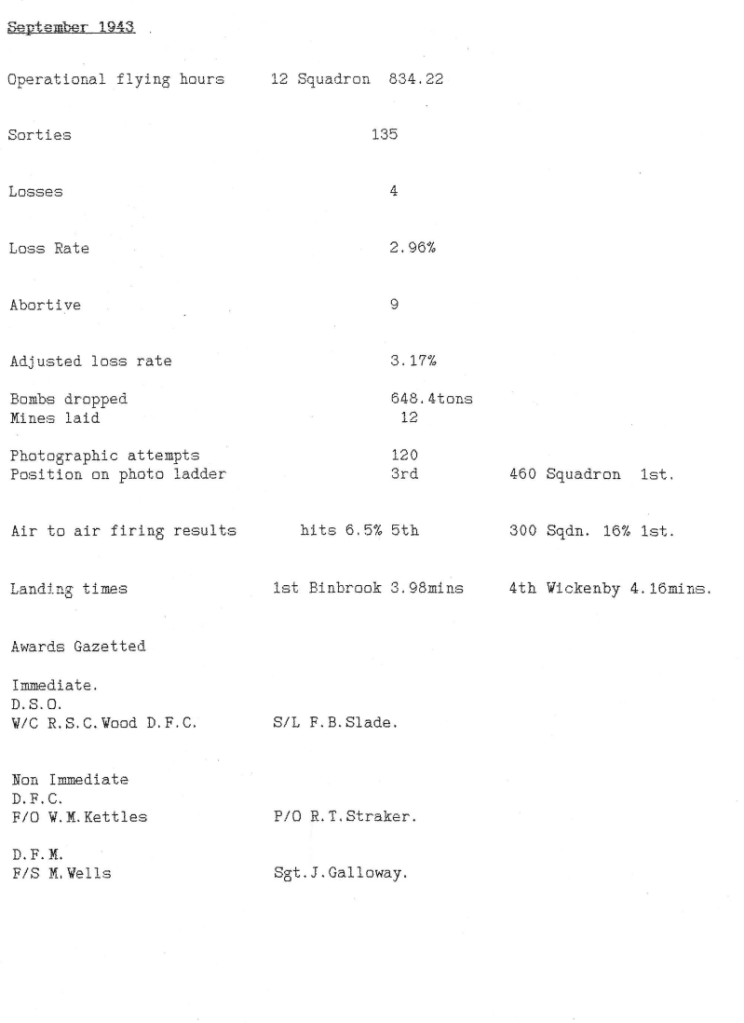
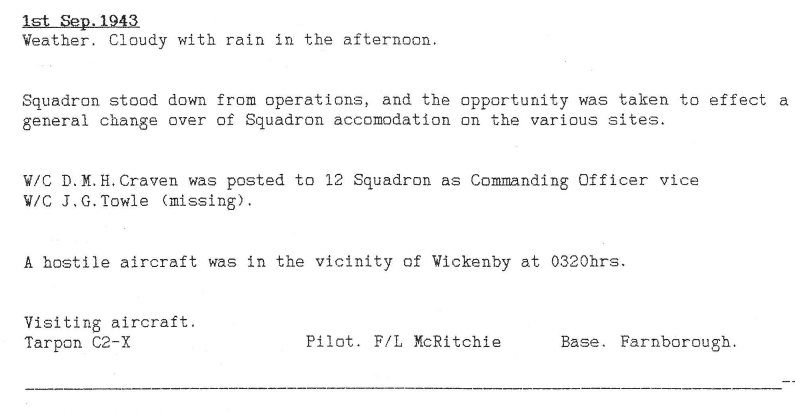
There were no operations until the last day of this week, when 12 Sqn joined the attack on Mannheim, which had been attacked earlier in the month. Two aircraft were lost with all their crews.
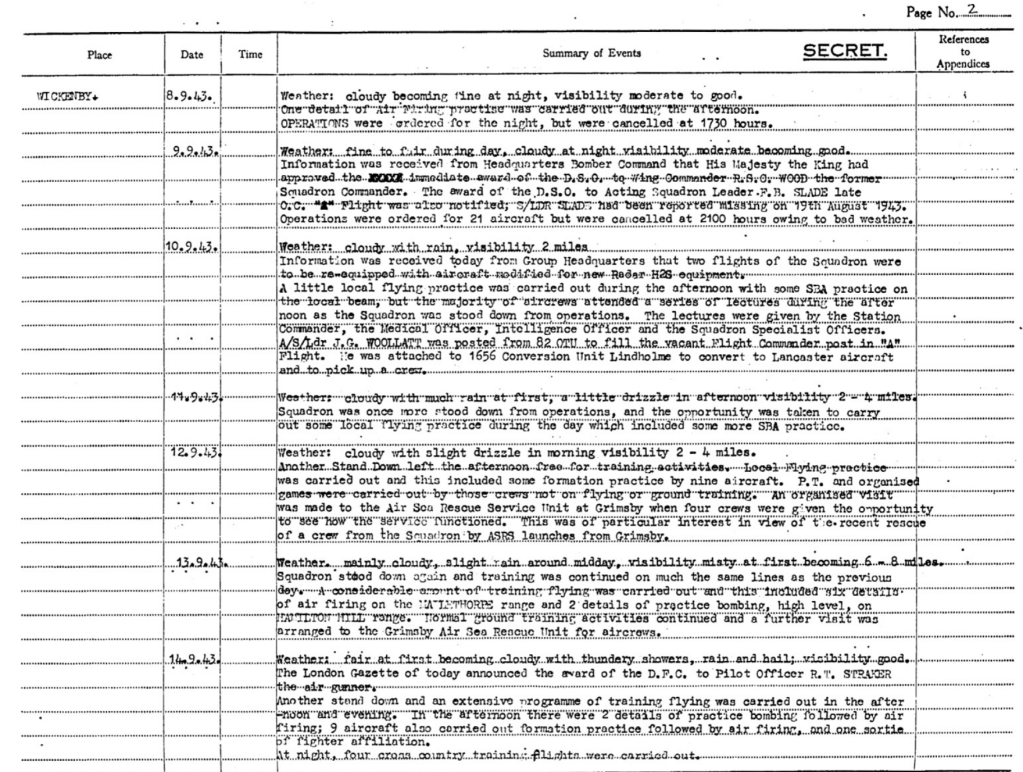
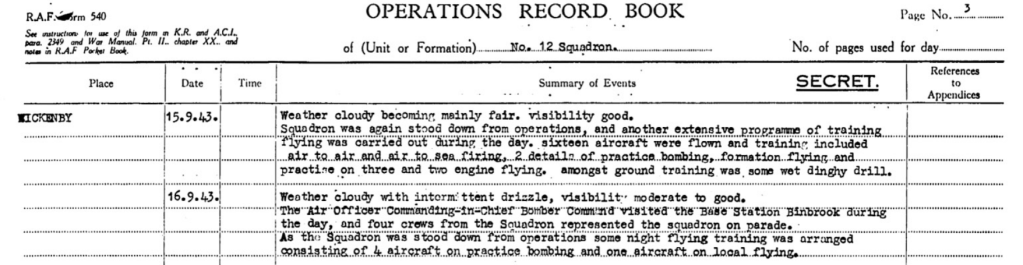
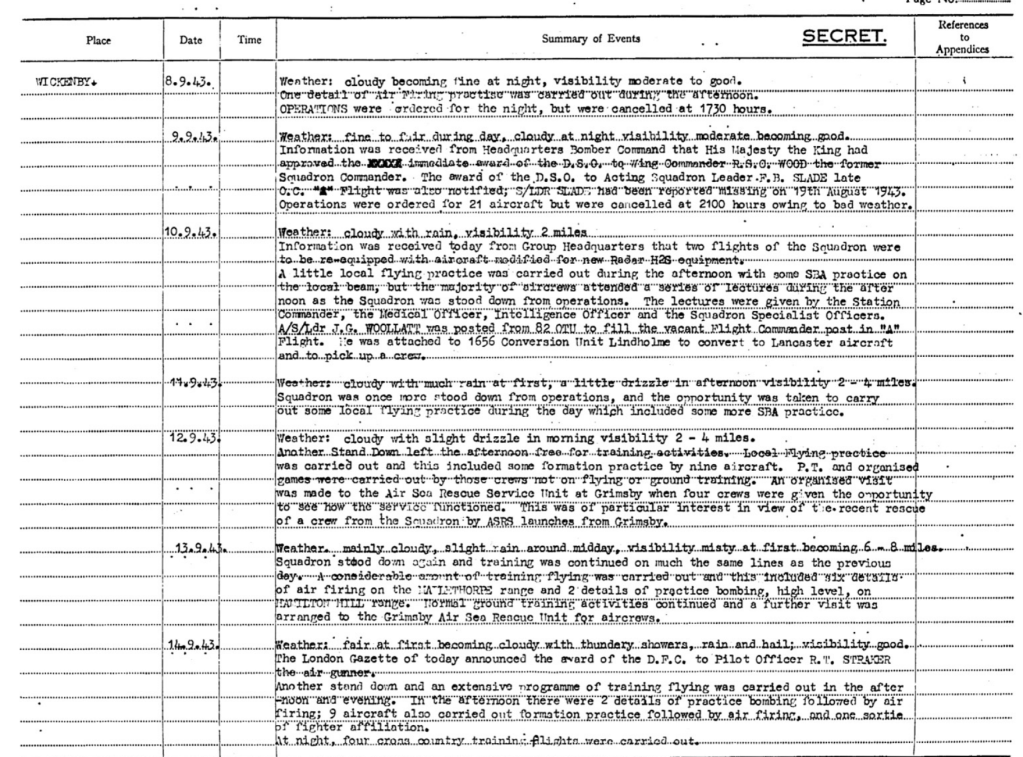
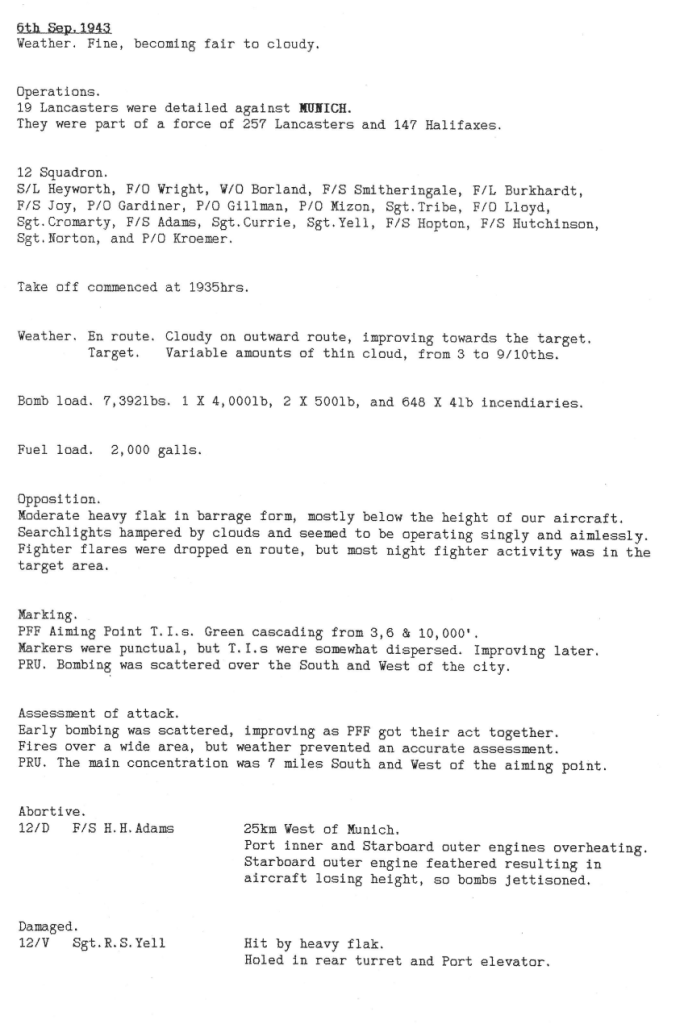
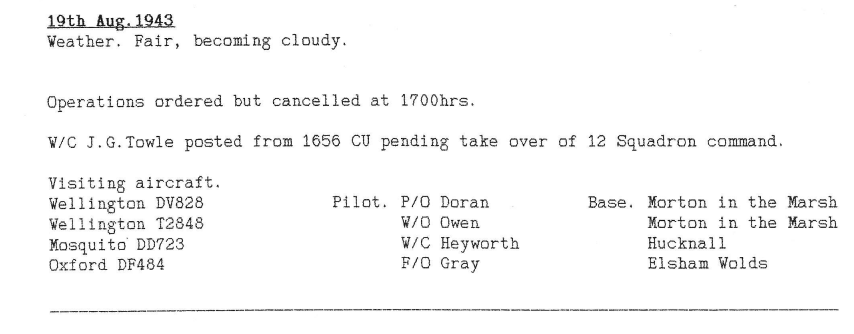
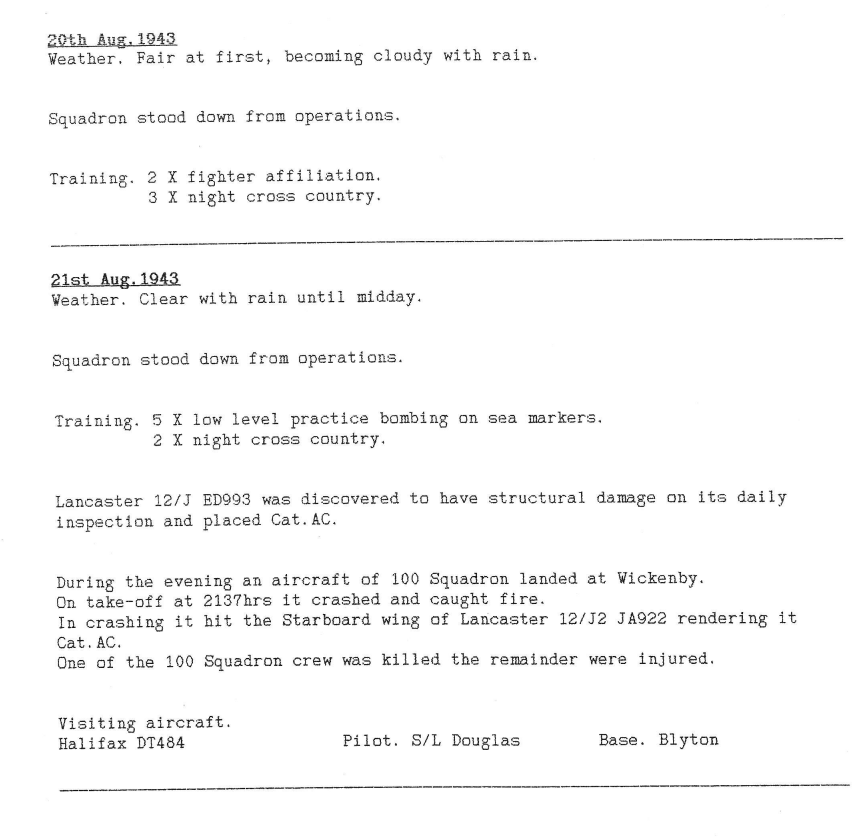
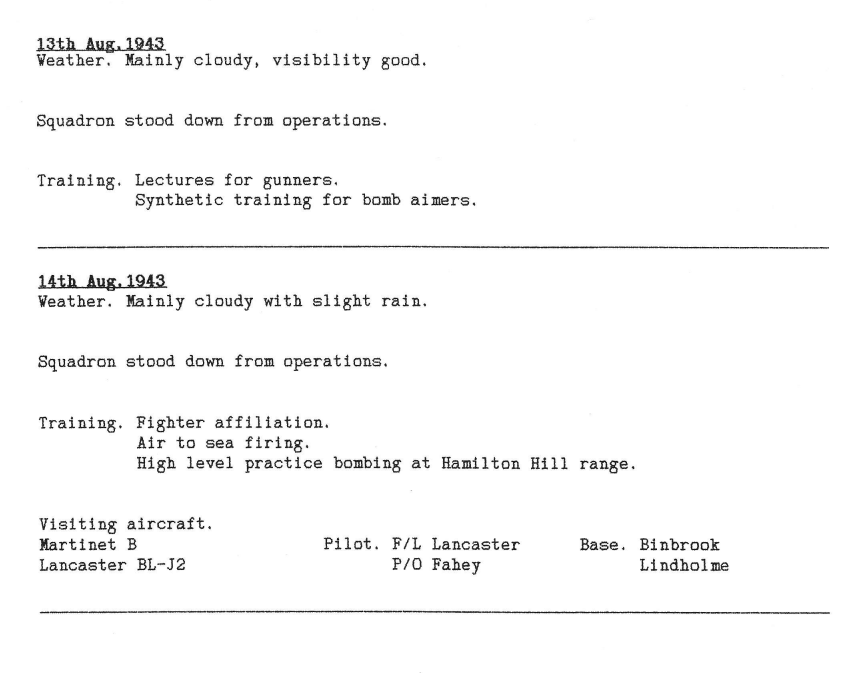
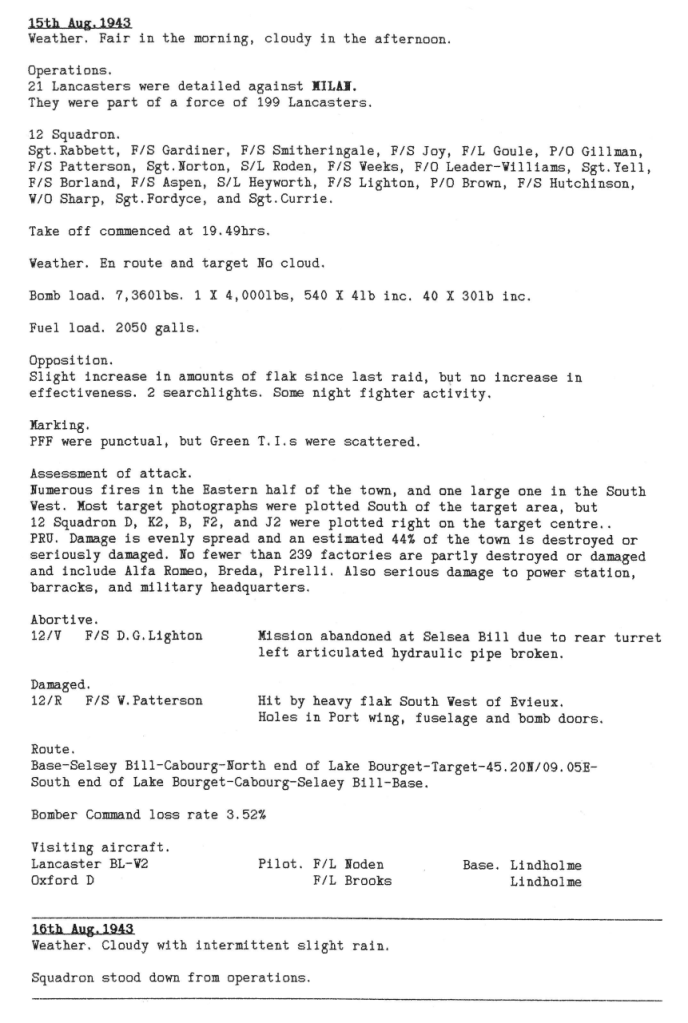
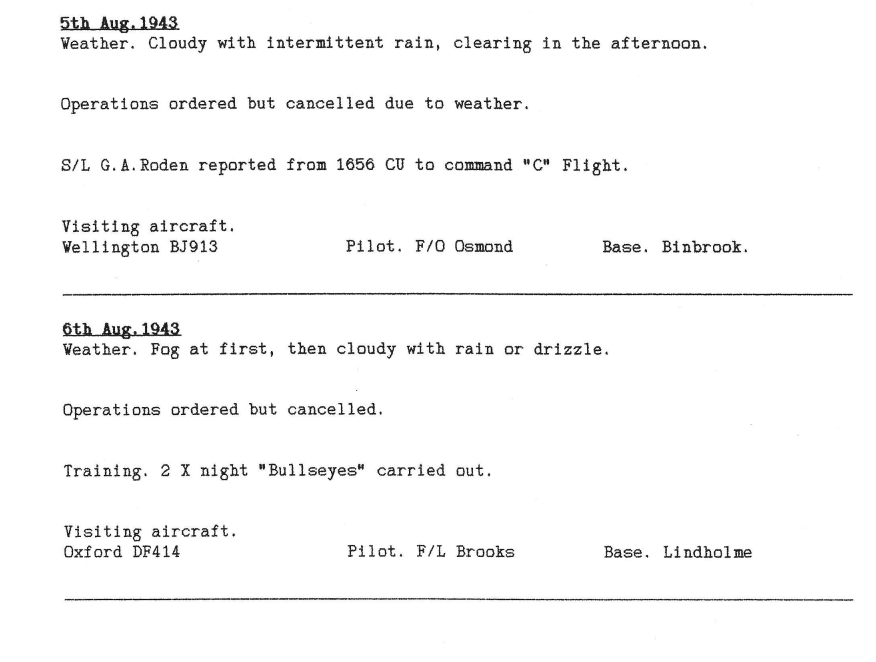
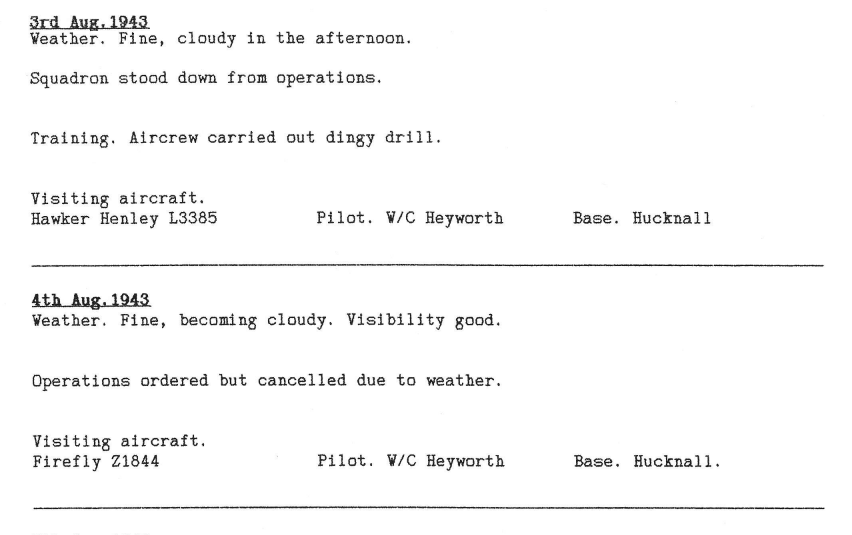
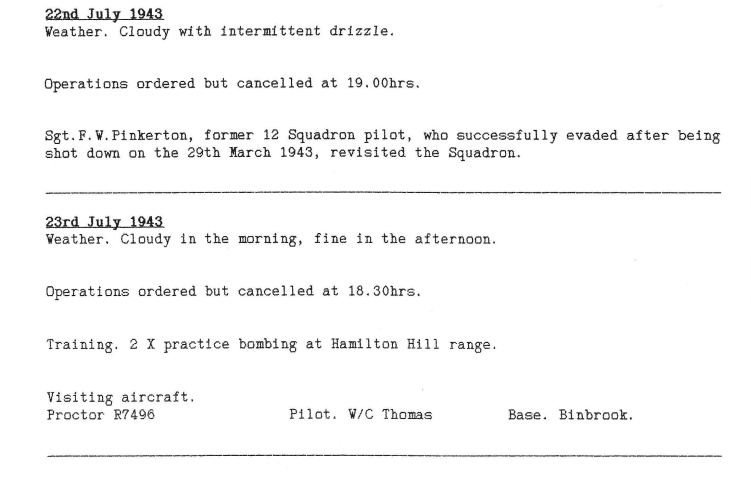
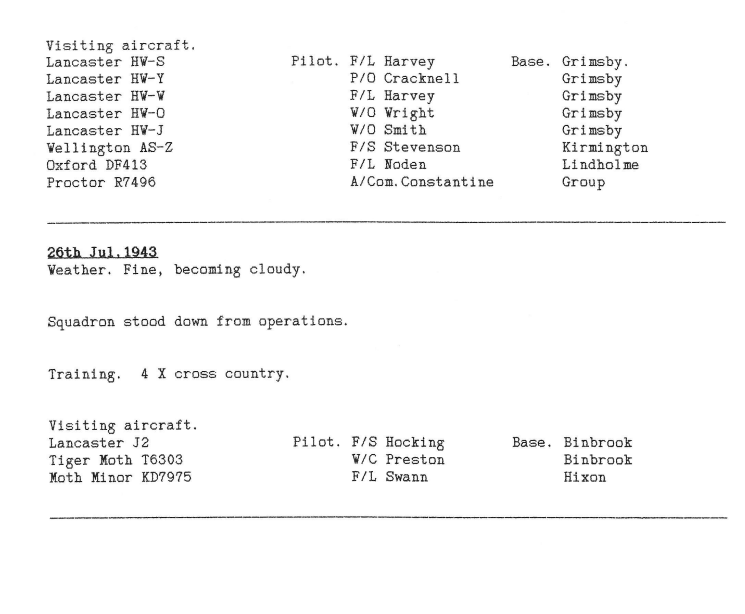
Aircraft from RAF Wickenby took part in no operations this week, however, airfields are always busy, with training, aircraft repairs and administration as can be seen in the 12 Sqn Operational Record Book for this period
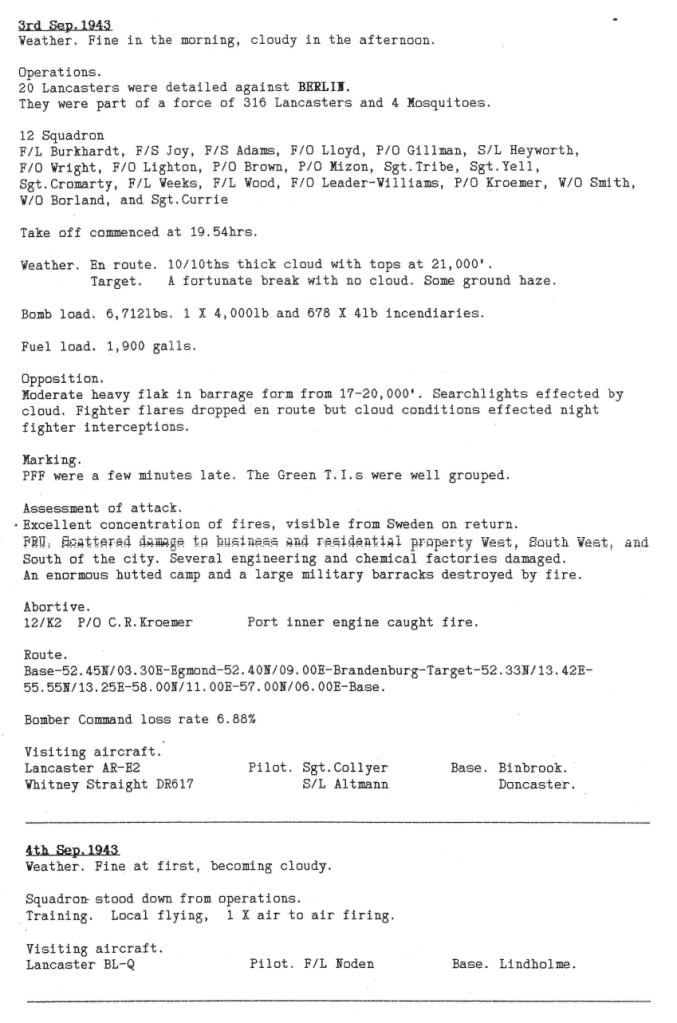
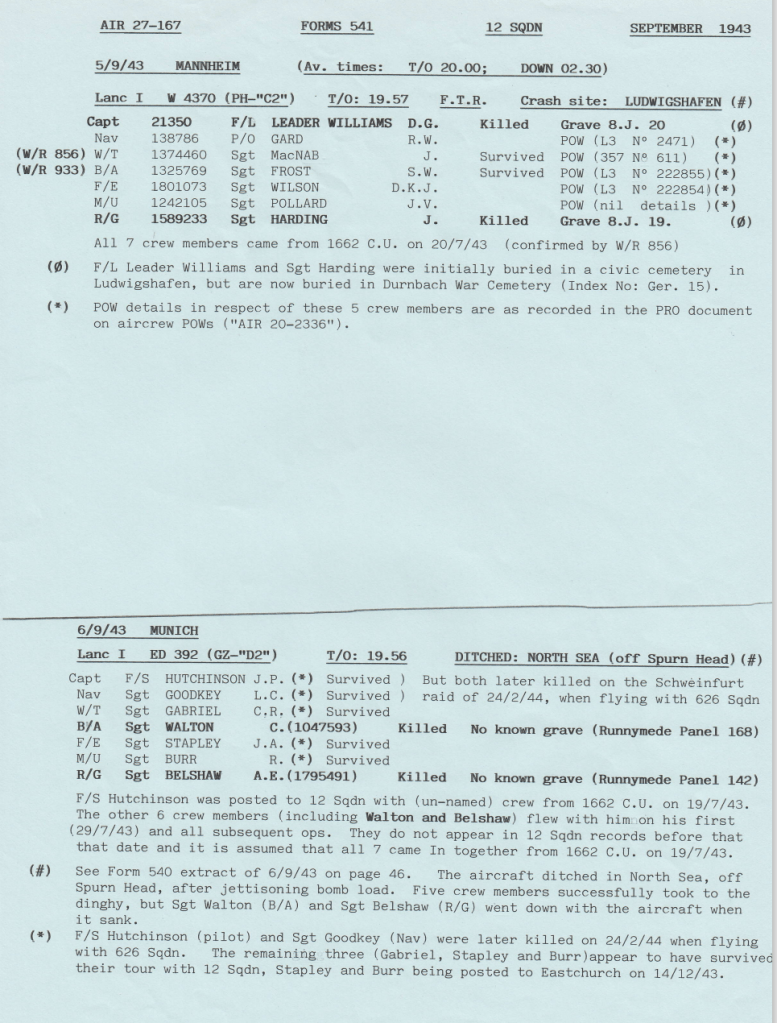
This week, attacks were concentrated on targets in Germany – Berlin, Mannheim/Ludwigshafen and Munich – apart from 2 aircraft which dropped mines off the coast of Brittany. 2 aircraft were lost and 4 aircrew killed, one of the aircraft ditched in the North Sea and 5 of the crew were rescued.
Extract from Station Diary
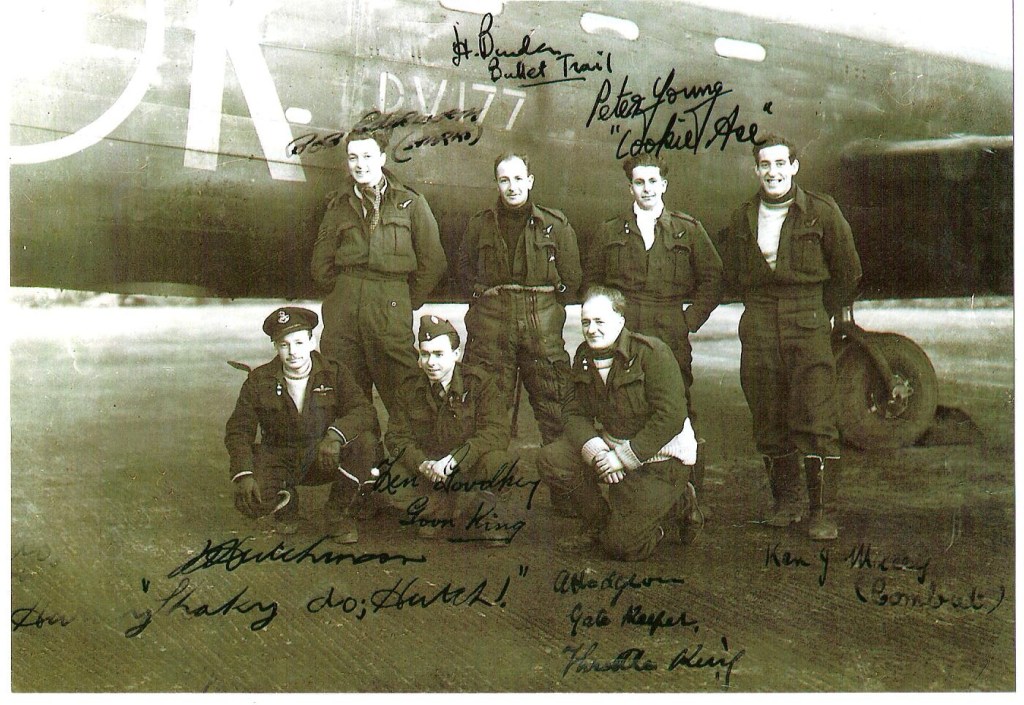
Flight Sergeant Hutchinson and 4 of his crew who ditched in the North Sea on the mission to Munich on 6th September – Back LtoR R Edgeworth, W/O – H Binder, AG – P Young, bomber – H Macey, A/G, Front LtoR J Hutchinson, Pilot – L Goodkey, Nav – A Hodgson F/Eng (Please note that the bomb aimer and the rear gunner drowned and have been replaced in this picture). Unfortunately, this crew were all killed, near the end of their tour, during the attack on Schweinfurt on 22nd February 1944
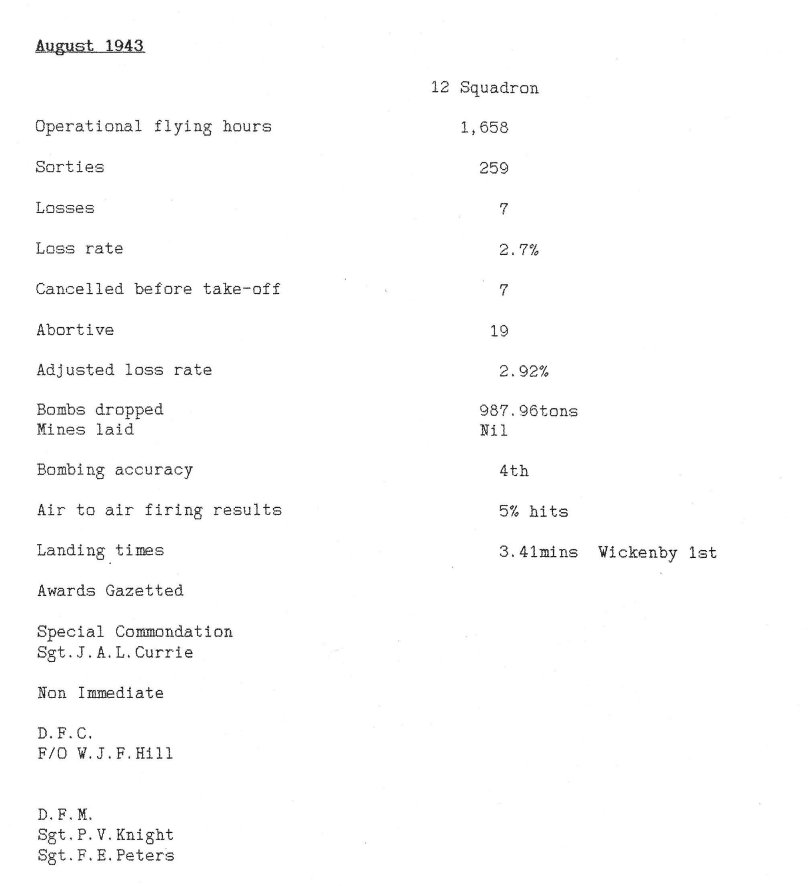
Extract from Appendix to 12 Sqn Operational Record Book
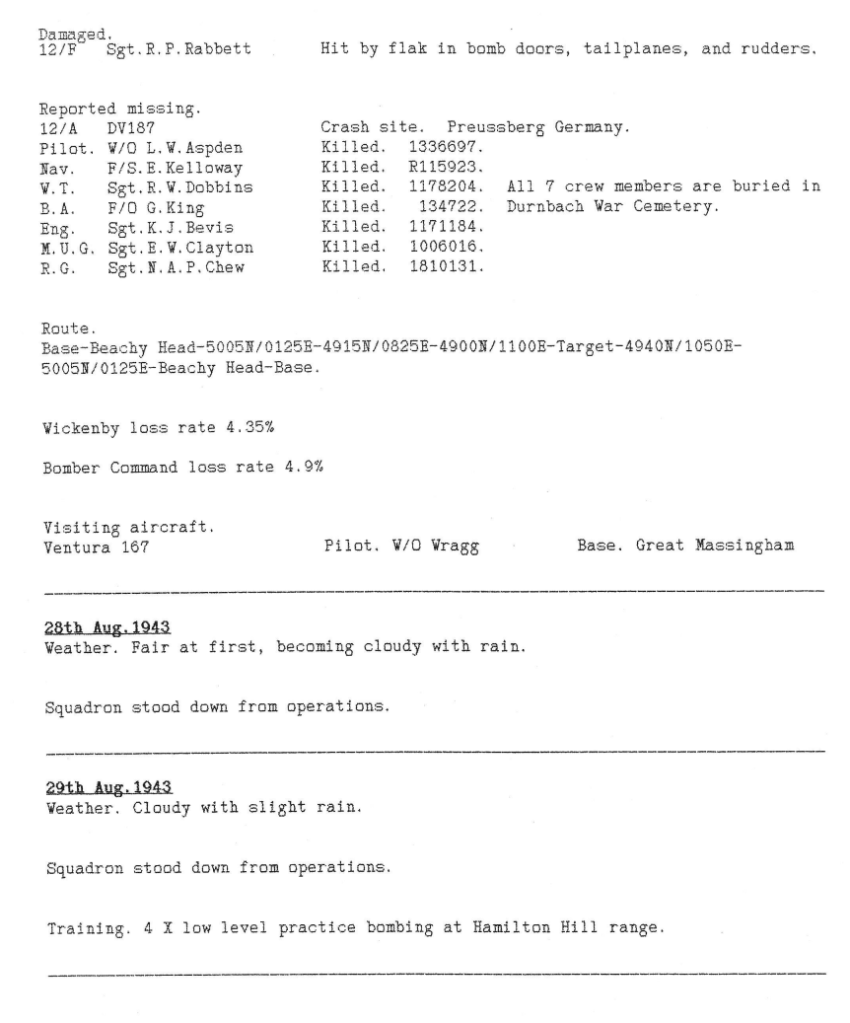
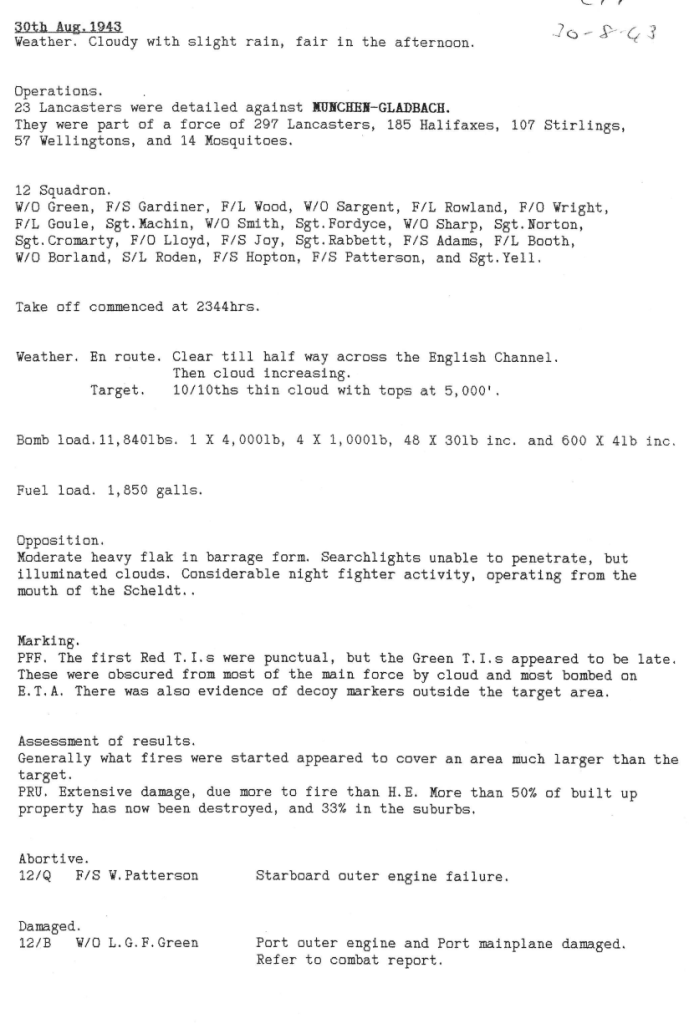
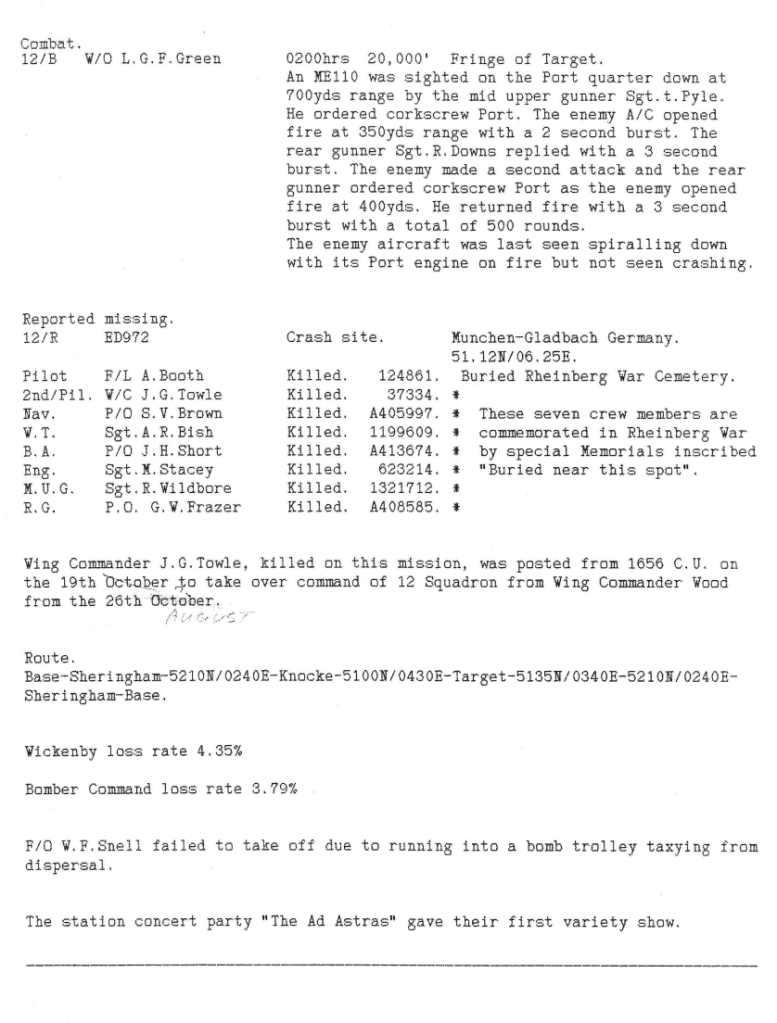
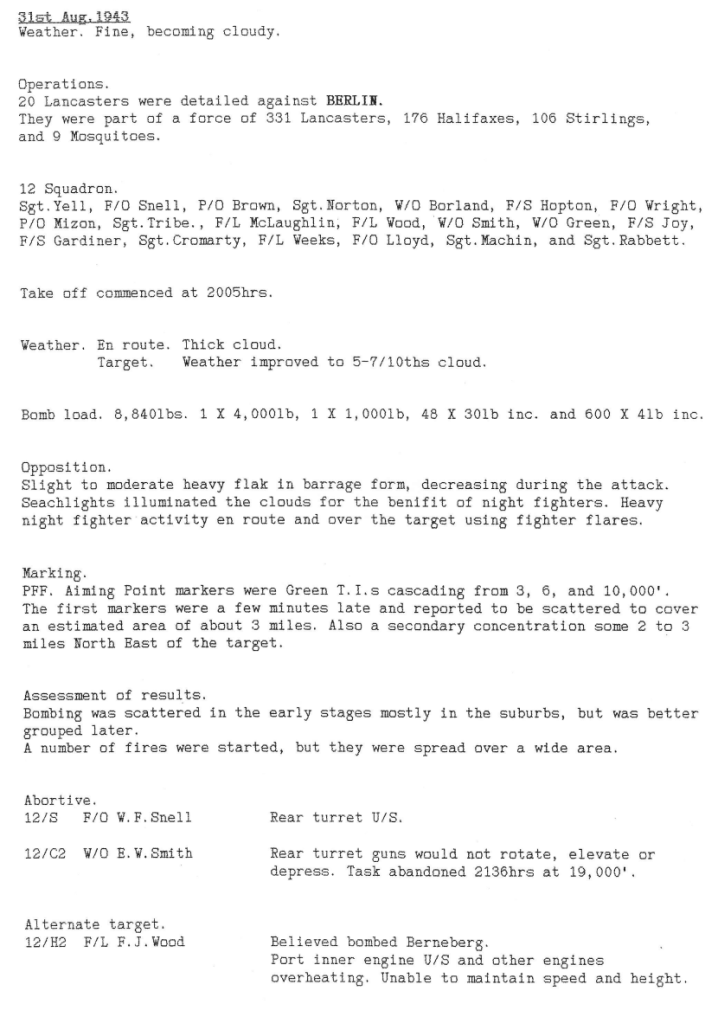
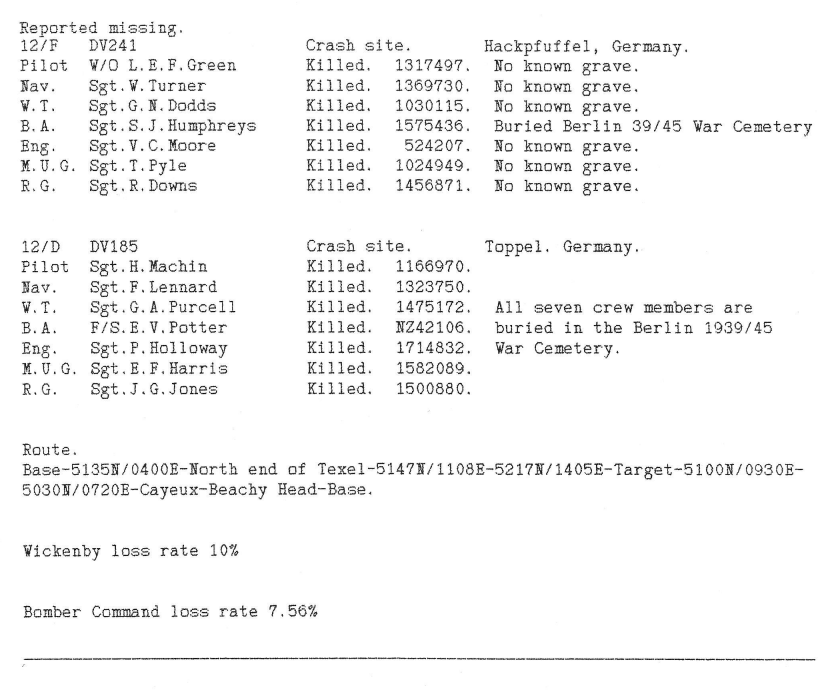
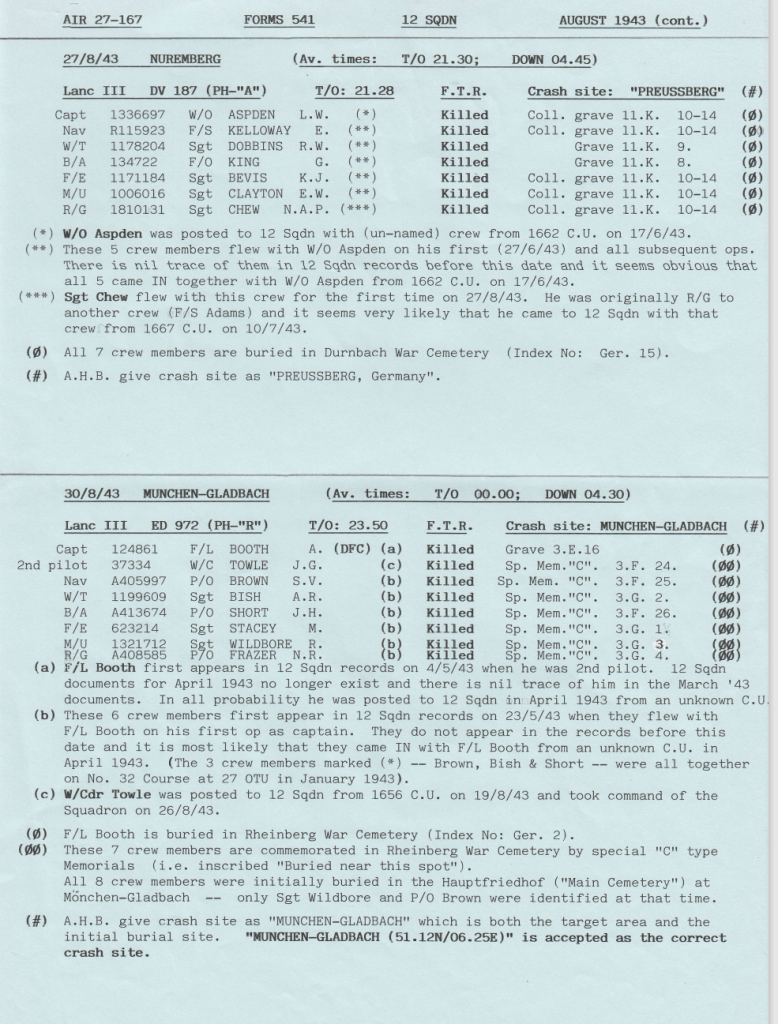
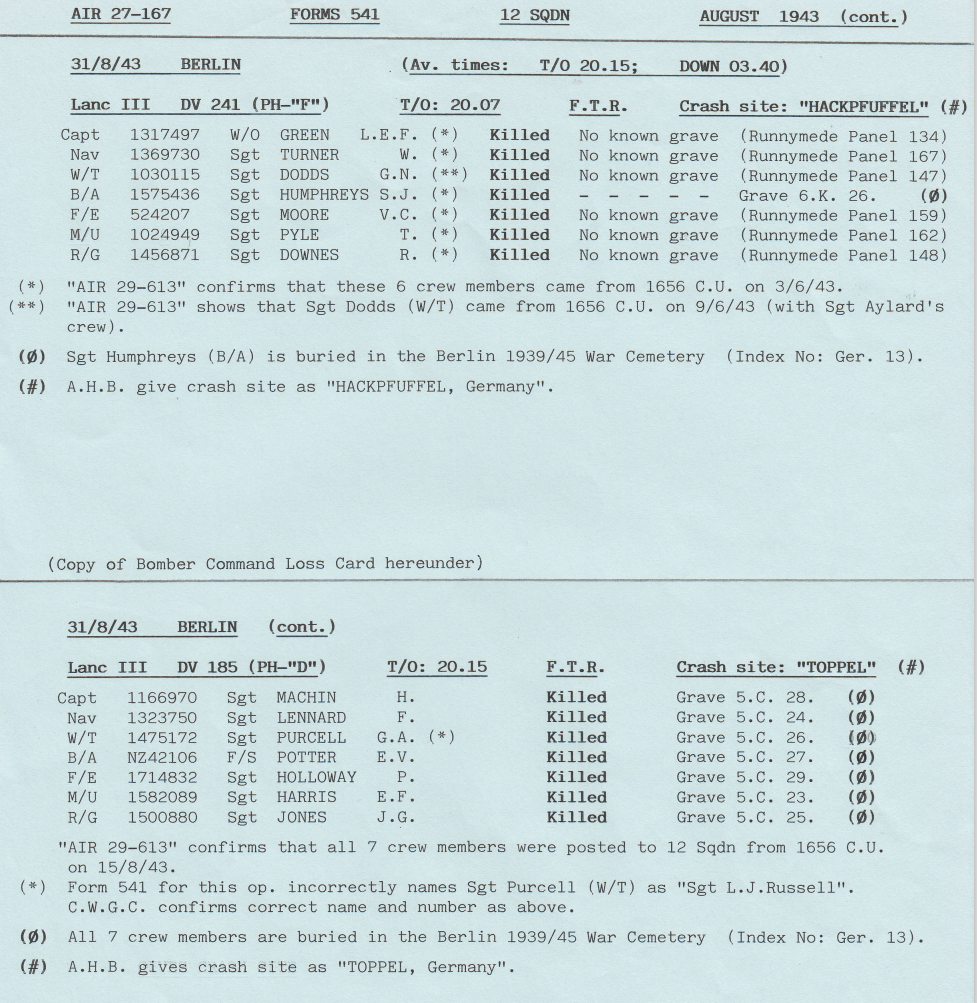
12 Sqn took part in 3 operations this week, to Nuremberg, Monchengladbach/Rheydt and Berlin, loosing 4 aircraft and all their crews. Wing Commander Towle, who was killed as the second pilot during the attack on Monchengladbach, had only been posted in to command 12 Sqn on 19th August and this was his first mission with his new command. This was also the start of what would become the Battle of Berlin, which Air Chief Marshal Harris believed could, if successful, lead to the end of the war. Events were to prove him wrong.
Extract from Station Diary
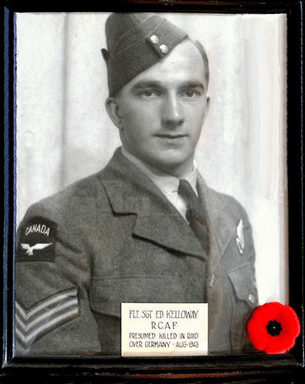
Sgt Edward Kelloway, aged 20, from Port Arthur, Ontario, Canada. He was the navigator in WO Aspden’s crew, killed in the attack on Nuremburg.
Extract from Appendix to 12 Sqn Operational Record Book
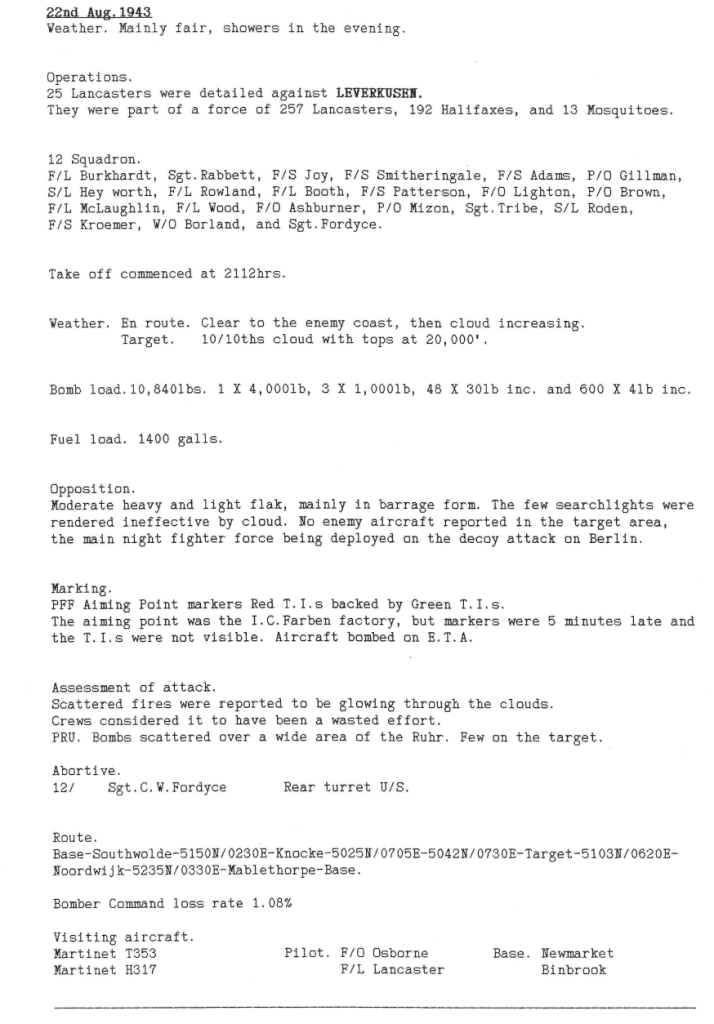
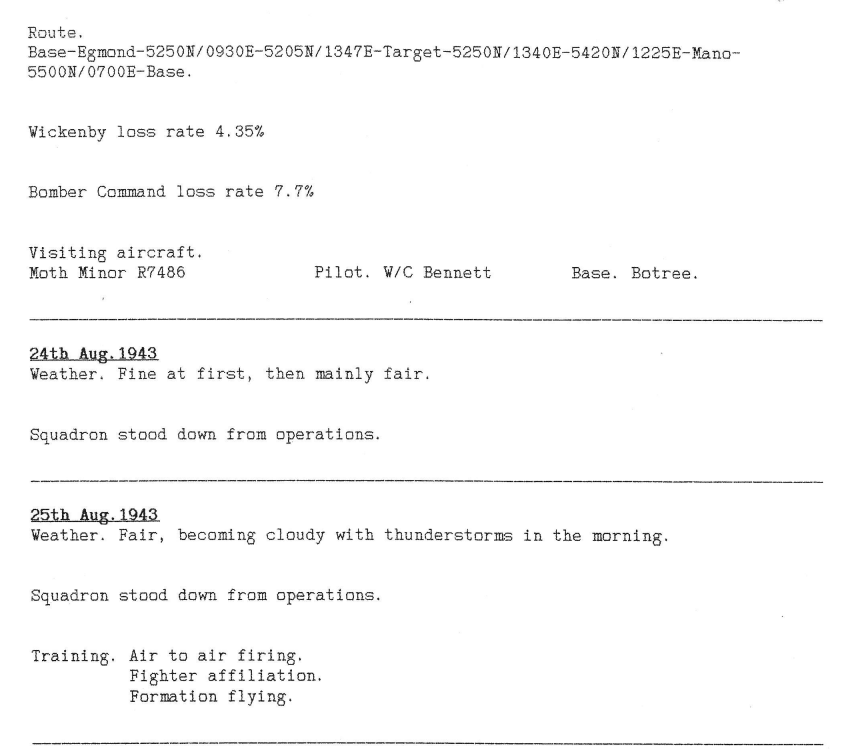
Only 2 missions this week, to Leverkusen and Berlin – the start of the week coincided with a full moon period, so no missions were flown as this gave too much advantage to German night fighters. It also saw the recommencement of attacks on Berlin, which would culminate in the Battle of Berlin later in the year. One aircraft and all the crew were lost this week.
Extract from Station Diary
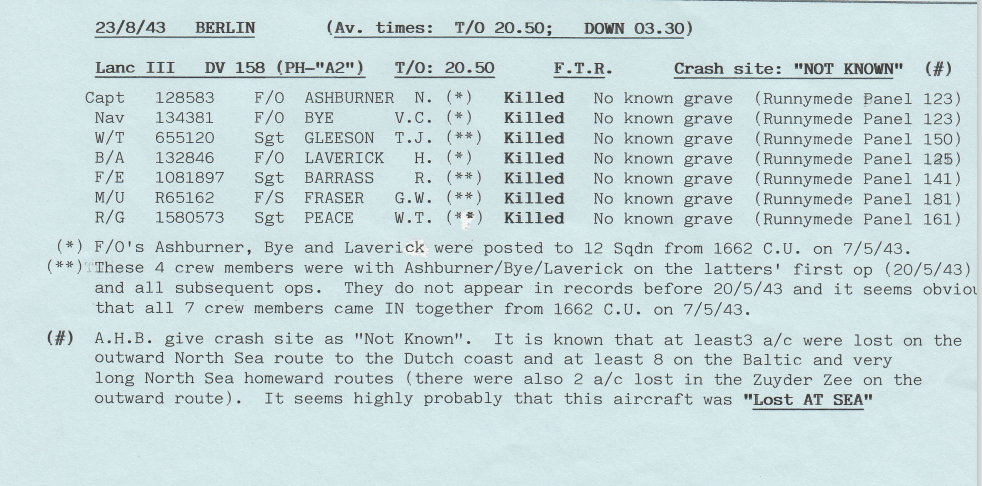
Flying Officer Norman Ashburner, aged 27, the son of Thomas & Elizabeth Ashburner of Urswick, Lancashire. He was the pilot of the only 12 Sqn aircraft lost during the mission to Berlin on 23rd August. He died with all his crew.Sgt Richard Barras, the Flight Engineer in Fg Off Asburner’s crew.
Extract from the Appendix to 12 Sqn Operational Record Book
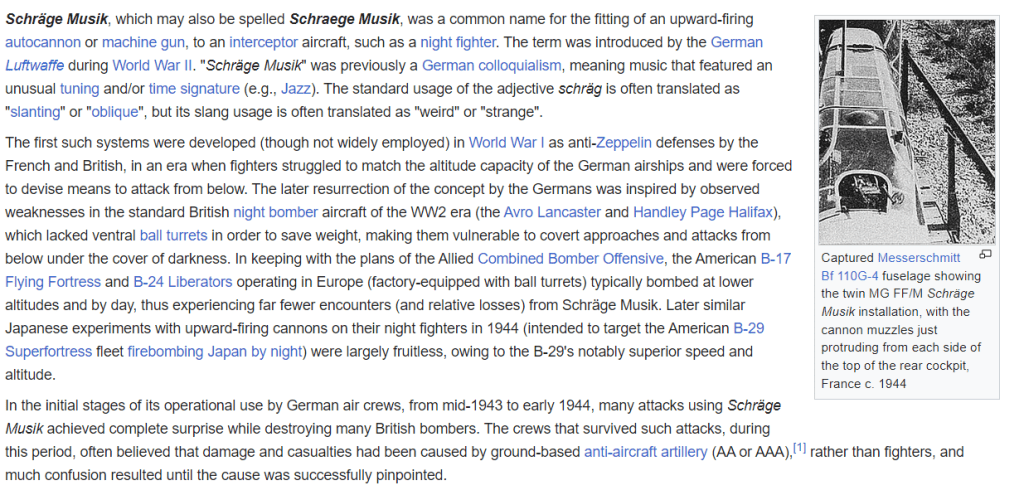
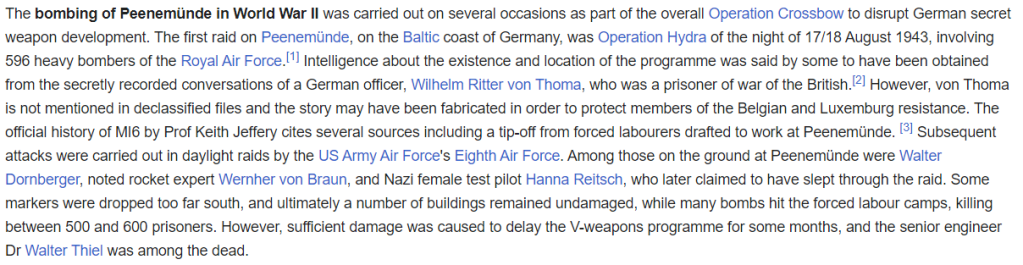
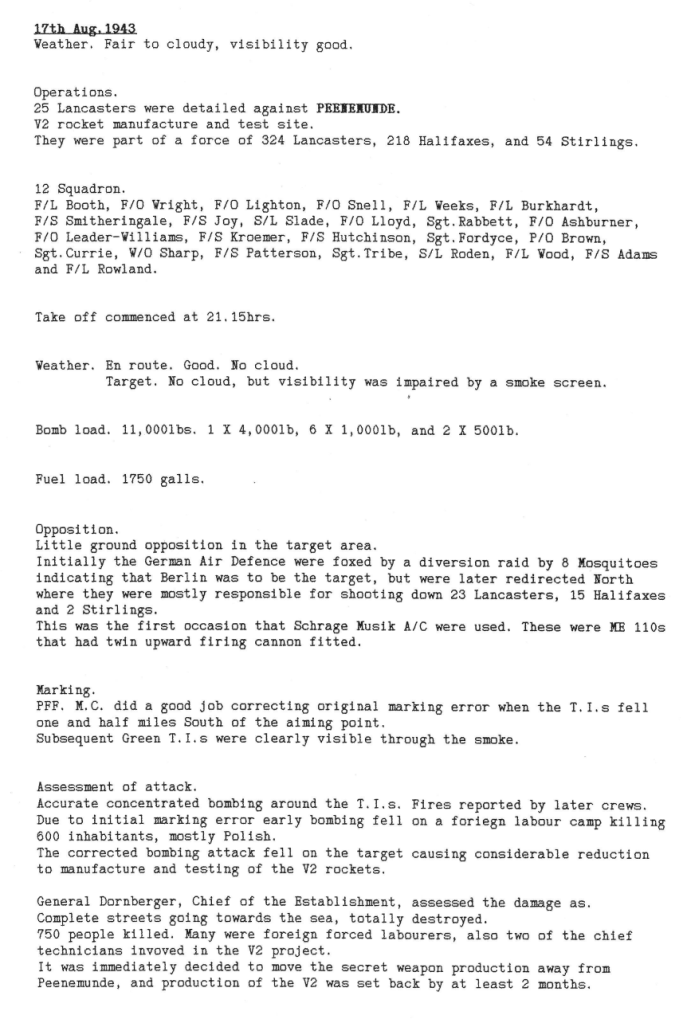
This was the week of the Peenemunde Raid against the German V1 and V2 rocket site on the Baltic coast, which also found the first use of upward firing cannons on some German night fighters (see Schrage Musik item below) and the final attacks on Italy by Bomber Command during the war.
WikipediaWikipedia
Extract from Station Diary
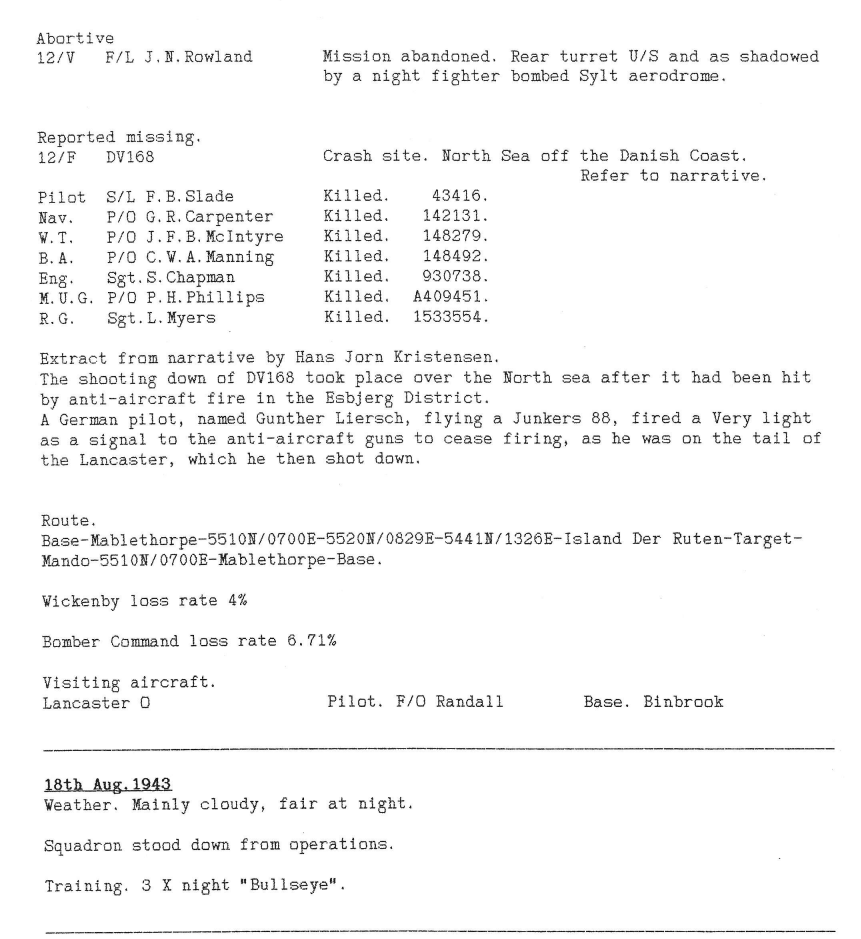
Sqn Ldr Fraser Burstock Slade DSO, aged 31, OC “A” Flight, who was killed with all his crew on the Peenemunde raid
Extract from Appendix to 12 Sqn Operational Record Book
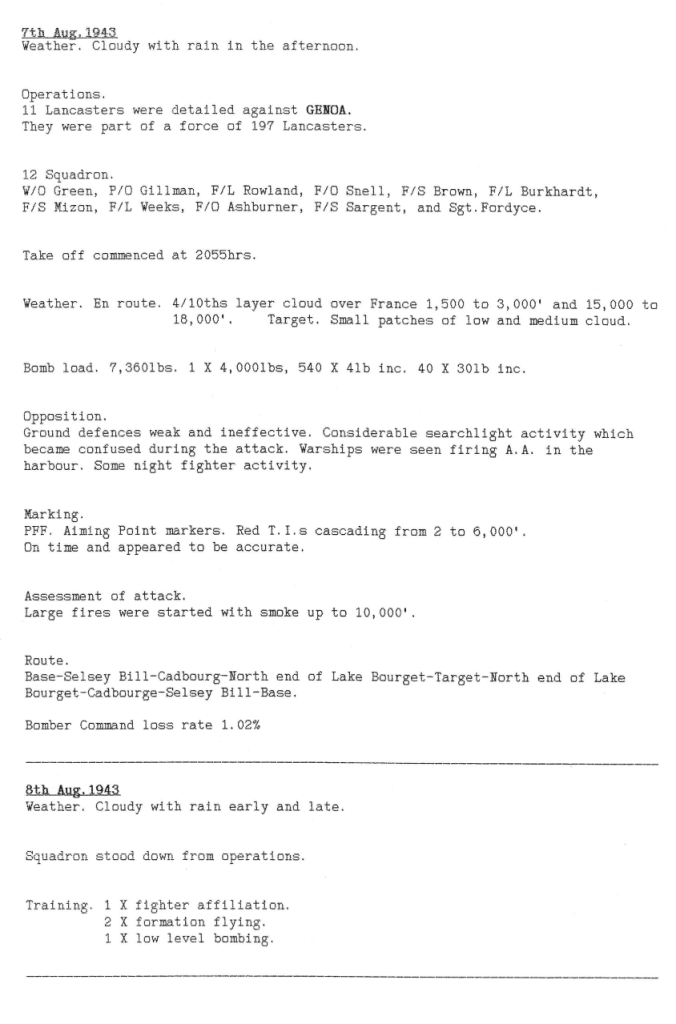
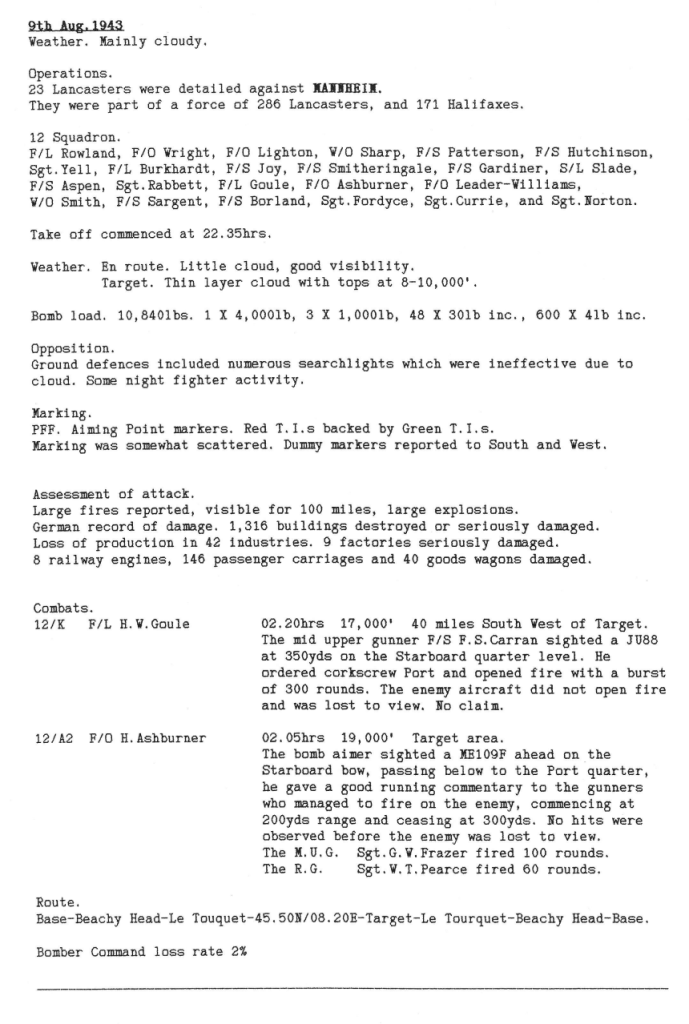
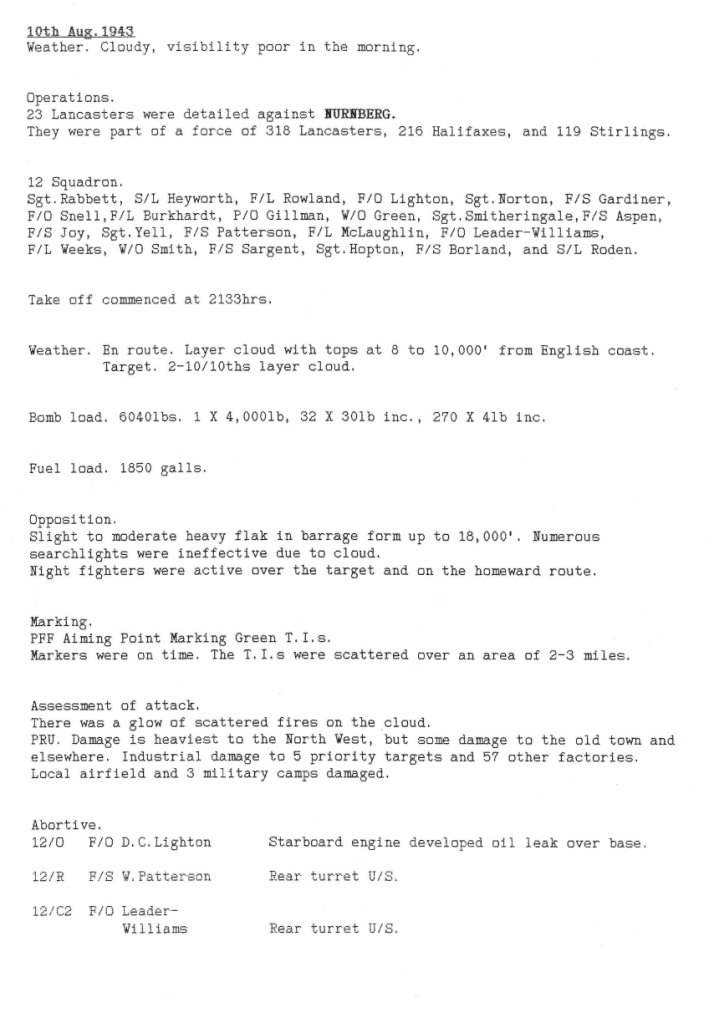
12 Sqn carried out attacks on Genoa, Mannheim and Nuremburg during this week. Only one aircraft was lost (see Station Diary below) but there were no aircrew casualties. The raid on Genoa, one of several that week in Italy, was called urgently for political reasons, probably because of the overthrow of Mussolini at the end of July, in order to further disrupt the uncertainty caused by that event.
Extract from Station Diary
Flight Sergeant Gardiner and his crew, who crash landed on 10th August – L-R Harry Pozgren – MU, John Davey – FE, Jimmy Orr – Nav, John Britnell – RG, Norman Gardiner – Pilot, Peter Grealy – BA, Vic Lambourne – WO – They completed a full tour of 30 missions.
There were continuing attacks on Hamburg during this week, as part of Operation Gomorrah, which included 4 major attacks on the city in 10 days. Whilst Bomber Command slept, the USAAF carried out 2 consecutive raids on Hamburg, adding to the destruction and reducing the capacity of the German fire and rescue services to reach many parts of the city.
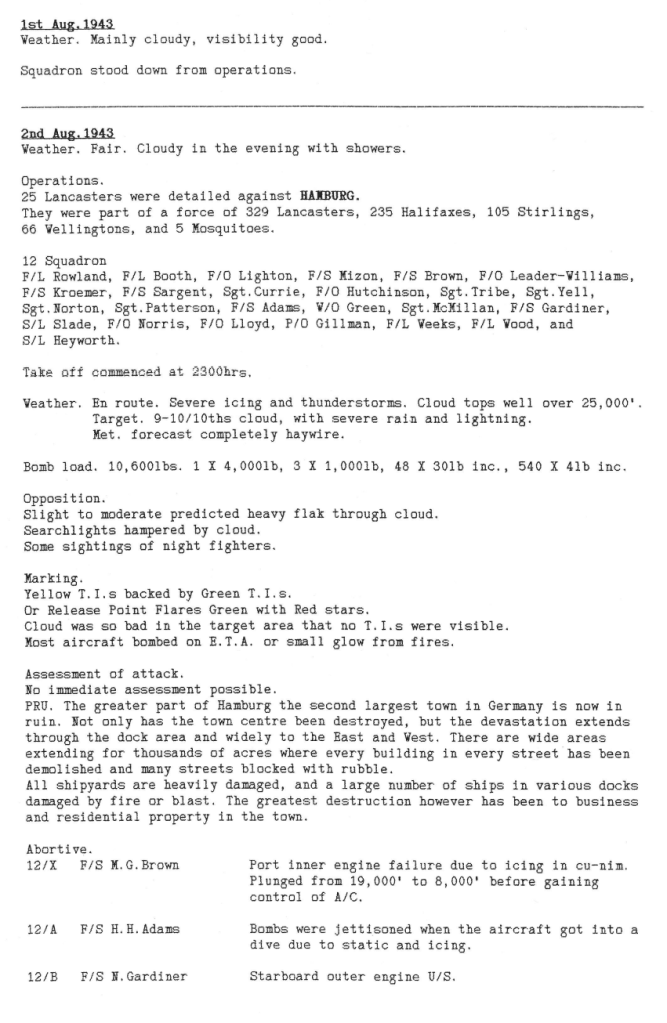
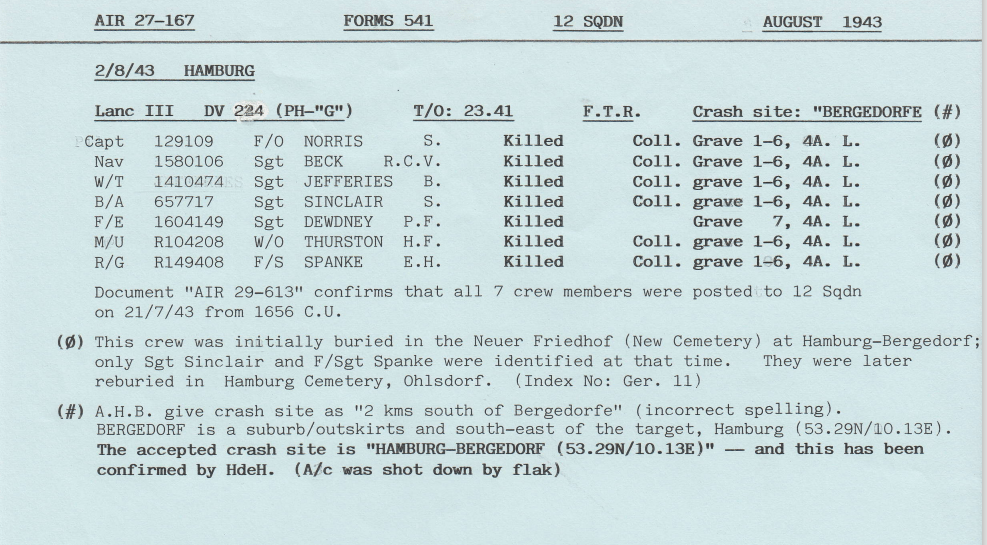
12 Sqn lost one aircraft and its crew this week. One aspect of the Hamburg raid on 2nd August was the huge electrical storm enroute to the target, which caused a lot of icing and led to a number of early returns.
Extract from Station Diary
Extract from Appendix to 12 Sqn Operational Record Book
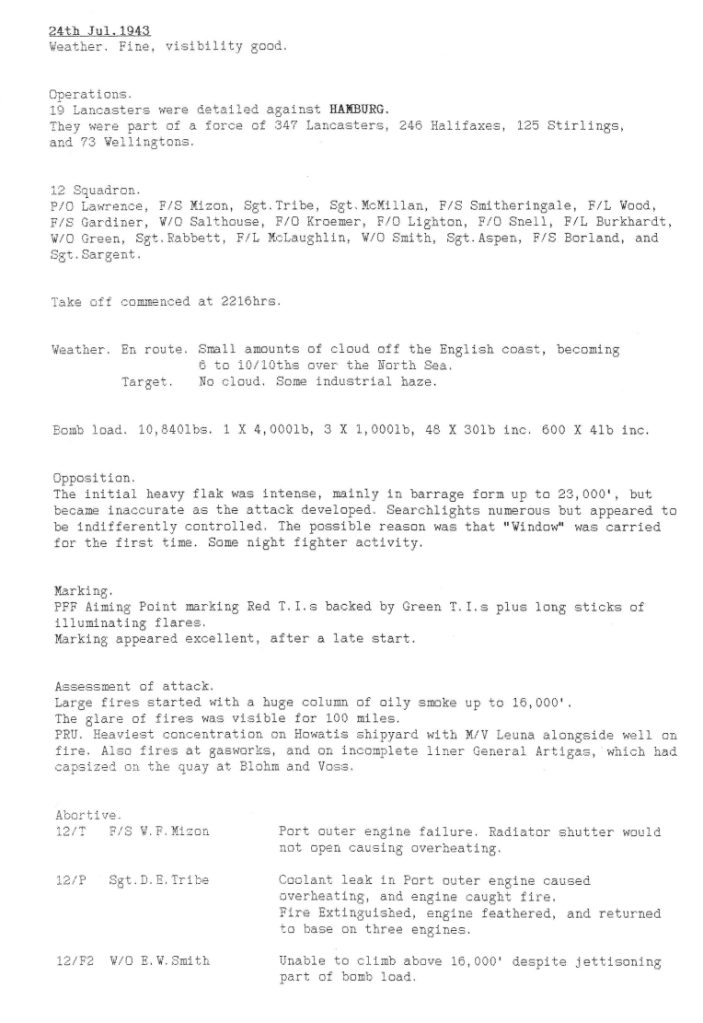
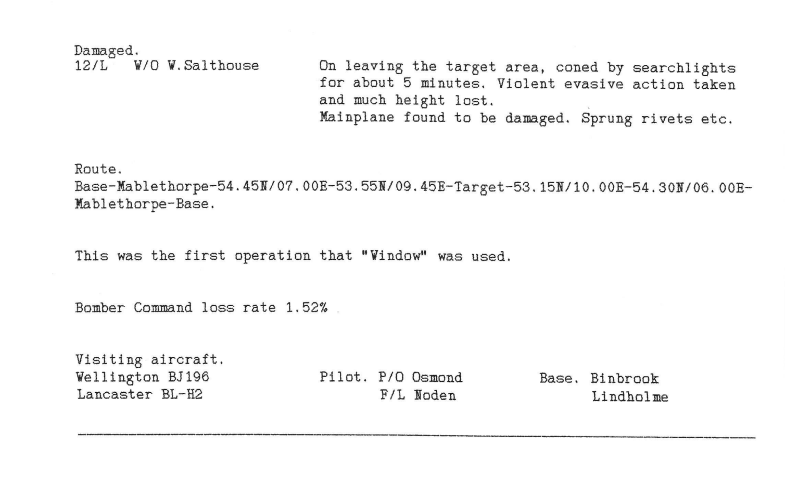
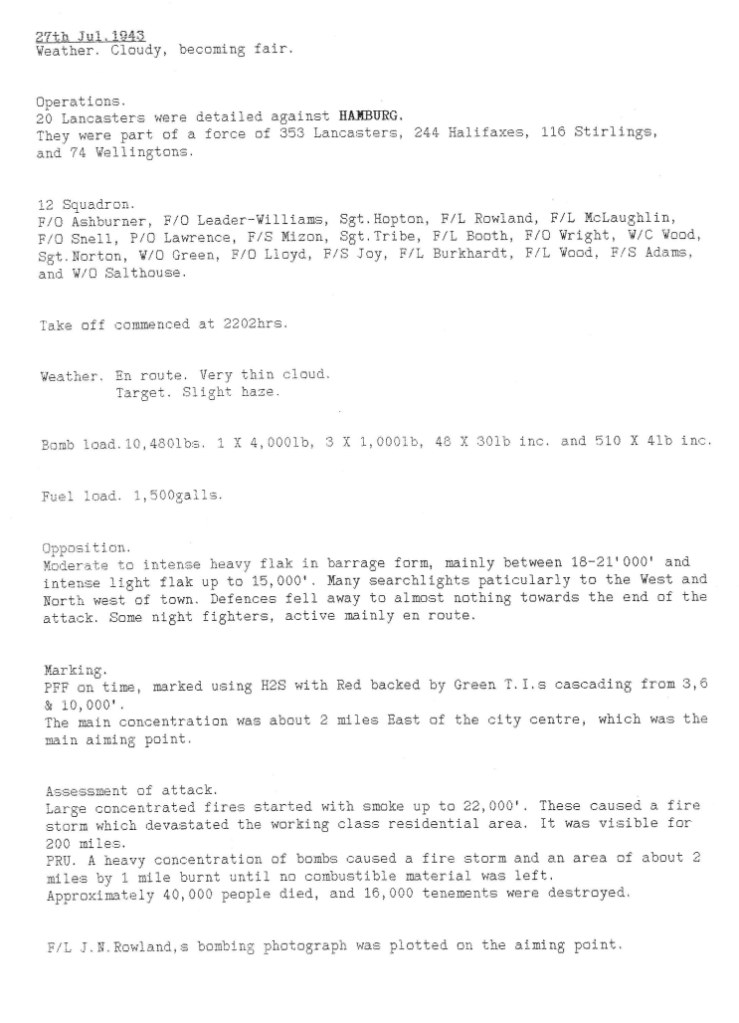
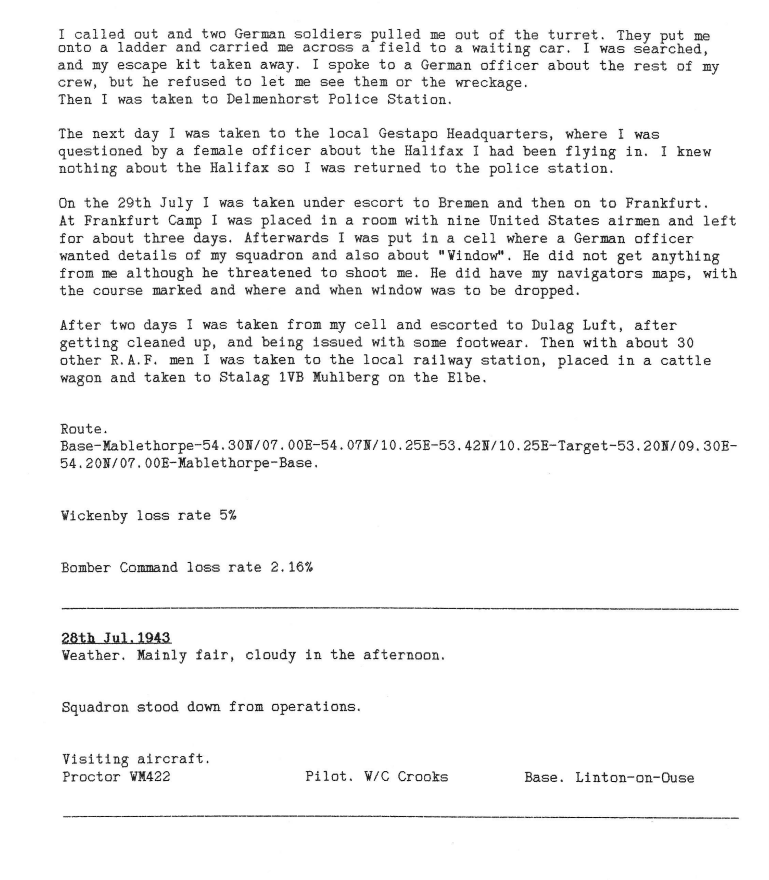
This was the week of the beginning of the attacks on Hamburg, which led to the fire storm resulting in the death of 40,000 people on the ground and the evacuation of over 1,200,000 more. It was also the first use of Window, strips of black paper, exactly 27 x 2 cms with thin aluminium foil stuck to one side, which completely confused the German radar, producing false echoes. This worked for a few weeks and losses were reduced, but the Germans soon adapted their tactics to counter this new technology.
Although Hamburg was outside the range of Oboe (see earlier post for description) it was thought to be suitable for H2S, the ground seeking radar, which seemed to work best when flying over water.
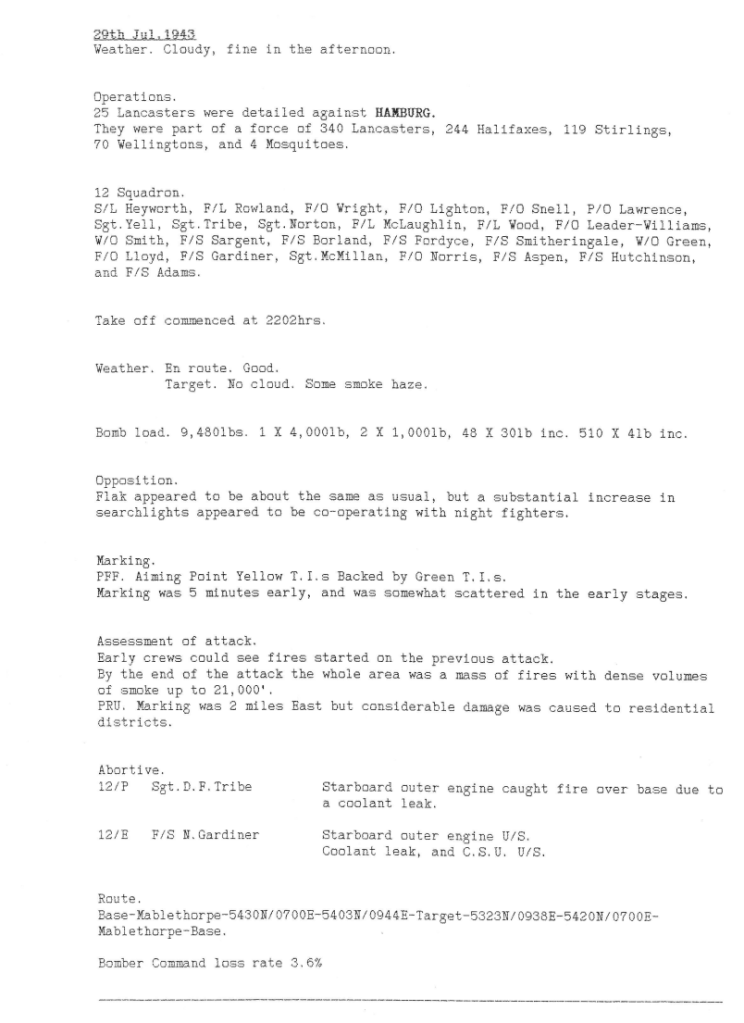
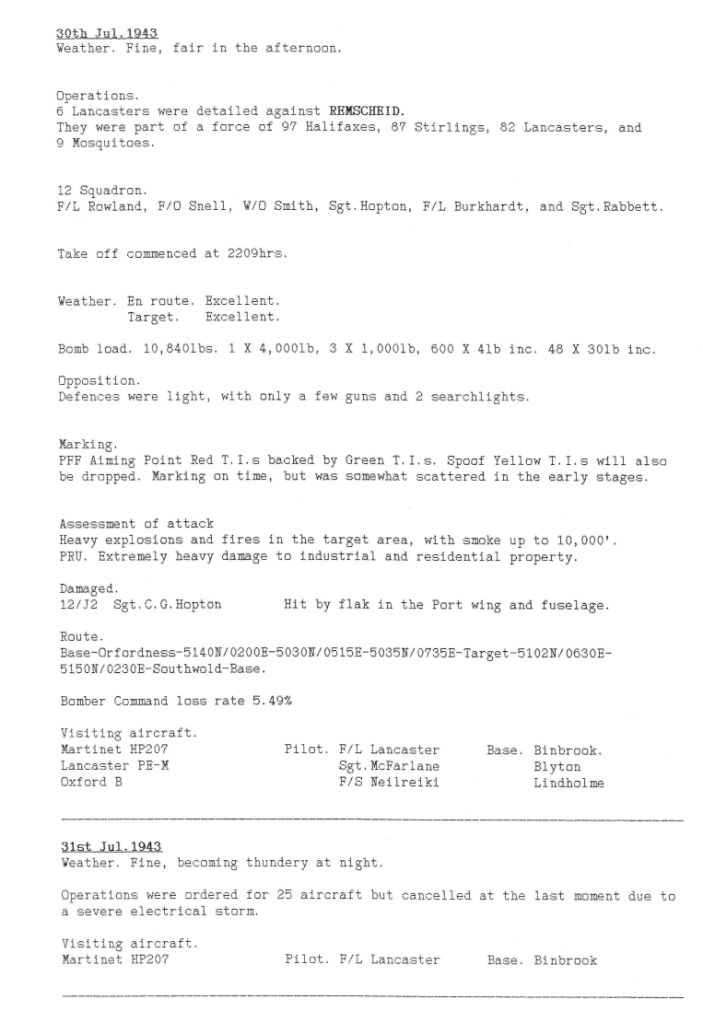
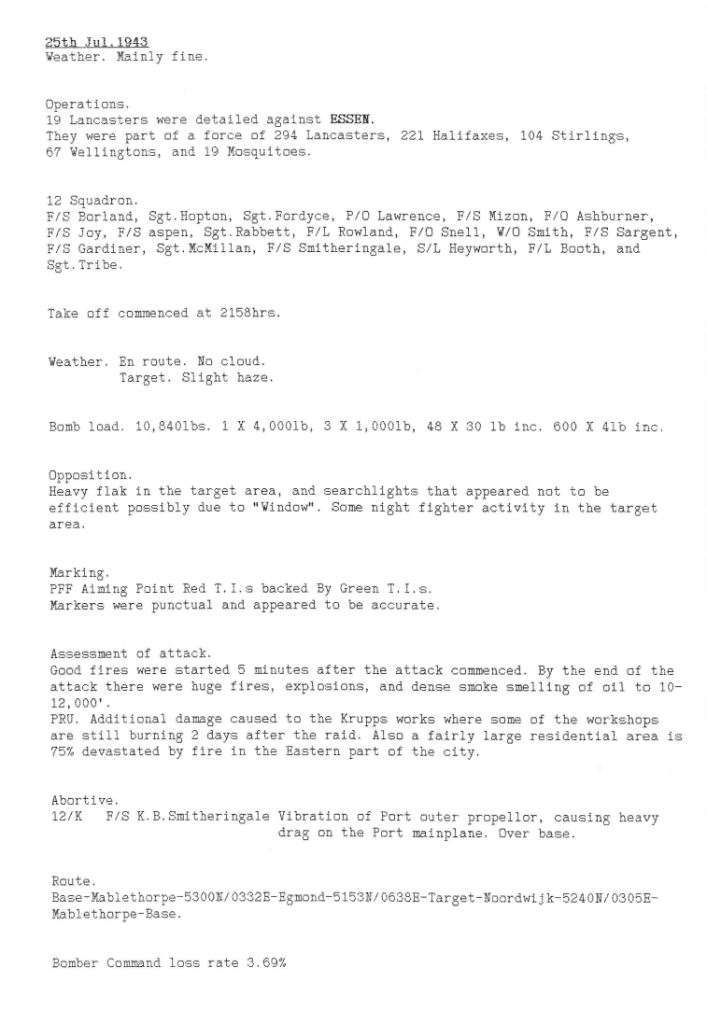
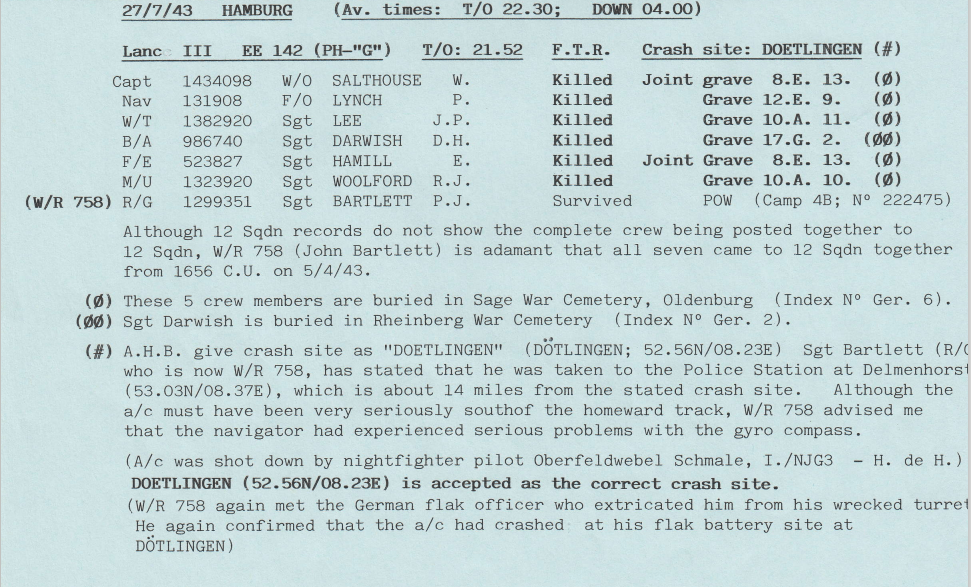
12 Sqn took part in two attacks to Hamburg and one to Essen this week and one aircraft was lost.
Extract from Station Diary
Extract from Appendix to 12 Sqn Operational Record Book













 RAF Wickenby - This week in history - World War 2