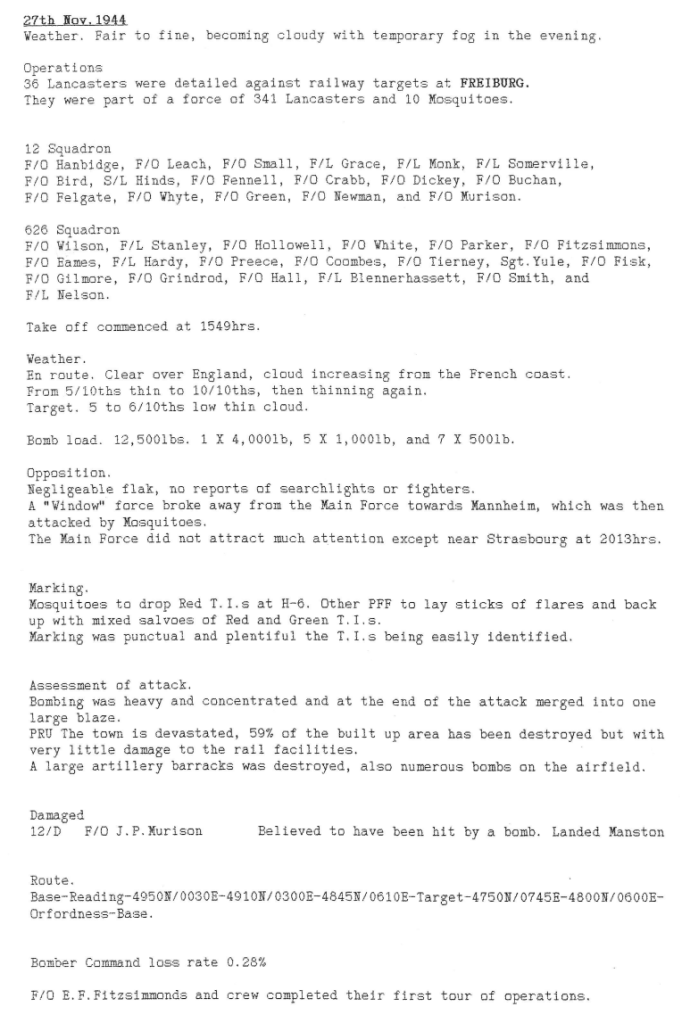
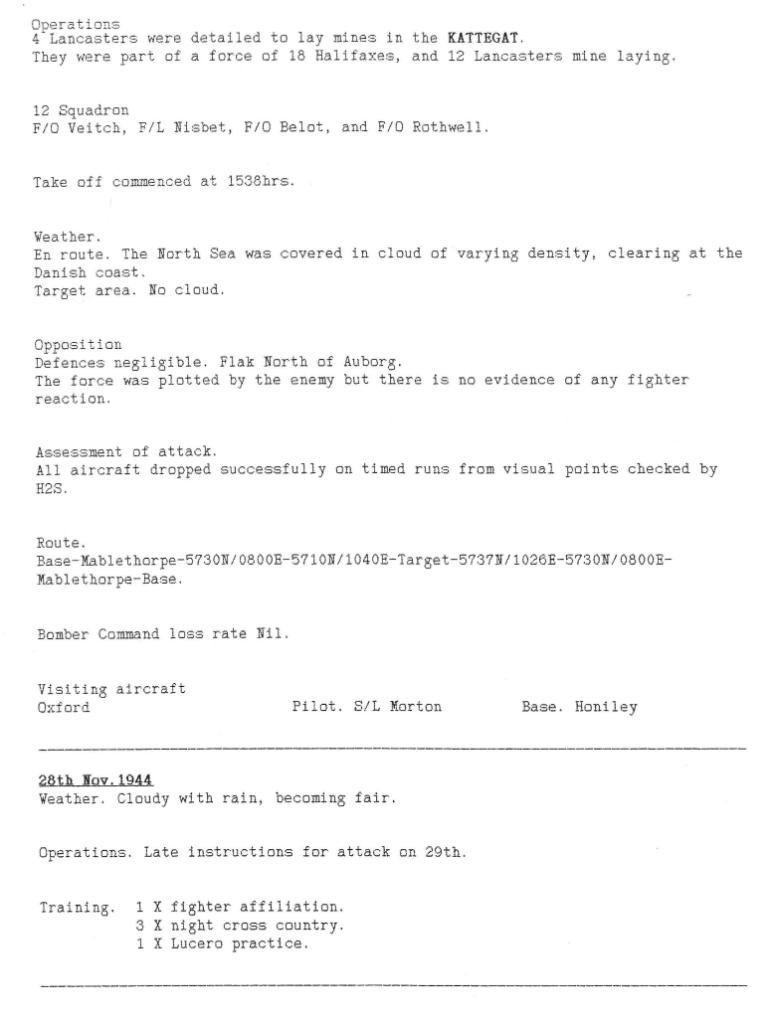
Two major and one minor operations this week – attacks on Freiburg and Dortmund and minelaying in the Kattegat. One aircraft was lost, one damaged by an incendiary, 6 aircrew killed, one becoming a POW and one injured by flak.
Freiburg was not an industrial town and had not been attacked before and, it appears that the authorities were taken unawares, resulting in considerable damage and the loss of over 2000 lives.
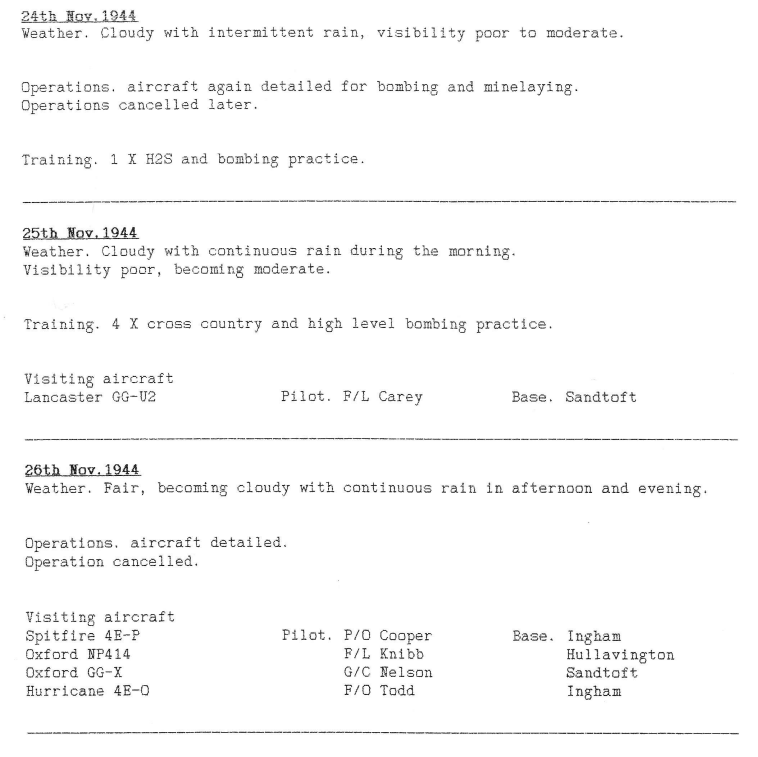
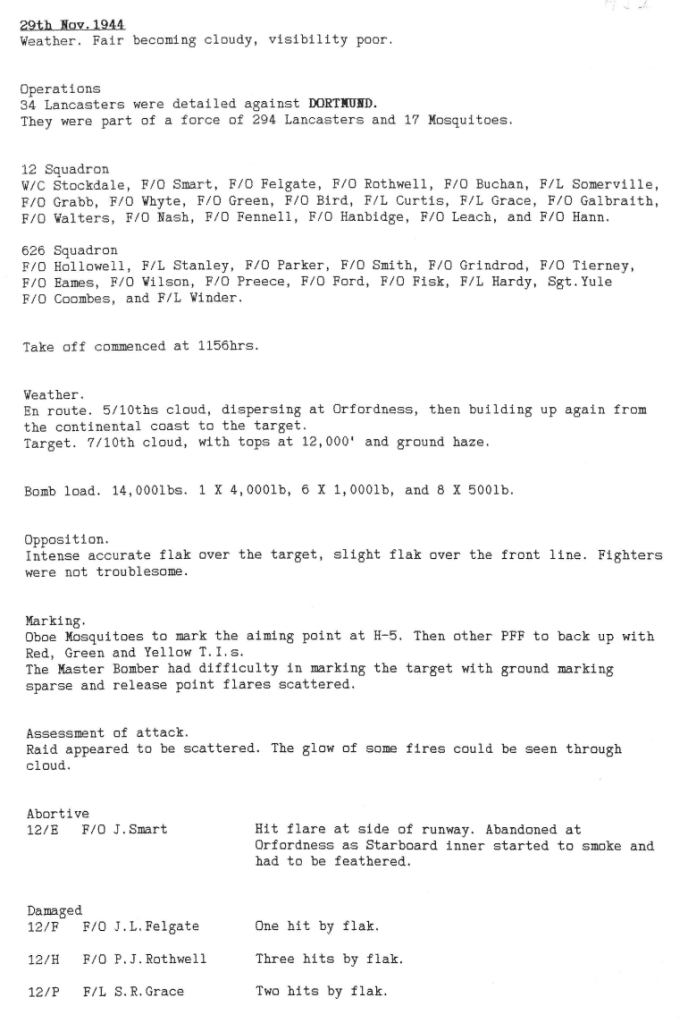
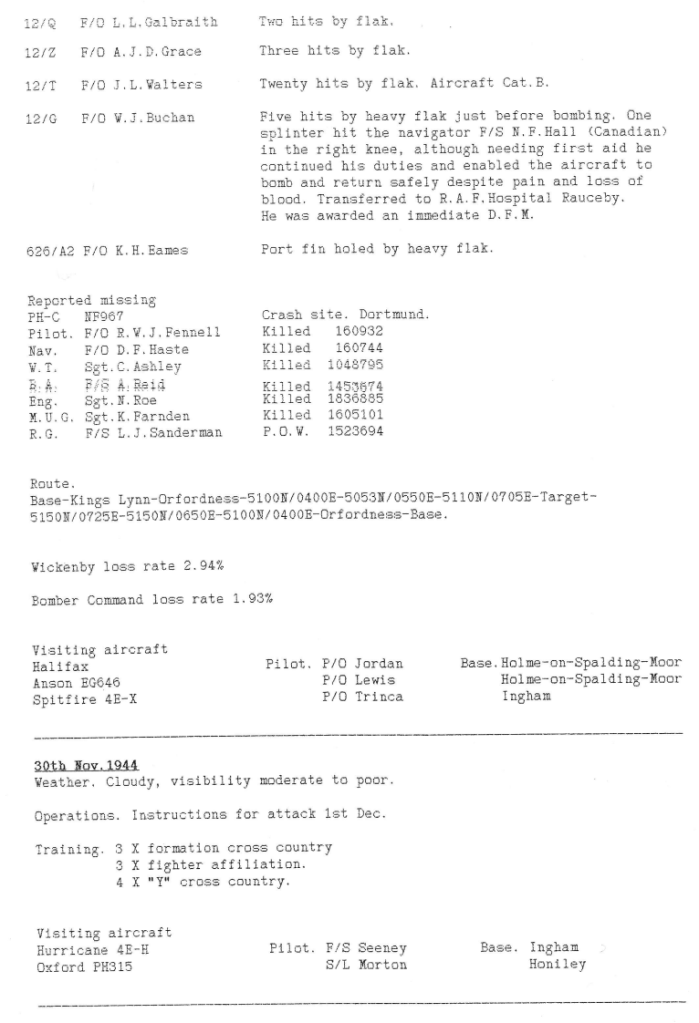
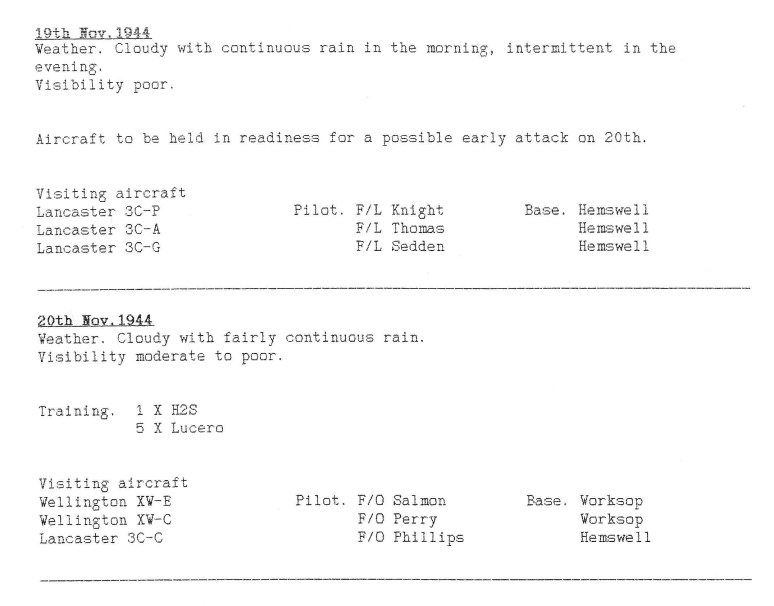
Extract from Station Diary
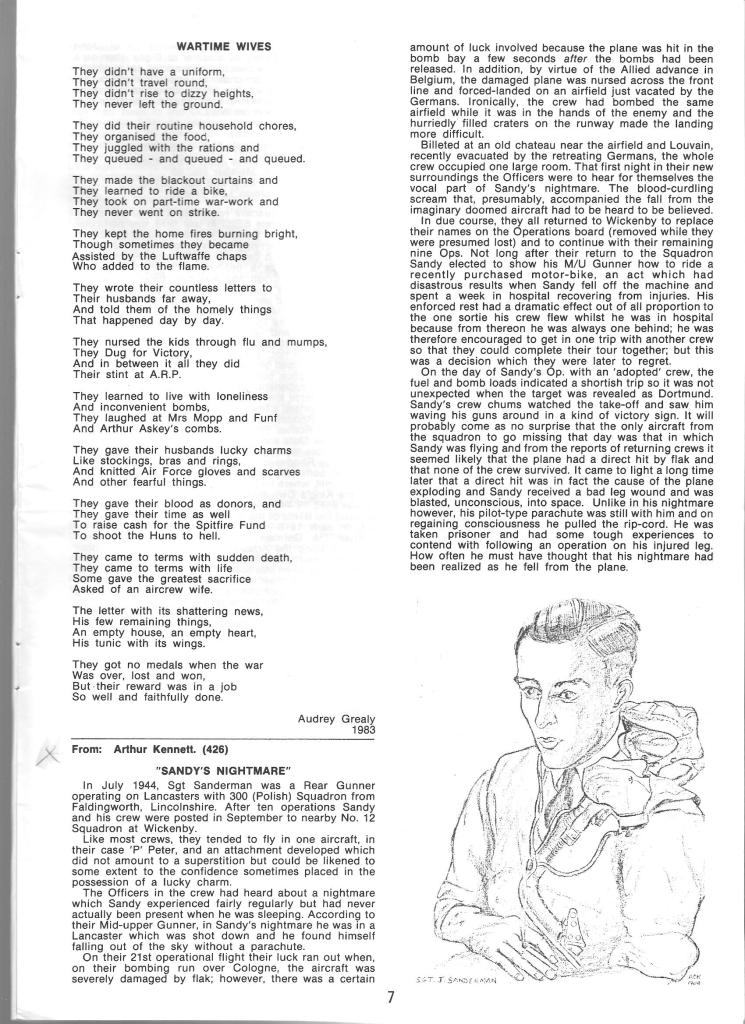
This extract from the Wickenby Register Newsletter gives an account of the experiences of Sgt Sanderson, who was the sole survivor of Fg Off Fennells’s aircraft during the attack on Dortmund on 29th November 1044
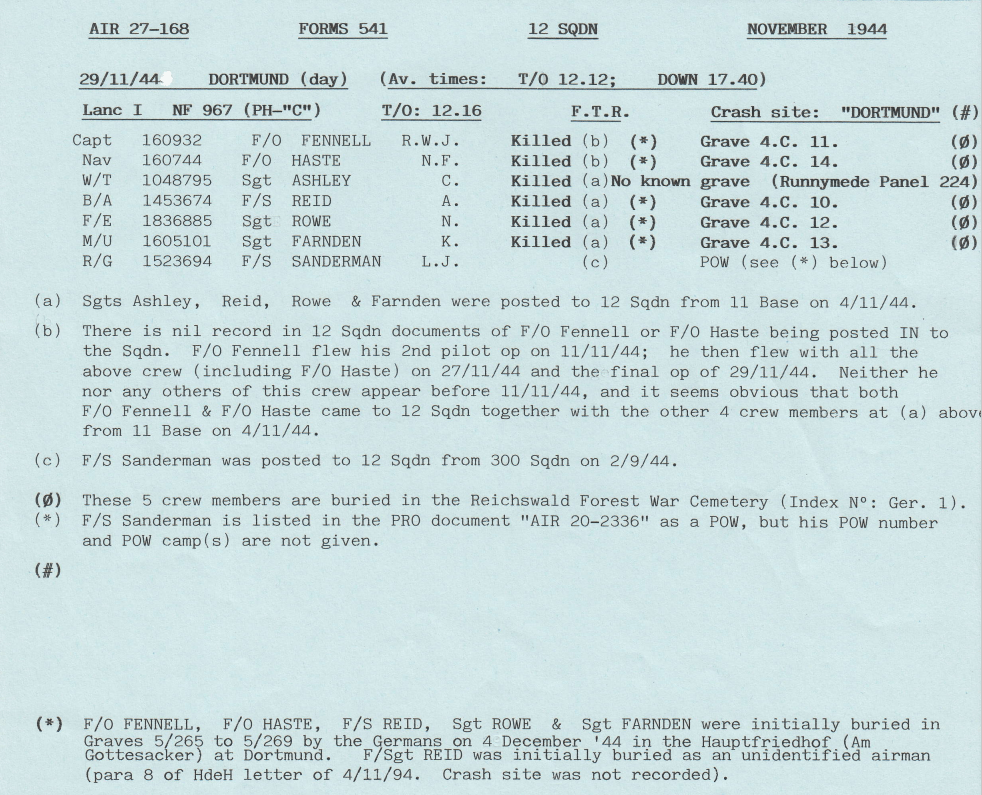
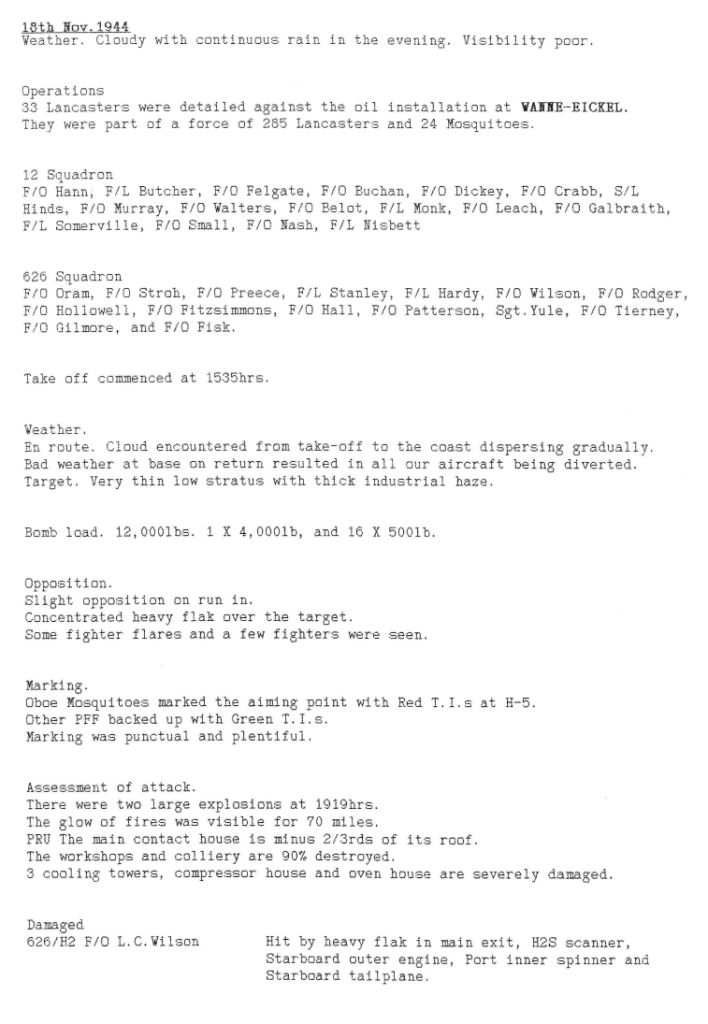
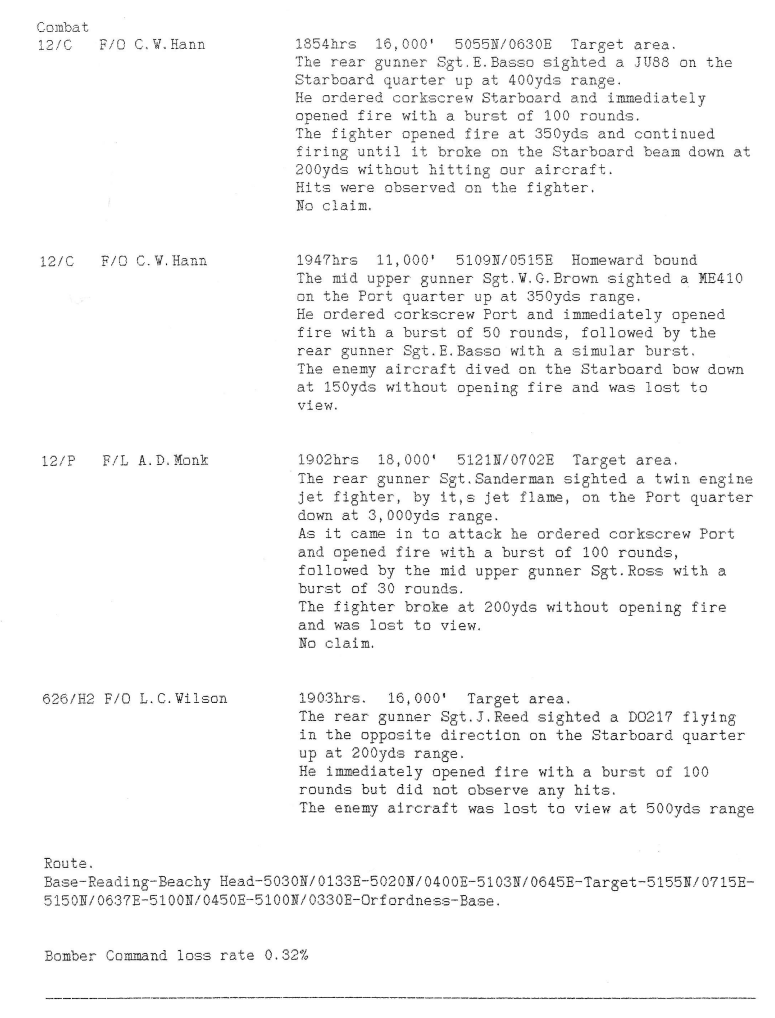
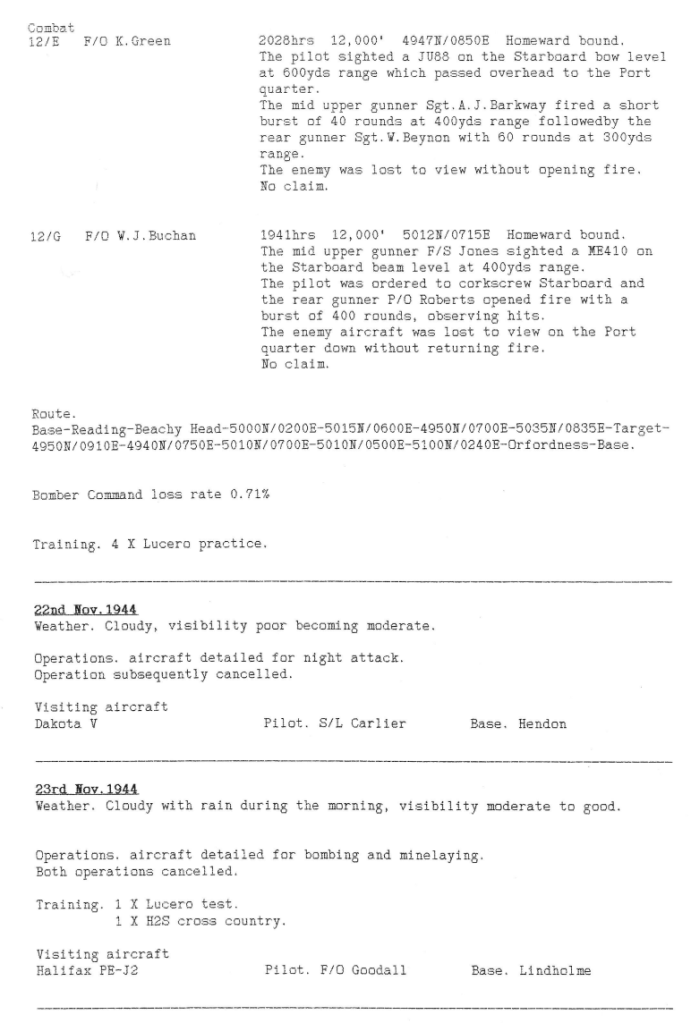
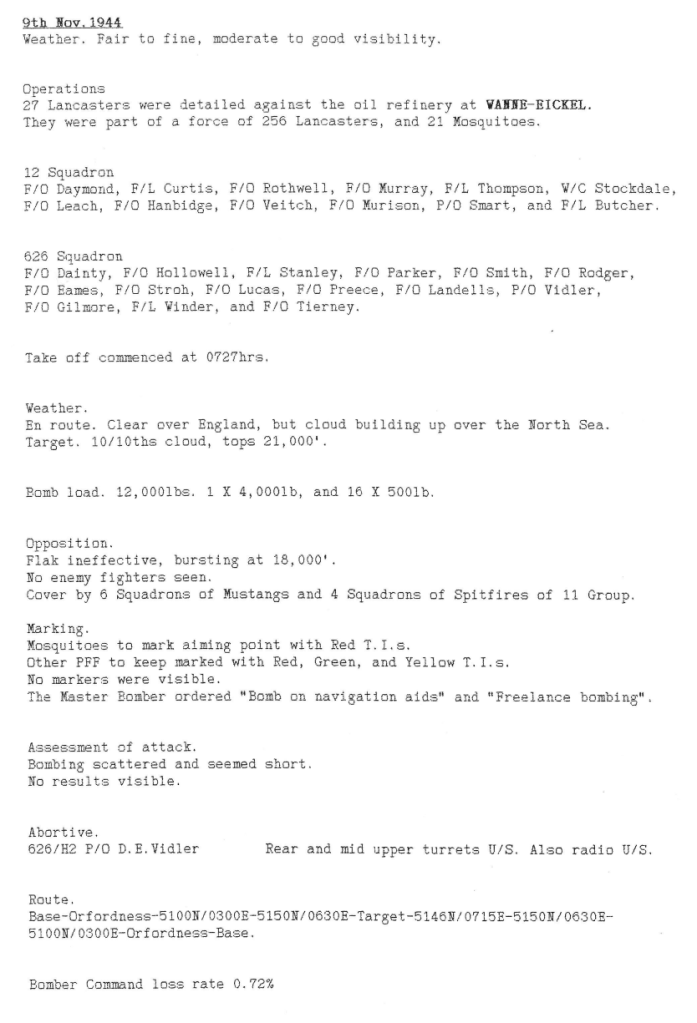
Extract from 12 Sqn Appendix to Operational Record Book
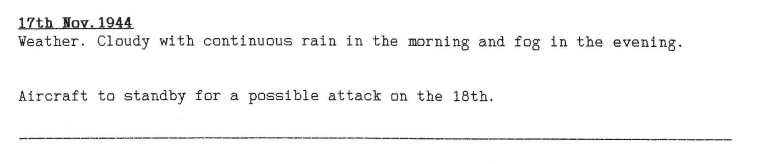
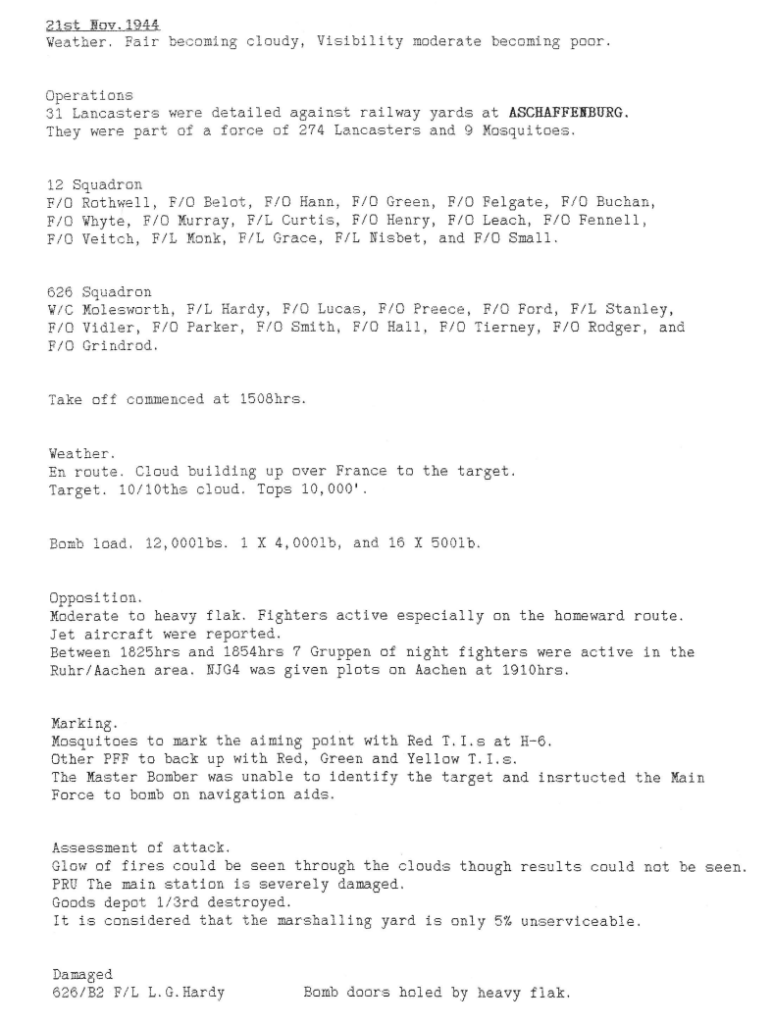
A quieter week for both squadrons, with only 2 missions – another attack on the synthetic oil plant at Wanne-Eickel and on the railway yards and lines at Aschaffenburg, southeast of Frankfurt. There were no casualties.
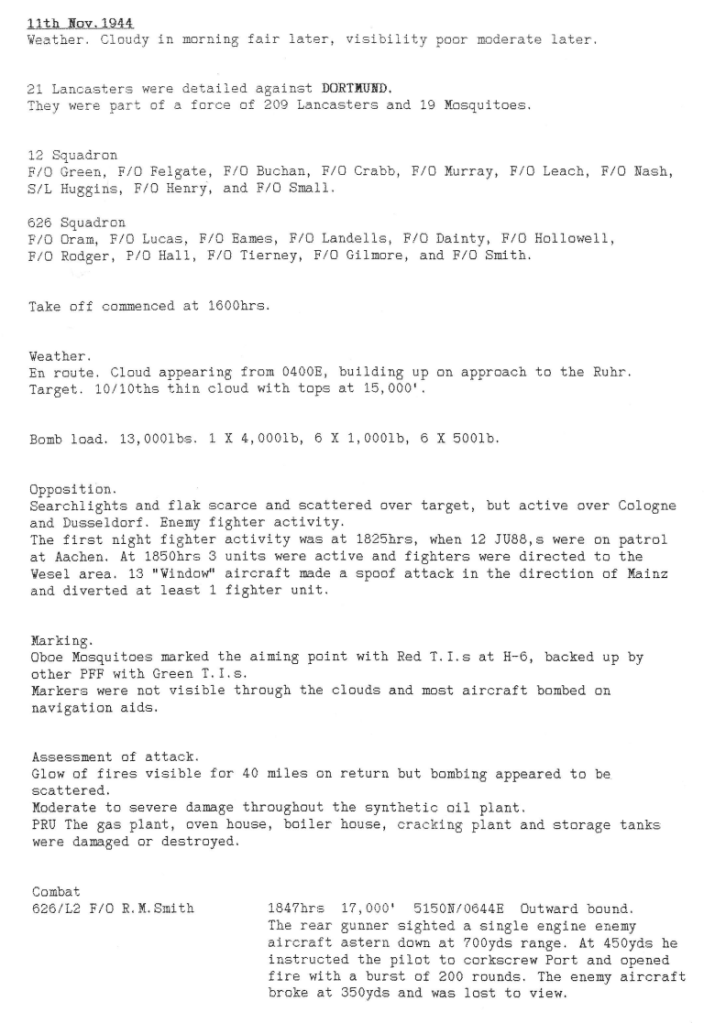
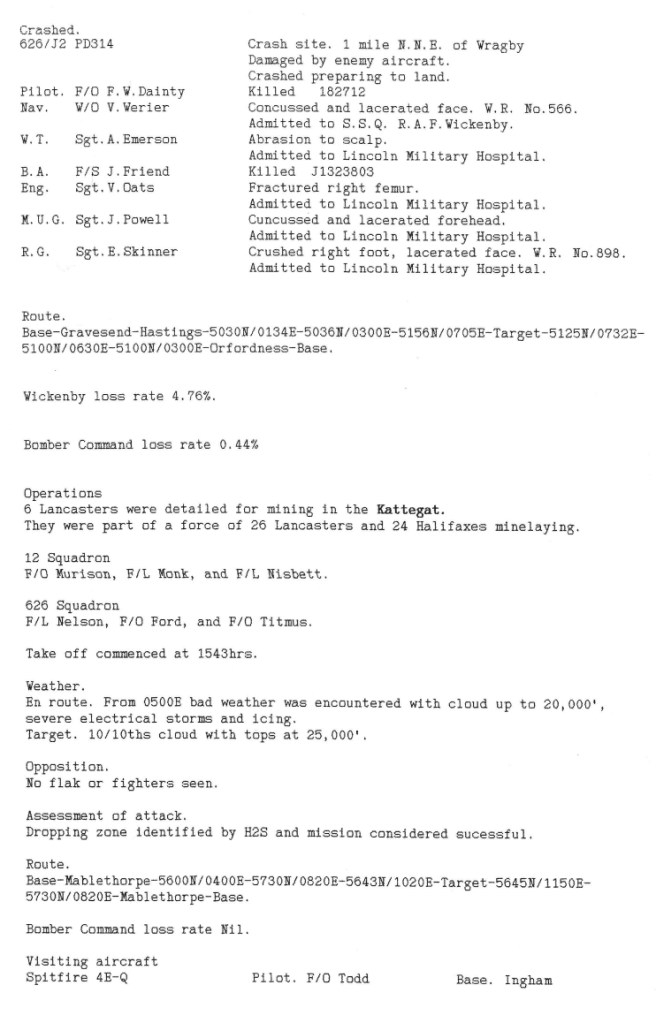
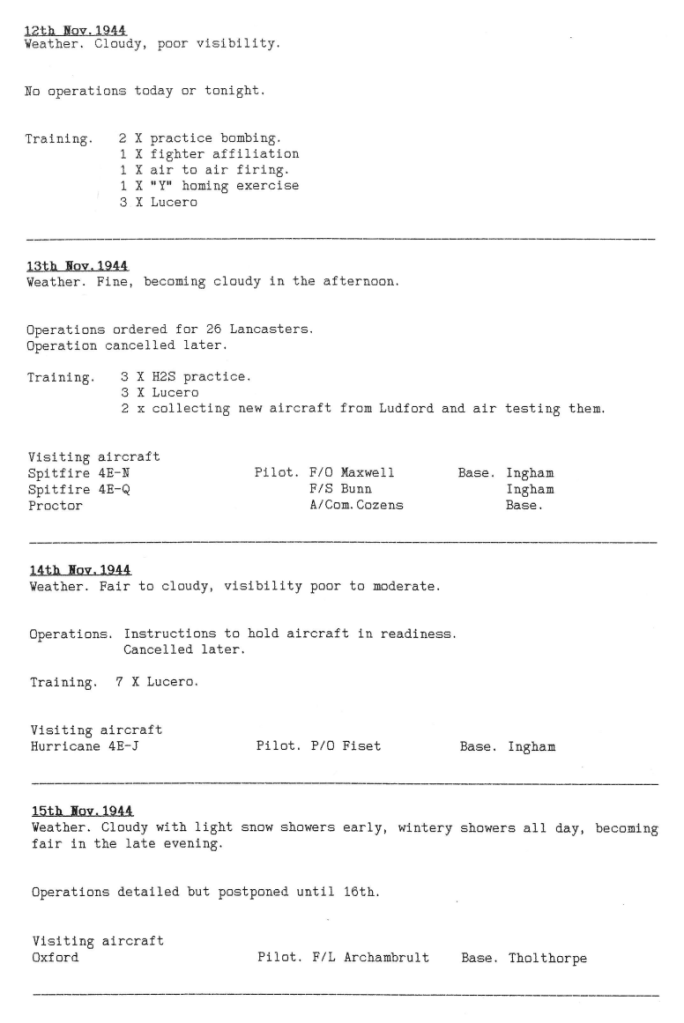
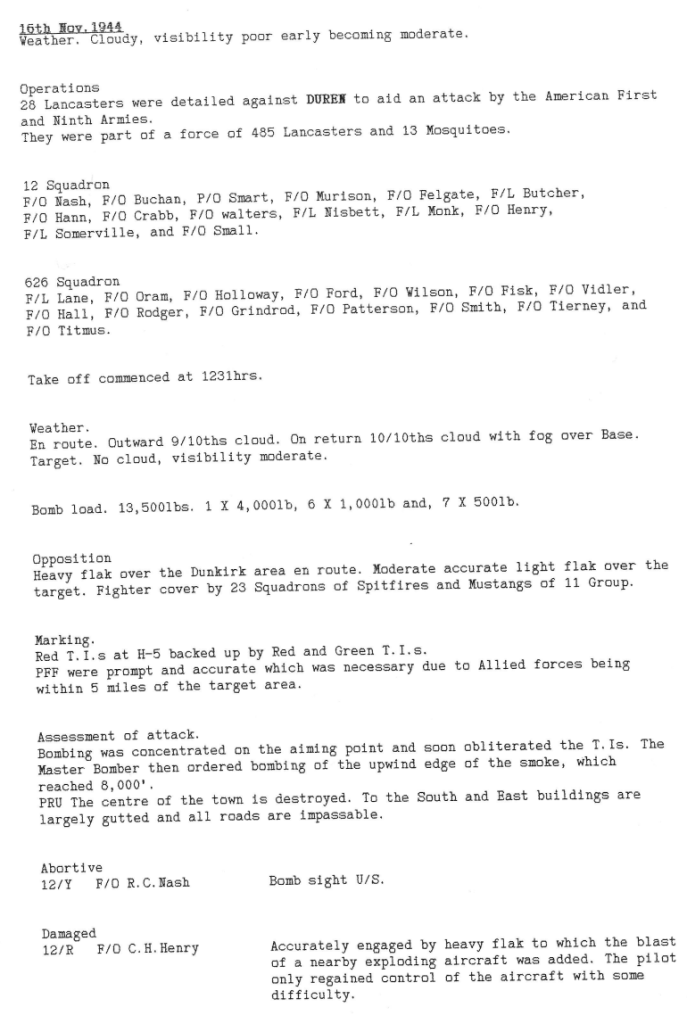
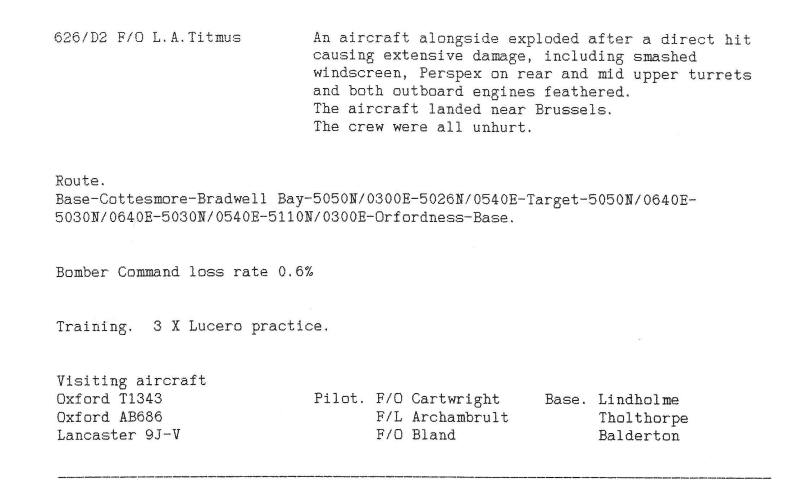
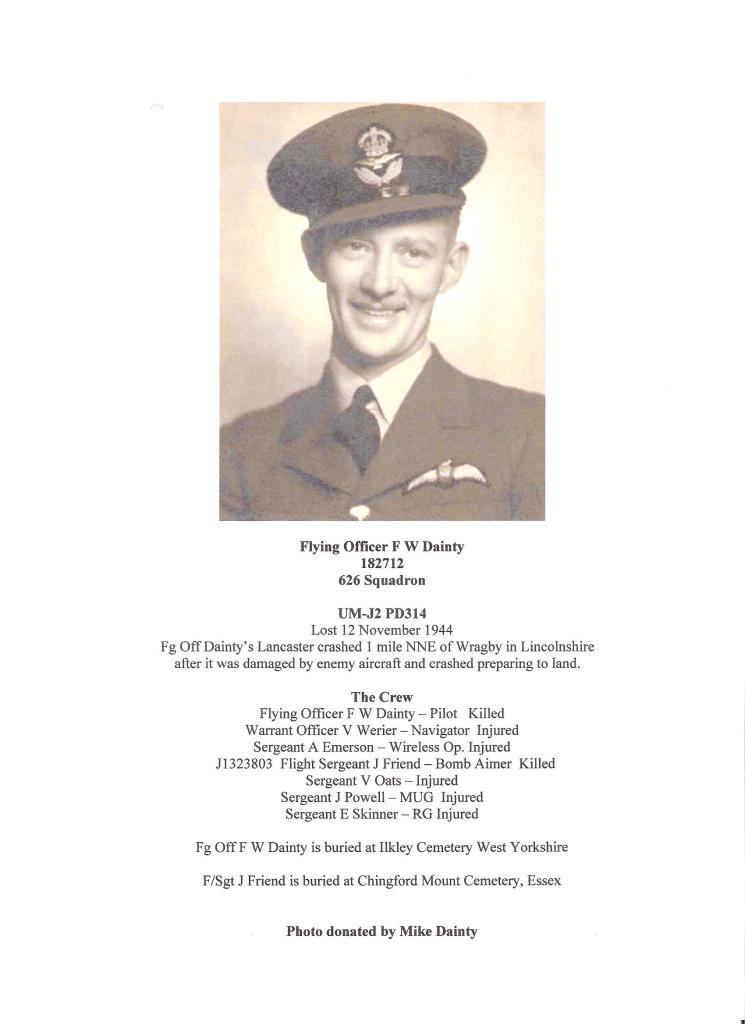
A pretty standard week for RAF Wickenby squadrons, with 3 operations; Dortmund, mine laying in the Kattegat and American Army support by bombing the town of Duren, which is between Aachen and the river Rhine. One aircraft was lost on return from the Dortmund raid, with 2 aircrew killed and 5 injured – the crew of Fg Off Dainty were on there 23rd mission. A second aircraft was badly damaged during the Duren attack by another aircraft exploding nearby, forcing it to land near Brussels (see Station Diary below).
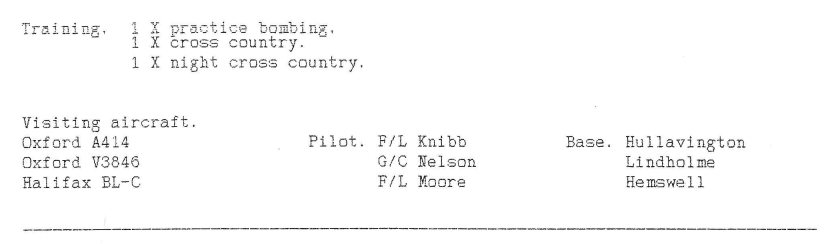
Extract from Station Diary
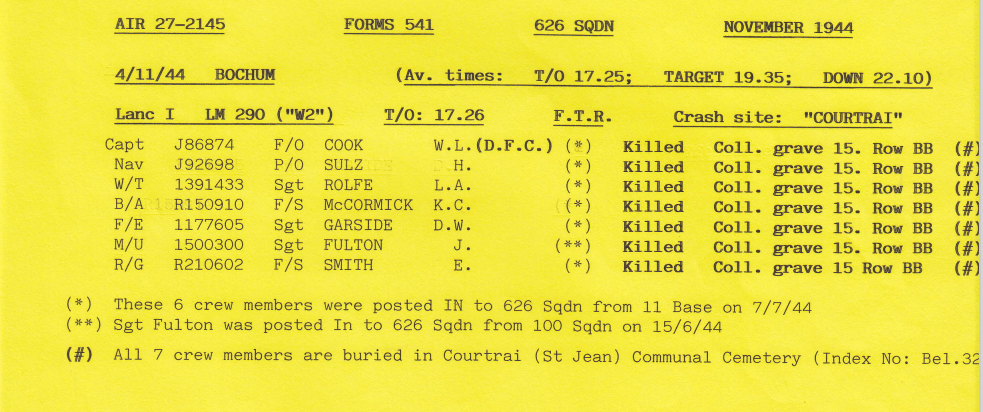
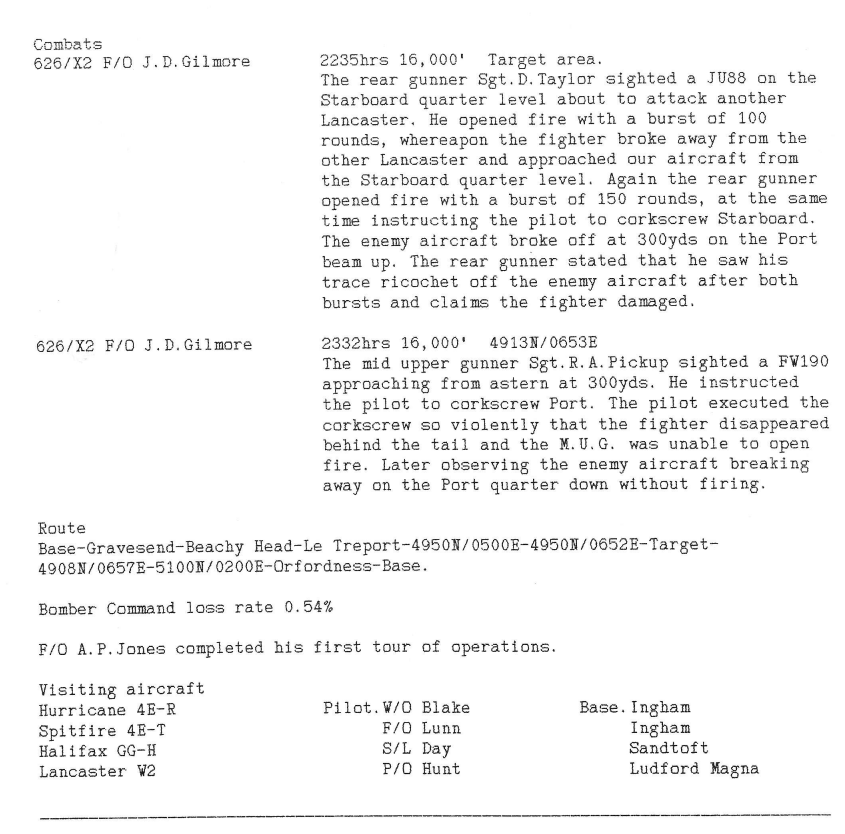
Extract from 626 Sqn Appendix to Operational Record Book
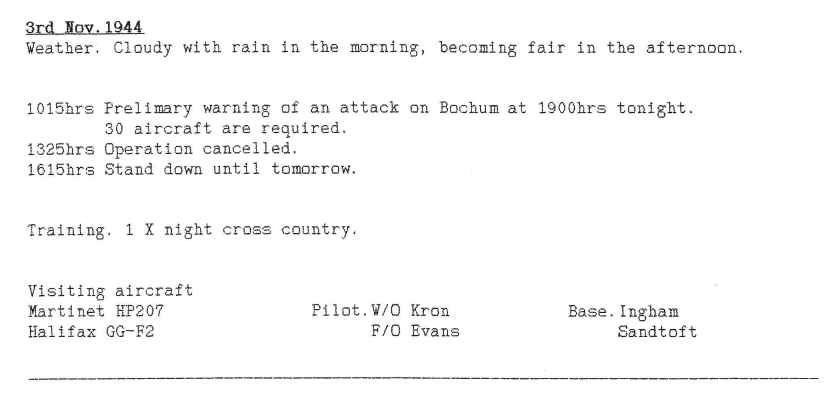
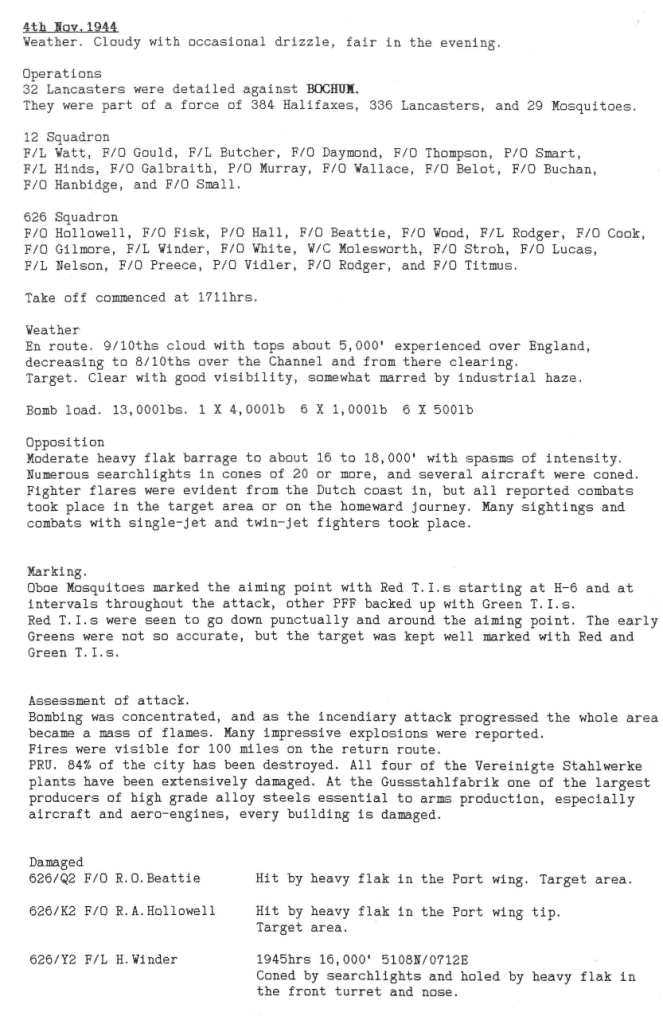
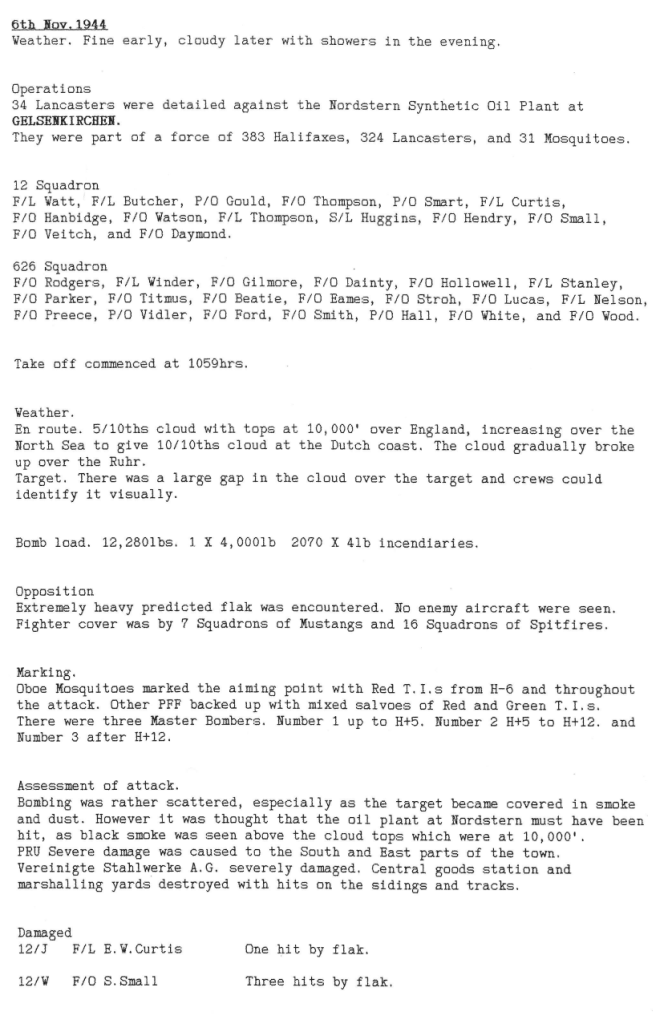
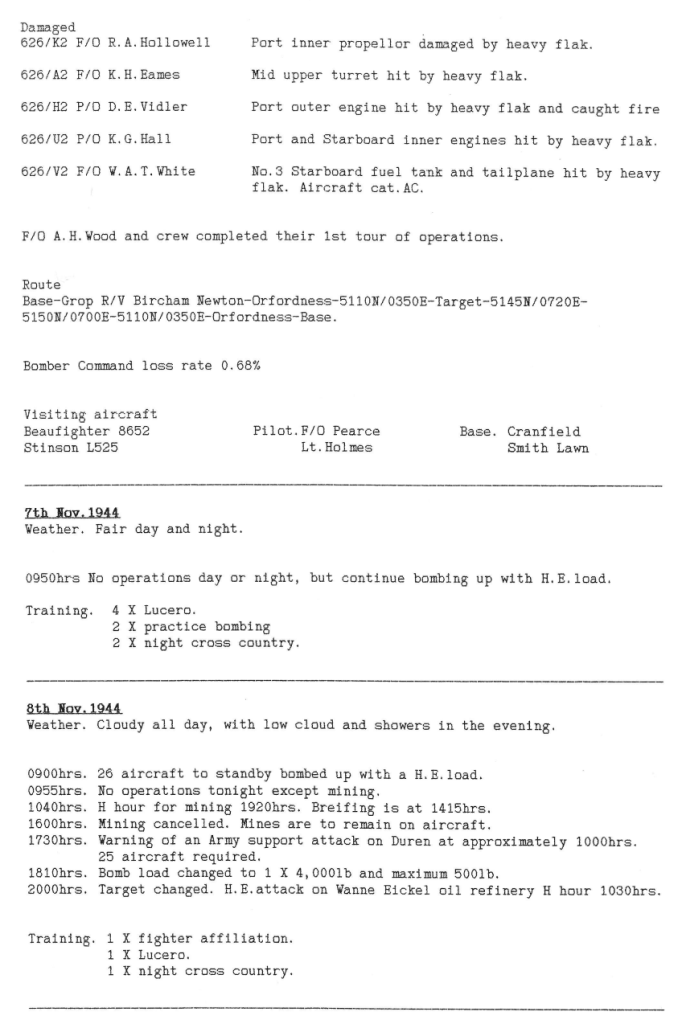
Missions this week concentrated on German targets – Bochum, Gelsenkirchen and Wanne-Eickel – with one aircraft lost and 7 aircrew killed. The attack on Bochum was particularly successful with over 4000 buildings destroyed and nearly 1000 people killed and was the last major raid made on this target.
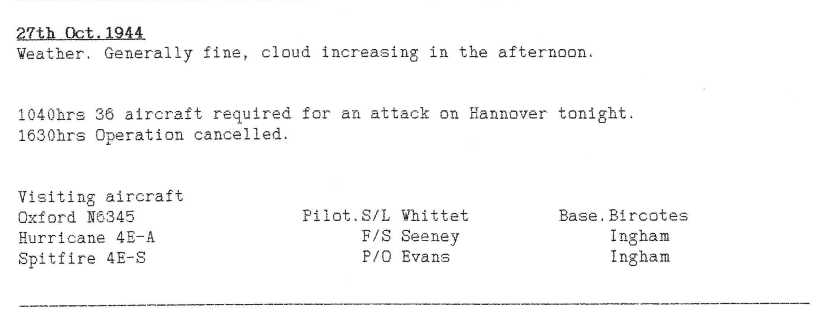
Extract from Station Diary
Extract from 626 Sqn Appendix to Operational Record Book
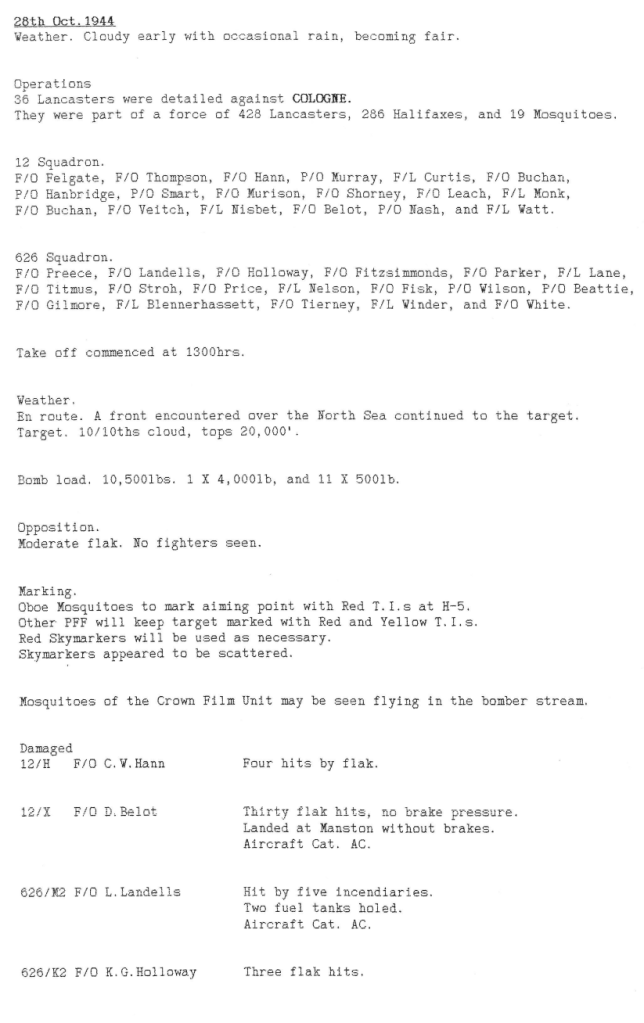
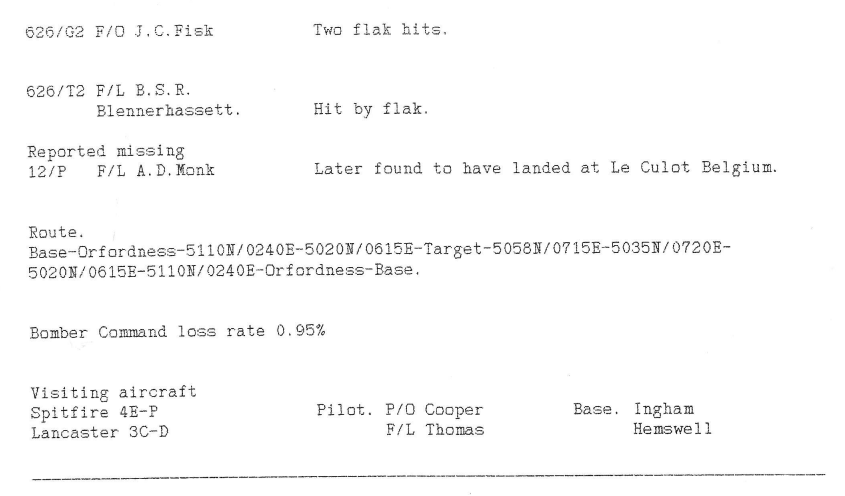
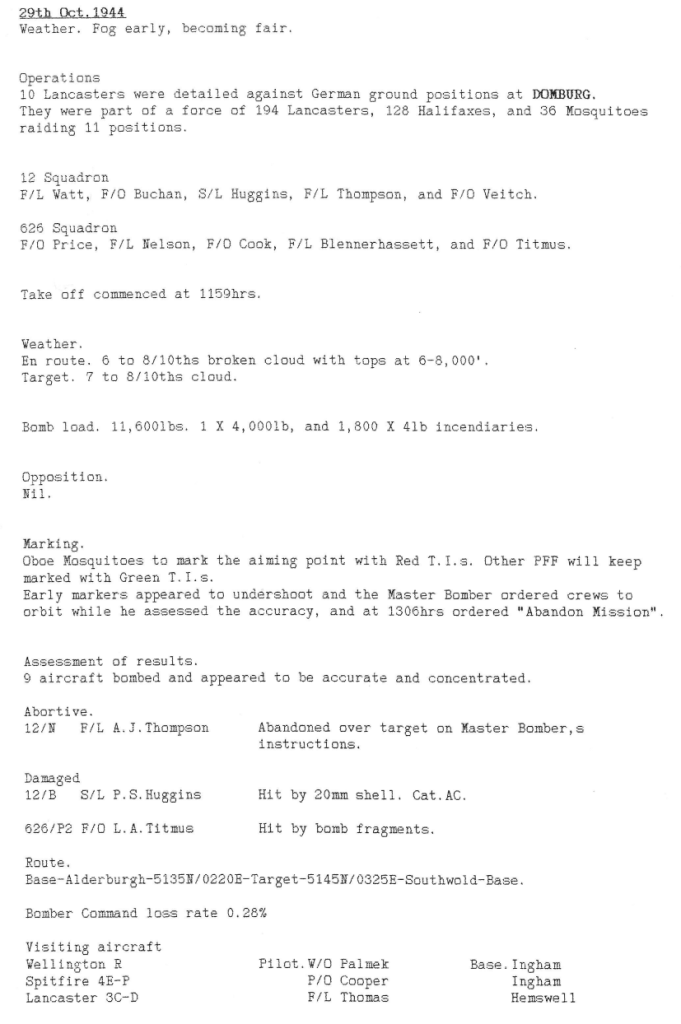
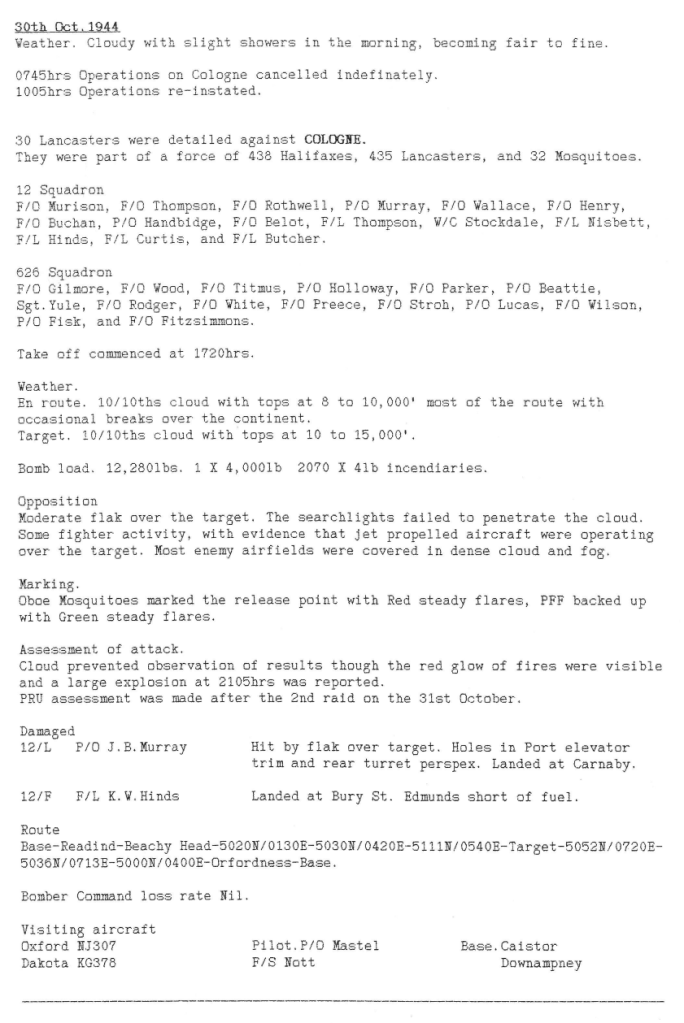
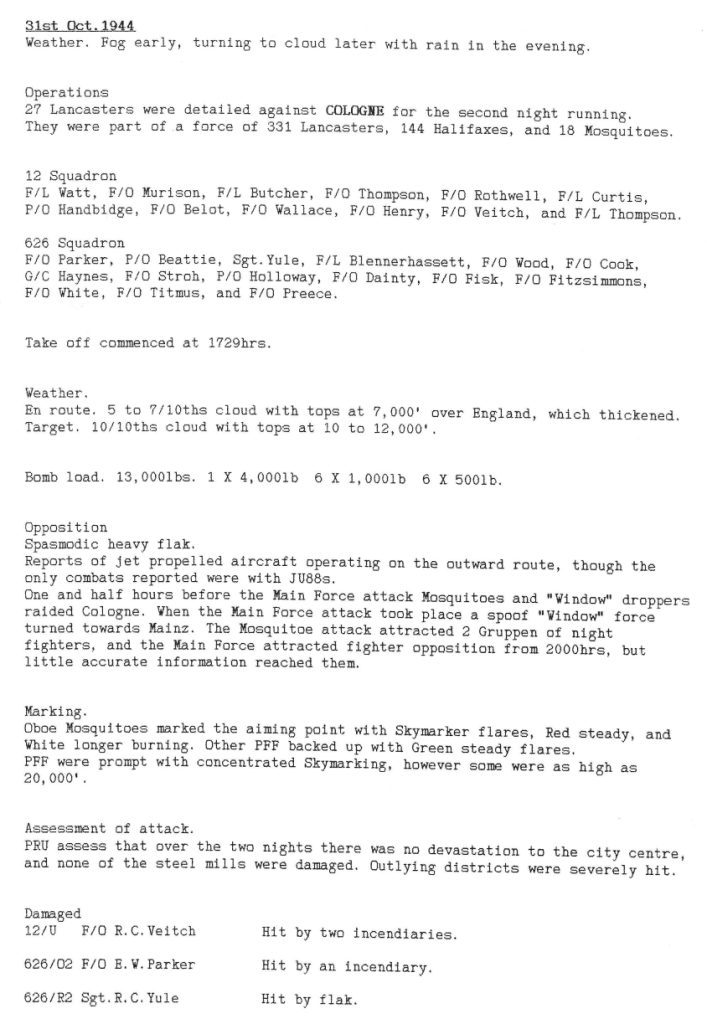
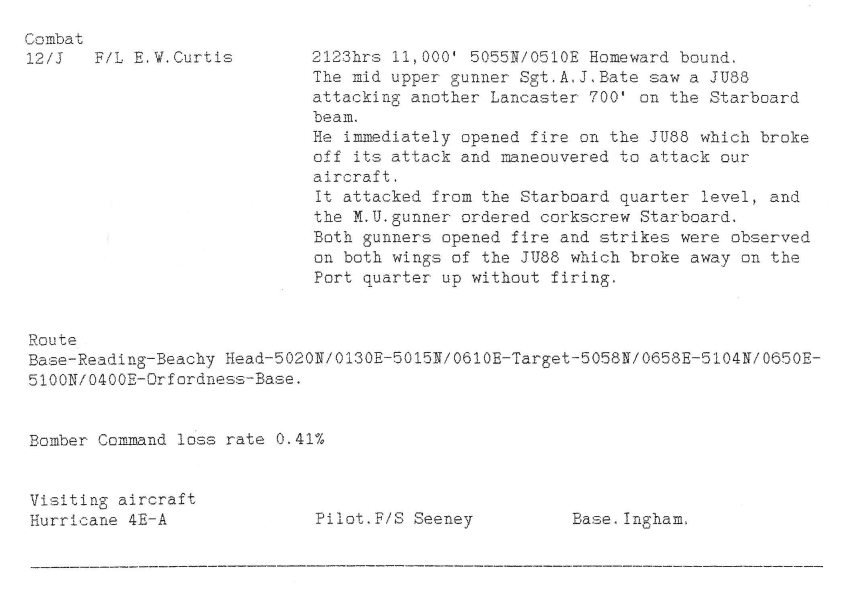
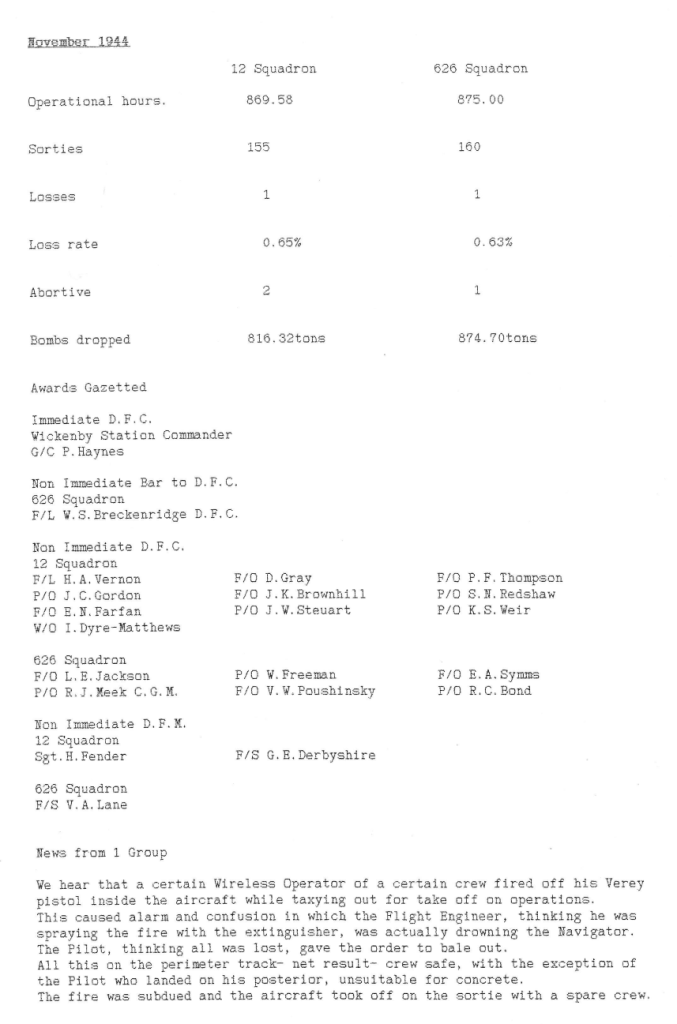
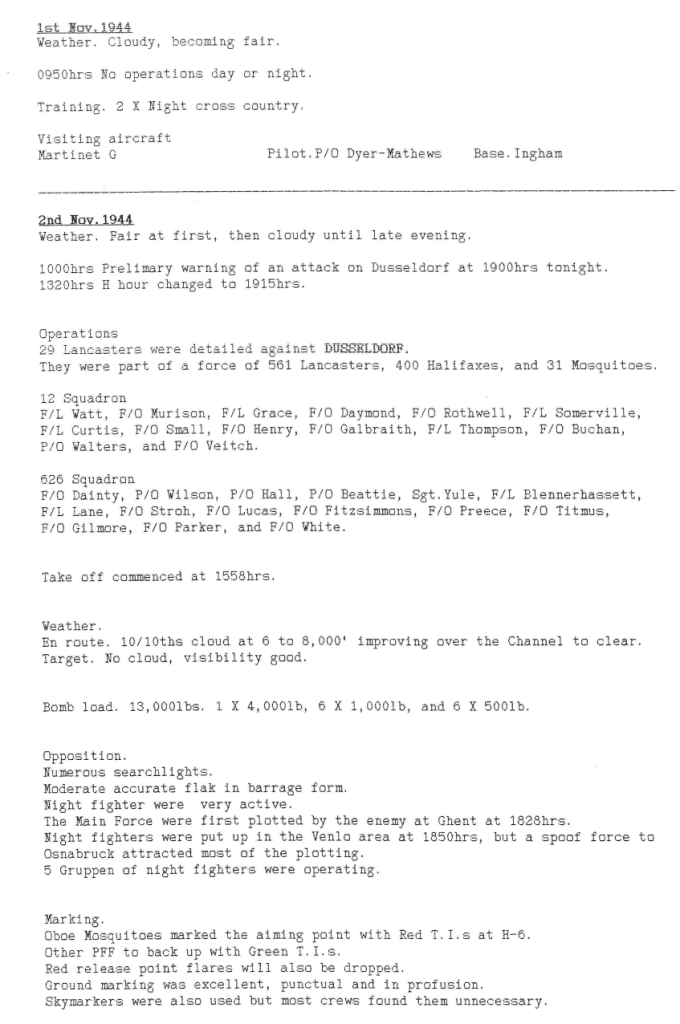
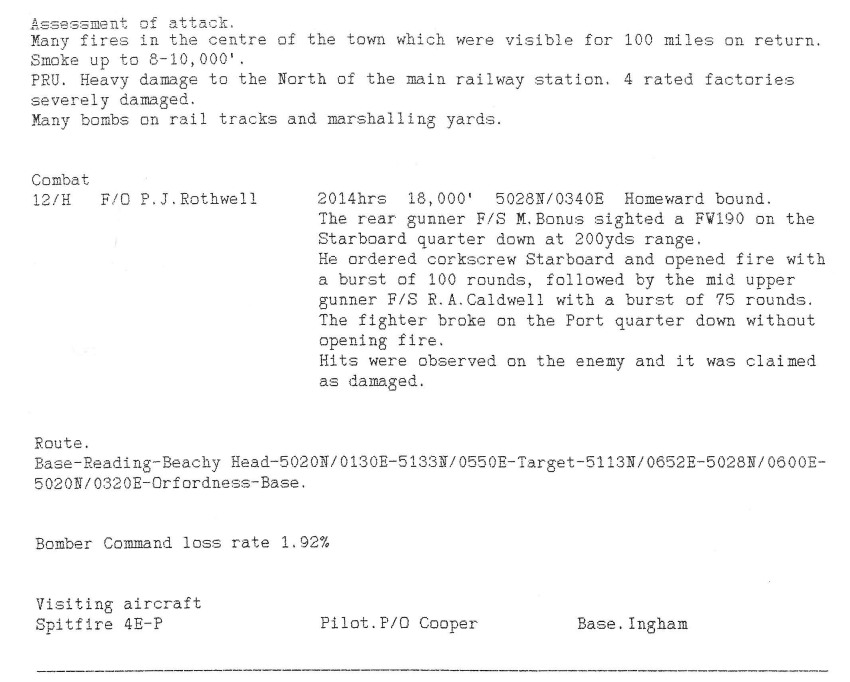
Cologne took a pounding this week, with 3 raids made by Wickenby squadrons as part of more than 2000 Bomber Command sorties to that city. The attacks caused major damage and killed more than 1200 people on the ground. There was also an operation by 10 Wickenby aircraft to attack German ground positions at Domburg on the island of Walcheren in Holland. No losses occurred this week.
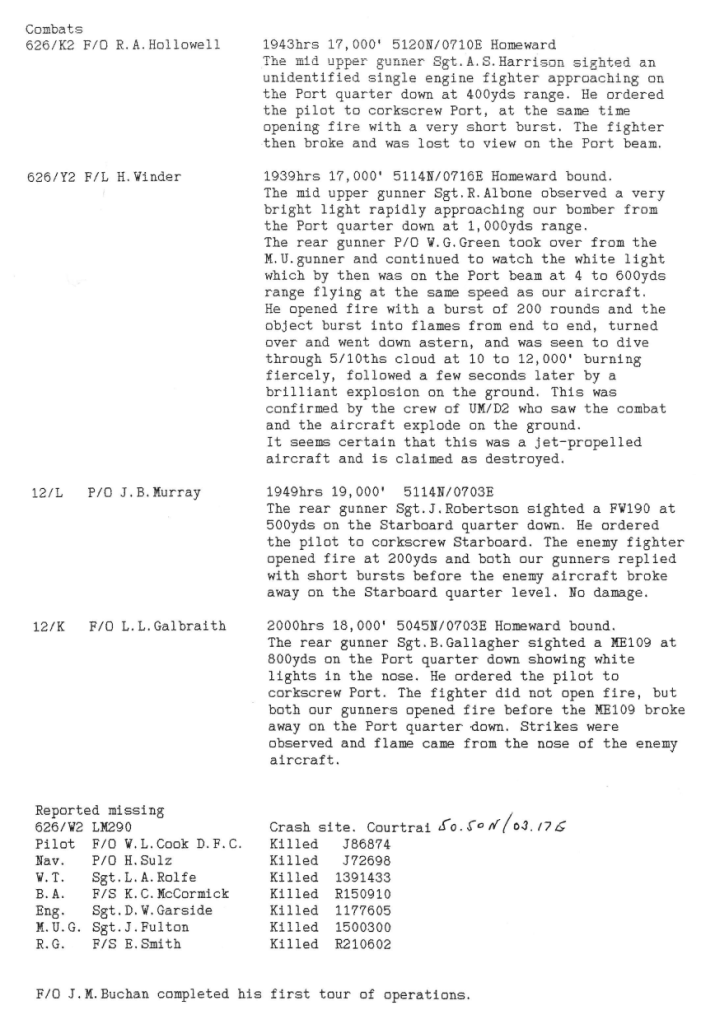
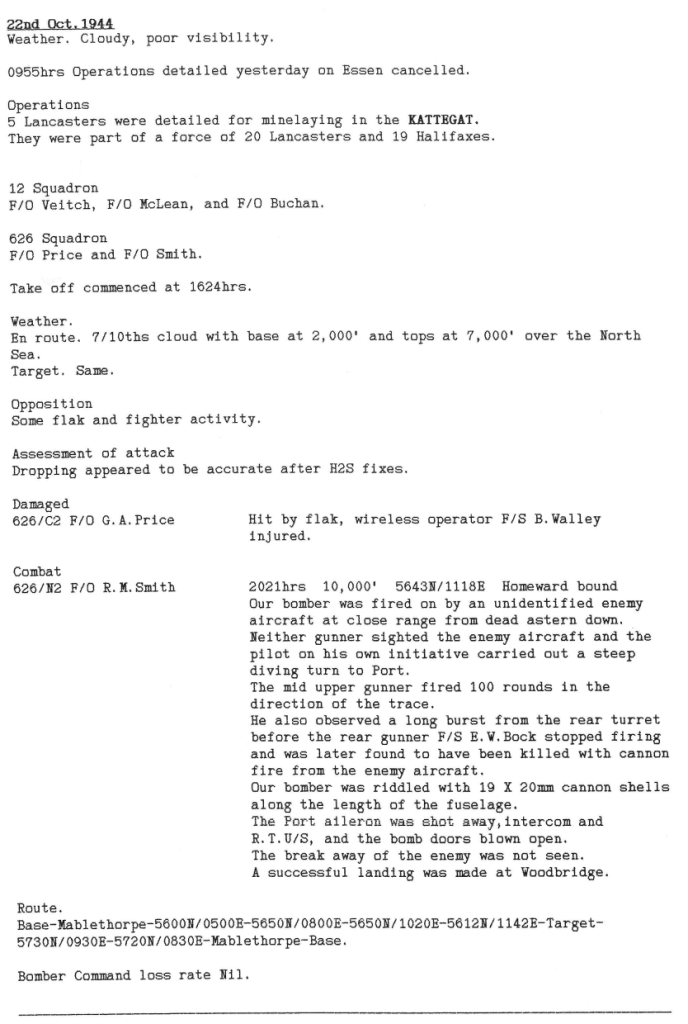
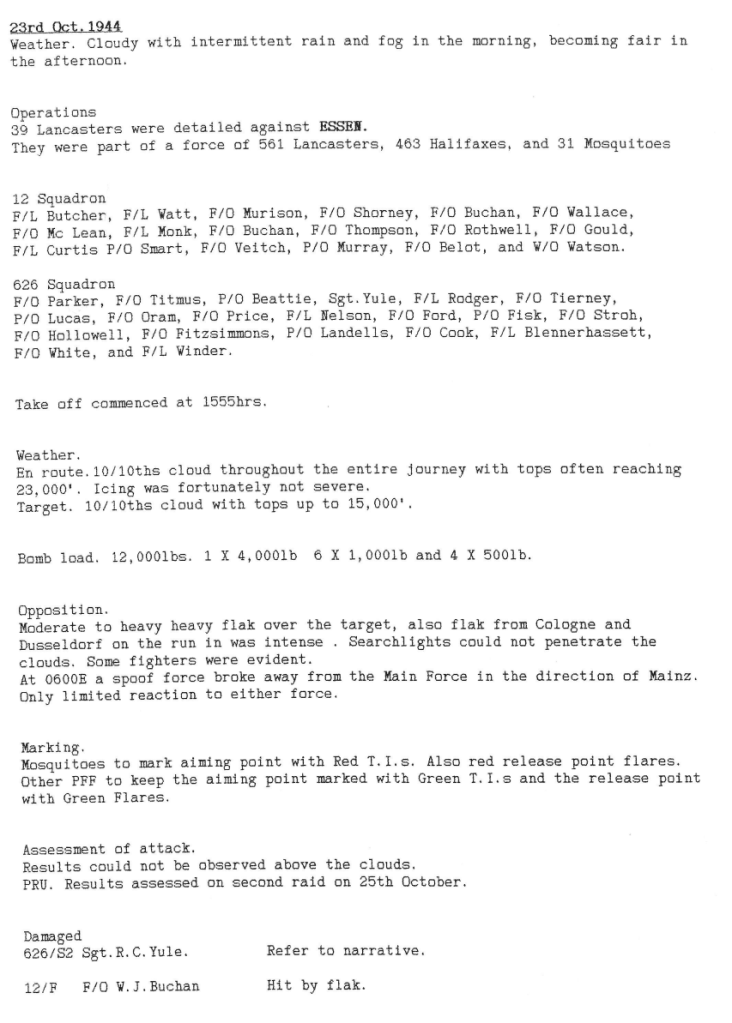
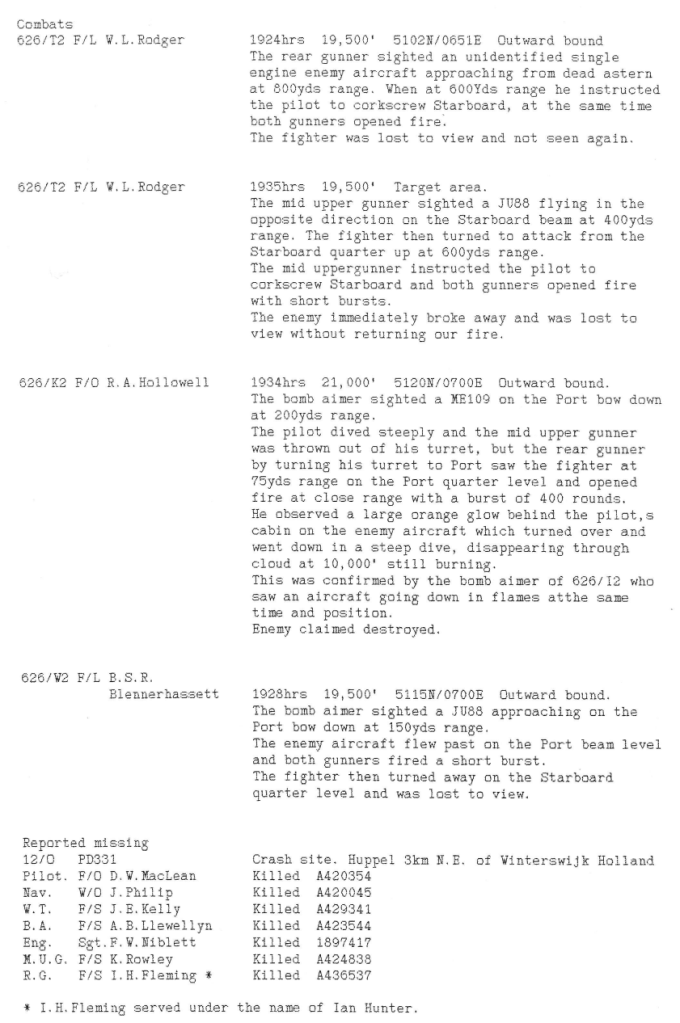
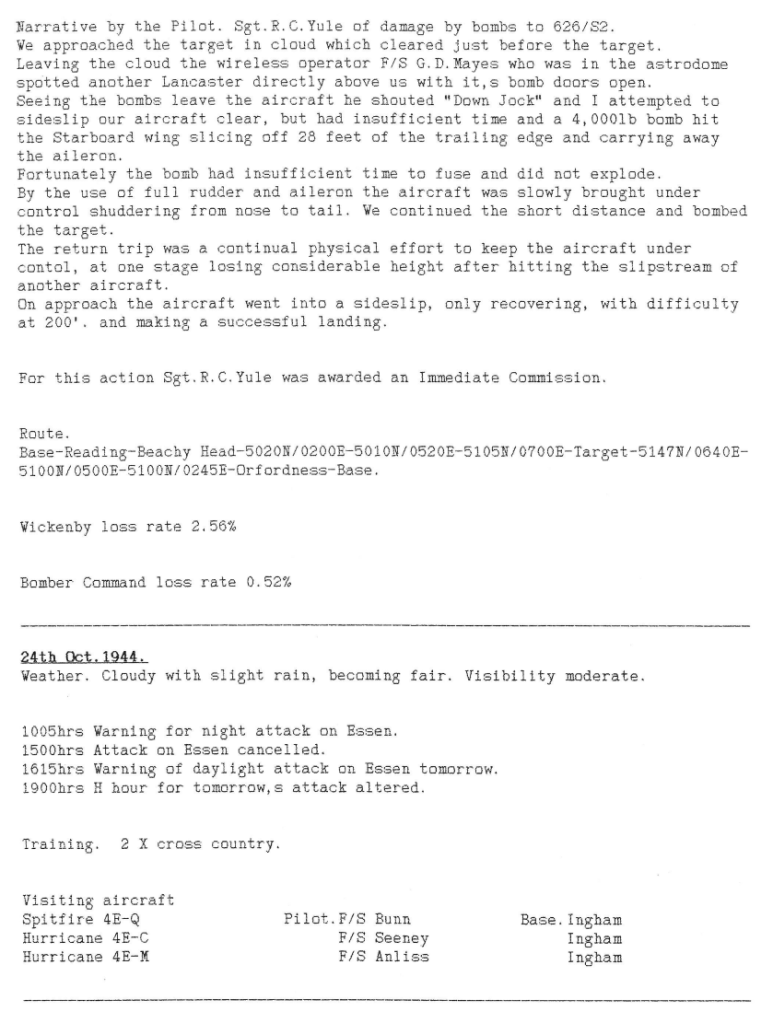
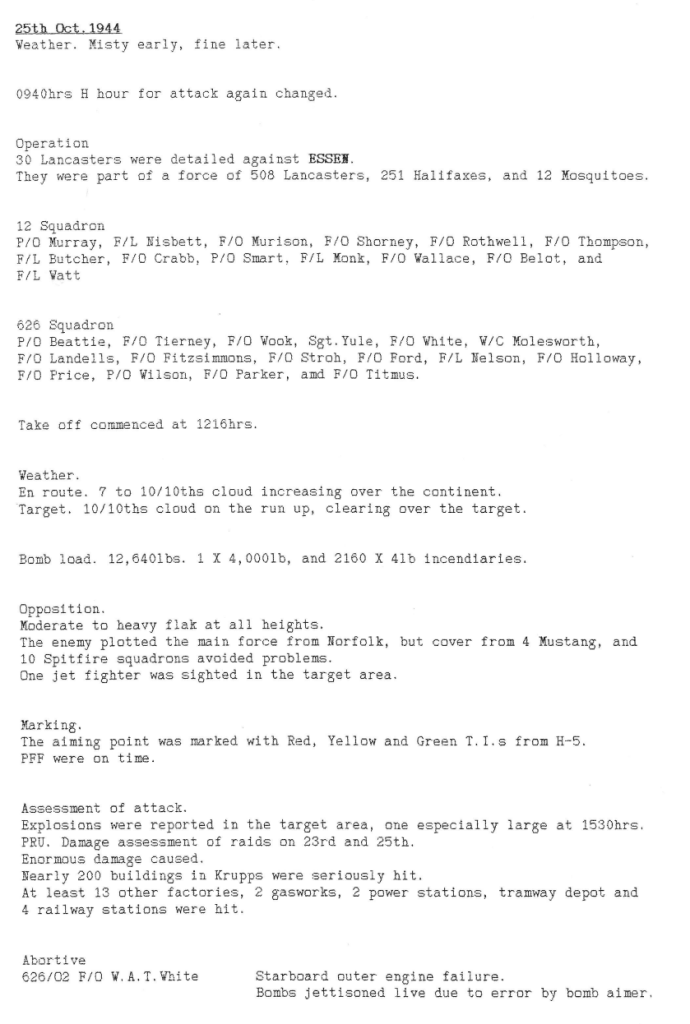
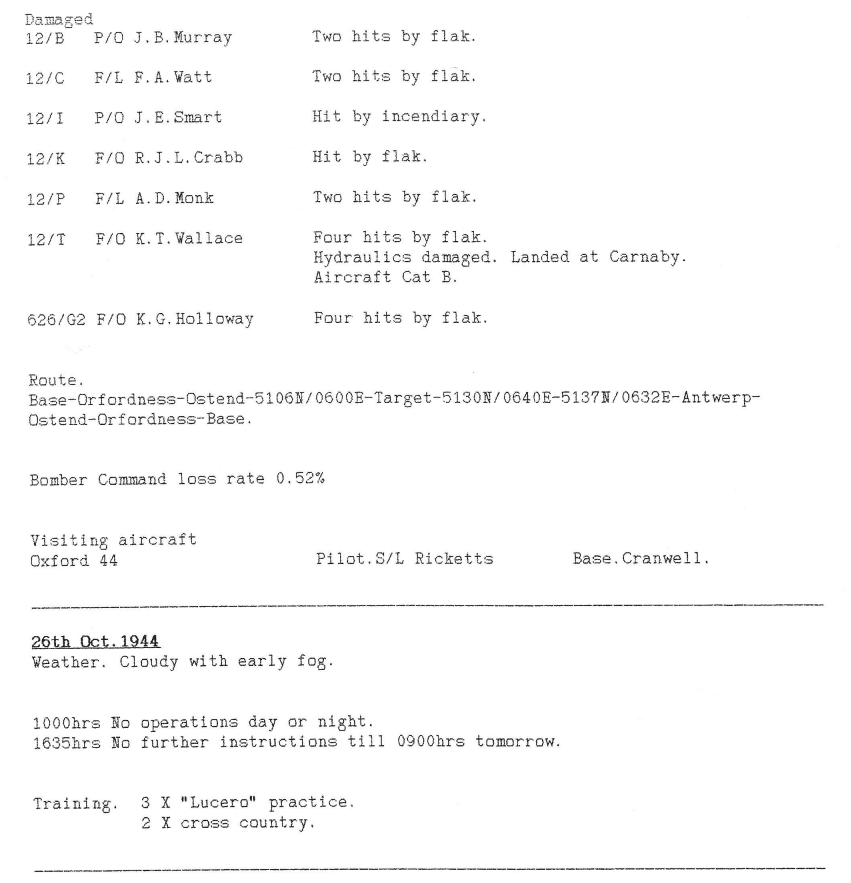
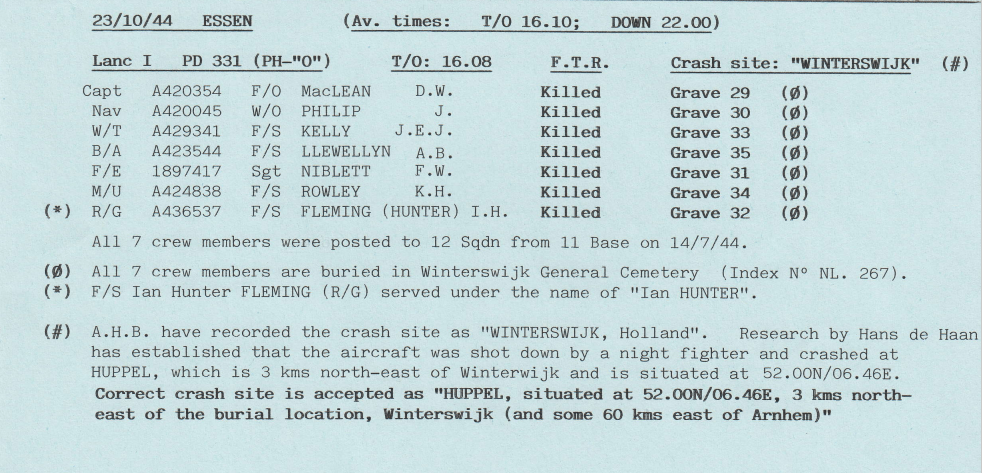
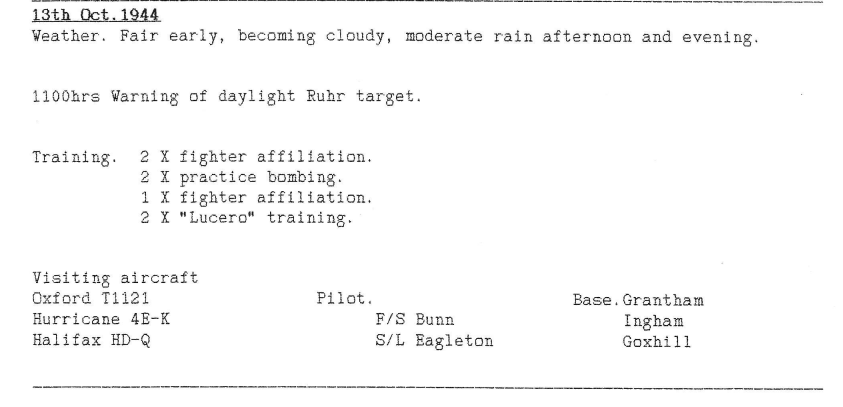
Wickenby aircraft were involved in 3 missions this week; minelaying in the Kattegat and twice to Essen – 8 aircrew were killed and one aircraft was lost. A rear gunner was killed by a night fighter during the minelaying and 7 aircrew were killed in the first mission to Essen, where Sgt Yule and his crew were lucky to return when hit be a 4000 lb “cookie” dropped from above (see Station Diary). It is also interesting to note that a jet fighter was observed during the second Essen operation.
Extract from Station Diary
Flying Officer Donald MacClean (RAAF) aged 32, and 5 of his crew, who were all killed during the attack on Essen on 23 October – From left to right sitting: D. Maclean, I. Fleming, B. Llewelynn, K.H. Rowley From left to right standing: J.Philips, J. Kelly.
Extract from 12 Sqn Appendix to Operational Record Book
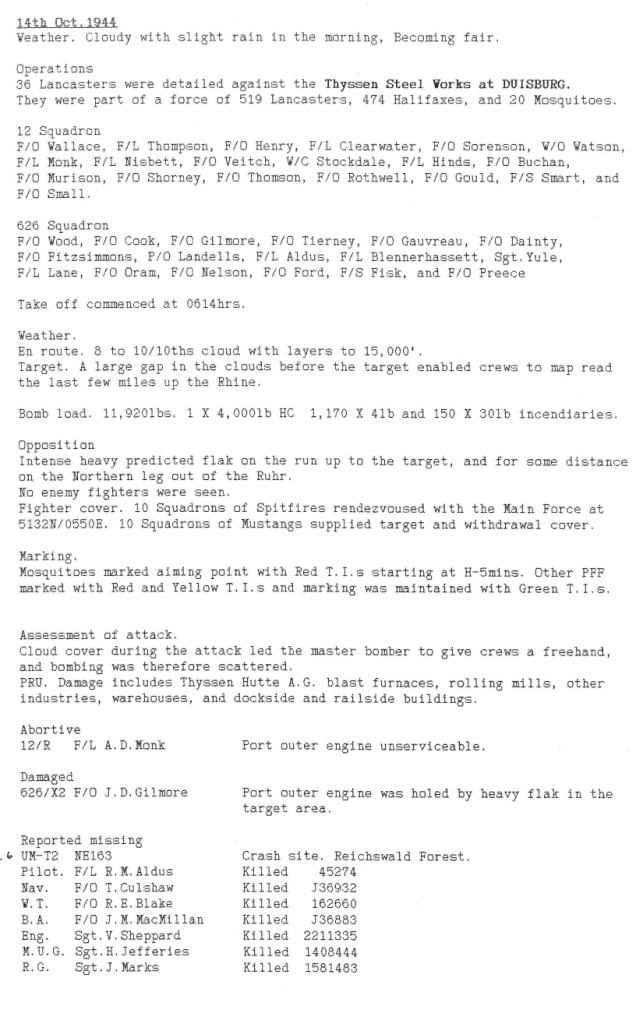
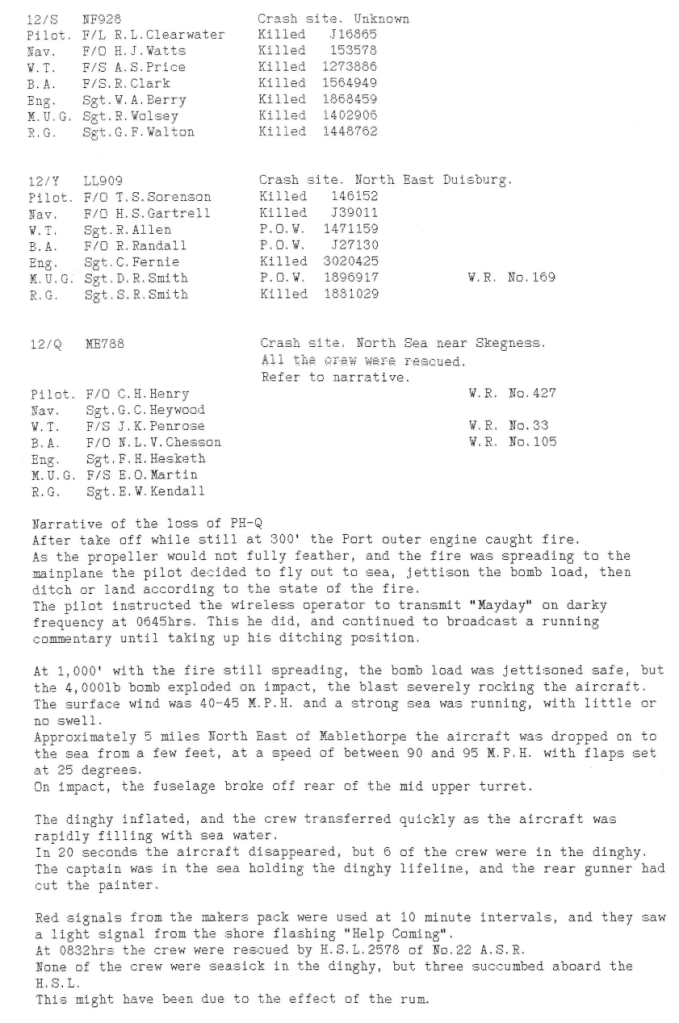
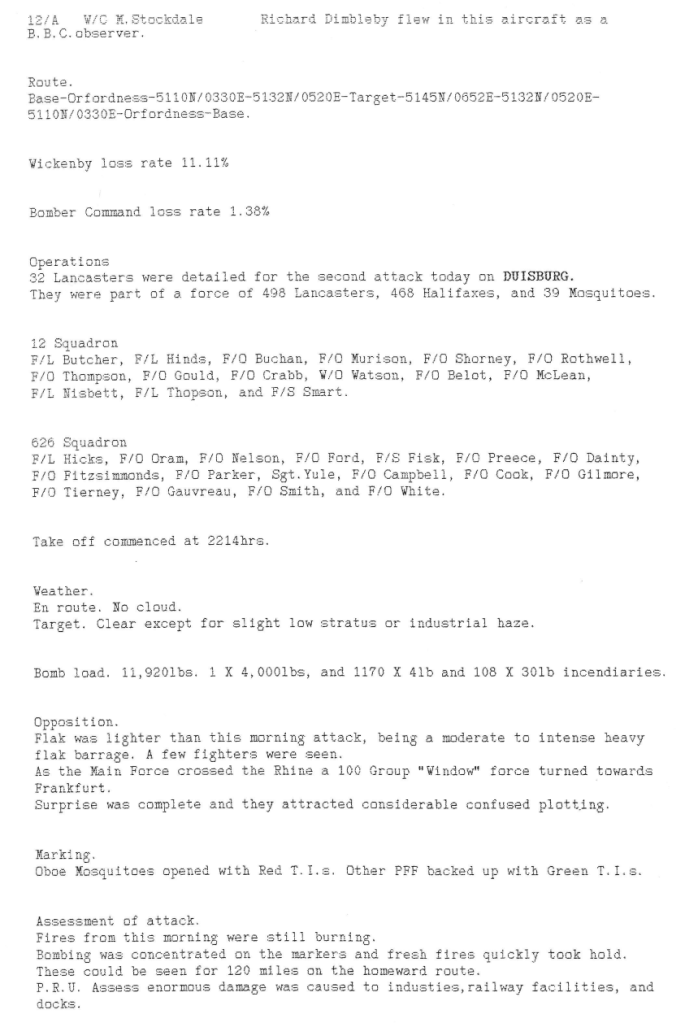
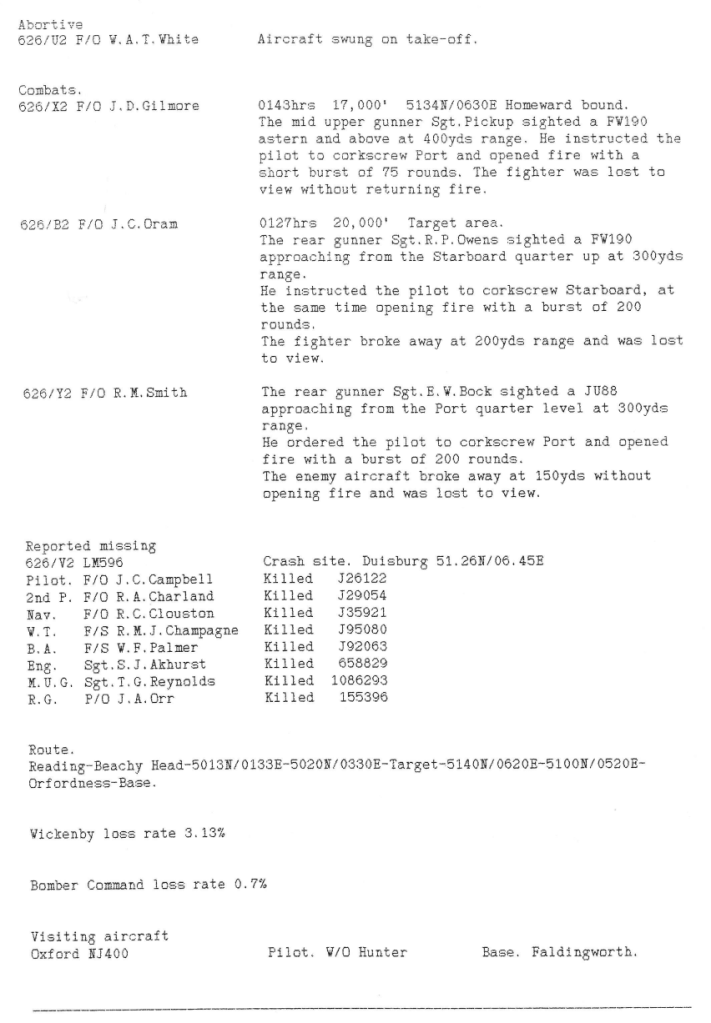
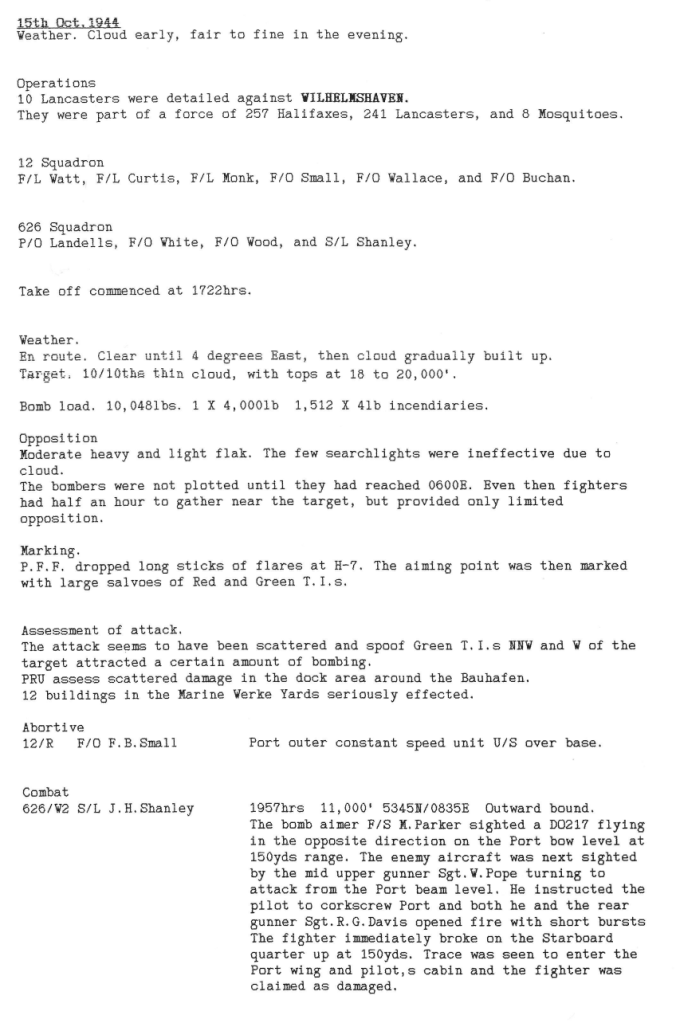
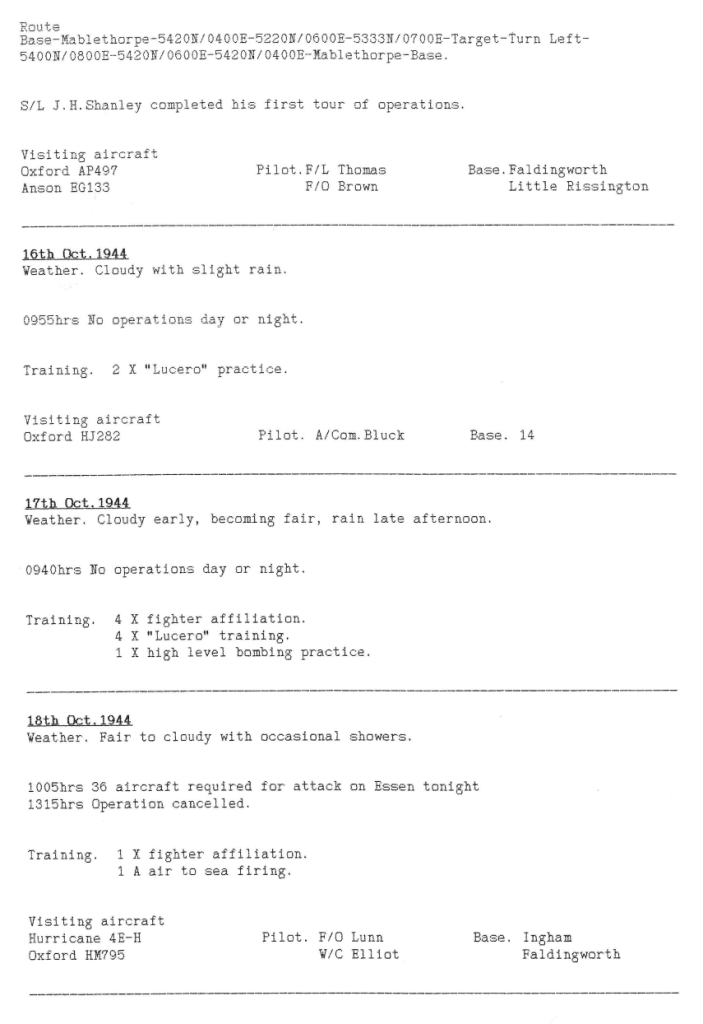
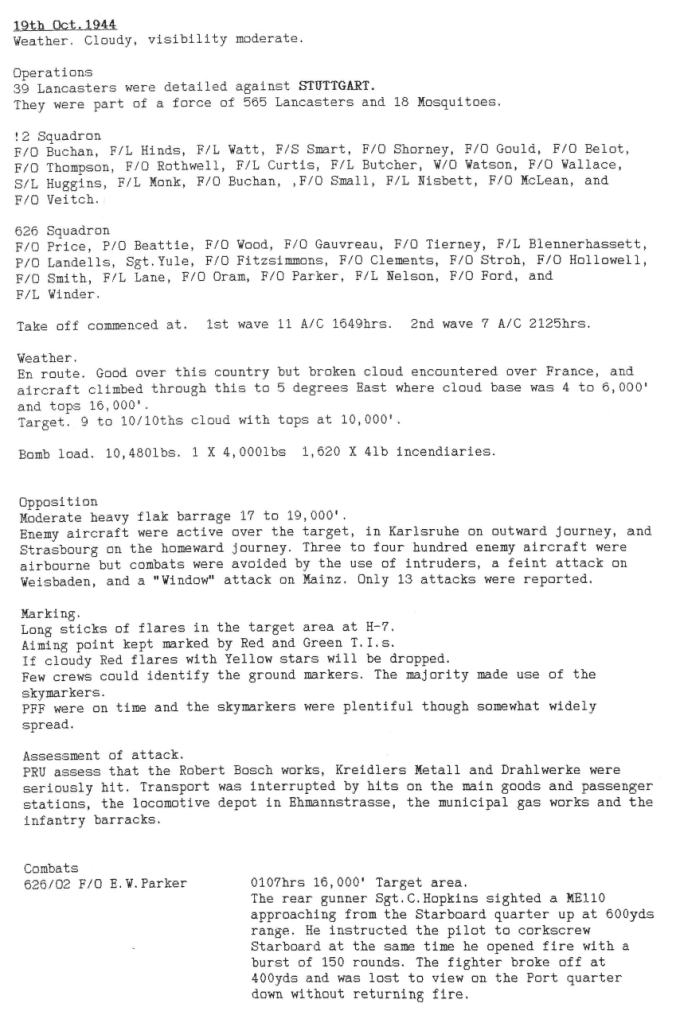
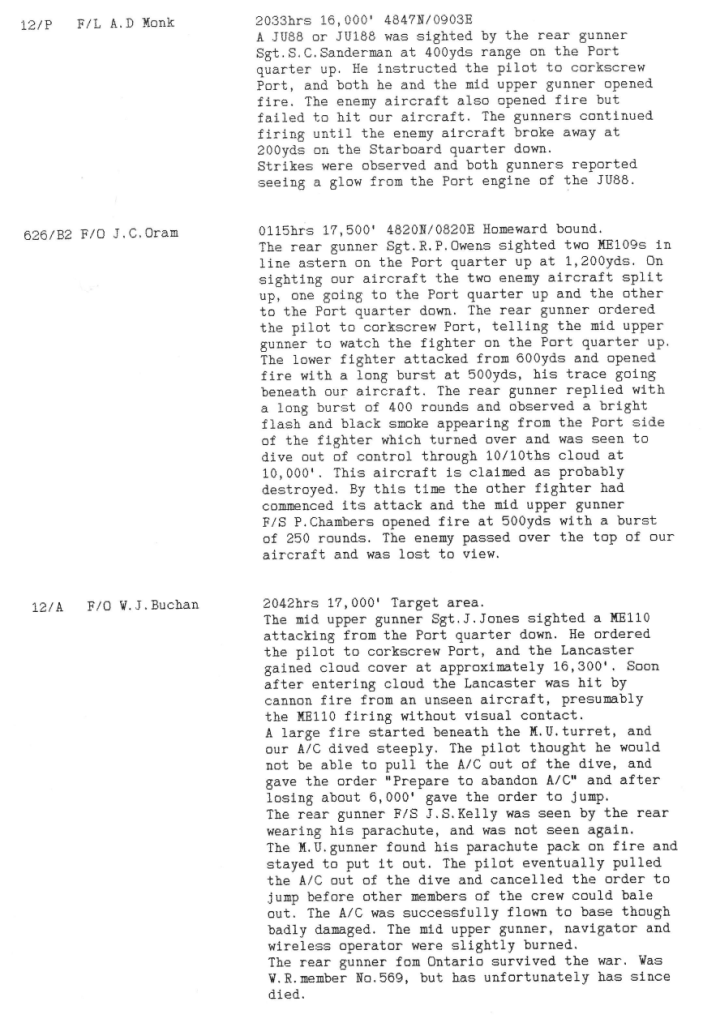
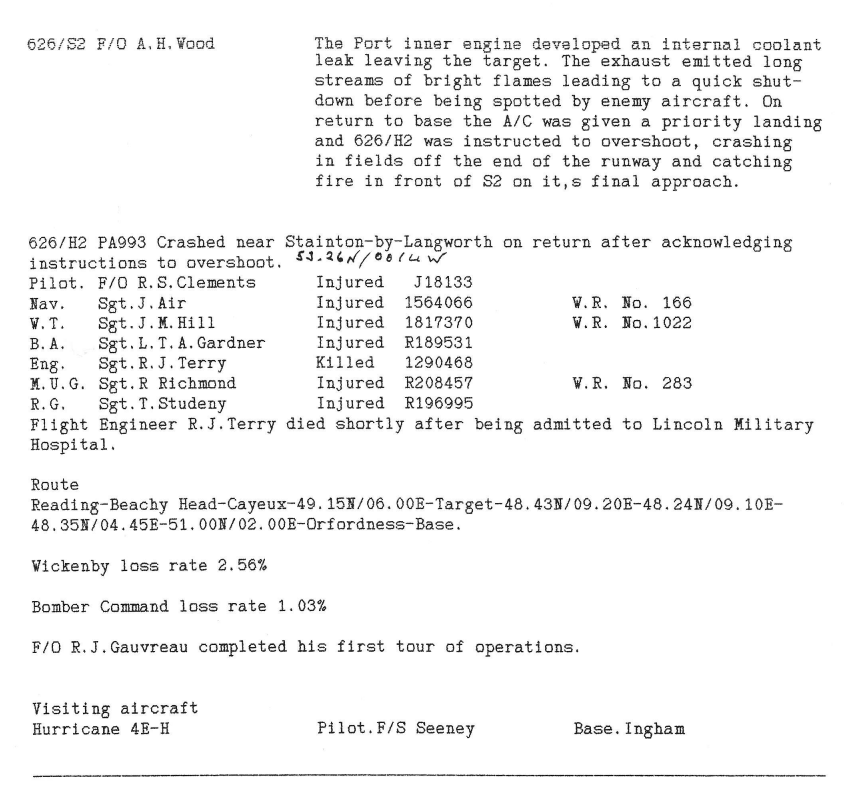
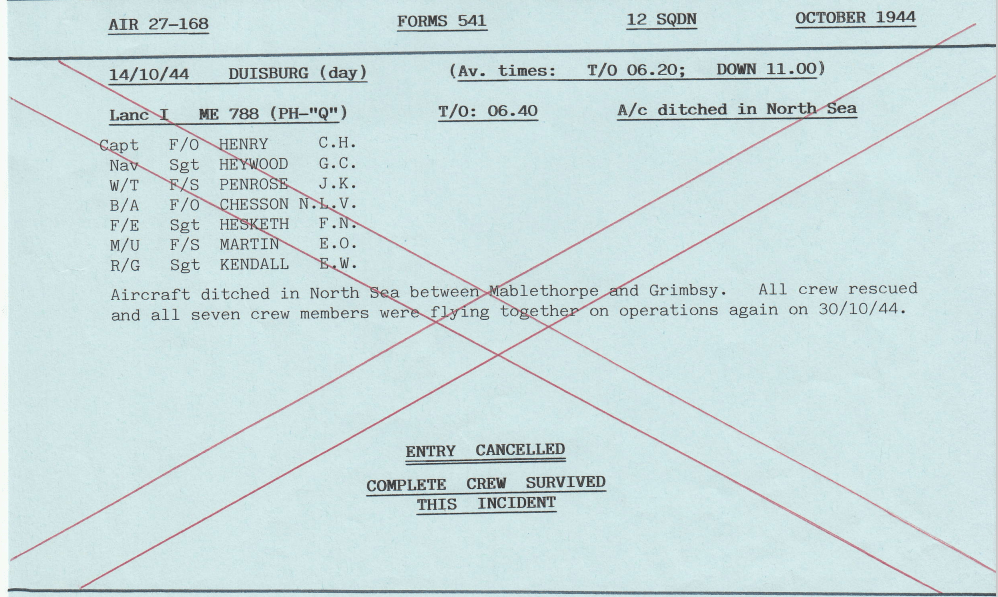
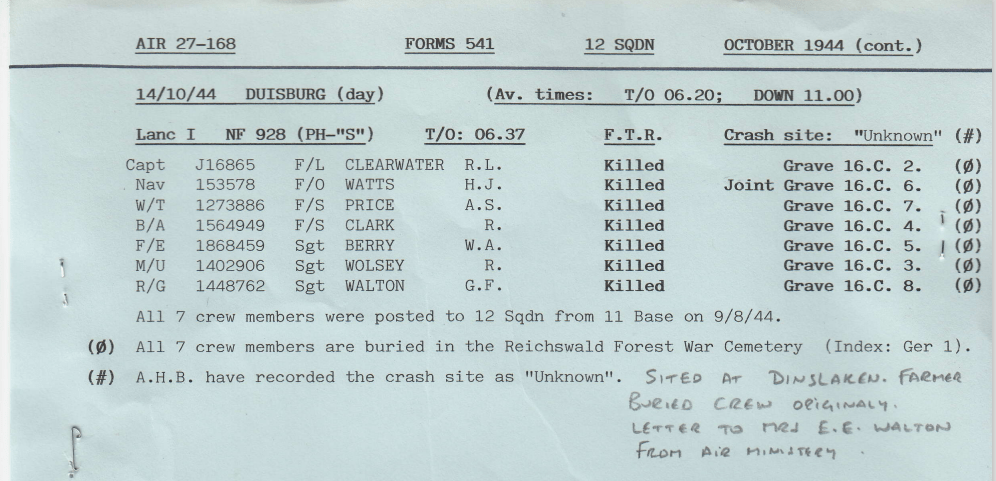
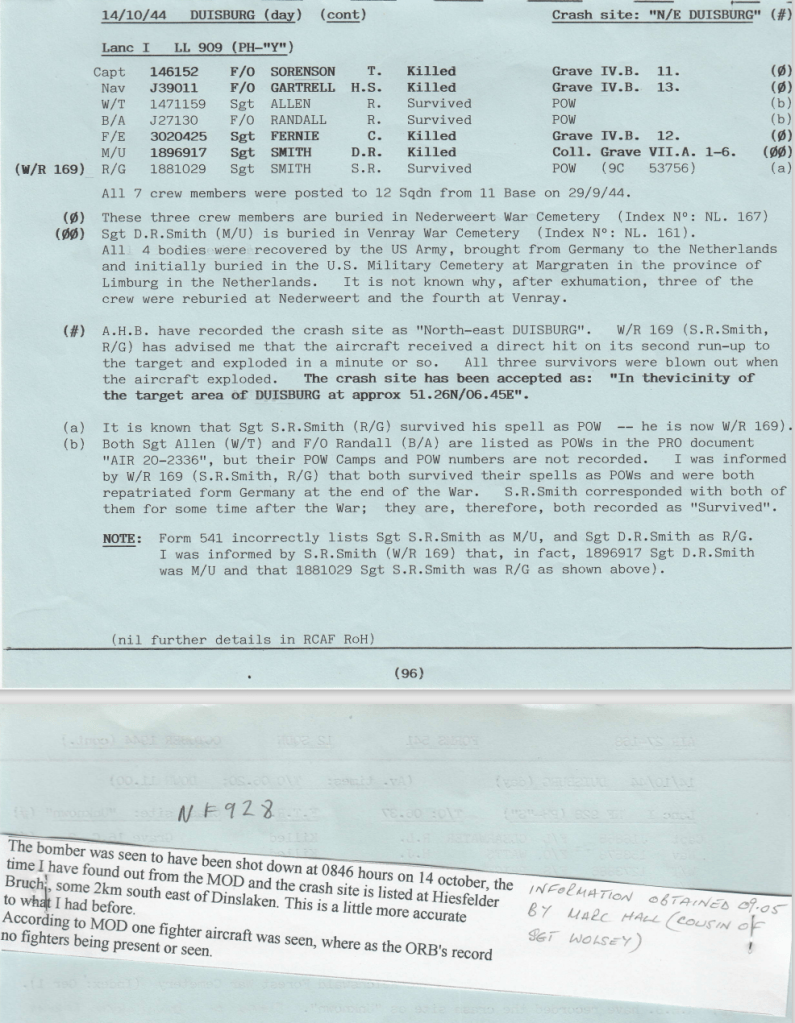
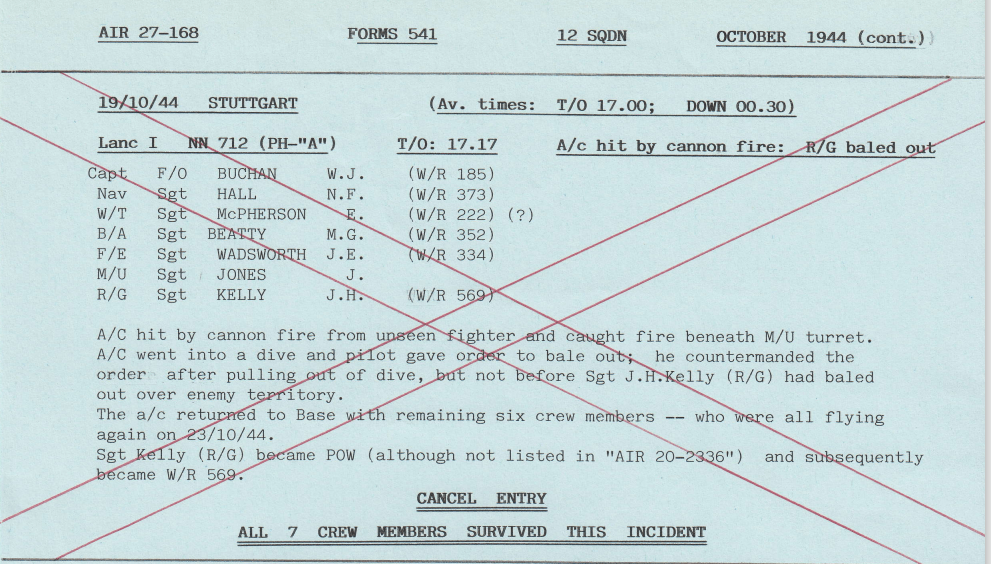
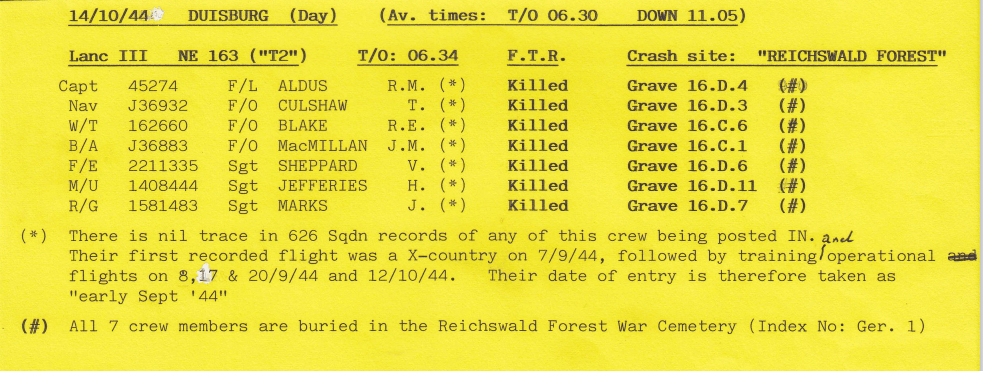
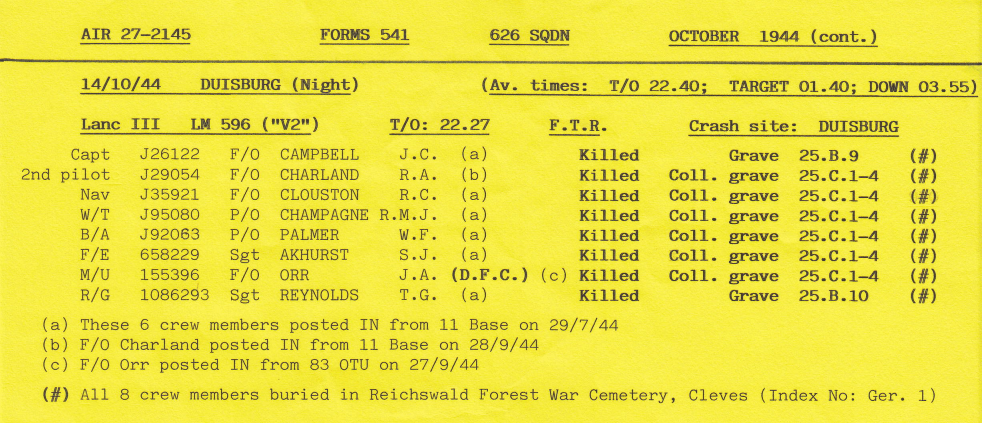
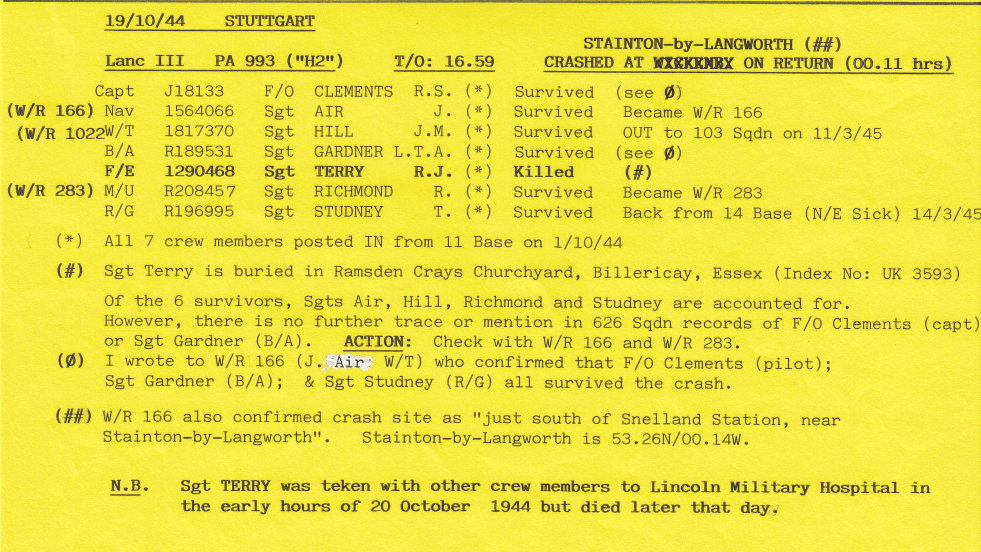
A costly week for RAF Wickenby, with 6 aircraft lost, 27 aircrew killed, 4 becoming POW’s and several injured during missions or in crash landings. Attacks were made on Duisburg, Wilhelmshaven and Stuttgart. There were two missions to Duisburg on one day, with many crews making both trips, but resulting in the loss of 5 aircraft, 4 during the daylight raid, which was becoming more common due to the availability of long range fighter cover. Both of these raids consisted of more than 1,000 RAF aircraft, with the USAAF also bombing Cologne the same day with over 1,200 aircraft.
Extract from Station Diary
Flt Lt Ray Clearwater, aged 32, the son of John Wesley Clearwater & Catherine J Clearwater of McAuley, Manitoba, Canada, who was killed with all his crew in the first attack on DuisburgRay Clearwater’s crew, all killed during the first mission to DuisburgSgt Ross Allen, the wireless operator in Flying Officer Sorenson’s aircraft that was lost on the first Duisburg mission – he was captured after bailing out and became a POW
Extract from 12 Sqn Appendix to Operational Record Book
Extract from 626 Sqn Appendix to Operational Record Book
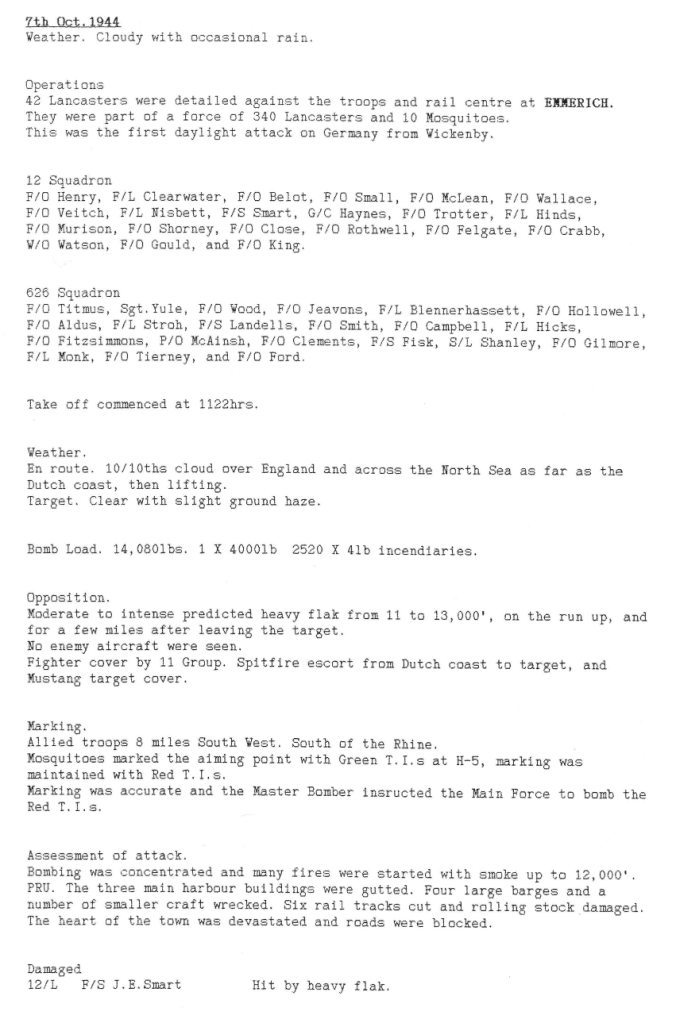
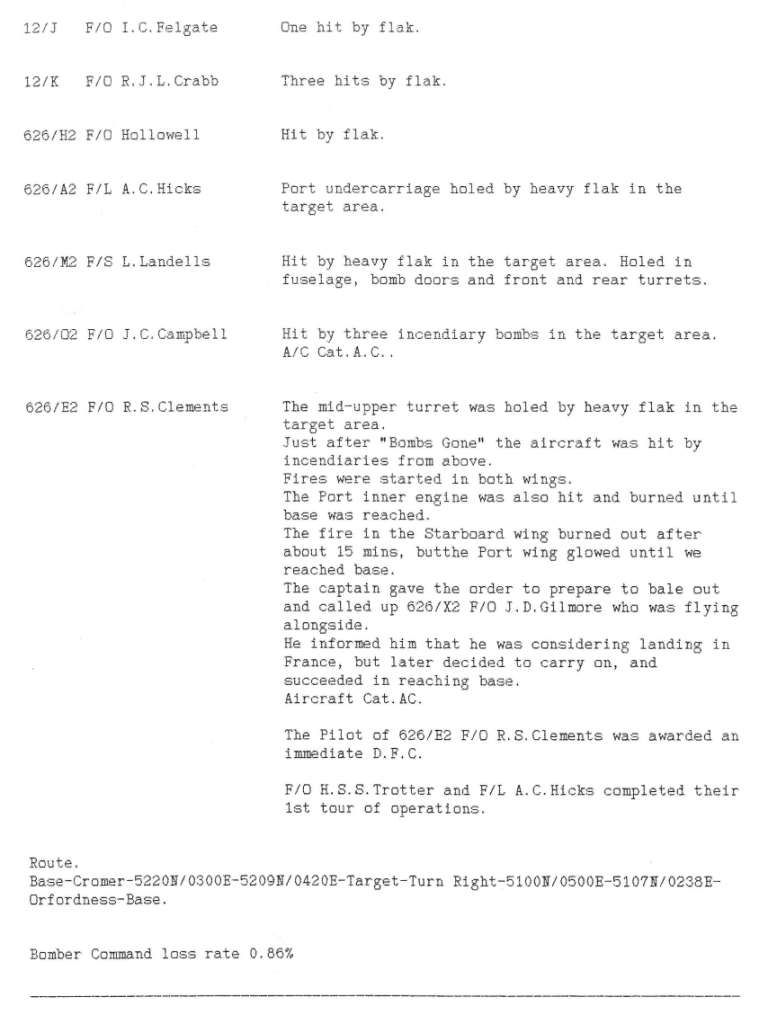
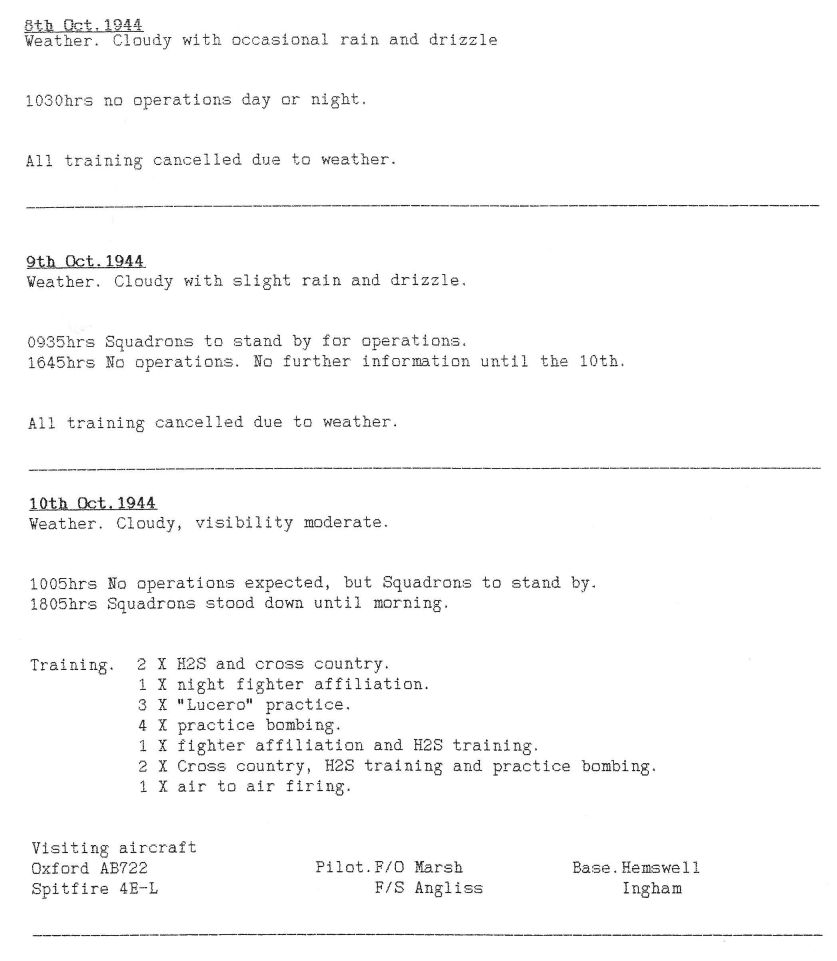
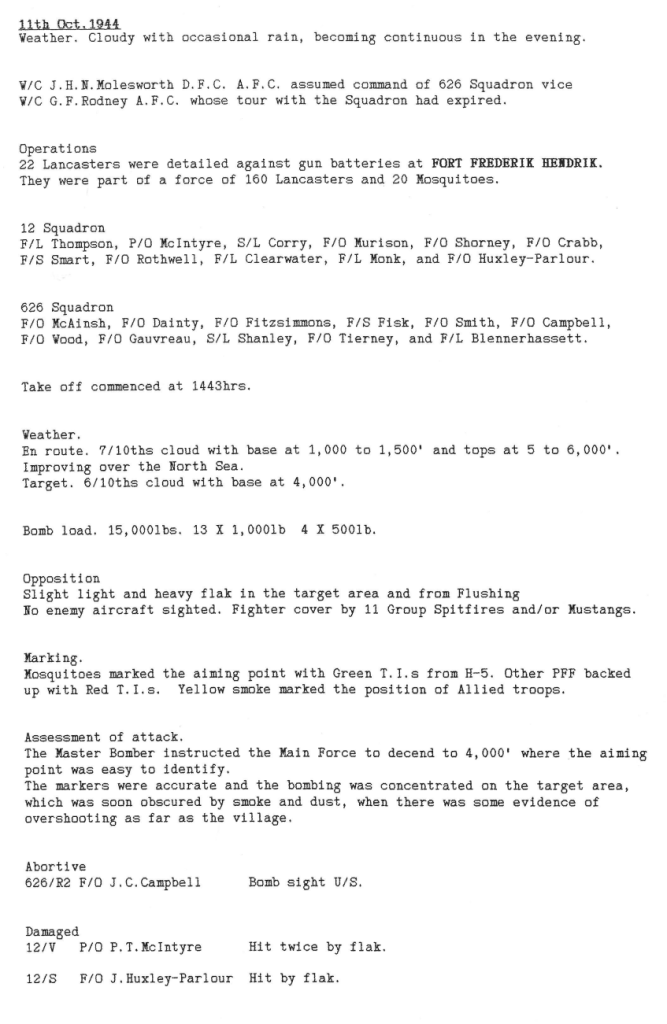
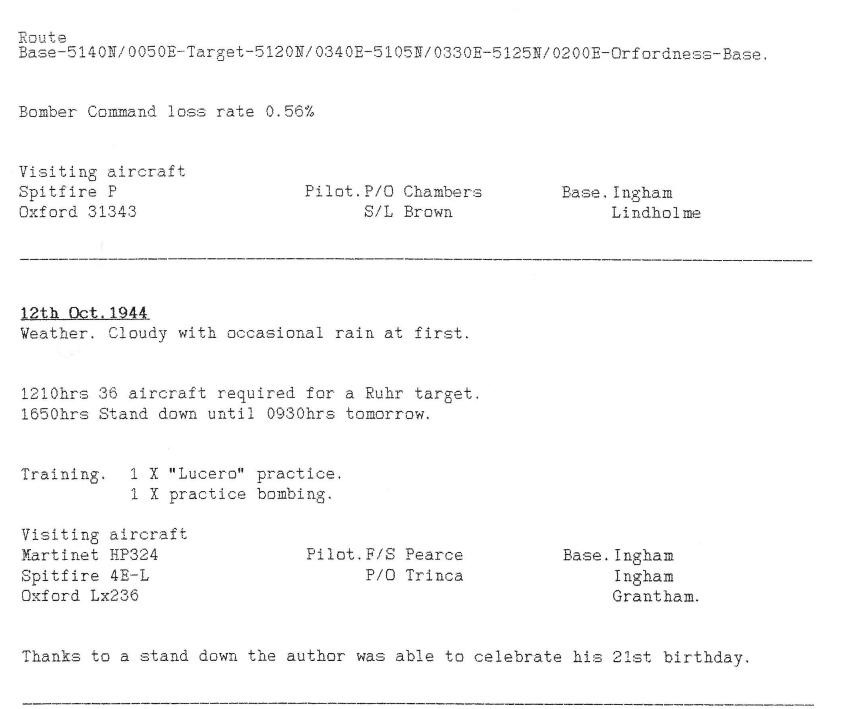
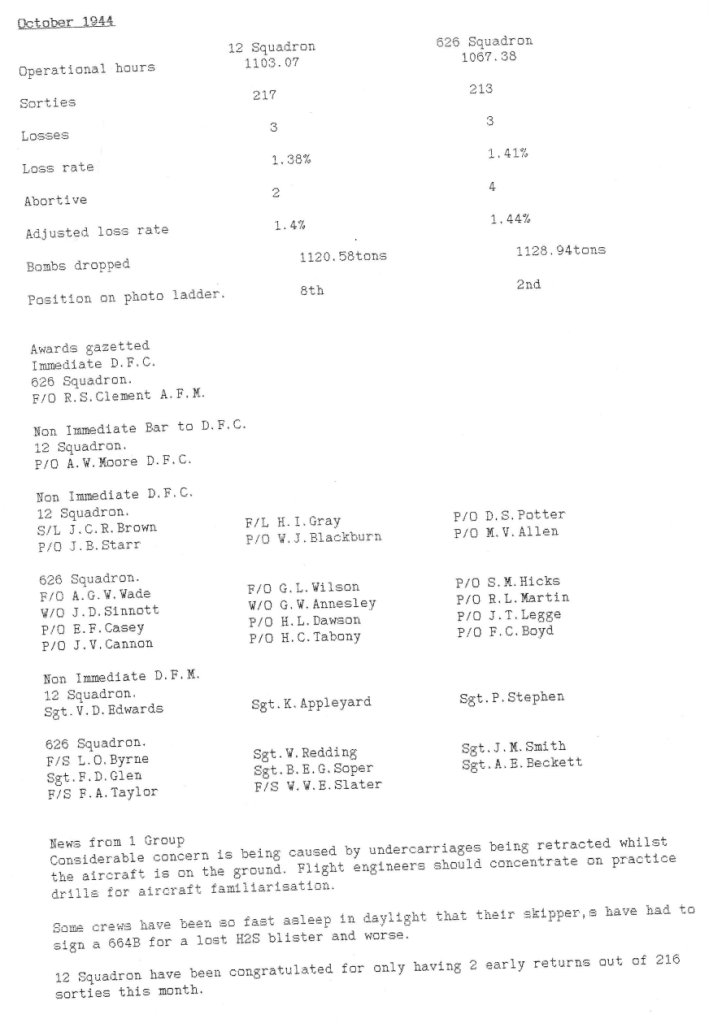
There were no casualties for Wickenby squadrons this week despite many aircraft being hit by heavy flak during the attack on Emmerich on the river Rhine near the Dutch border. One aircraft had a lucky escape when it was it by incendiaries dropped by another bomber, setting two engines on fire – the pilot, Flying Officer Clements, managed to get the aircraft back to Wickenby and was awarded a well deserved immediate DFC. This was also the first daylight attack on Germany by Wickenby aircraft.
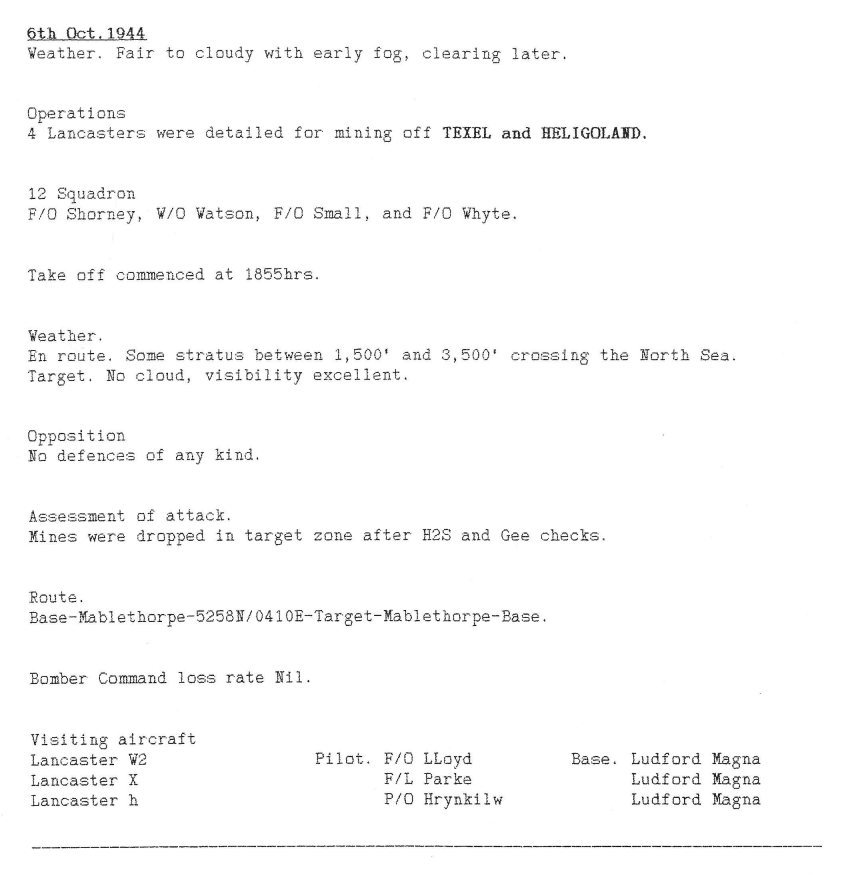
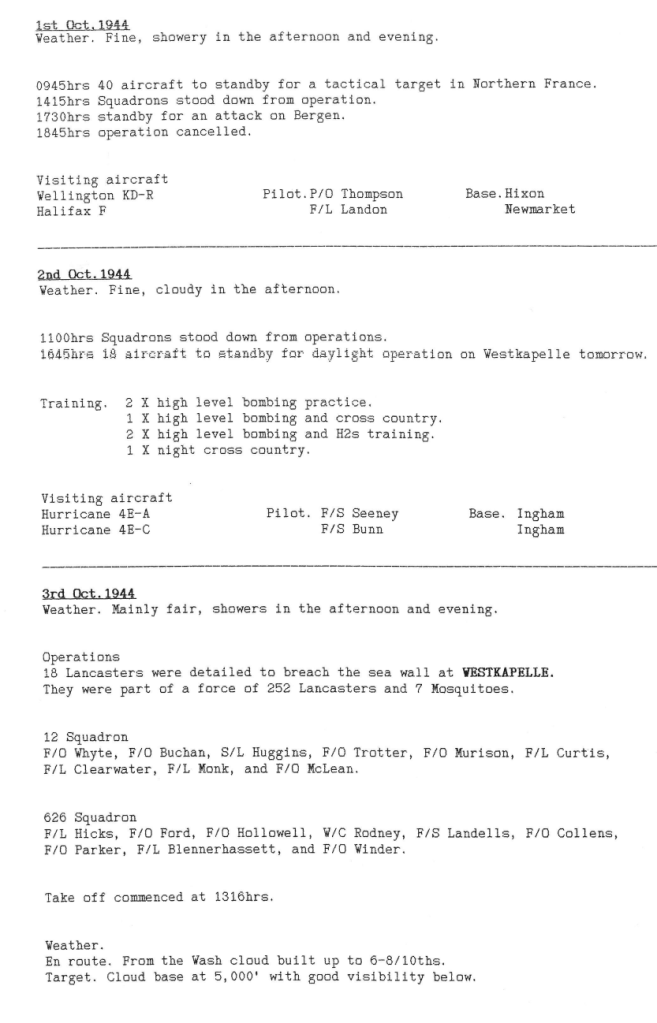
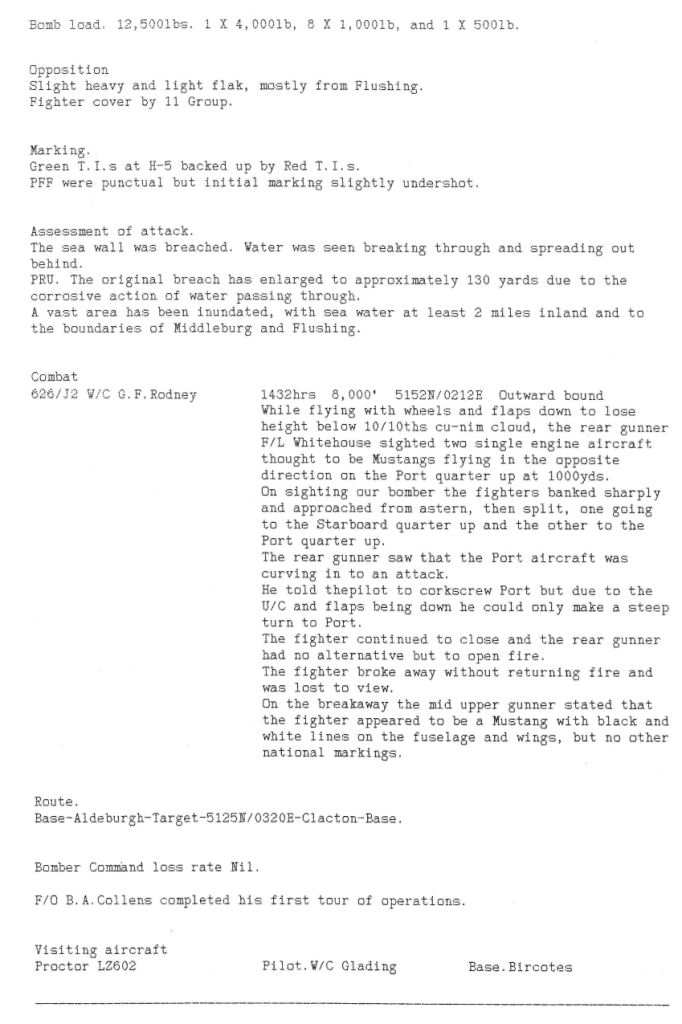
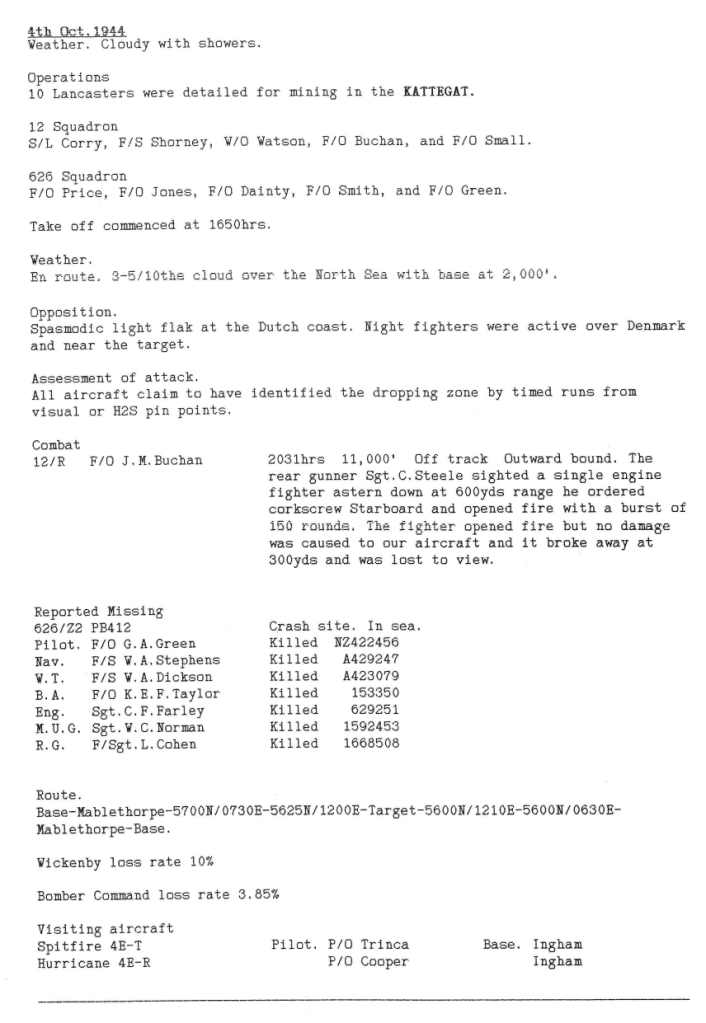
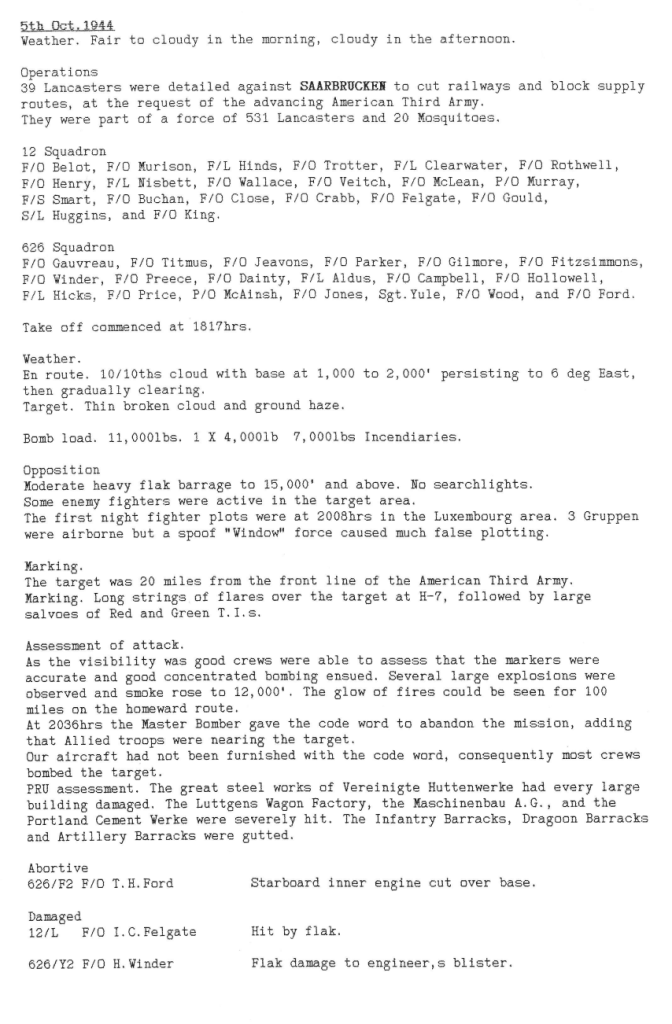
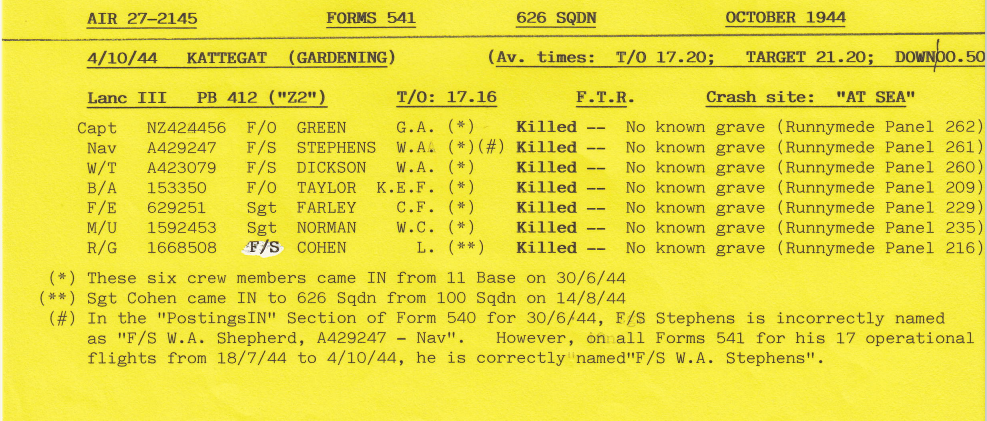
There were 3 missions this week; Westkapelle in Holland, mining in the Kattegatt and Saarbrucken on the French/German border. One aircraft and all 7 of the crew were lost.
Westkapelle is the most western point of Walcheren island and the bombing opened a wide breach in the sea wall which flooded the reclaimed polder below sea level, submerging some German gun batteries and hampering enemy defences against ground attack.
The operation to Saarbrucken was in support of the American 3rd Army with the intention of cutting railway lines and supply routes used by the Germans – the attack was very successful.
Extract from Station Diary
Extract from 626 Sqn Appendix to Operational Record Book
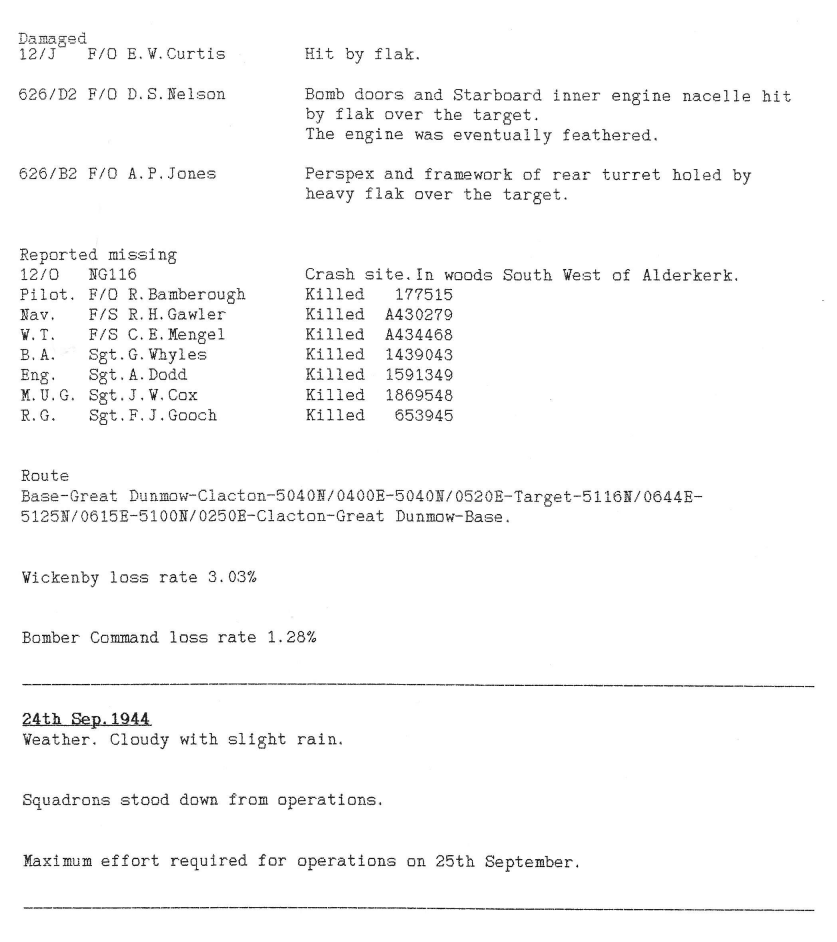
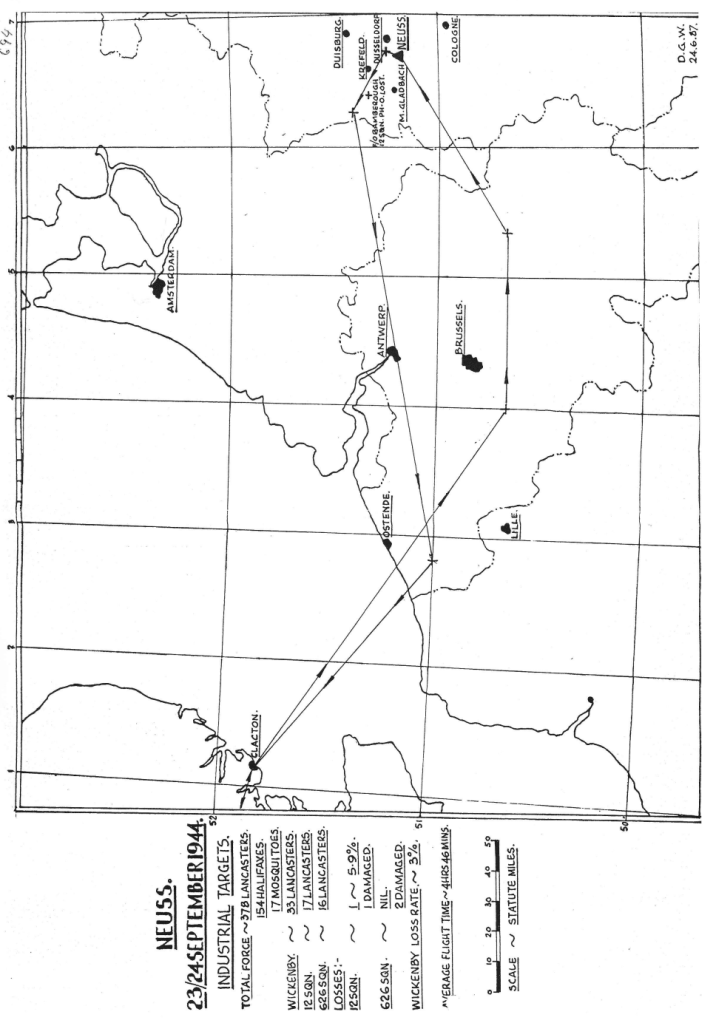
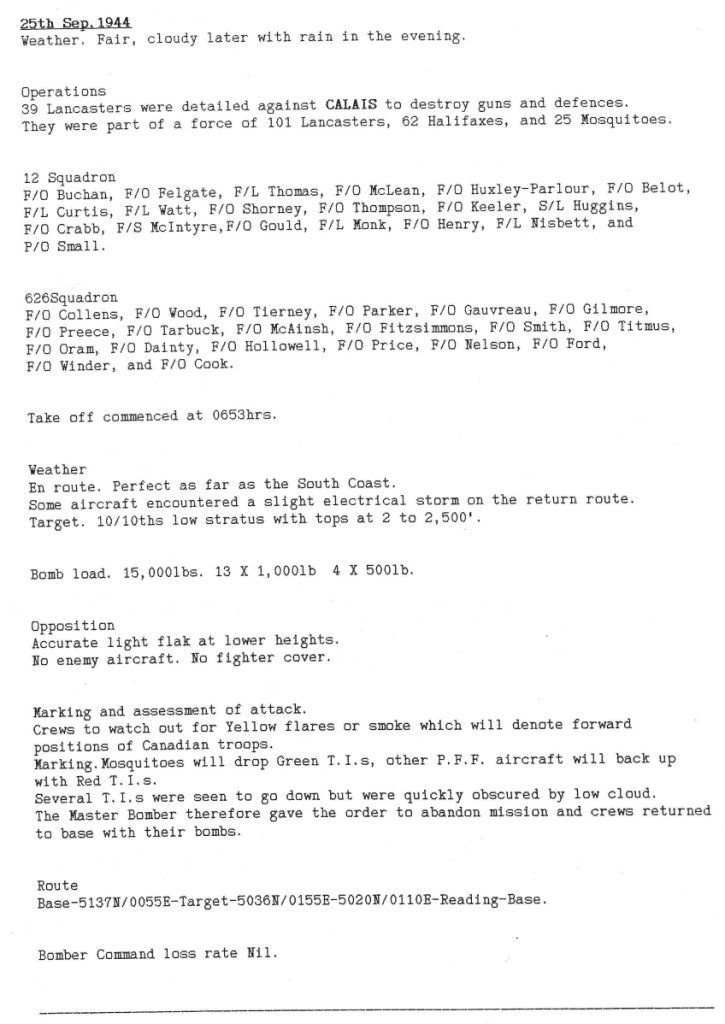
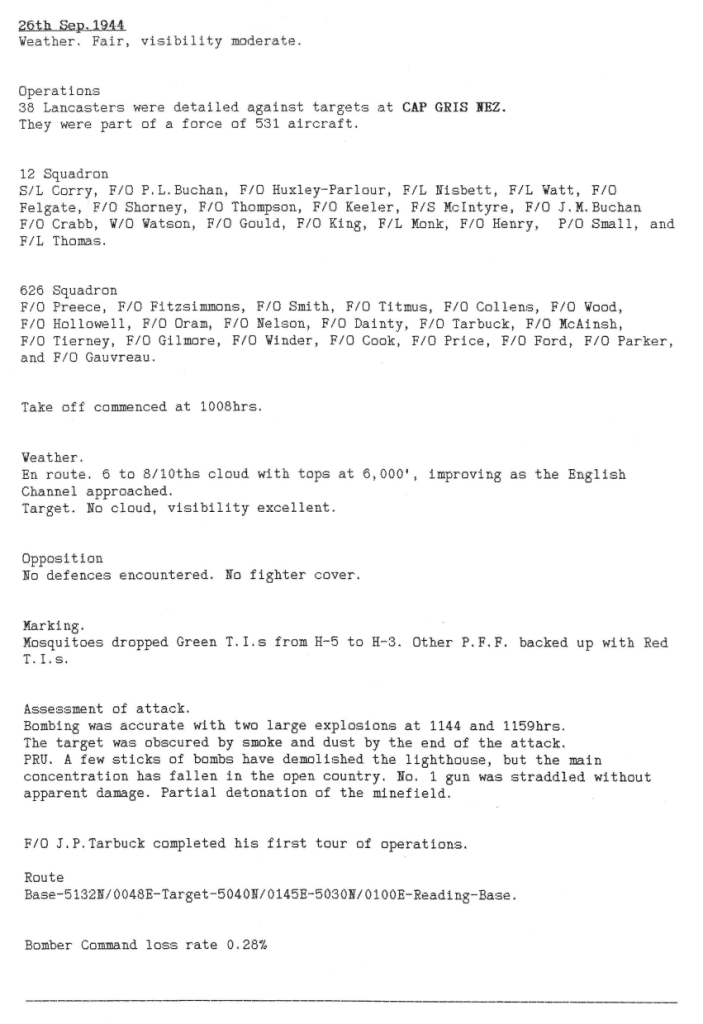
Only 3 missions this week, one of which was cancelled by the master bomber due to cloud covering the target area in Calais – this was probably to prevent bombs landing on friendly troops besieging the port and to reduce civilian casualties. Another point to note is that all the missions were flown in daylight. One aircraft with the entire crew were lost.
Extract from Station Diary
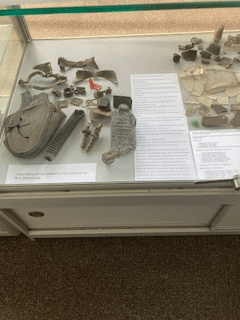
Some of the items recovered from the crash of Flying Officer Bamberough’s aircraft, which have been kindly loaned to the RAF Wickenby museum by Rick Greenfield
Extract from 12 Sqn Appendix to Operational Record Book







 RAF Wickenby - This week in history - World War 2