24-30 December 1943

Overview

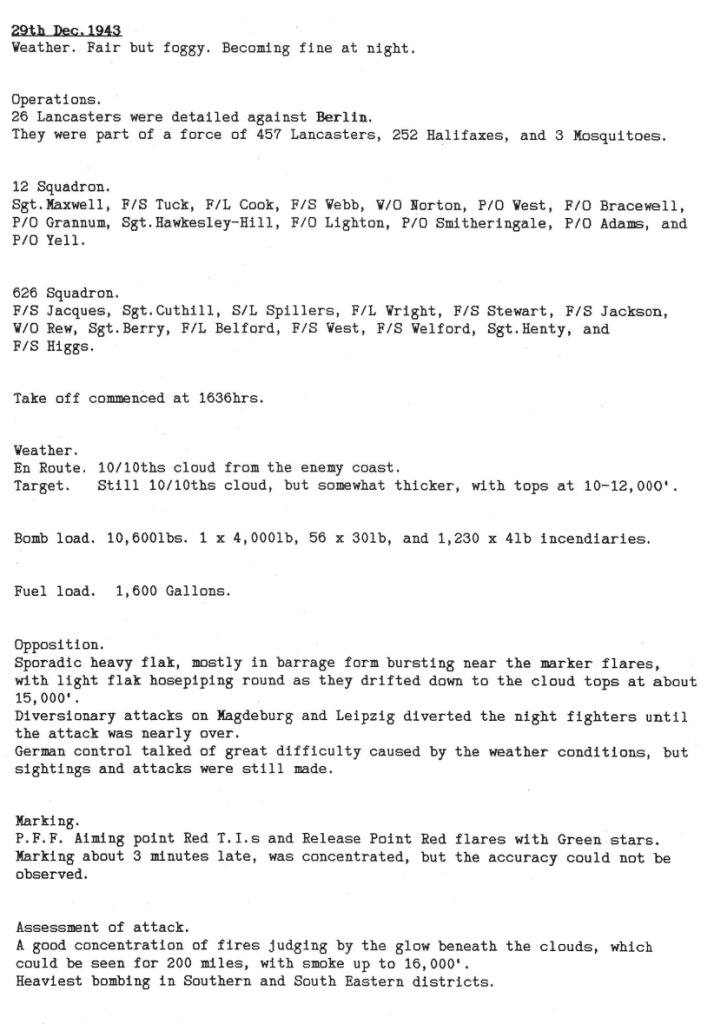
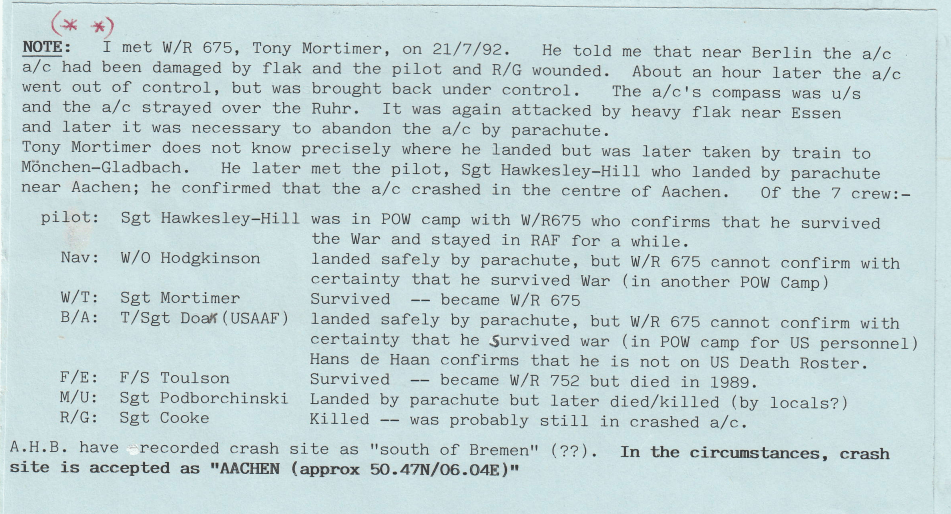
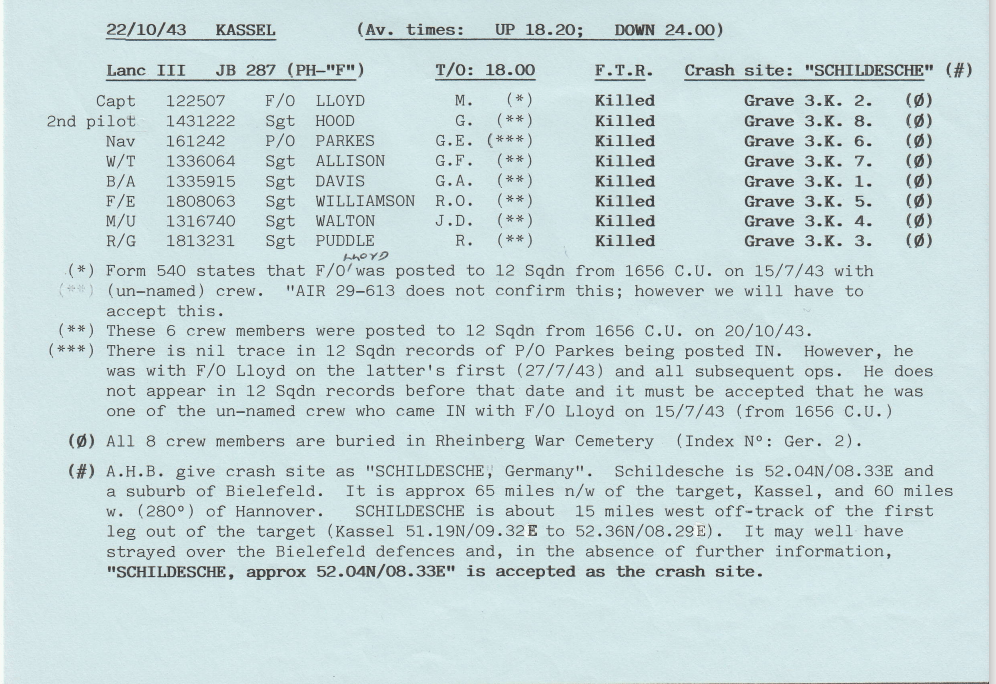
Only one operation this week, to Berlin on 29/30 December, with one aircraft lost, 2 crew killed and 5 becoming POW’s. One of the captured aircrew was a United States Army Air Force Technical Sergeant, who was the bomb aimer.

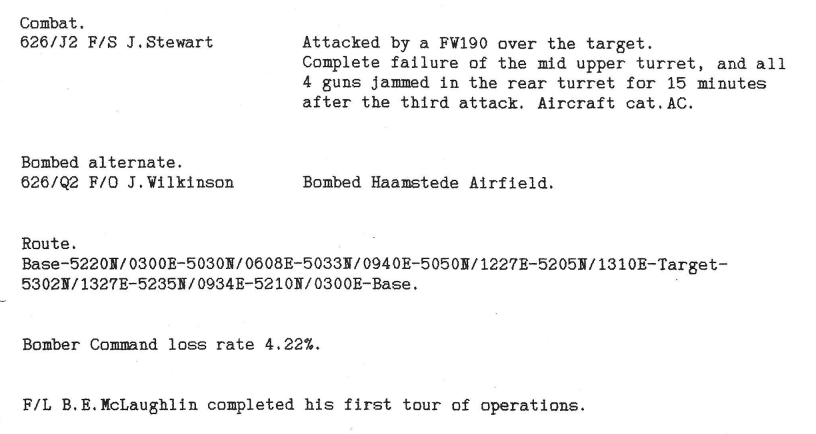
Some of the dangers of flying in close formation at night are revealed in the Station Diary entries below, one Lancaster suffering damage from another aircraft exploding nearby and another having its trailing aerial damaged in a near collision with another Lancaster.

Extract from Station Diary
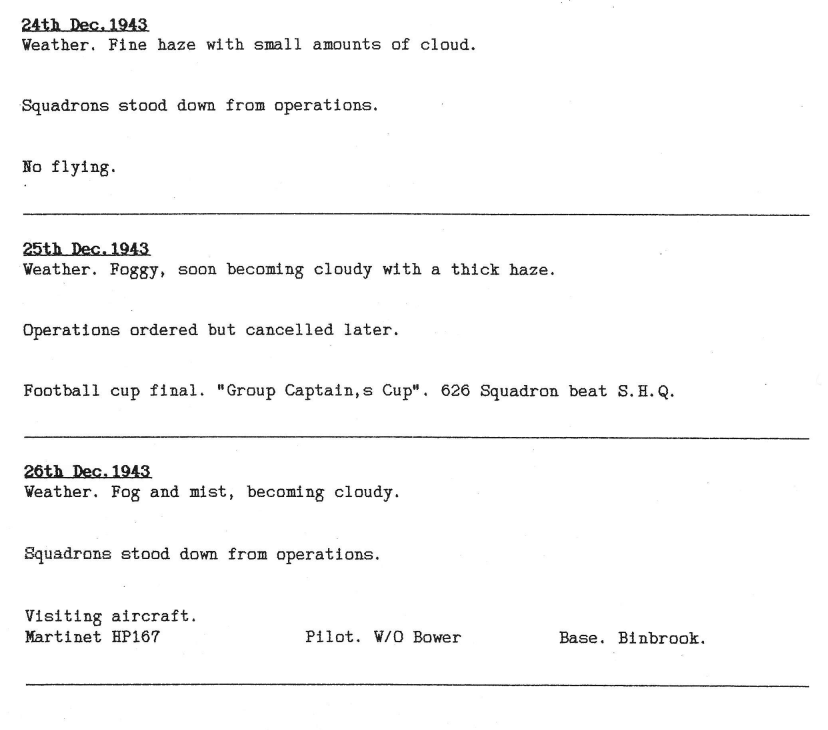
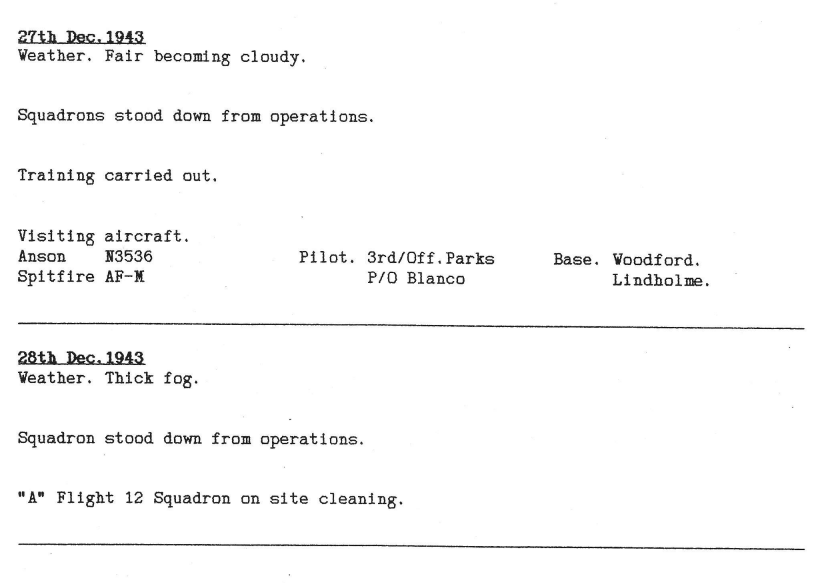
Extract from 12 Sqn Appendix to Operational Record Book

17-23 December 1943

Overview

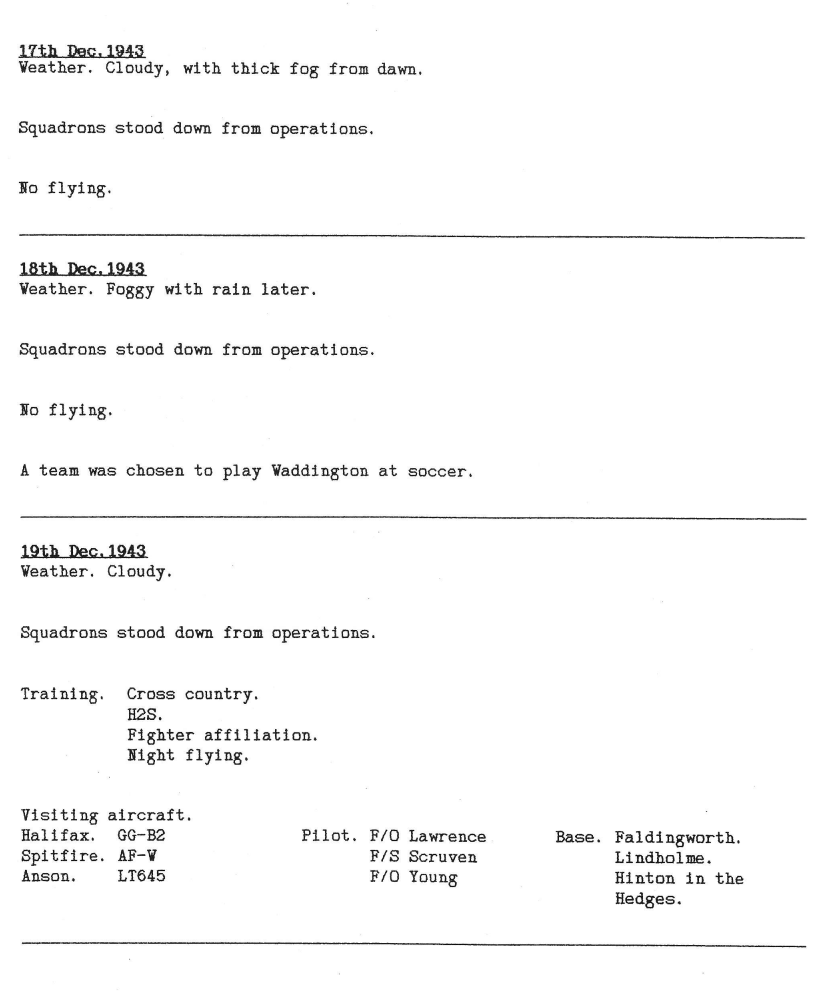
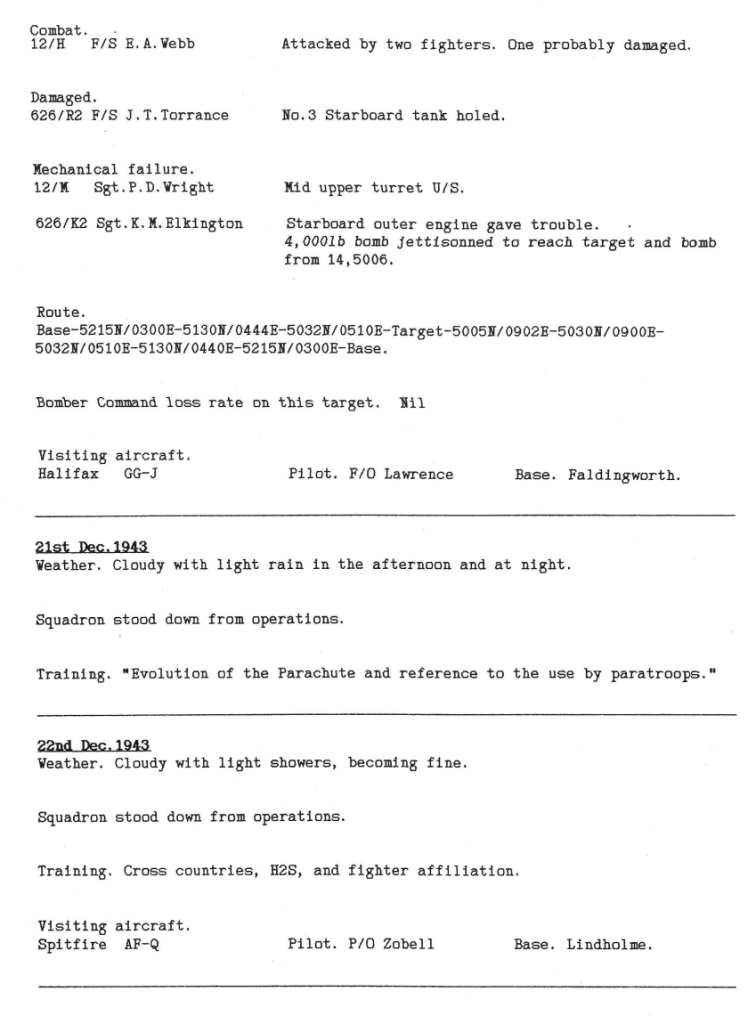
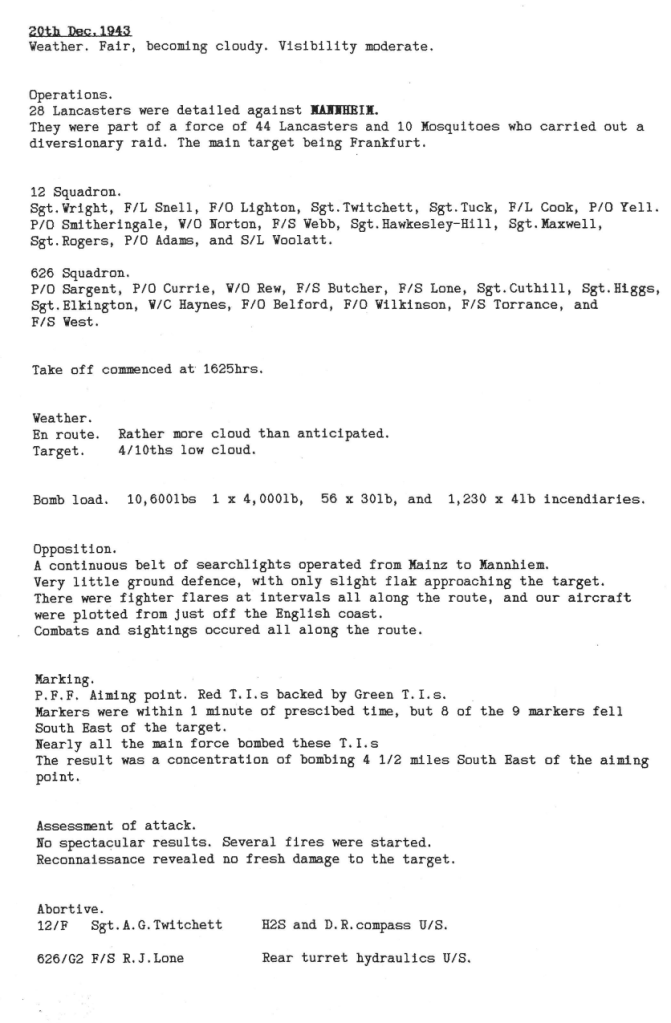
Wickenby squadrons took part in two missions this week, a diversionary attack on Mannheim (the main attack was to Frankfurt) and another attack on Berlin. There were no casualties.

Flight Lieutenant B.E. McLaughlin, mentioned in the Station Diary below, a pilot with 12 Sqn, completed his tour of 30 missions with the attack on Berlin. Known as “Big Jim”, he was well known, when flying over enemy territory, to state “stand well back, chaps: I’m about to open the window and demonstrate the power of slipstream pull”, and commenced urinating out of the window. Jack Currie, the well known author, carried out his first “second dicky” mission with McLaughlin and recounts this act in his book “Lancaster Target”. Unfortunately, Big Jim was killed in July 1944 whilst training new pilots at a Heavy Conversion Unit.

Extract from Station Diary

10-16 December 1943

Overview

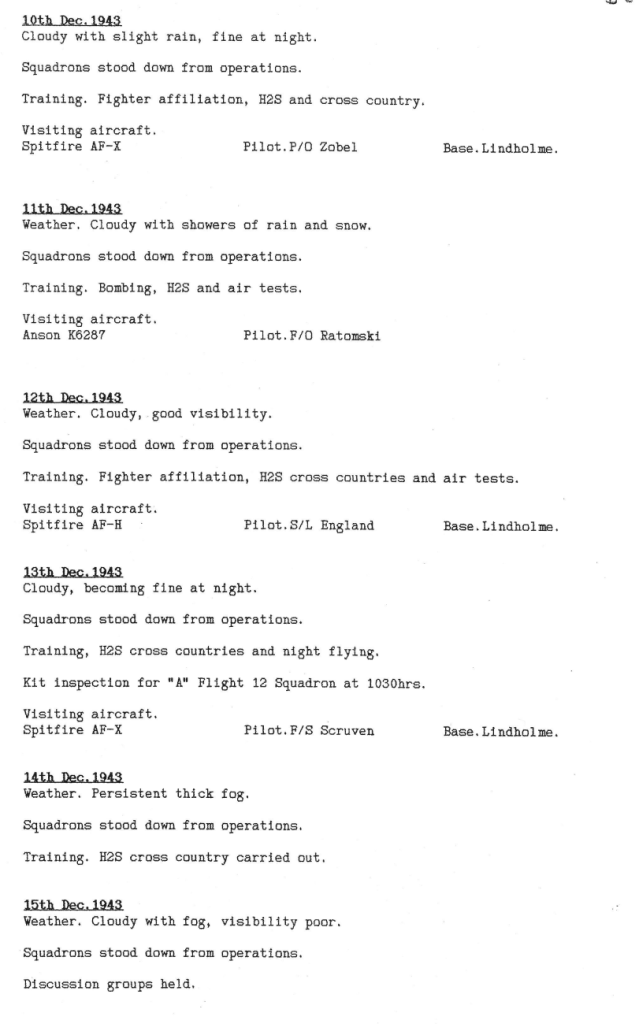
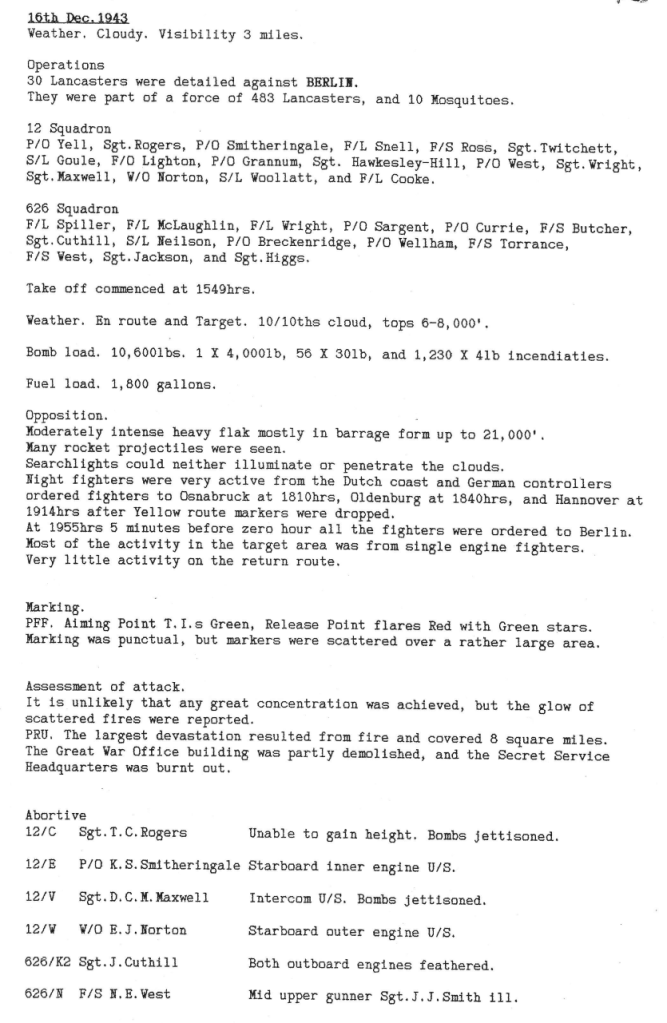
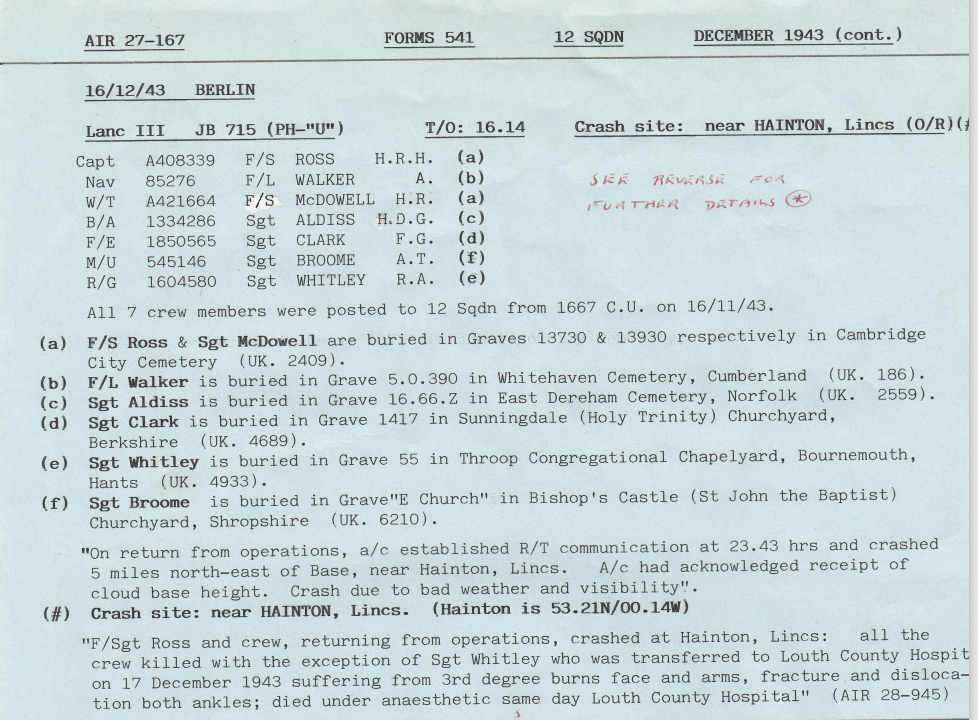
The squadrons at Wickenby were stood down for most of this week, with only 1 mission taking place on 16th December to Berlin – one aircraft and all the crew were lost from 12 Sqn, however, another 626 Sqn crew crashed near Kelstern, but the crew all survived, relatively uninjured. Pilot Officer Breckinridge and his crew will be met again later in 1944.

Extract from Station Diary

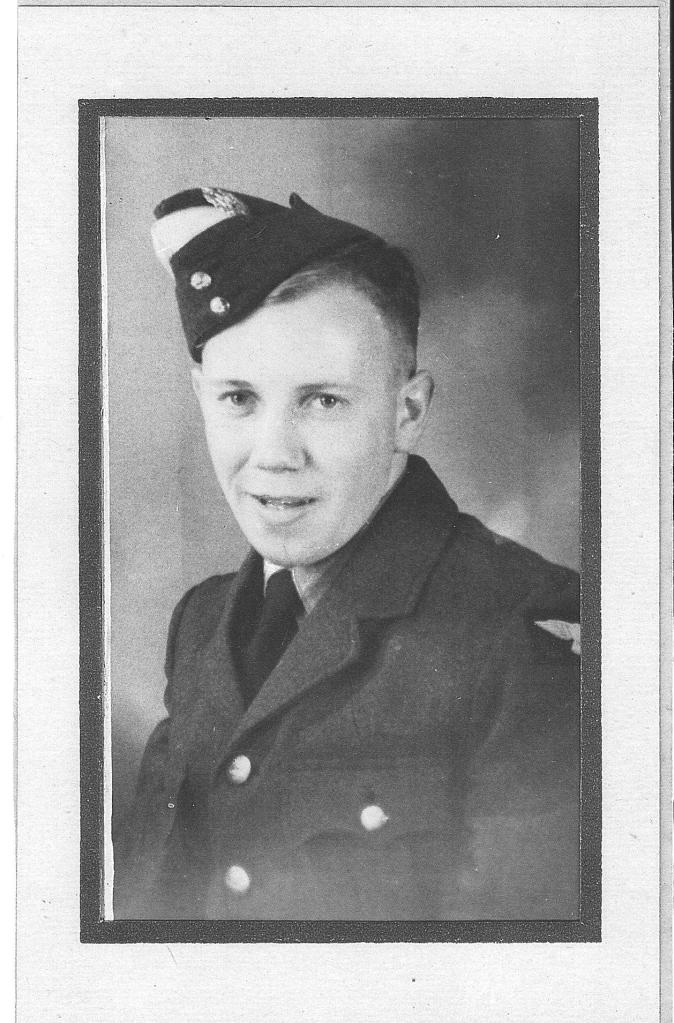
Sgt Ronald Alfred Whitley, aged 21, the rear gunner in Flight Sergeant Ross’s aircraft. Sgt Whitley survived the crash & was transferred to Louth County Hospital on 17 December 1943 suffering from 3rd degree burns to his face and arms, facture & dislocation of both ankles, but he died under anesthetic.

Extract from Appendix to 12 Sqn Operational Record Book

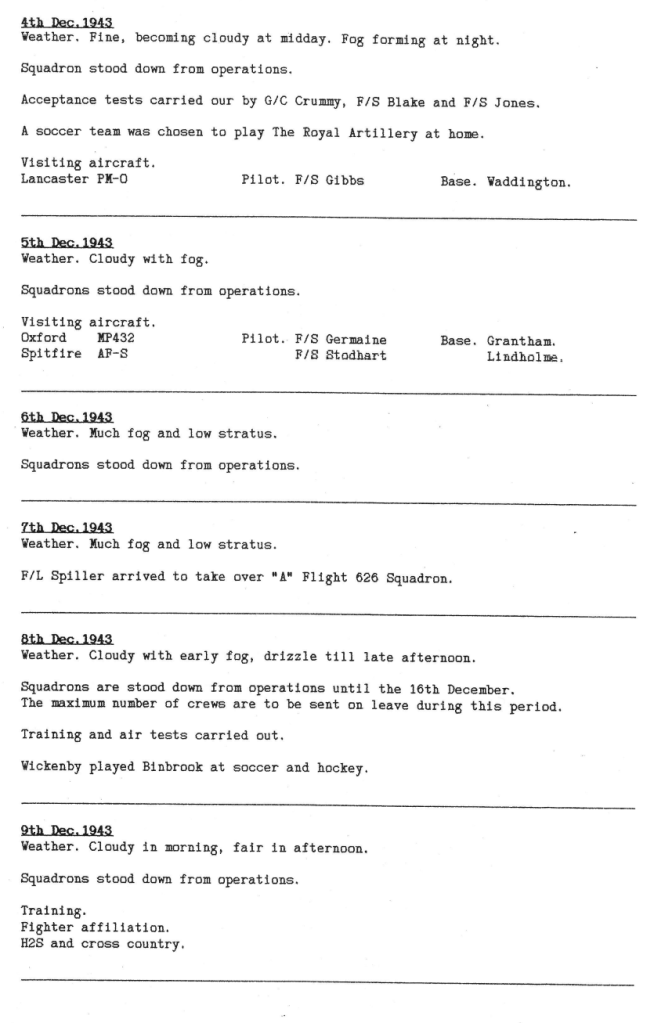
3-9 December 1943

Overview

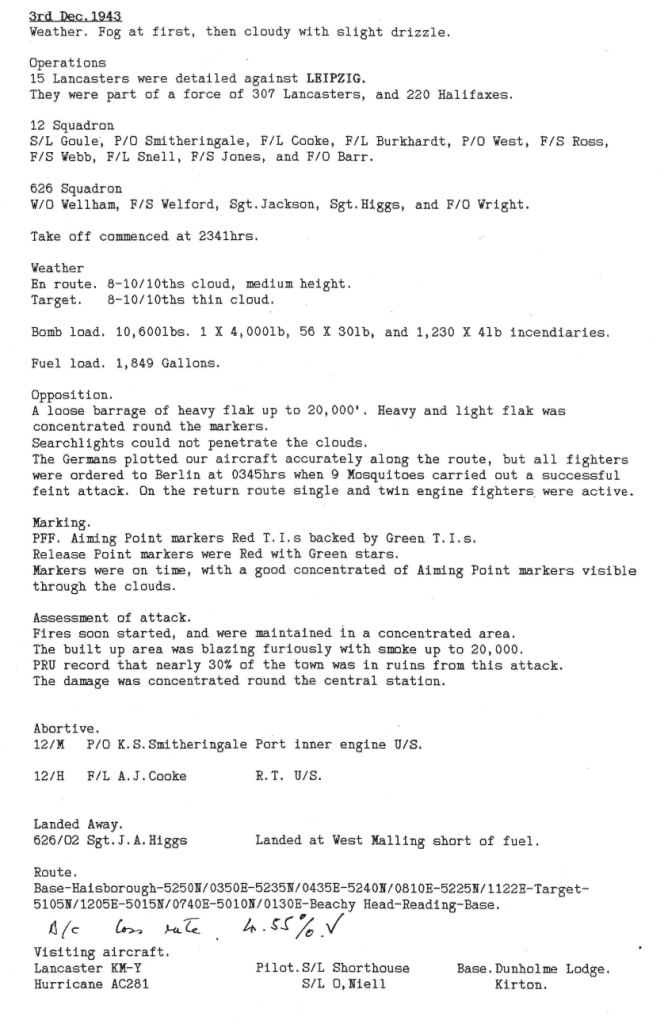
Only one mission for RAF Wickenby crews this week, to Leipzig on 3/4 December – there were no losses of casualties. The Squadron’s were stood down from operations on 8th December until 16th December and many were sent on leave.

The raid on Leipzig was a distant inland target, but the Pathfinders successfully found and marked it and this was the heaviest raid that Leipzig had during the war, at least 600 people being killed and over 400 injured.

Extract from Station Diary

26 November-2 December 1943

Overview

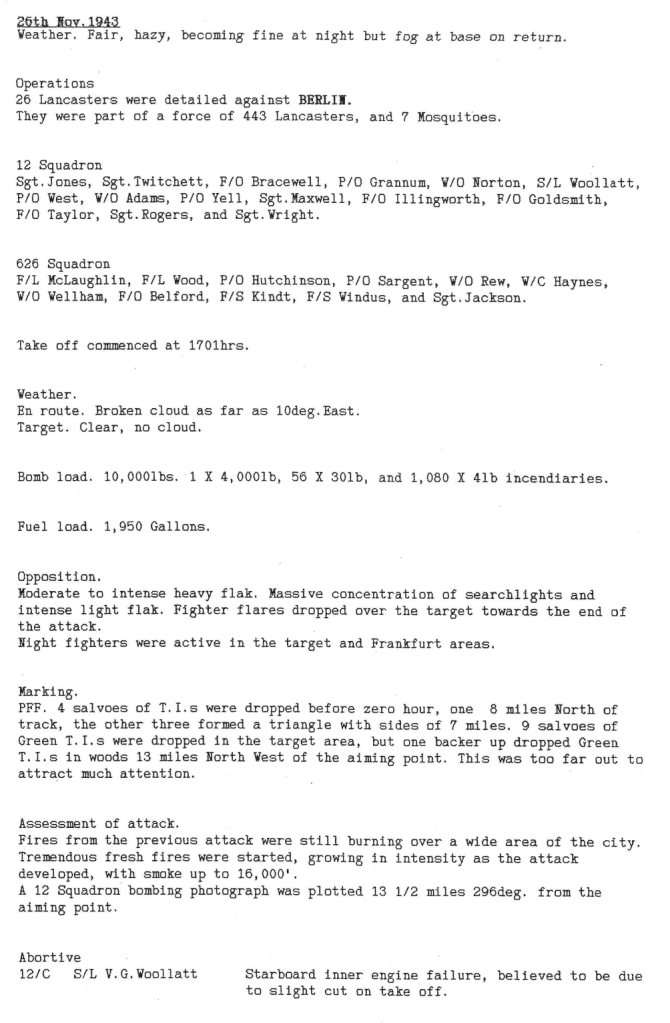
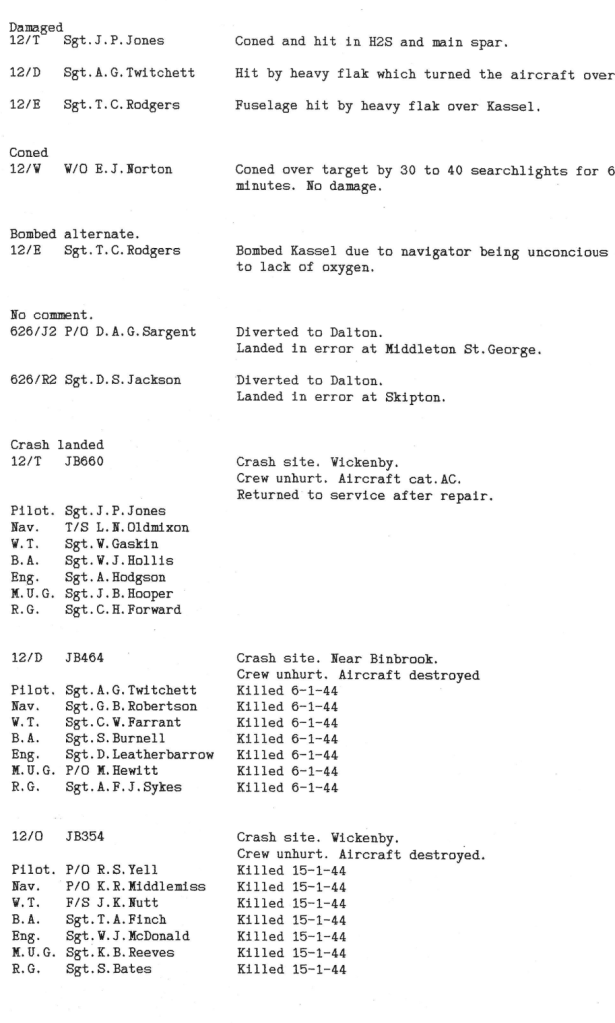
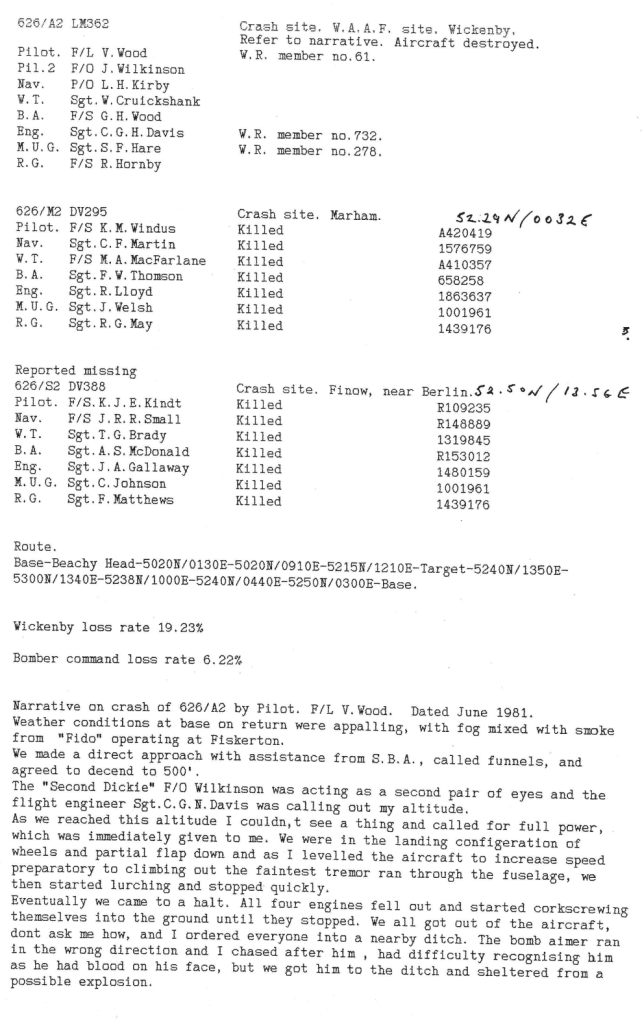
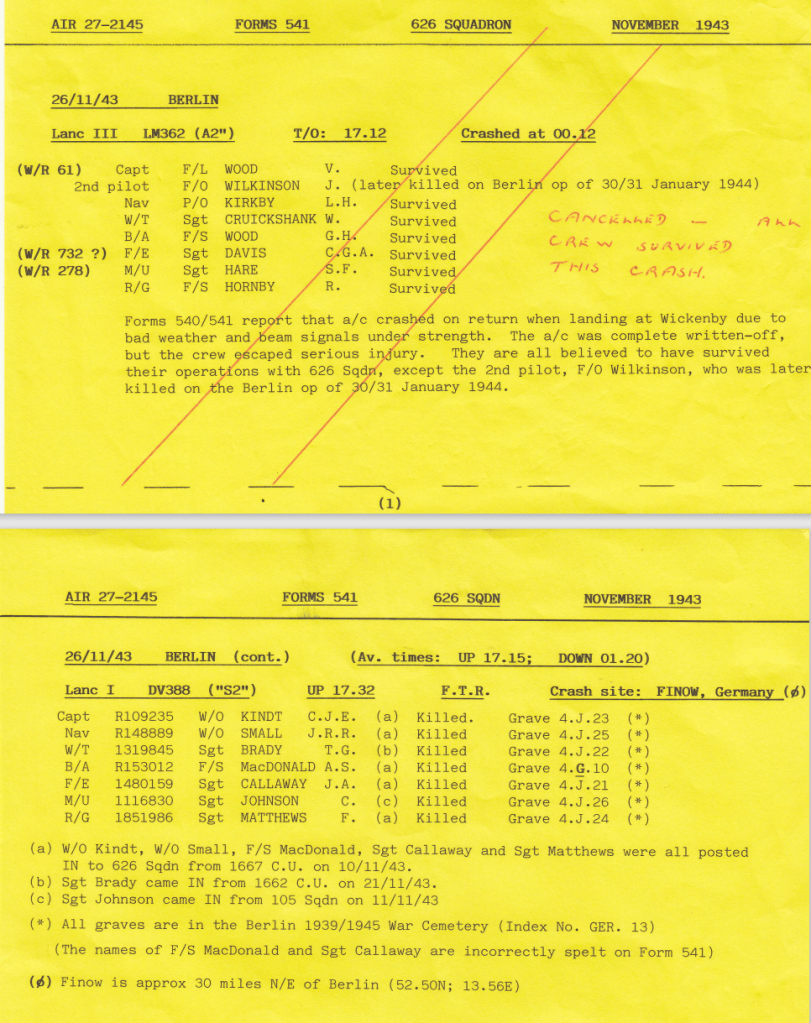
The battle of Berlin was in full swing and, although only 2 missions were flown this week, both to Berlin, 12 and 626 Sqn’s lost 10 aircraft with 36 aircrew killed and 6 becoming POW’s.

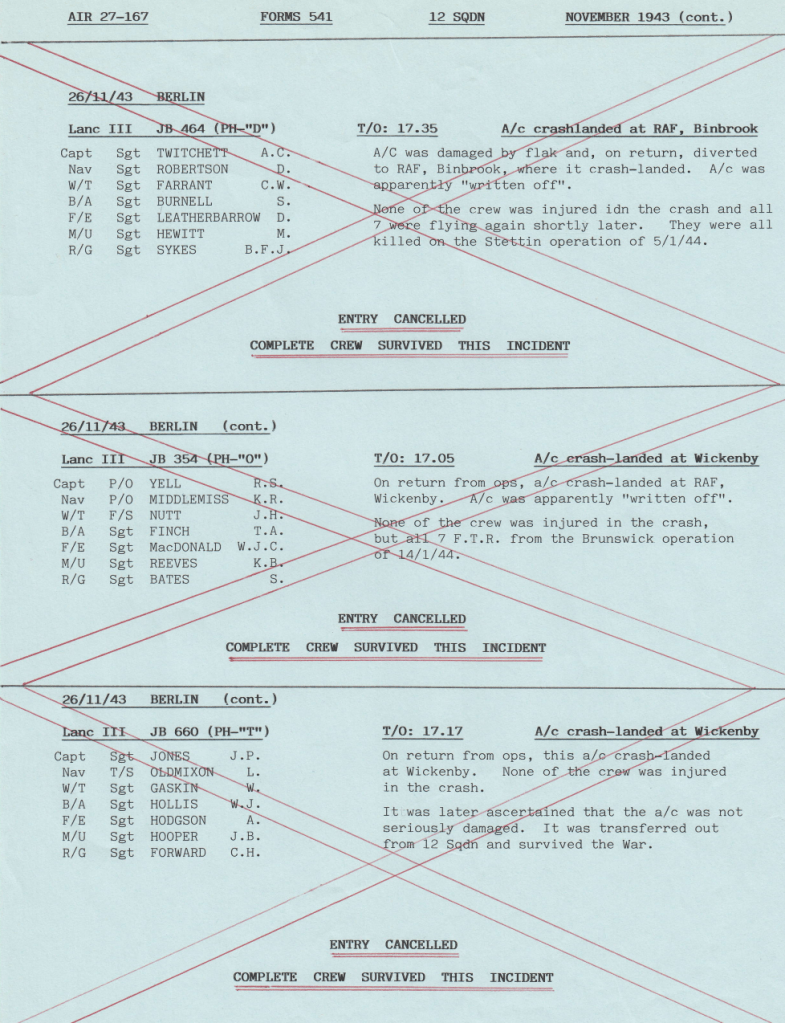
On returning from the attack on 26/27 November, 4 aircraft crashed on landing, 3 at Wickenby and one at RAF Binbrook – this was almost certainly due to fog over the airfields, as mentioned in the Station Diary below.

During the 3 Berlin raids at the end of November, 4.330 people were killed on the ground and 417,665 lost their homes for more than a month and 36,391 for up to a month.

Extract from Station Diary

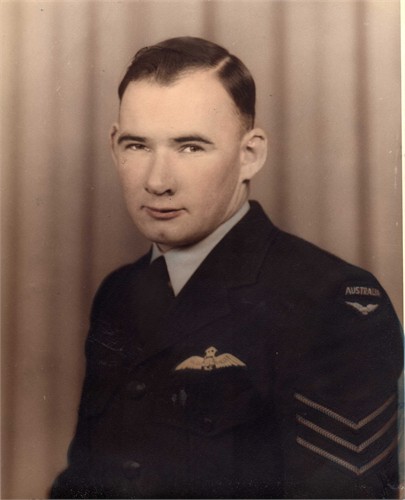
Flight Sergeant Keith Windus, aged 24, the son of George Henry & Pearl May Windus of Gumble, New South Wales, Australia, who was killed when the aircraft he was piloting crashed at RAF Marham, following the attack on Berlin on the night of 26/27 November 1943.
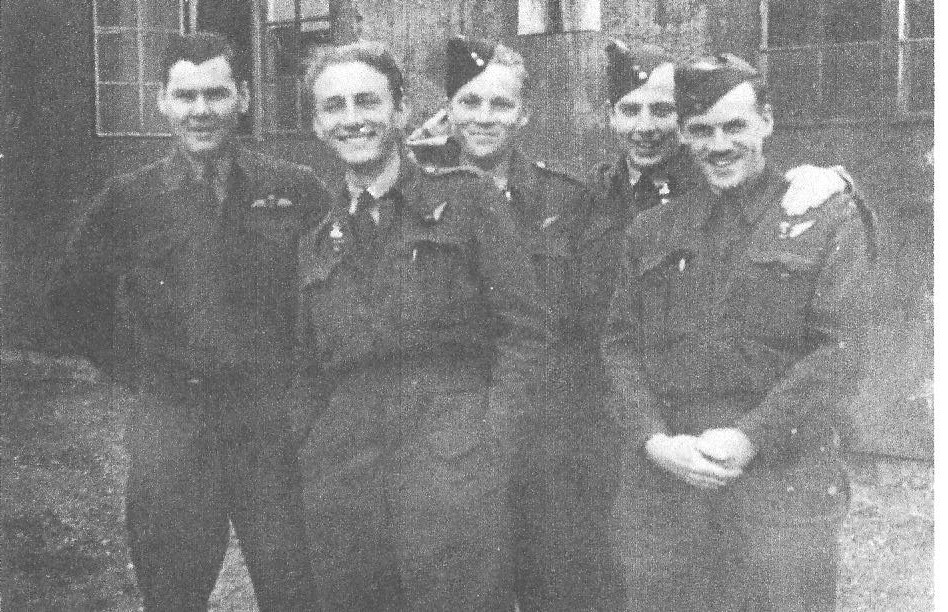
Members of the crew of Warrant Officer Kindt, who were all killed during the attack on Berlin on 26/27 November 1943 – LtoR: F/Sgt Cecil Kindt RCAF – Pilot, Sgt Tommy Brady – WOP, Sgt Frank Matthews – RG, F/Sgt Roy Small RCAF – Nav, Sgt Stewart McDonnell RCAF – BA
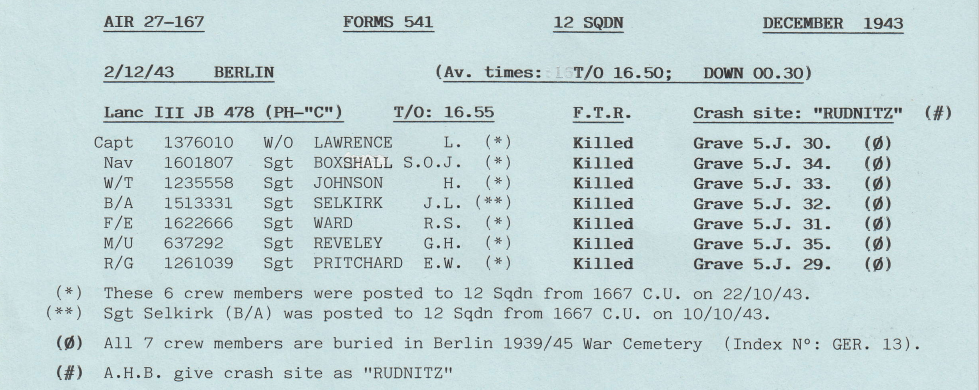
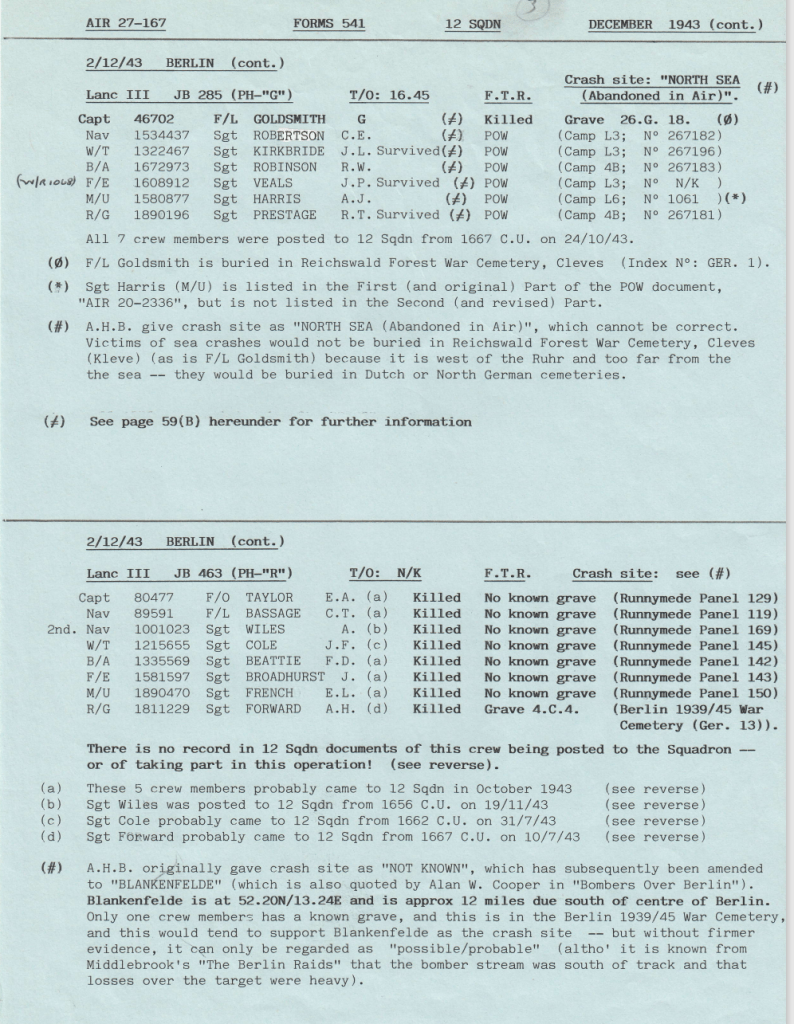
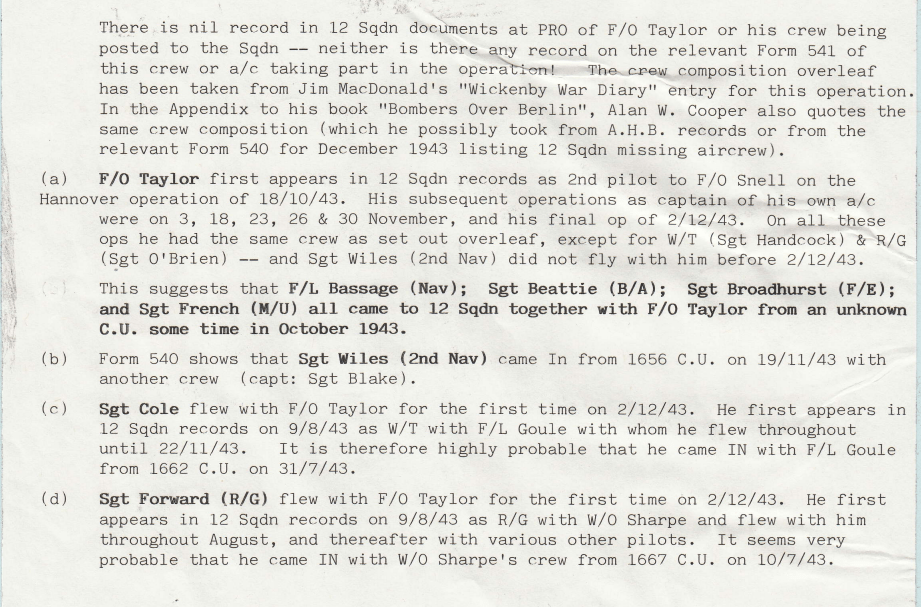
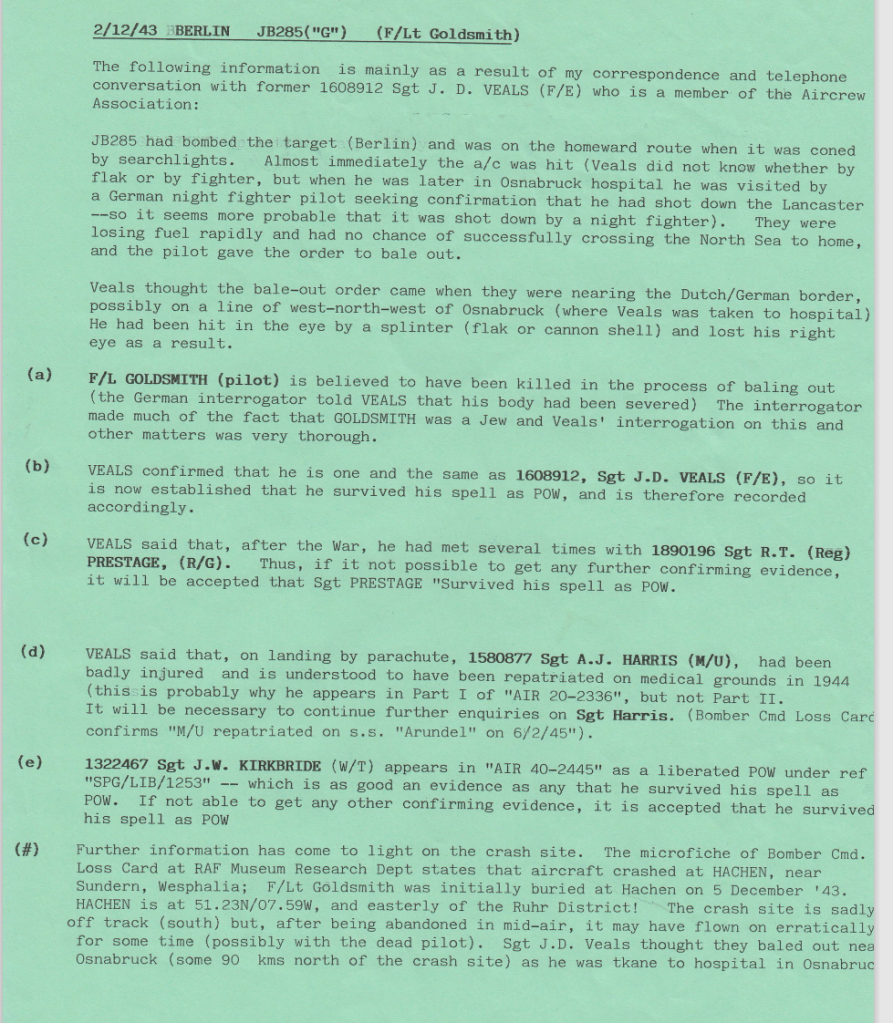
Six members of the crew of Warrant Officer Leonard Lawrence, who were all killed attacking Berlin on the night of 2/3 December 1943 – LtoR: Sgt Gill, Sgt Fisher, Sgt Quinn, F/Lt Kitney, Sgt Lawrence, Sgt Boxall

Extract from Appendices to Squadron Operational Record Books

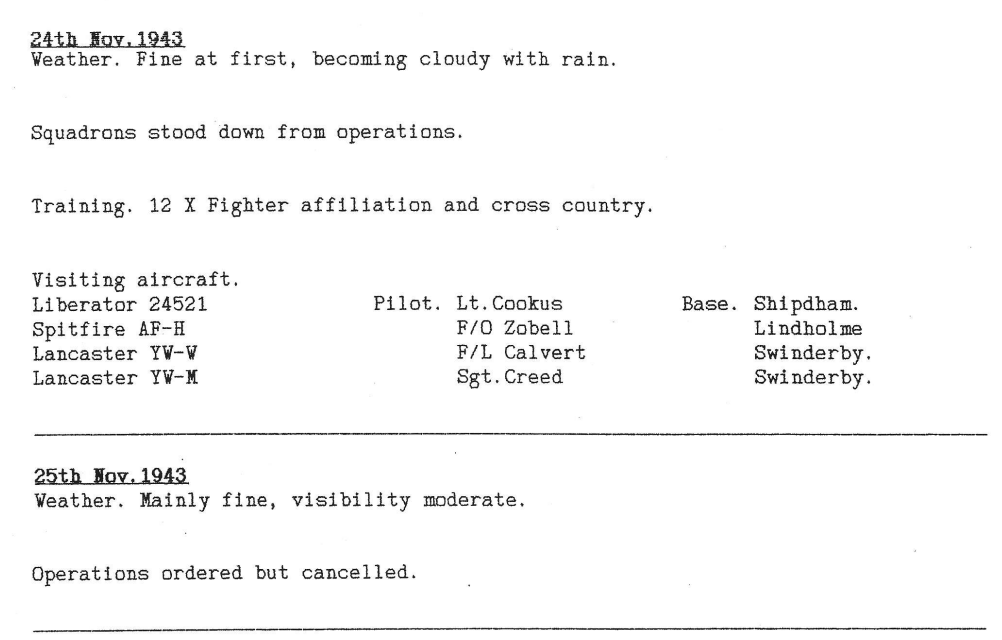
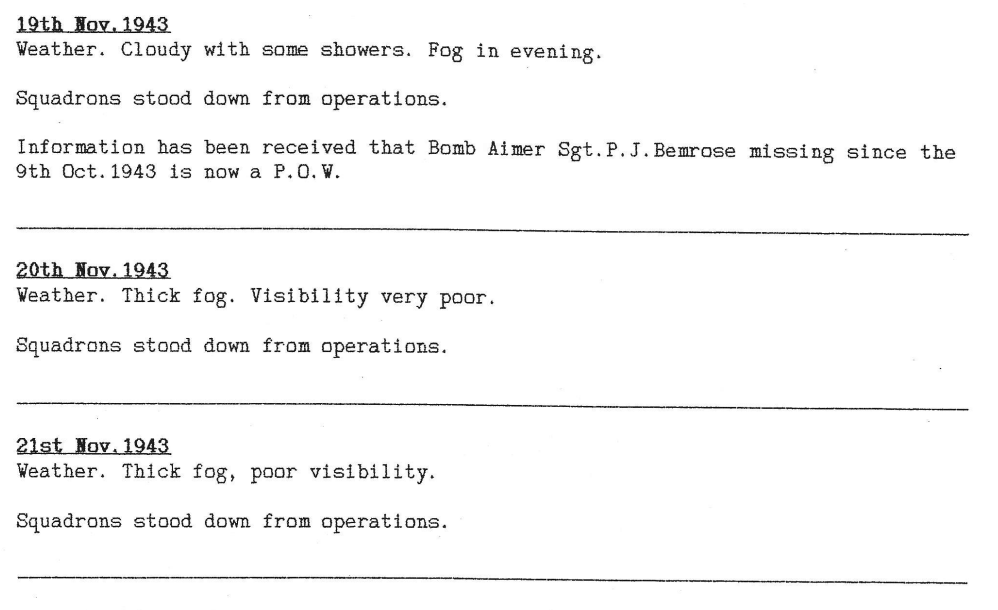
19-25 November 1943

Overview

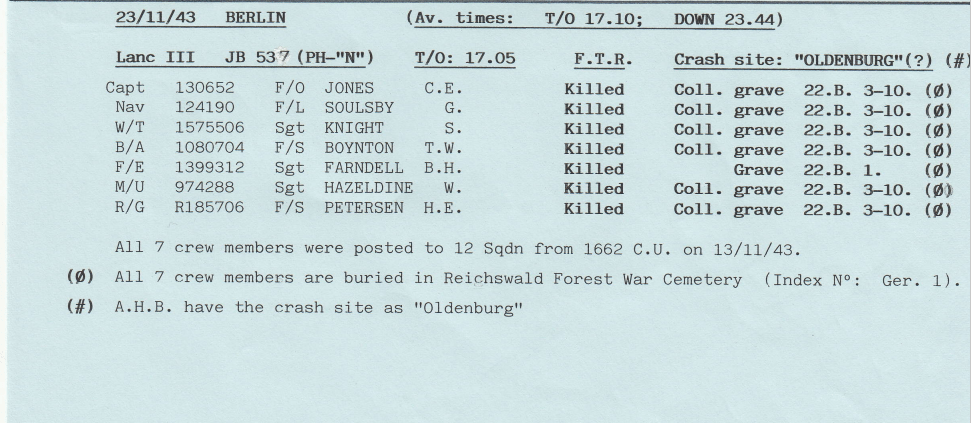
Aircraft from Wickenby took part in 2 raids to Berlin on consecutive nights during this week with 2 aircraft lost and 7 aircrew killed. One of these aircraft crashed on takeoff but there were no casualties.

The raid on 22/23 November was the largest so far on Berlin with 764 aircraft taking part and it was the last that Stirling’s were sent to Germany. Over 2,000 people were killed on the ground and over 175,000 were bombed out, 500 being killed in one shelter alone after a direct hit.

Extract from Station Diary

Extract from Appendix to Operational Record Book
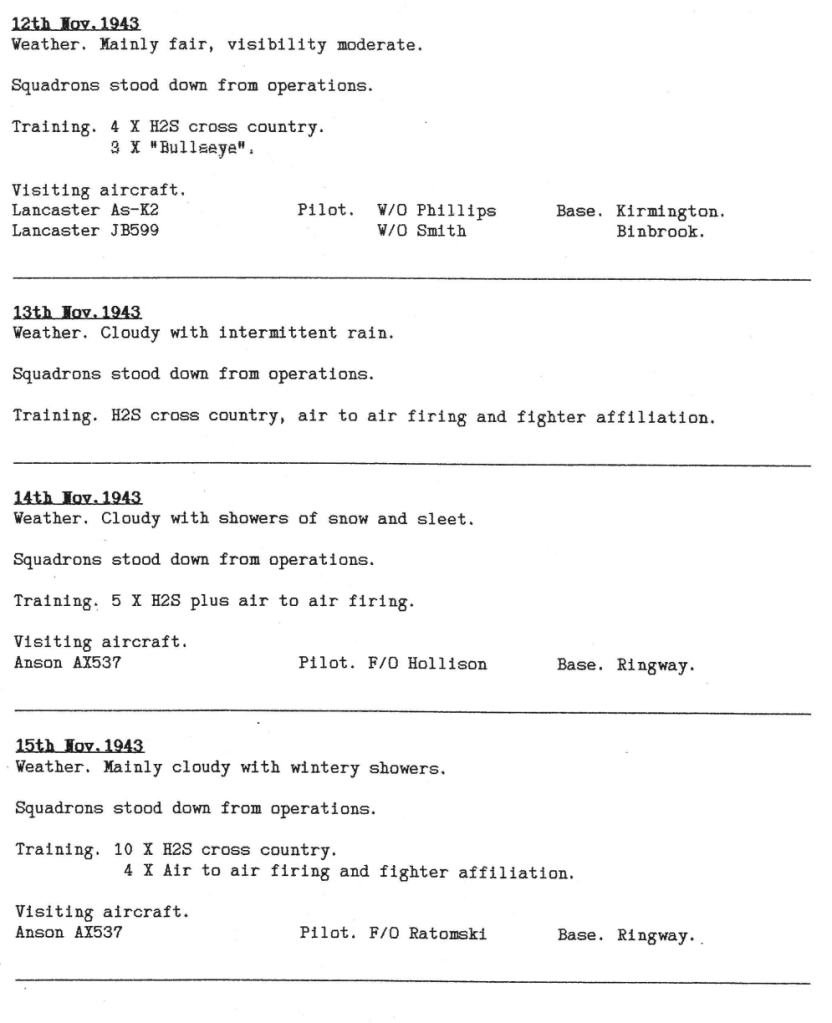
12-18 November 1943

Overview

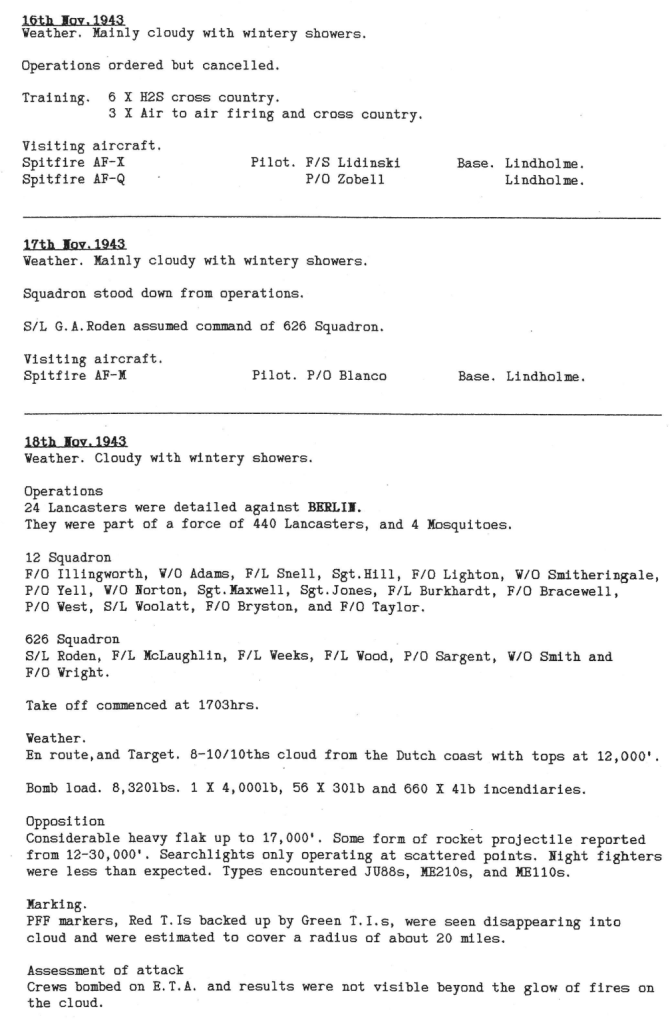
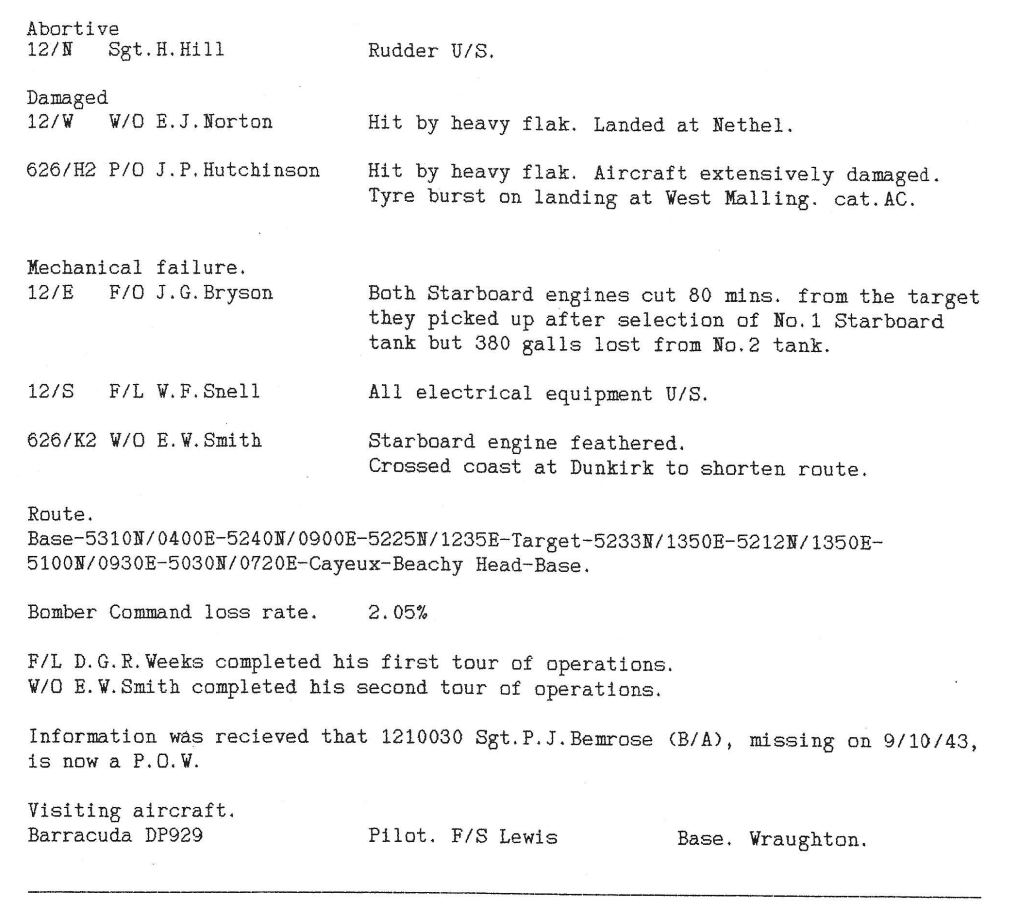
This week is considered to be the beginning of the Battle of Berlin, with the first raid being on 18/19 November, which both 12 and 626 Sqn’s took part in – fortunately with no casualties. This battle will be a common part of our reports until the end of March 1944.

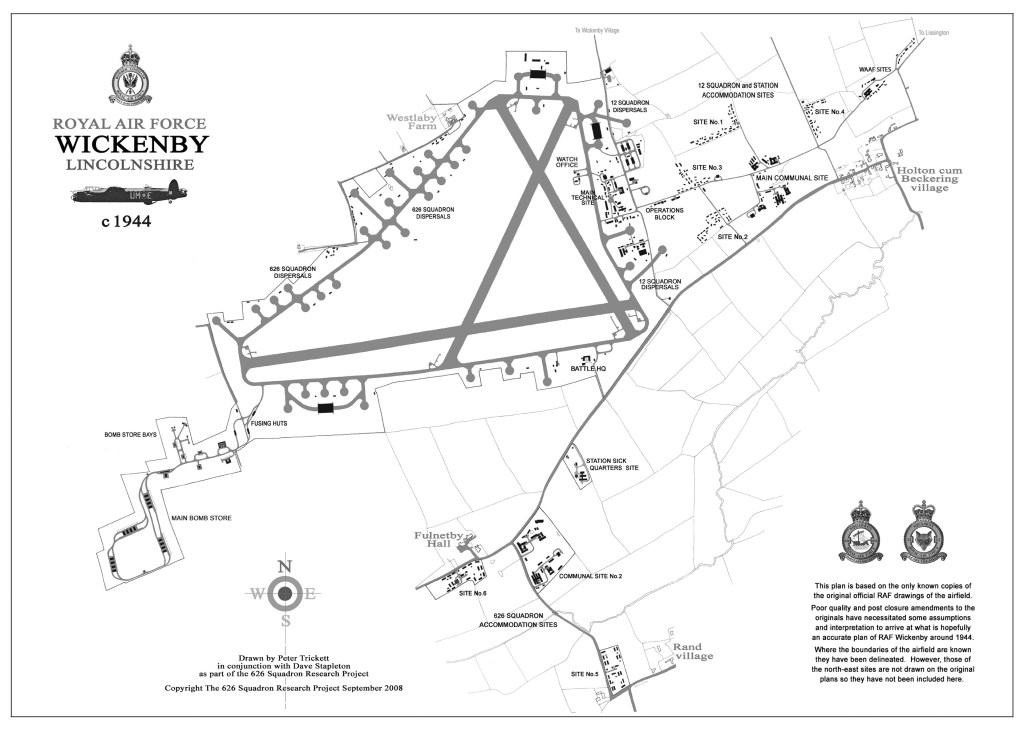
I think it would also be useful for people to have a view of what the airfield looked like when both squadron’s were operating – this map was compiled using blueprints from the RAF Museum in Hendon, high level photographs of the time and local knowledge of the area around the airfield.

Many of the buildings, especially those to the east of the airfield marked “Main Communal Site” are still standing and accessible, although it is on private farm land. The whole airfield was over 650 acres in size and was built from the end of 1941 to September 1942 when 12 Sqn arrived.

Extract from Station Diary

5-11 November 1943

Overview

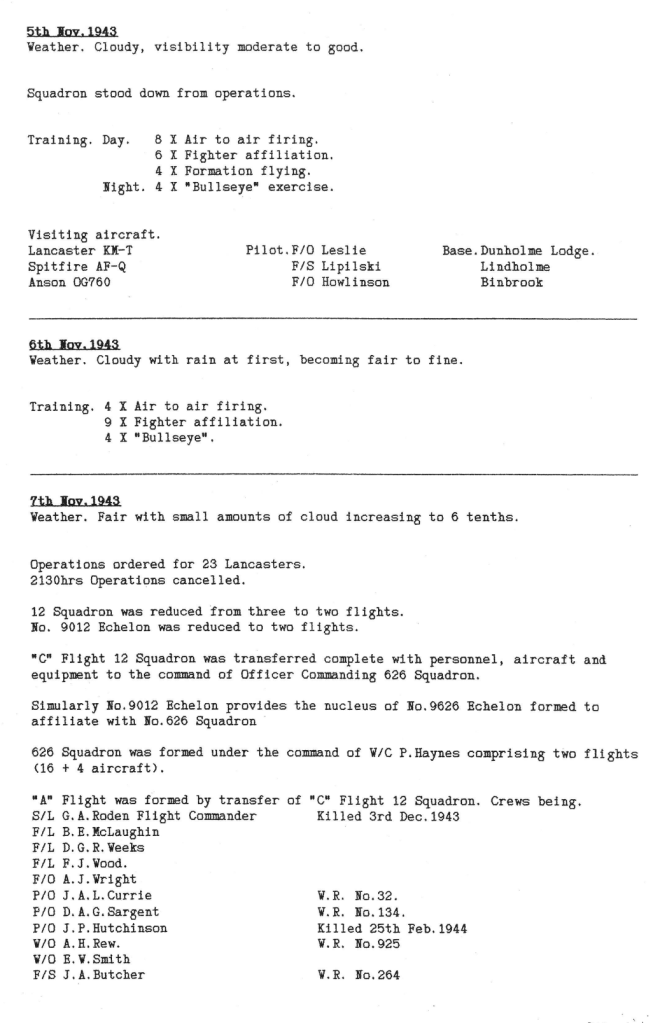
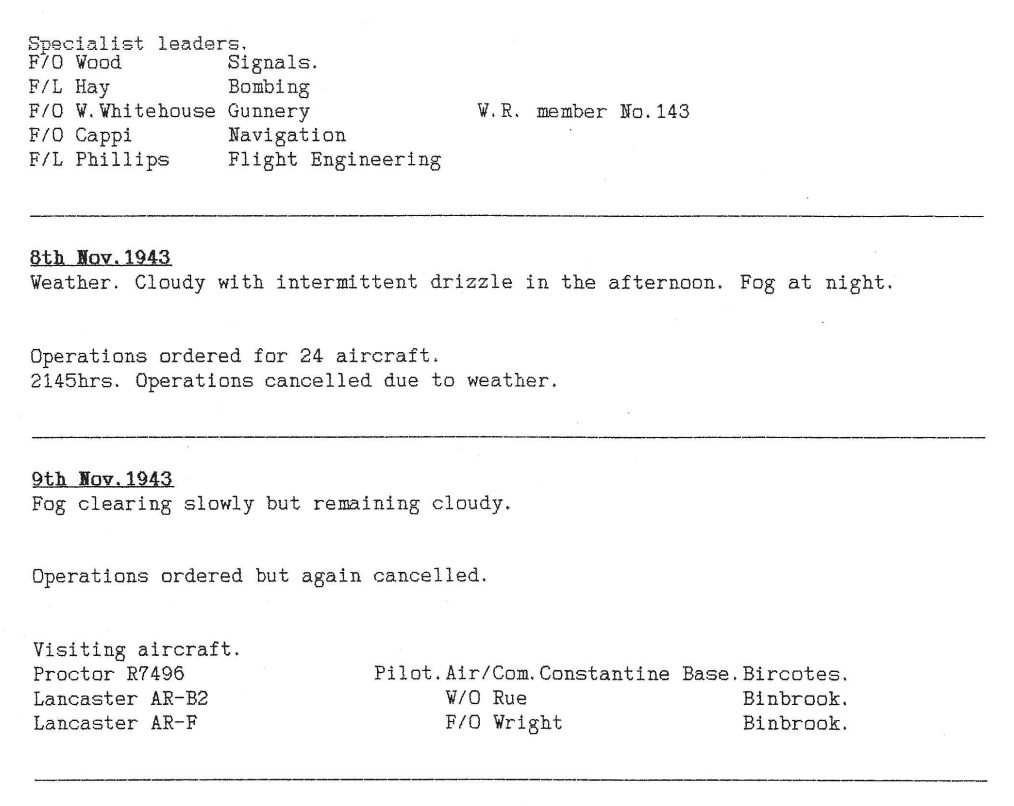
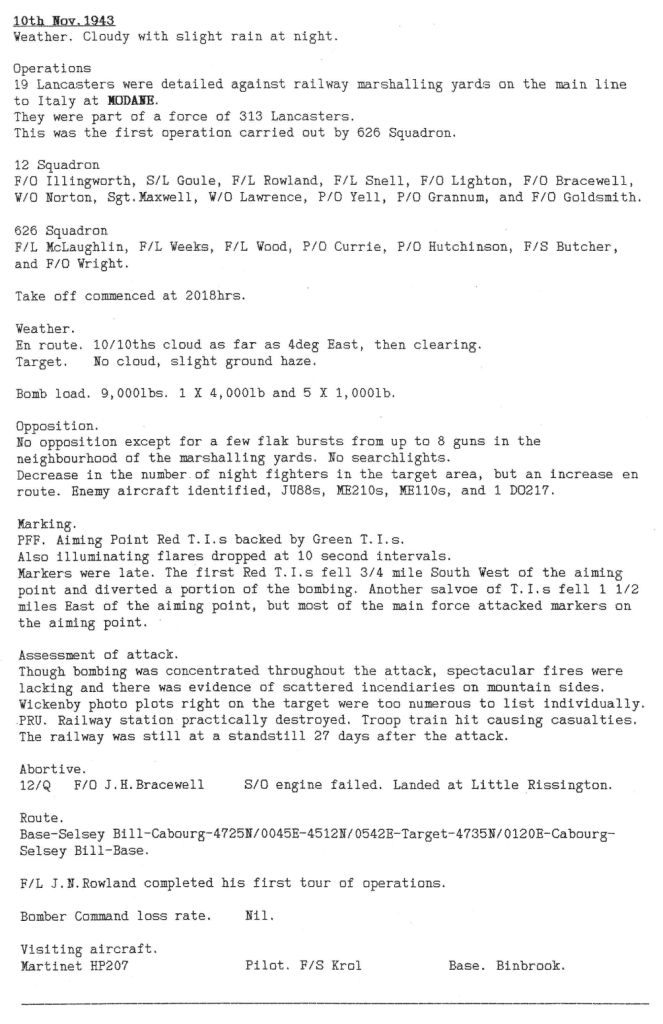
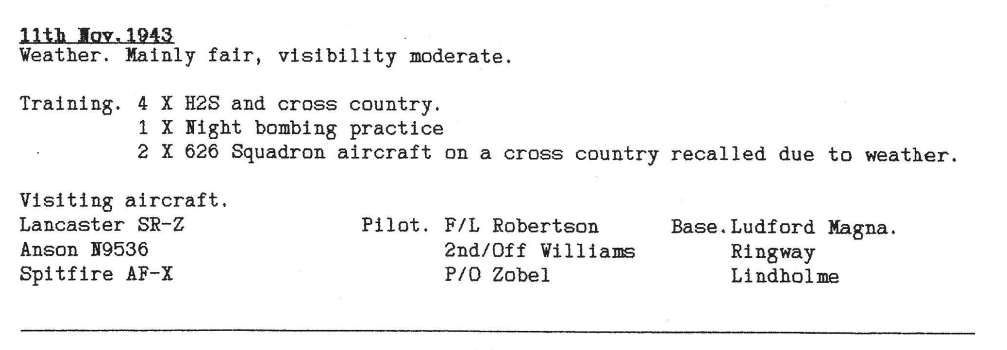
626 Sqn were formed on 7th November, to consist of two flights of eight aircraft, with four spares. The initial ‘A’ flight was formed by taking ‘C’ flight aircraft, aircrews and groundcrews from 12 Sqn with the remainder comprising crews straight from training and a few more experienced crews from other squadrons. A list of the first crews is in the Station Diary extract below. The commanding officer was Wing Commander P Haynes. Their first mission was to Modane in the French Alps on 10th November, which was a successful attack on the railway line and tunnels of the main line from France to Italy. There were no casualties.

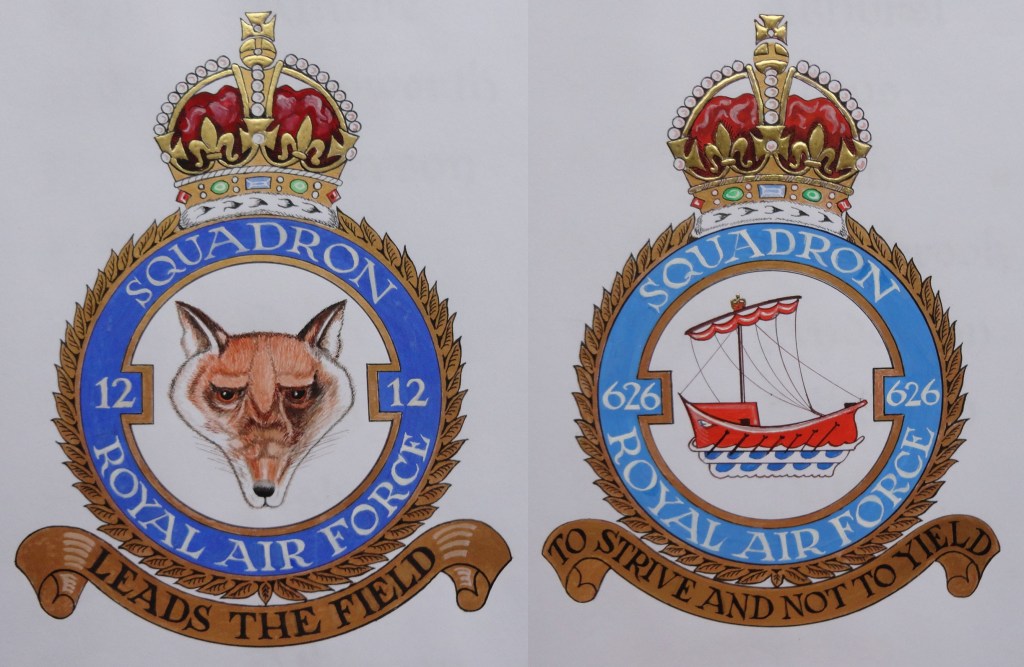
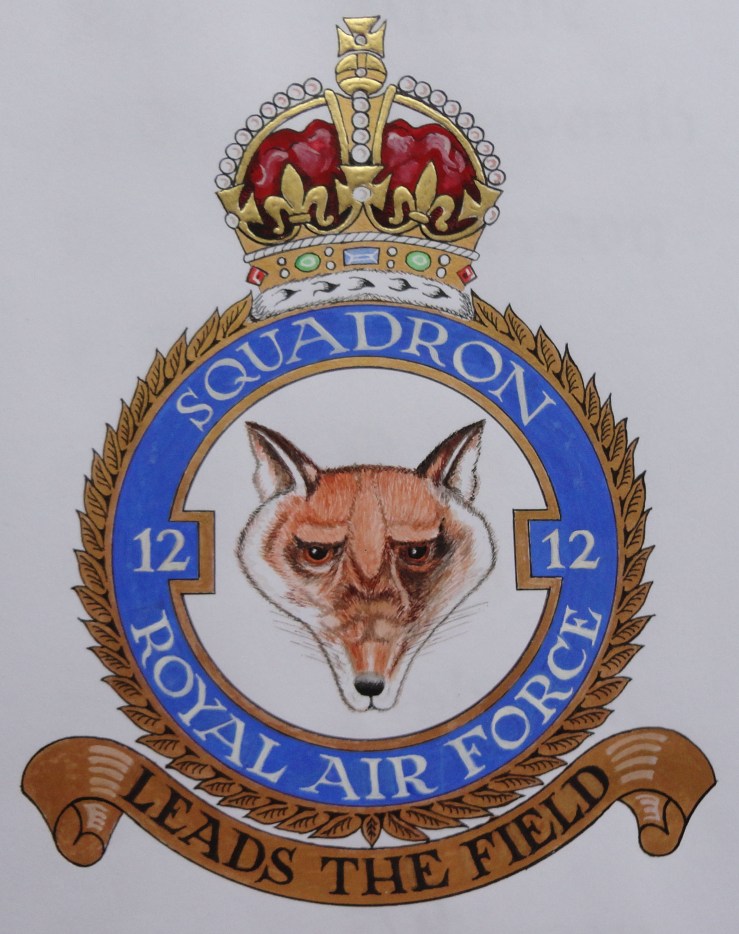
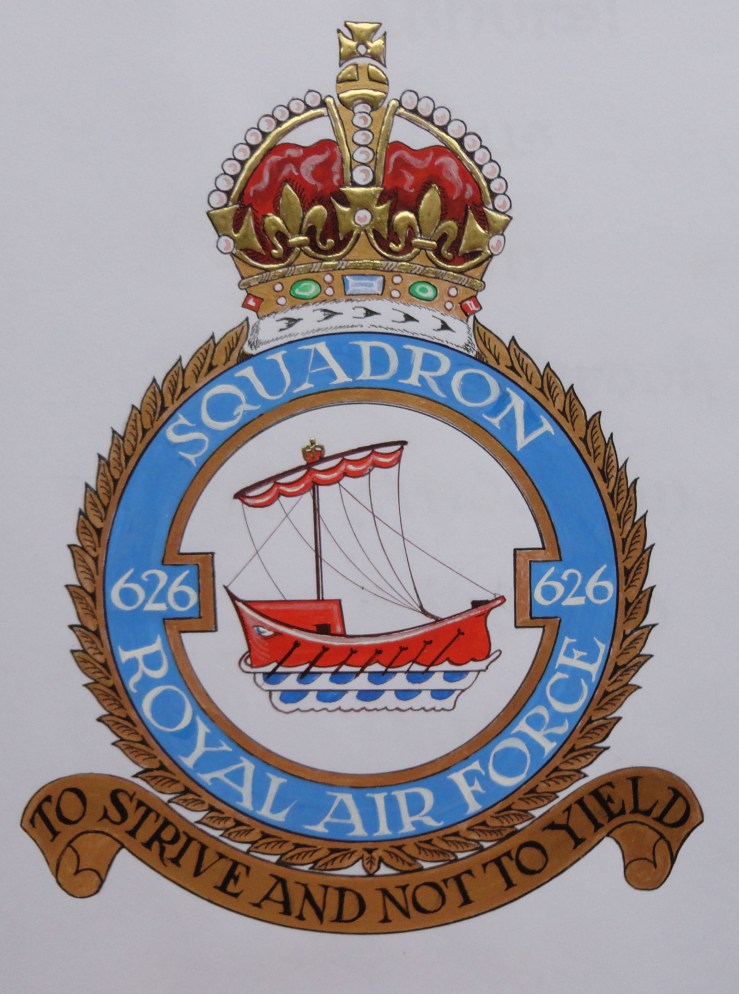
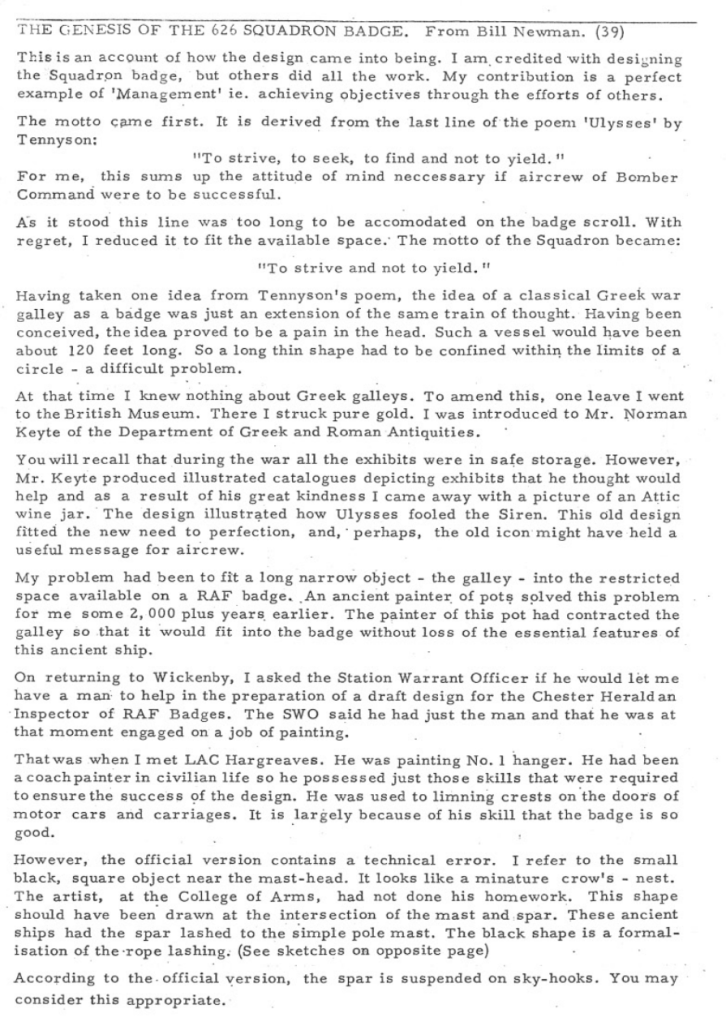
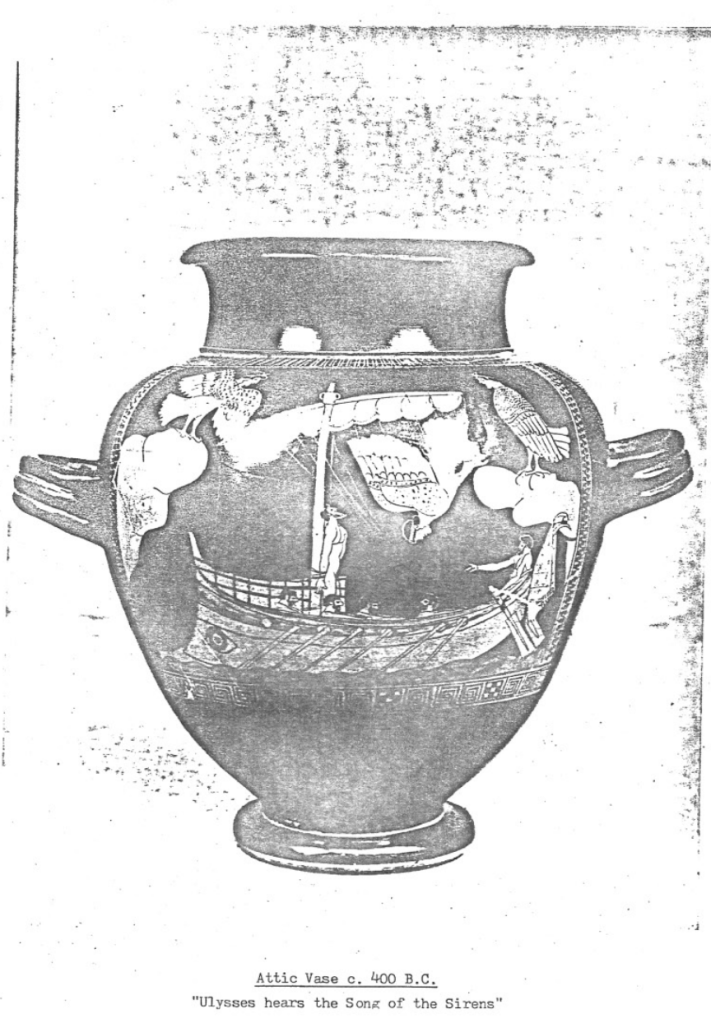
I’ve included an account from Flying Officer Bill Newman about how the 626 Sqn badge and motto was developed and designed.

Extract from Station Diary

29 October-4 November 1943

Overview

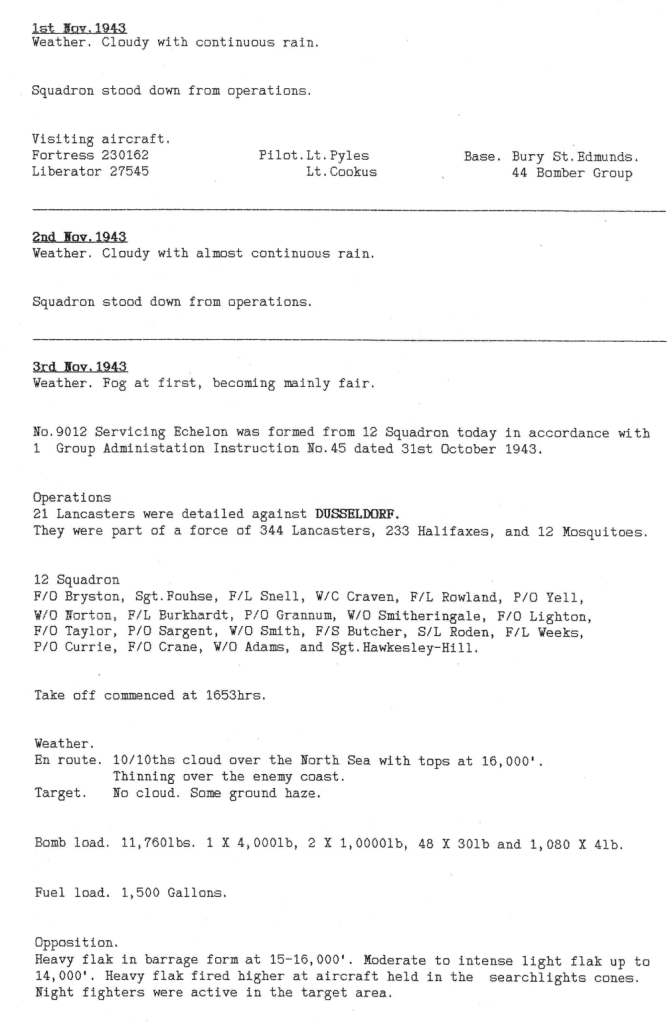
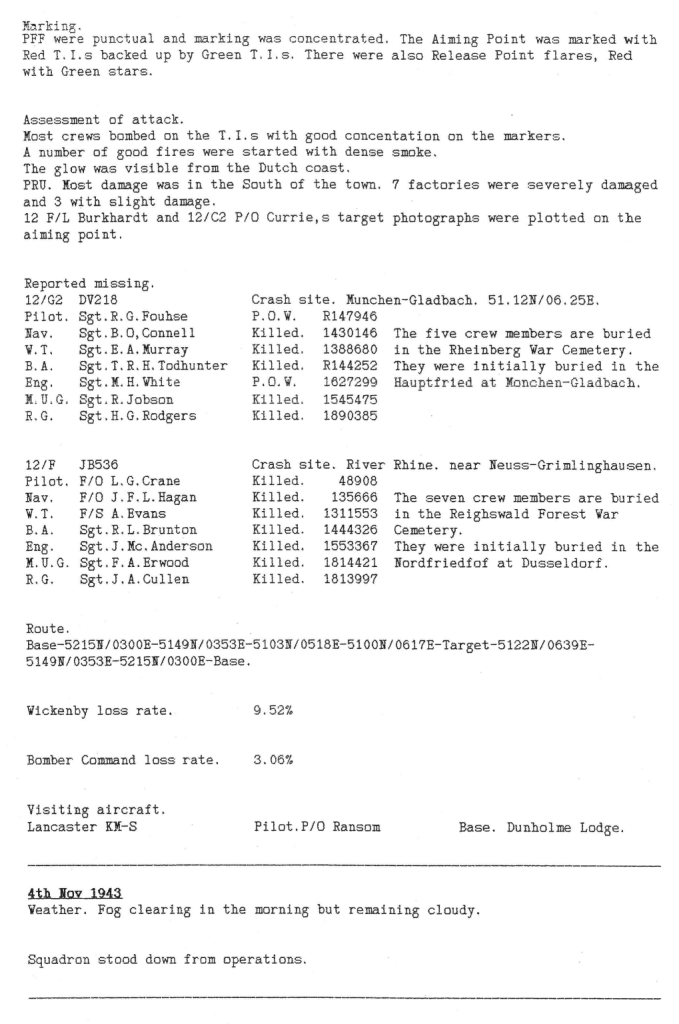
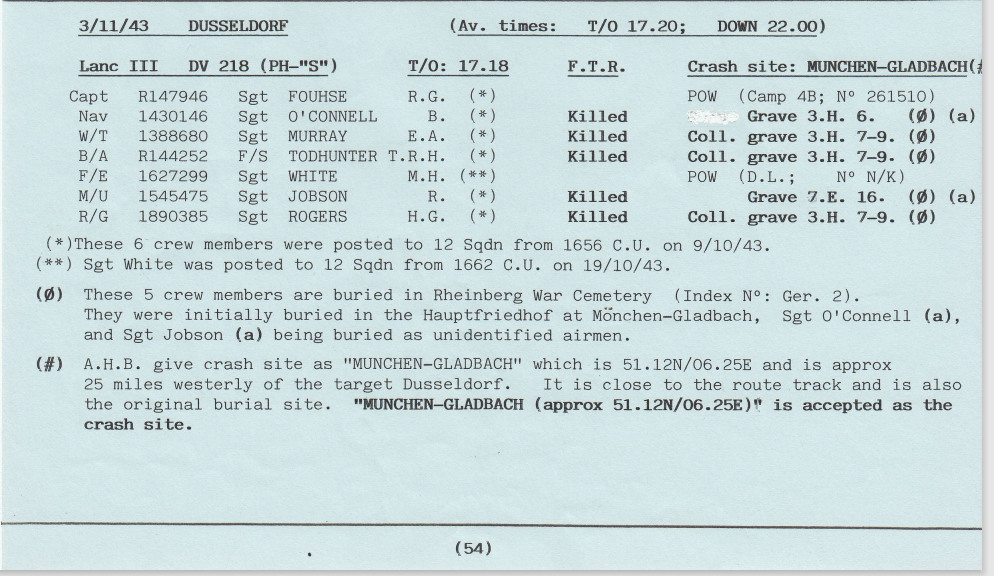
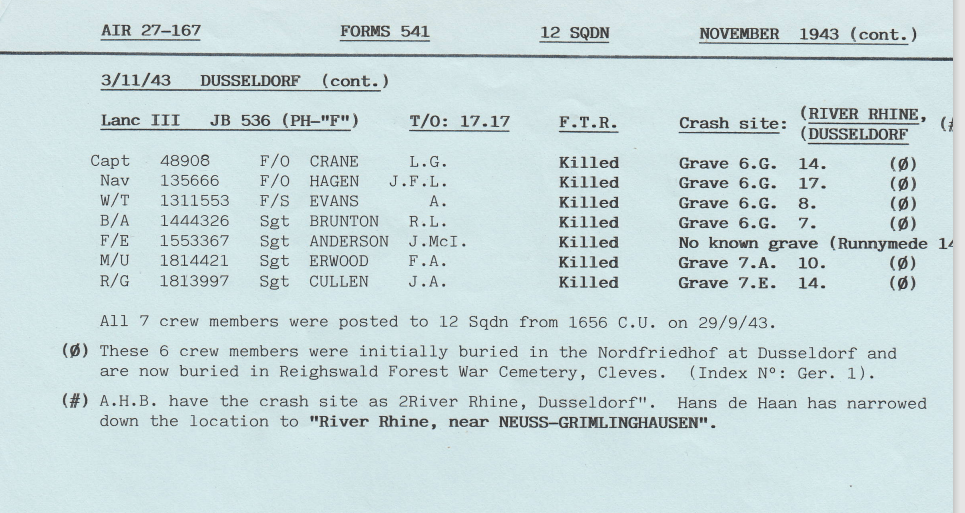
Only one operation this week, to Dusseldorf, but 2 aircraft were lost, with 12 aircrew killed and 2 becoming prisoners of war – both crews were on their first mission.

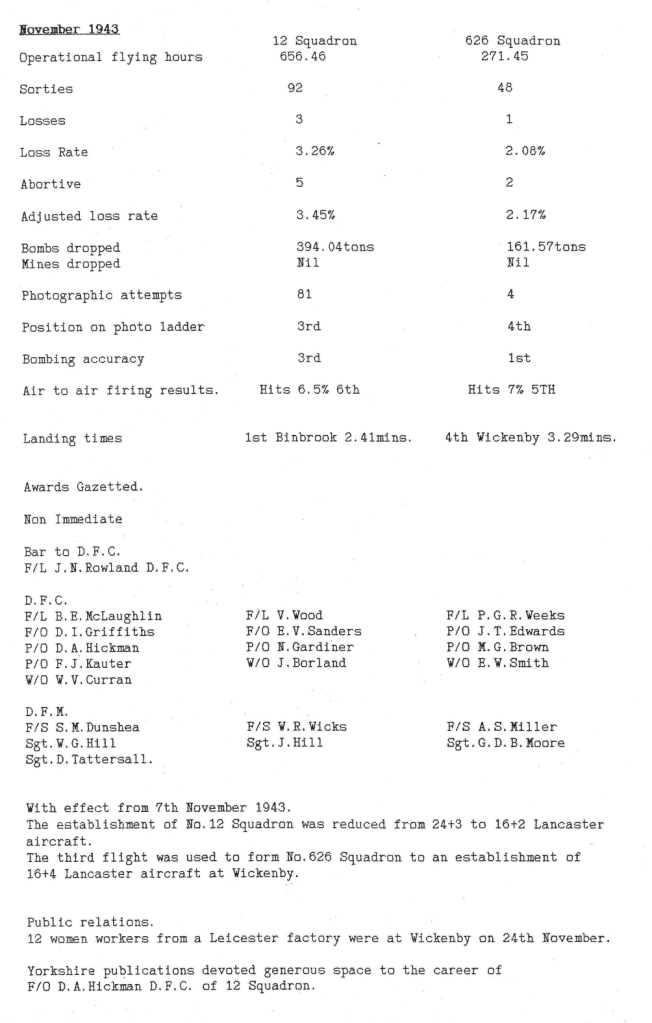
You will also notice, in the summary of November in the Station Diary, that 626 Sqn was formed on 7th November – this will be covered in more detail in the next post.

Extract from Station Diary

Extract from Appendix to 12 Sqn Operational Record Book
22-28 October 1943

Overview

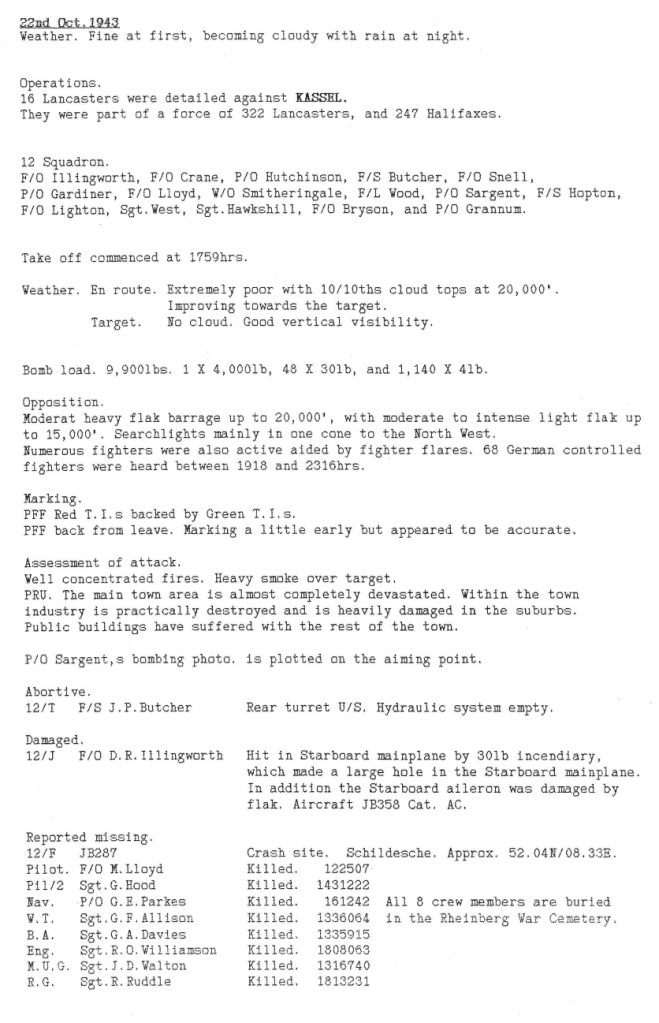
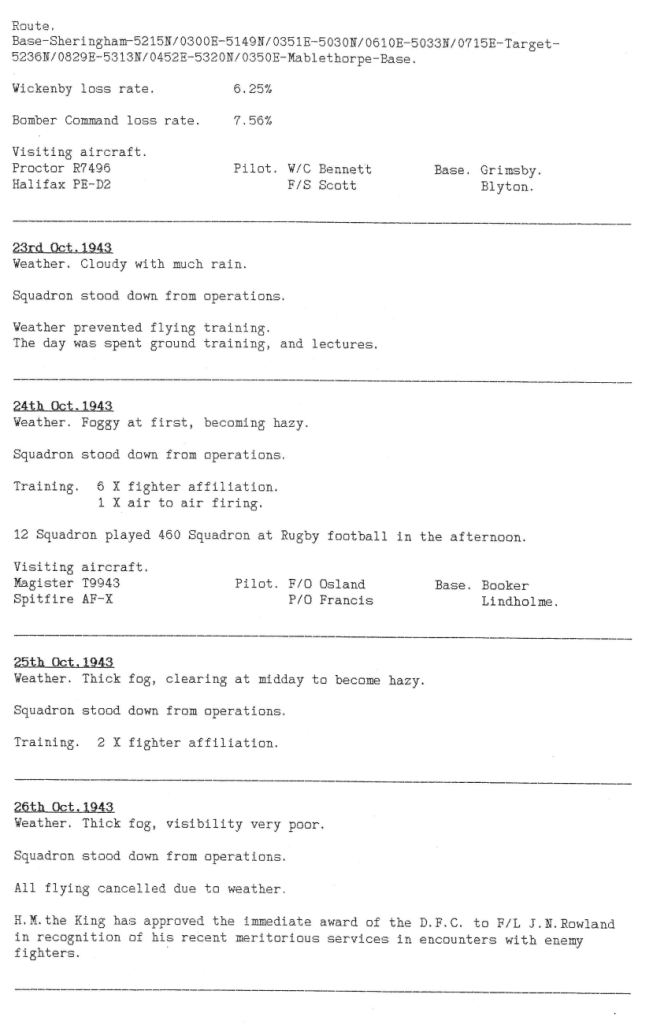
Just one target attacked this week – Kassel – but it was a very successful raid for Bomber Command, with over 100,000 people displaced and a conservative estimate of dead at 5,599, although more than 3000 more were missing. One 12 Sqn aircraft and it’s crew, including a “second dicky” pilot, were all killed. Another danger for aircrews is illustrated in the damage to Fg Off Illingworth’s aircraft, which was hit by a 30lb incendiary released from above, damaging the starboard mainplane and aileron (see Station Diary below).
Extract from Station Diary

Extract from Appendix to 12 Sqn Operational Record Book