Overview
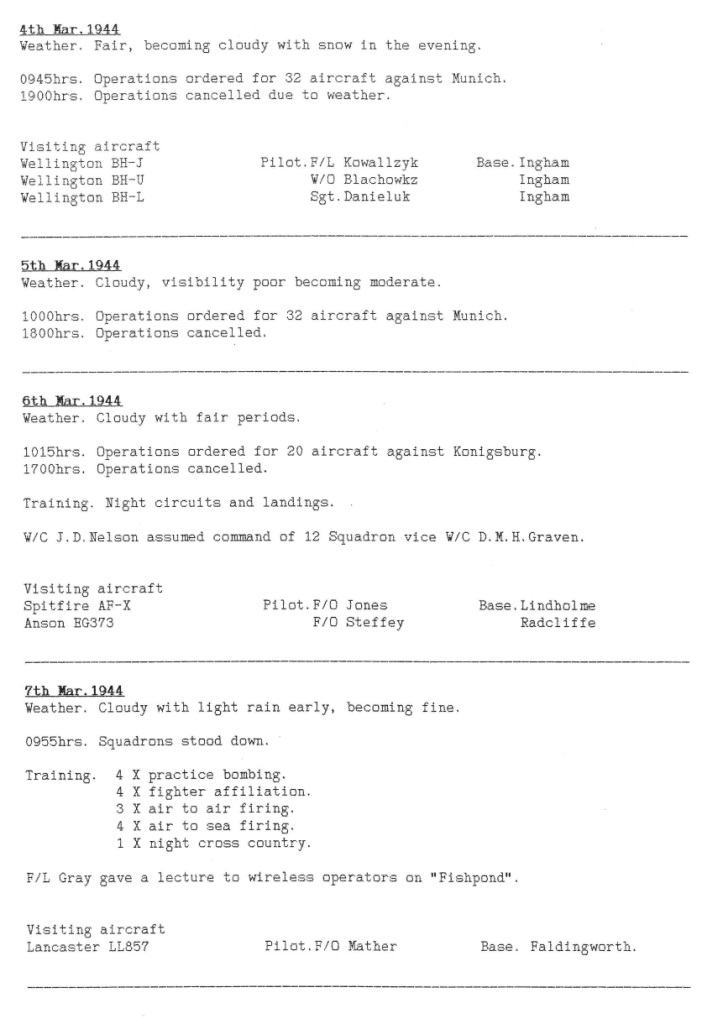
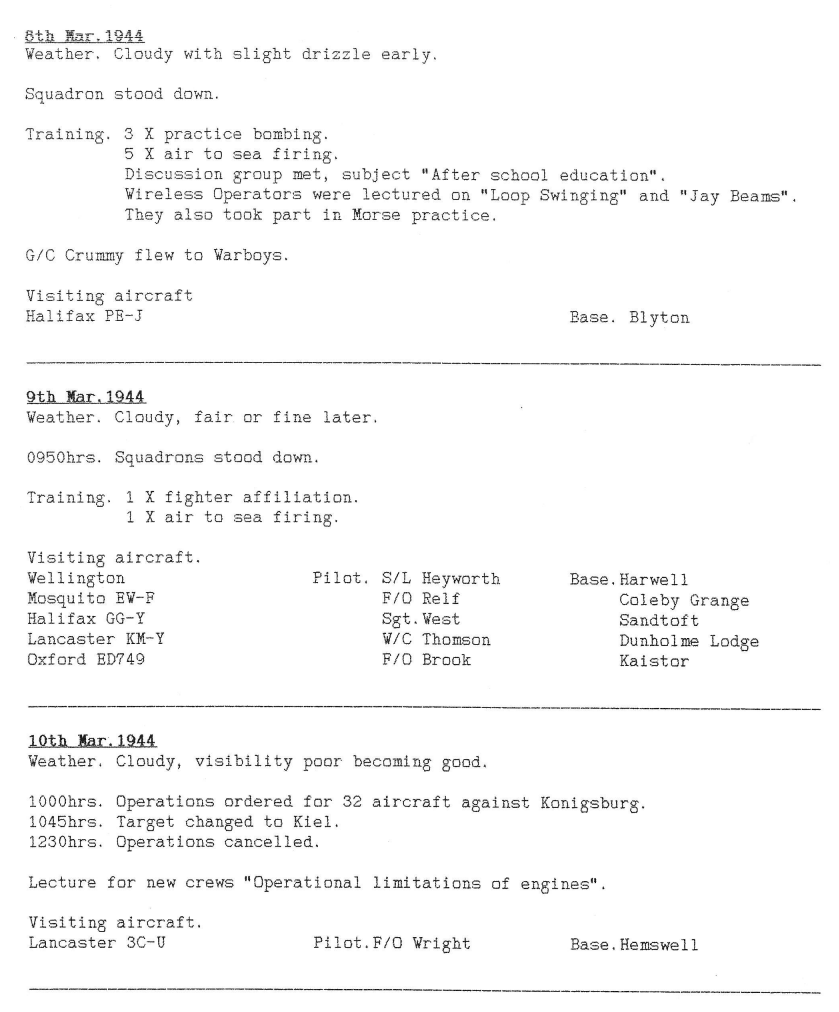
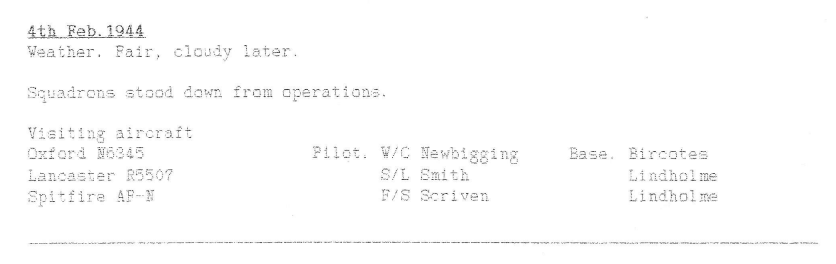
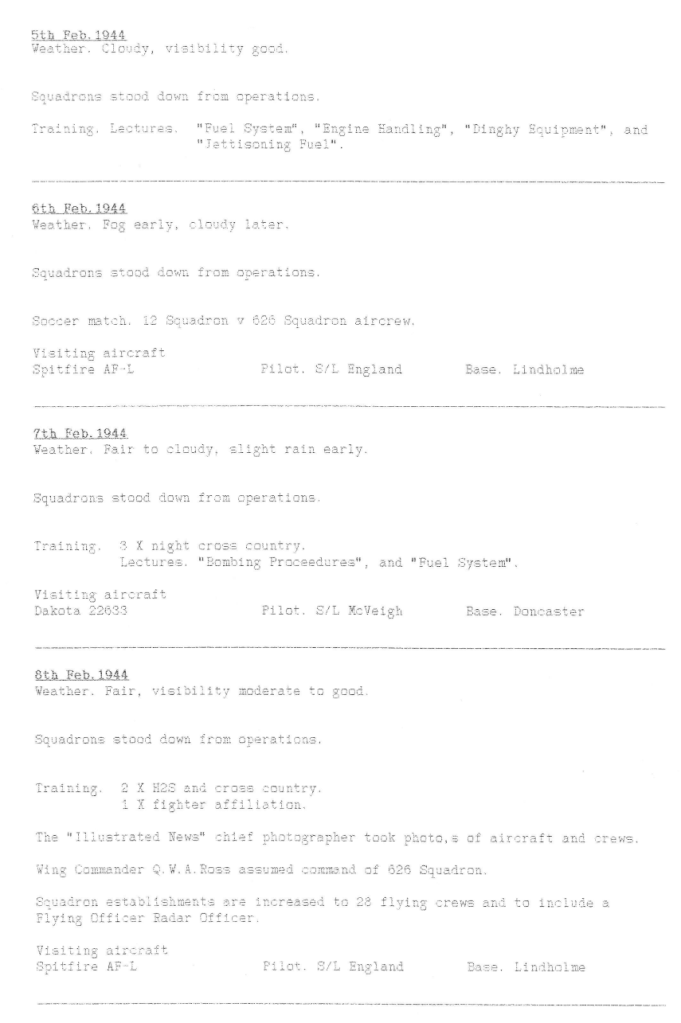
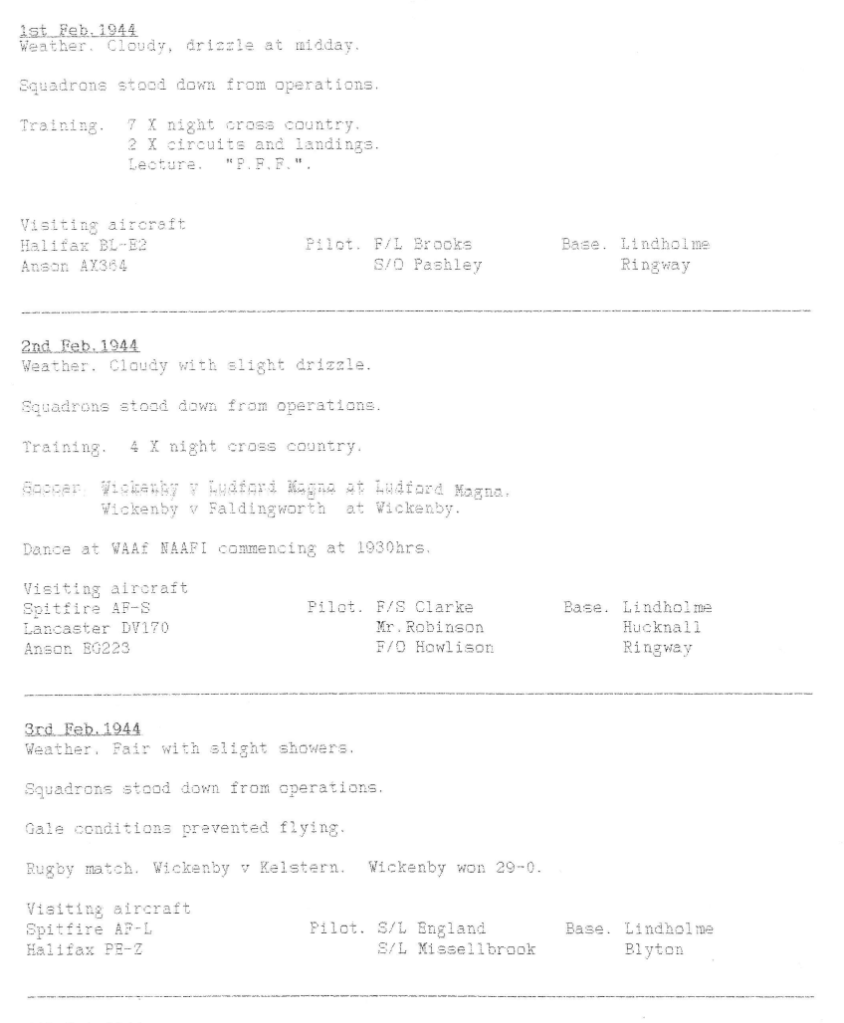
There were no operations flown this week from Wickenby

Extract from Station Diary

RAF Wickenby – This week in history – World War 2
RAF Wickenby history week by week during World War 2
There were no operations flown this week from Wickenby
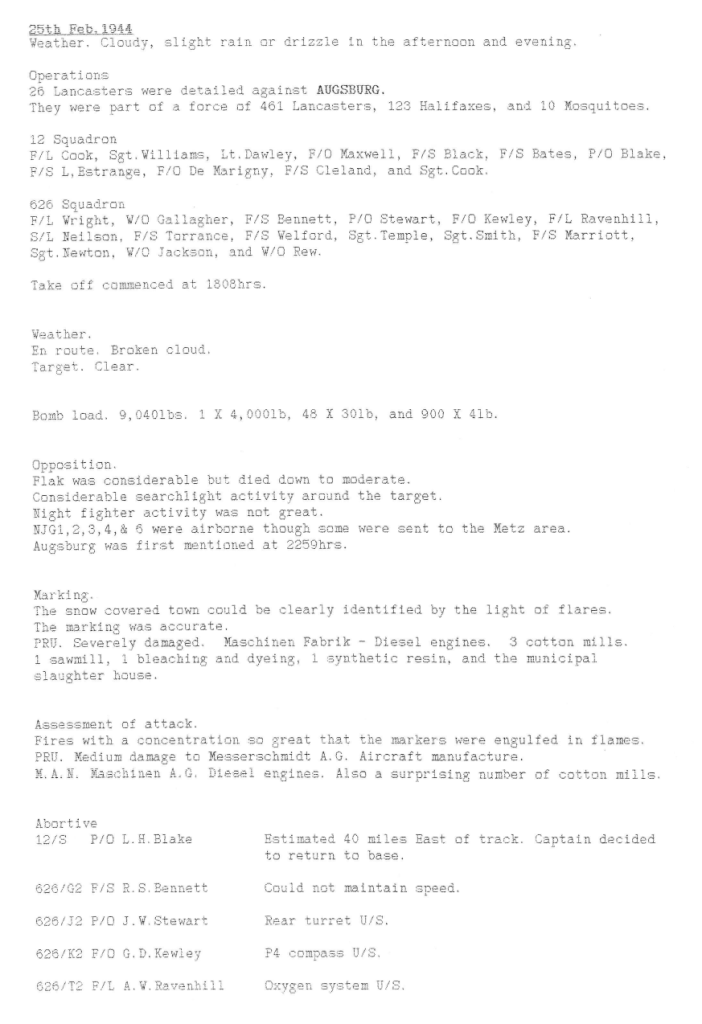
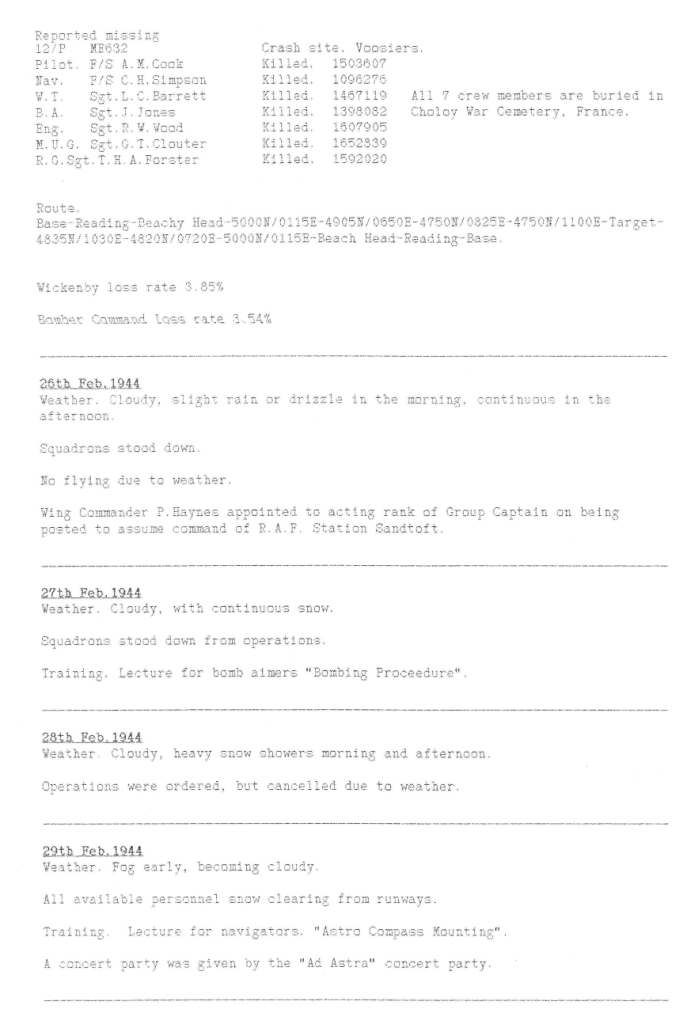
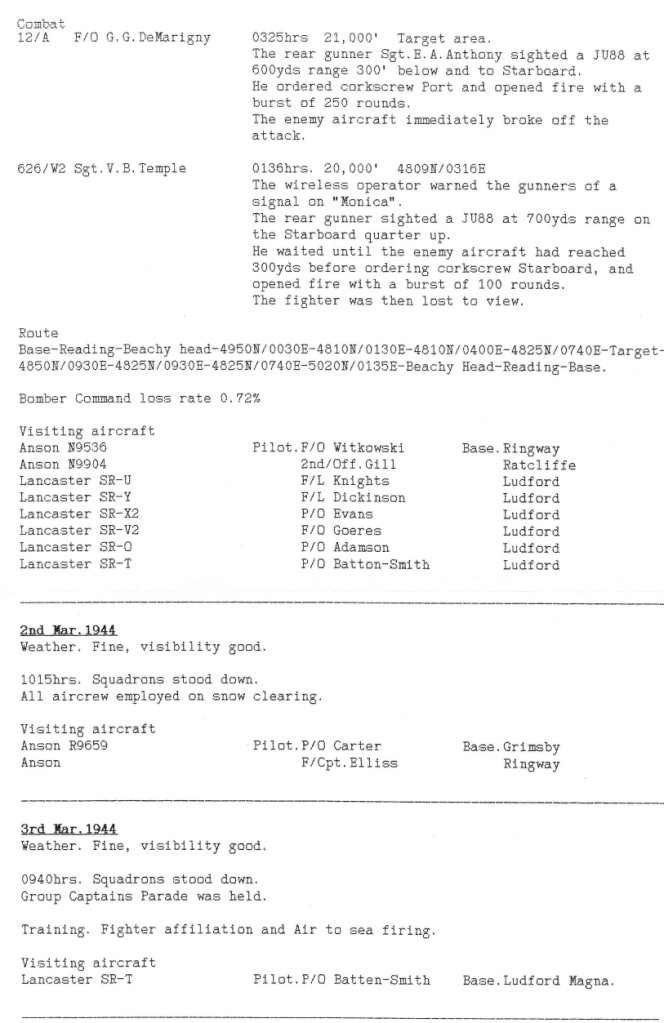
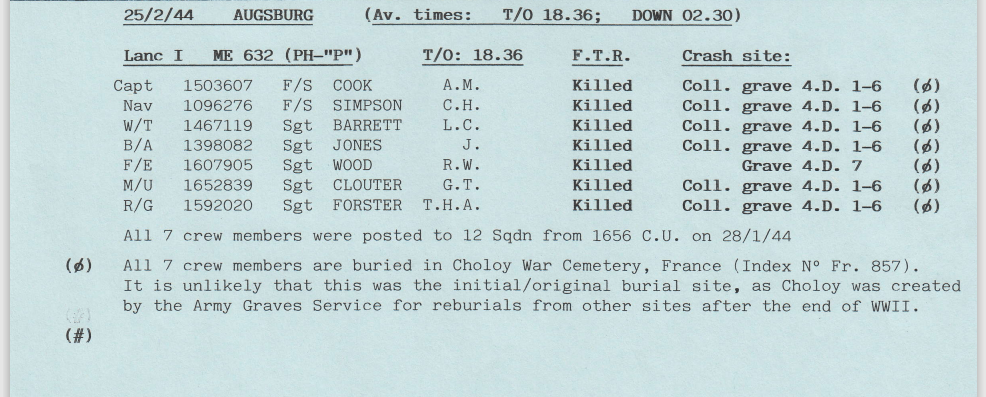
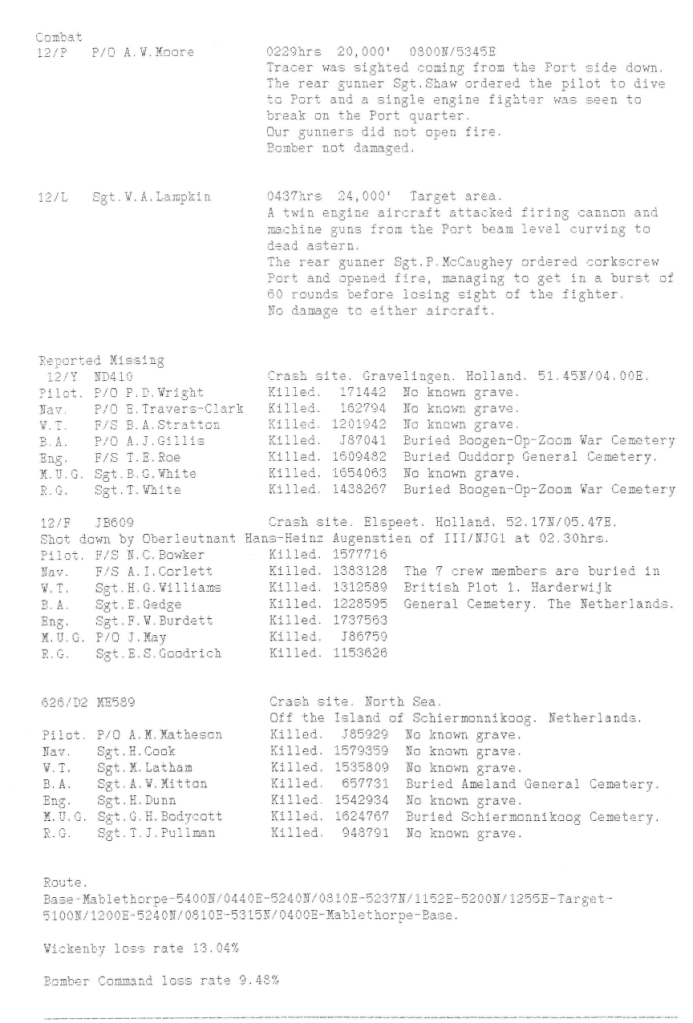
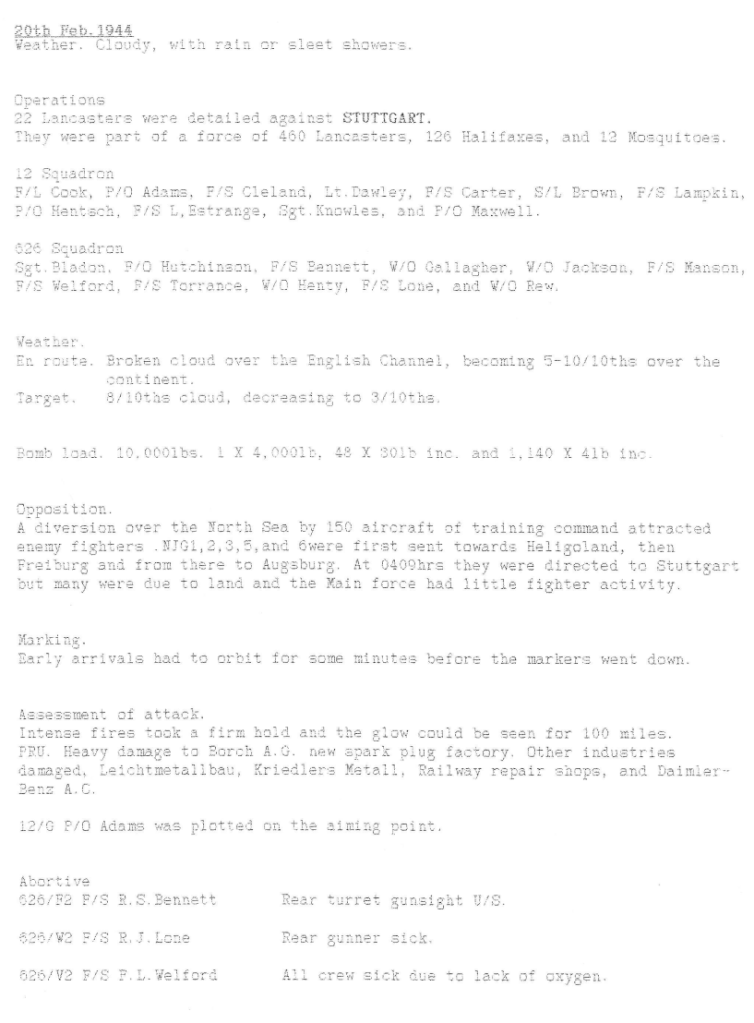
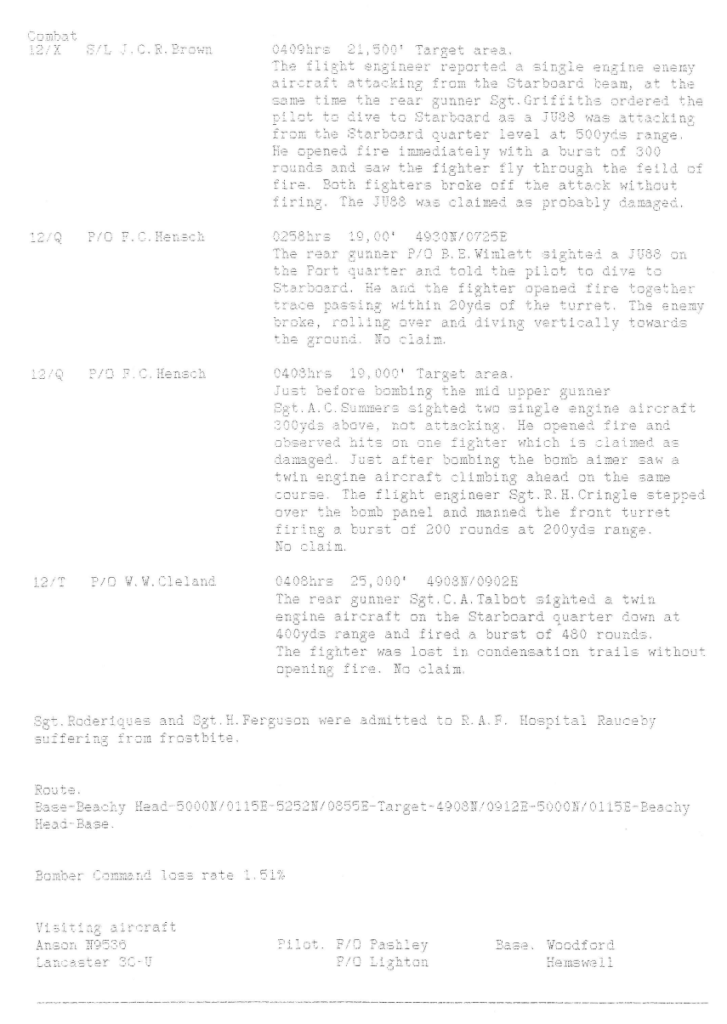
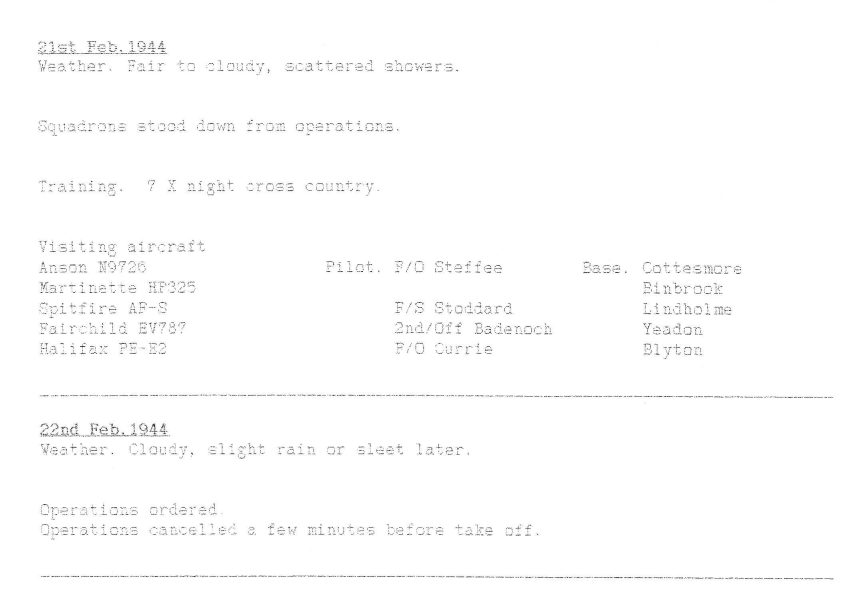
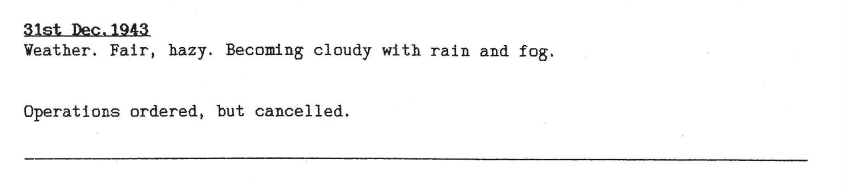
Aircraft from Wickenby took part in 2 raids during this week, to Augsburg and Stuttgart, with one aircraft and all its crew being lost.
The Augsburg raid was very accurate and more than 2000 tons of bombs were dropped which destroyed the centre of the old town, with about 700 people being killed and 90,000 bombed out. Augsburg had not been attacked before and had very light defenses, which, with the clear weather over the target led to accurate Pathfinder marking.


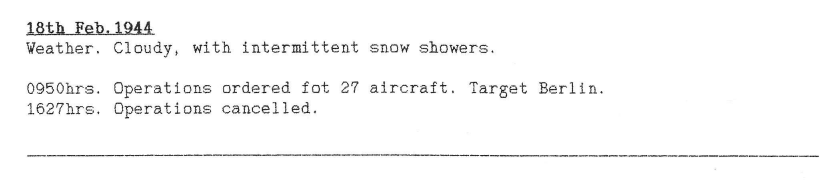
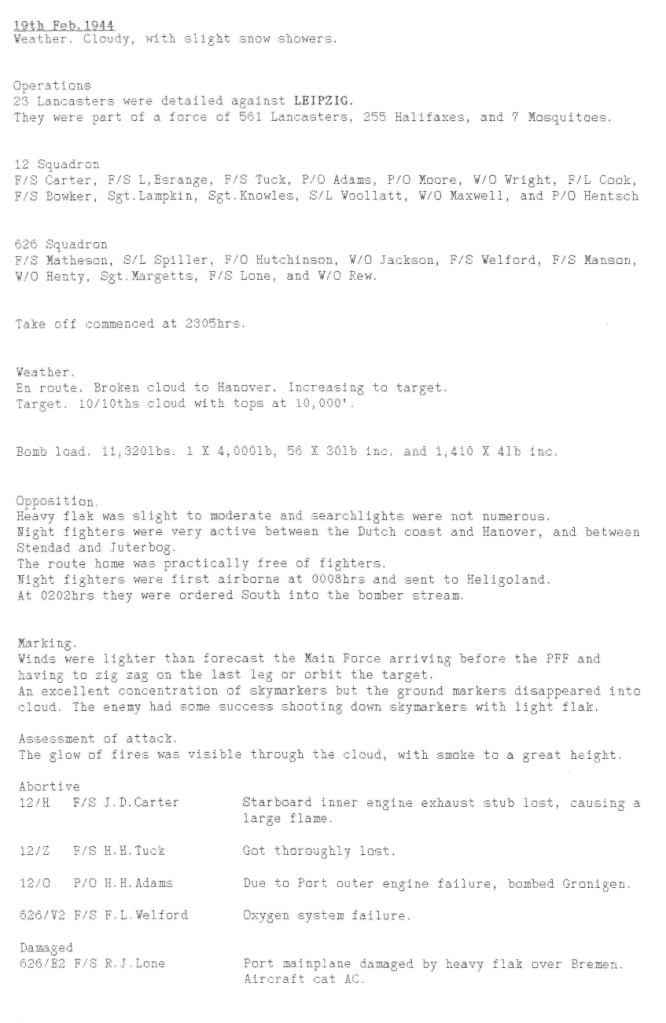
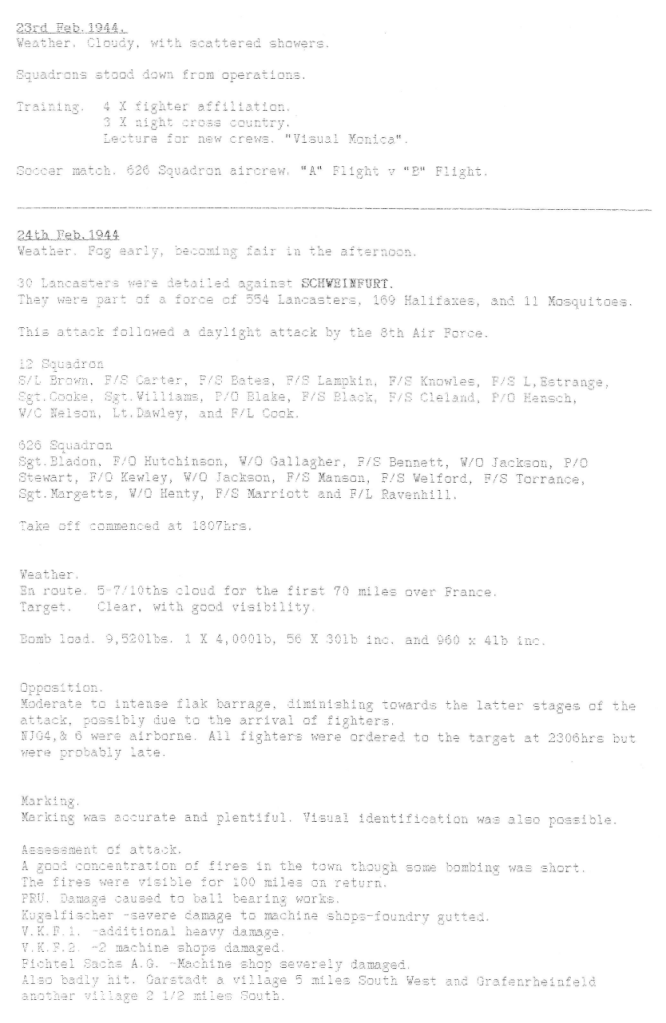
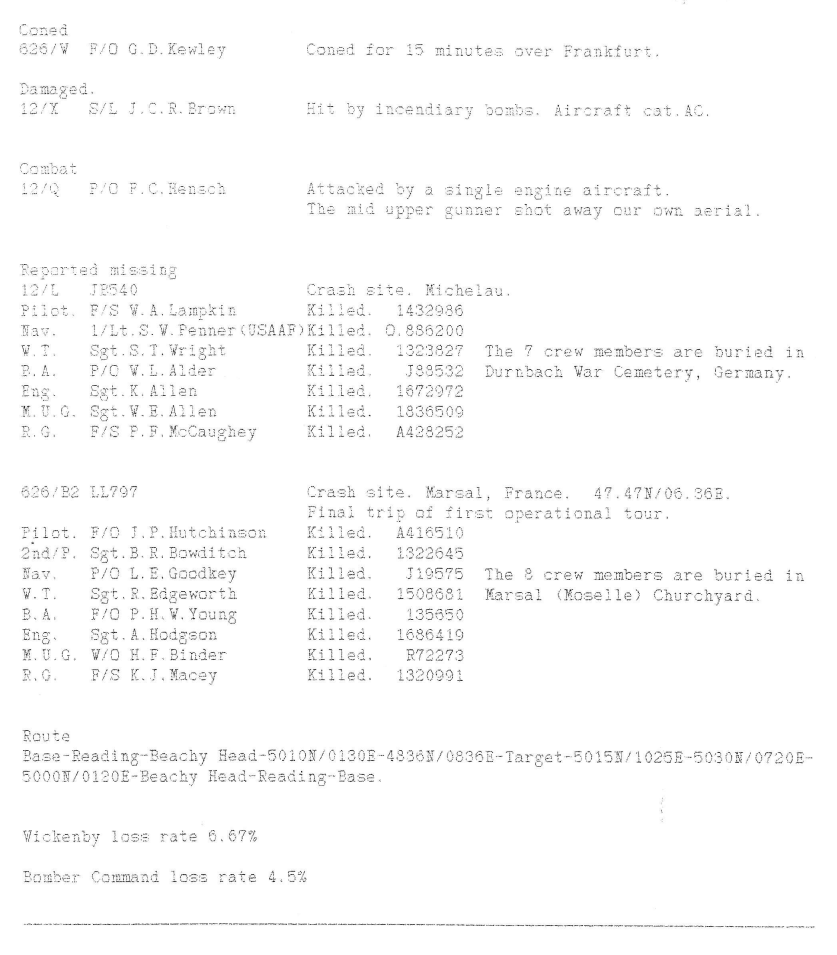
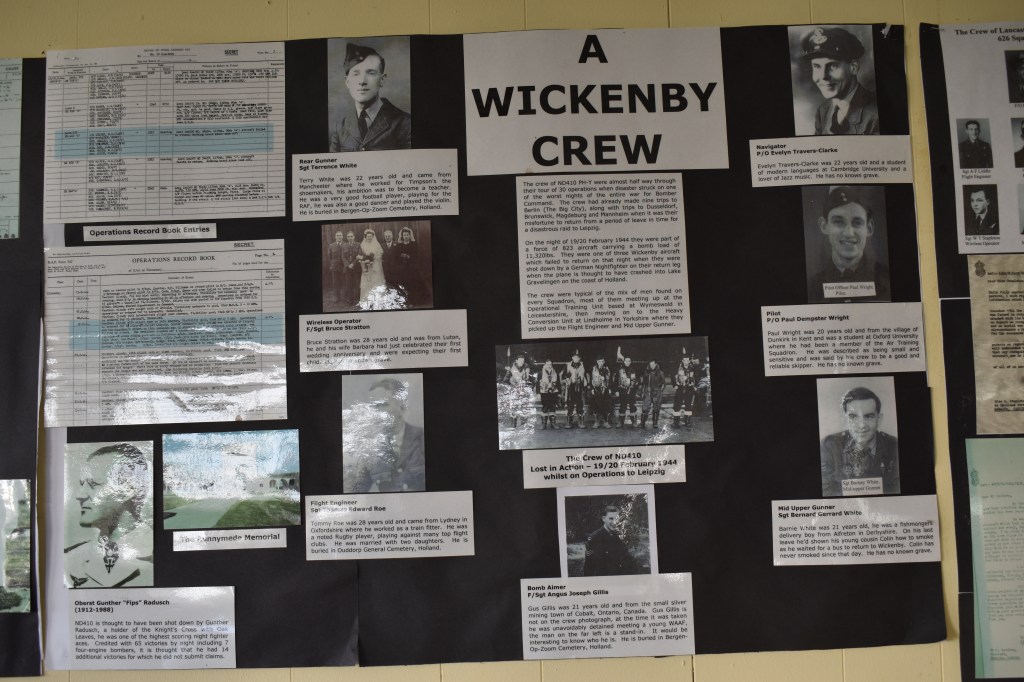
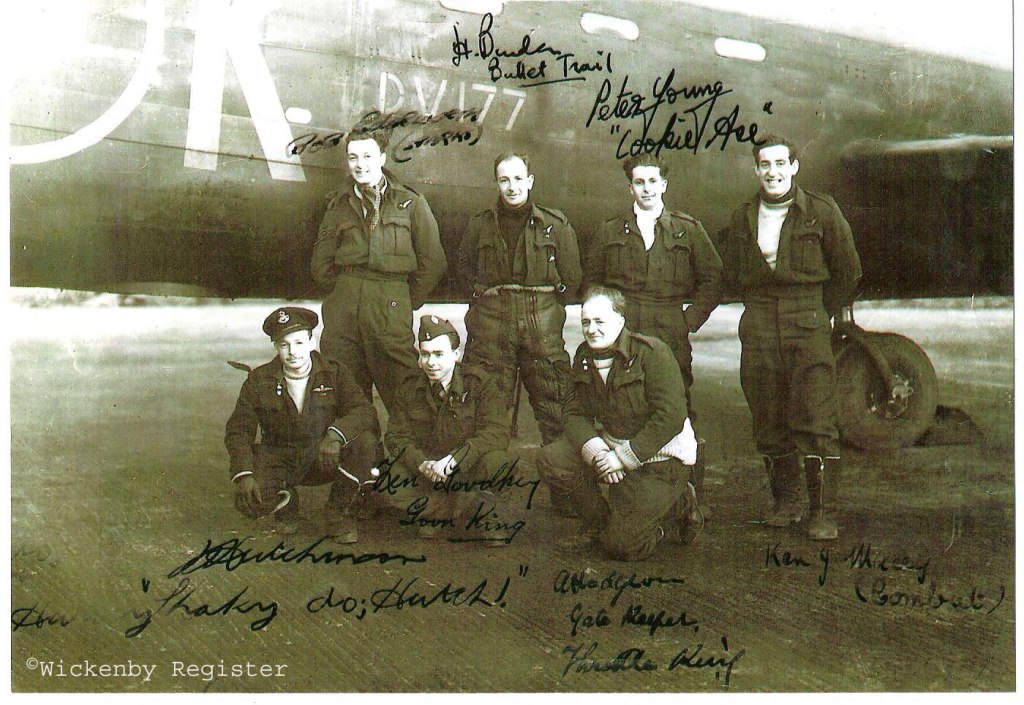
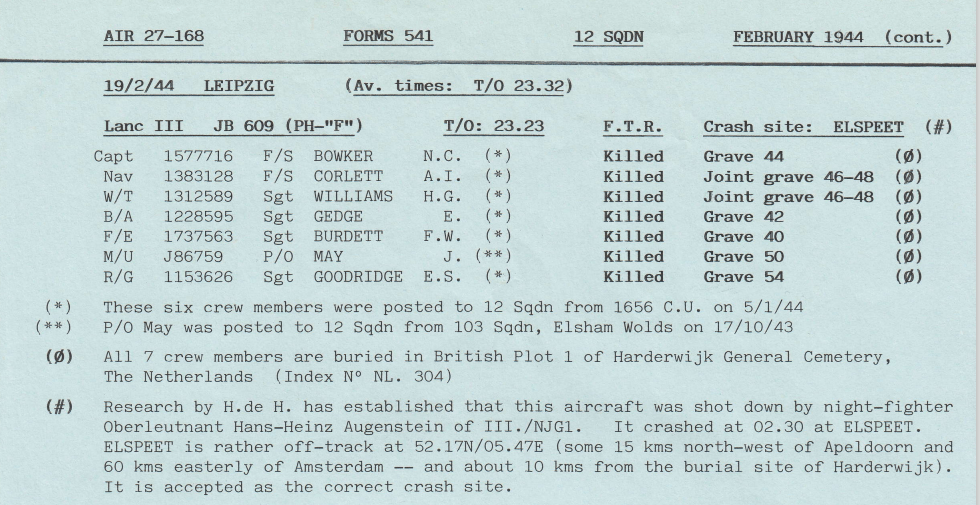
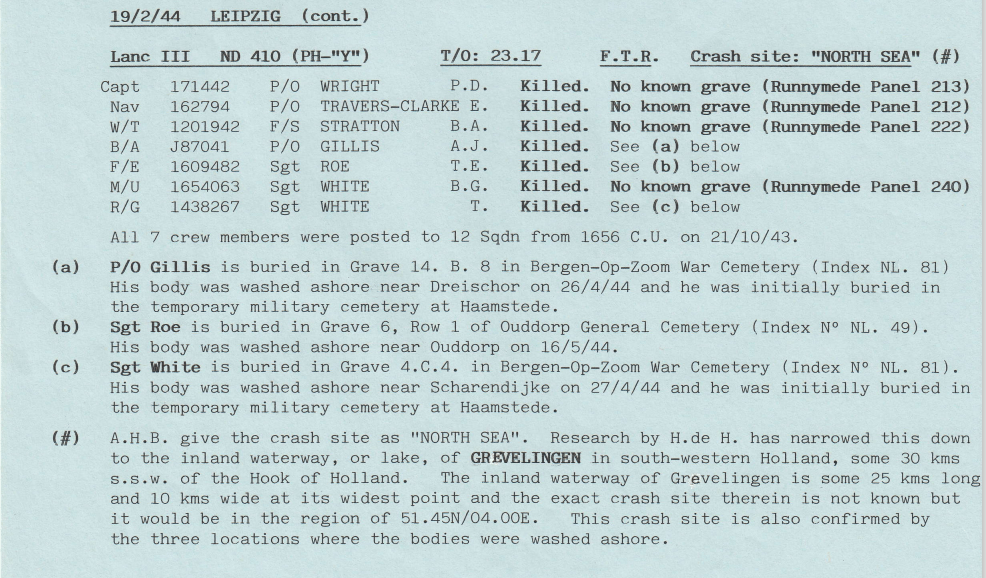
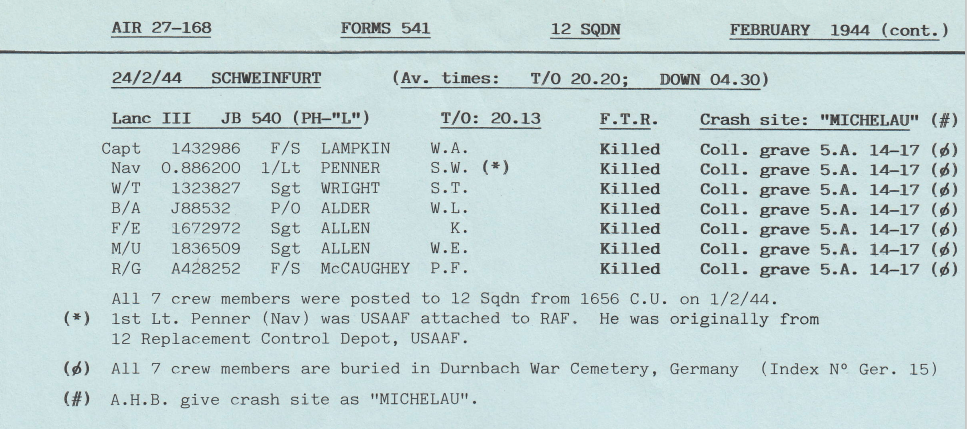
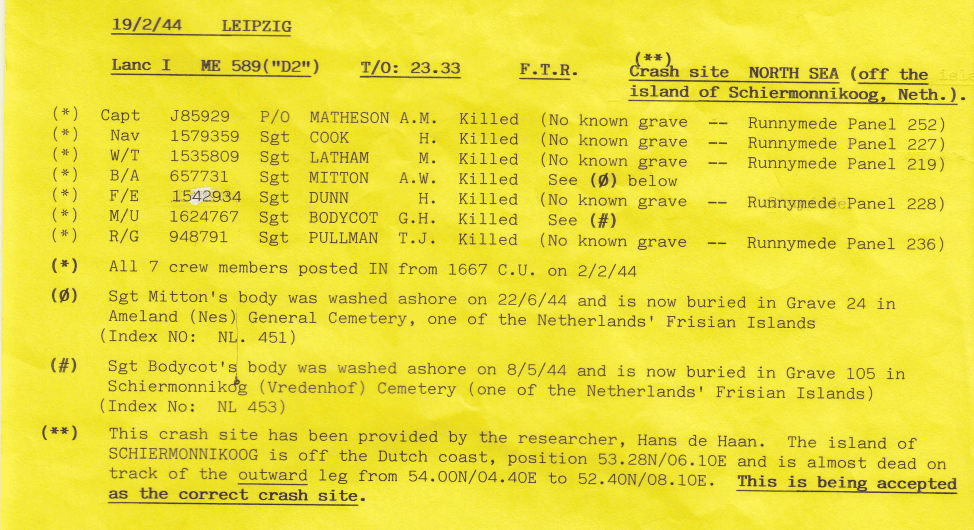
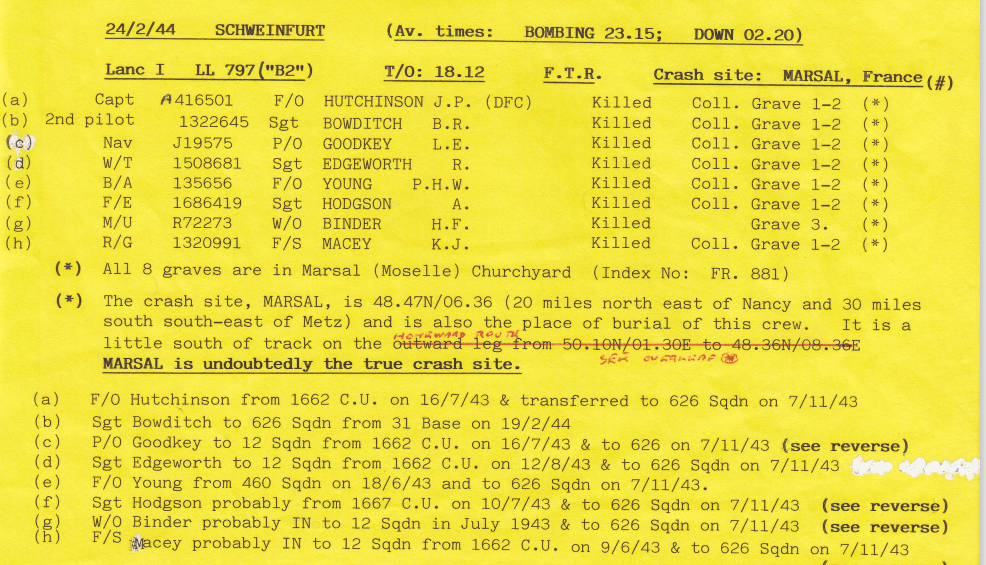
Another bad week for Wickenby aircrews – following attacks on Leipzig, Stuttgart and Schweinfurt, 5 aircraft and all their crews were lost. The attack on Leipzig was particularly expensive for Bomber Command, 44 Lancasters and 34 Halifaxes were lost, 9.5% of the force sent. German fighter controllers were not fooled by a diversionary attack on Kiel, therefore the bomber stream was under attack all the way to the target.

No operations were flown this week from Wickenby, although 617 Sqn, led by Wg Cdr Leonard Cheshire, did carry out a 12 Lancaster attack on the Gnome and Rhone aero-engine factory. The importance of this raid revolves around the use of low level marking using a Mosquito bomber by Cheshire, which was very successful and led to the destruction of the factory and minimal French civilian casualties. Although this method was adopted by 5 Group it was never used on large raids by the Pathfinders of 8 Group, even though it was shown subsequently that losses in marking aircraft, if Mosquitoes were used, were low.
In the Station Diary for 8th February, it states that a photographer from “Illustrated Magazine” took pictures of aircraft and crews – these appeared in the March 1944 addition and we have a copy of that magazine in the museum and some of the original prints that were not used. The photographs were taken from the balcony of the Watch Tower, which is now the RAF Wickenby Museum.

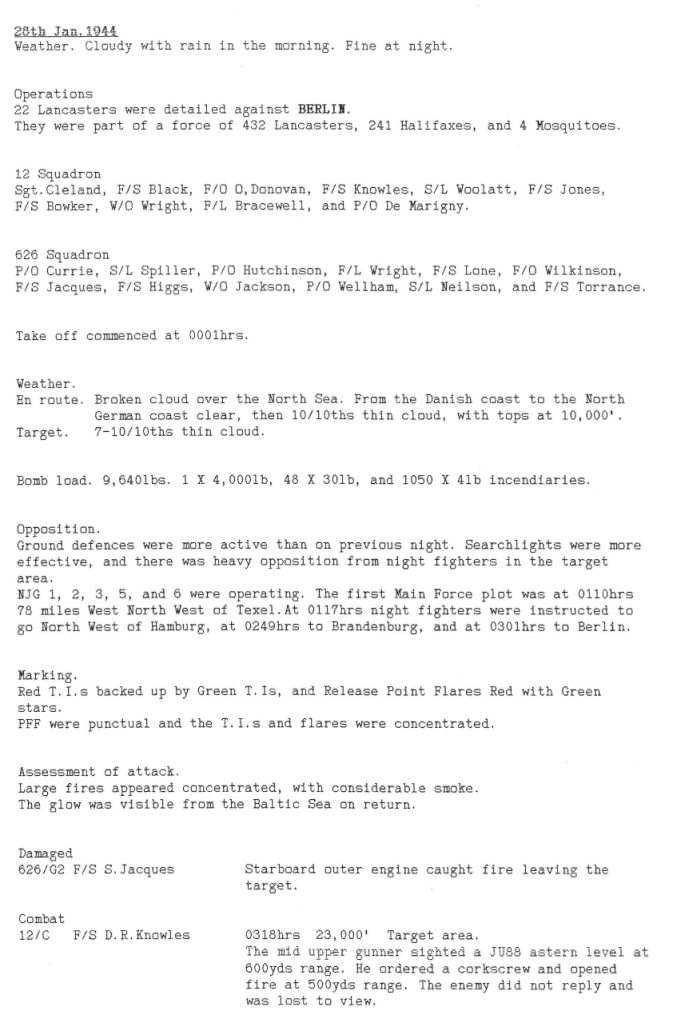
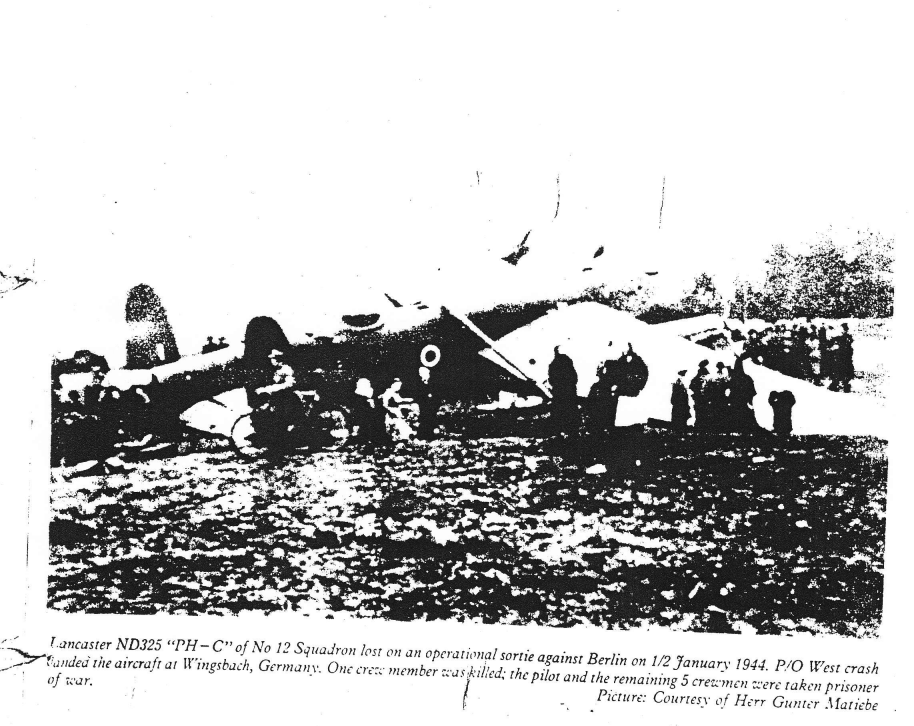
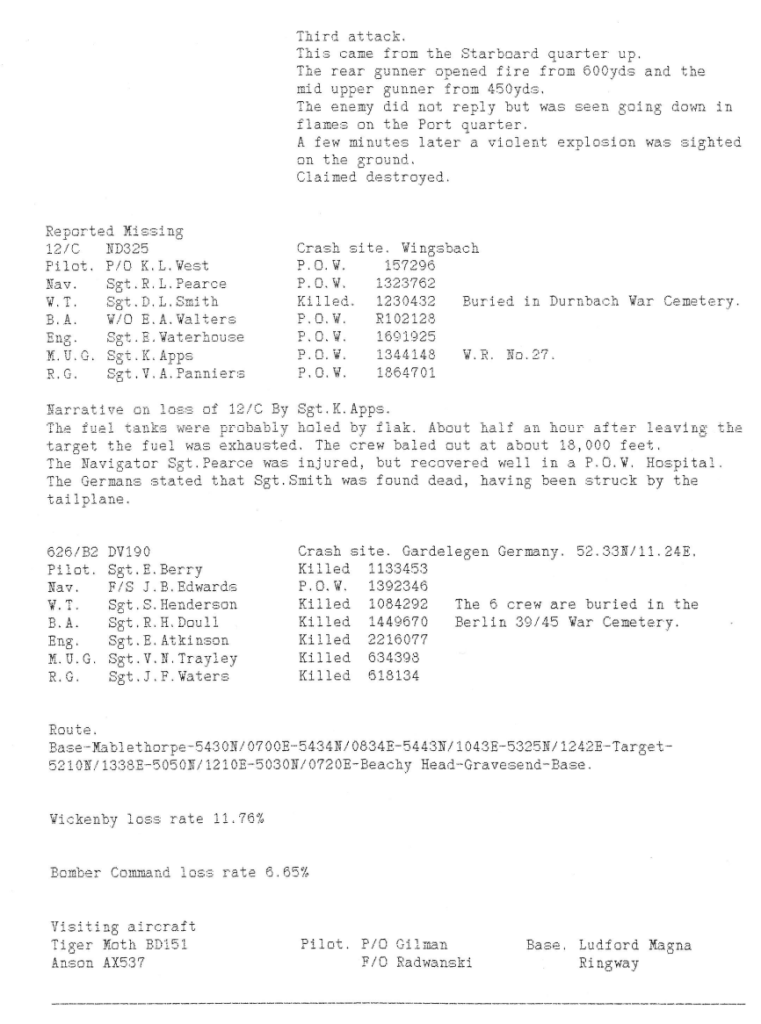
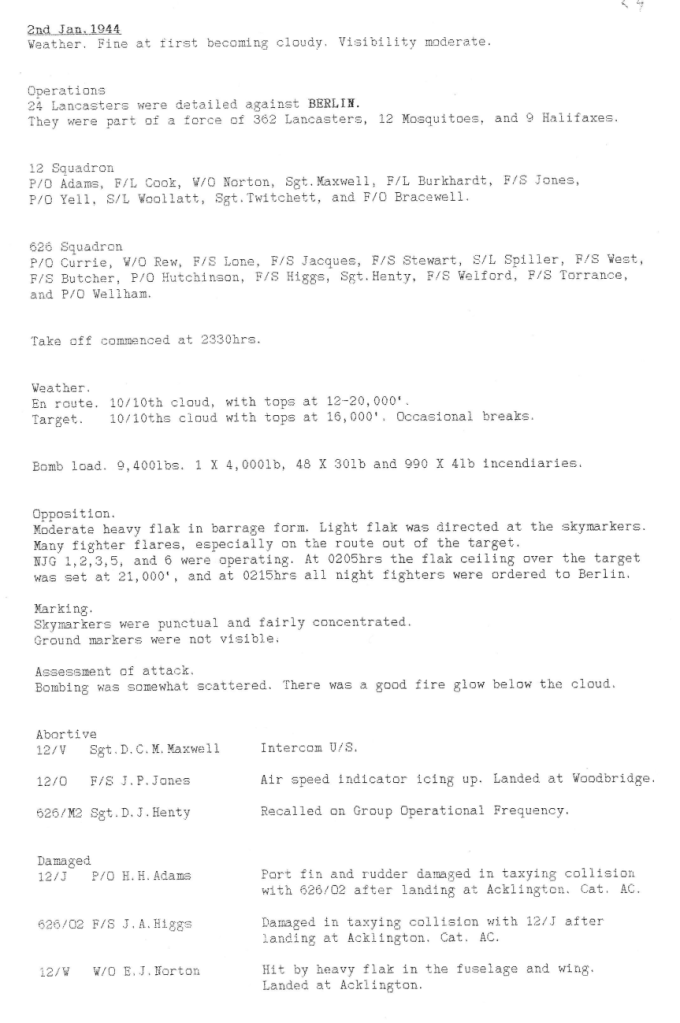
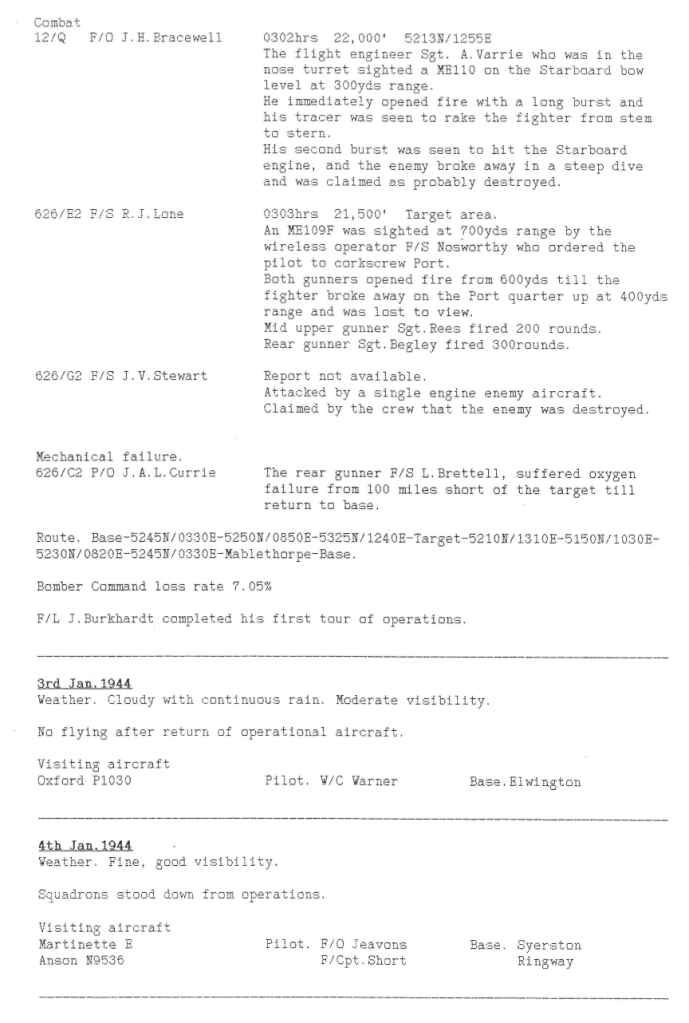
Two attacks on Berlin this week, with one aircraft lost with all the crew and one aircraft returning severely damaged, following 4 night fighter attacks, with one dead crew member and 4 others badly wounded – this crew had 3 gallantry medals issued immediately, one being a rare Conspicuous Gallantry Medal (see report in Station Diary extract below).
The operations to Berlin resulted in more than a 1000 deaths and 200,000 people being bombed out, with Bomber Command losing 79 aircraft.
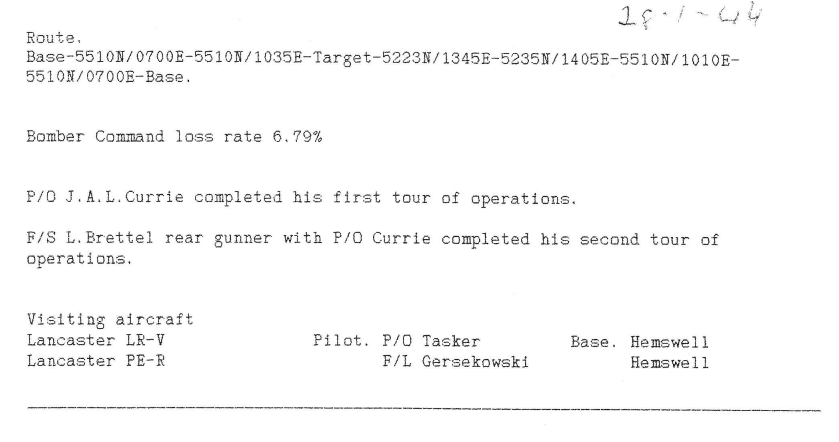

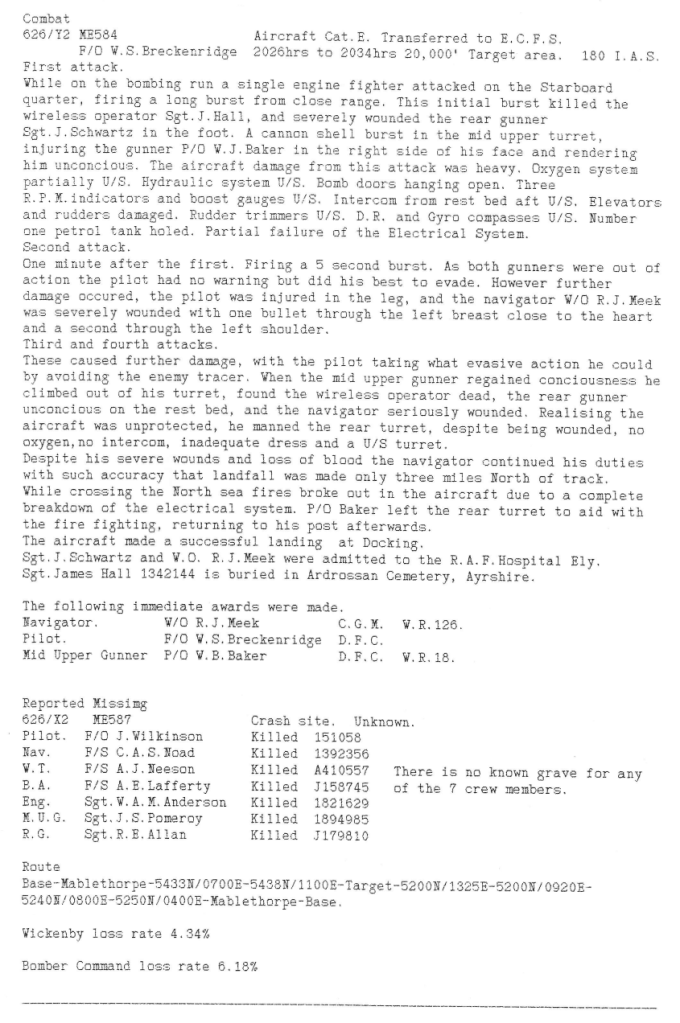
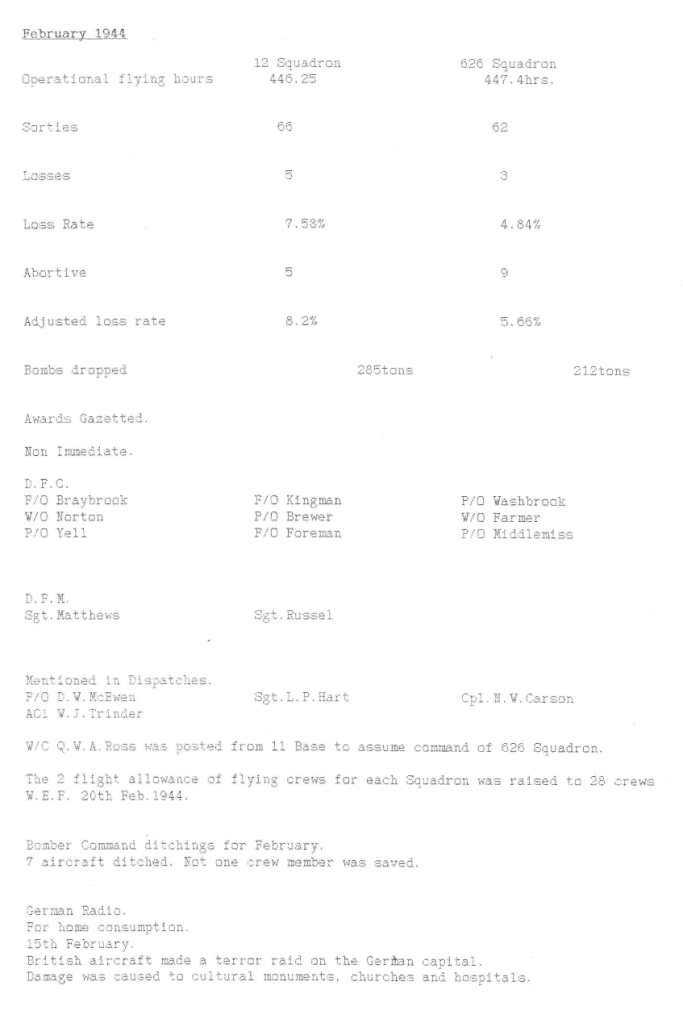

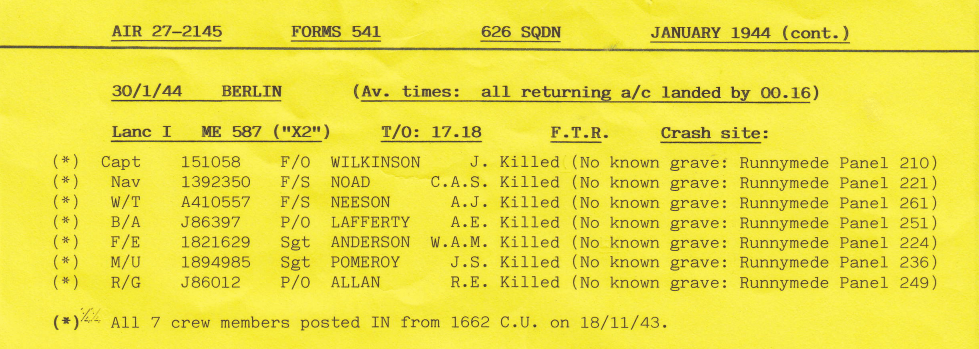
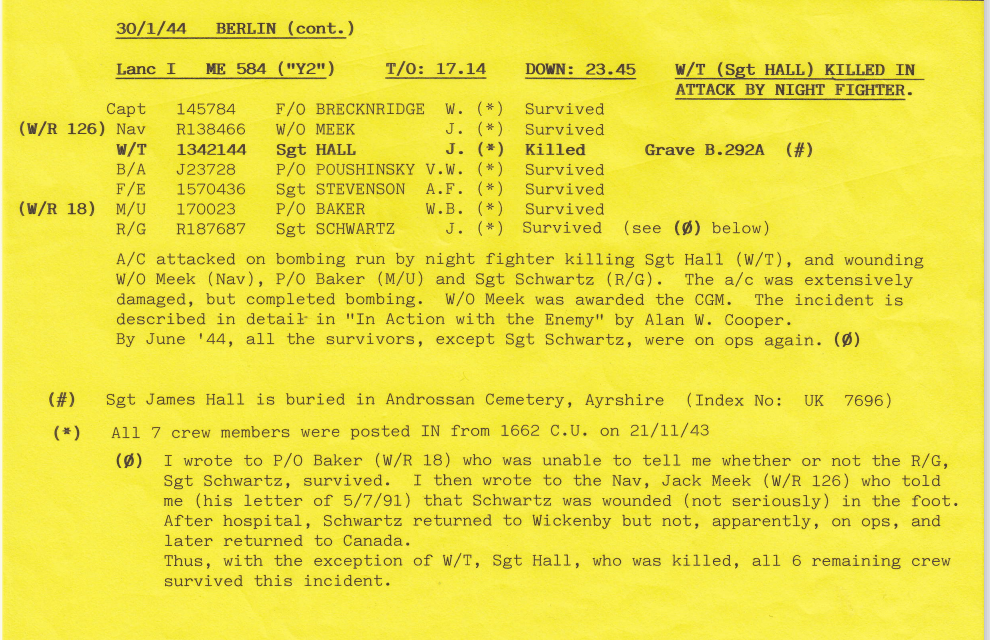
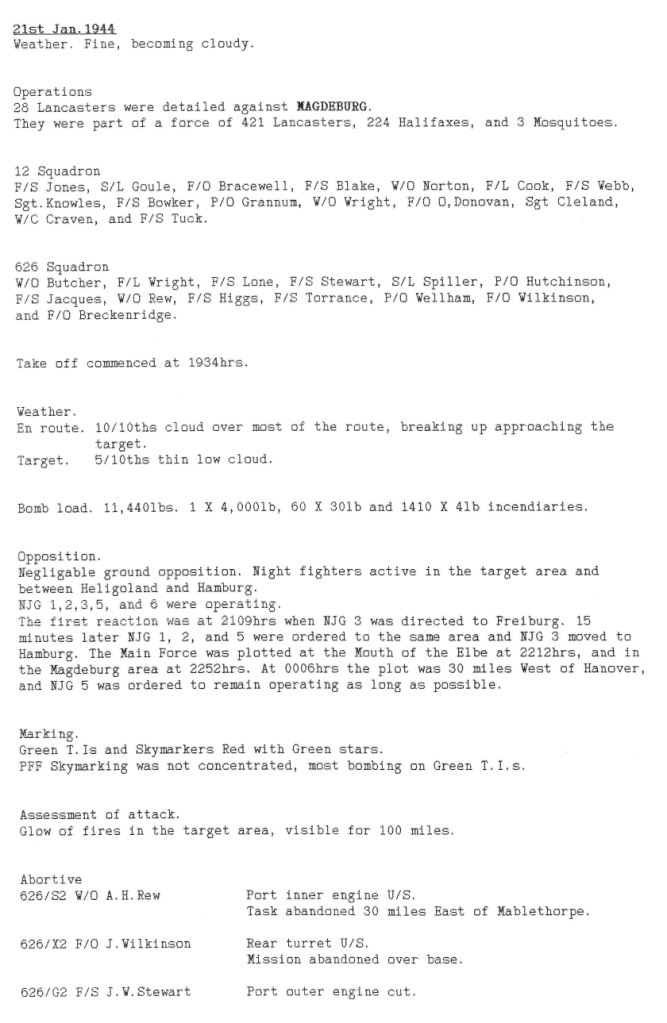
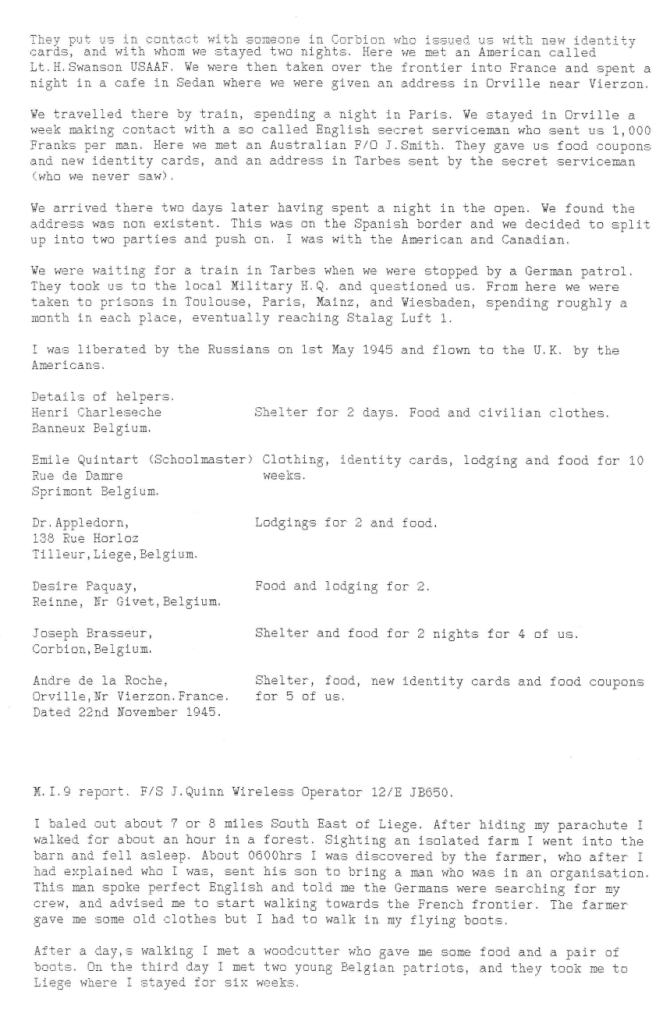
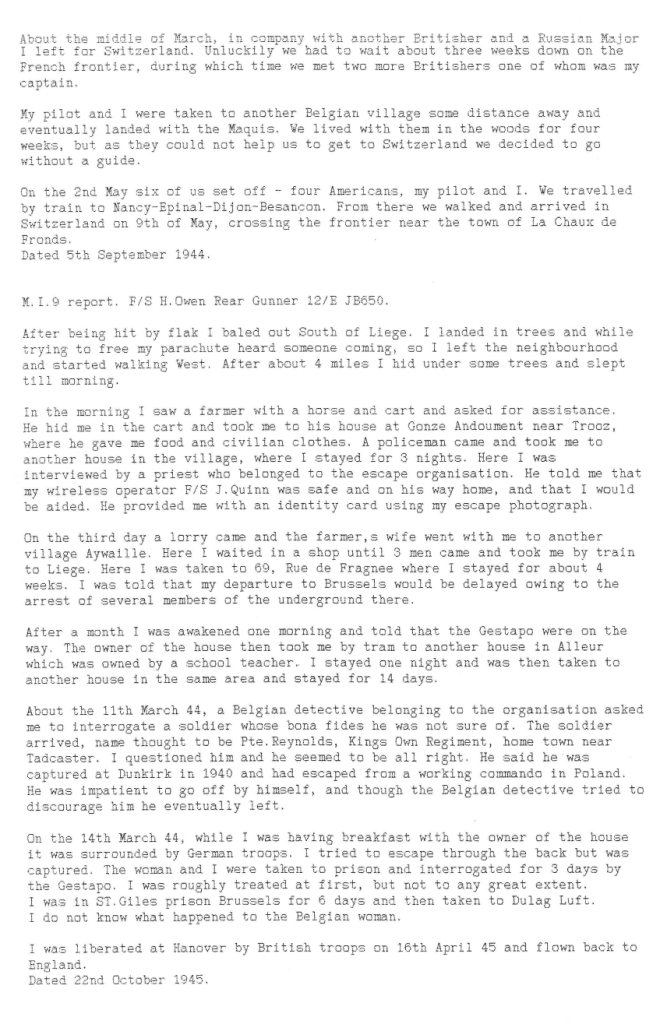
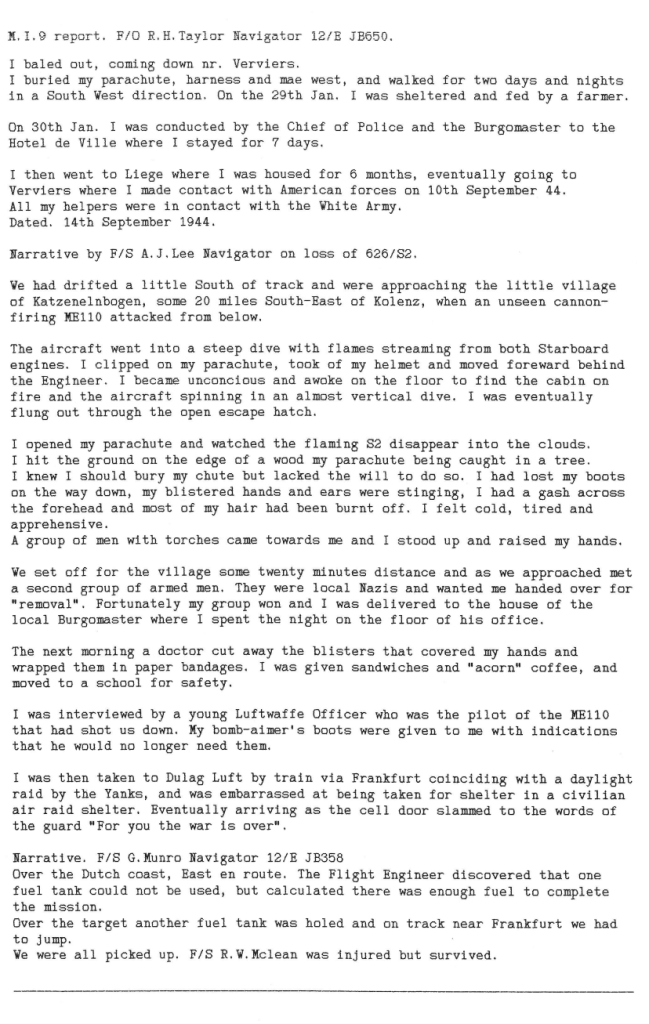
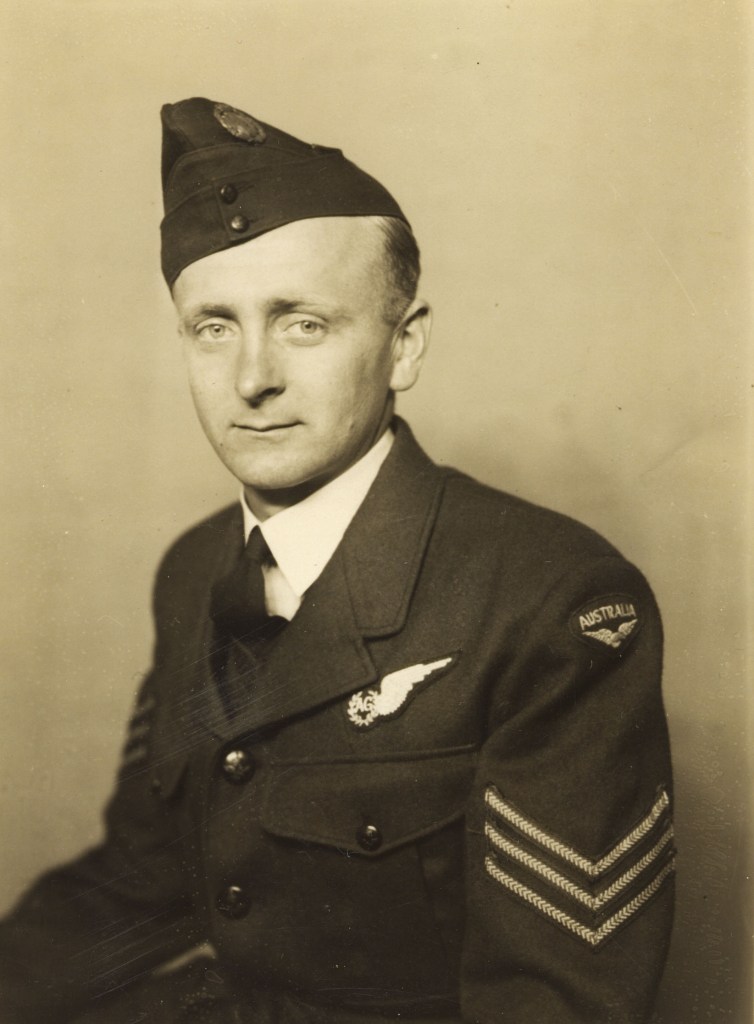
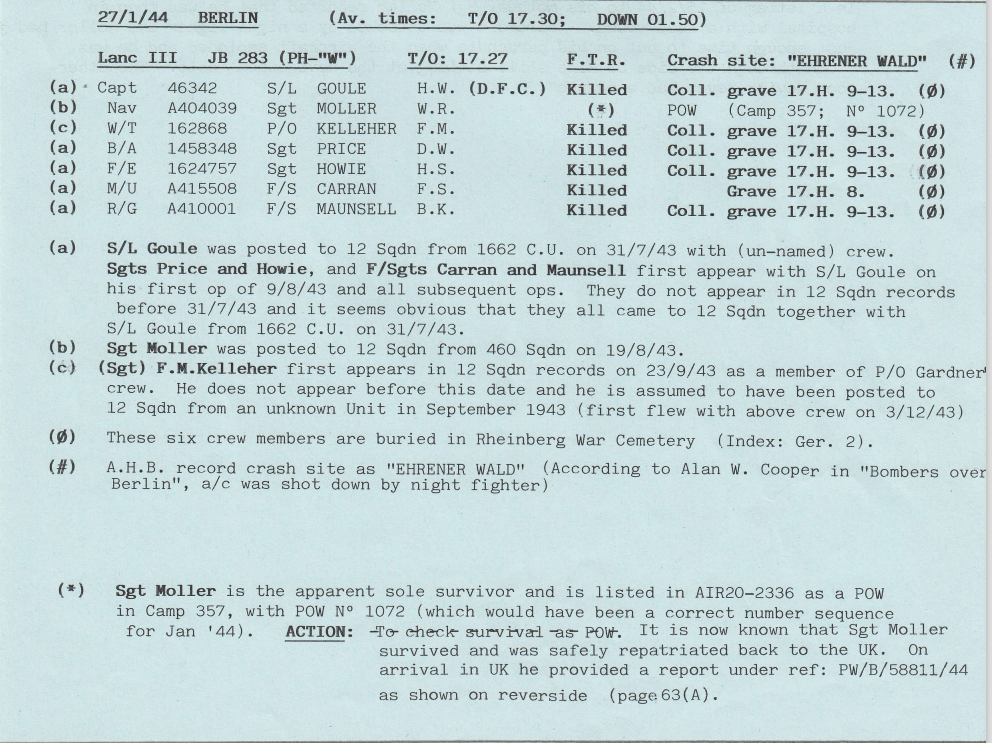
There were 2 attacks carried out by Wickenby squadrons this week, to Magdeburg and Berlin: 1 aircraft crashed on take-off, with no casualties, and 4 aircraft were lost on the Berlin operation, with 12 aircrew being killed, 12 becoming POW’s and 4 evading capture – some accounts of these airmen, given to Military Intelligence, are listed below in the Station Diary and emphasize the courage and ingenuity of civilians in the occupied countries.
The attack on Magdeburg was the first one on that target, but was a failure, mainly due to strong winds and some premature bombing by Main Force aircraft, which made it difficult for the Pathfinders to identify and mark the target. One RAF POW in hospital in Magdeburg at the time reported only “bangs far away”. 8.8% of the force were lost, Halifaxes suffering 15.6% losses.
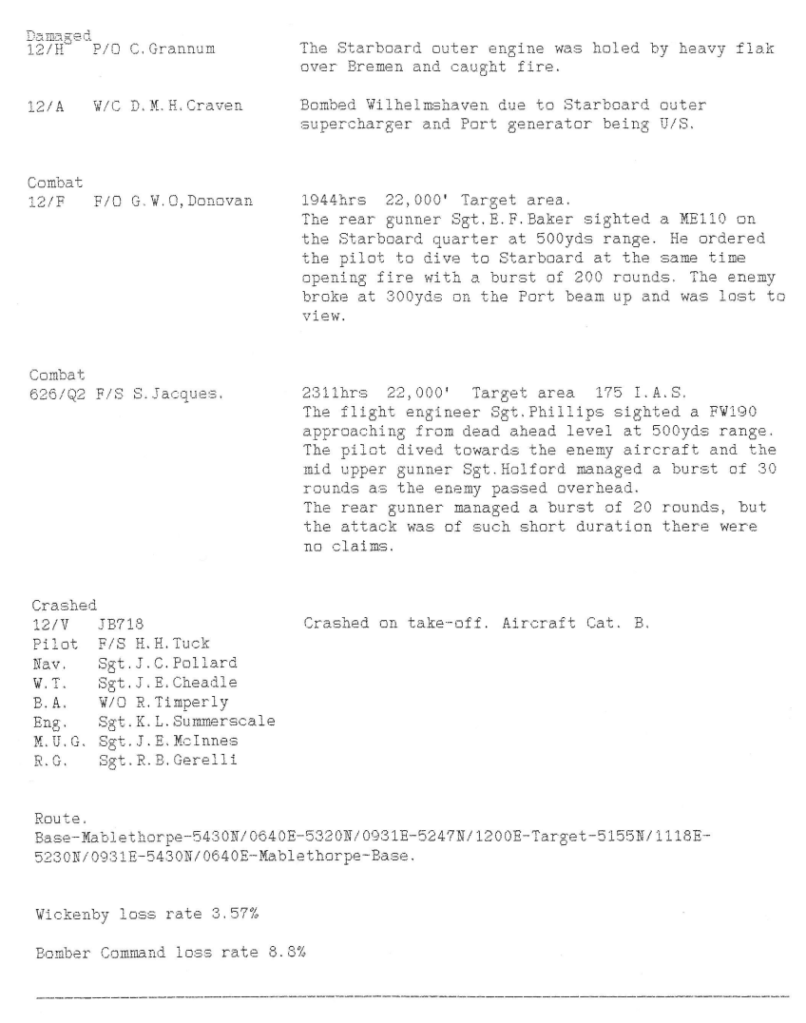
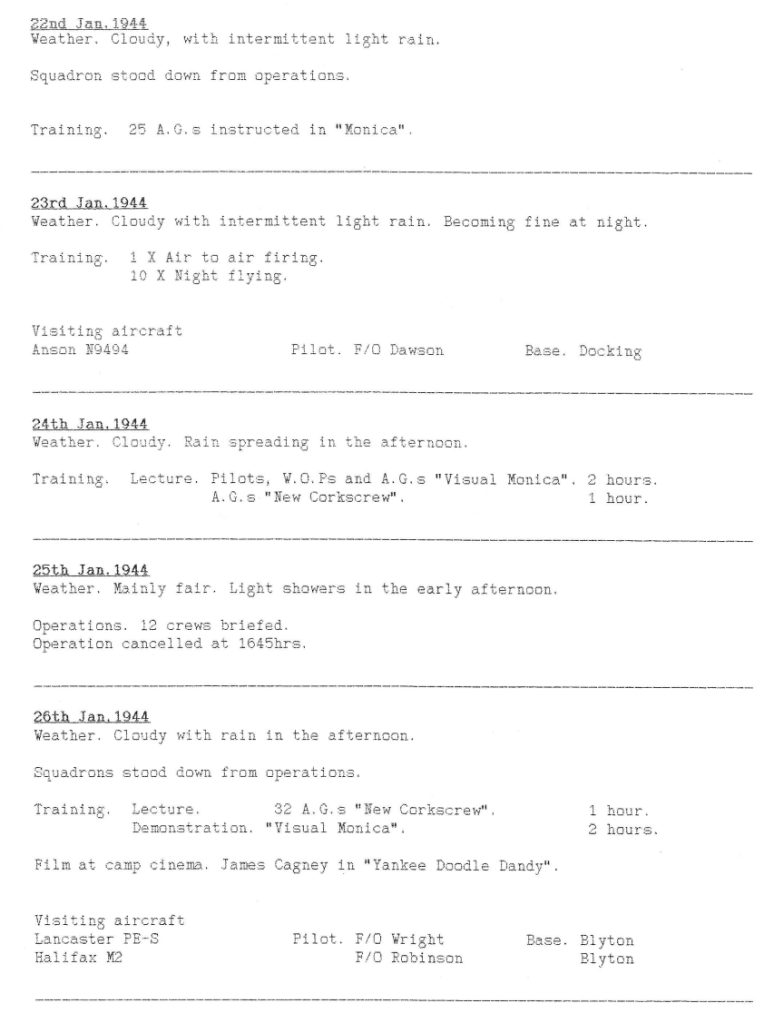

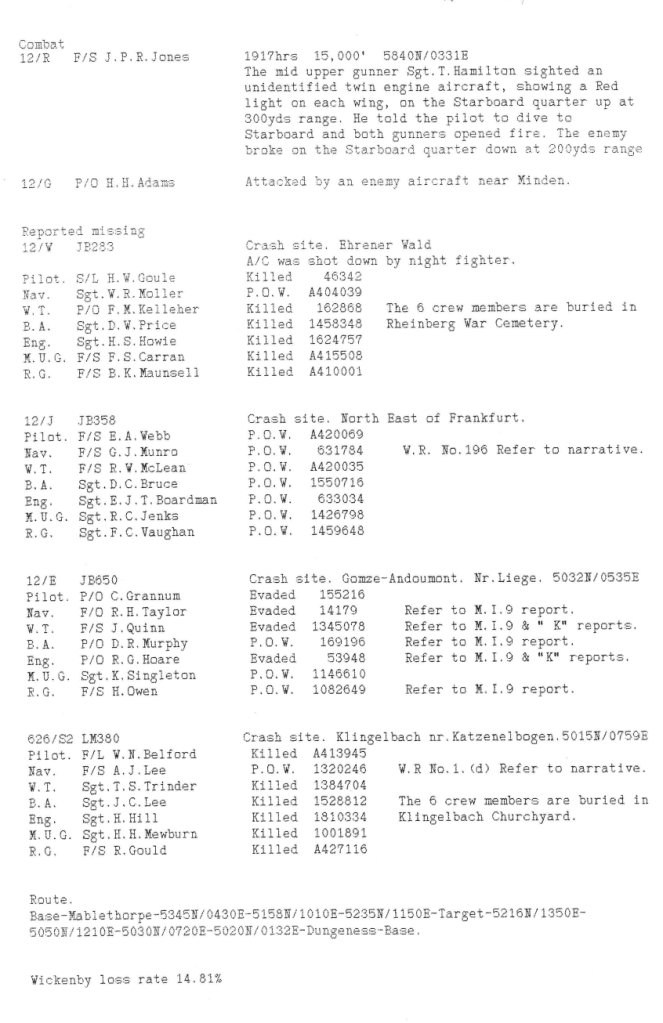

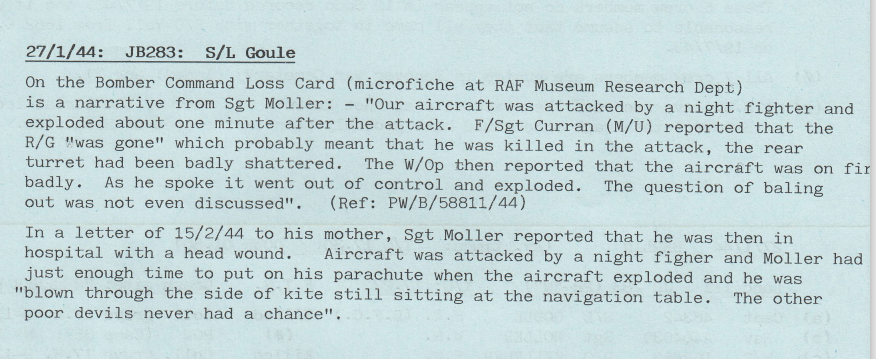
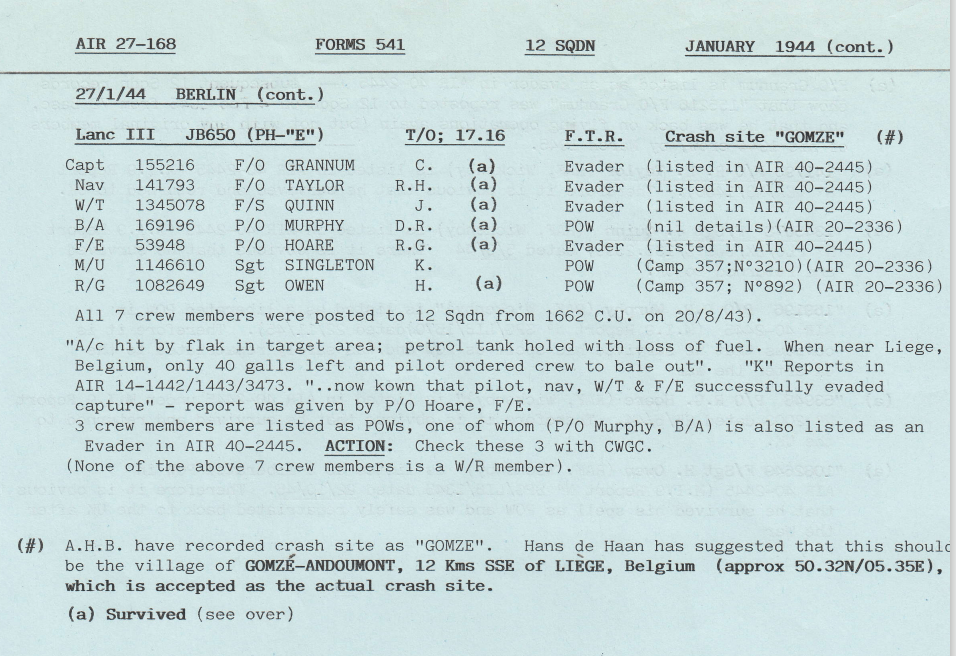
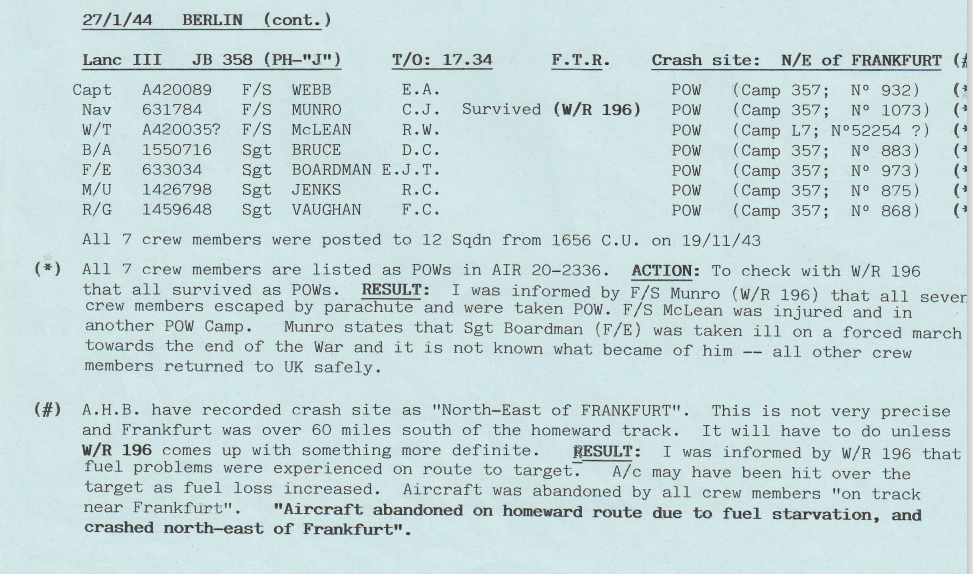
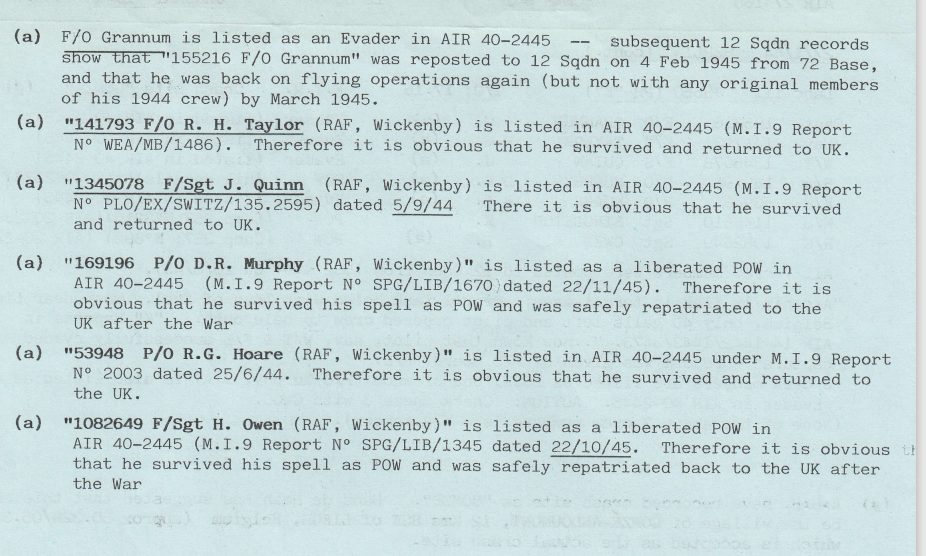
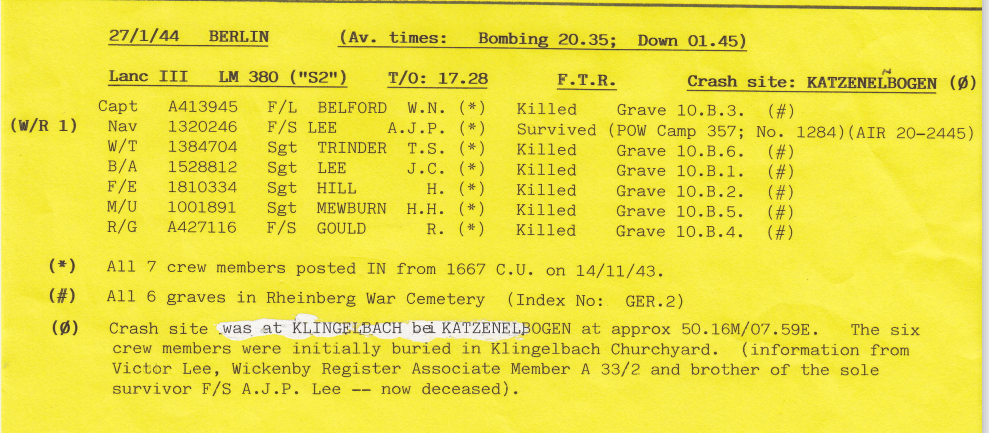
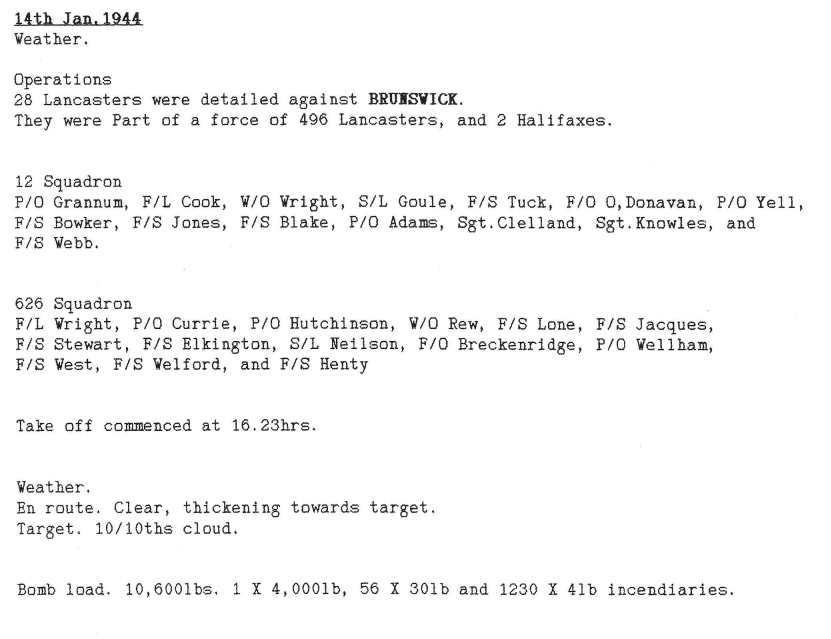
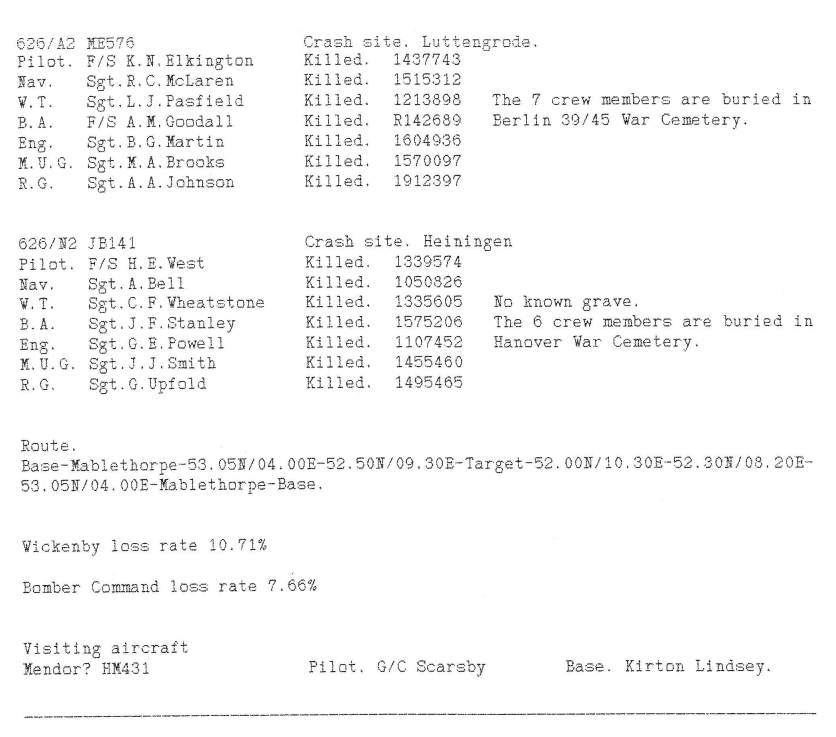
Both squadrons took part in 2 operations this week, to Brunswick and Berlin – 3 aircraft and all their crews were lost on the Brunswick attack. 38 Lancasters were lost on the Brunswick raid, 7.6% of the force, which was higher than normal, with the German controllers successfully deploying fighters all the way in and out. Neither attack was successful, unfortunately, with thick cloud cover over Berlin (a not unusual occurrence) and 11 Pathfinders were lost attacking Brunswick.


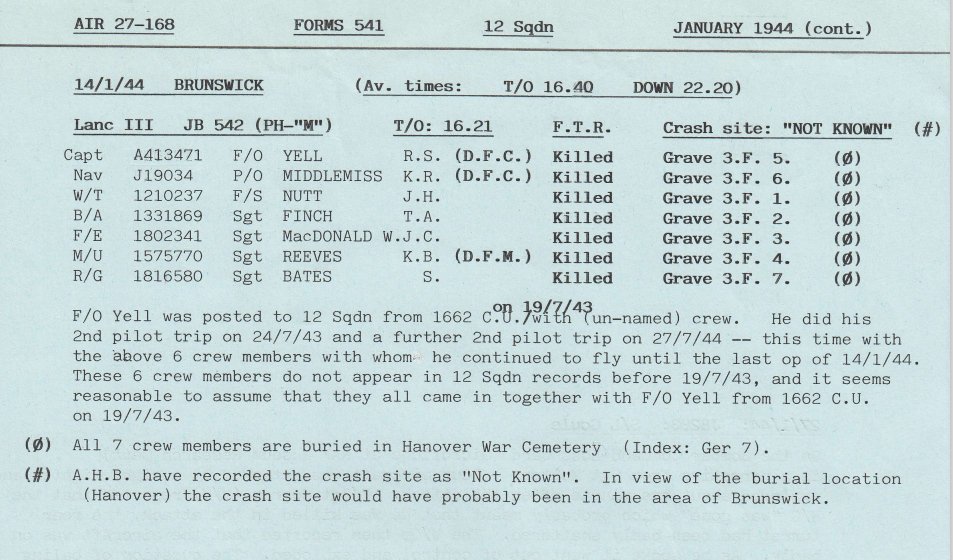
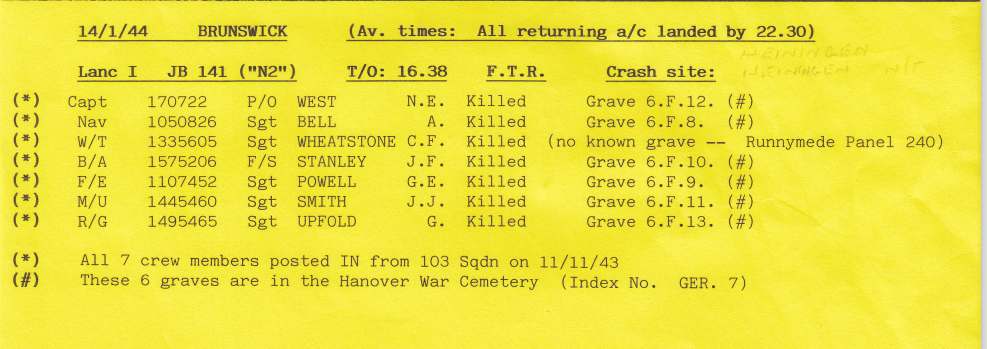
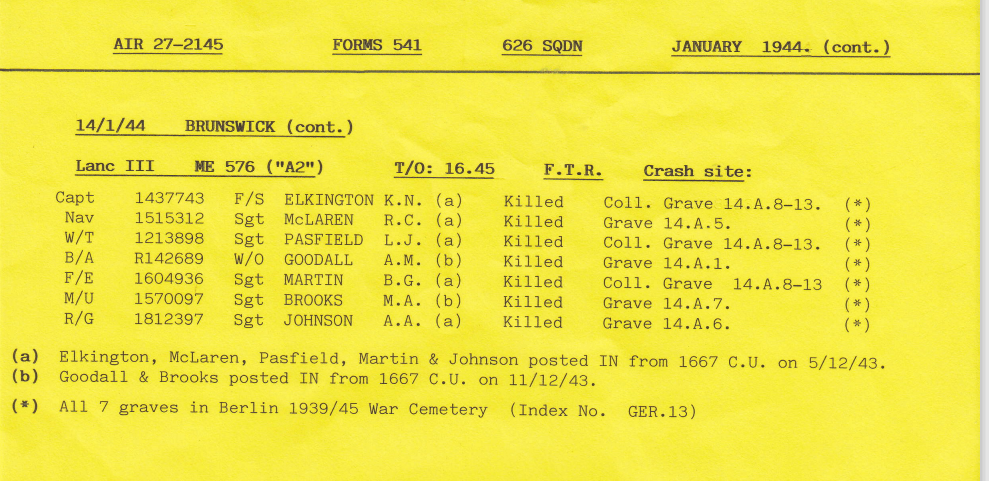
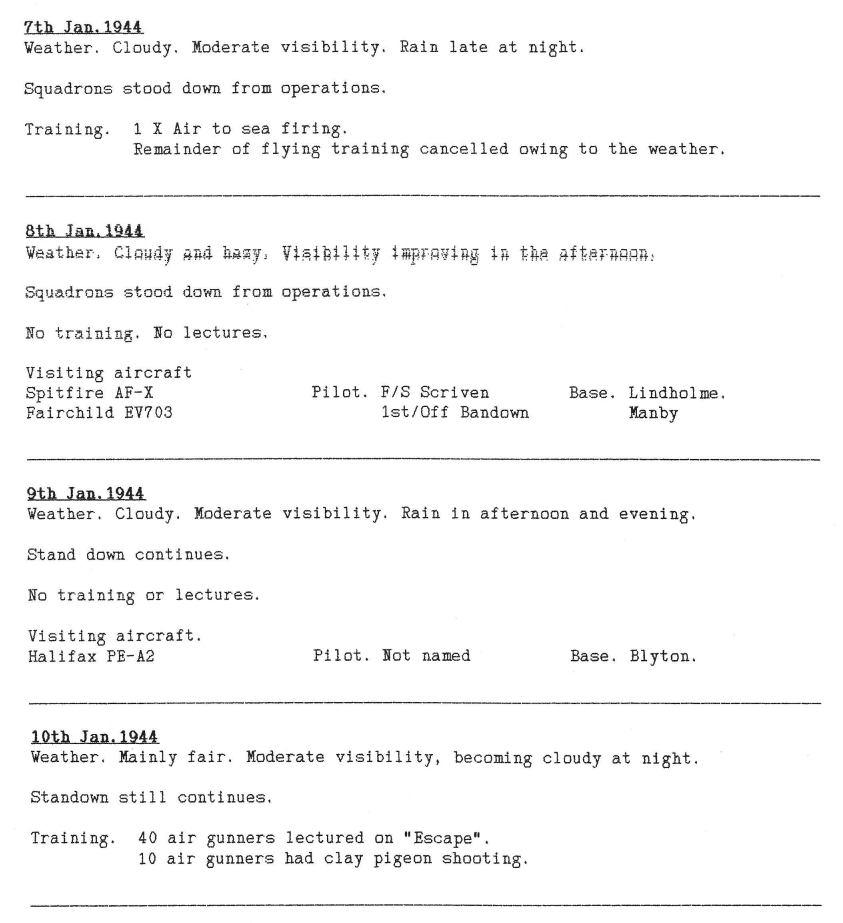
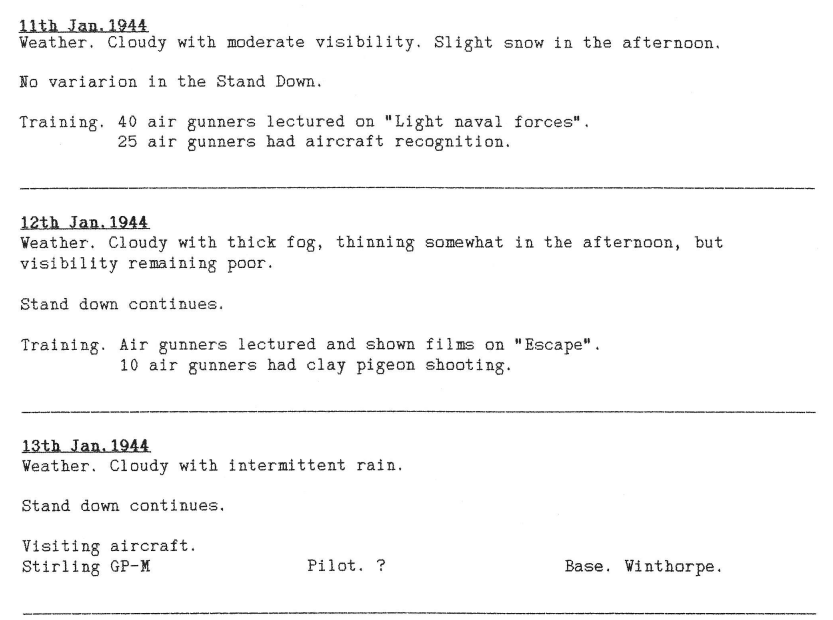
A quiet week for Wickenby crews, with no missions flown. An interesting comment in the Station Diary below about air gunners having clay pigeon shooting practice – this was actually part of their air gunner training as, as with shooting aircraft, you have to lead the moving target in order to hit it. Many air gunners got to know local farmers, who were more than happy to lend them shotguns because it meant plenty of rabbits and wild fowl for the table and, of course, extra rations for the crews.
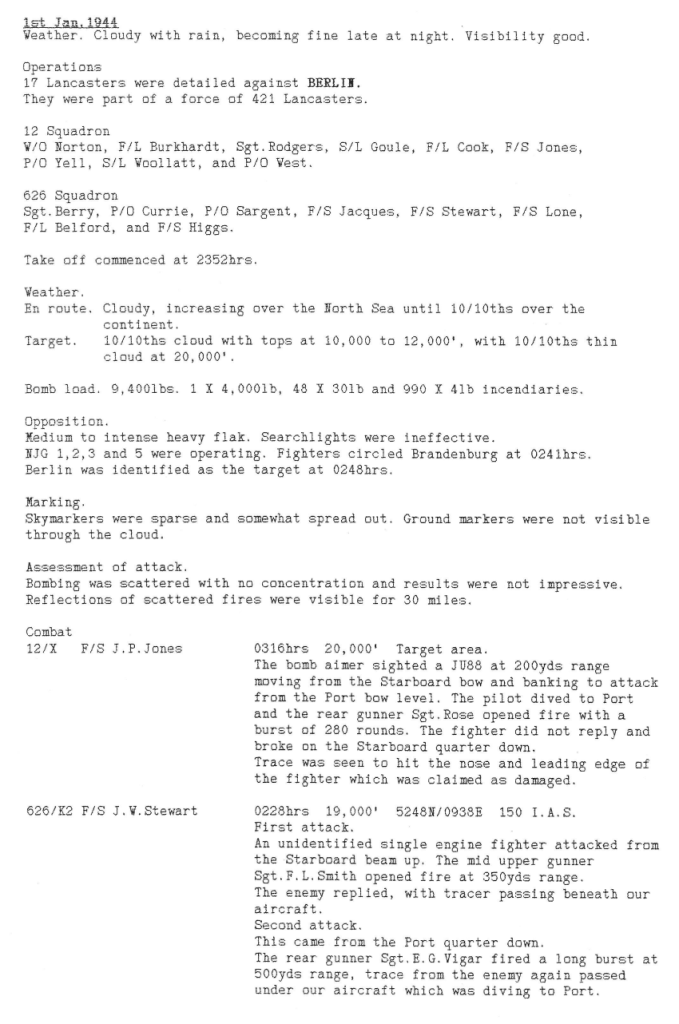
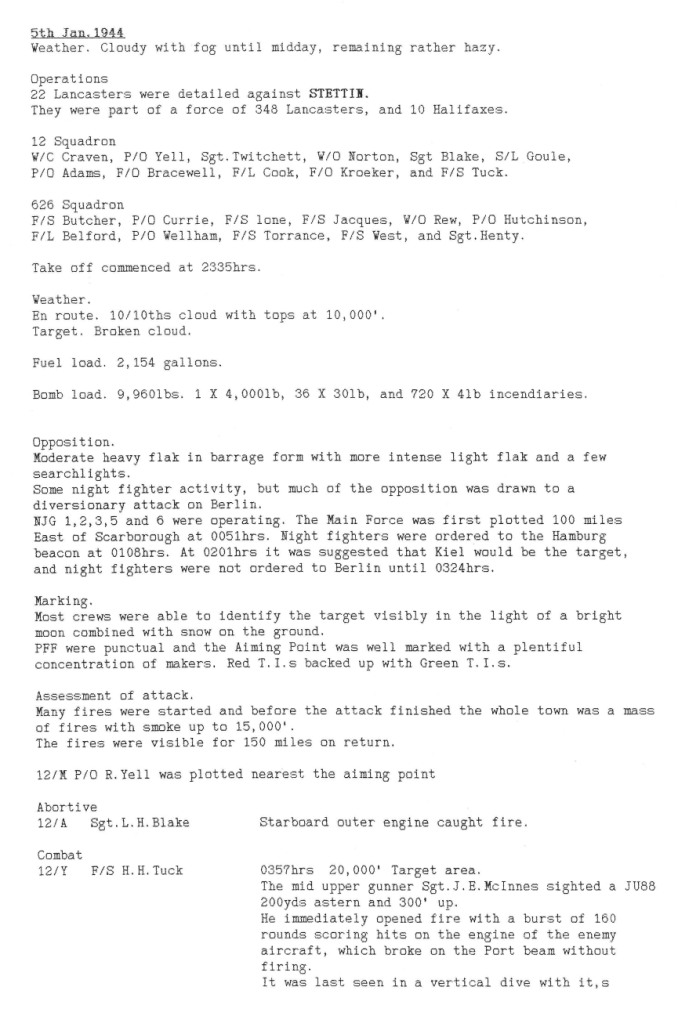
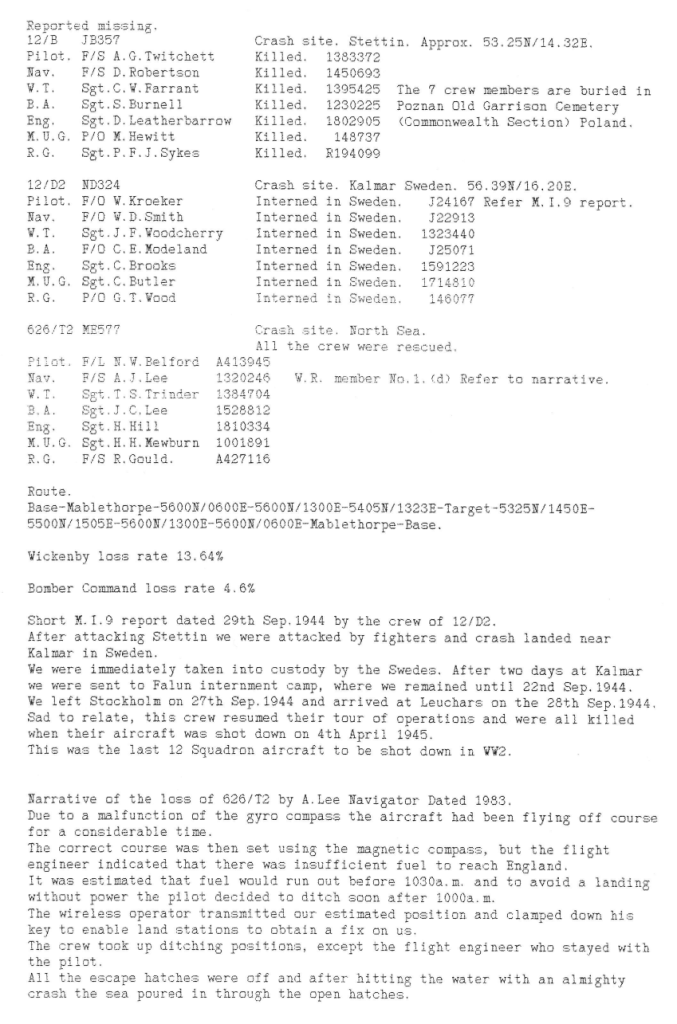
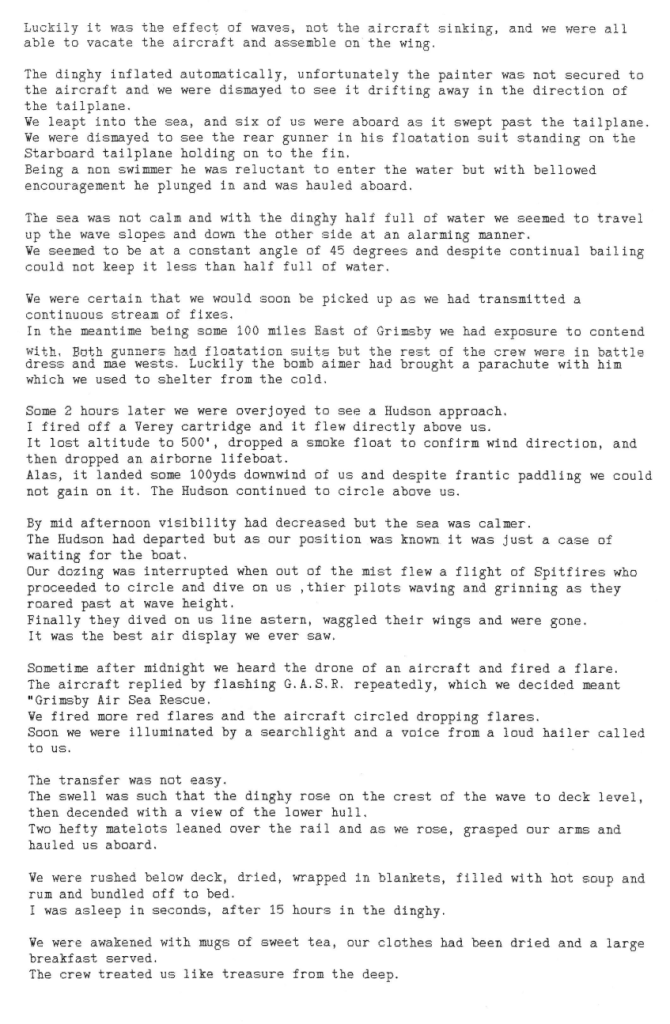
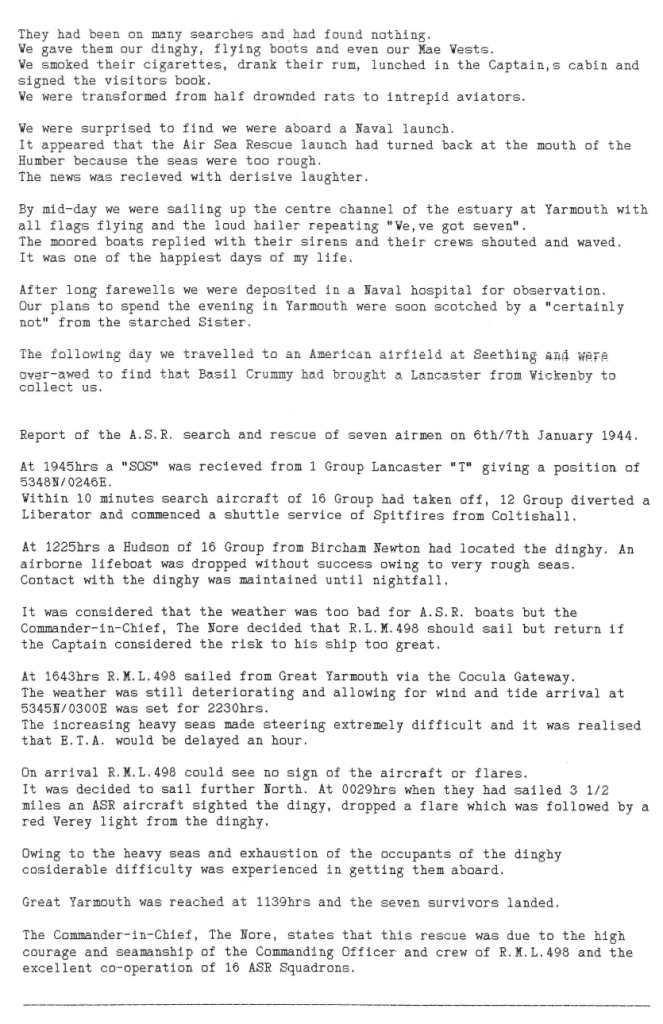
A busy week for the two Wickenby squadrons with successive nights attacking Berlin and a long range operation to Stettin, in what is now Poland. 5 aircraft were lost, 13 aircrew killed, 7 becoming POW’s and one entire crew interned in Sweden having crash landed on their way back from the attack on Stettin. One aircraft ditched in the North Sea off Grimsby and the narrative in the Station Diary gives a very descriptive account of another of the many dangers faced by Bomber Command crews.
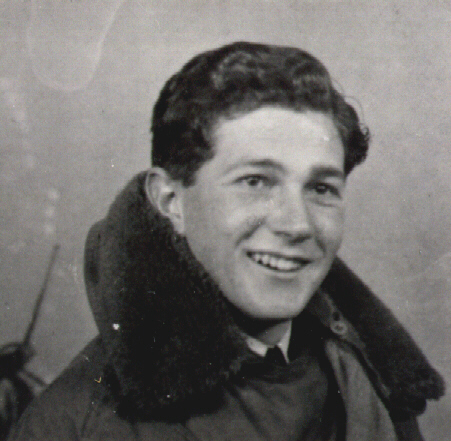
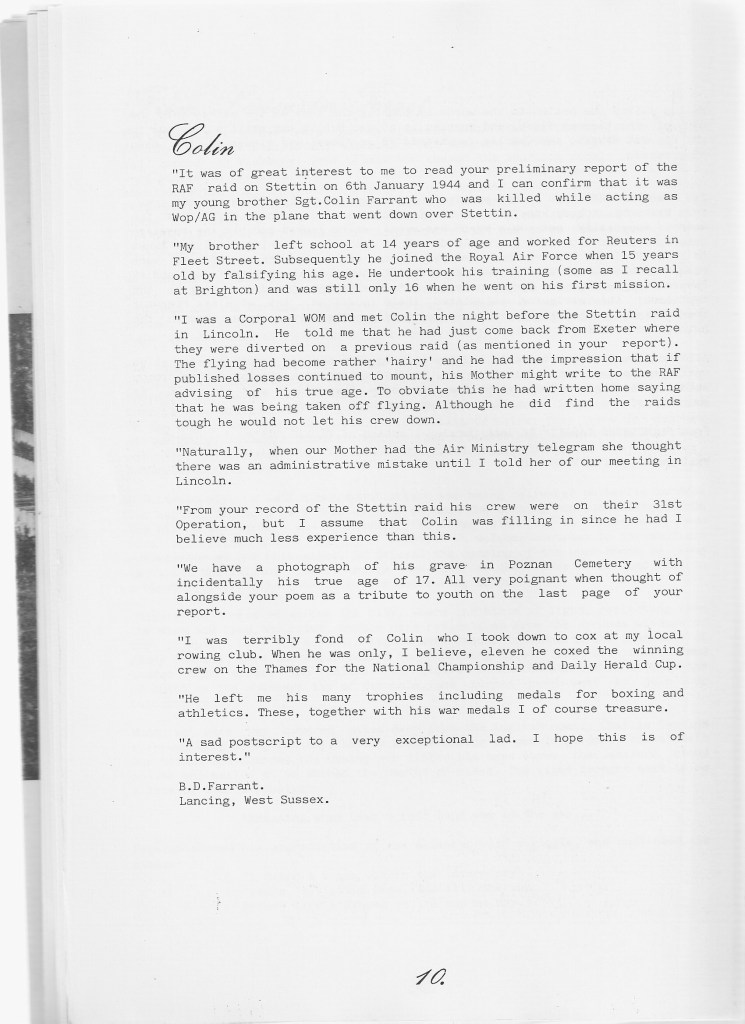
There is also a very moving article from Colin Farrant’s brother about his death aged only 17 during the attack on Stettin – lest we forget.


 RAF Wickenby - This week in history - World War 2