Overview
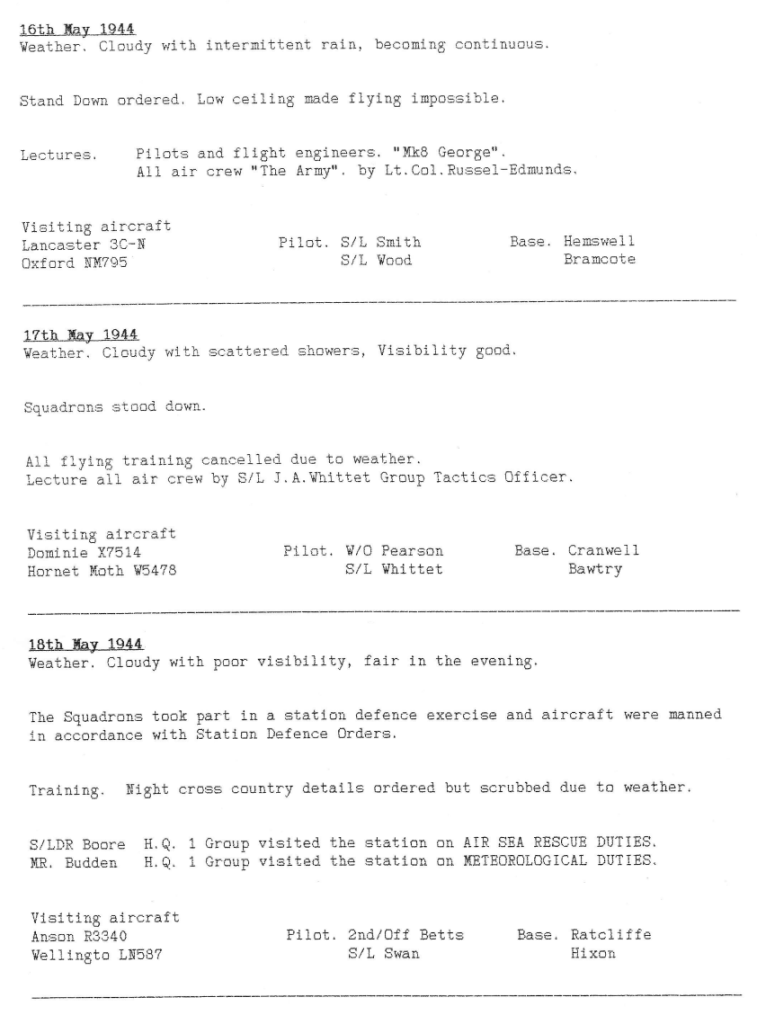
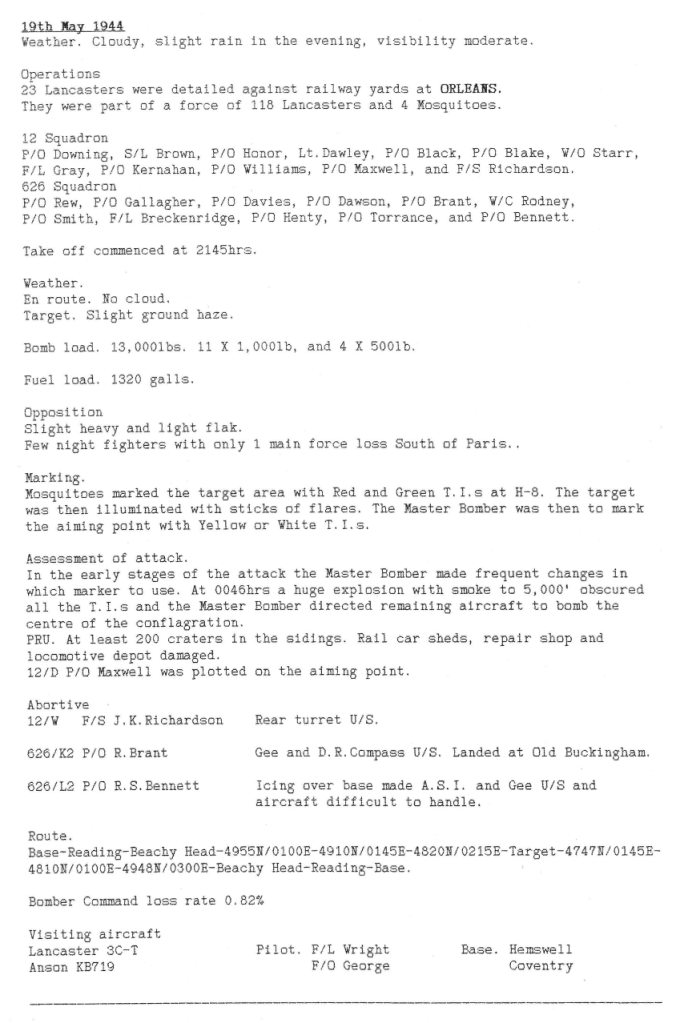
A quiet week for RAF Wickenby squadrons, mostly due to the inclement weather, with only one operation flow, to the rail yards at Orleans, with no aircraft lost or casualties.

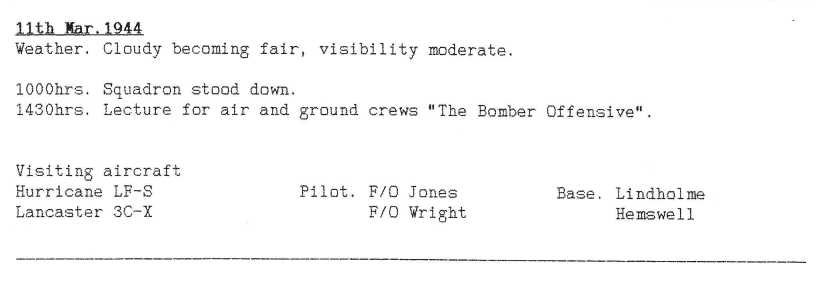
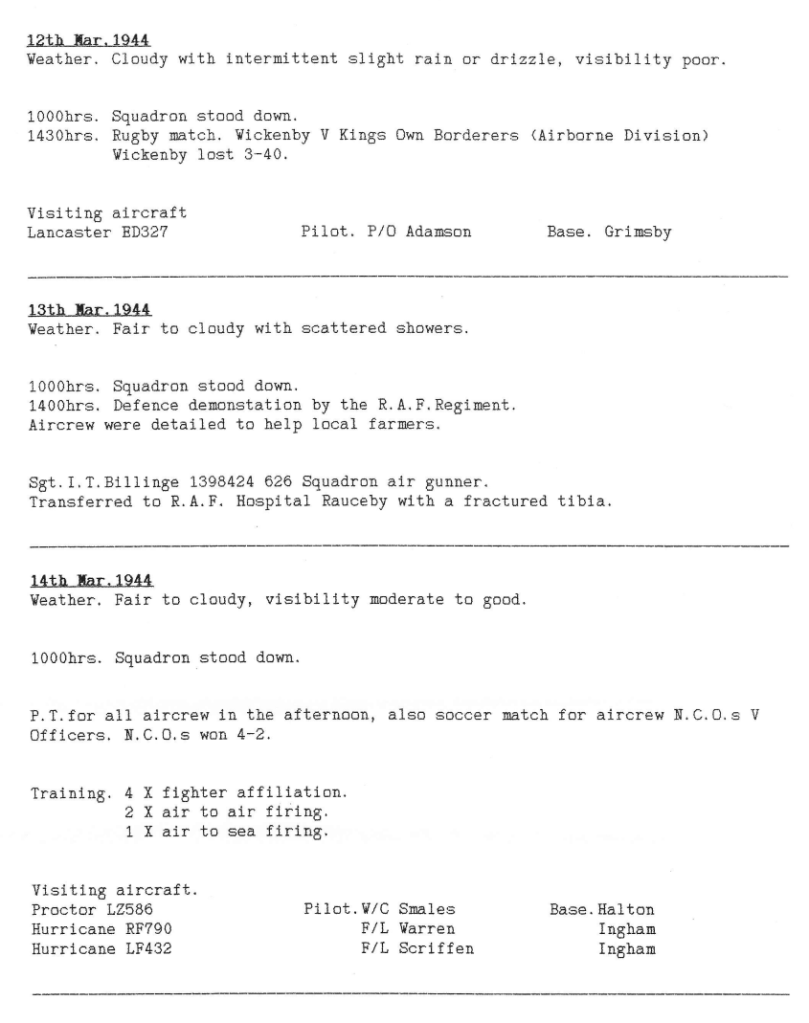
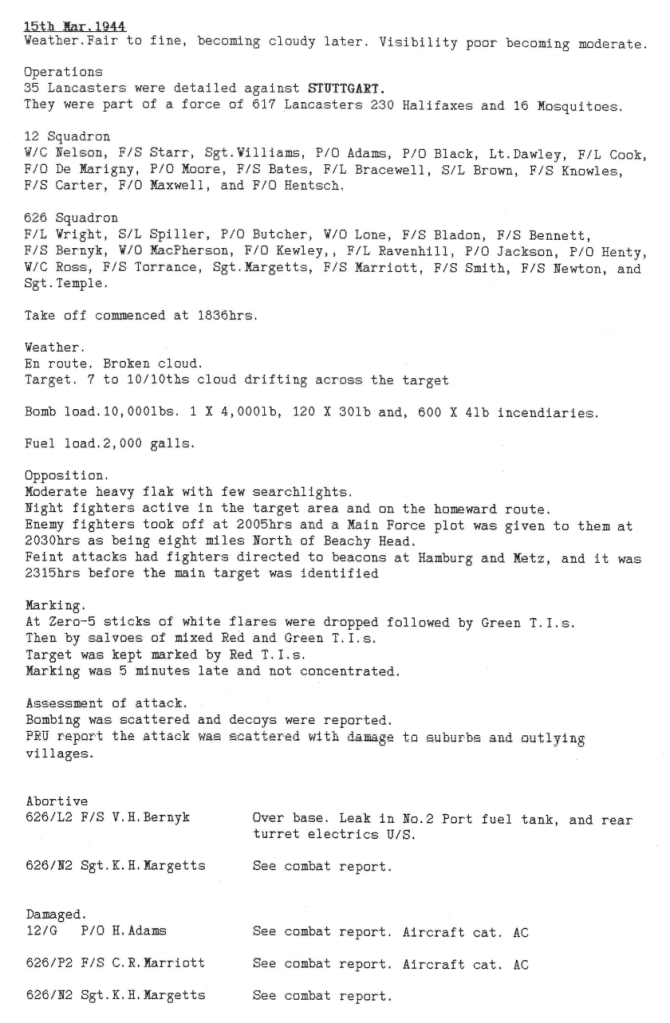
Extract from Station Diary


RAF Wickenby – This week in history – World War 2
RAF Wickenby history week by week during World War 2
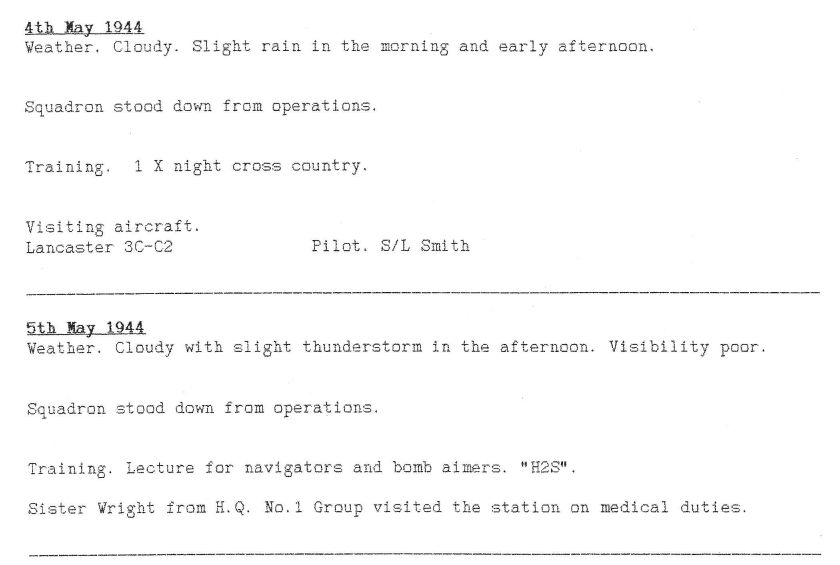
A quiet week for RAF Wickenby squadrons, mostly due to the inclement weather, with only one operation flow, to the rail yards at Orleans, with no aircraft lost or casualties.
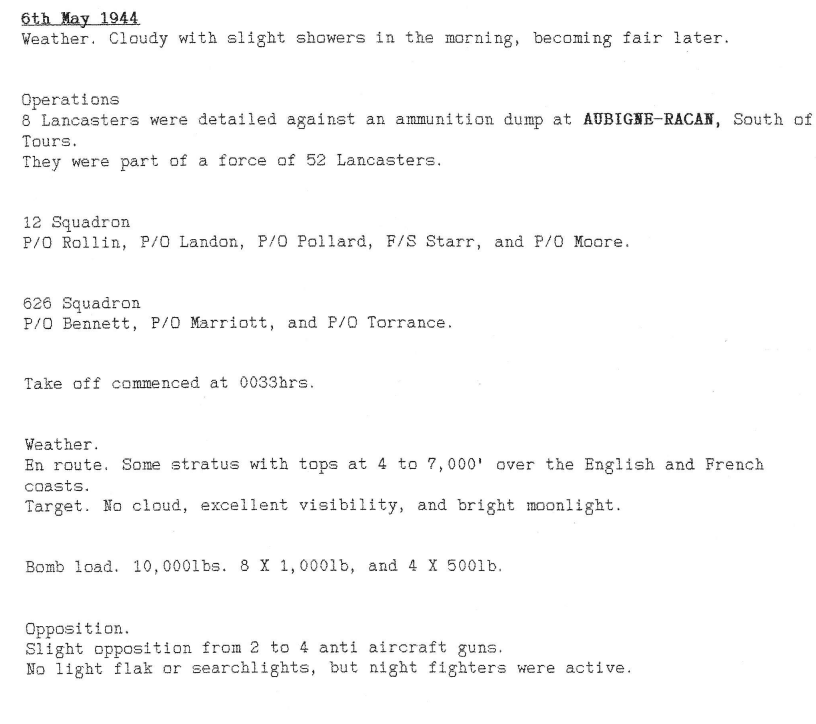
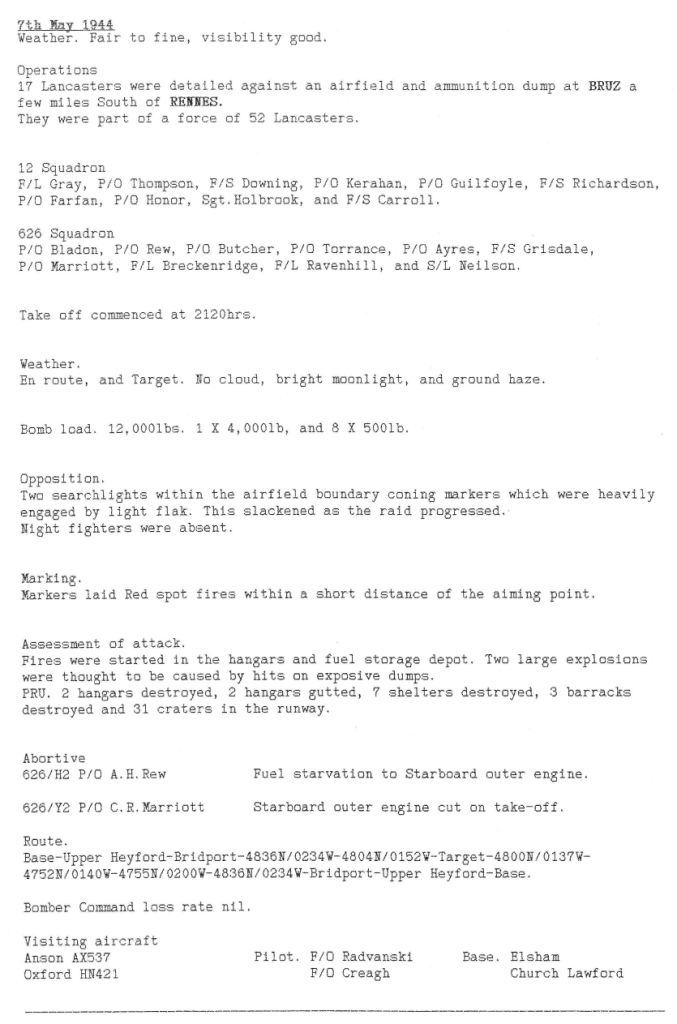
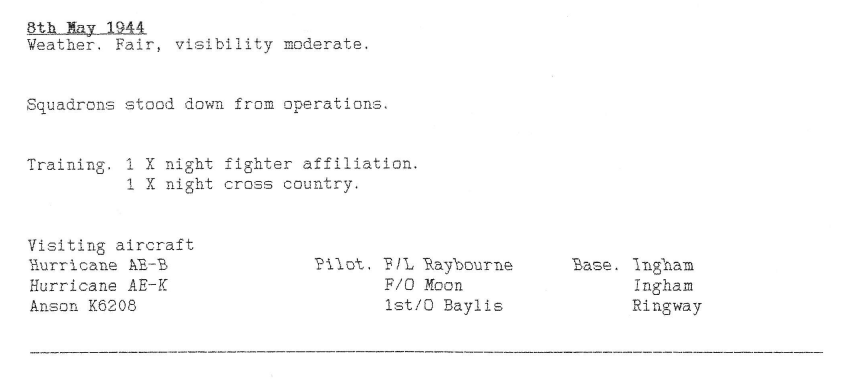
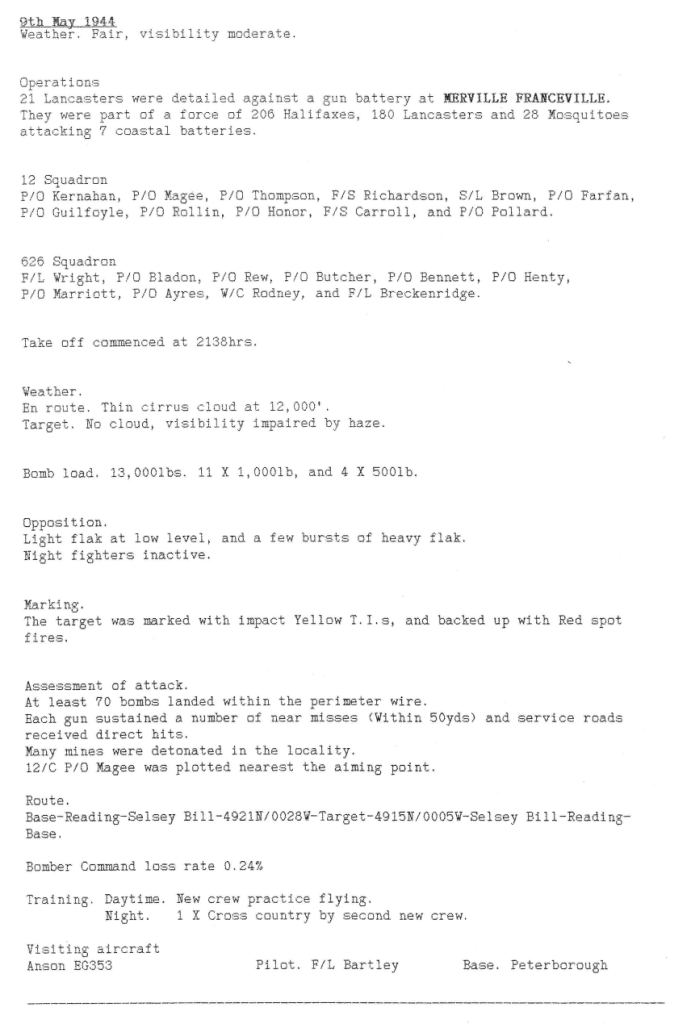
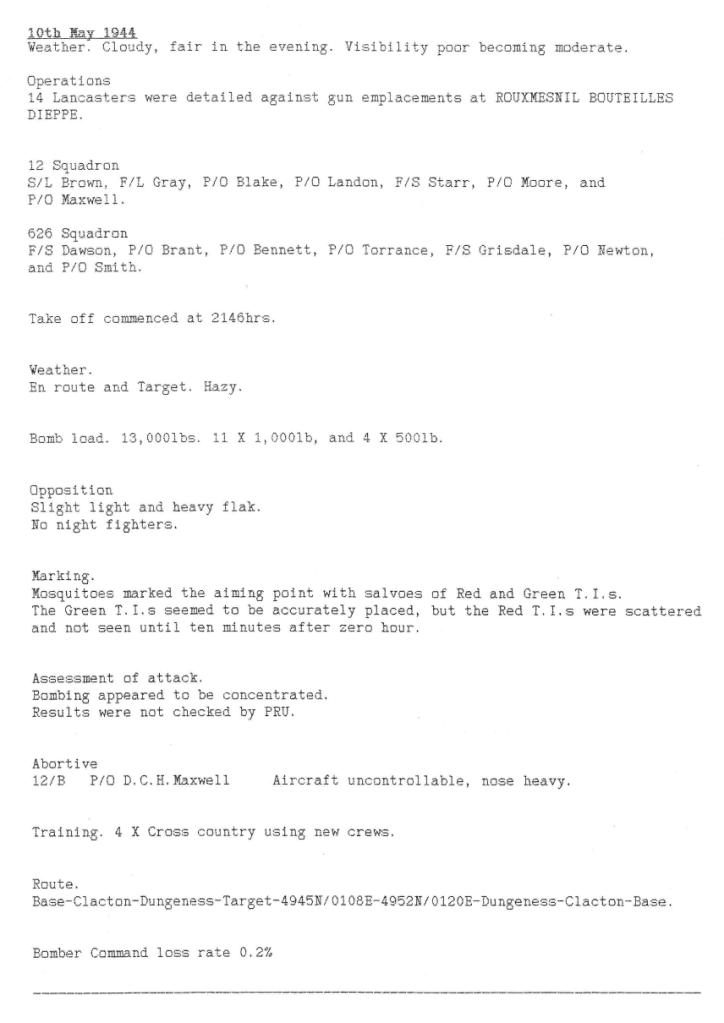
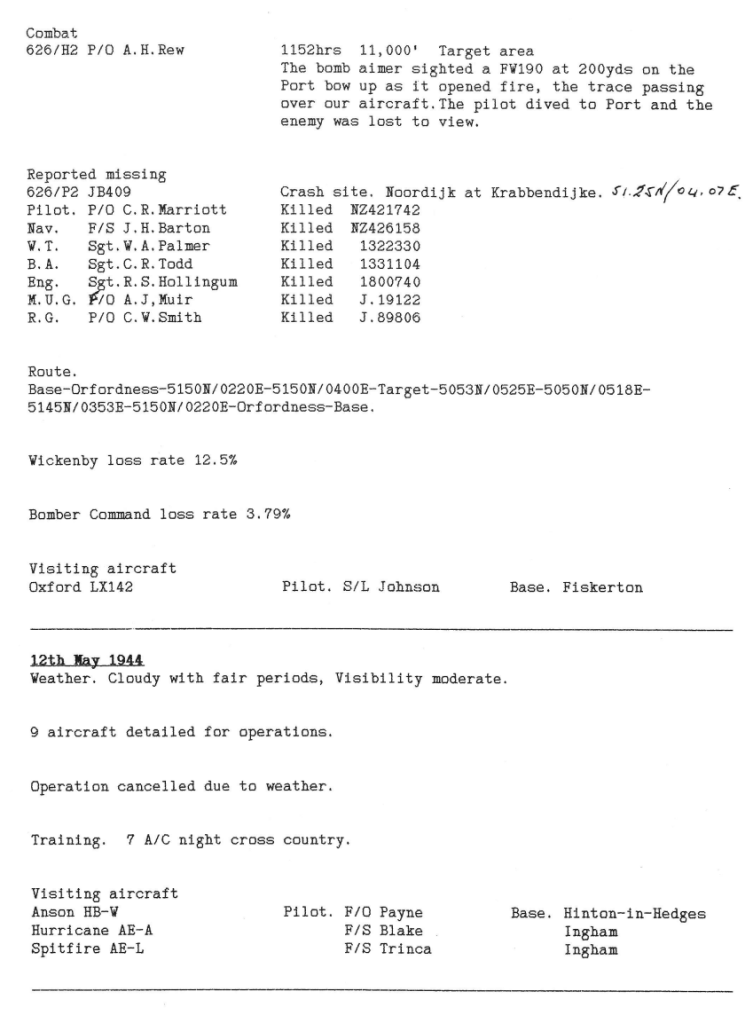
RAF Wickenby aircraft continued to attack targets in France and Belgium as part of the build up to the invasion of Europe on D-Day, including the bombing of the famous Merville battery that had the ability to shell the landings at Sword Beach. One aircraft was lost with all its crew.


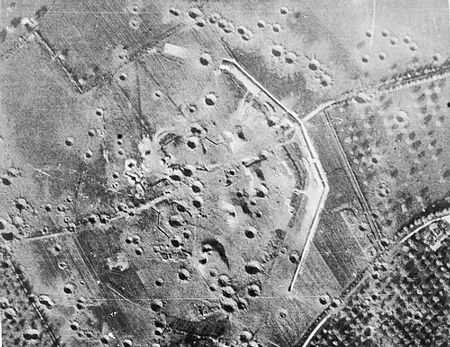

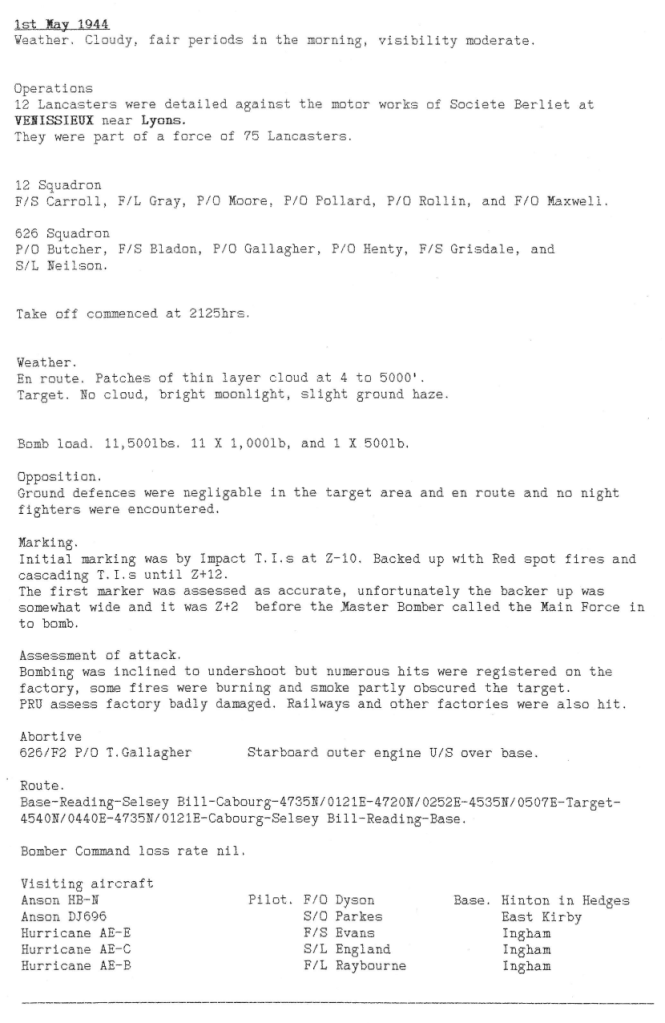
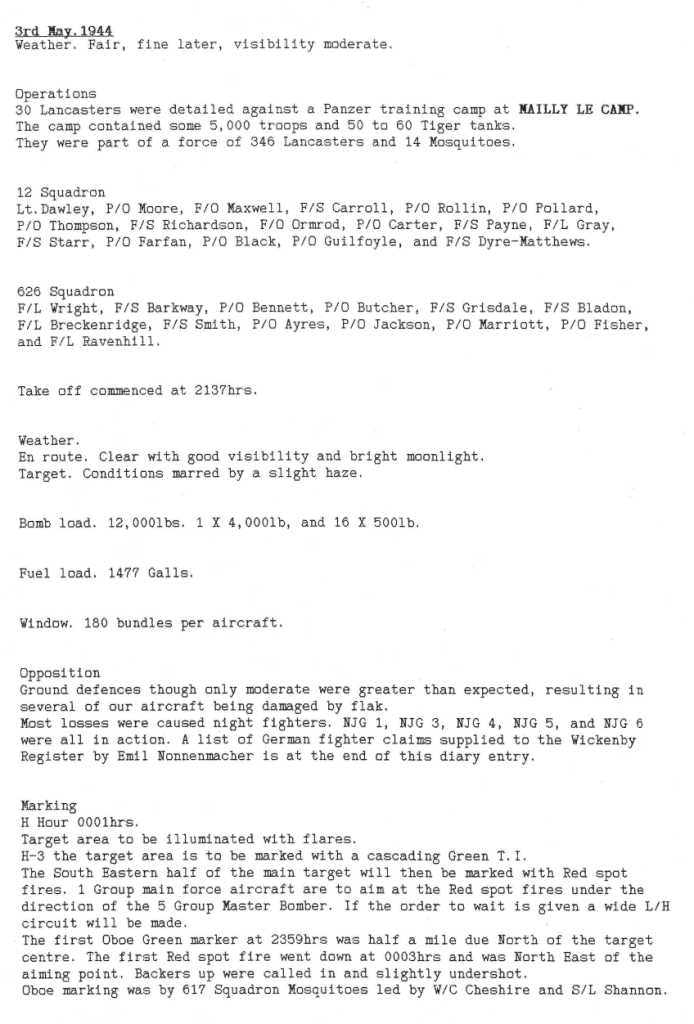
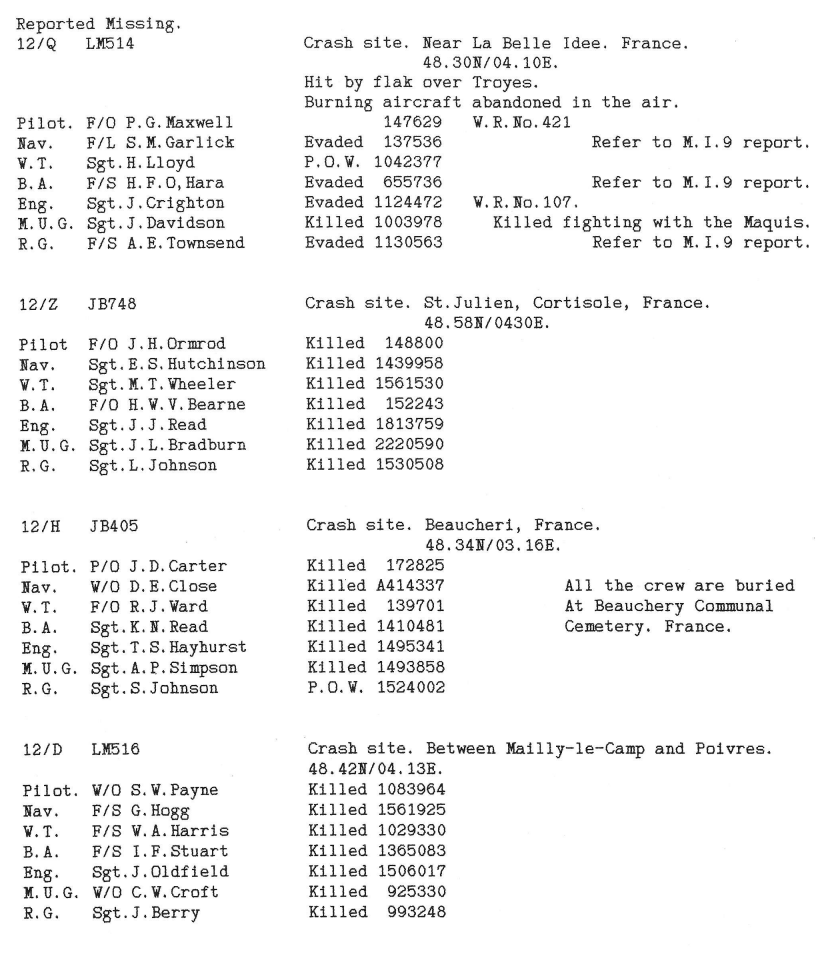
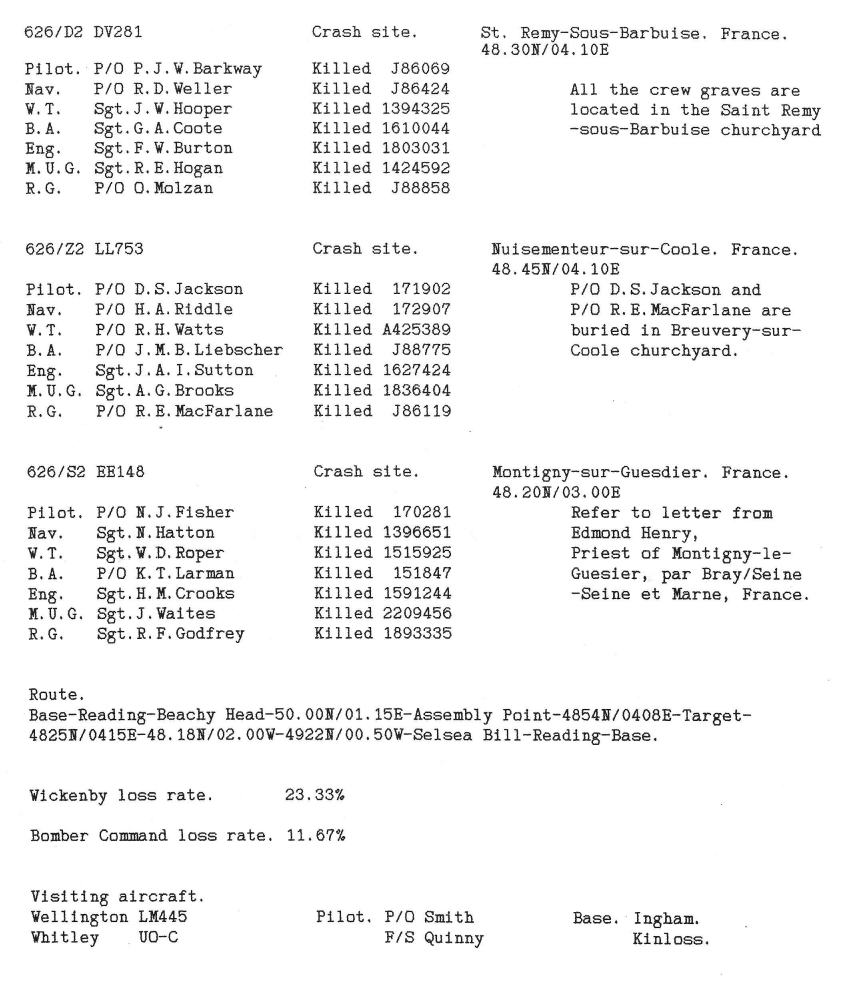
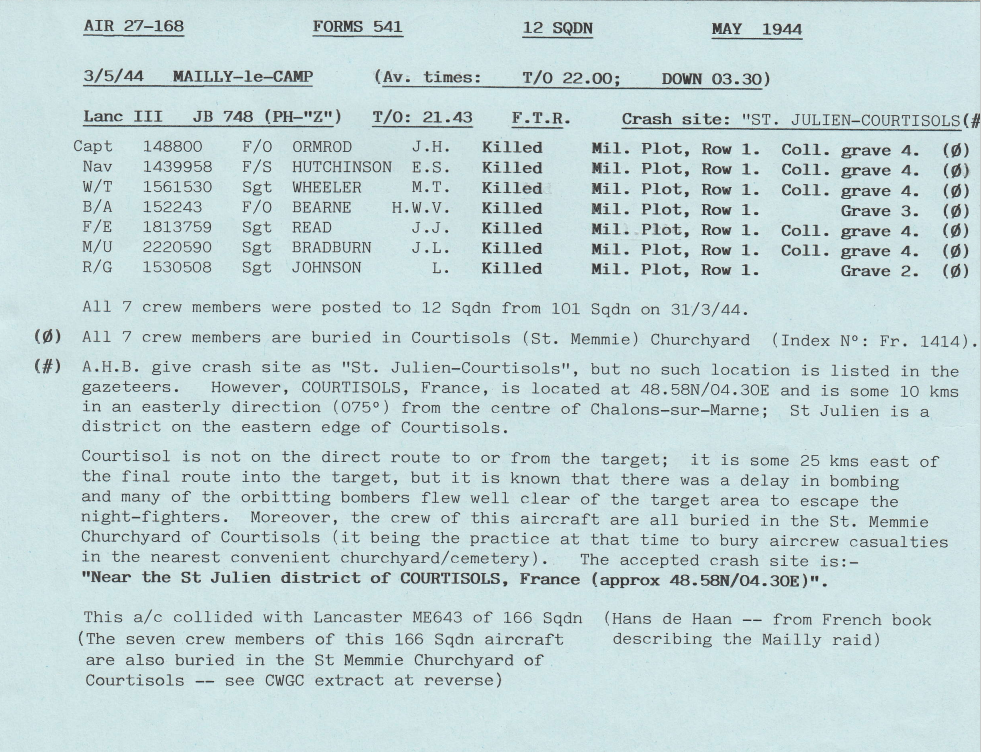
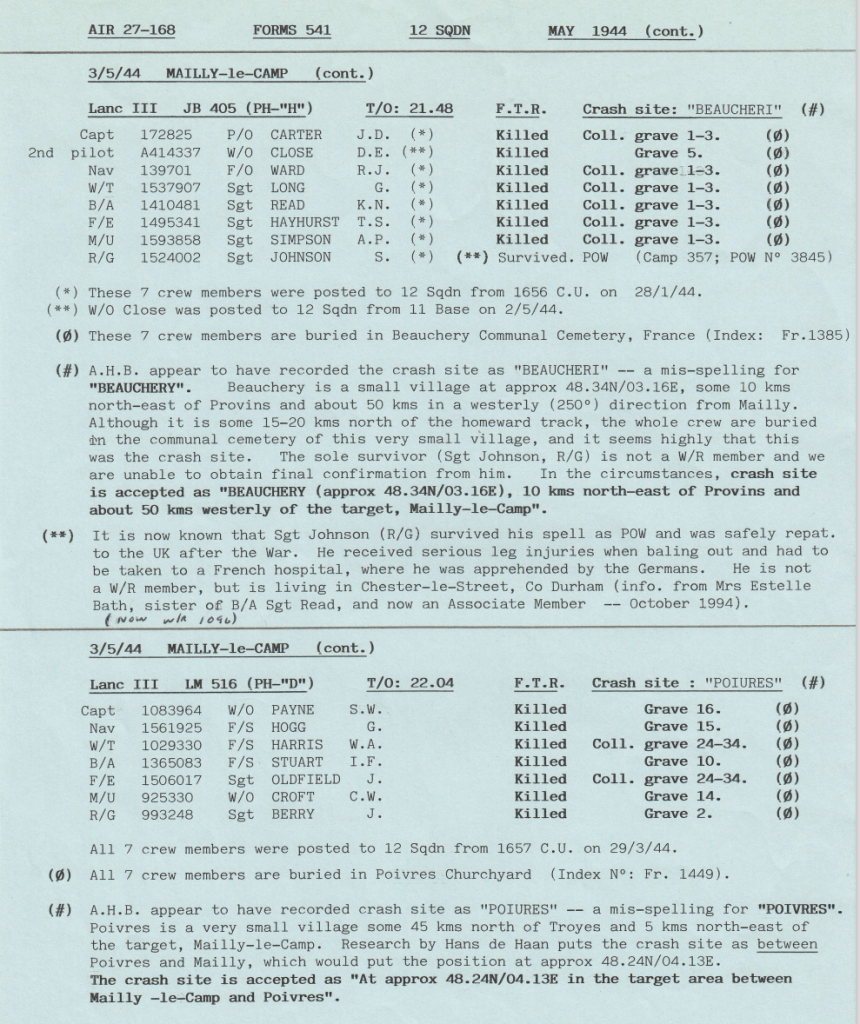
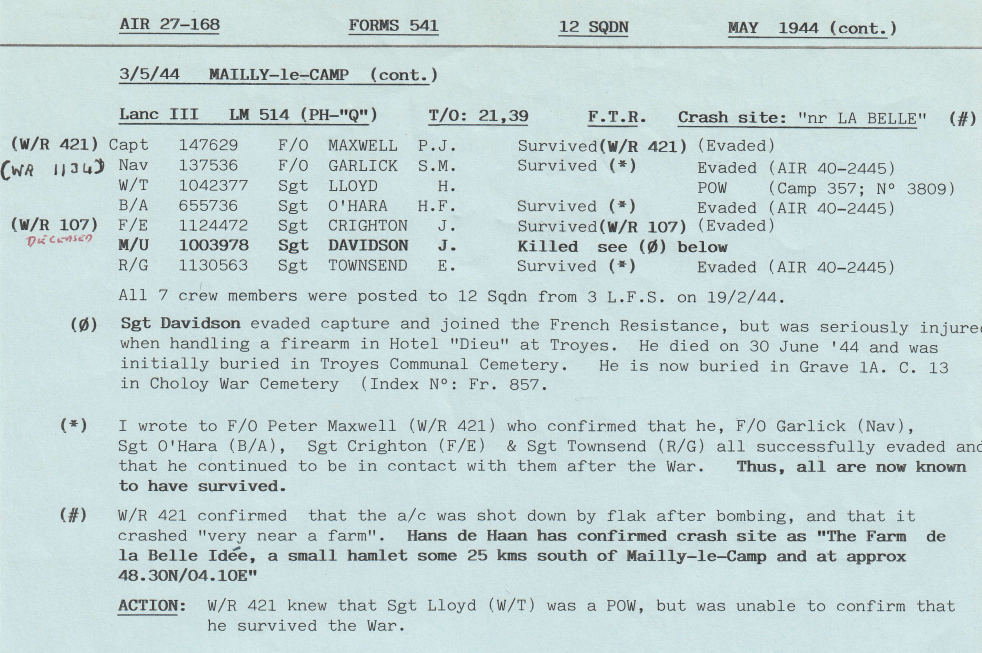
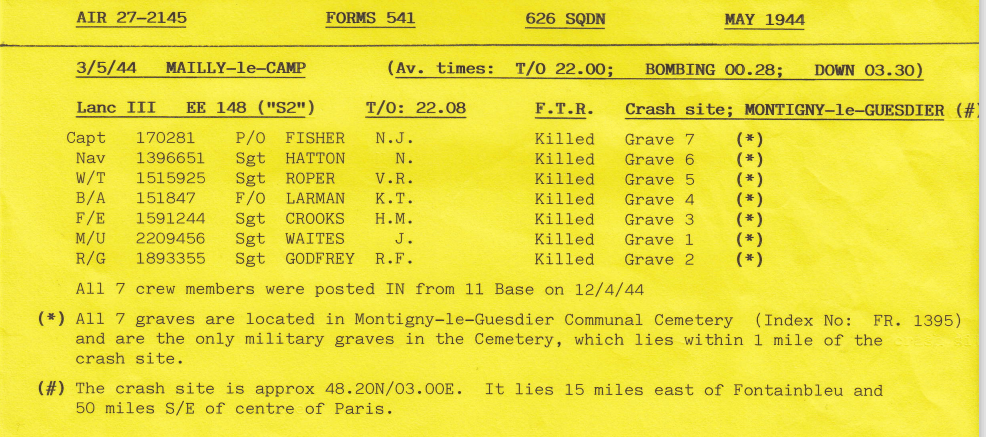
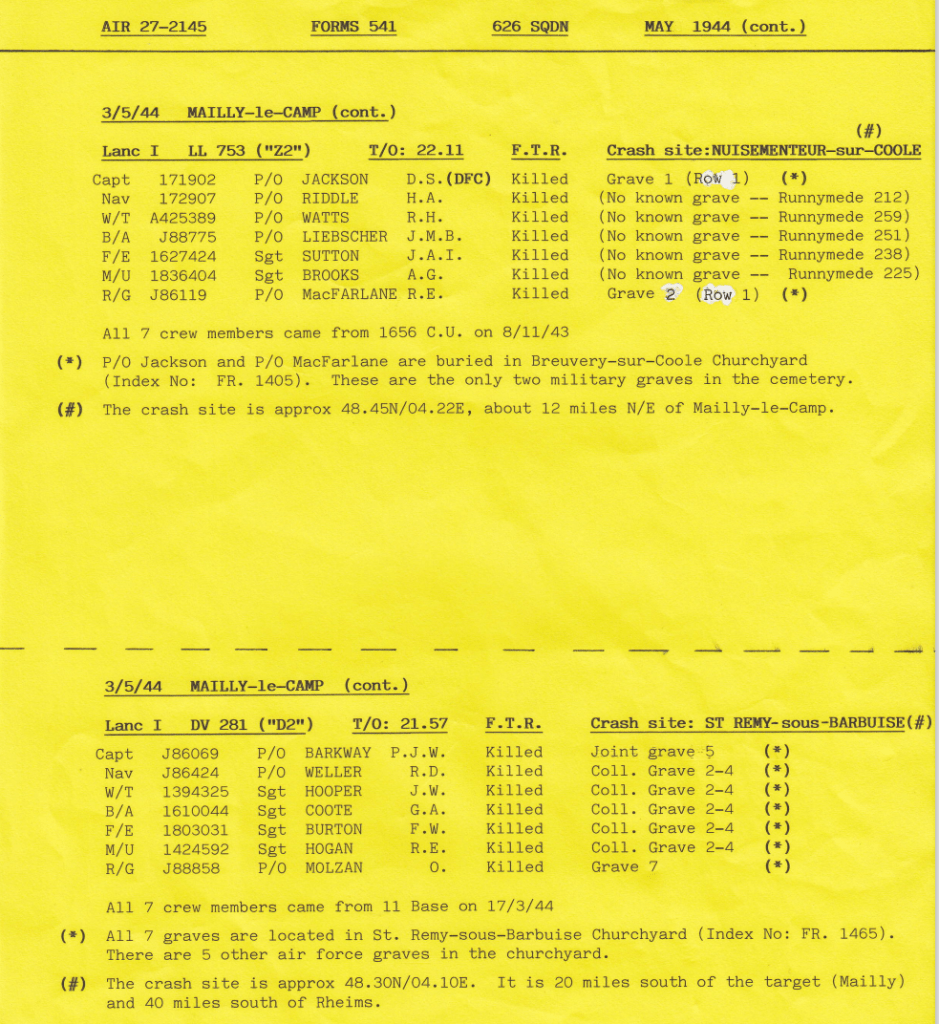
RAF Wickenby squadrons continued to support the build up to D-Day by attacking targets in France, including the infamous operation to Mailly-le-Camp, the base of 21 Panzer Division. This was the worst night of the war for RAF Wickenby, as far as losses were concerned, with 7 aircraft lost, 41 aircrew killed, 6 evading capture and 2 becoming POW’s. This was a 23% loss rate.
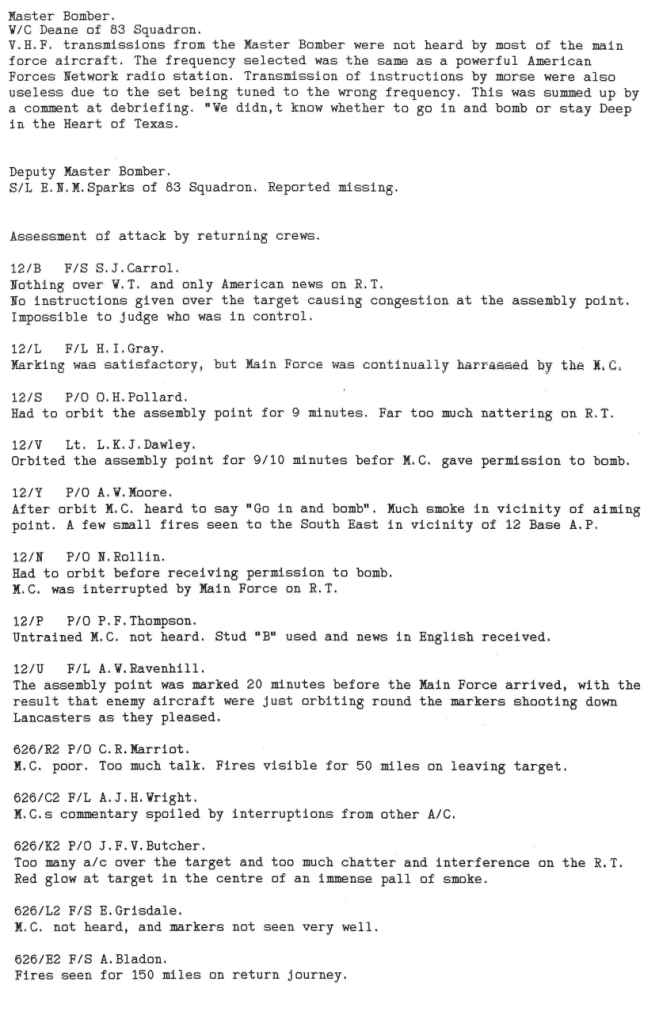
The control of this raid in the target area failed to operate according to plan. The “Marker Leader”, Wg Cdr Leonard Cheshire, ordered the Main Force to bomb but the “Main Force Controller”, Wg Cdr L.C. Deane, could not transmit the order to do so because his VHF radio set was being drowned by an American Forces broadcast and his wireless transmitter was wrongly tuned. German fighters arrived during the delay and bomber casualties were heavy.
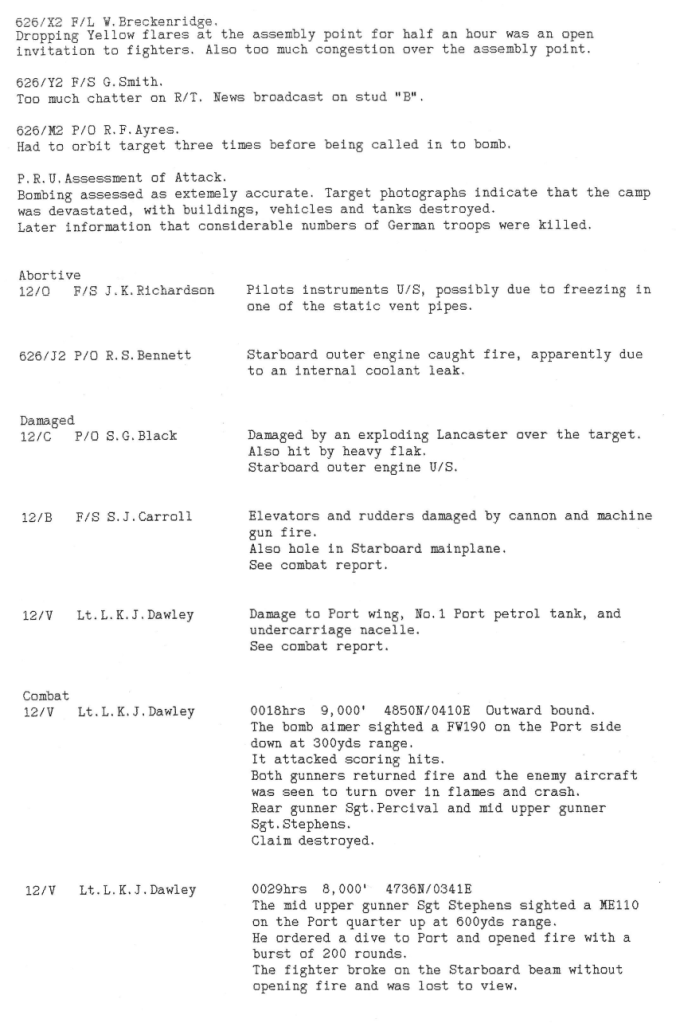
The main attack eventually started when the Deputy Controller, Sqn Ldr E.N.M. Sparks, took over. Following that, the attack was very successful, but of 346 Lancasters dispatched, 42 were shot down, many during the delay in receiving the order to attack, when aircraft were ordered to circle a marker, some for 10 minutes, which allowed time for the German night fighters to assemble.
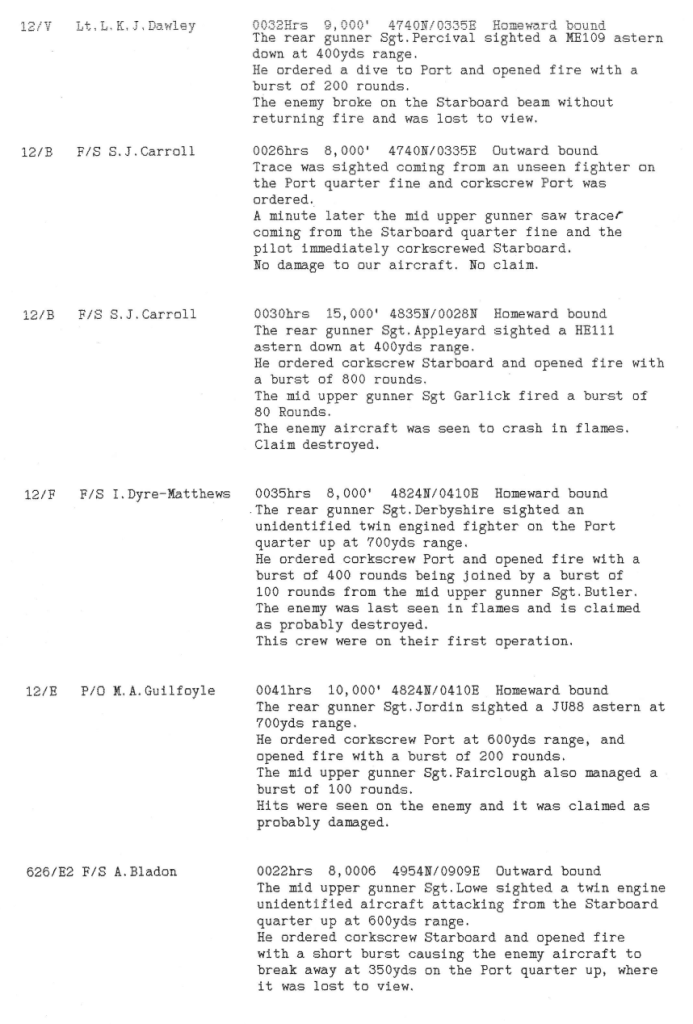
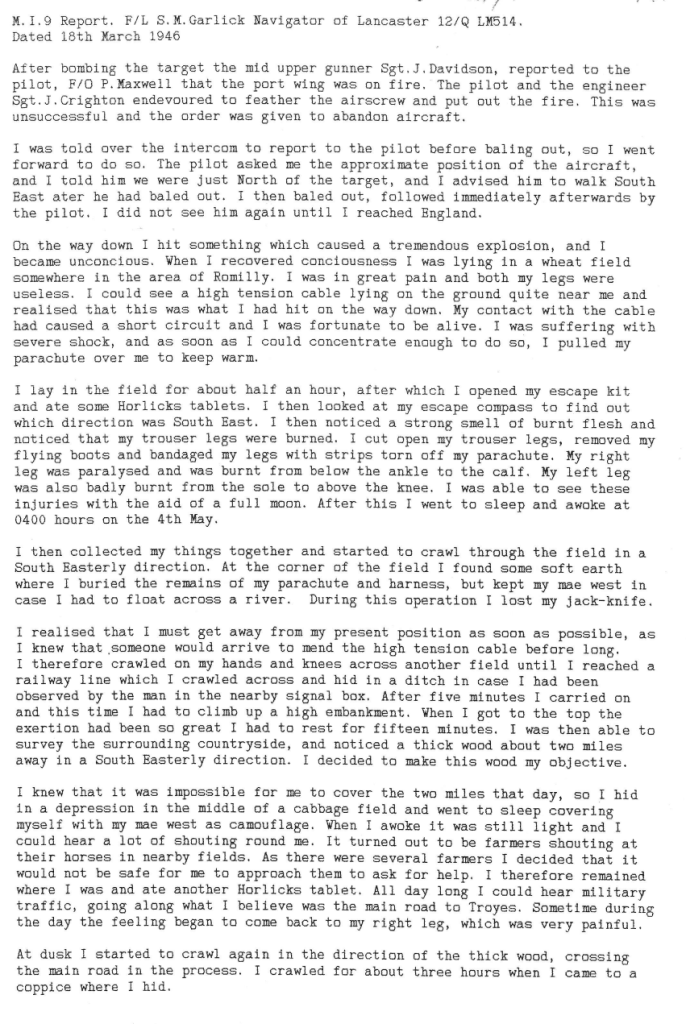
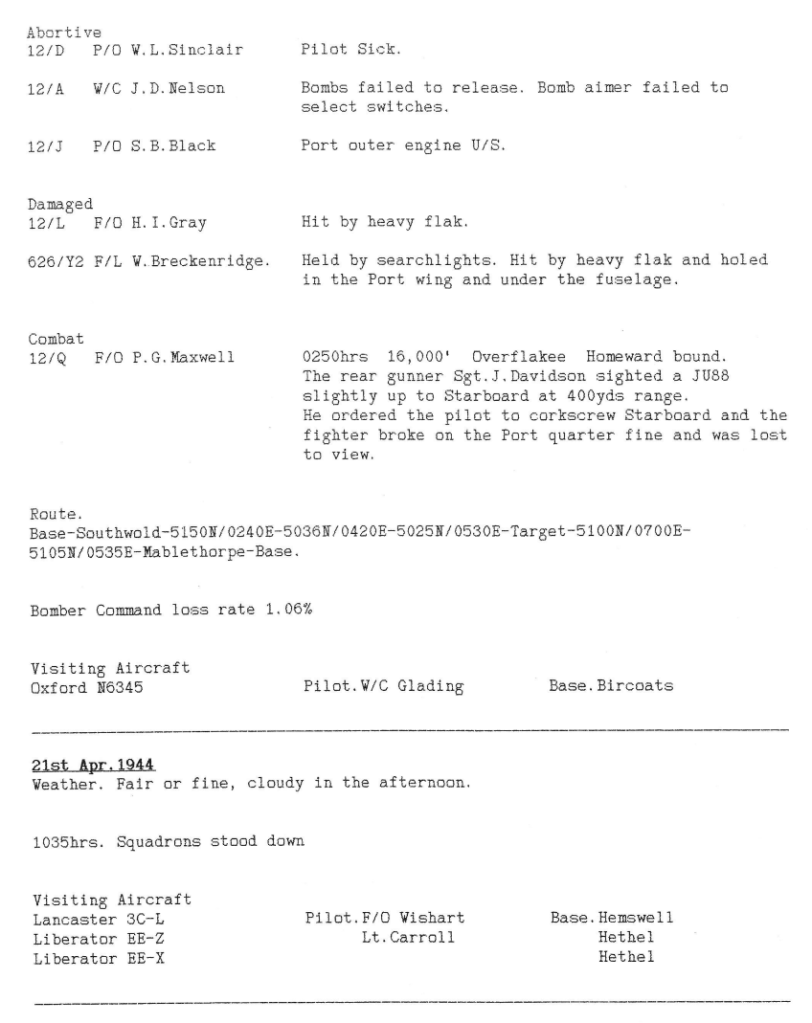
It can be seen from the comments of returning crews below and the number of aircraft damaged and in combat with night fighters that this was a particularly unpleasant and dangerous mission.
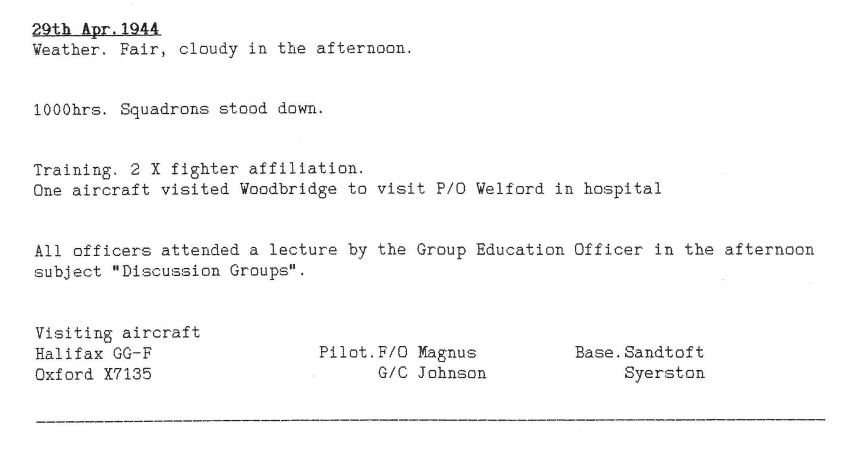
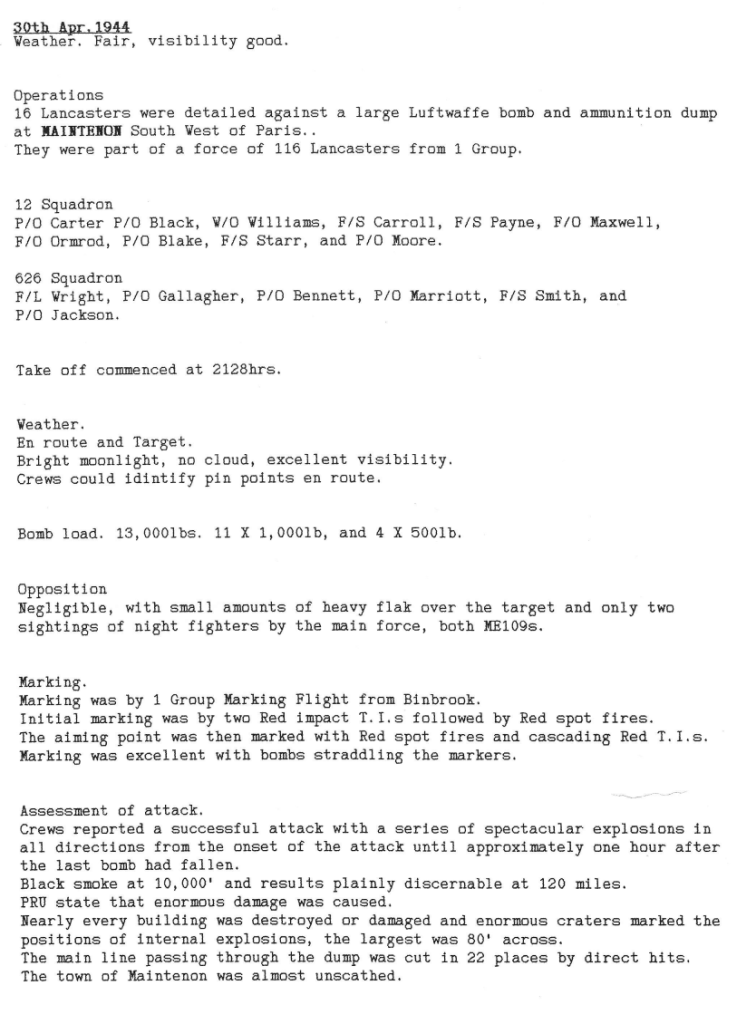
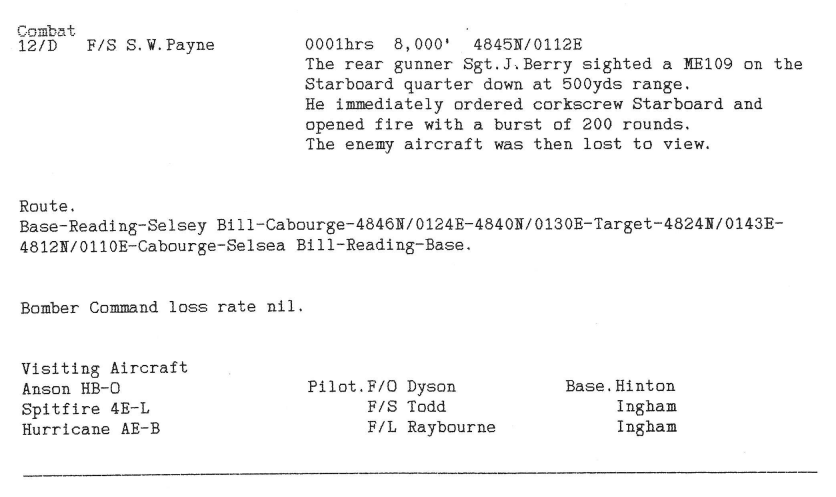

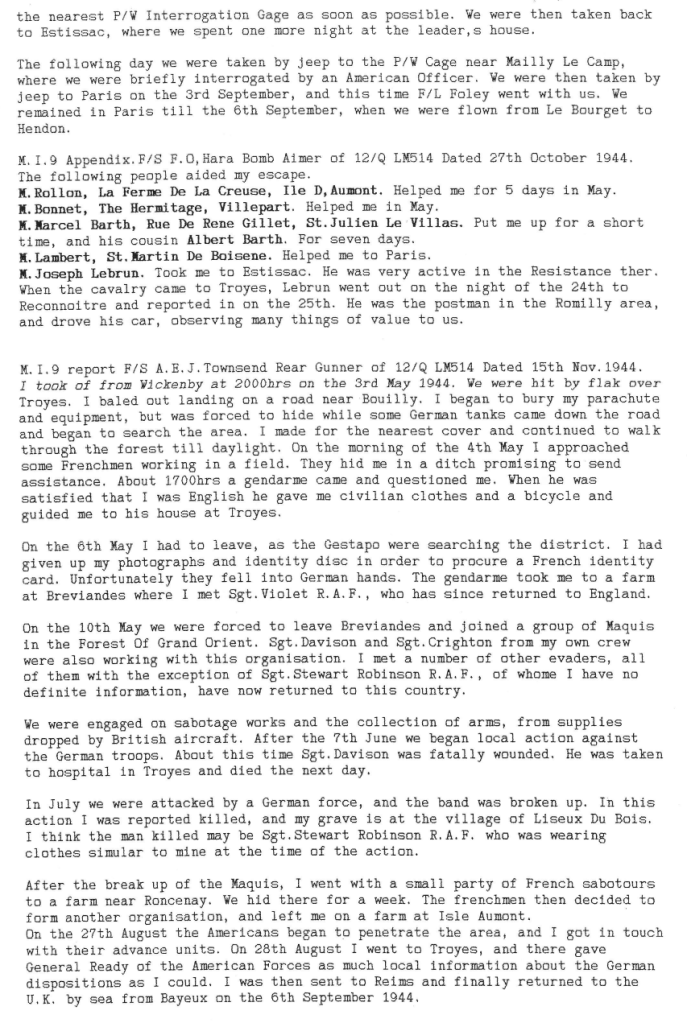

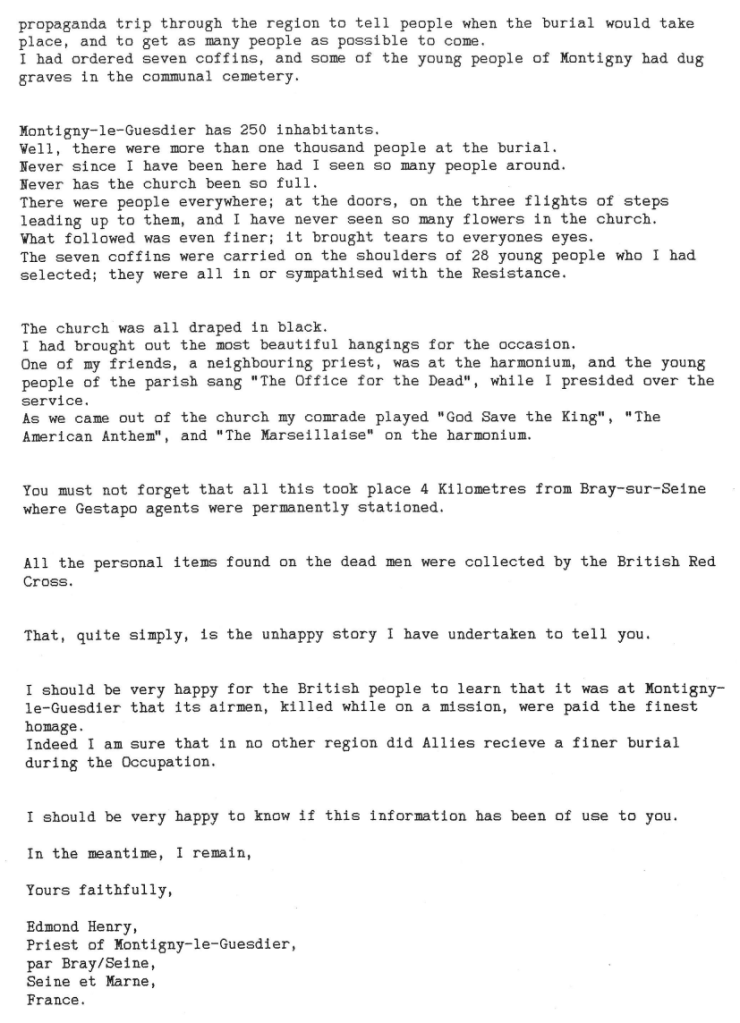

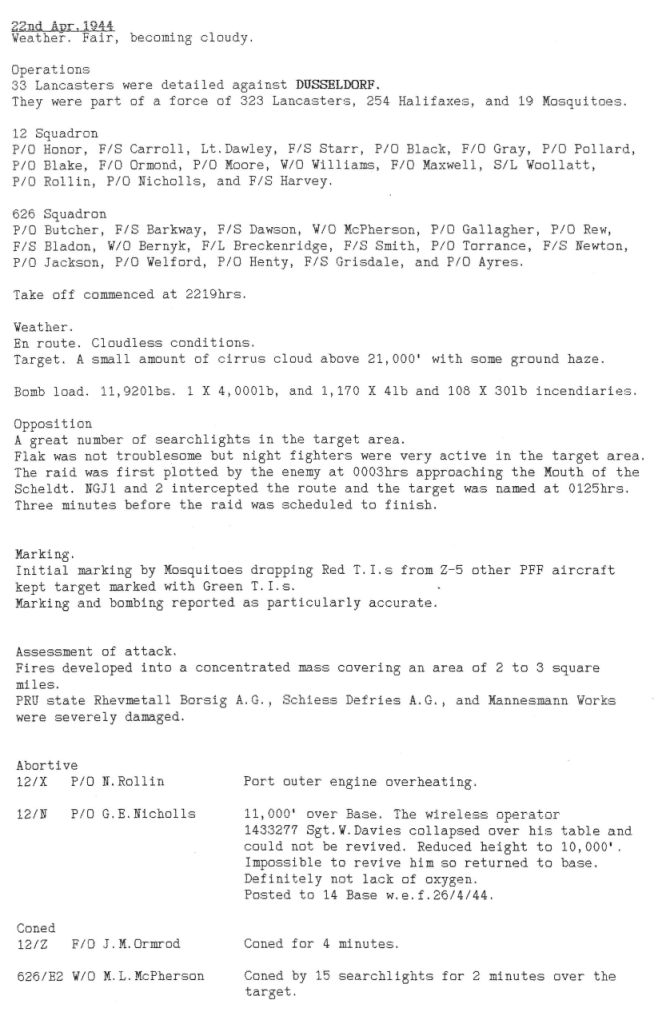
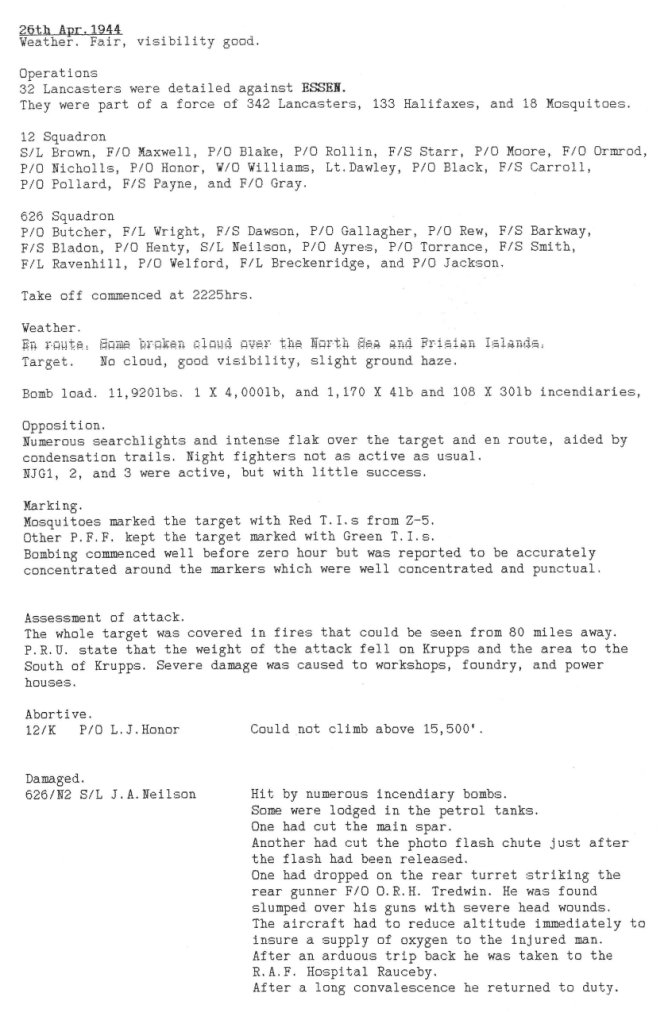
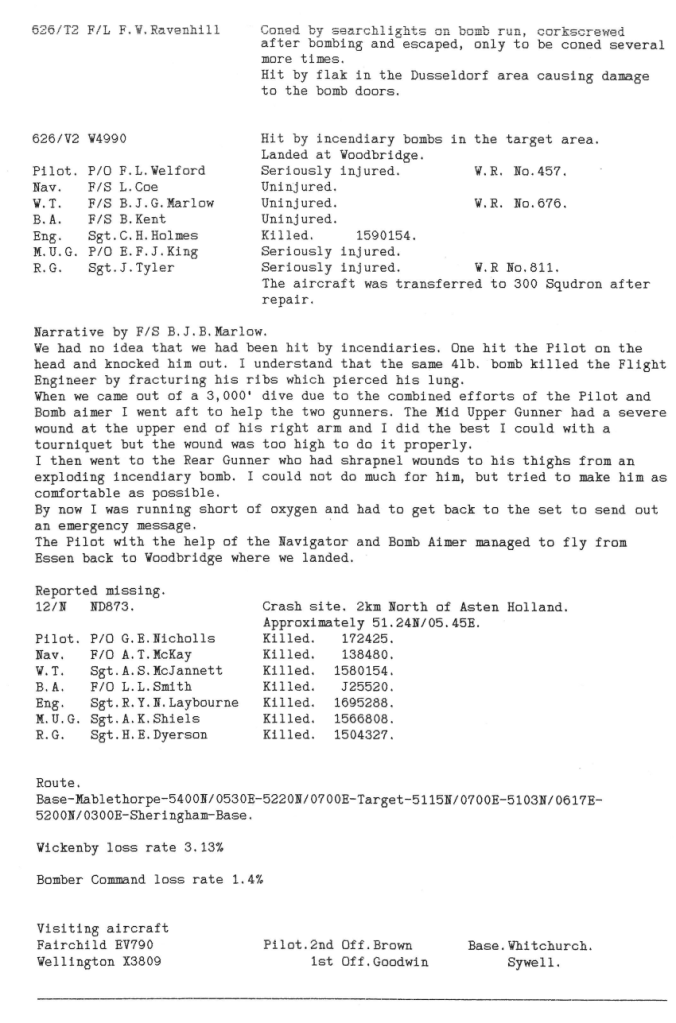
A busy week for RAF Wickenby – operations were carried out to Dusseldorf, Karlsruhe, Essen and Friedrichshafen, with 4 aircraft lost and 36 aircrew killed. Two aircraft returned damaged by incendiaries dropped from aircraft above them, with one flight engineer being killed and 4 others seriously injured – yet another hazard of flying at night in a large stream of bombers.



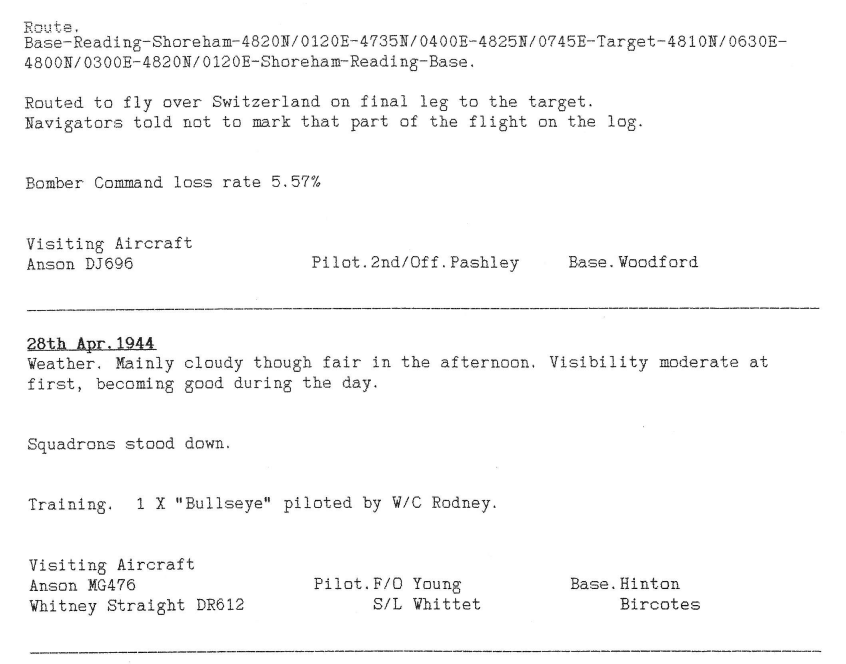
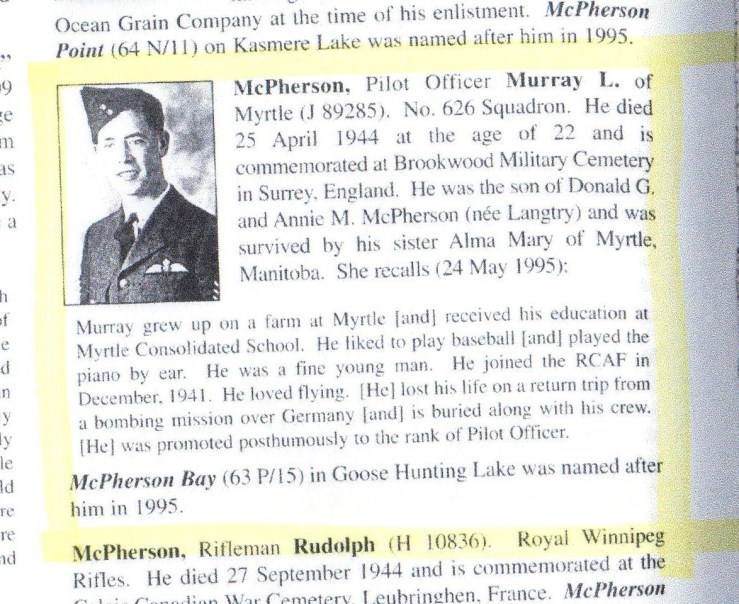
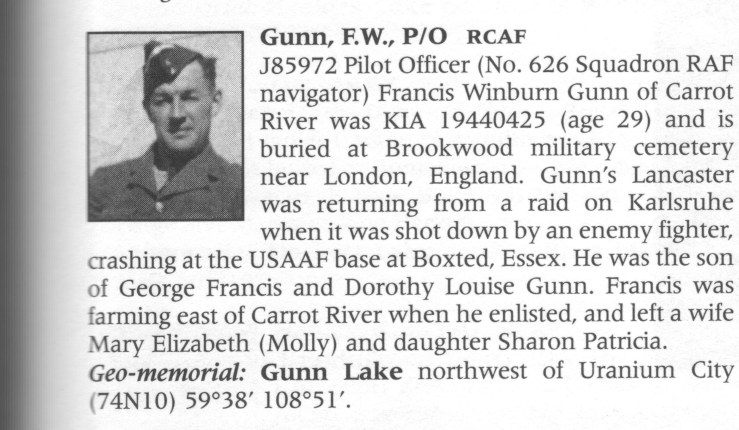
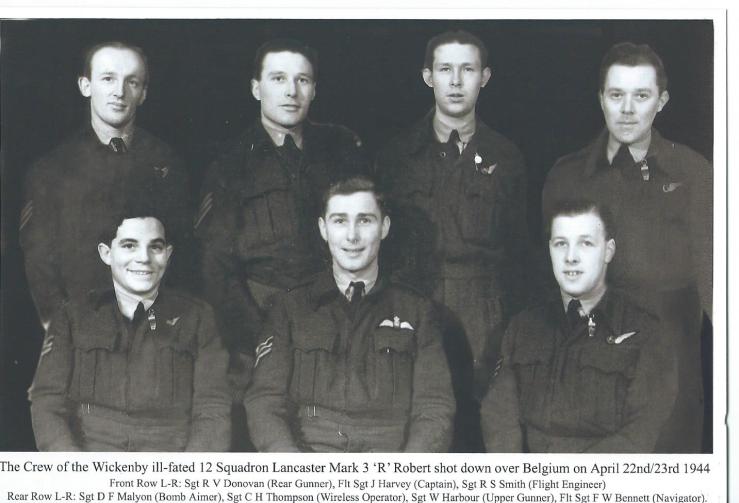
Aircraft from Wickenby continued to support the buildup to D-Day by attacking targets in France, with the odd mission to Germany to try to confuse the Germans. There were no losses this week, however, it is interesting to note that a 12 Sqn aircraft was damaged by an intruder whilst flying circuits around Wickenby on 19th April.
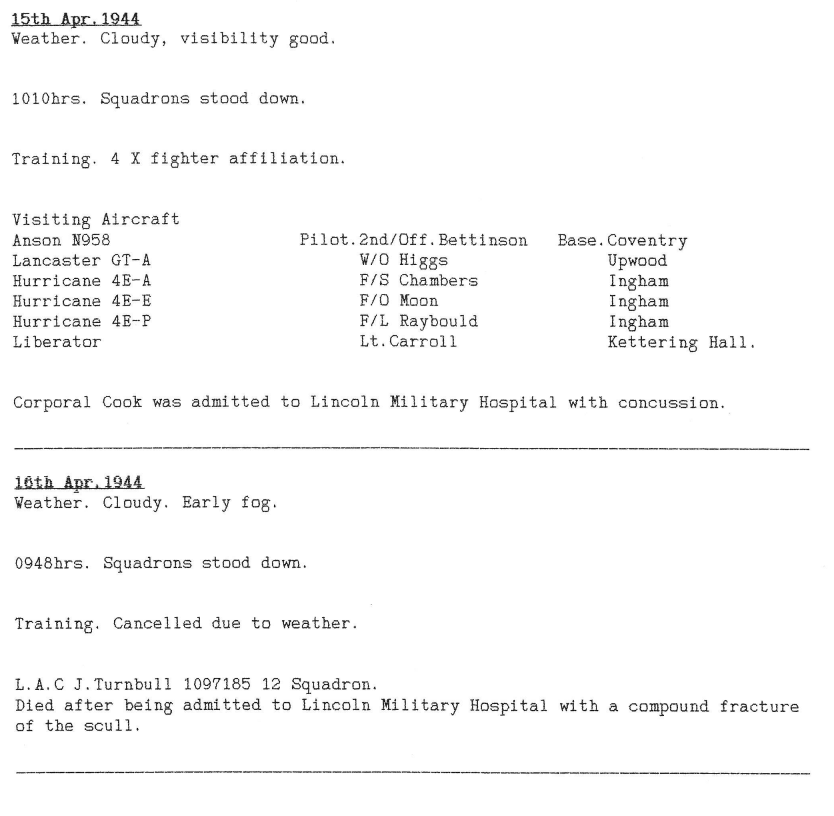

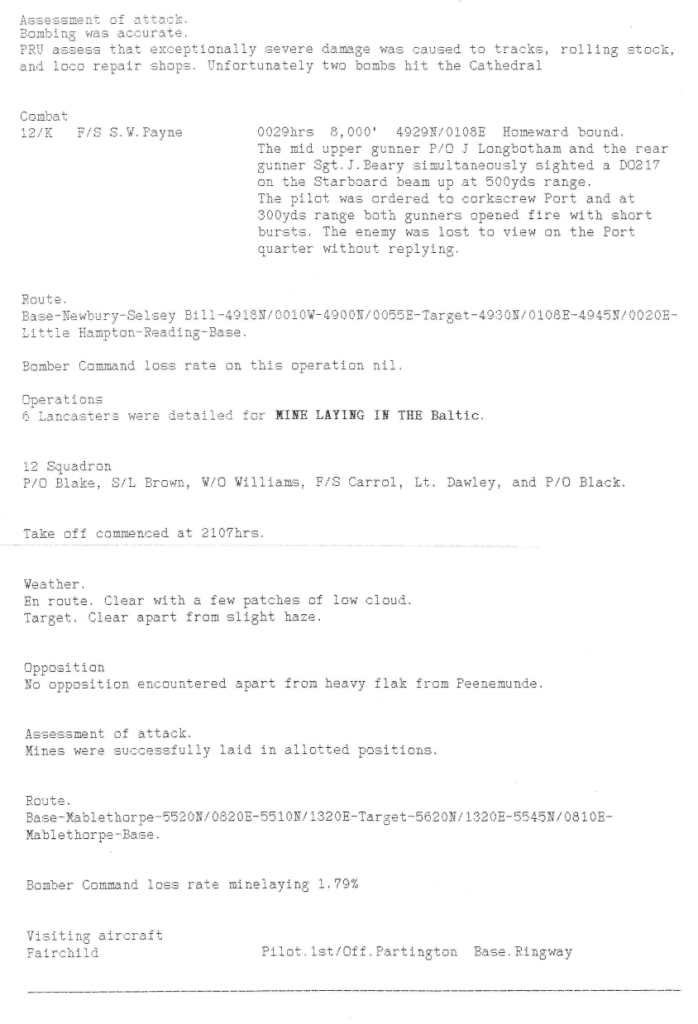

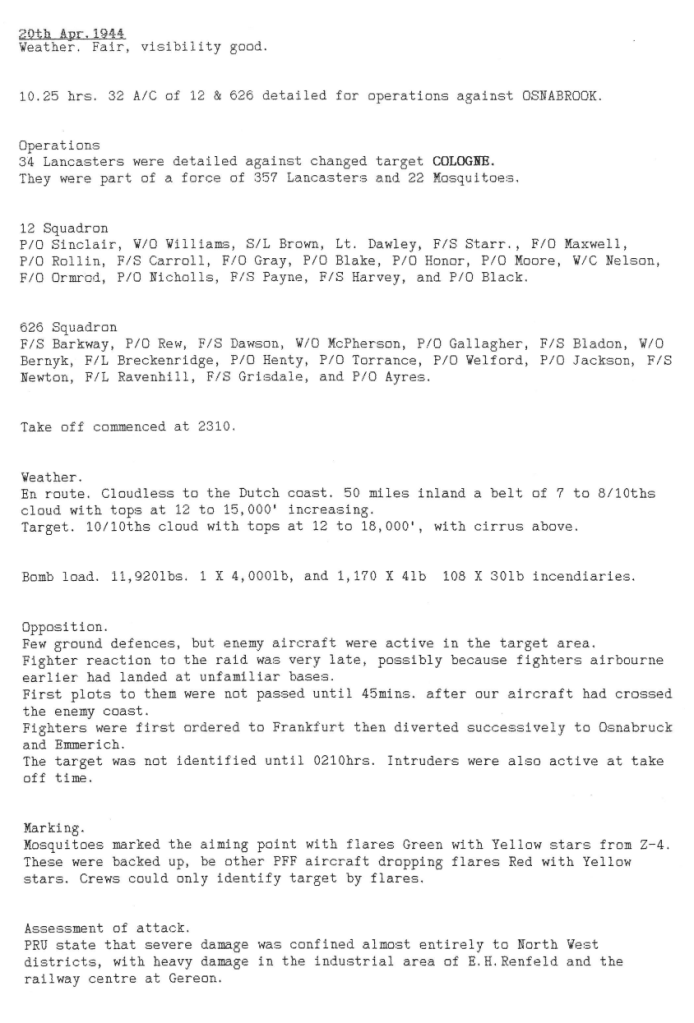
We are now into the period building up to the invasion of Europe in June 1944 – the Battle of Berlin is over and the Luftwaffe night fighters were not the force they were, due to losses caused by US long range fighters. Consequently, we start to see attacks on communication centers in France and Belgium during the following months, with the occasional foray into Germany itself.
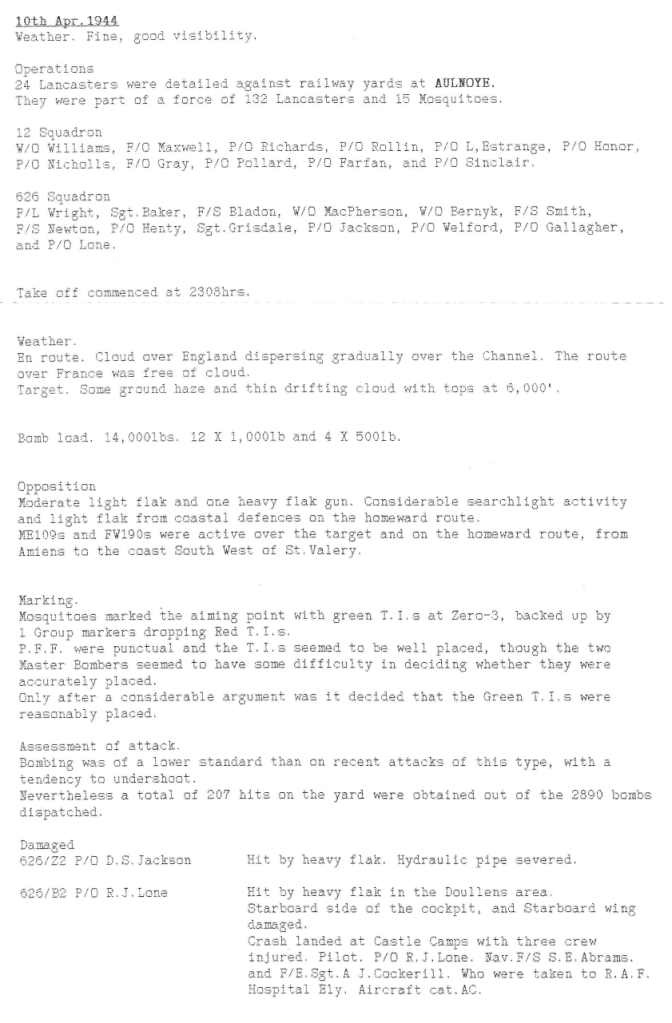
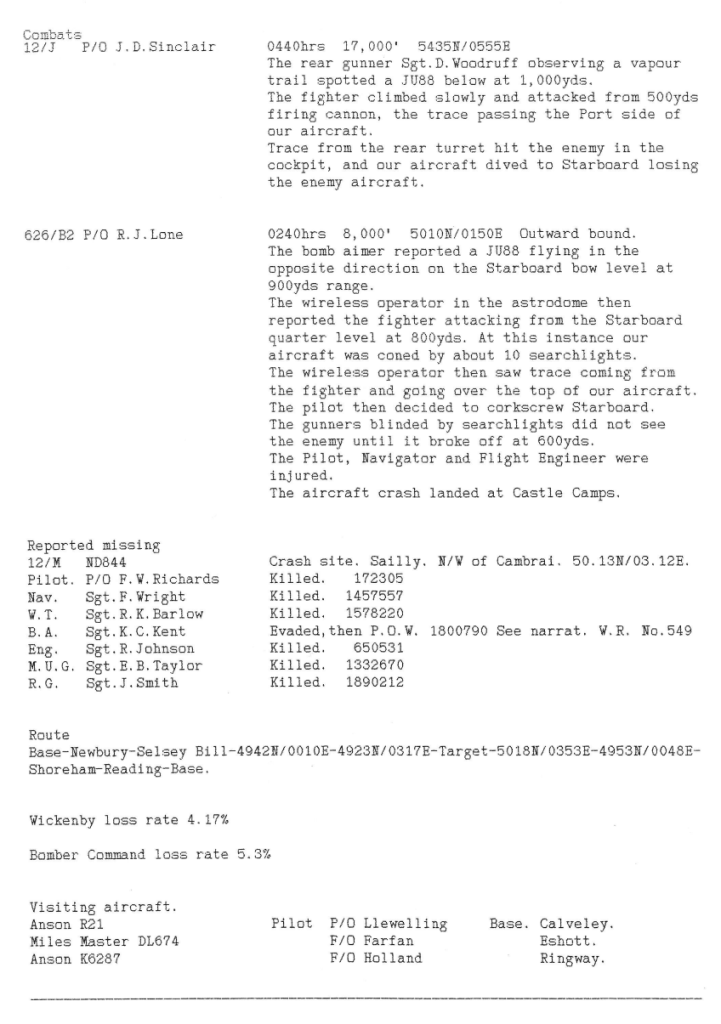
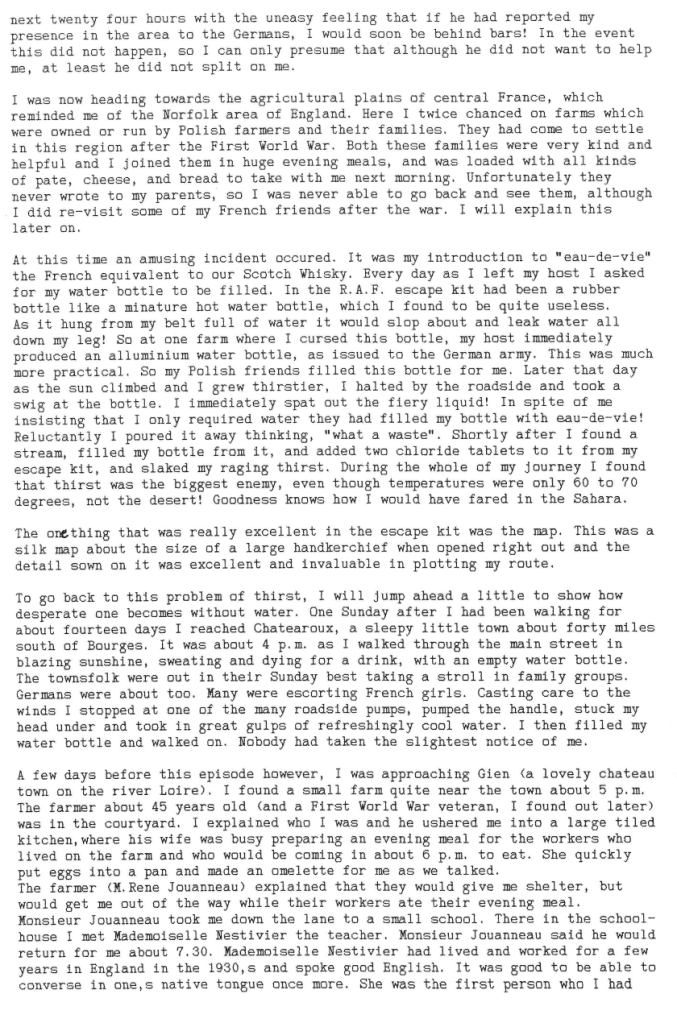
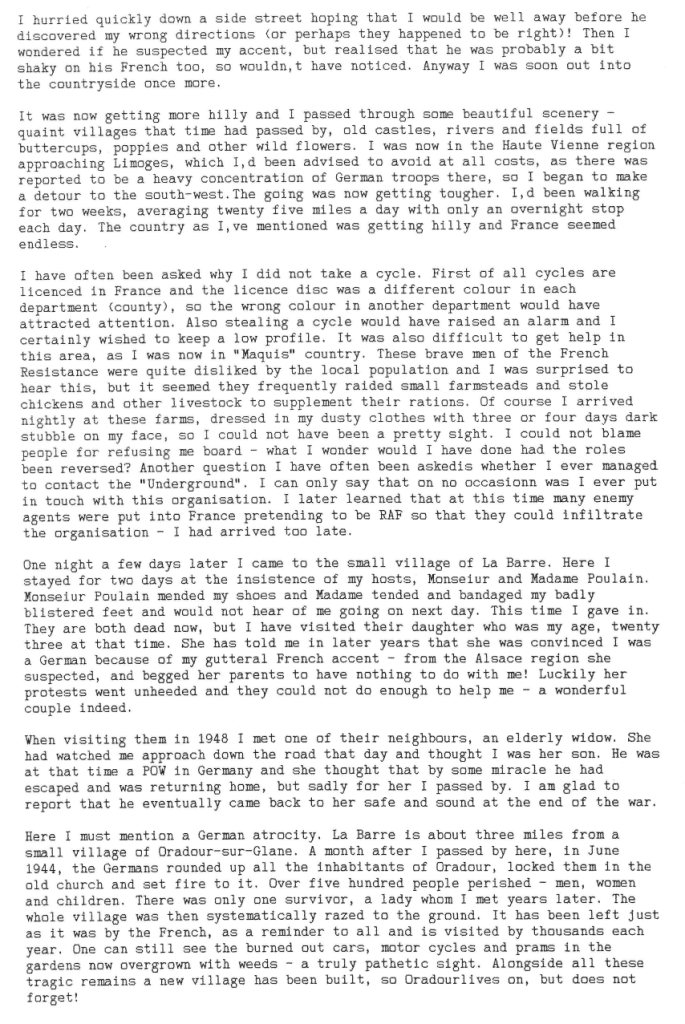
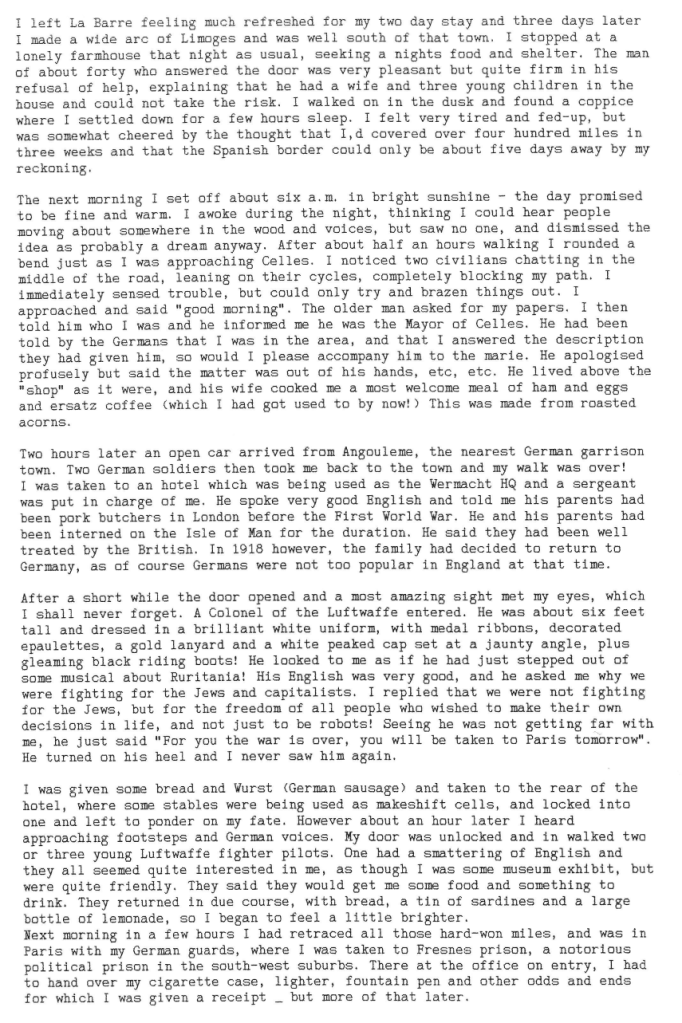
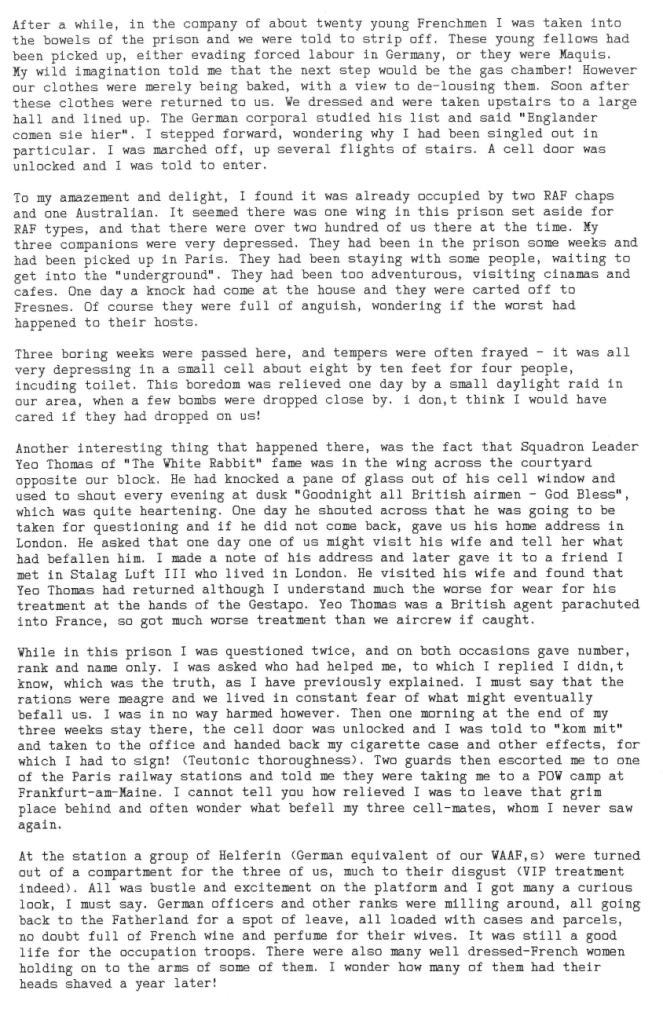
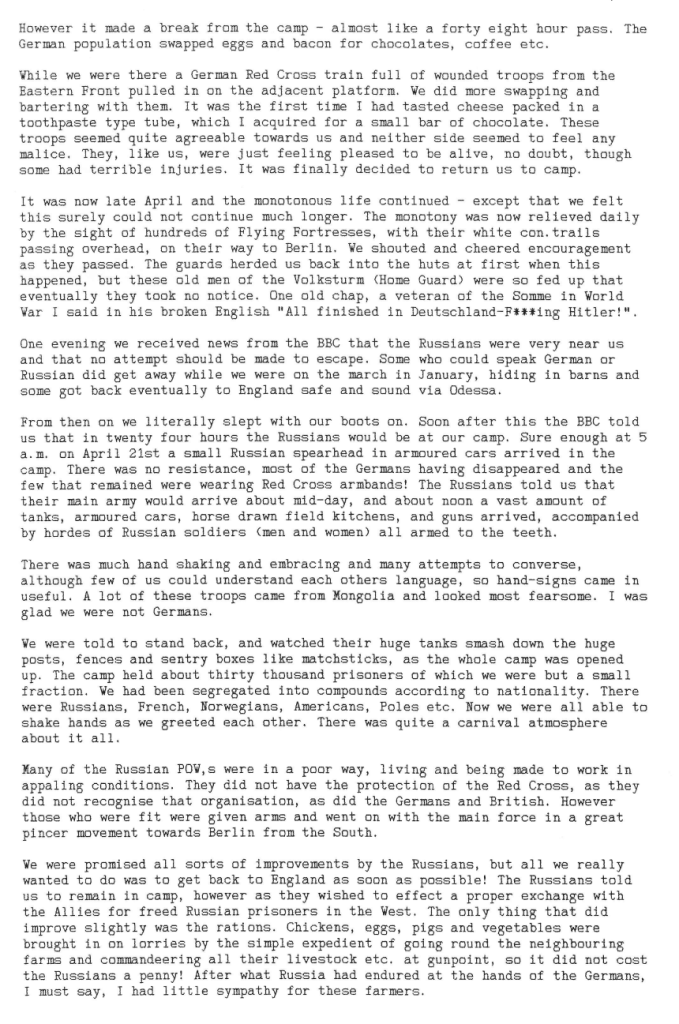
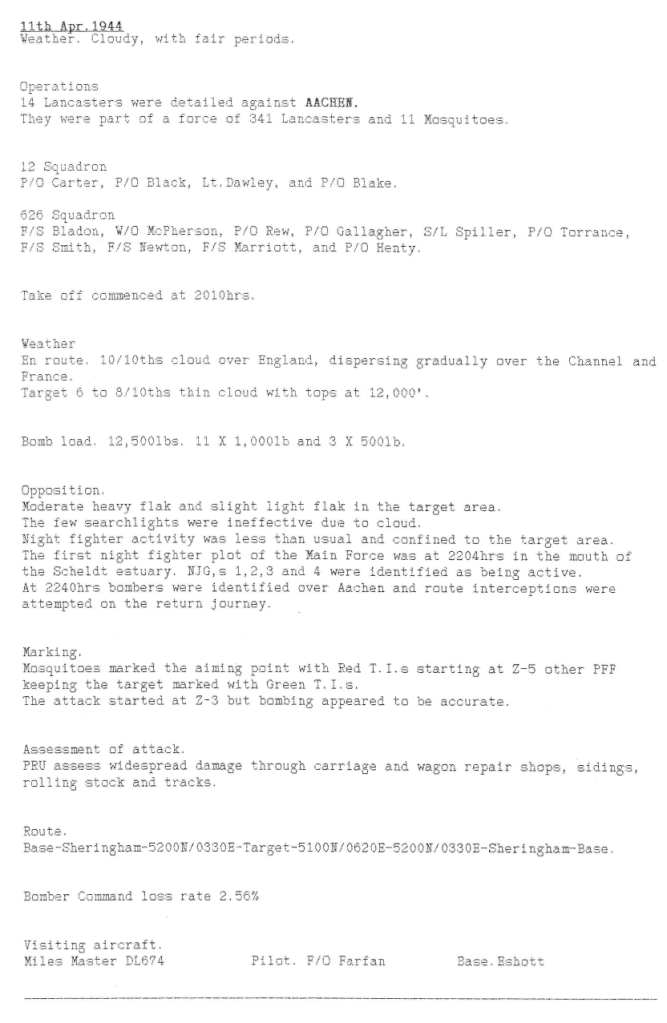
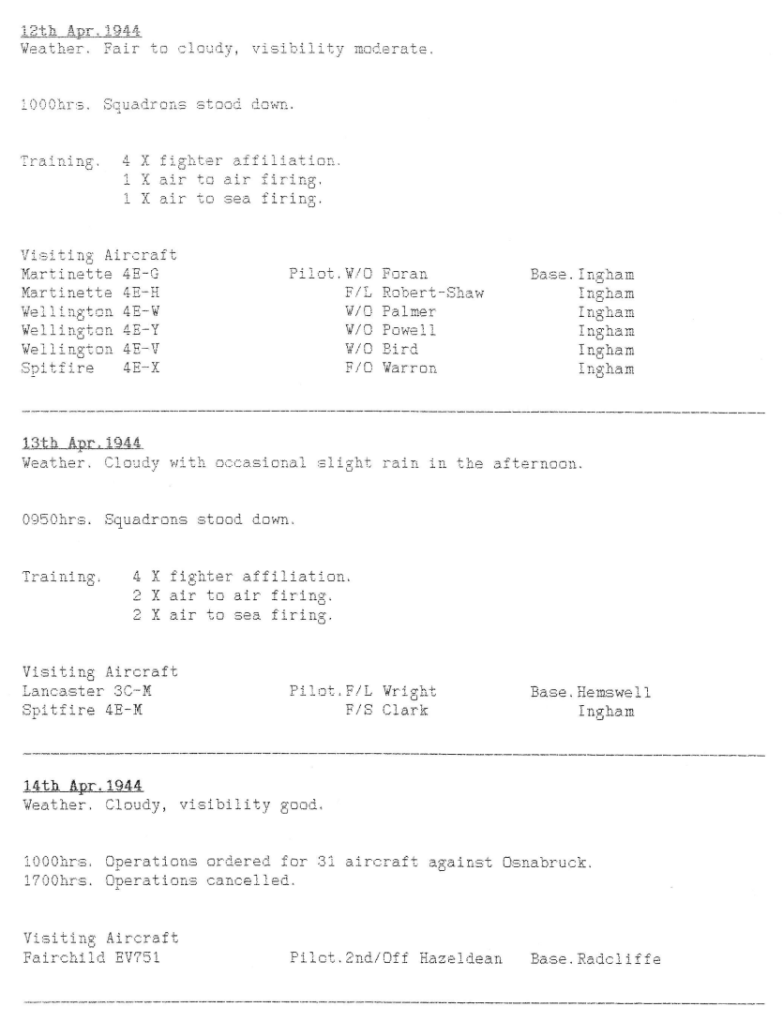
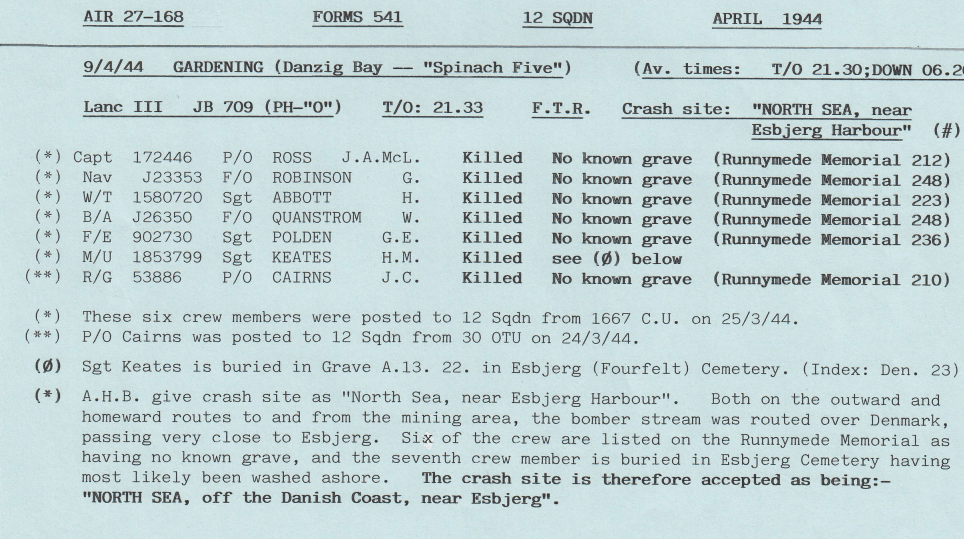
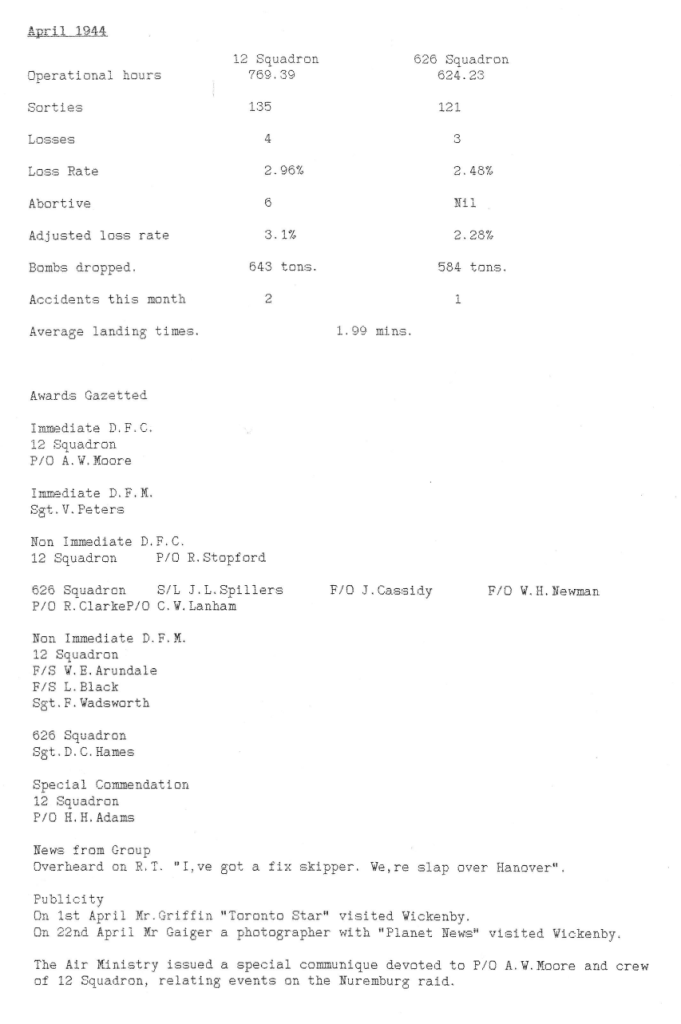
This week, Wickenby squadrons carried out operations to Villeneuve-St-George, Aulnoye, Gulf of Danzig and Aachen. Two aircraft were lost and 13 aircrew were killed and one became a POW (see very comprehensive account below).










There were no missions flown this week from Wickenby, due to there being a new moon.
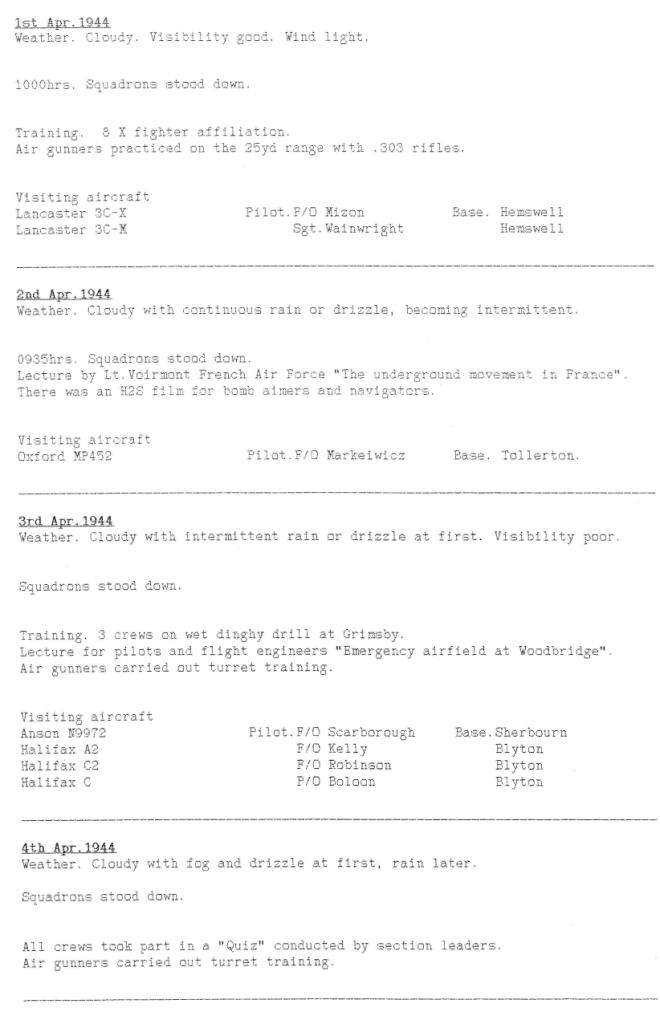

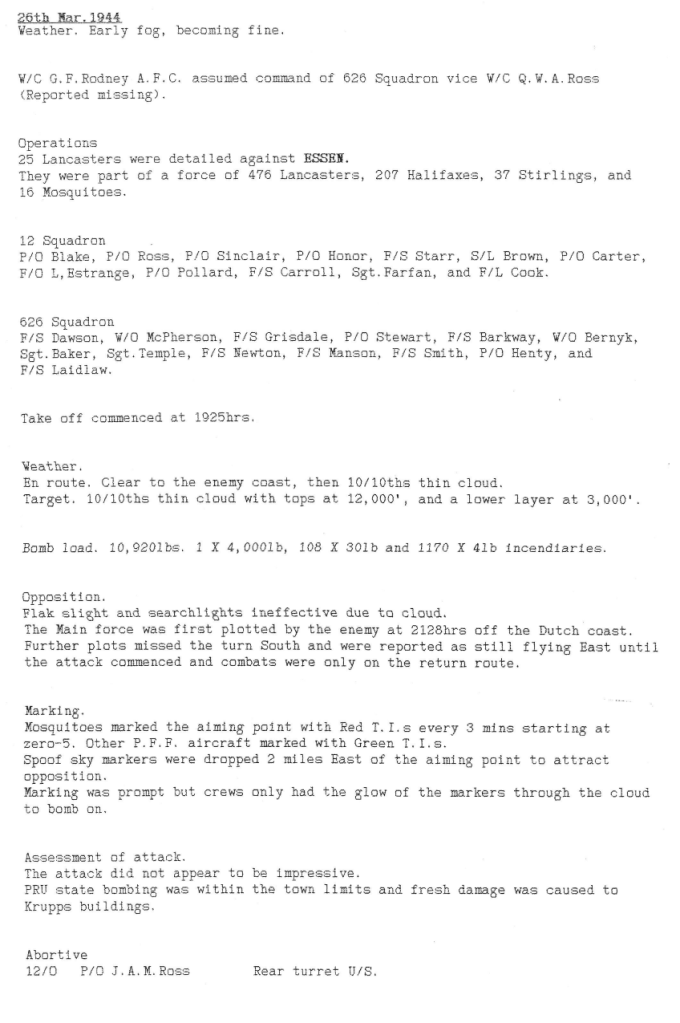
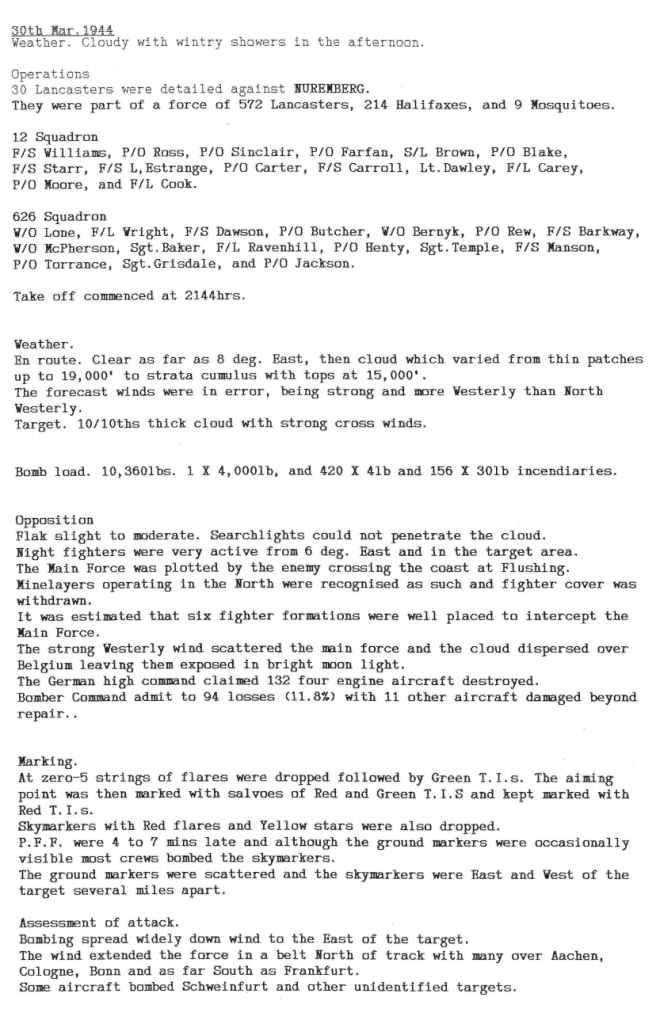
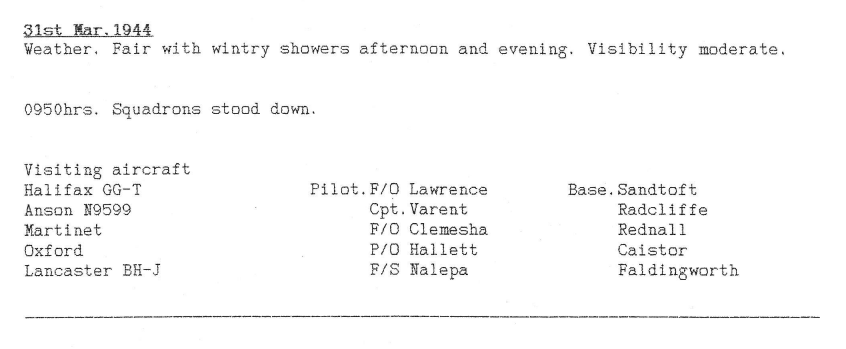
Wickenby aircraft were involved in 3 operations this week, to Aulnoye in France, Essen and Nuremburg in Germany – 3 aircraft were lost, with 20 aircrew being killed, one becoming a POW and one evading capture.
The raid on Nuremburg became the worst night of the war for Bomber Command with 95 bombers lost along with 545 aircrew deaths, mostly by night fighters on the way to the target – only 9 were lost on the return leg as the Germans had to land to refuel.
There is a narrative below describing the experiences of one crew during the attack on Nuremburg, which clearly shows the courage and character of the men who made up Bomber Command – there are too many stories like this for it to be anything other than a normal response.







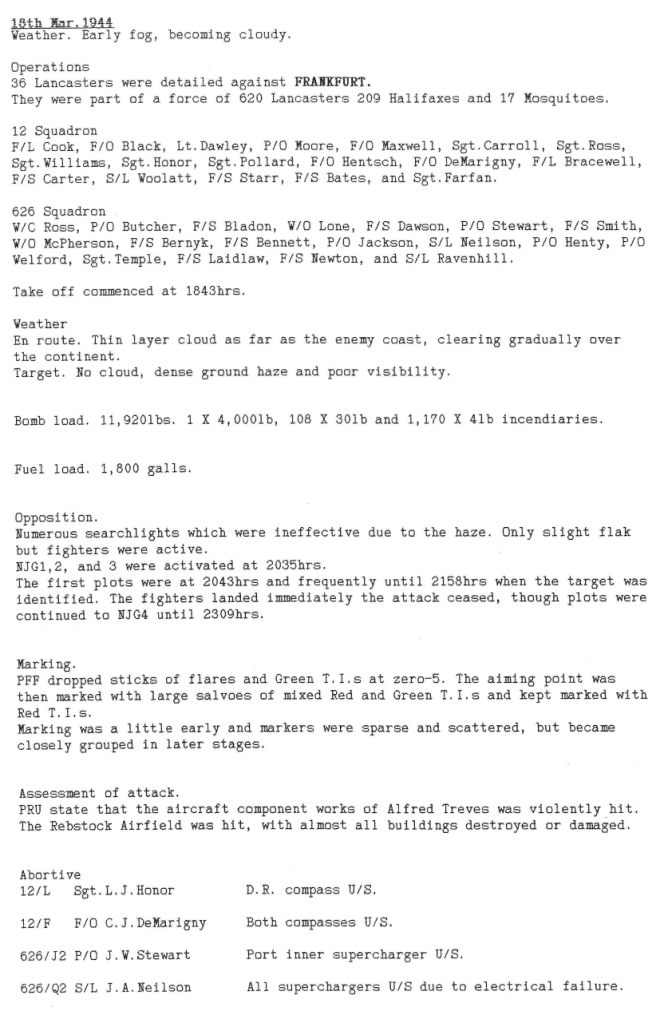
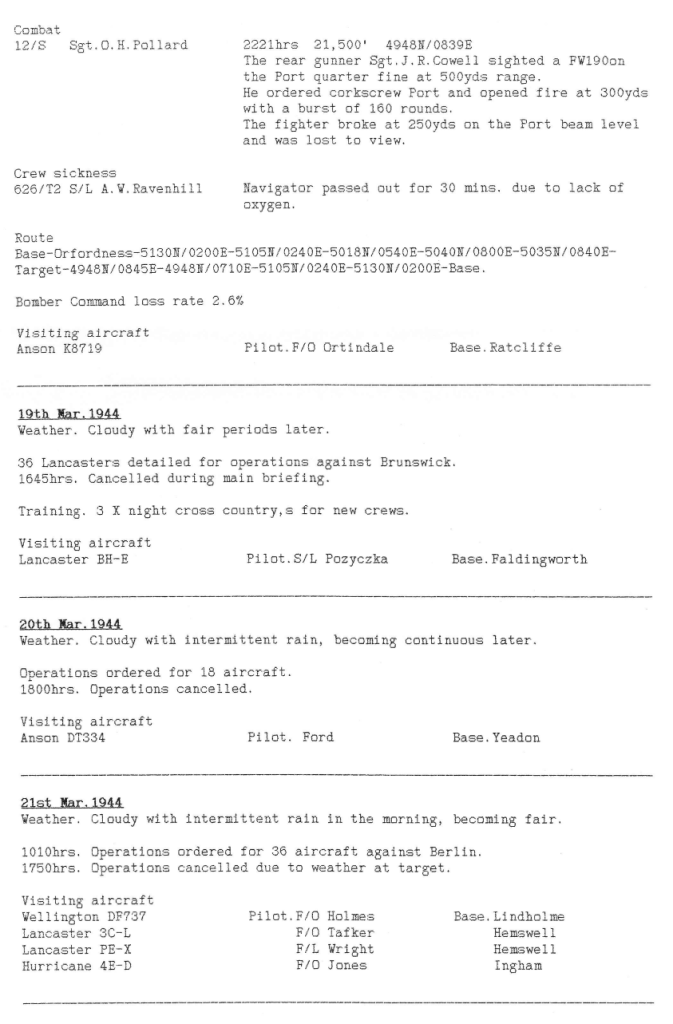
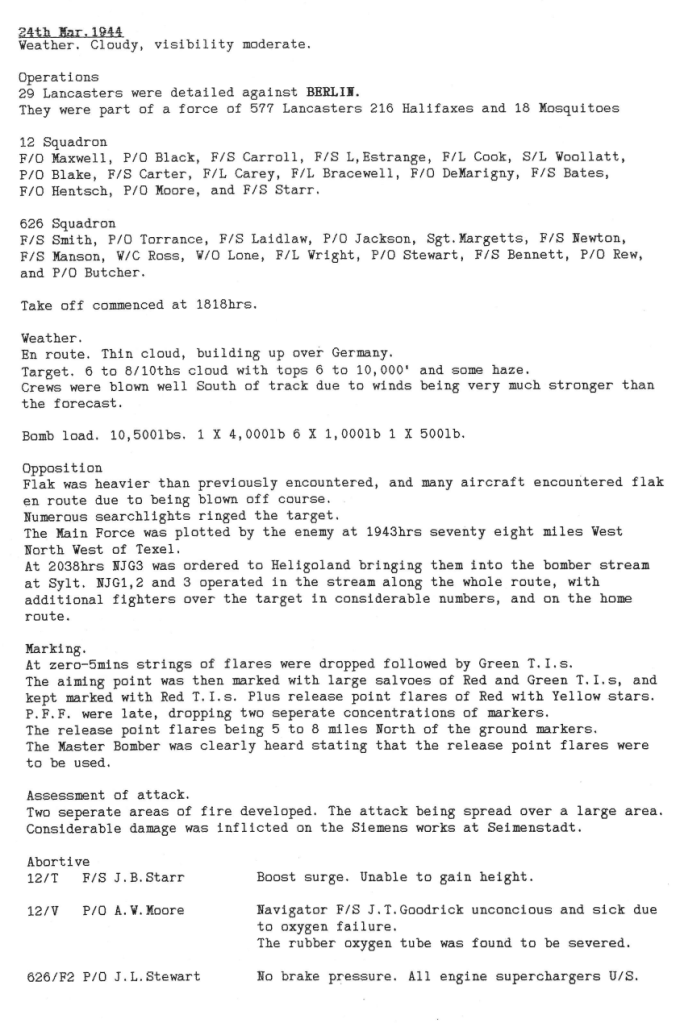
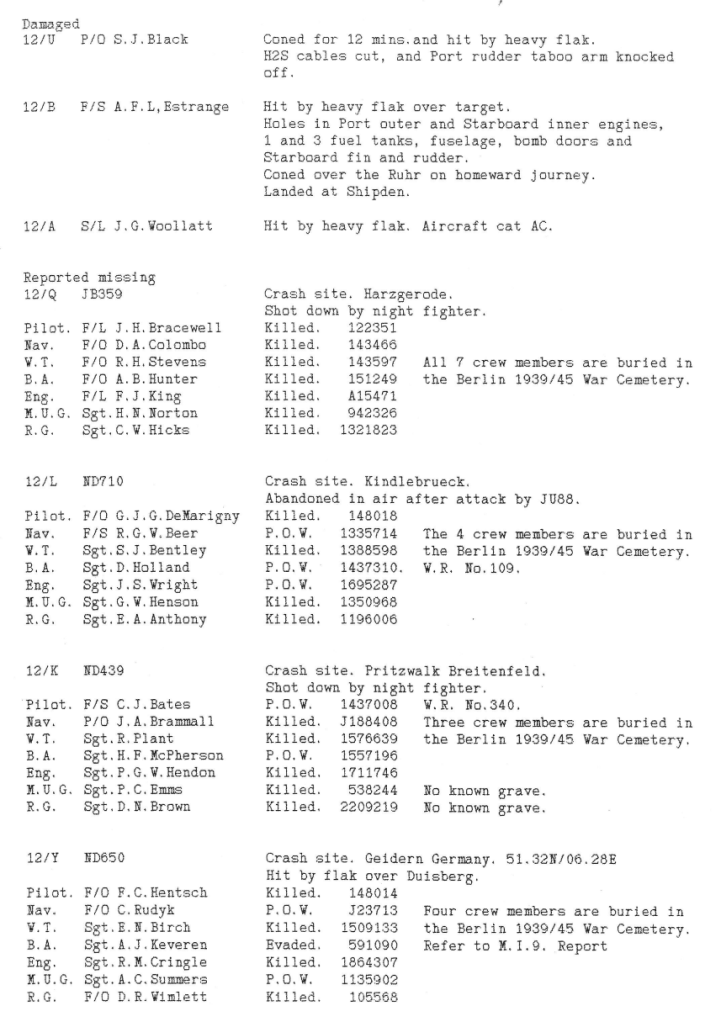
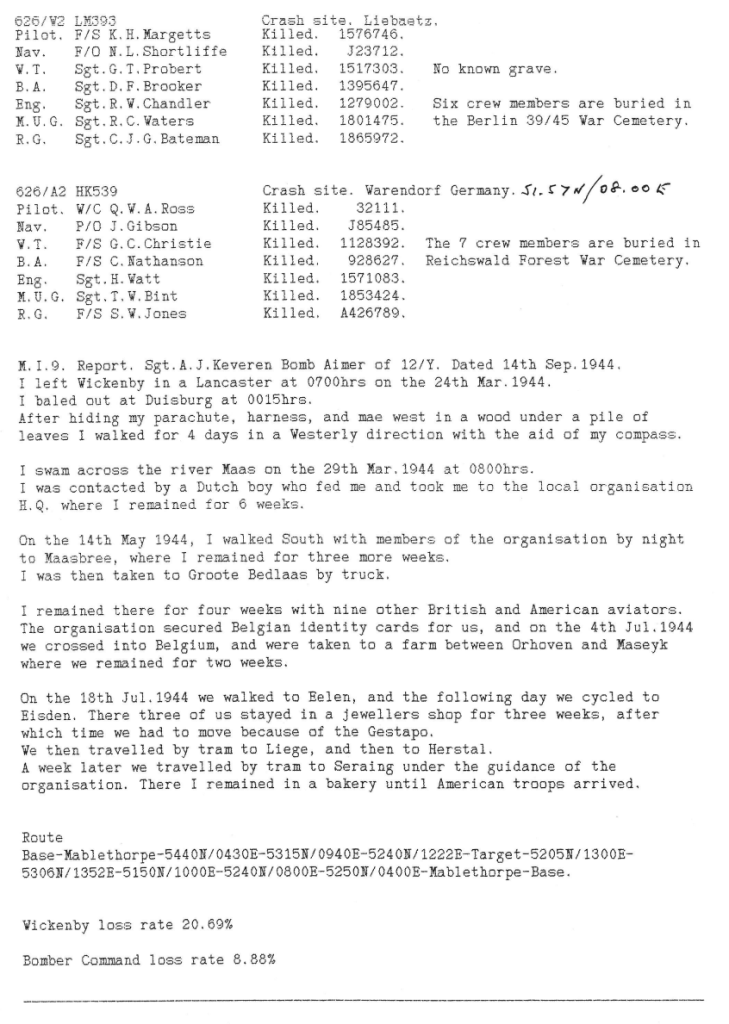
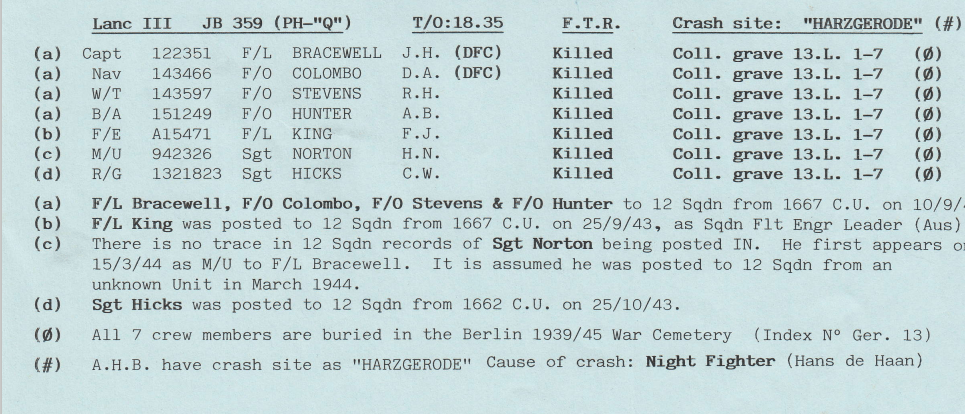
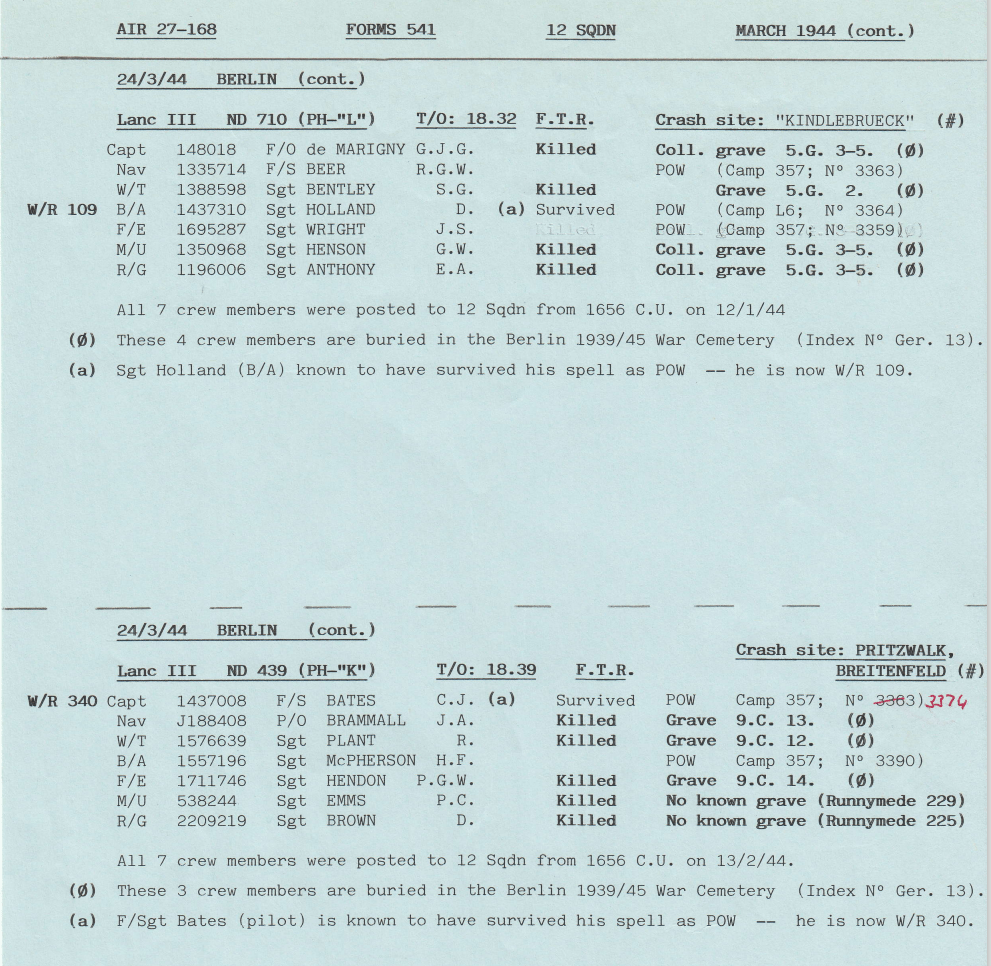
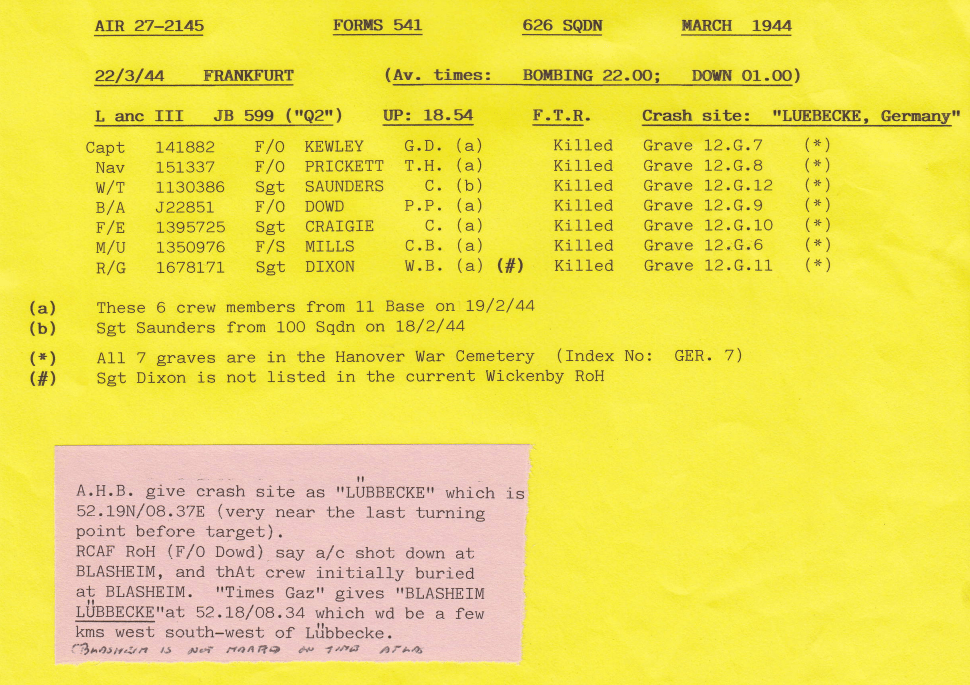
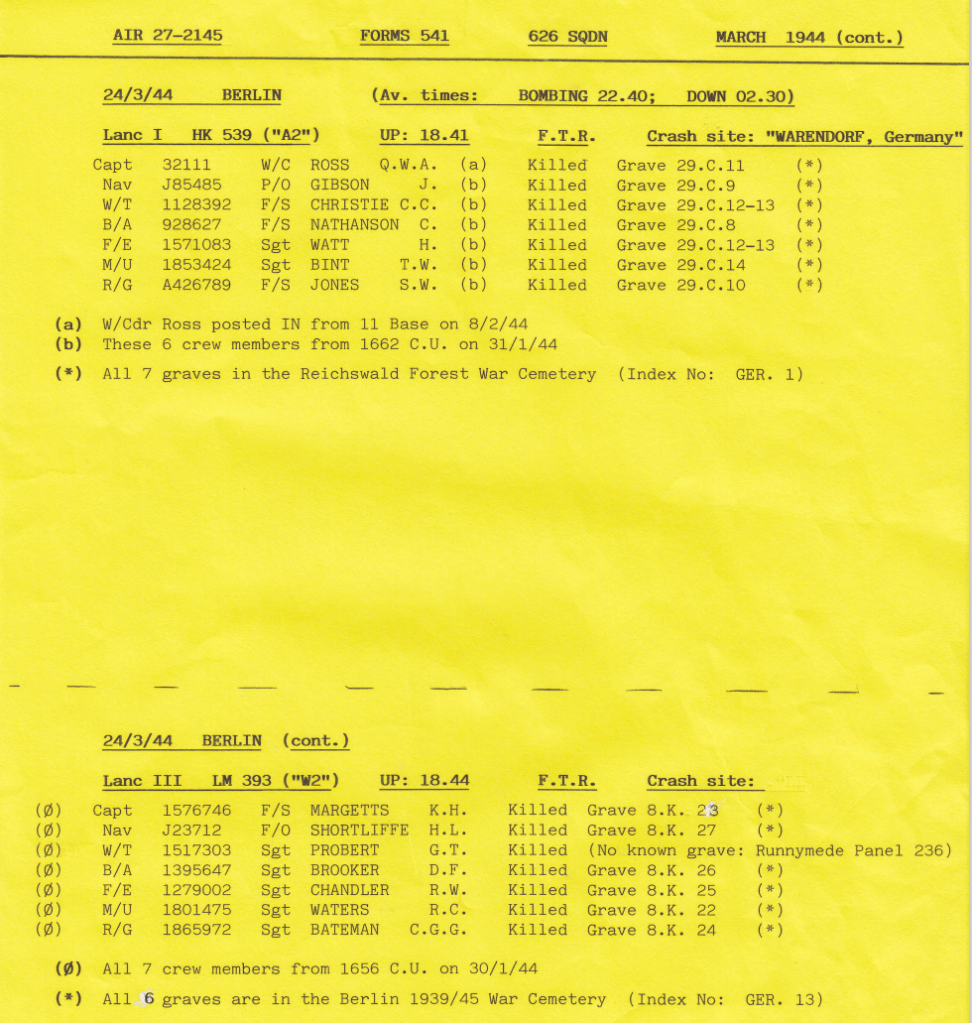
A very bad week for Wickenby crews, with 7 aircraft lost, 41 aircrew killed, 7 becoming POW’s and one evading capture. Three attacks were made, 2 to Frankfurt where one 626 Sqn aircraft and all her crew were killed, and one to Berlin, where 12 Sqn lost 4 aircraft and 626 Sqn 2 aircraft – more detail is below.
The attack on Berlin, which was the last major attack made on that city during the war, was known as the “night of the strong winds”, which were much more powerful than predicted causing many aircraft to be blown off course and into heavy flak areas, which caused a large proportion of the losses. In all, Bomber Command lost 72 aircraft on this one operation, a loss rate of 8.9% – Wickenby’s loss rate was 20%.





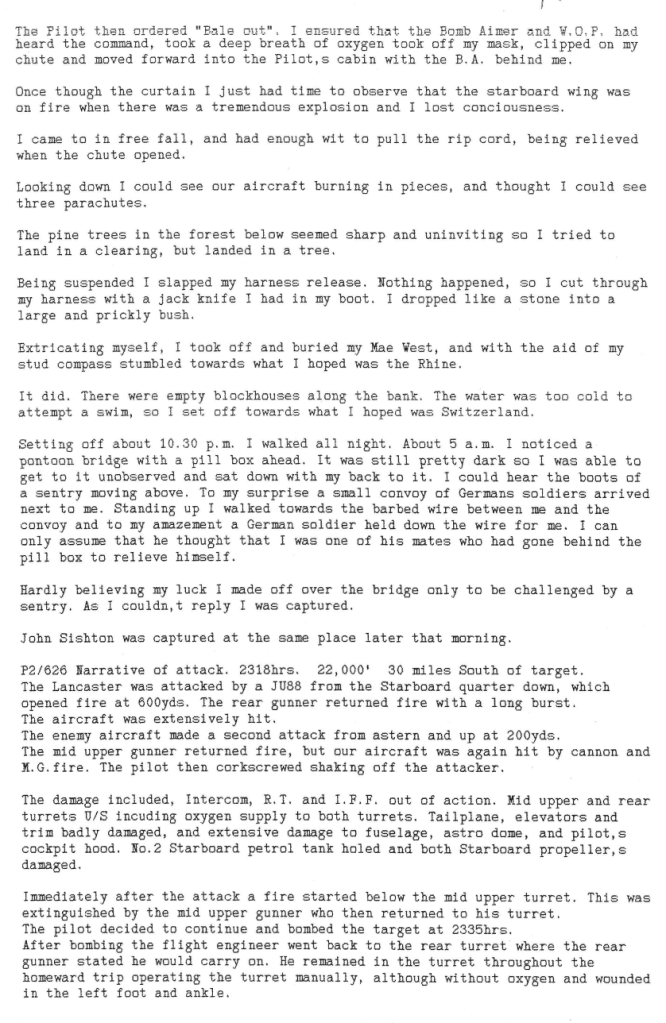
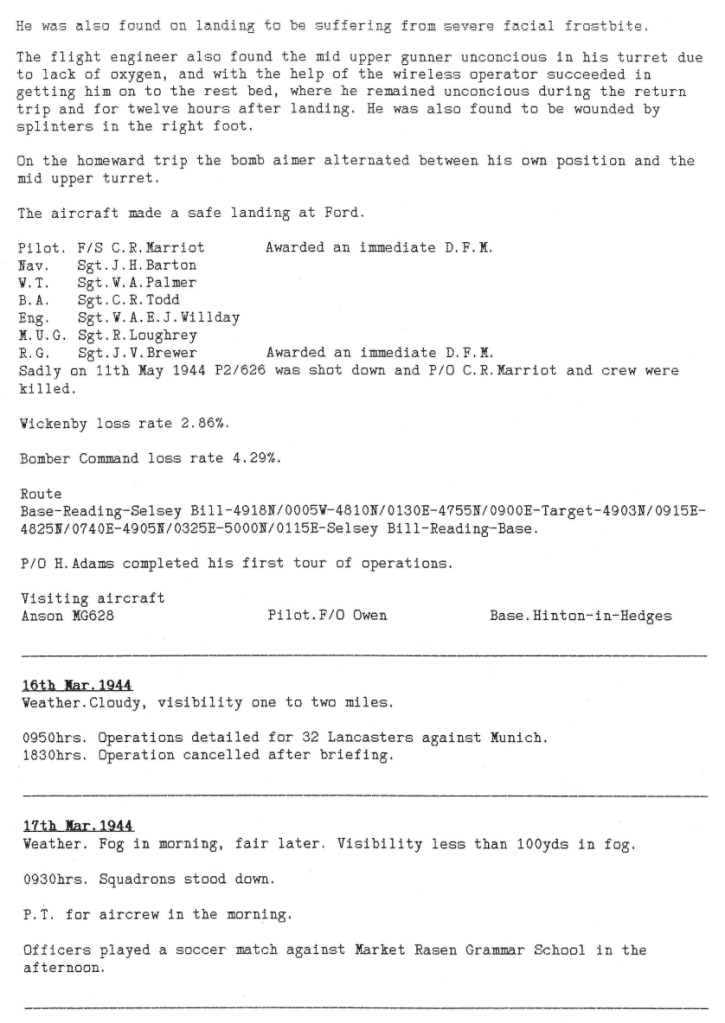
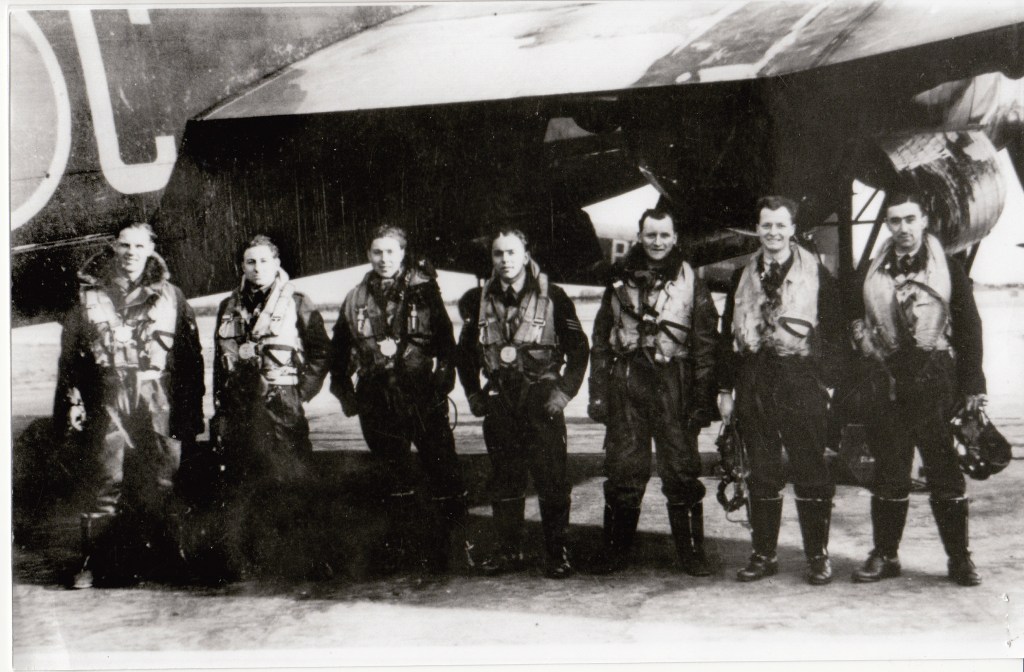
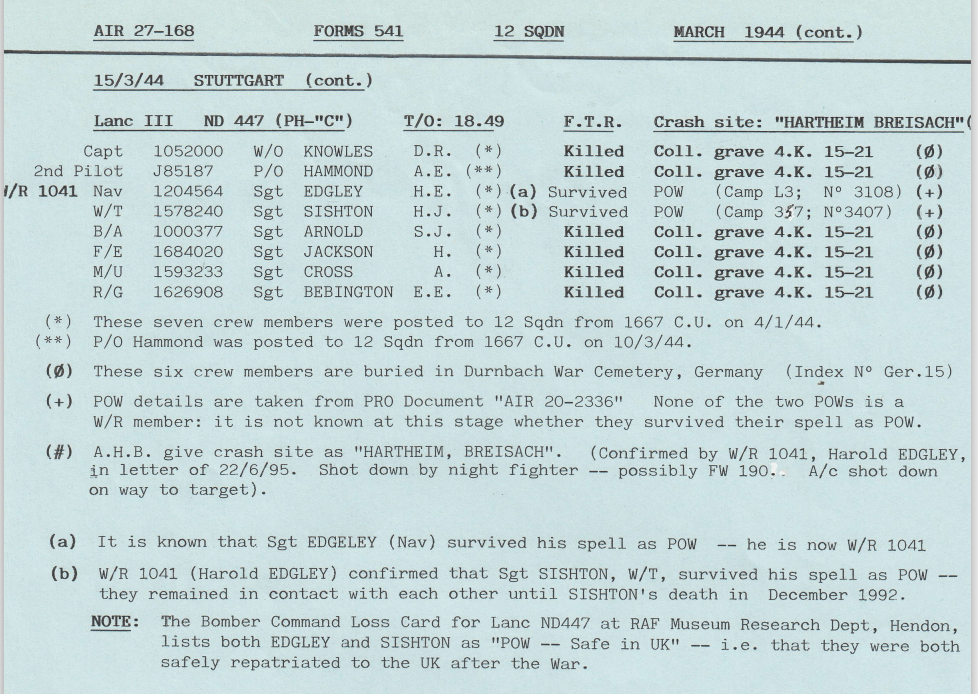
Just one operation this week, to Stuttgart on 15th March where one 12 Sqn aircraft was lost with 7 aircrew being killed and 2 becoming POW’s (see narrative from the navigator below). One of the crew killed was Pilot Officer Albert Hammond, a Canadian aged 25, the son of Albert & Alice M Hammond of Winnipeg, Manitoba, Canada. He had only arrived at Wickenby 5 days before and was flying as a “second dicky” pilot on his first mission.

 RAF Wickenby - This week in history - World War 2