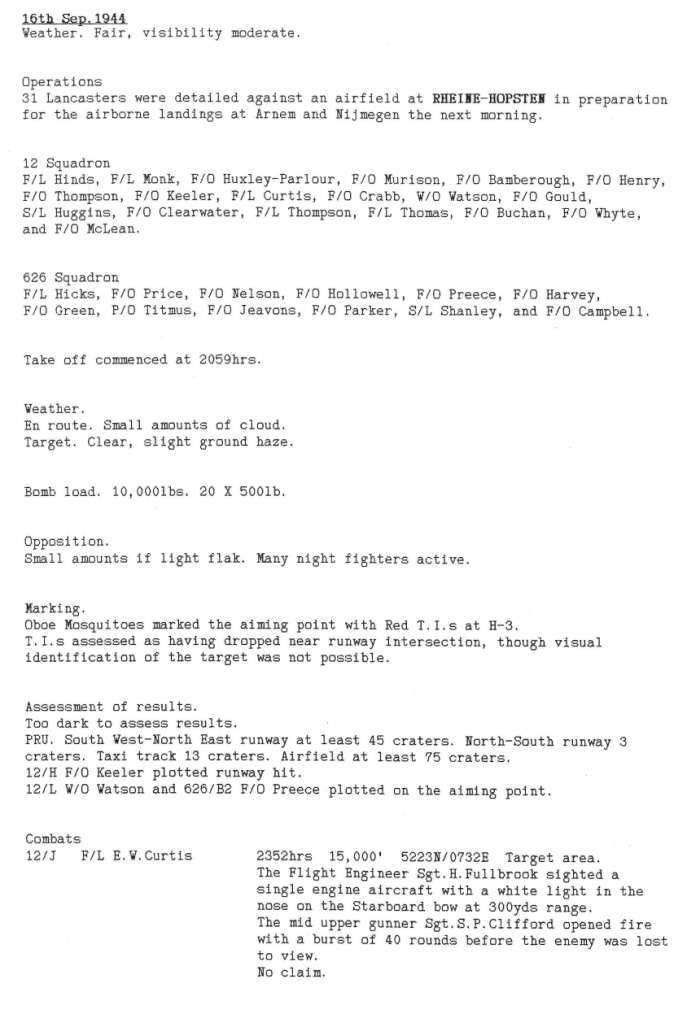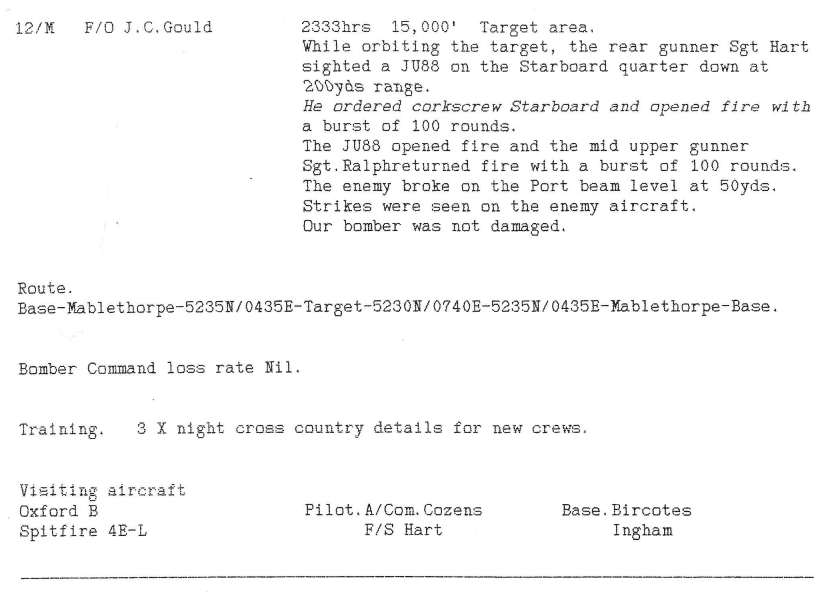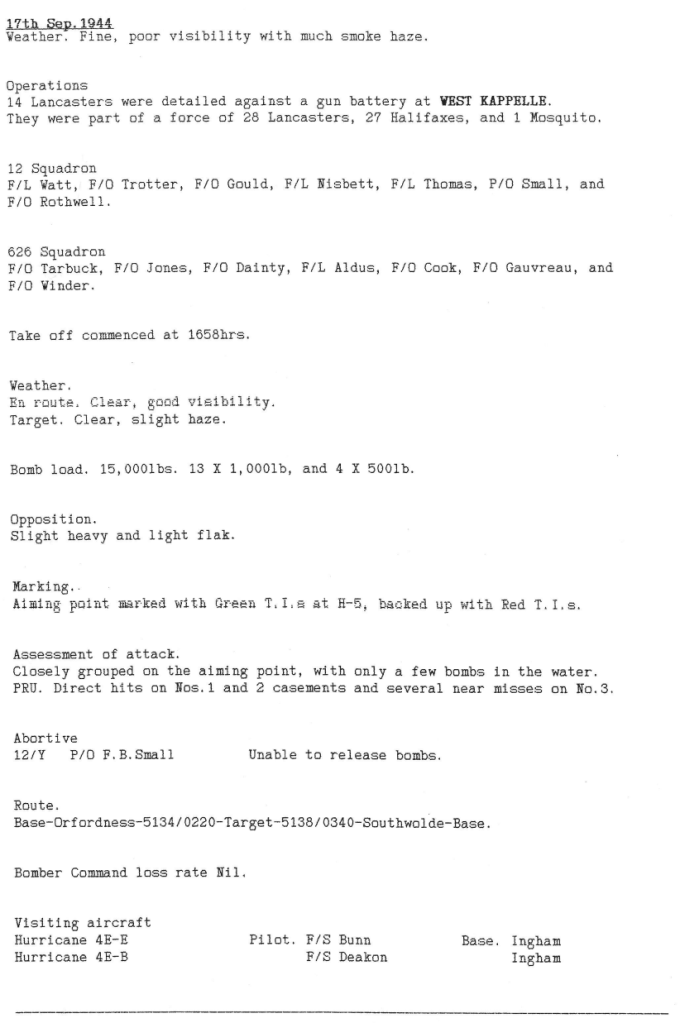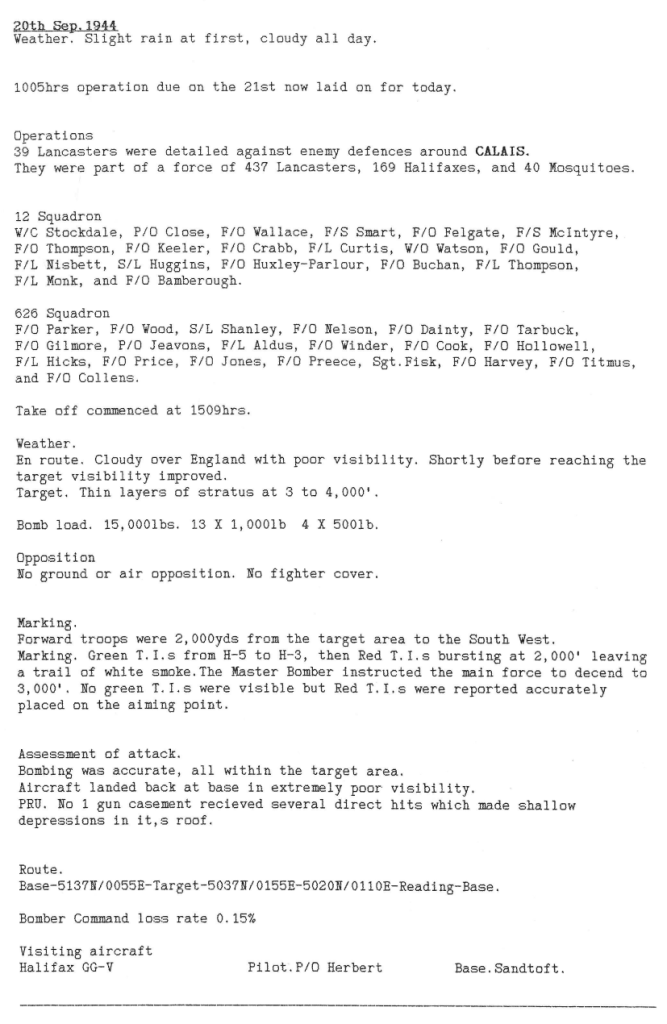
29 September-5 October 1944

Overview

There were 3 missions this week; Westkapelle in Holland, mining in the Kattegatt and Saarbrucken on the French/German border. One aircraft and all 7 of the crew were lost.

Westkapelle is the most western point of Walcheren island and the bombing opened a wide breach in the sea wall which flooded the reclaimed polder below sea level, submerging some German gun batteries and hampering enemy defences against ground attack.

The operation to Saarbrucken was in support of the American 3rd Army with the intention of cutting railway lines and supply routes used by the Germans – the attack was very successful.

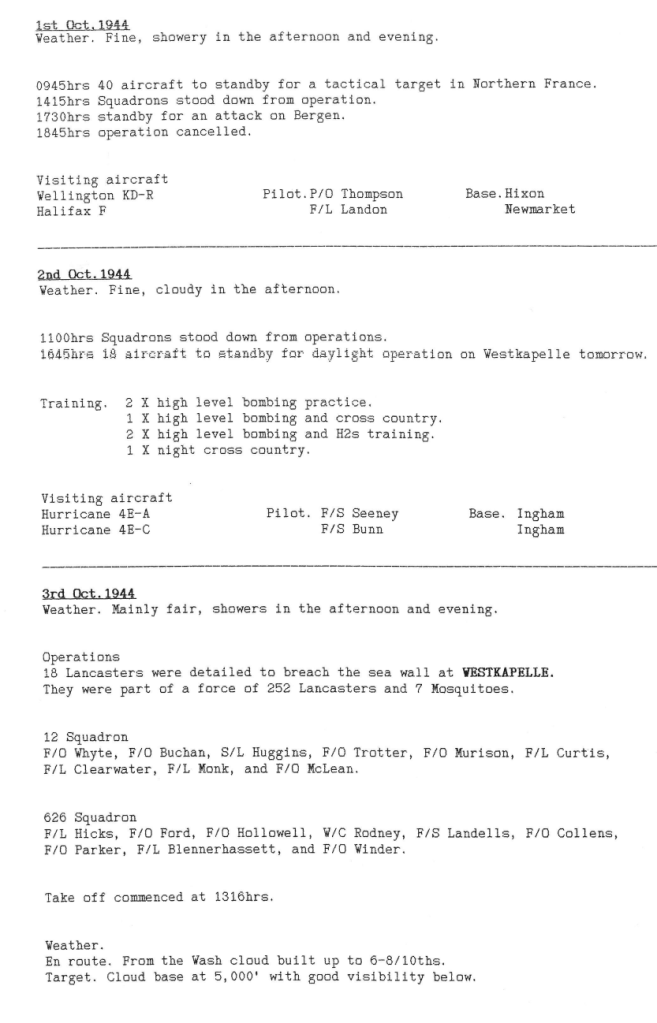
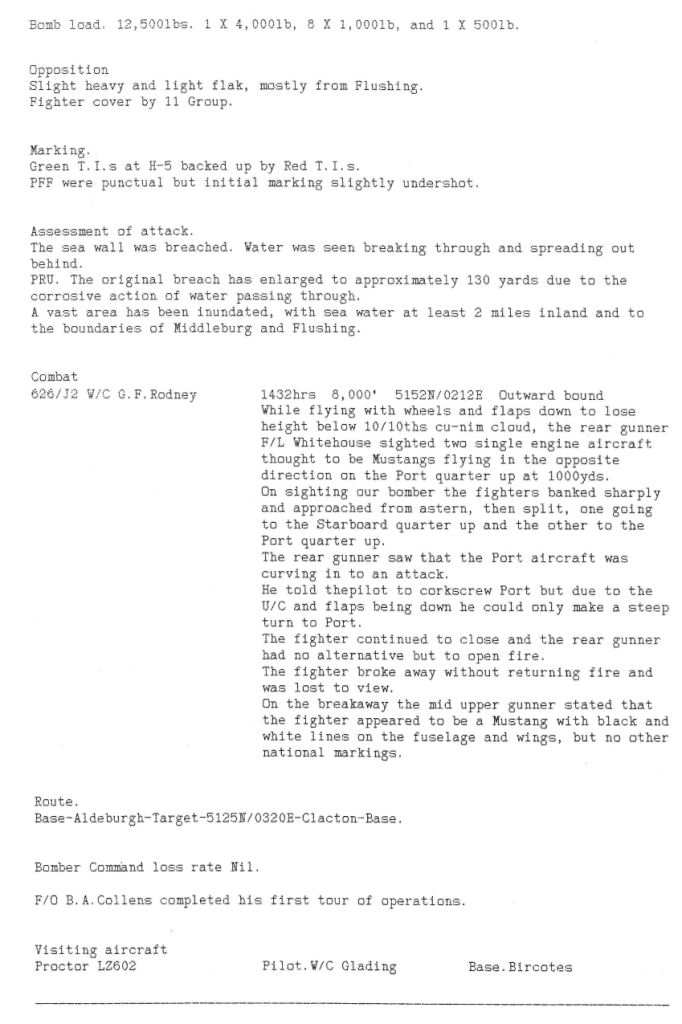
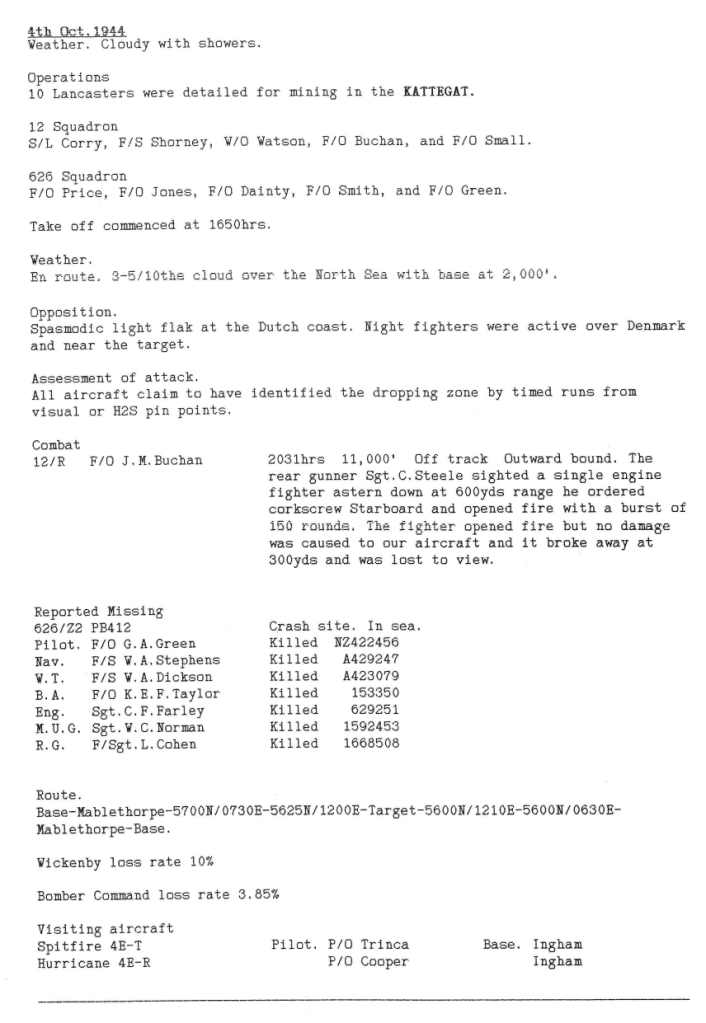
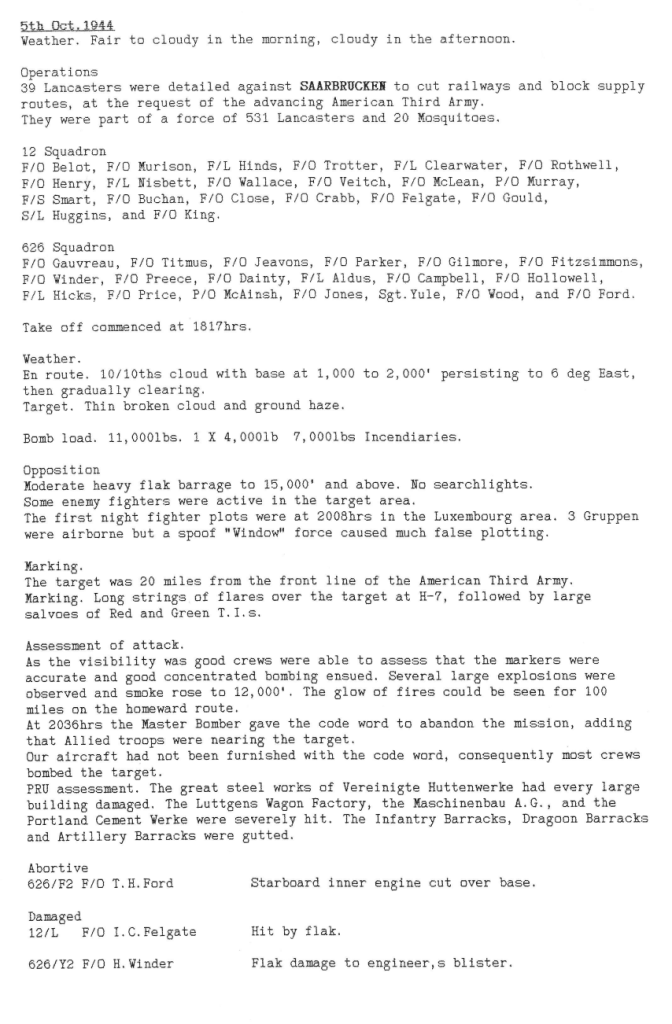
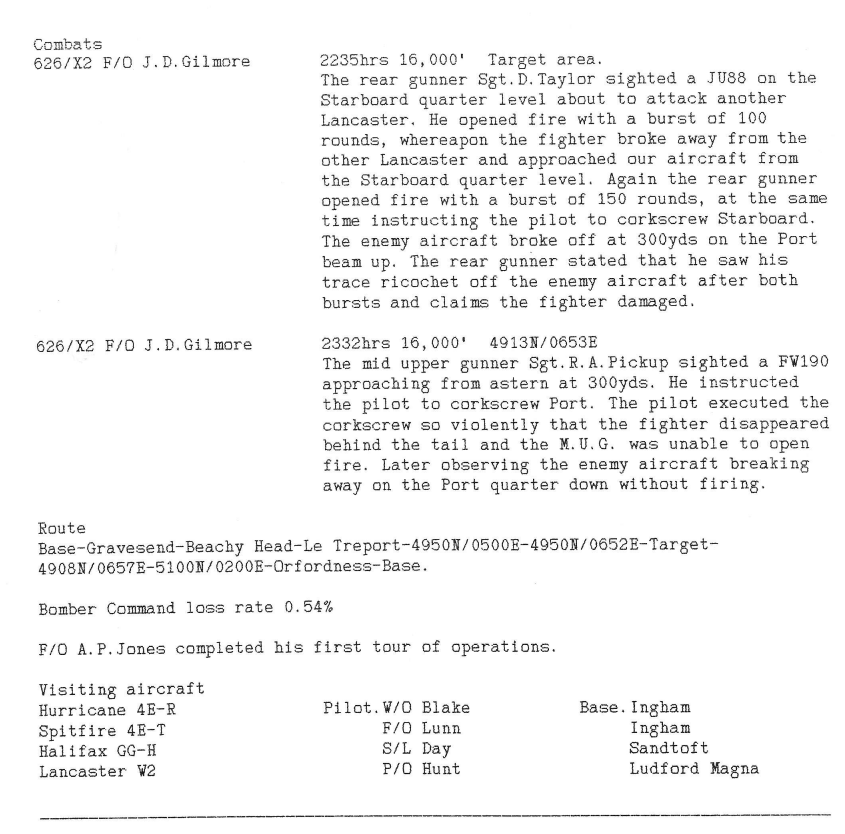
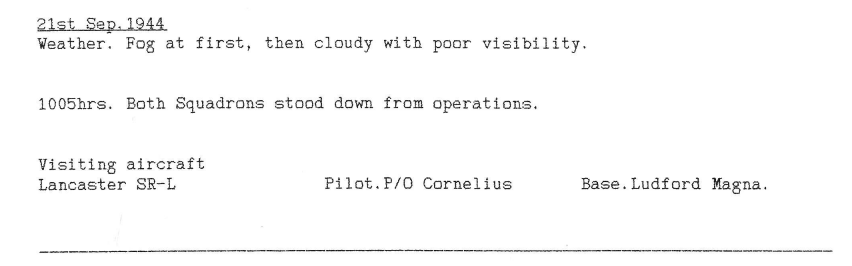
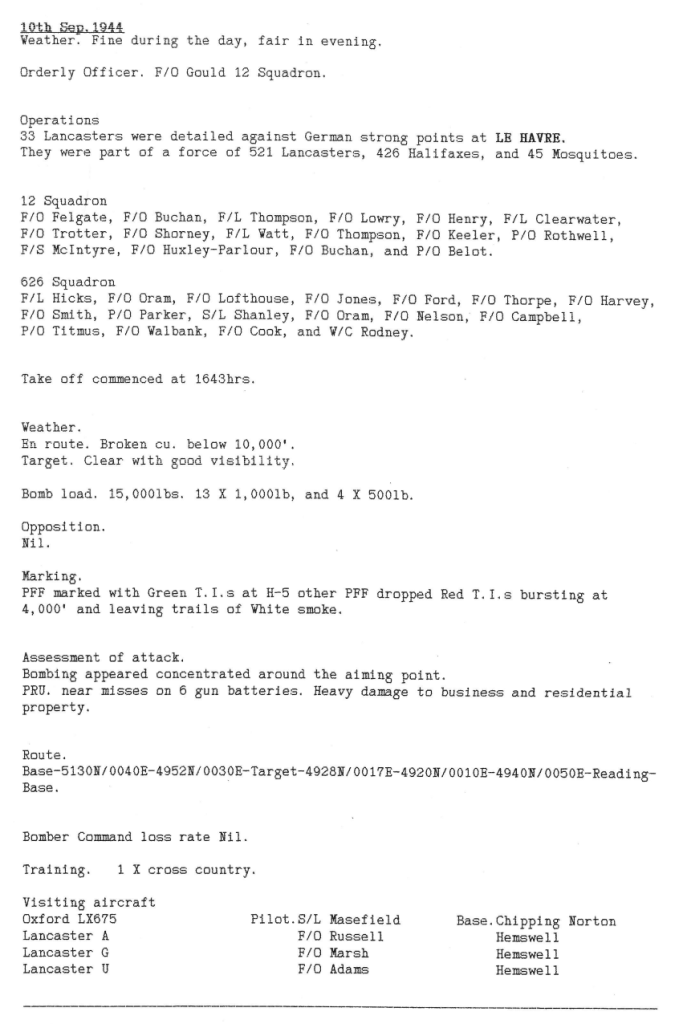
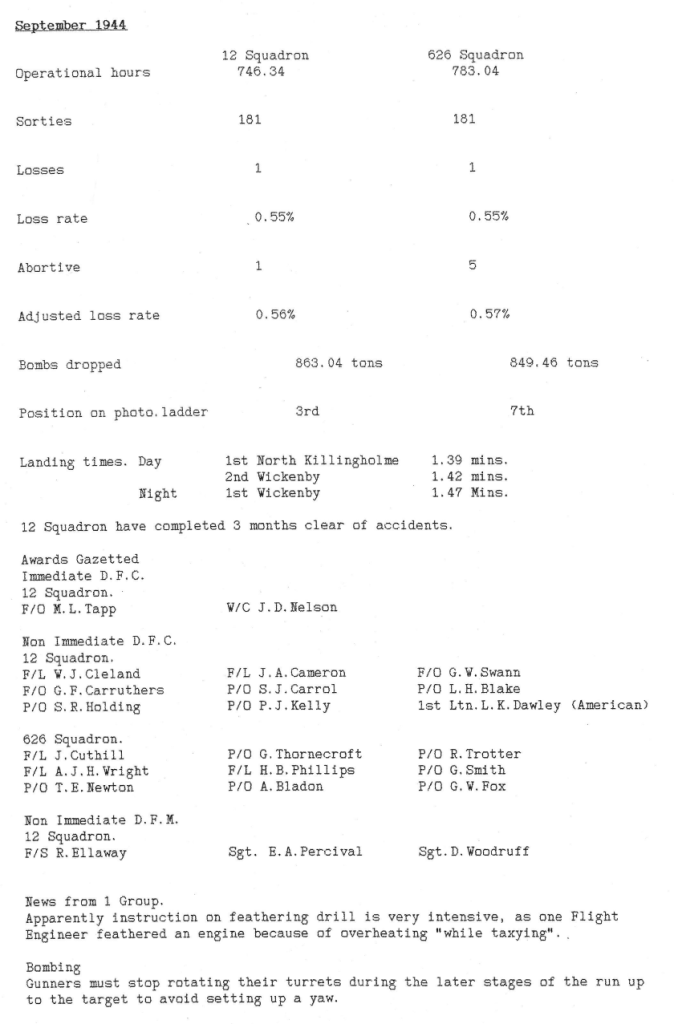
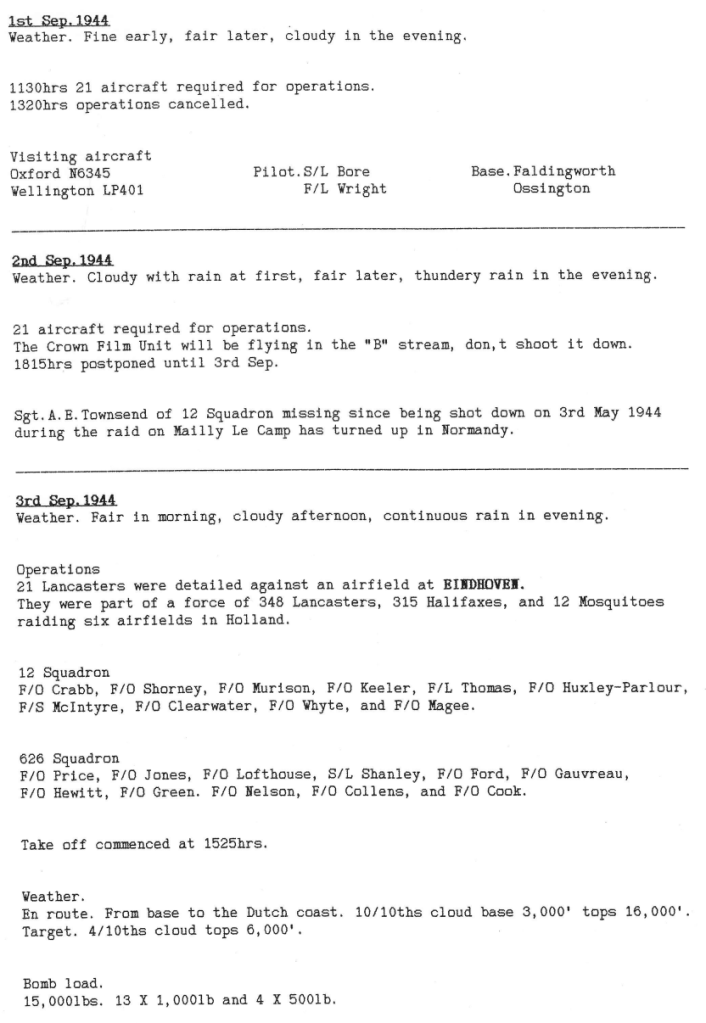
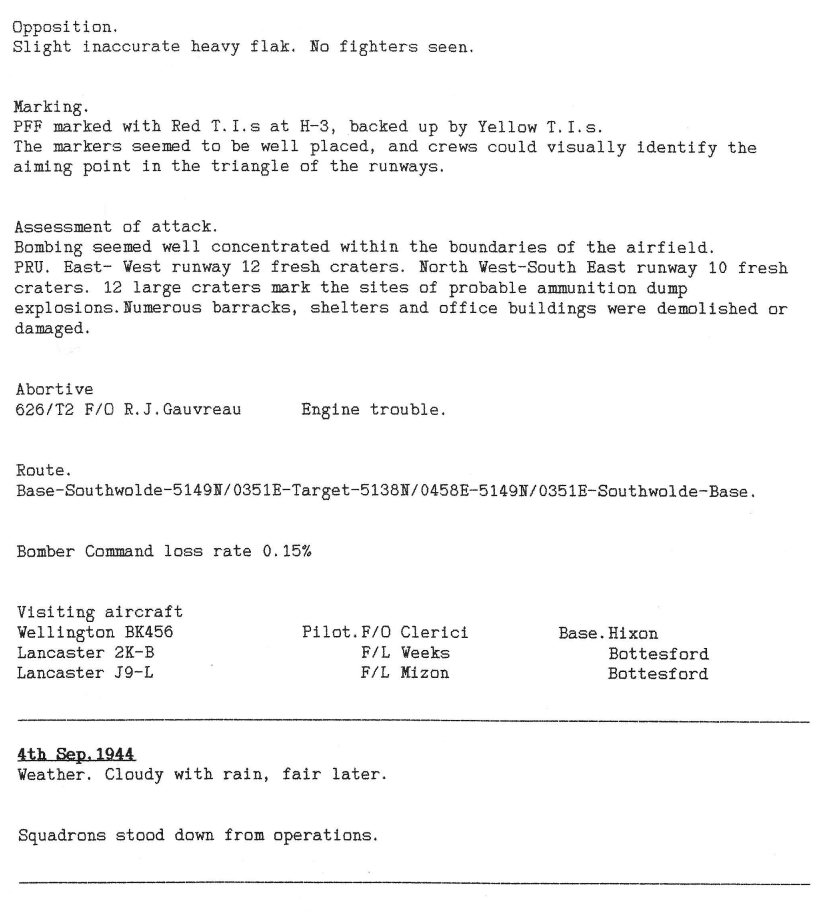
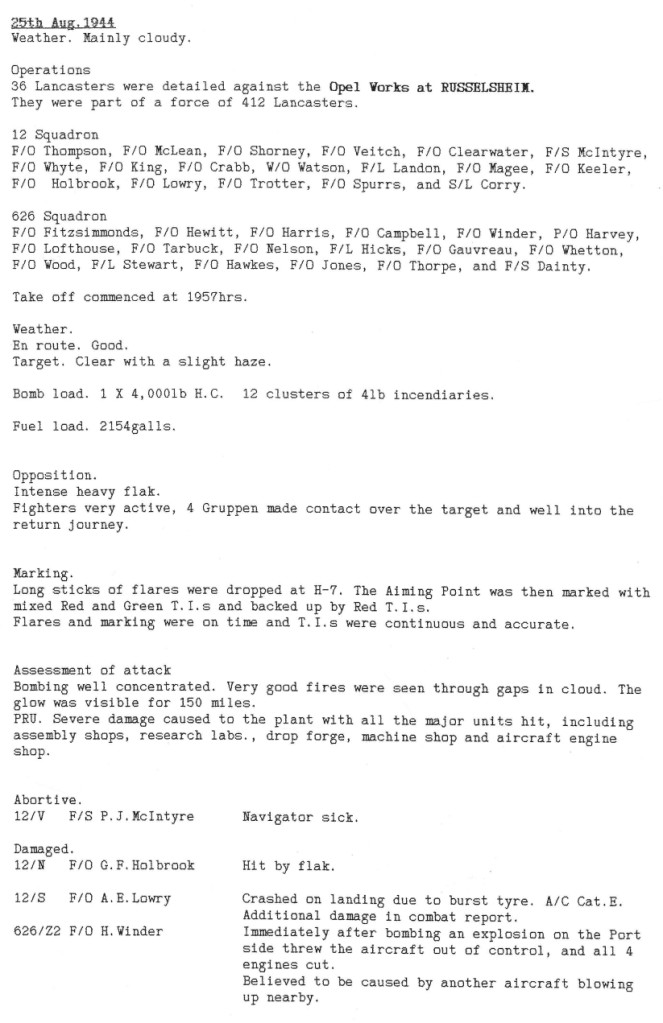
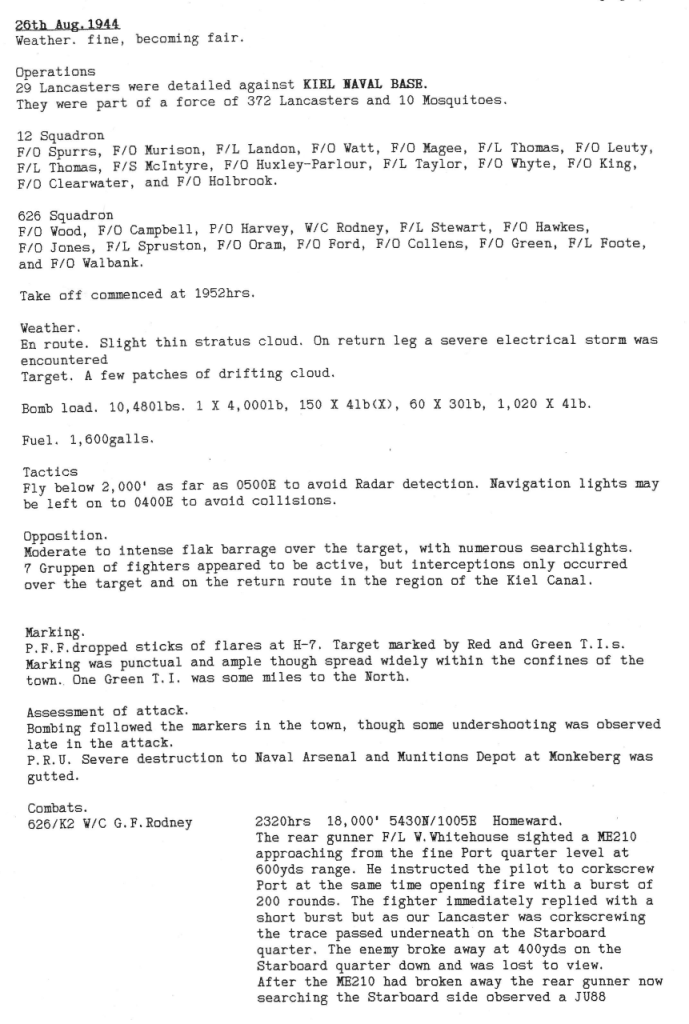
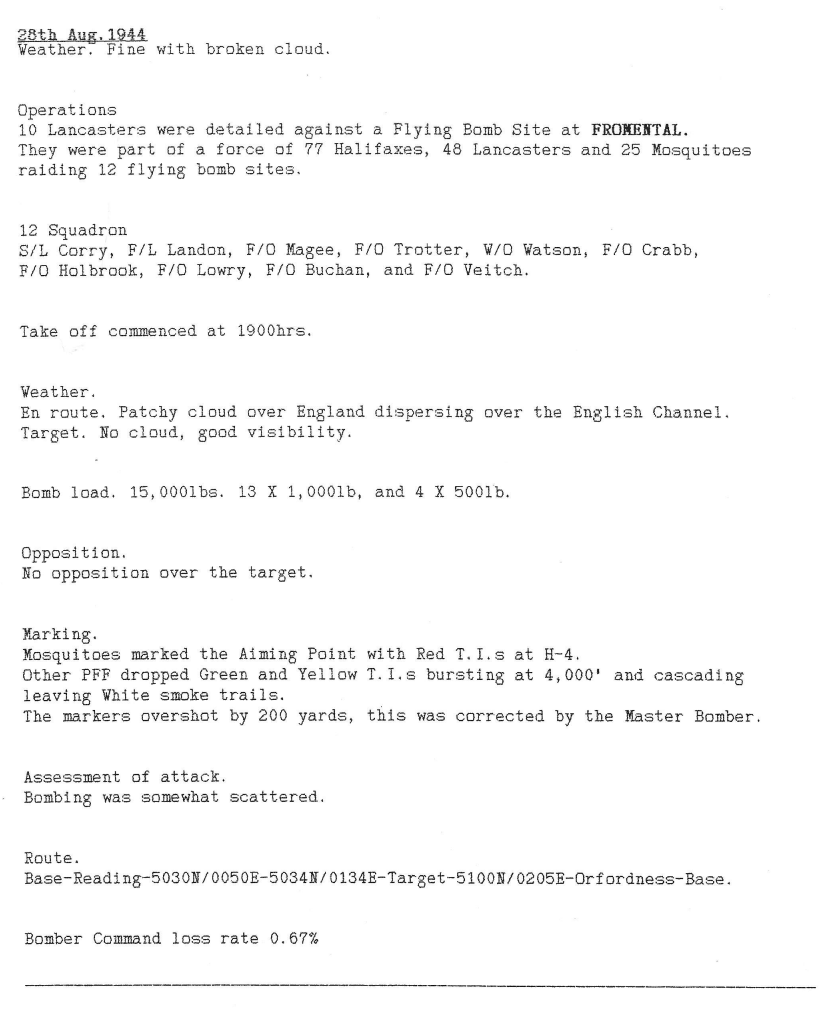
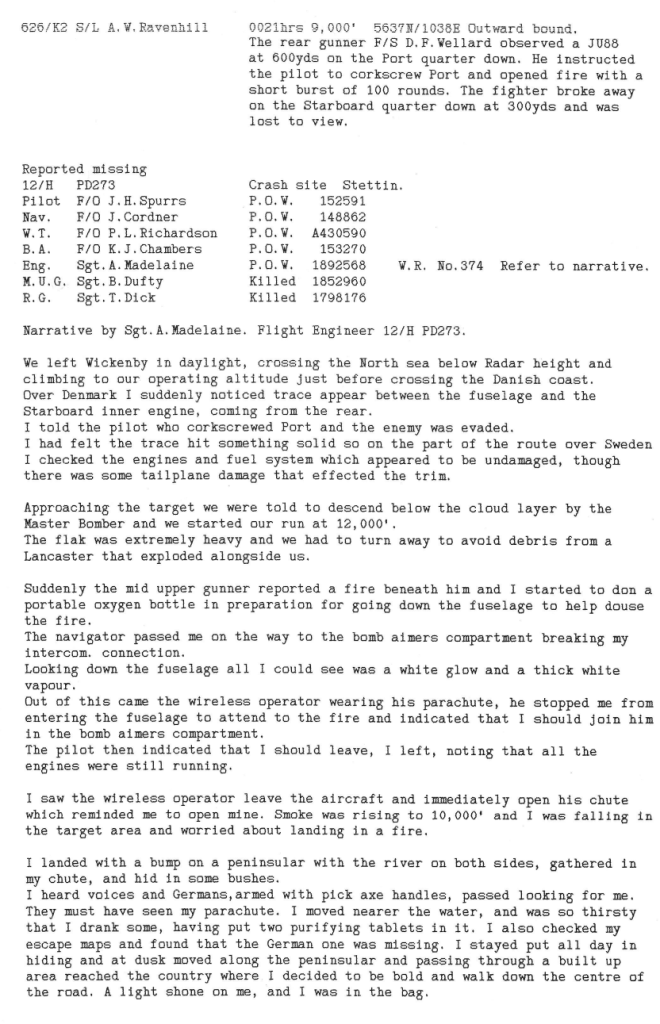
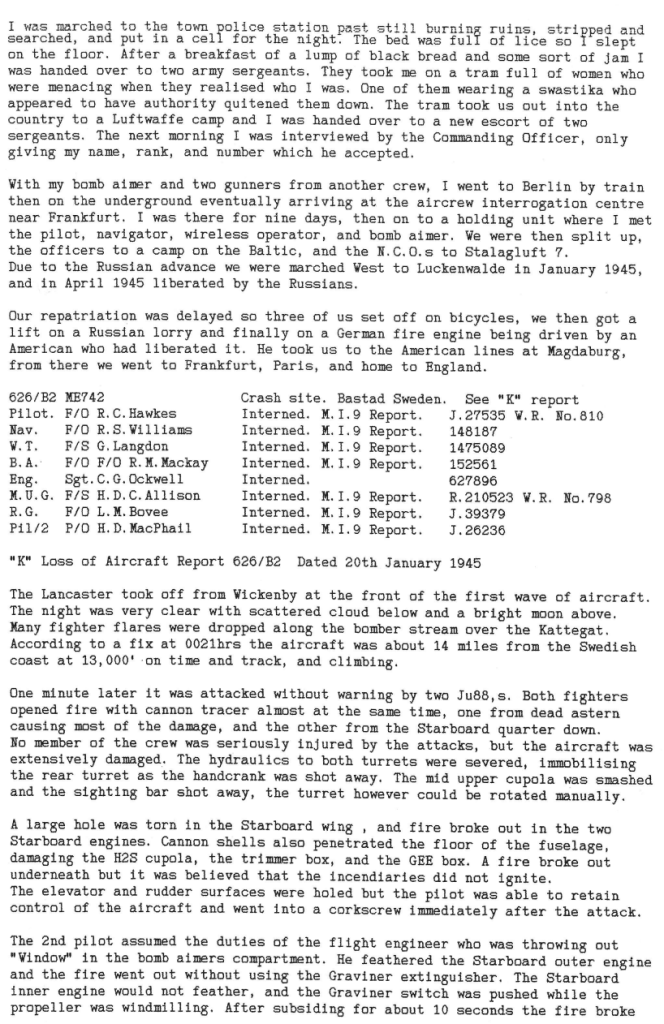
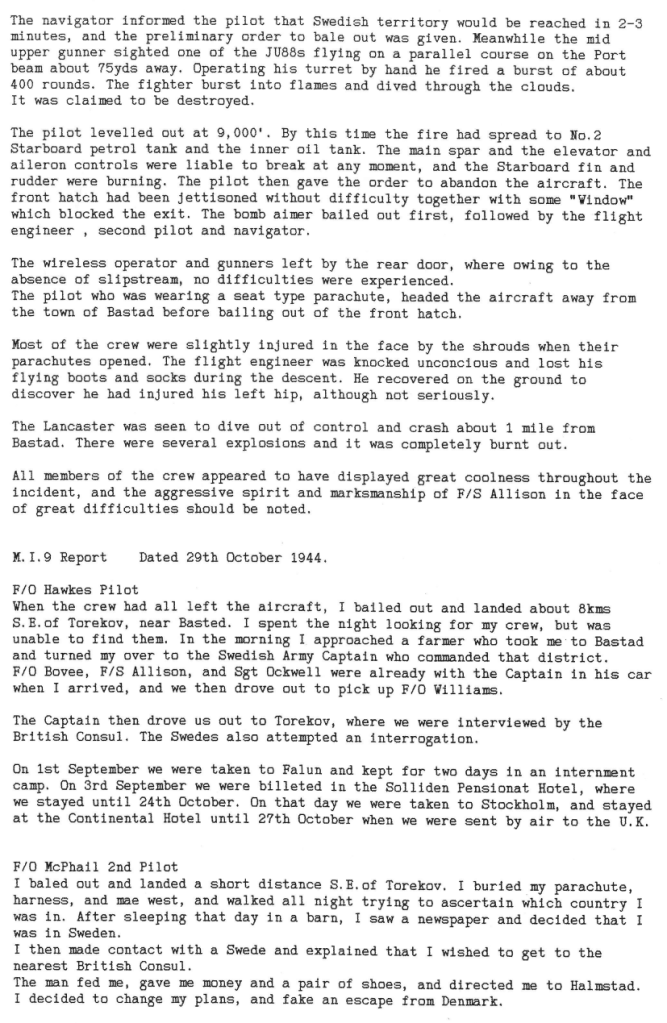
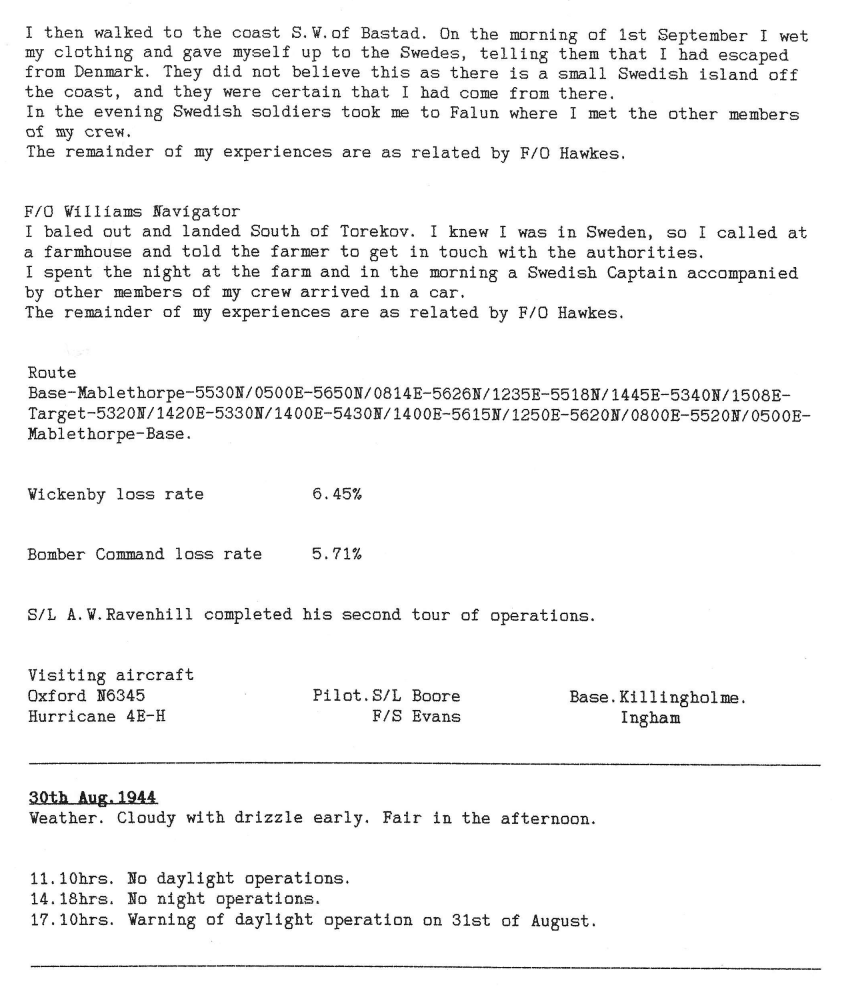
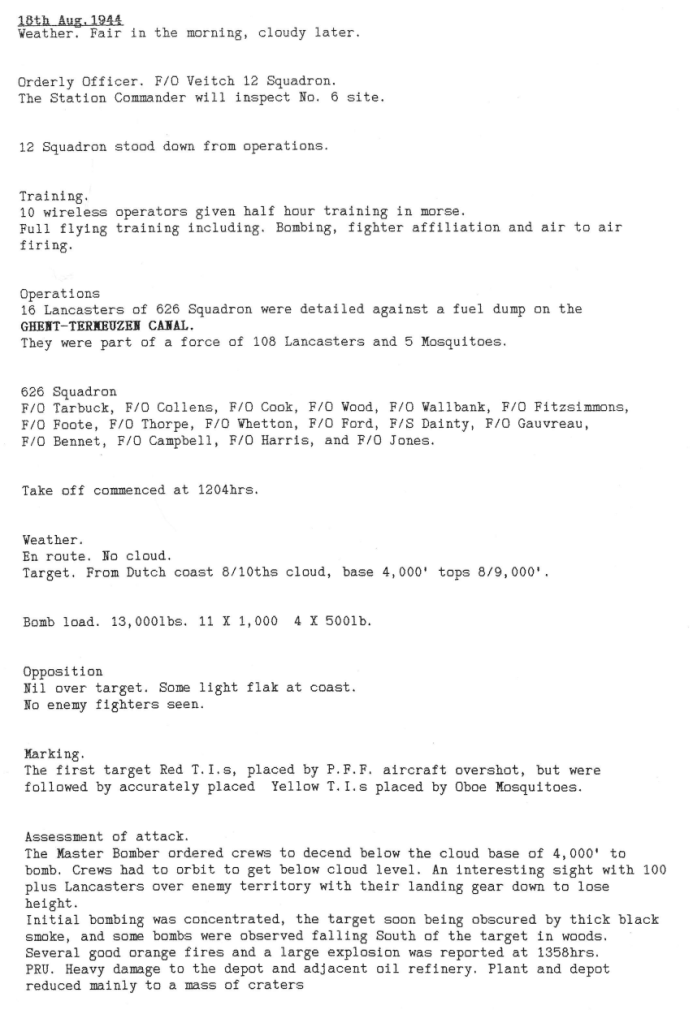
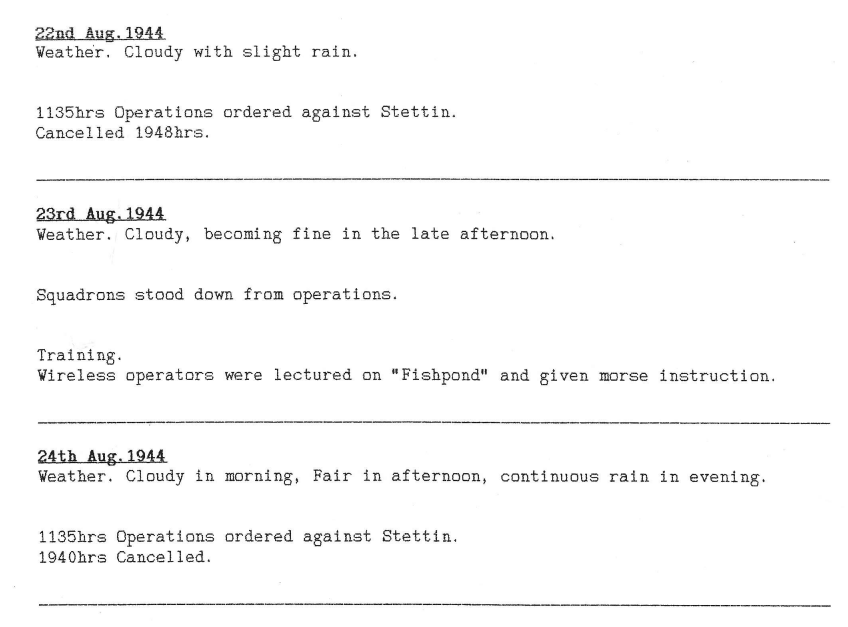
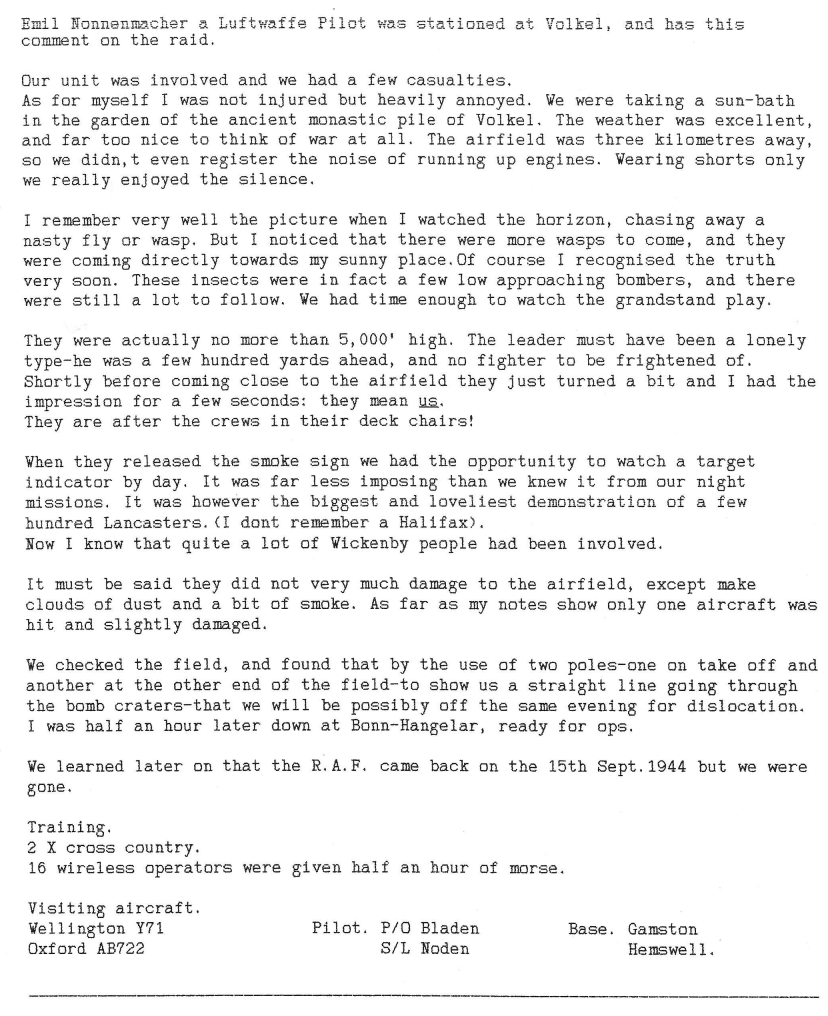
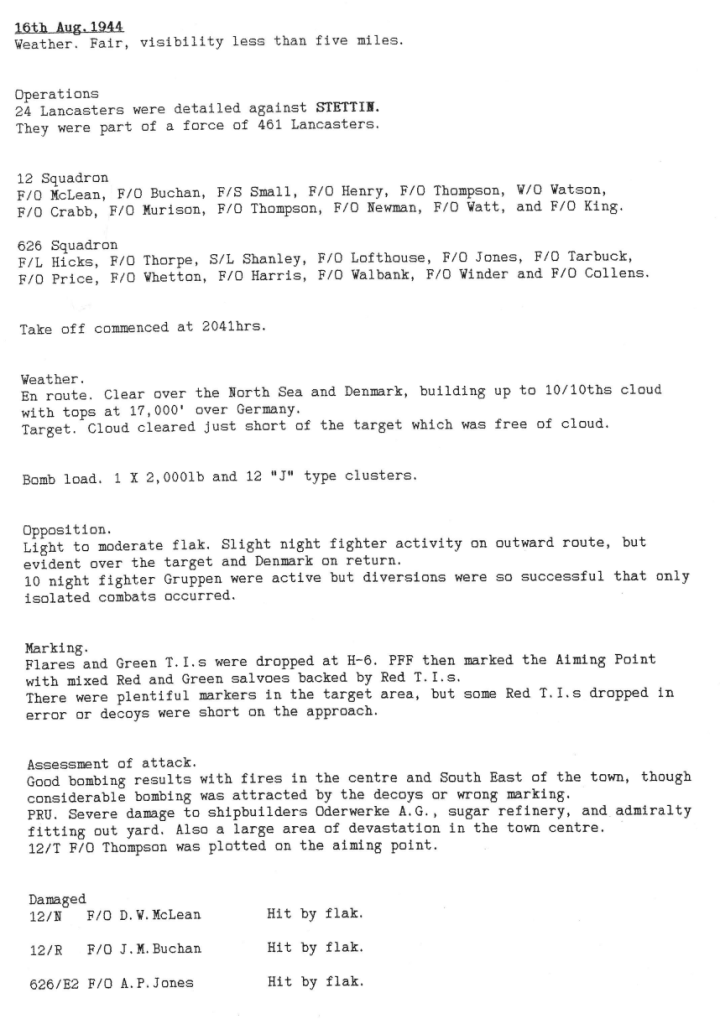
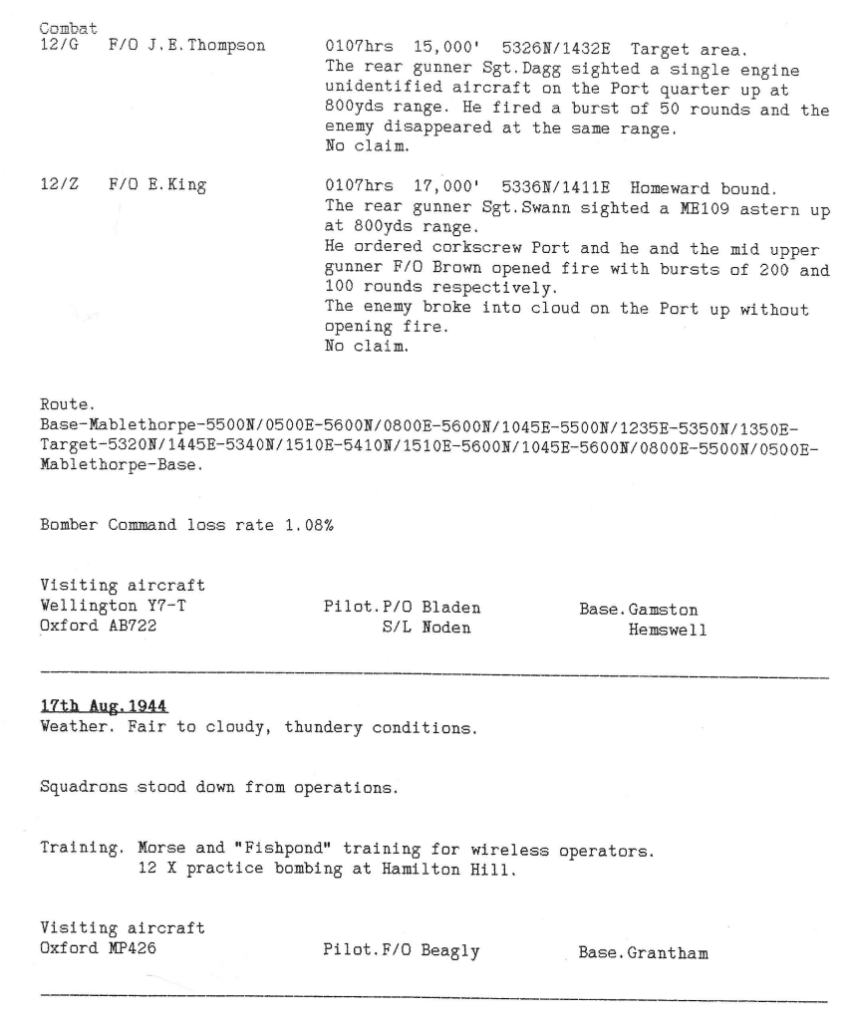
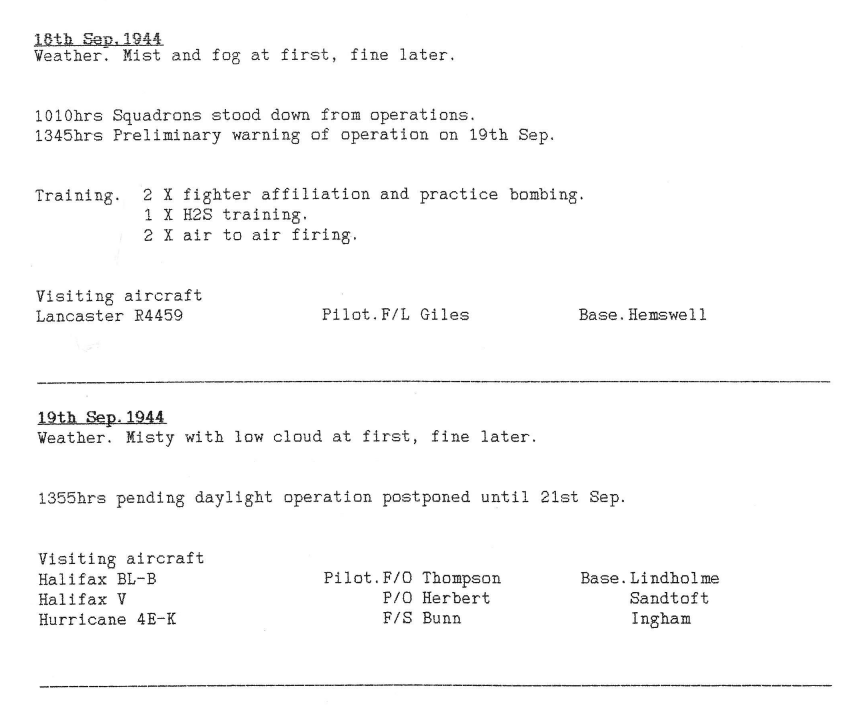
Extract from Station Diary

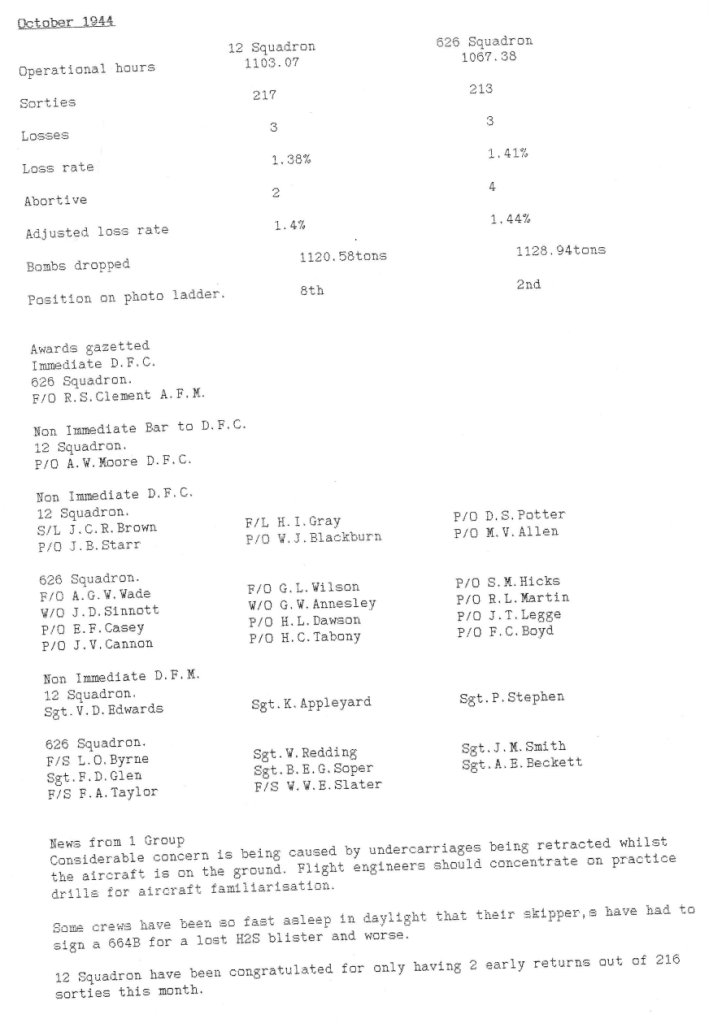
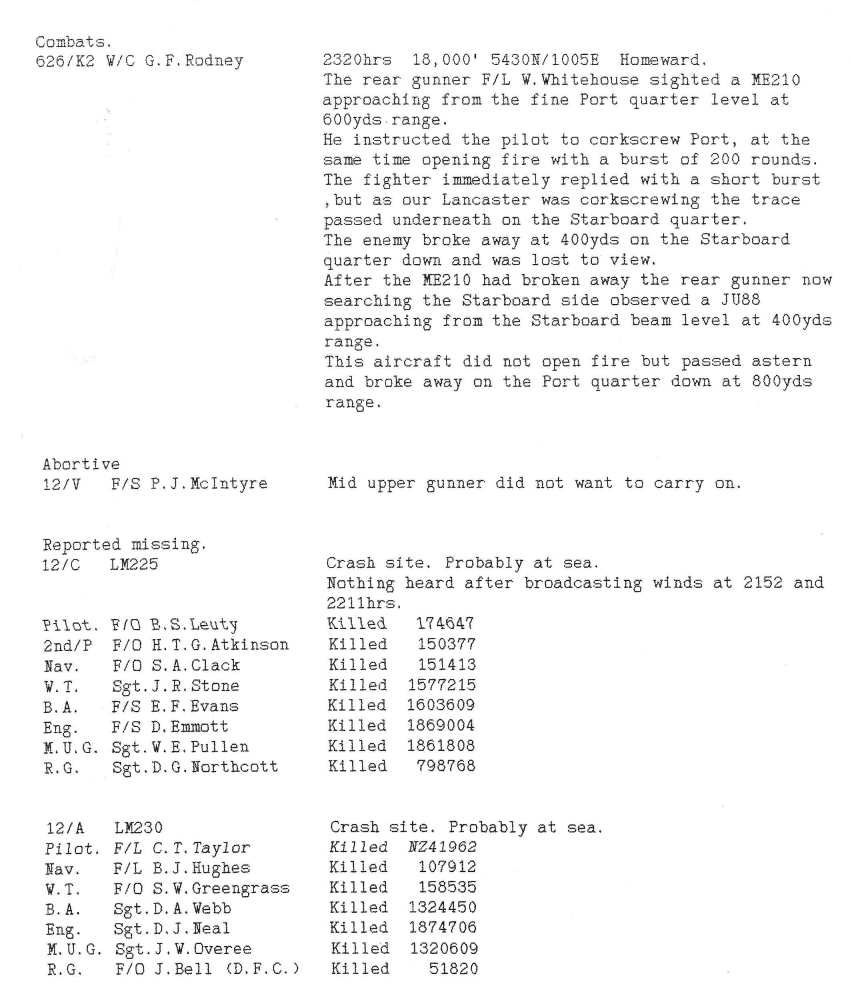
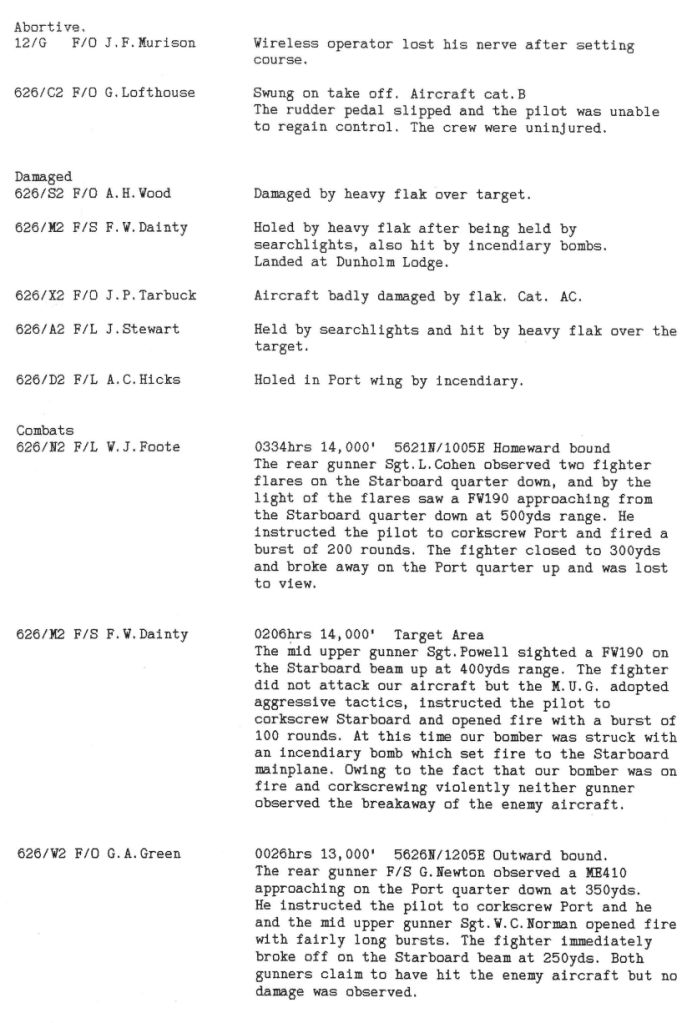
Extract from 626 Sqn Appendix to Operational Record Book
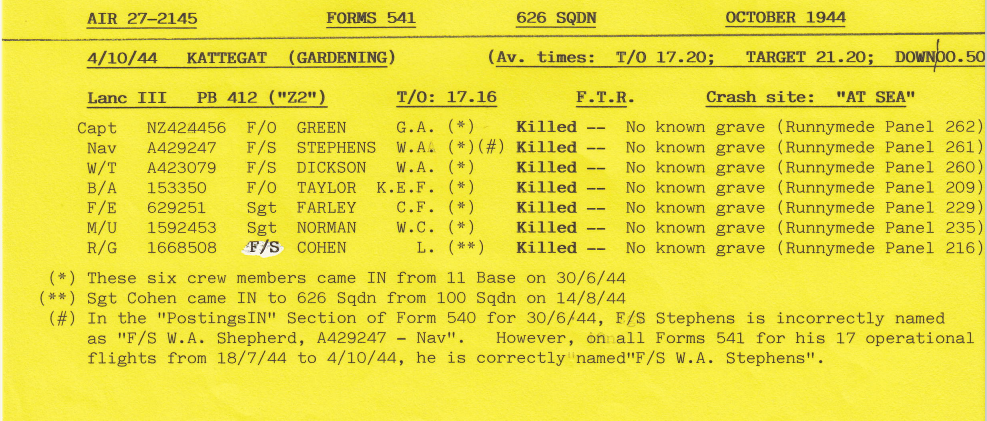
22-28 September 1944

Overview

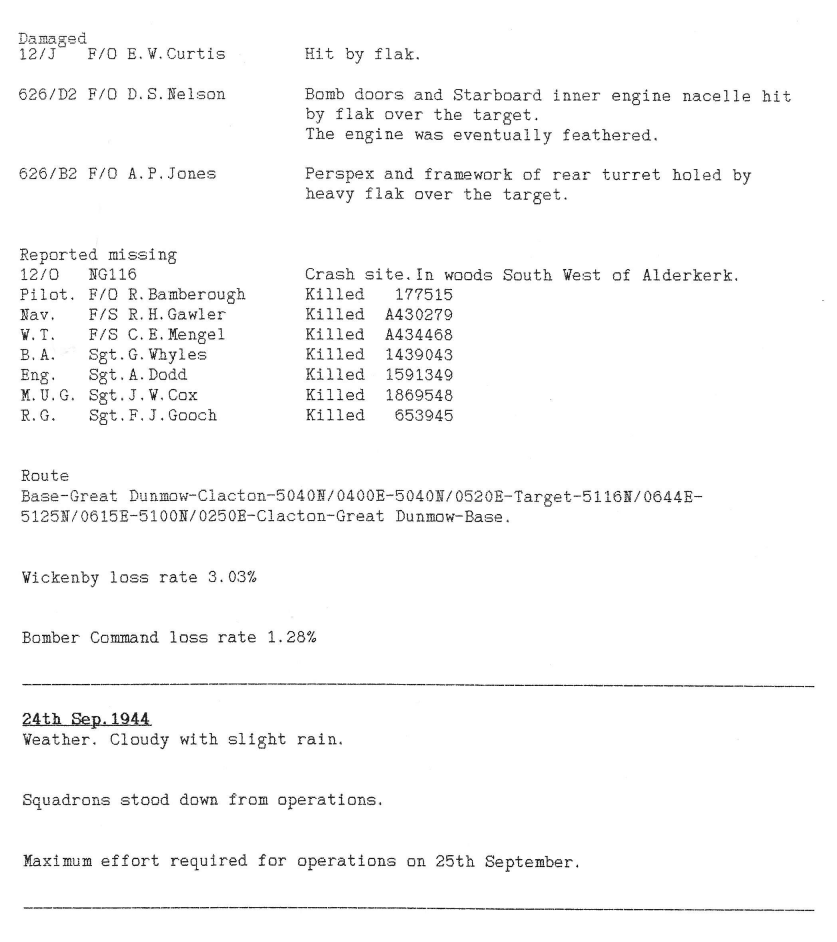
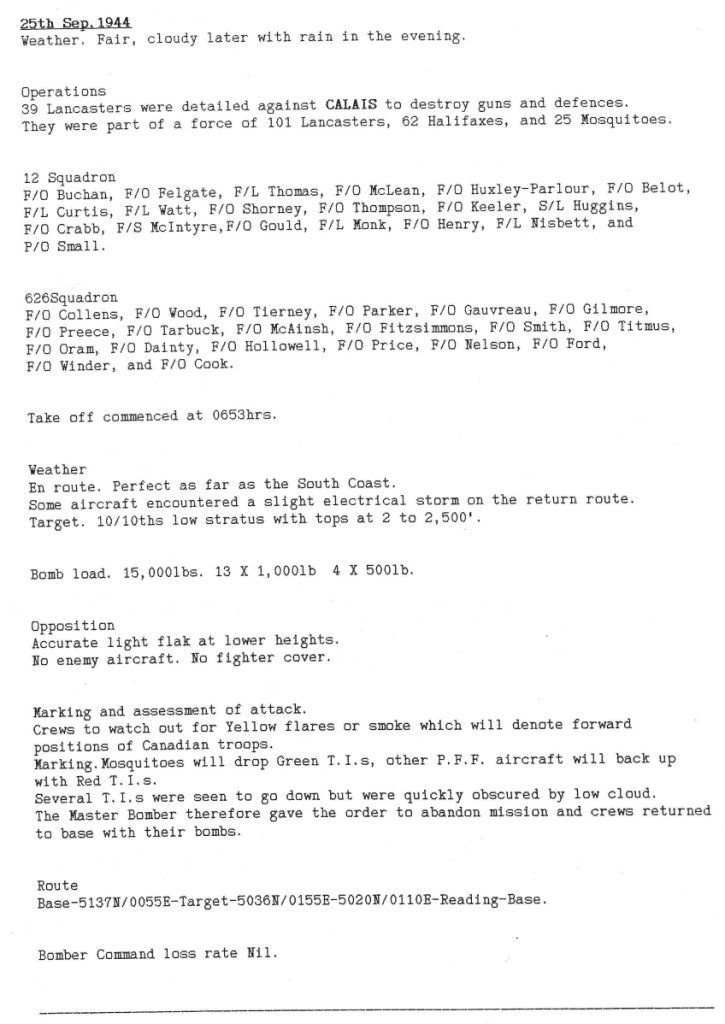
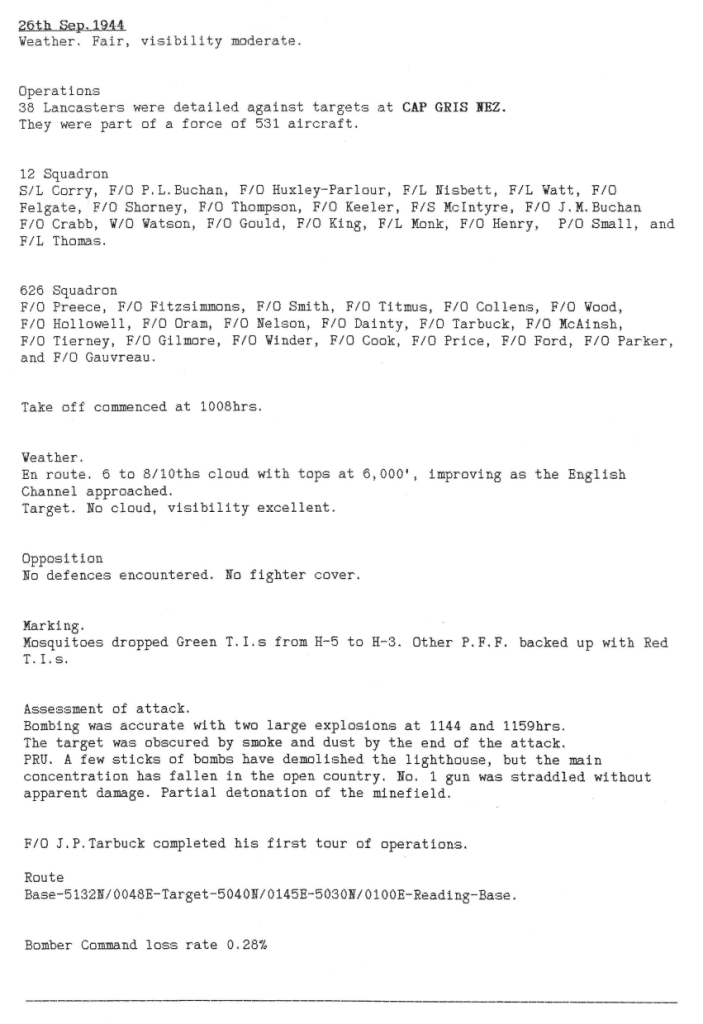
Only 3 missions this week, one of which was cancelled by the master bomber due to cloud covering the target area in Calais – this was probably to prevent bombs landing on friendly troops besieging the port and to reduce civilian casualties. Another point to note is that all the missions were flown in daylight. One aircraft with the entire crew were lost.

Extract from Station Diary

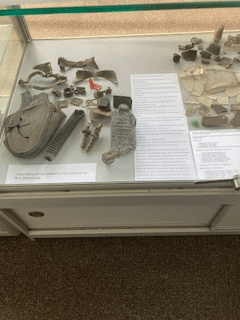
Some of the items recovered from the crash of Flying Officer Bamberough’s aircraft, which have been kindly loaned to the RAF Wickenby museum by Rick Greenfield

Extract from 12 Sqn Appendix to Operational Record Book
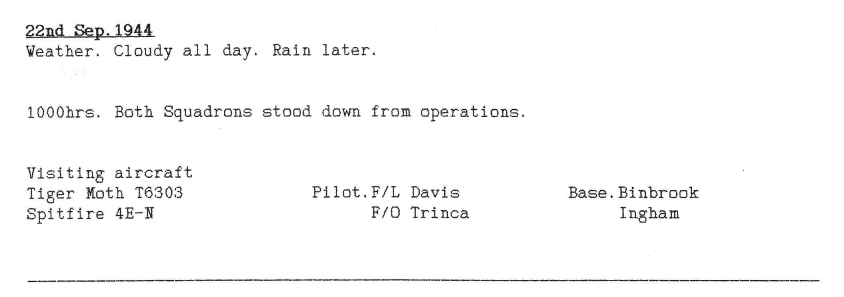
8-14 September 1944

Overview

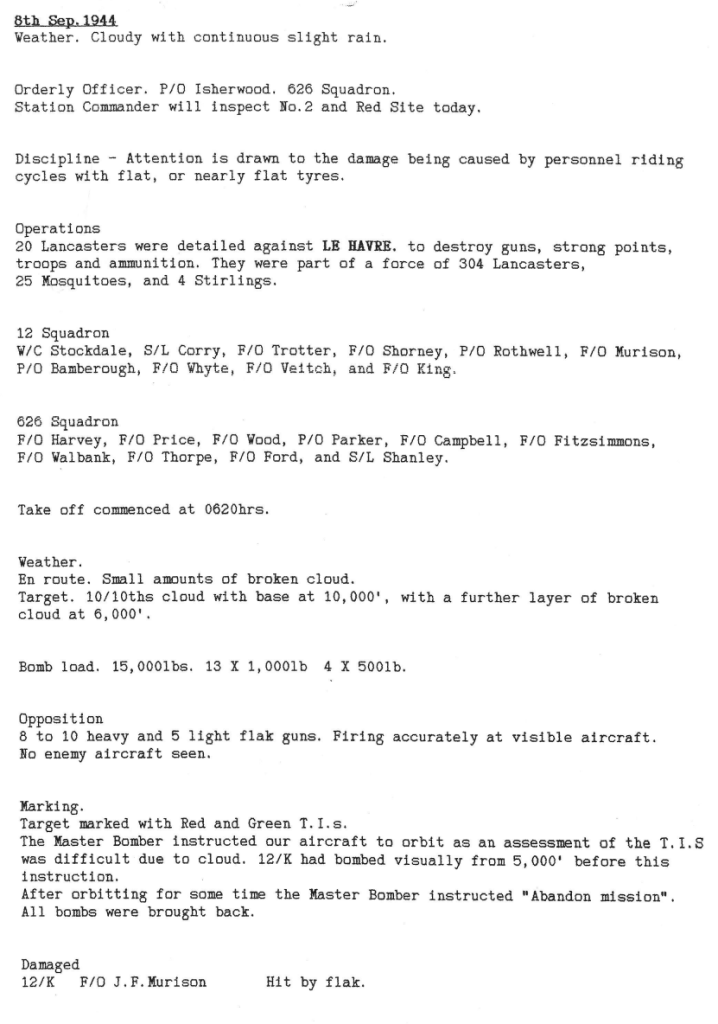
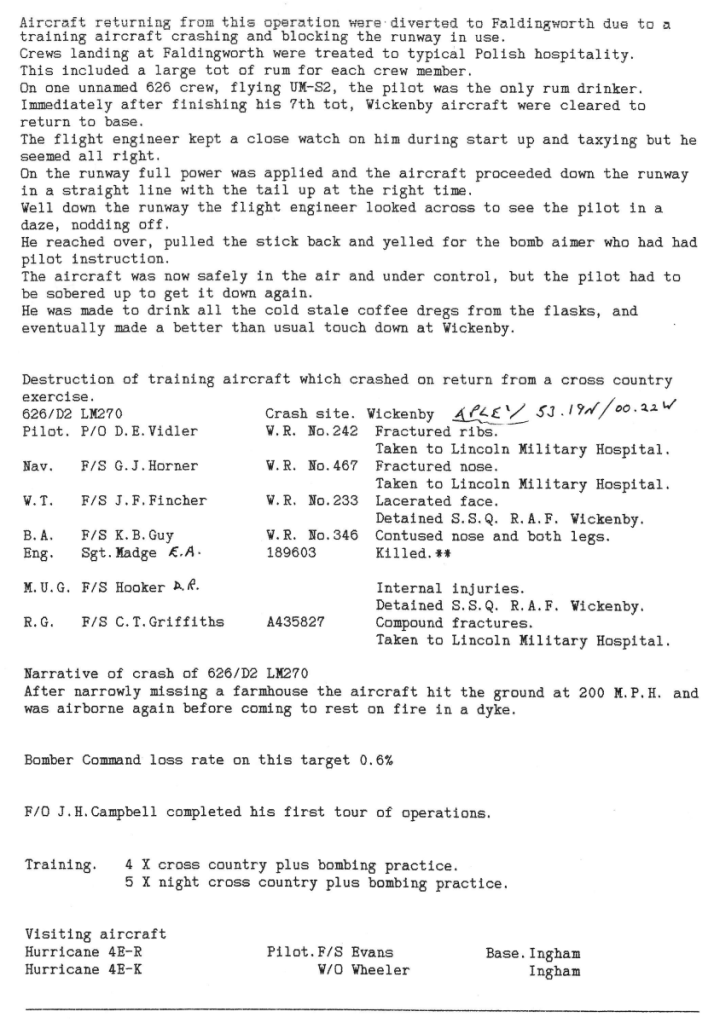
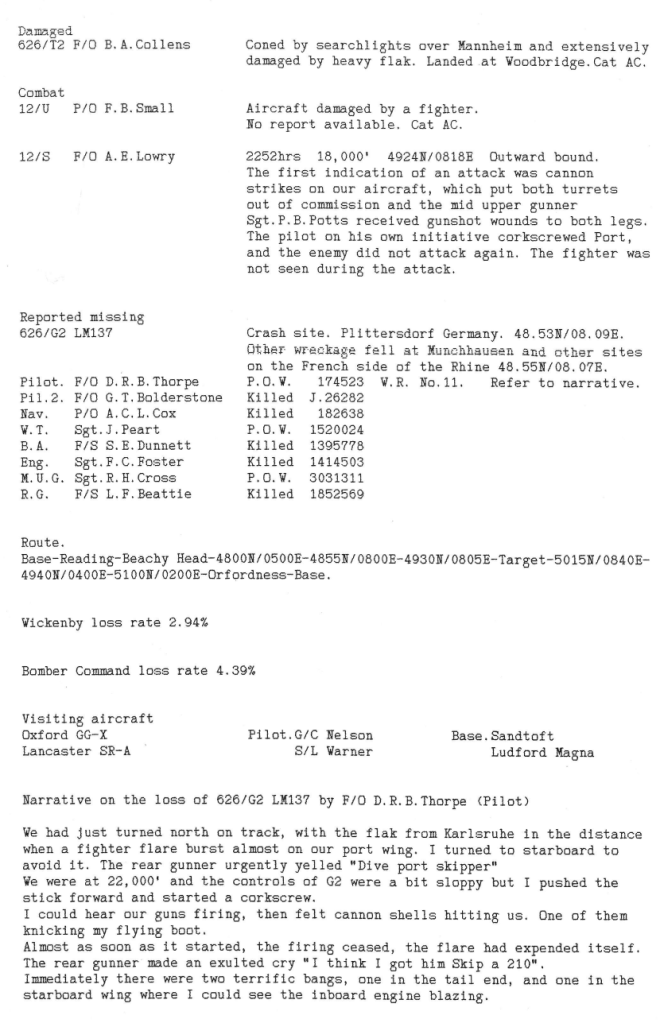
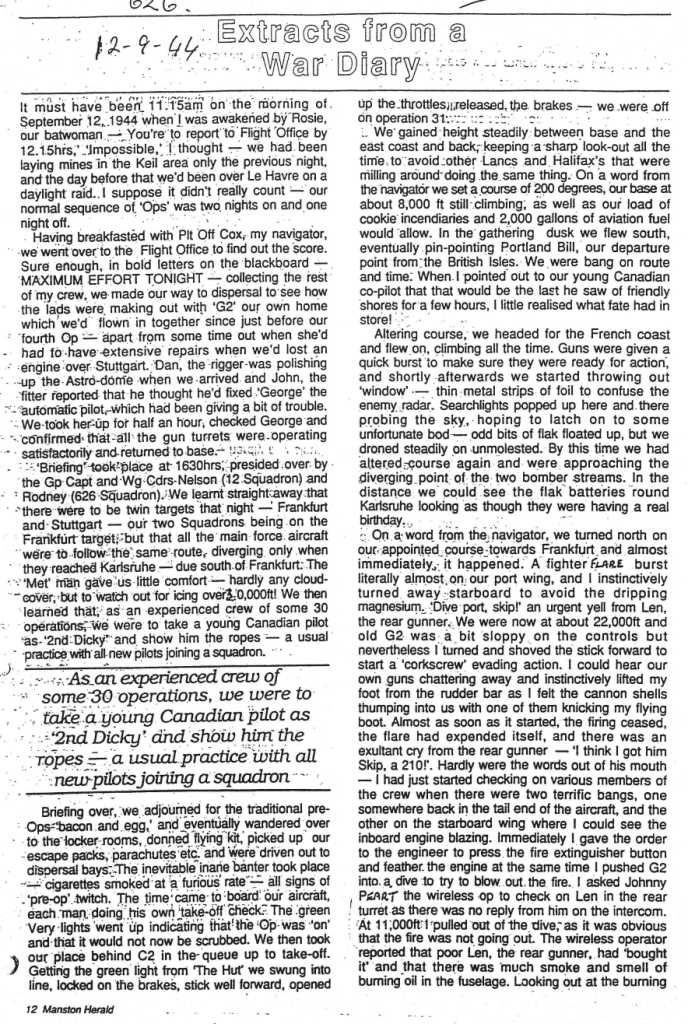
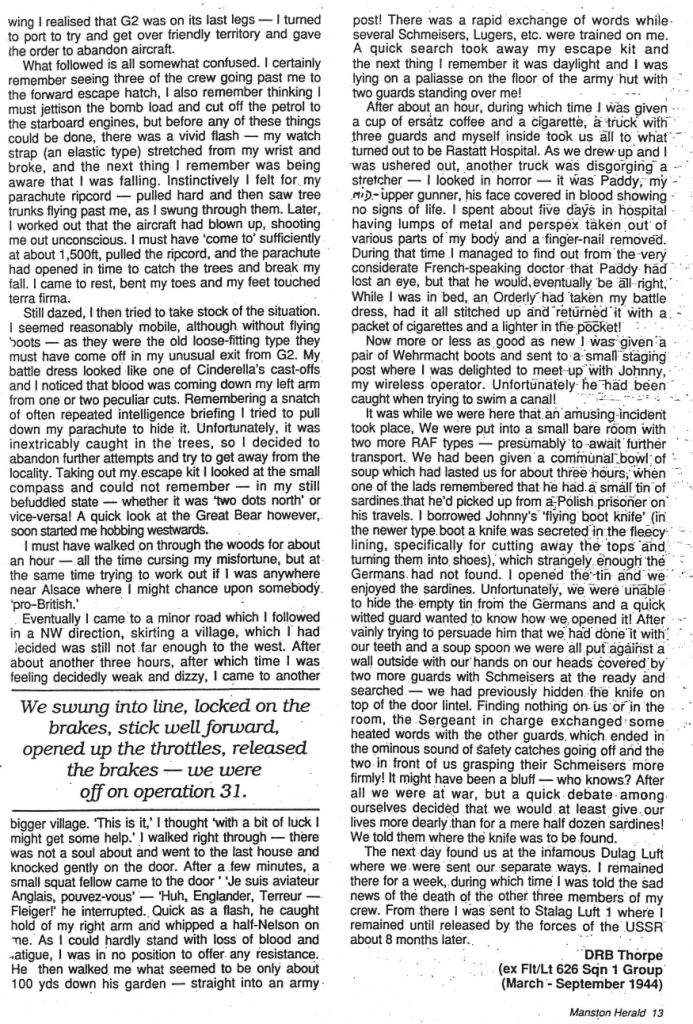
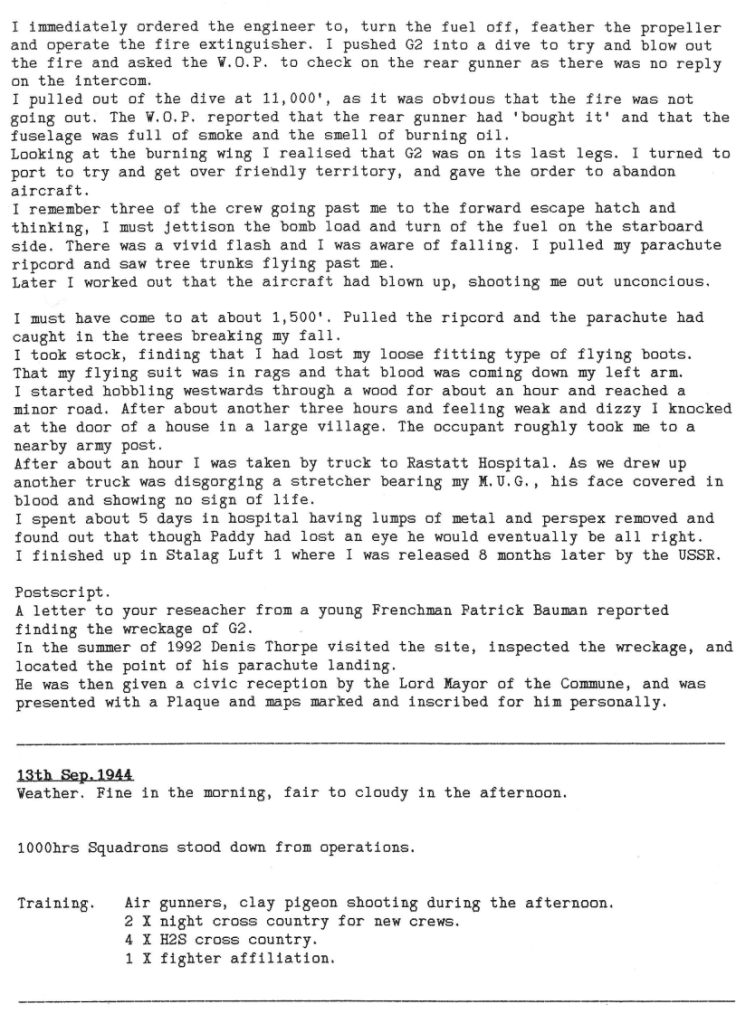
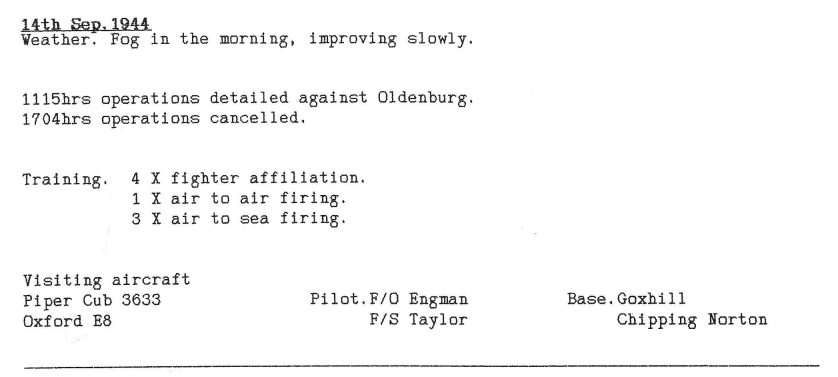
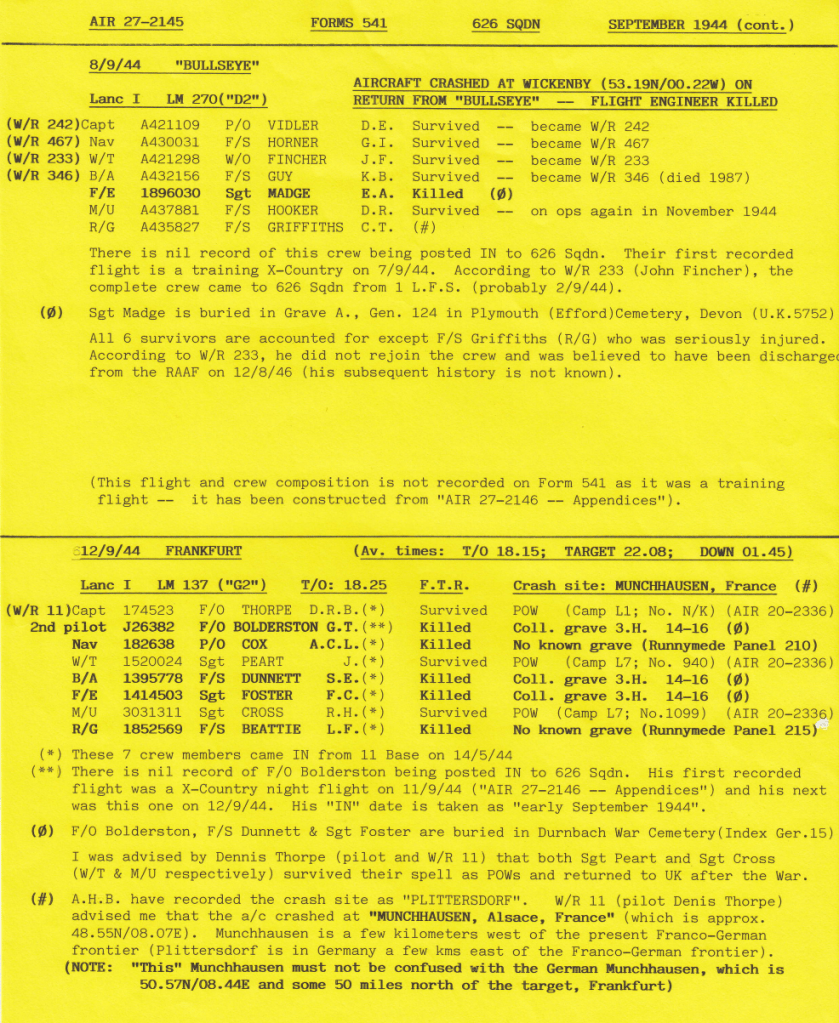
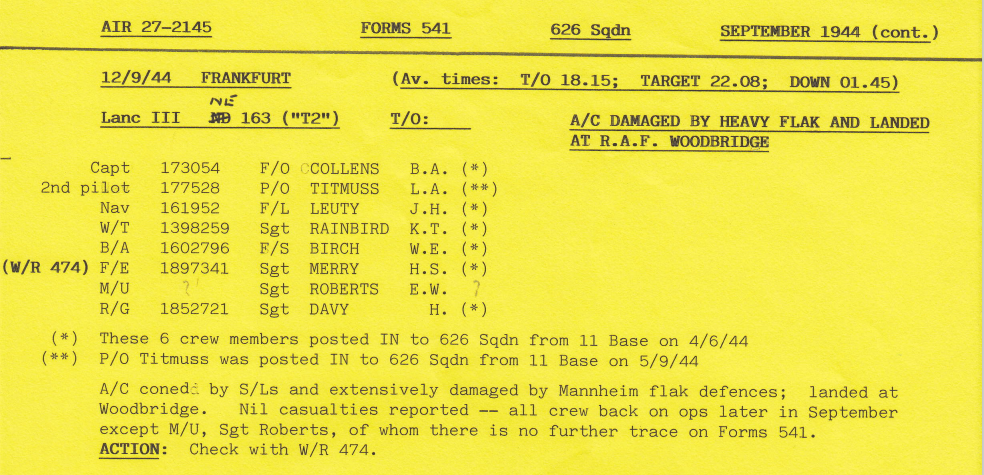
Wickenby aircraft attacked Le Havre twice this week along with a minelaying operation and an attack on Frankfurt. One aircraft was lost on the Frankfurt raid, with 5 crew members killed and 3 becoming POW’s, another aircraft crash landed near Wickenby on a training exercise (with several crew members badly injured and the flight engineer killed) which caused all the aircraft on one of the Le Havre raids to divert to RAF Faldingworth, home of a Polish bomber squadron – the humorous results of this diversion are detailed in the Station Diary.

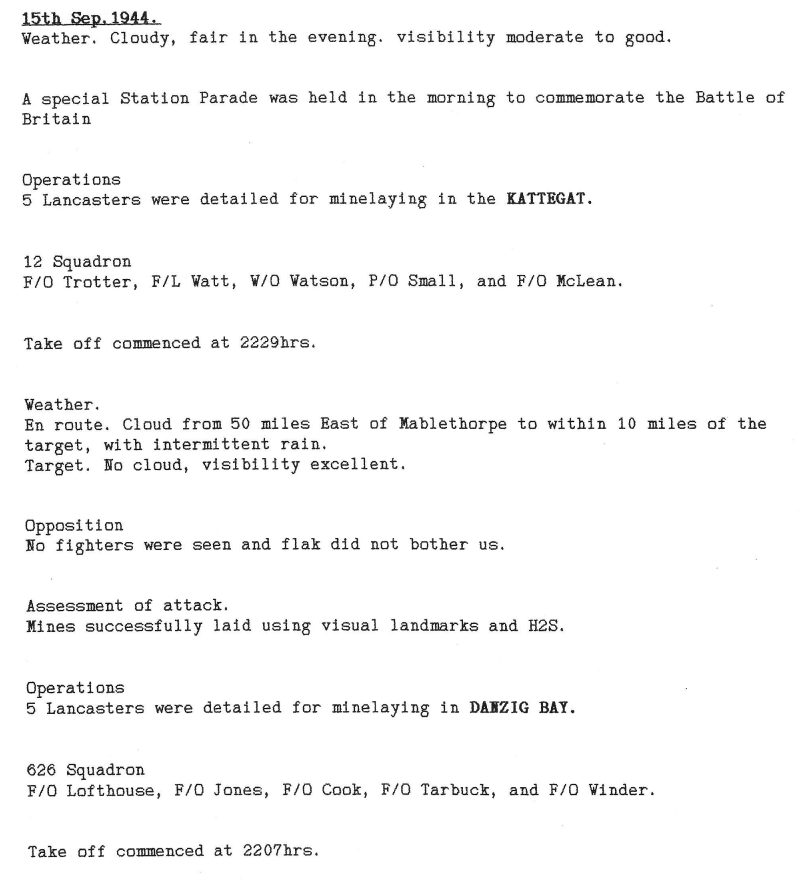
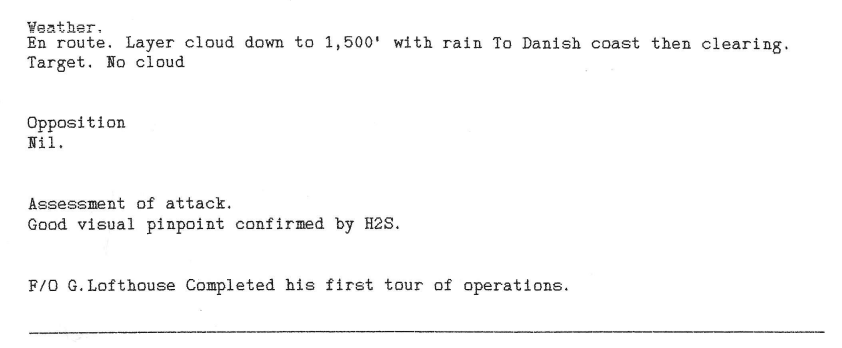
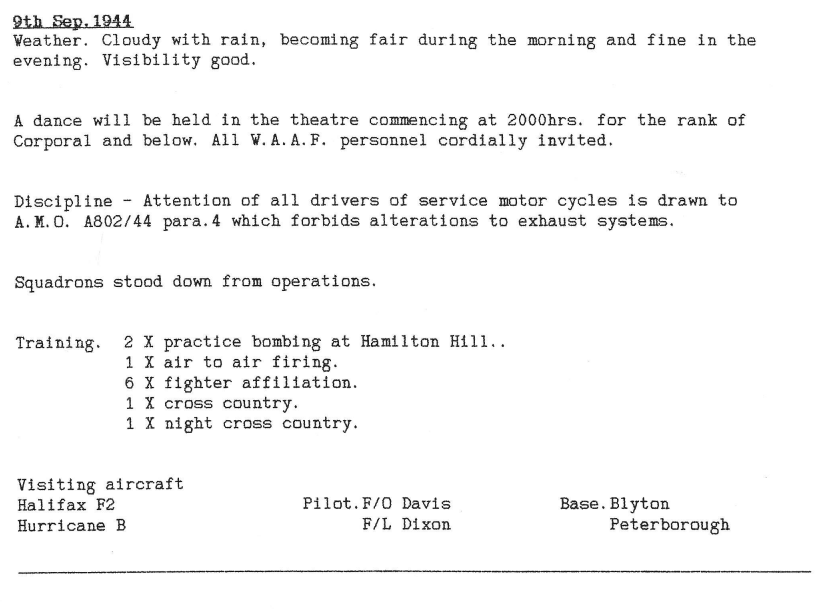
Extract from Station Diary

Extract from 626 Sqn Appendix to Operational Record Book
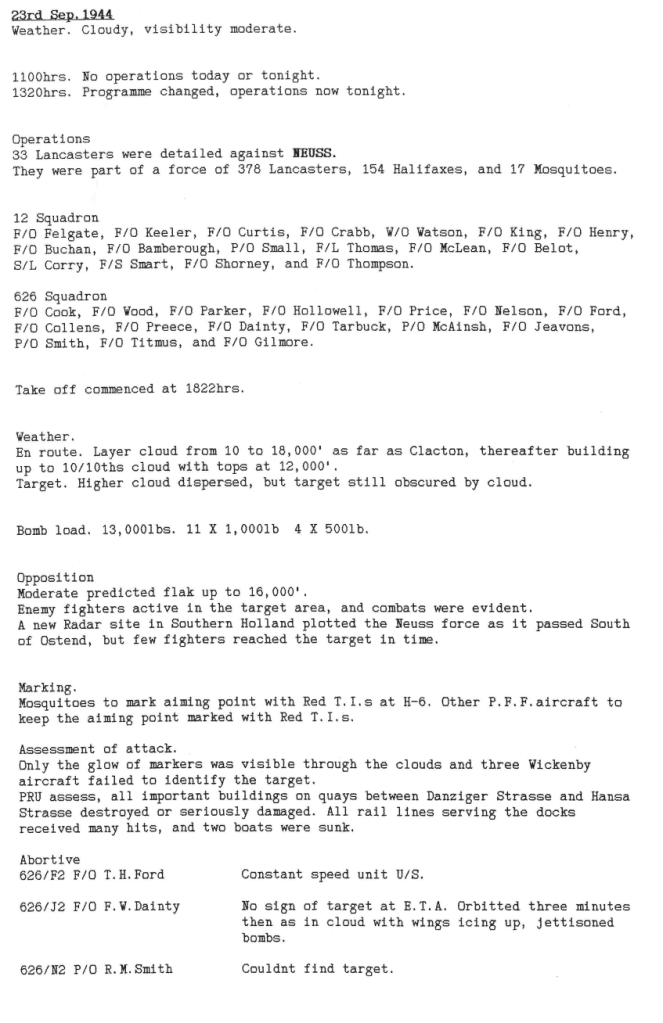
25-31 August 1944

Overview

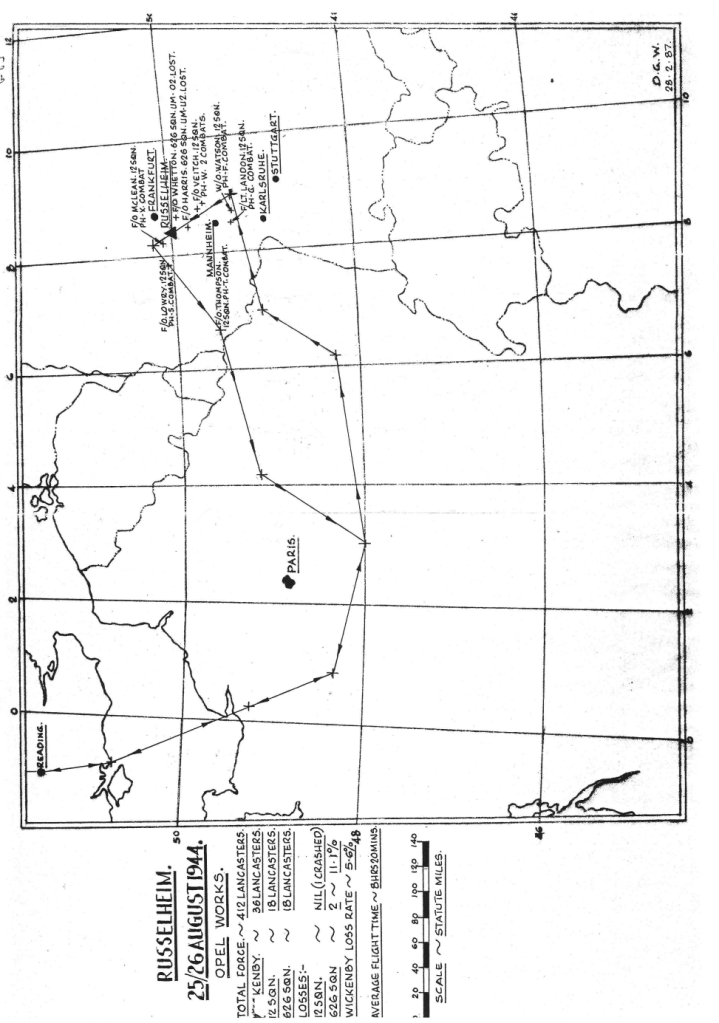
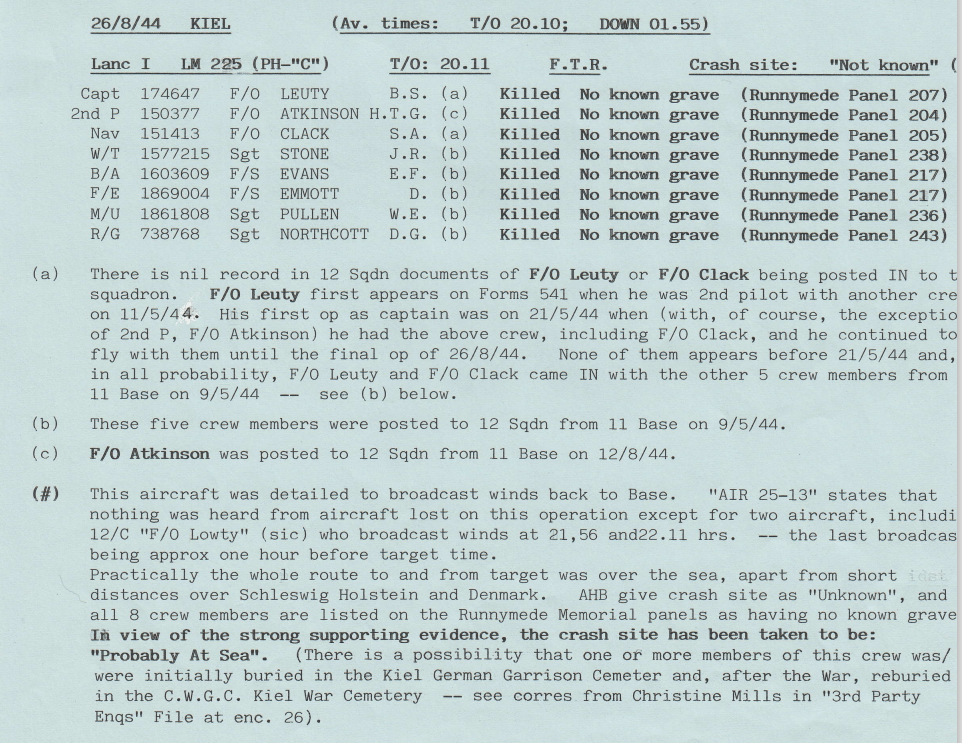
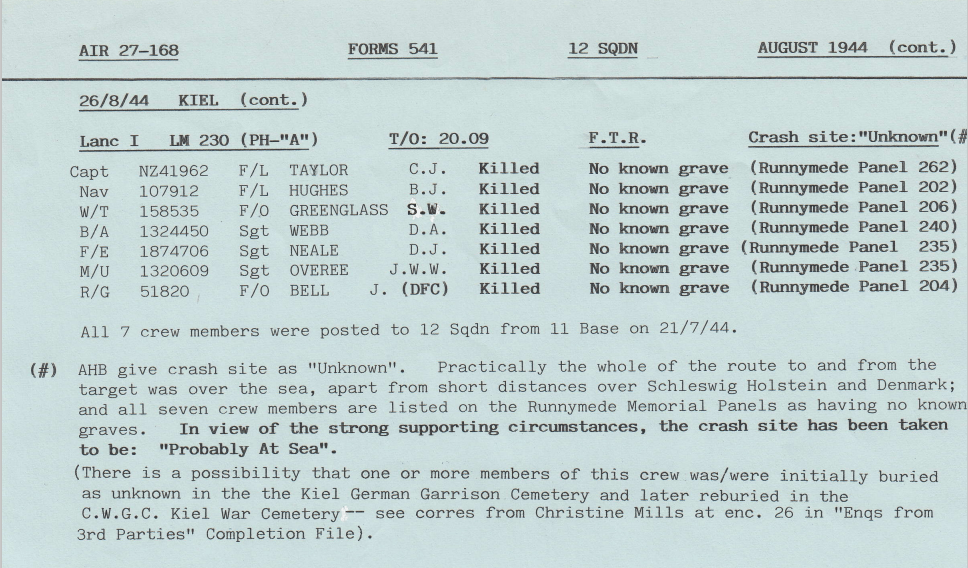
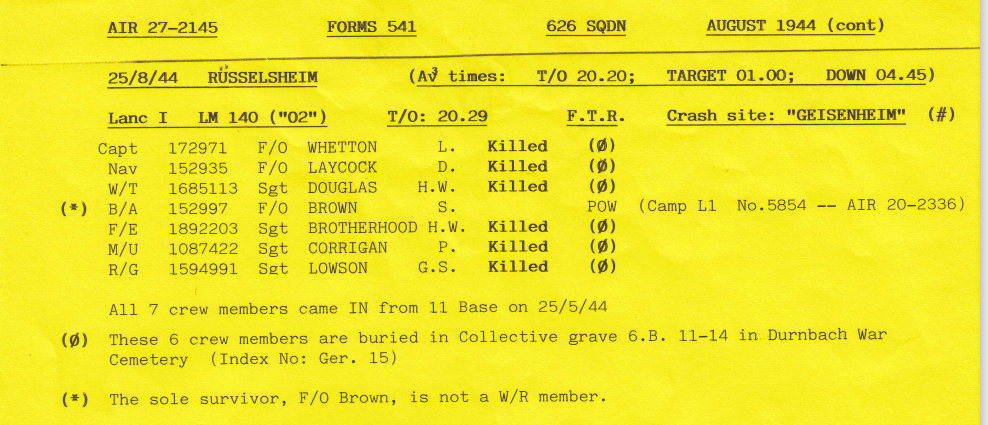
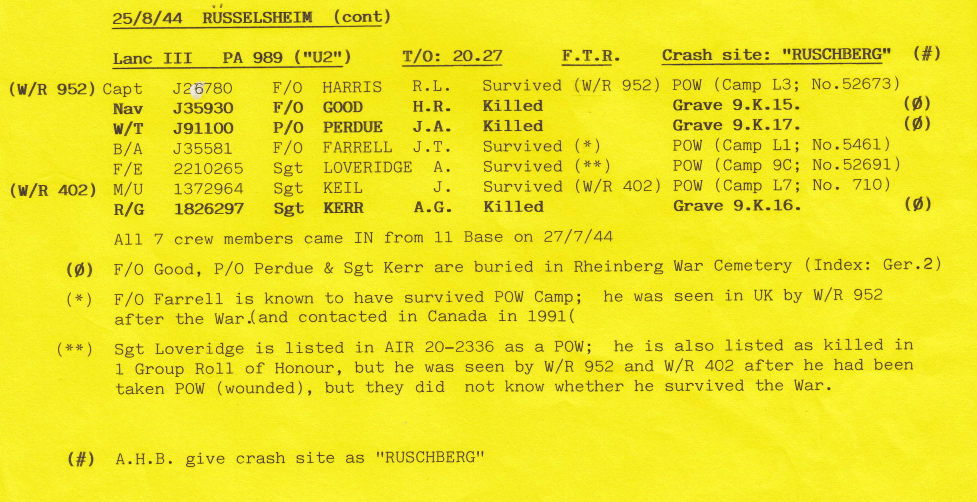
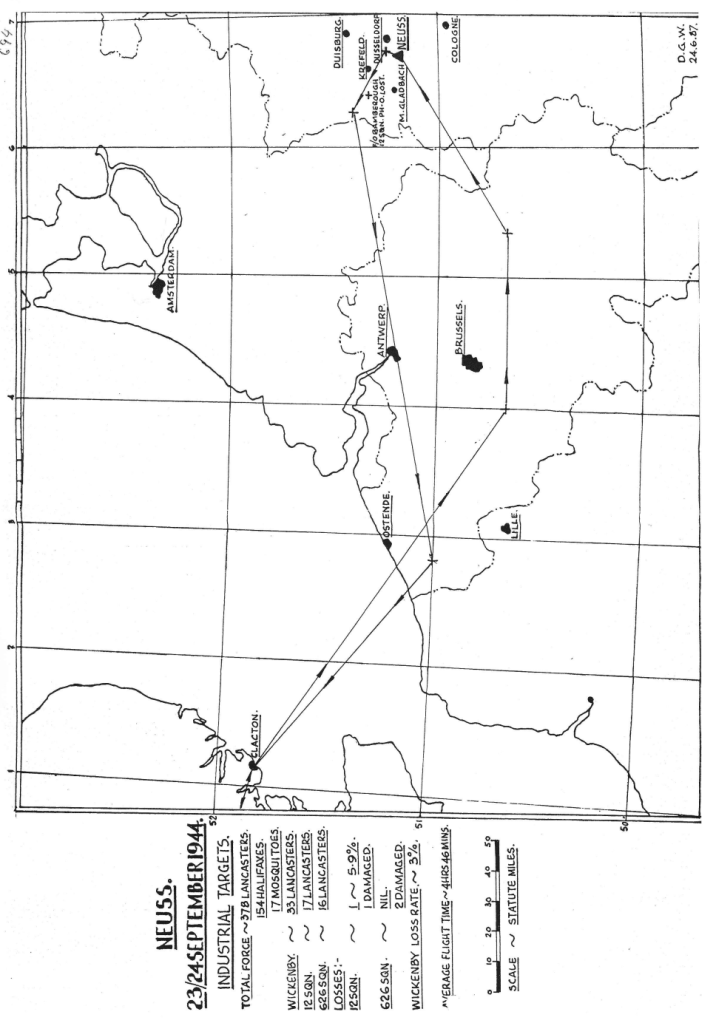
There were heavier losses this week than had been the case since the Mailly-le-Camp attack in May, 6 aircraft being lost during operations and one lost on landing at Wickenby – 26 aircrew were killed, 10 became POW’s and 8 were interned in Sweden, but were back in the UK by October. Reading the damage and combat reports, it is also clear that several aircrew also received wounds that took time for them to recover from. Attacks were made to targets in Germany as well as a V2 rocket site and storage area.

Extract from Station Diary

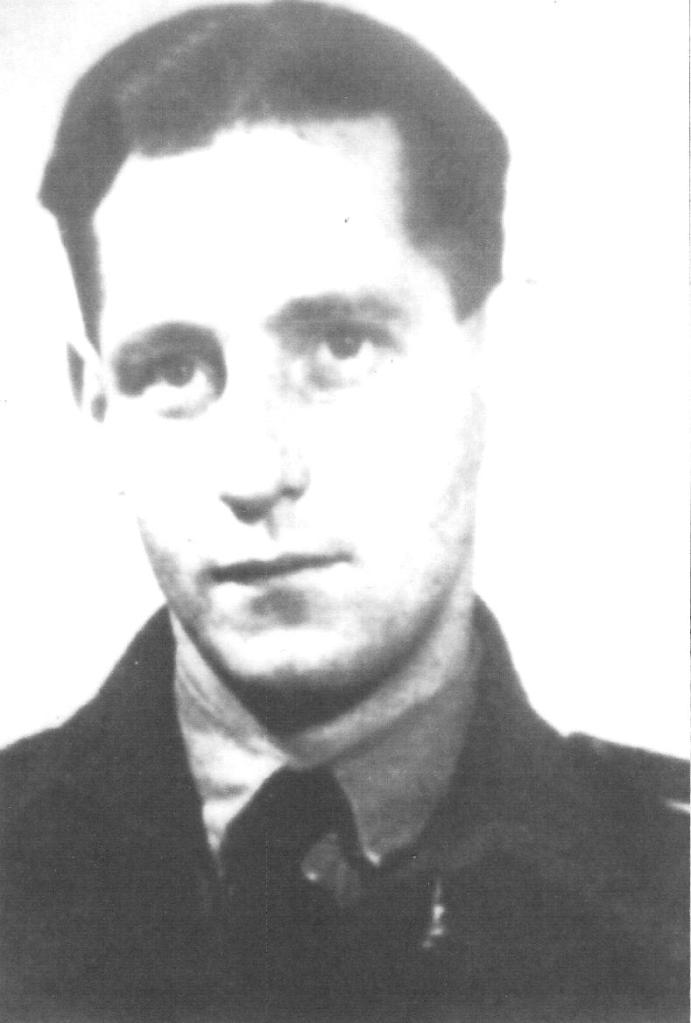
Flying Officer Leonard Whetton, aged 31, who was killed on 25 August 1944
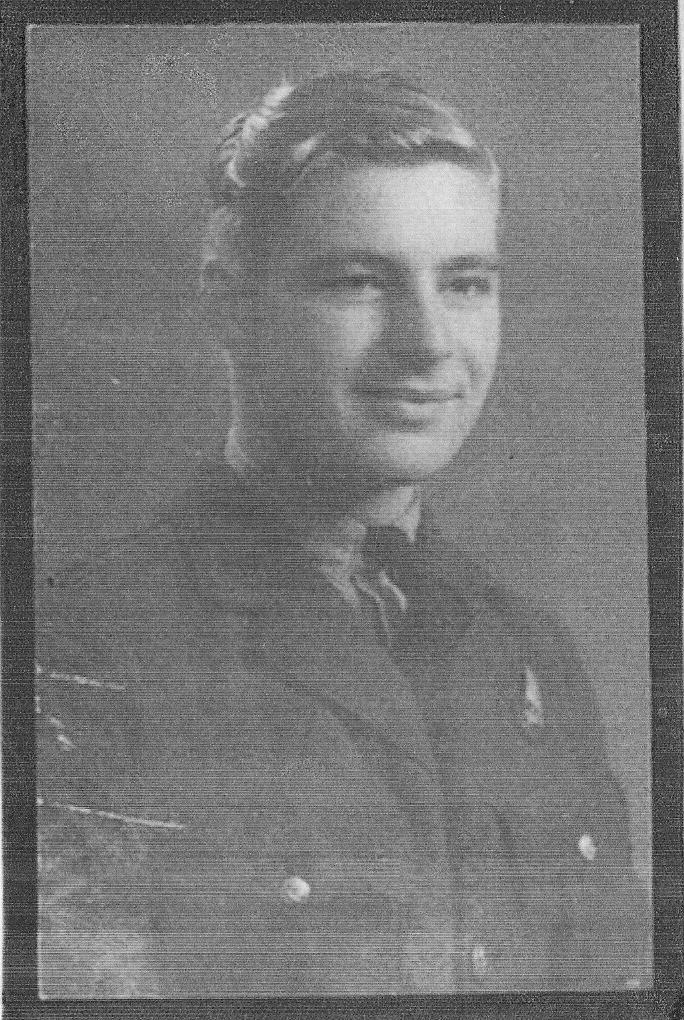
Flying Officer Derrick Laycock, aged 22, the navigator in FO Whetton’s aircraft, killed during the operation to Russellsheim
Sgt Peter Corrigan, aged 30, the mid-upper gunner in FO Whetton’s aircraft, who also died
Sgt Herbert Douglas, aged 21, the son of Thomas & Lily Douglas of Aintree, Liverpool. He was the wireless operator in FO Whetton’s aircraft when he was killed.

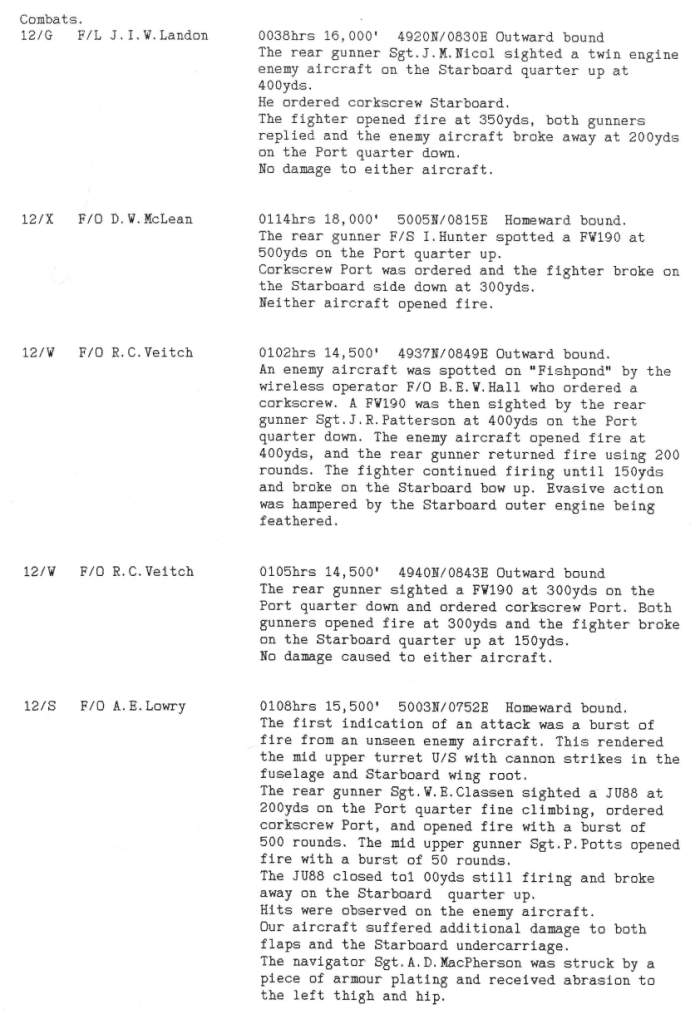
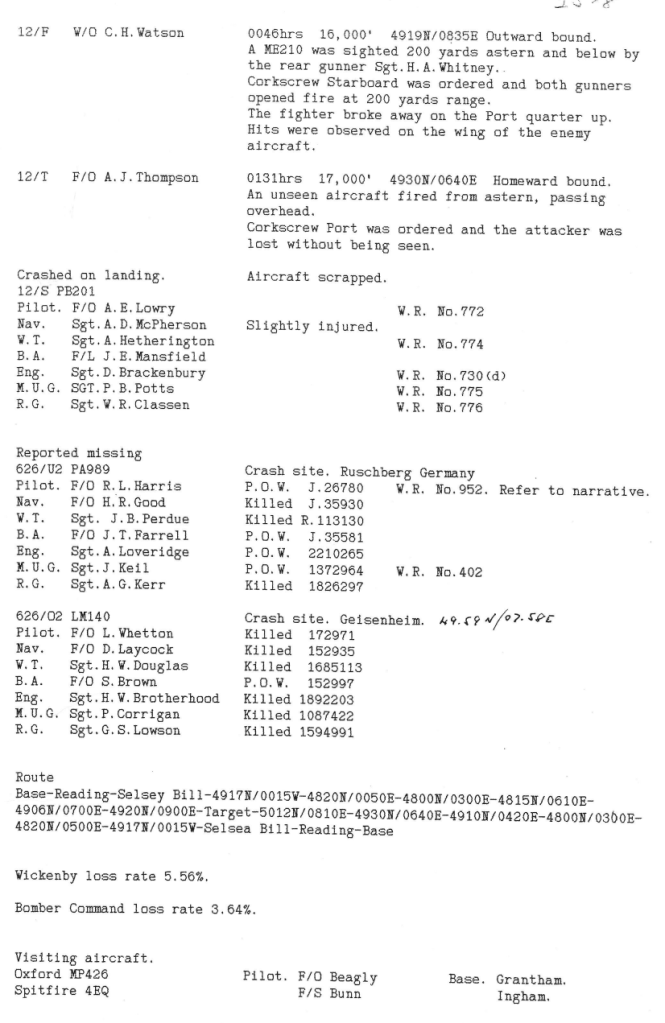
Extract from 12 Sqn Appendix to Operational Record Book
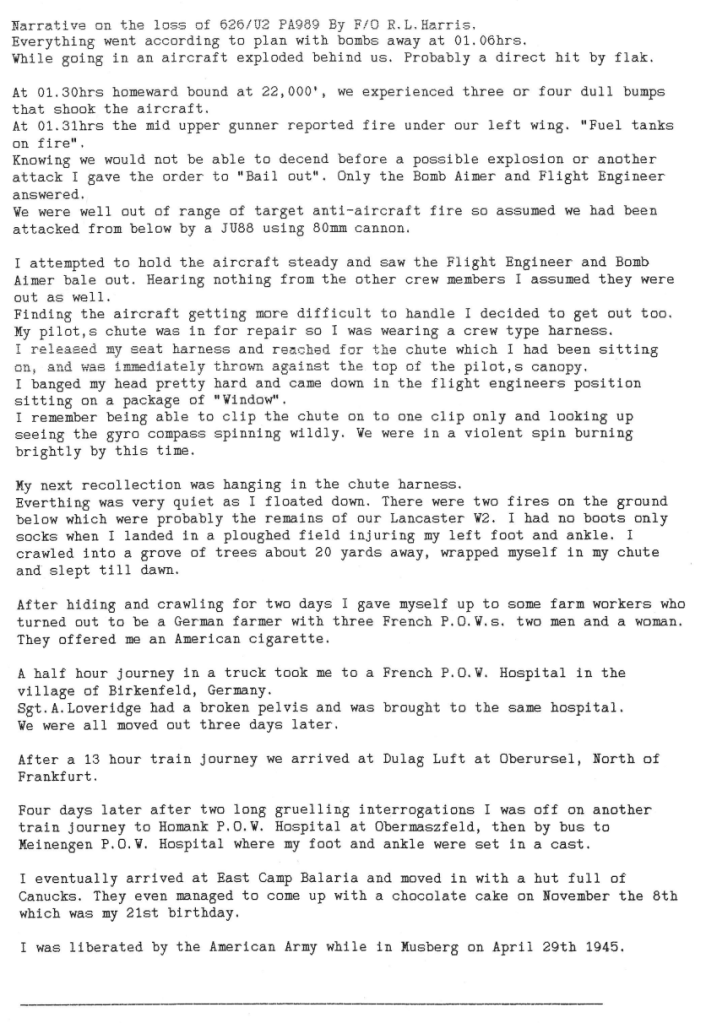
Extract from 626 Sqn Appendix to Operational Record Book
11-17 August 1944

Overview

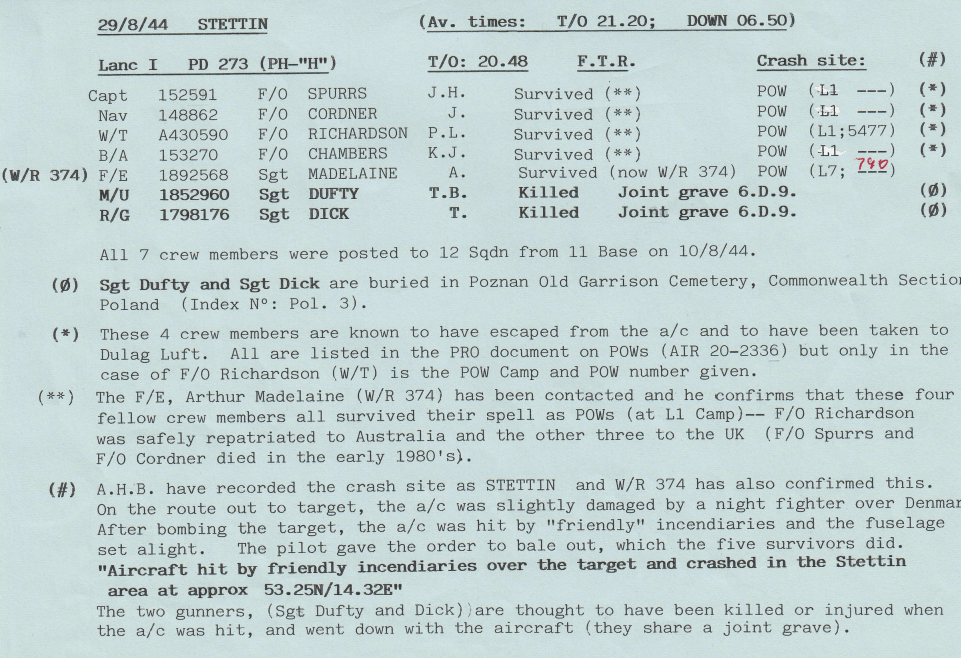
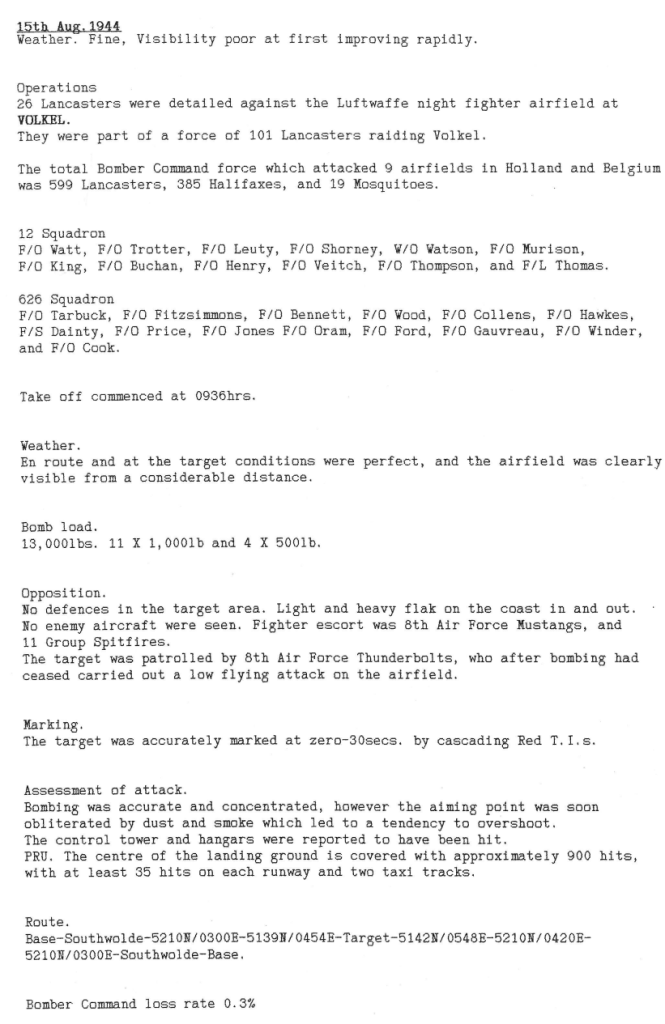
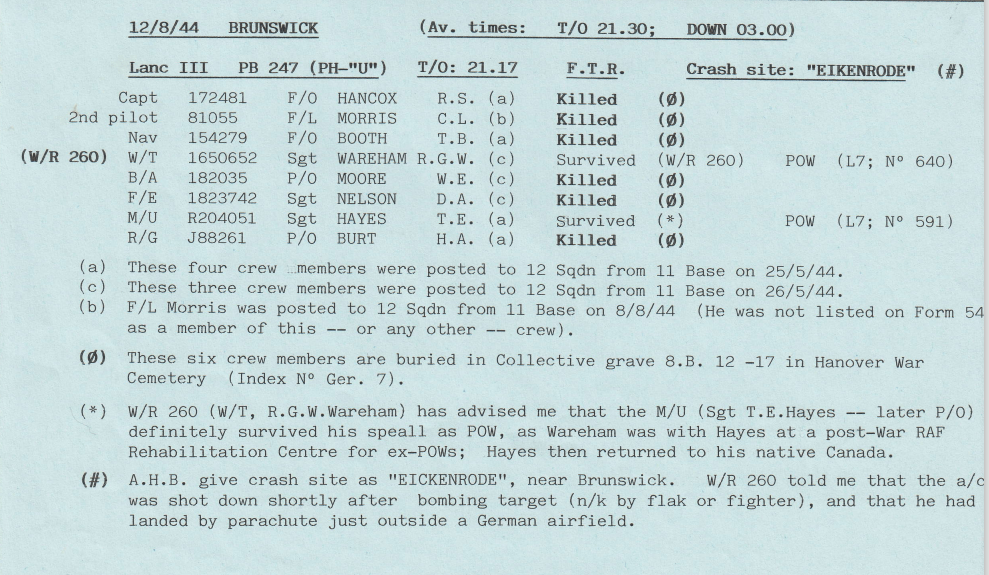
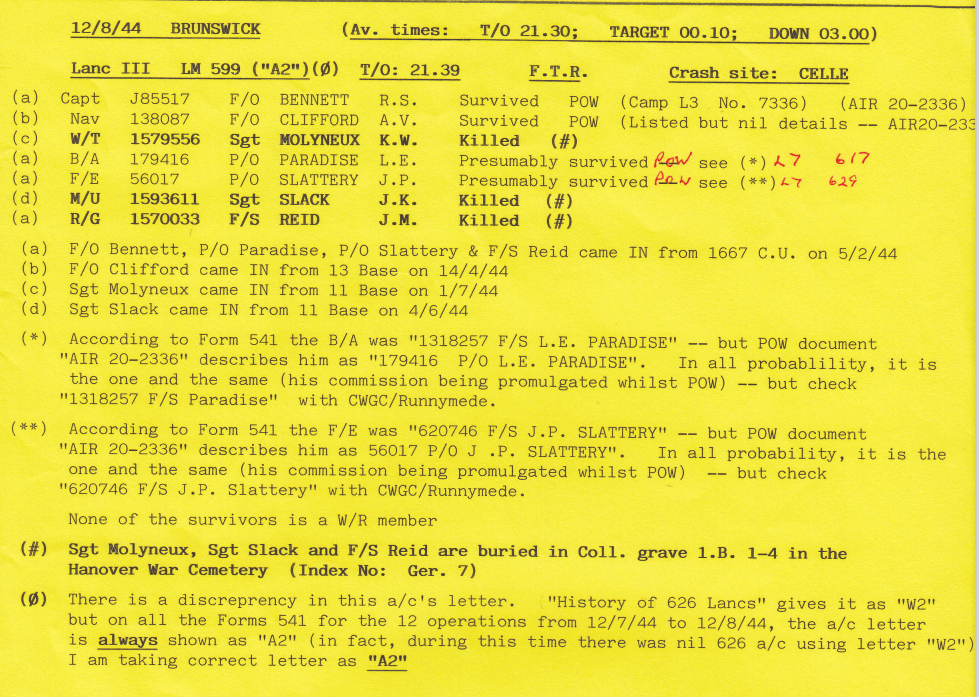
A mixture of targets for Wickenby aircraft this week, with a continuation of support for the Allied troops in Normandy, an attack on a German night fighter base in Holland and a couple of operations to Germany itself, including a long range one to Stettin on the Baltic. Two aircraft were lost with 9 aircrew killed and 6 becoming POW’s.

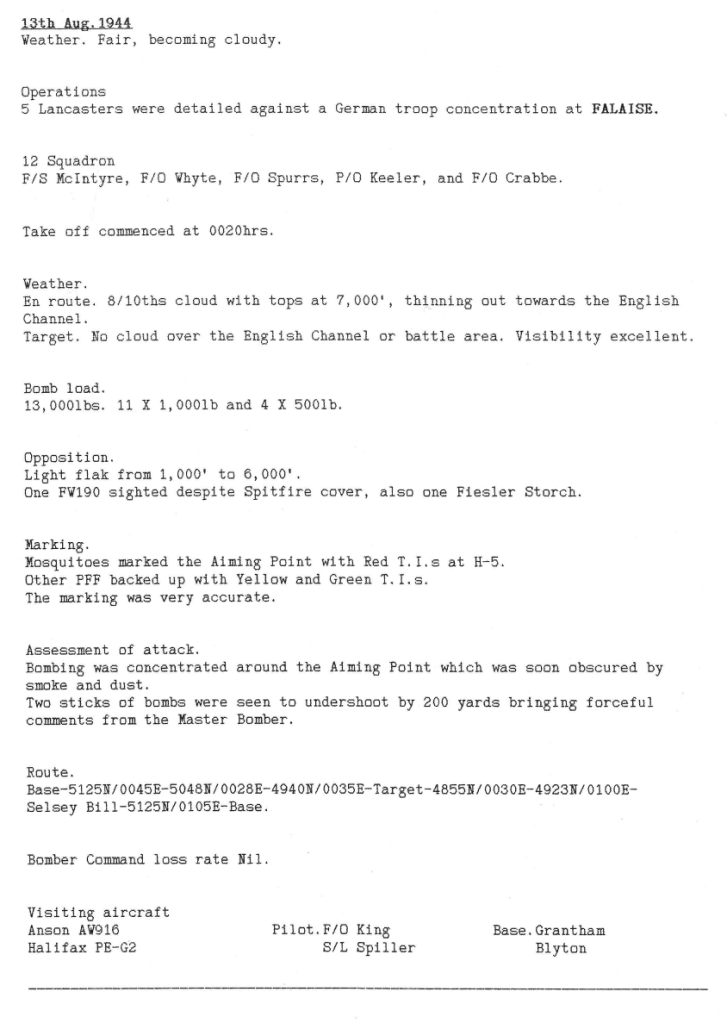
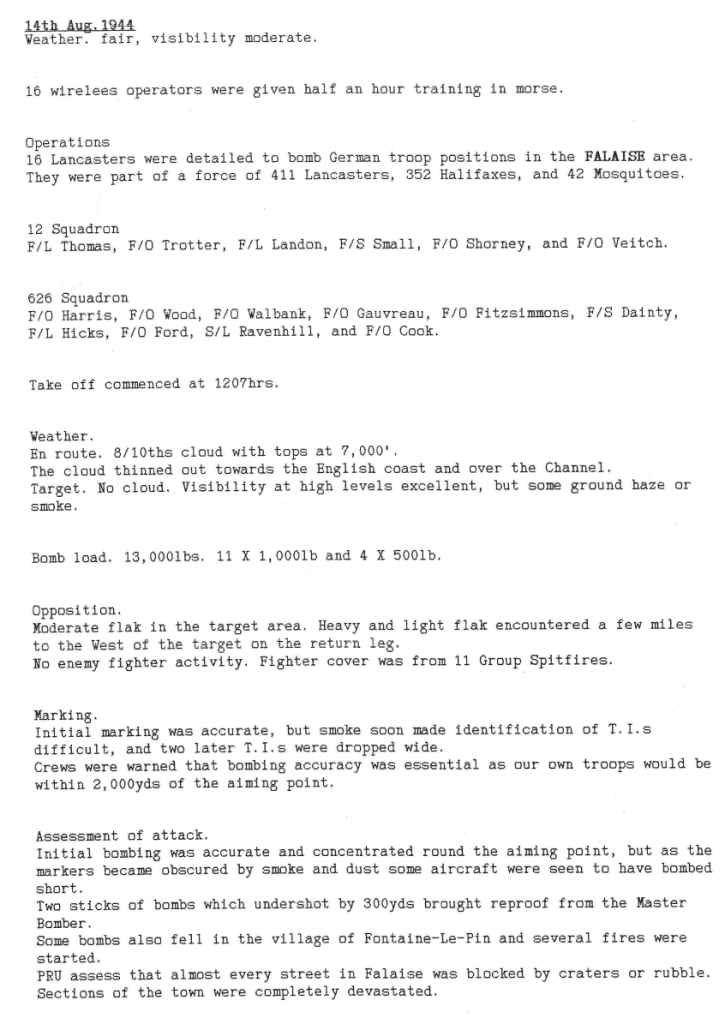
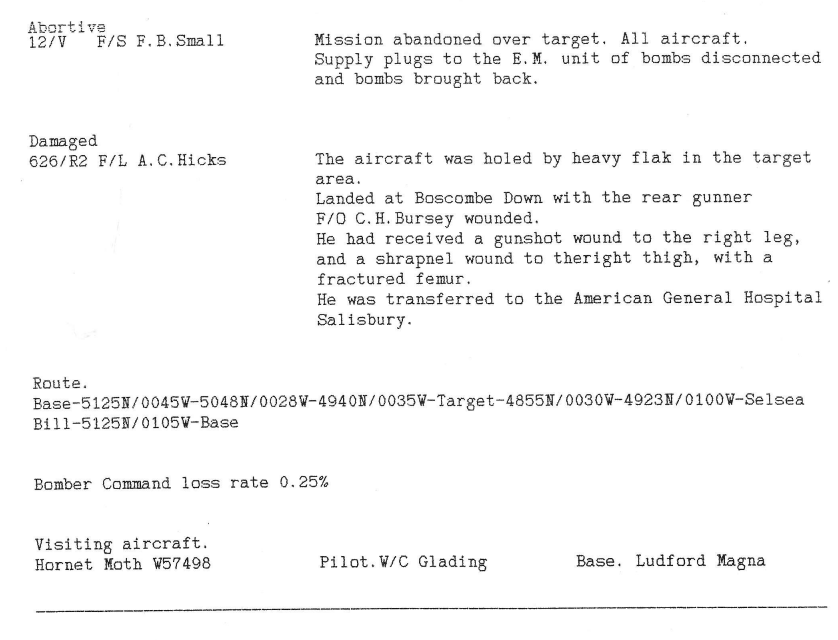
During the attack on Falaise on 14 August, Bomber Command dropped some bombs on a quarry occupied by Canadian troops, causing a number of casualties, including 13 fatalities. It is thought that the cause was the Canadians using yellow smoke canisters which resembled the amber target indicators released by the Pathfinders. It is interesting to note that the Station Diary mentions some Wickenby aircraft dropping bombs 300 yards short of the target – could this have been onto the Canadians?

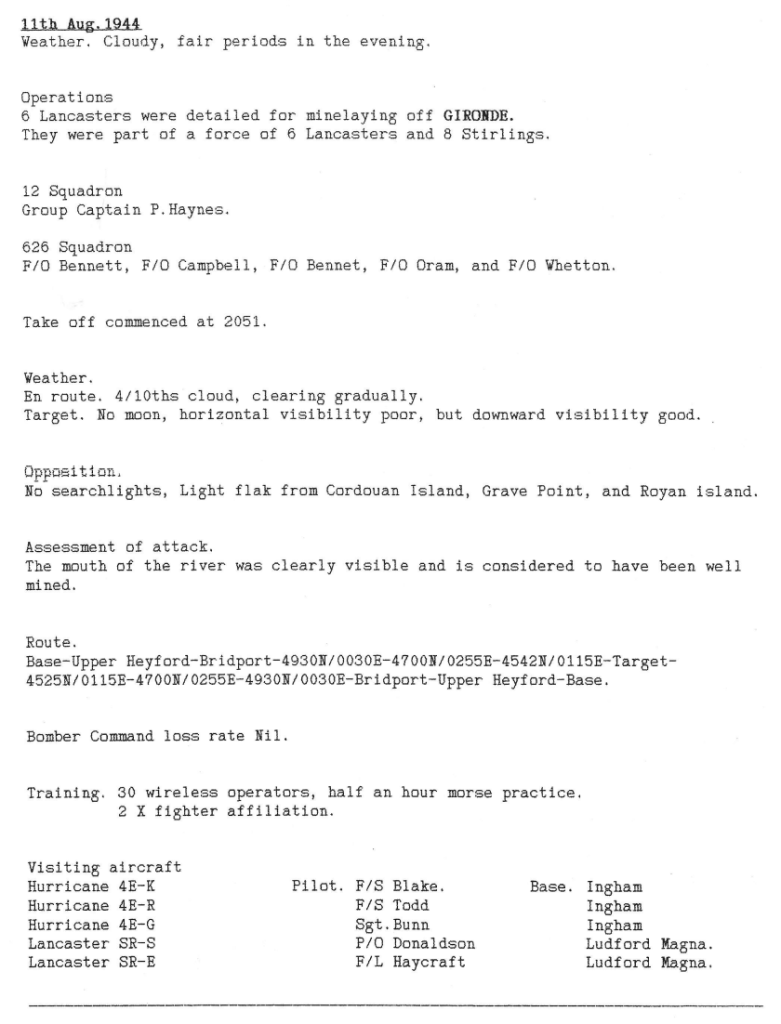
Extract from Station Diary

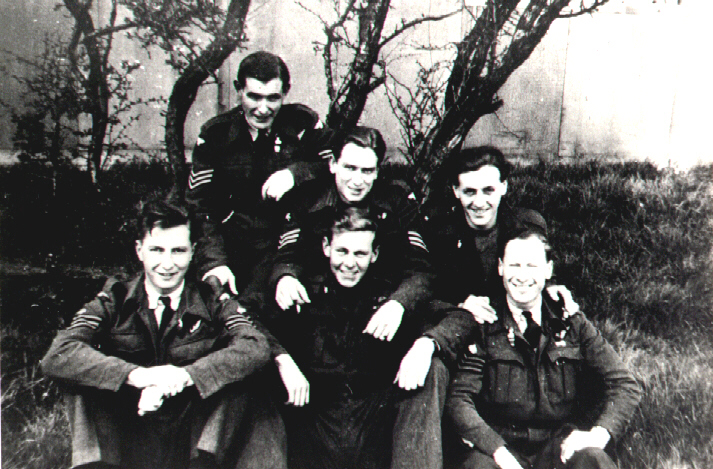
The crew of Flying Officer Bennett, who were shot down during the attack on Brunswick. Back LtoR F/S James P Slattery, F/O RS Bennett RCAF, F/Sgt JM Reid, Front LtoR F/Sgt LE Paradise, F/Sgt ES Cooper, F/Sgt BS Heath

Extract from 12 Sqn Appendix to Operational Record Book
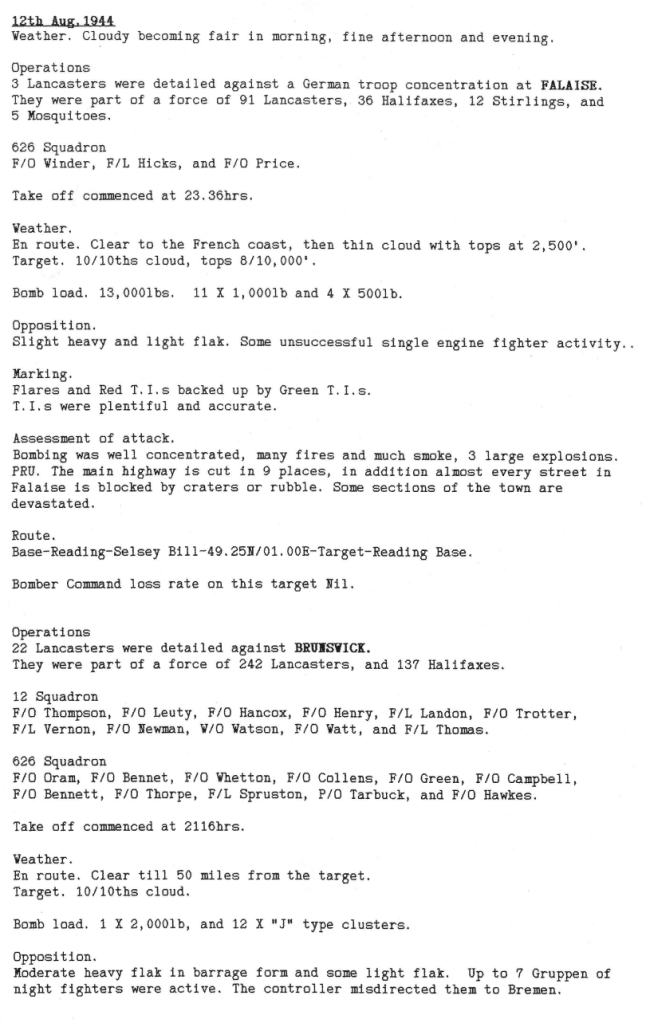
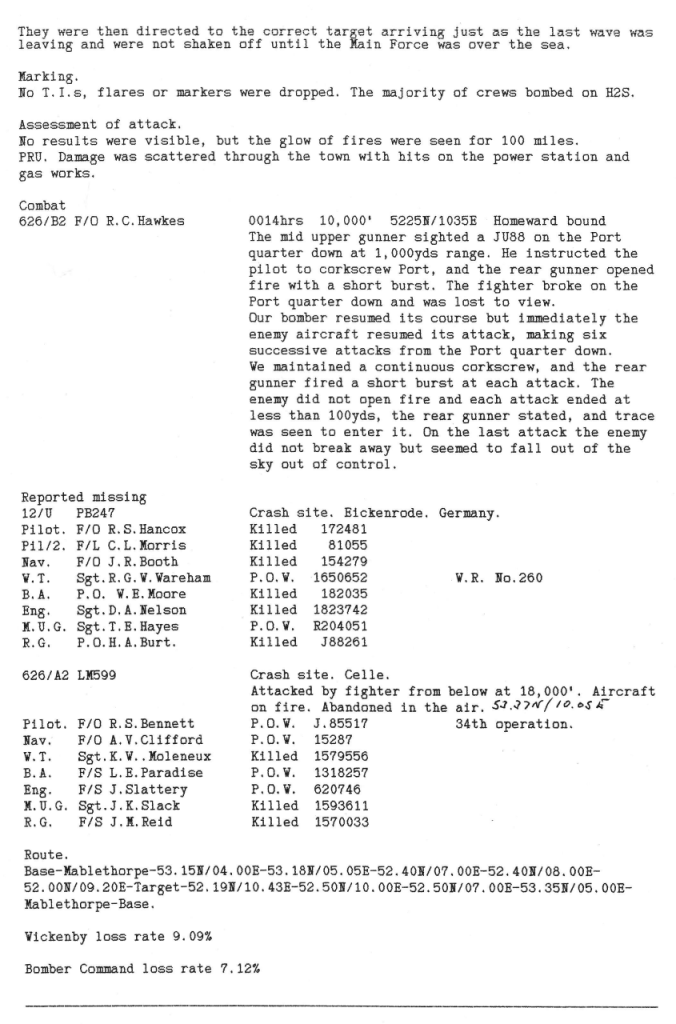
Extract from 626 Sqn Appendix to Operational Record Book
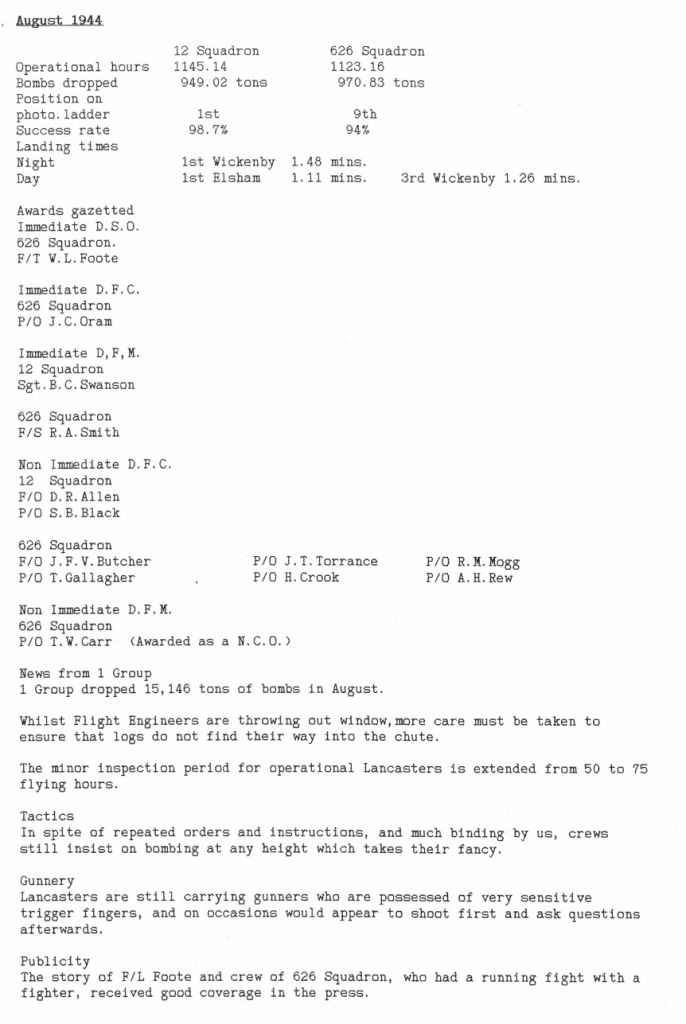
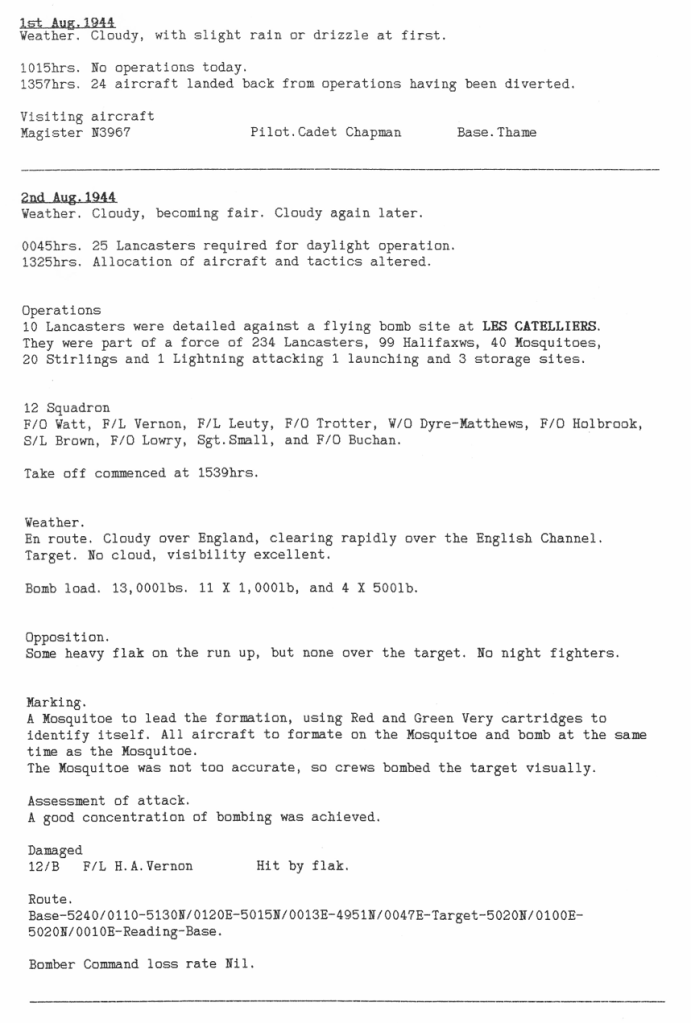
4-10 August 1944

Overview

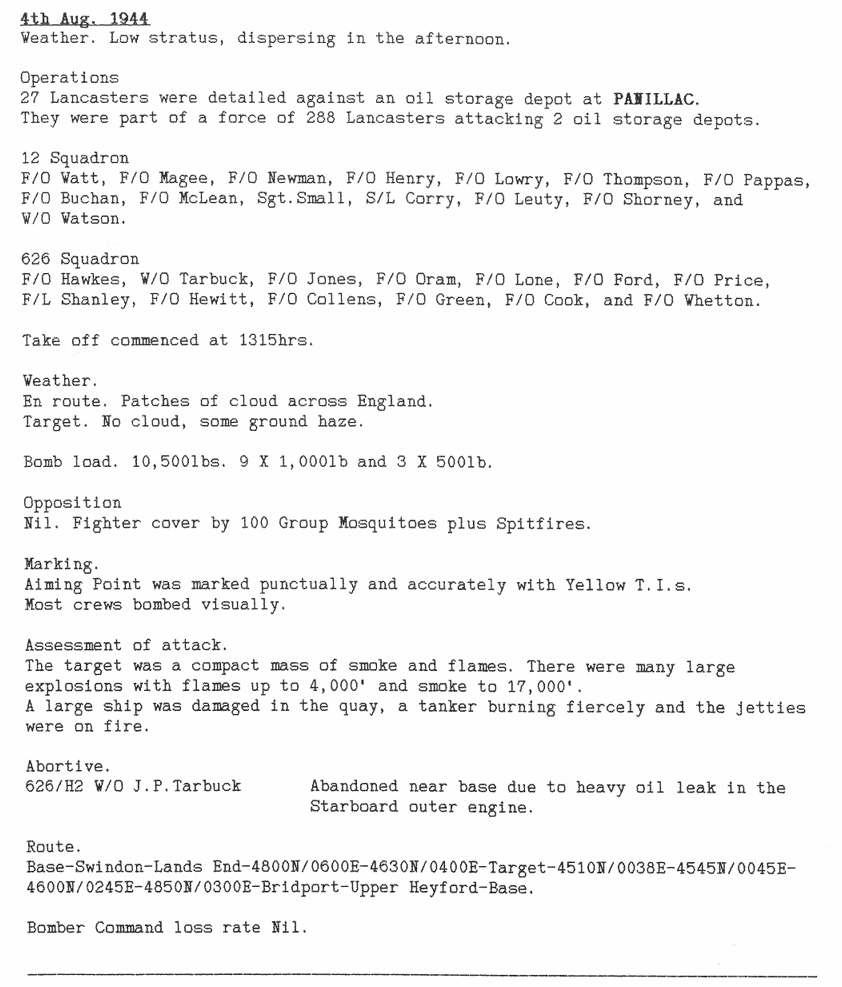
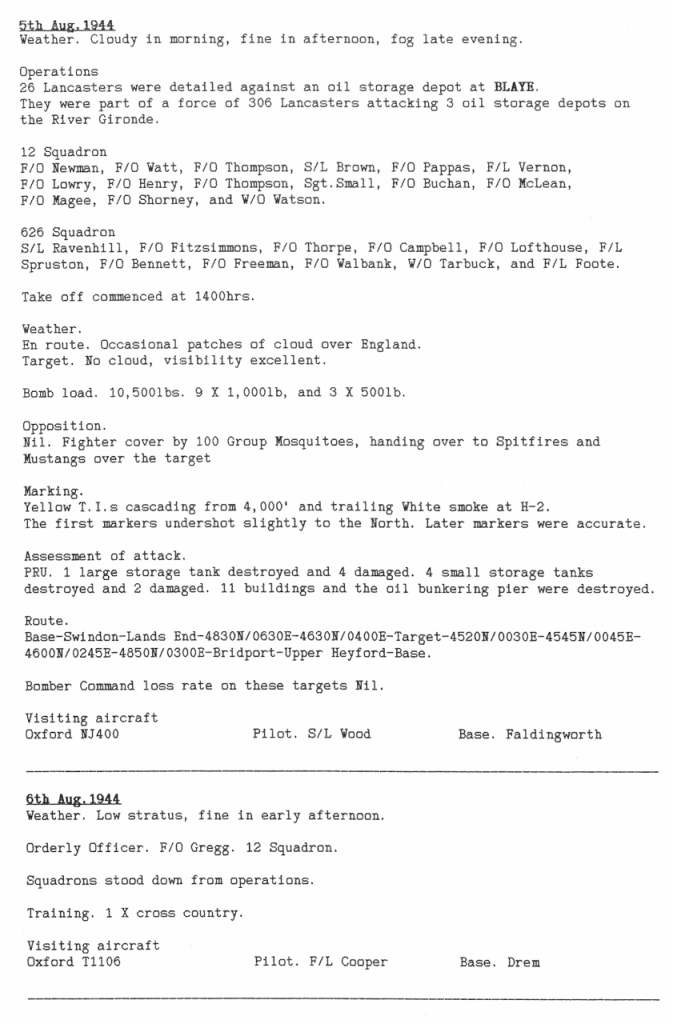
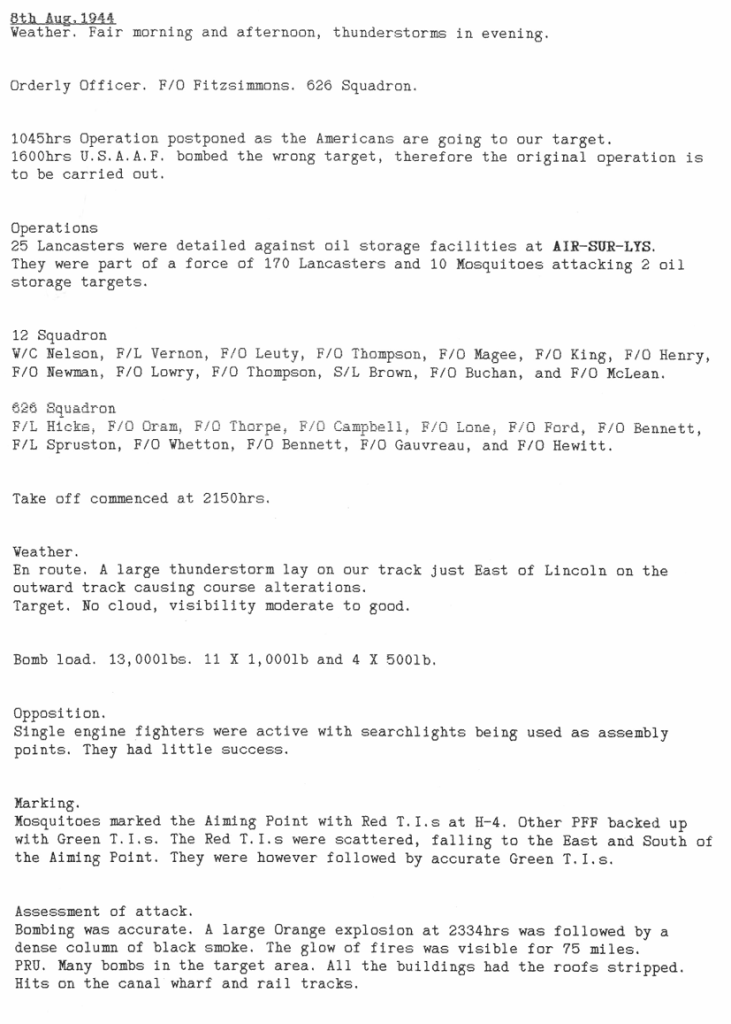
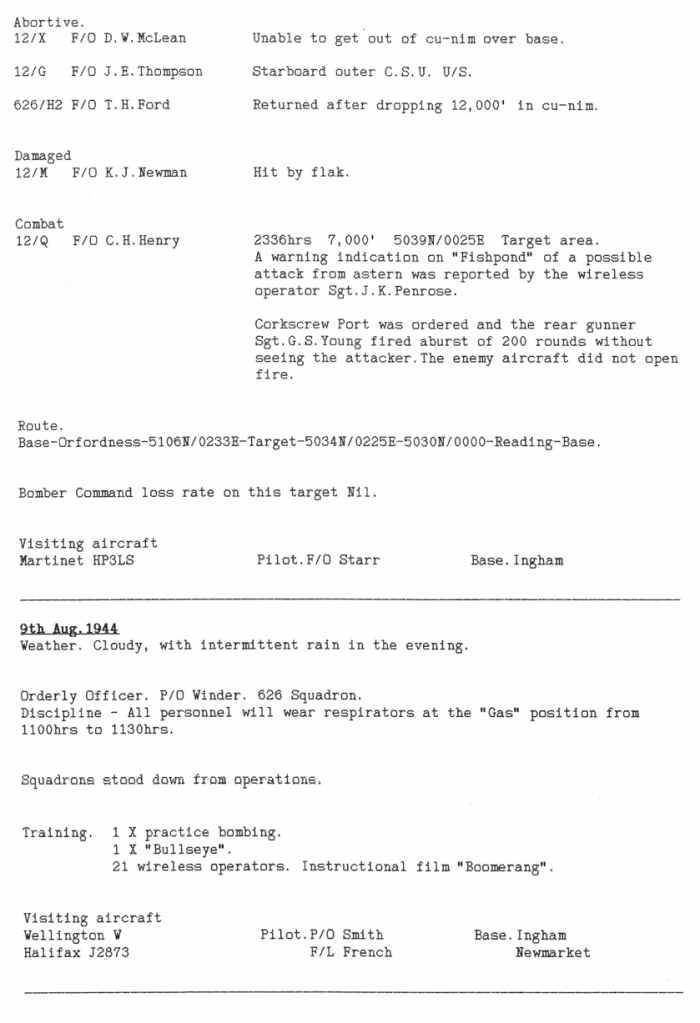
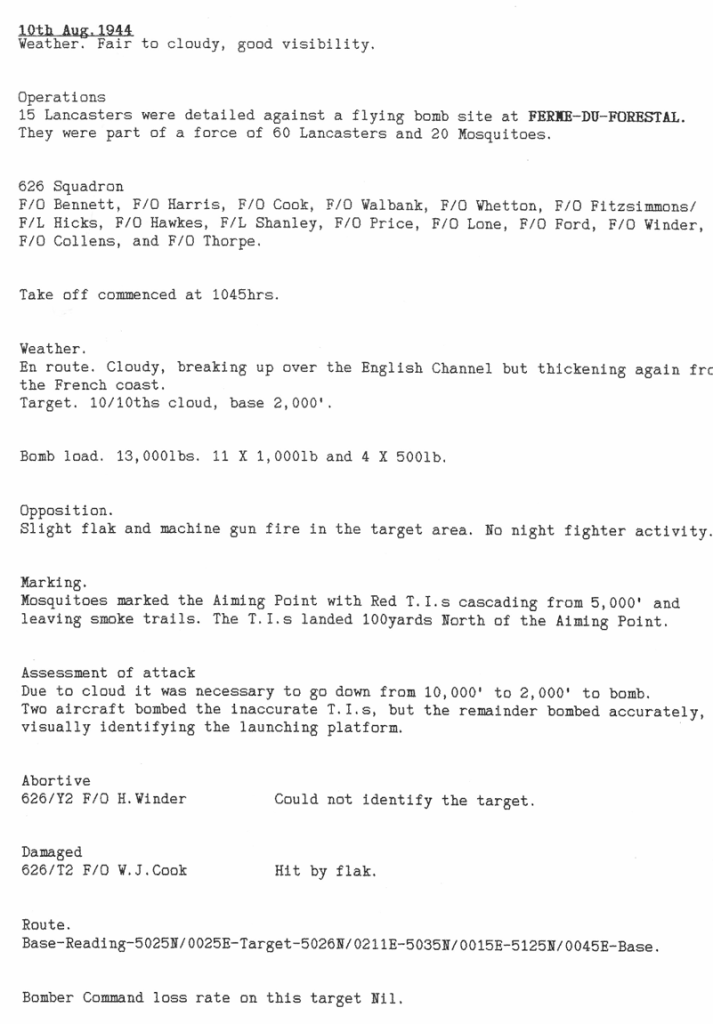
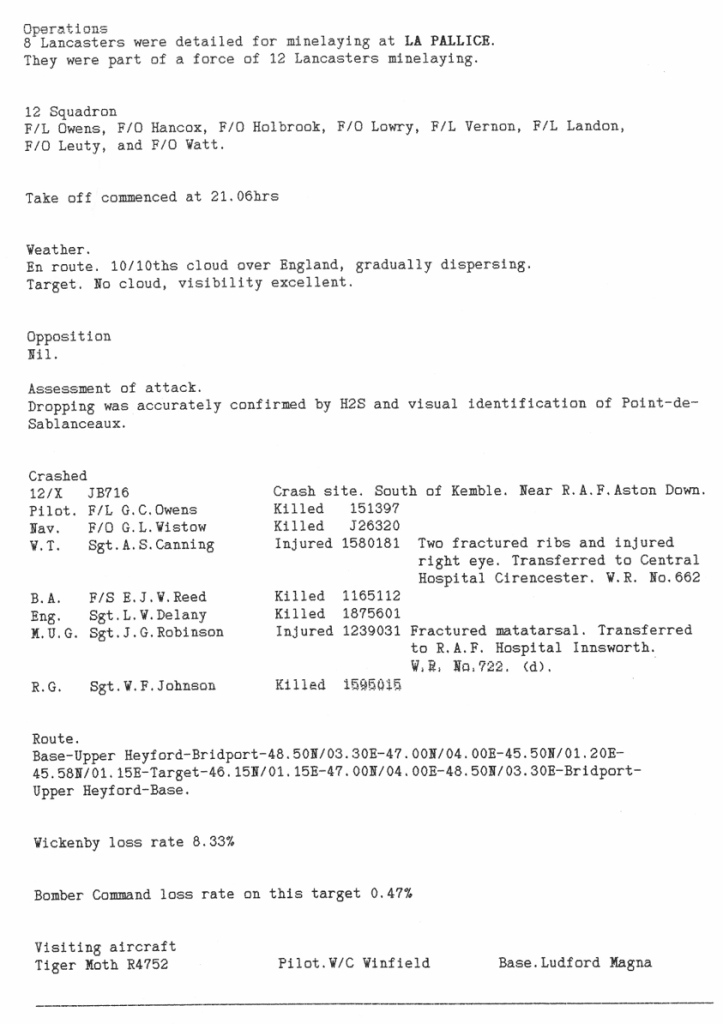
All attacks made this week were to targets in France, including oil storage, close support for Allied ground troops and mine laying. One aircraft was lost returning from the mine laying with 5 aircrew killed and 2 badly injured. Also of note is the fact that some of these missions were being flown during daylight, some with Mosquito fighter support, which helped with accuracy.

Extract from Station Diary

Flying Officer Gordon Owens who was killed on 11 August 1944
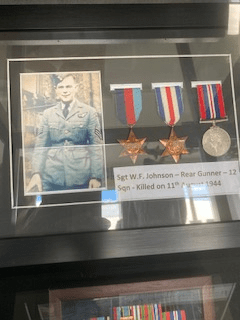
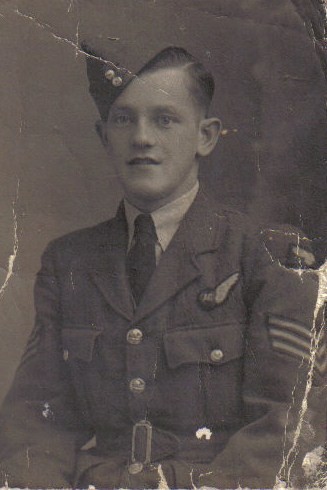
The medals and photograph of Sgt William Johnson, the rear gunner in FO Owens crew, who was killed along with 4 other members of the crew. His family donated the medals to the RAF Wickenby Memorial Collection. He was an industrial chemist but gave up this reserved occupation to serve his country.

Extract from 12 Sqn Appendix to Operational Record Book

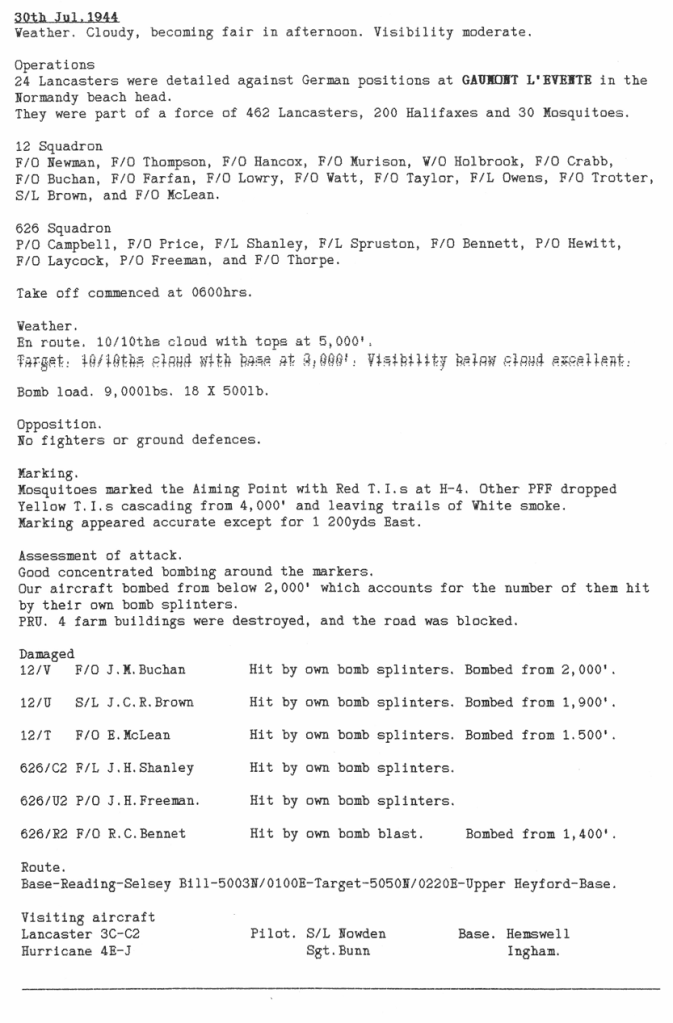
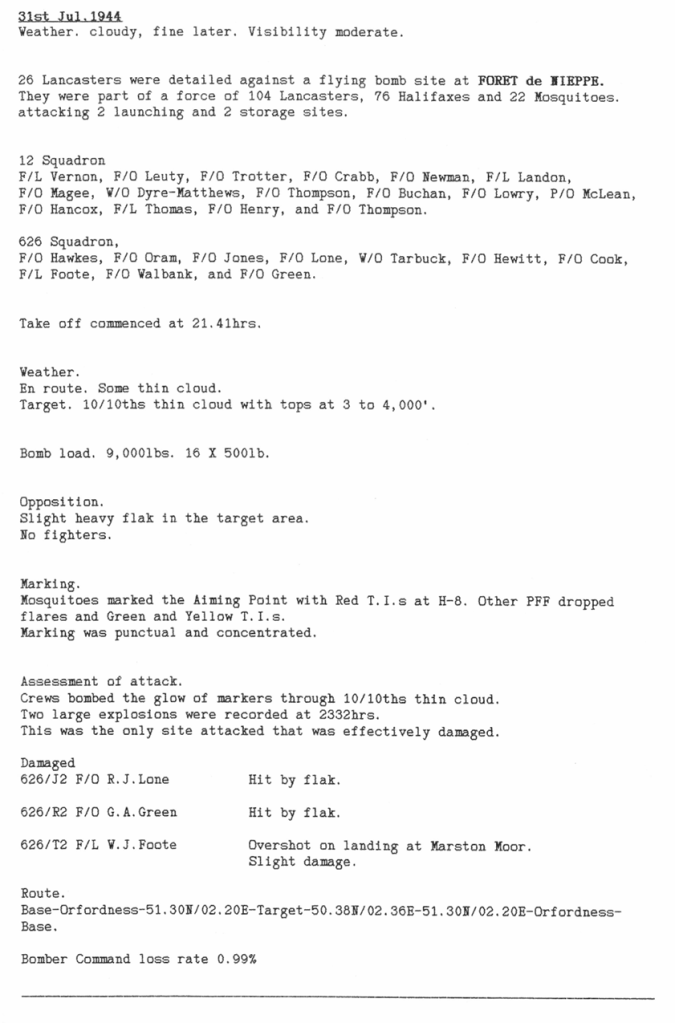
29 July – 3 August 1944

Overview

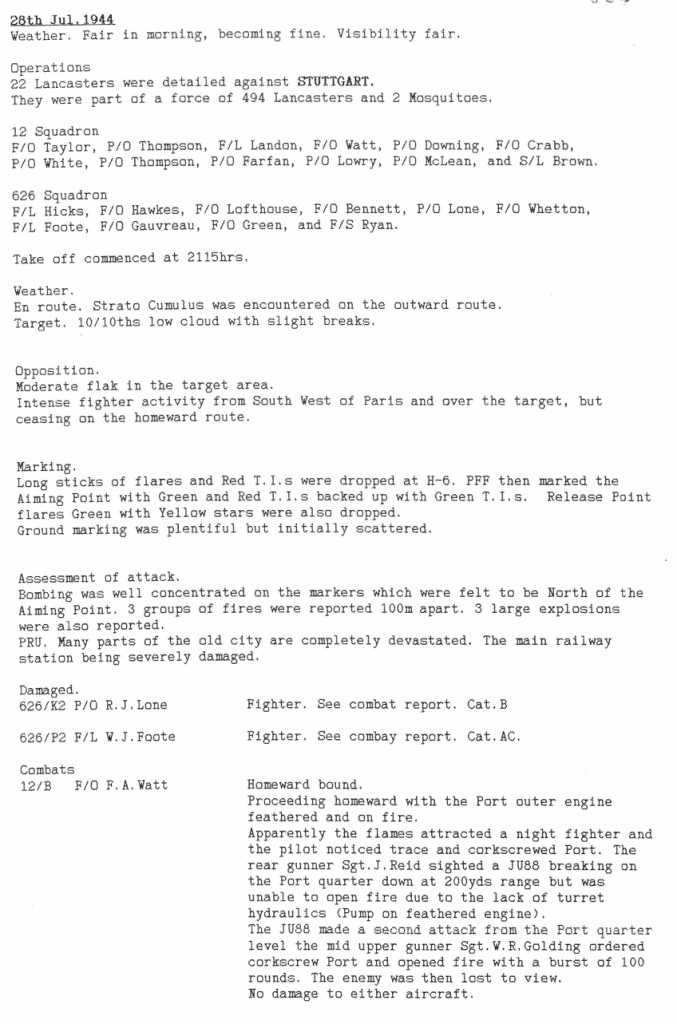
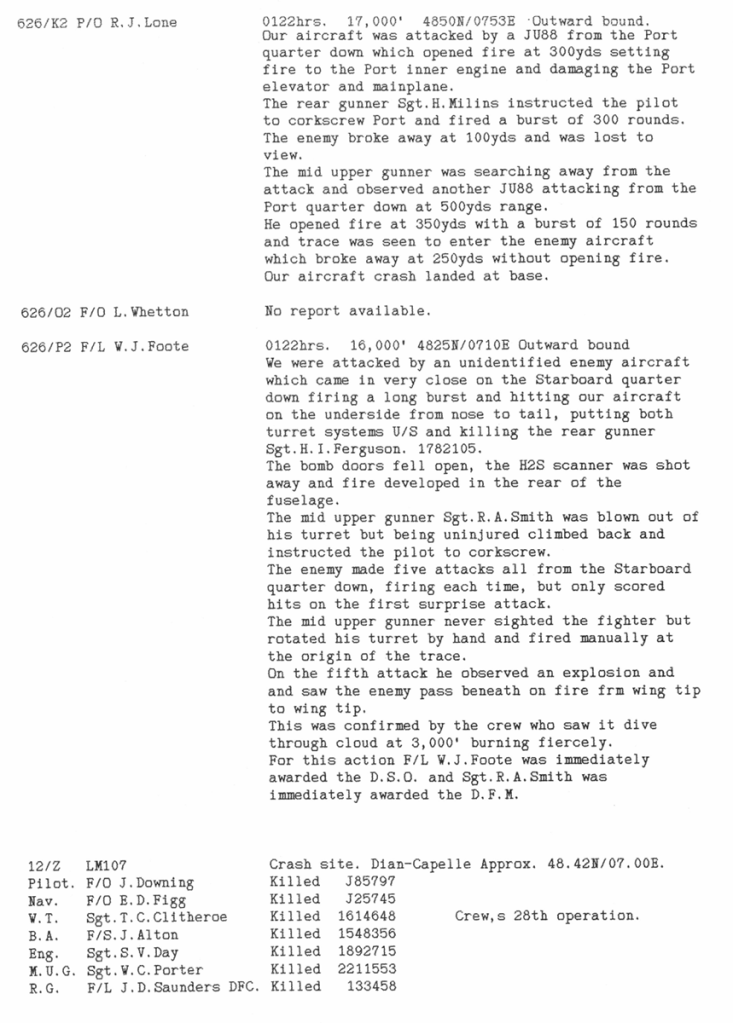
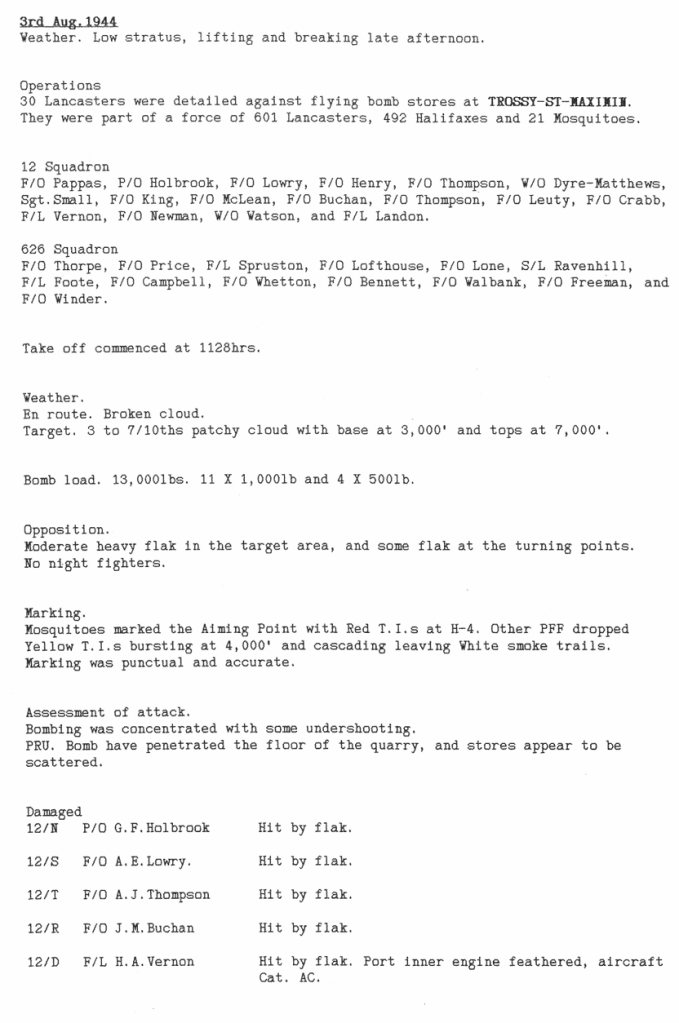
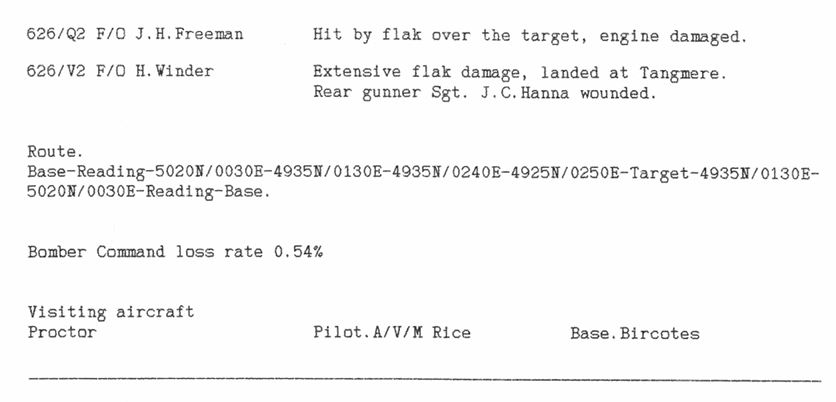
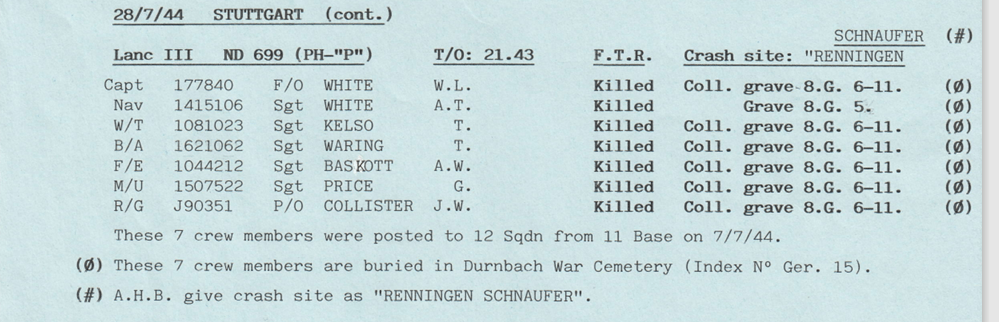
RAF Wickenby aircraft continued to support the Normandy landings and breakout as well as attacking flying bomb sites and a single operation to Stuttgart during this week. 3 aircraft were lost, with 21 aircrew killed and one becoming a POW.

It is also worth noting the rather pithy comments, at the start of the August Station Diary, about aircraft bombing from whatever height they wanted and some gunners having sensitive trigger fingers!

Extract from Station Diary

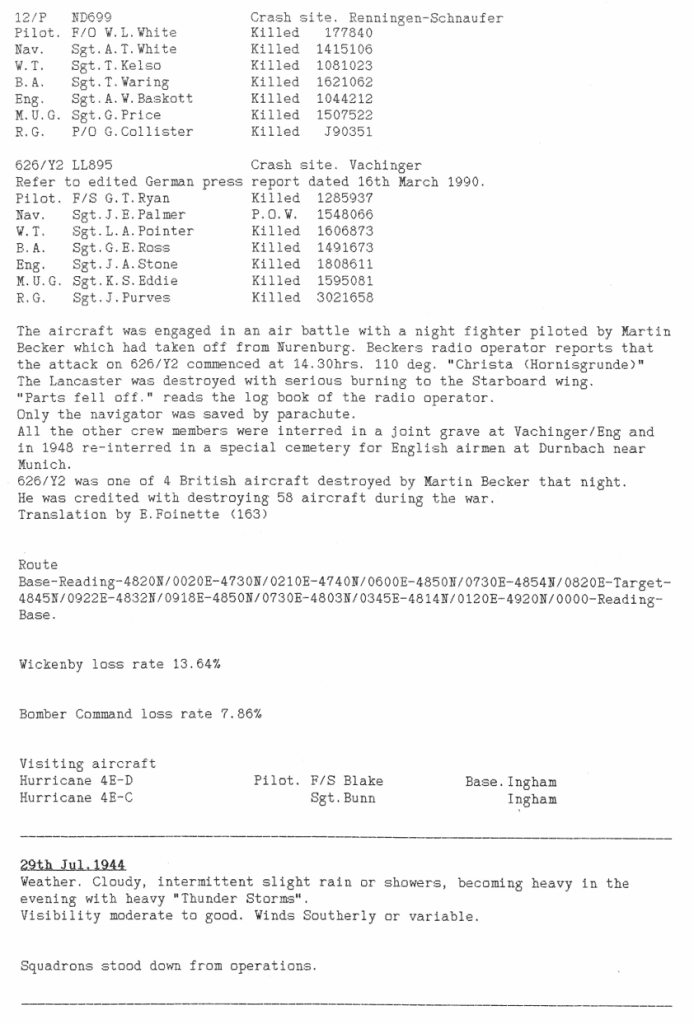
Sgt Keith Eddie, aged 20, the son of James & Jean Eddie of Fraserburgh, Aberdeenshire. He was the mid-upper gunner in the aircraft flown by FS Ryan which was lost, with all the crew, during the attack on Stuttgart on the night of 28/29 July 1944.

Extract from Appendix to 12 Sqn Operational Record Book
Extract from 626 Sqn Appendix to Operational Record Book