11-17 January 1943

Overview

At this time, Bomber Command was building up its strength and gradually replacing the older Wellingtons with Lancasters. By this week in January 1943 there were 128 Wellingtons, 104 Halifaxes and 178 Lancasters operational amongst a total of 515 first line aircraft. The larger series of raids, involving hundreds of bombers were not yet happening, but Sir Arthur Harris, Commander in Chief of Bomber Command, was biding his time for the forthcoming battles of the Ruhr and Berlin.
12 Squadron Operations

  • 11/1/43 ESSEN – 8 a/c F/S BAKER F.T.R.
  • 12/1/43 ESSEN – 7 a/c nil casualties reported
  • l3/l/43 ESSEN – 3 a/c ni1 casualties reported (Sgt Atwood and crew were on temporary attachment to 103 Sqn and FTR from this operation. Casualty action was taken by 103 Sqn)
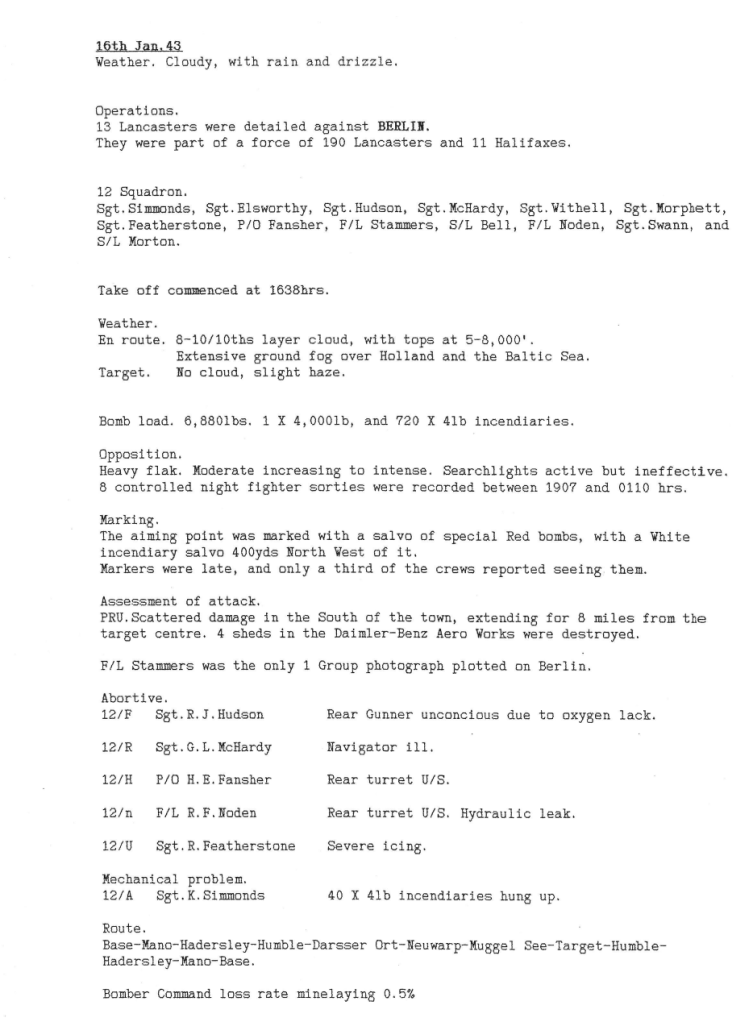
  • 16/1/43 BERLIN – 13 a/c nil casualties reported
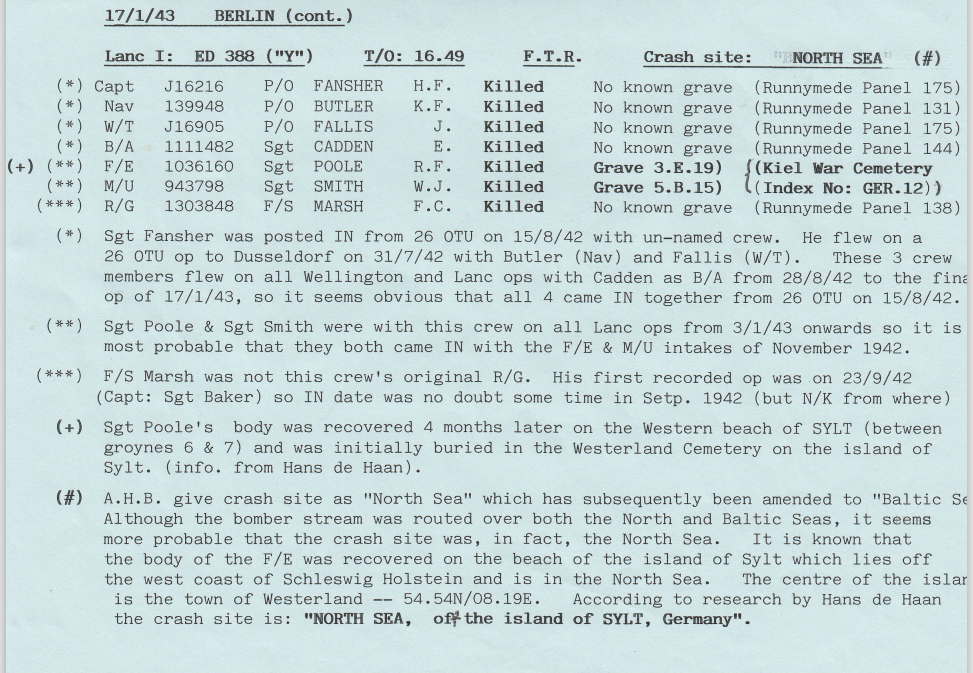
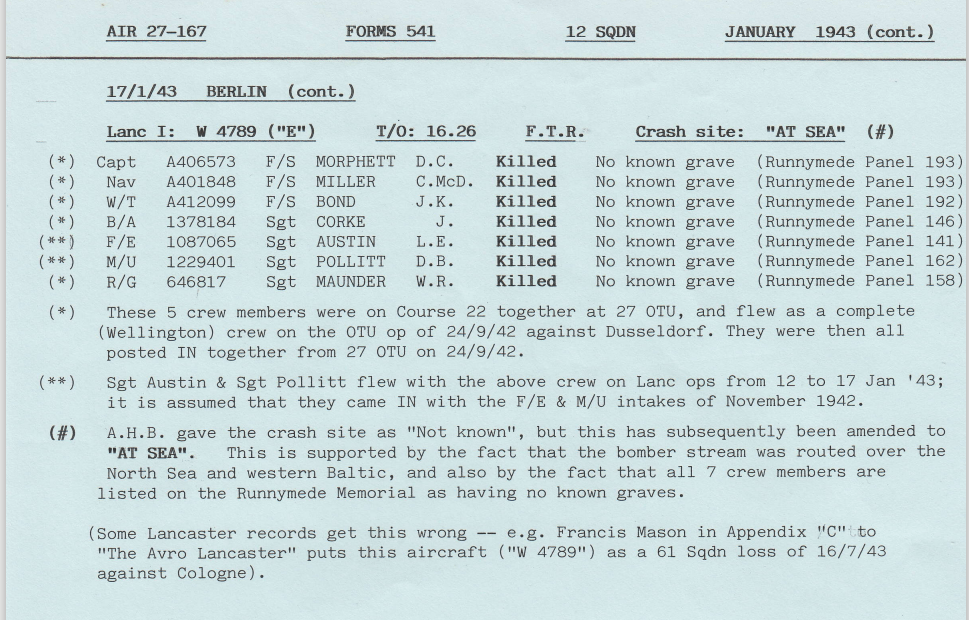
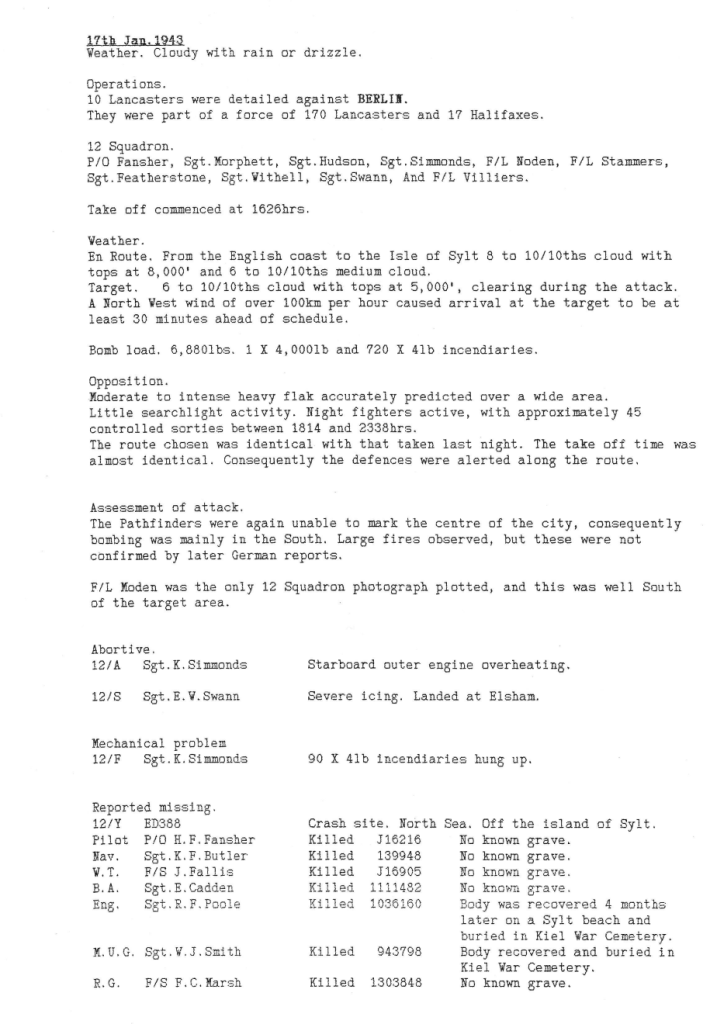
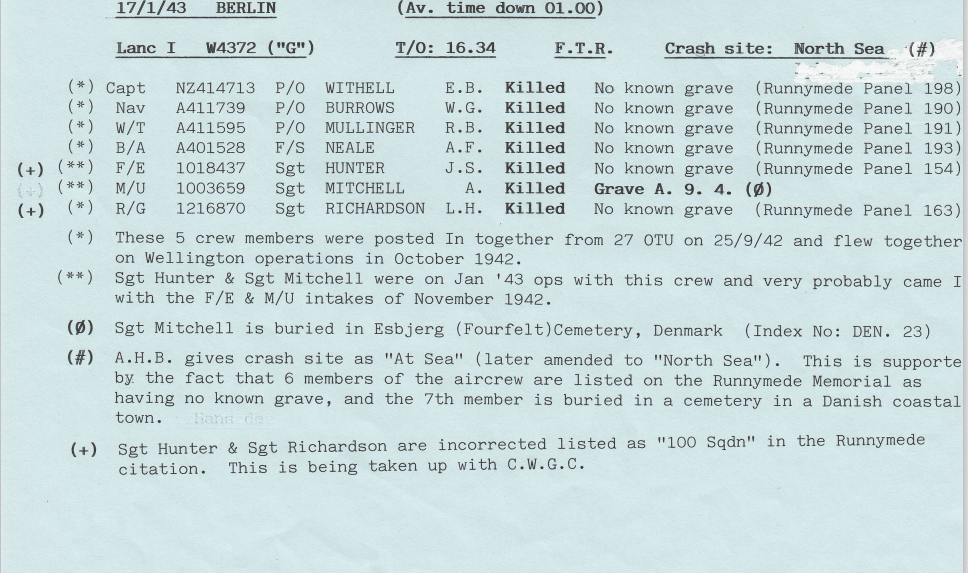
  • 17/1/43 BERLIN – l0 a/c – FOUR AIRCRAFT WERE REPORTED MISSING:- Sgt WITHELL: Sgt FEATHERSTONE; F/S MORPHETT: P/O FANSHER
  • FTR = Failed to Return
  • a/c = aircraft

Extract from 12 Sqn Operational Record Book Appendix

The following information is taken from the Operational Record Book (RAF F 540) completed immediately after missions – the notes at the end were added later by members of the Wickenby Register:
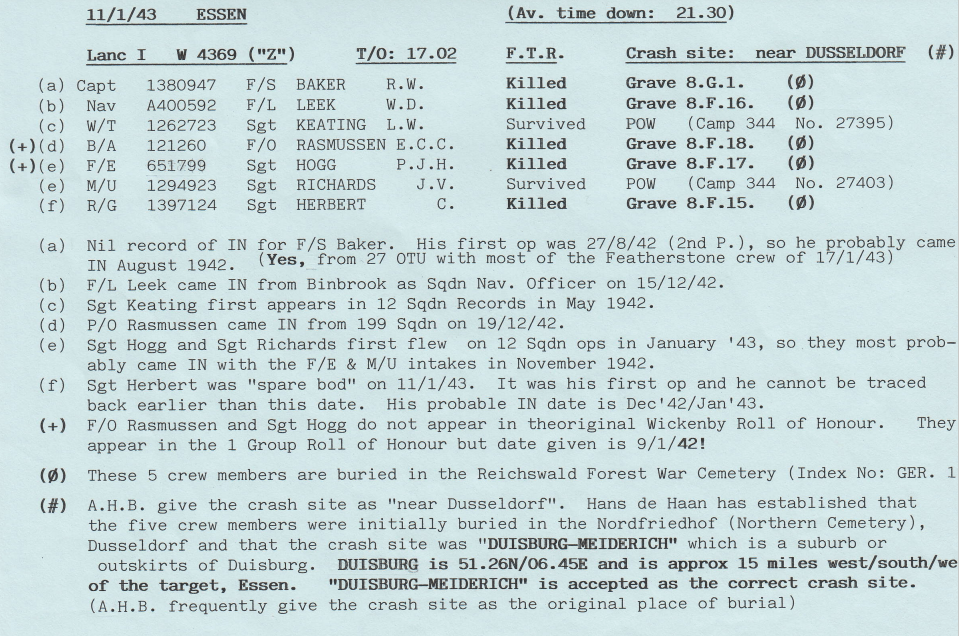
  • 2nd P = Second pilot – it was normal for a new pilot to fly a mission with an experienced crew prior to flying with his own crew
  • A.H.B. = Air Historical Branch

Flight Sergeant Baker had completed 12 missions flying Wellingtons and this was his 3rd in a Lancaster. He was 21, unmarried and came from Harold Wood in Essex.

12 Sqn Diary – 11 Jan 43

Extract from 12 Sqn Operational Record Book Appendix (RAF F541)
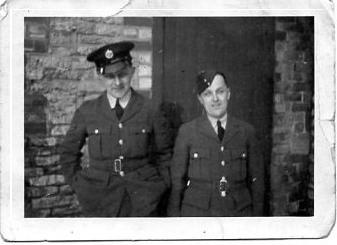
Flight Sergeant Frederick Cecil Marsh (left), the Rear Gunner in PO Fansher’s aircraft – killed on night of 17/18 Jan 43. He was on attachment from 100 Sqn. He was 34 and came from Christchurch, Hampshire

Flight Sergeant Miller RAAF, was a graduate of Melbourne University.
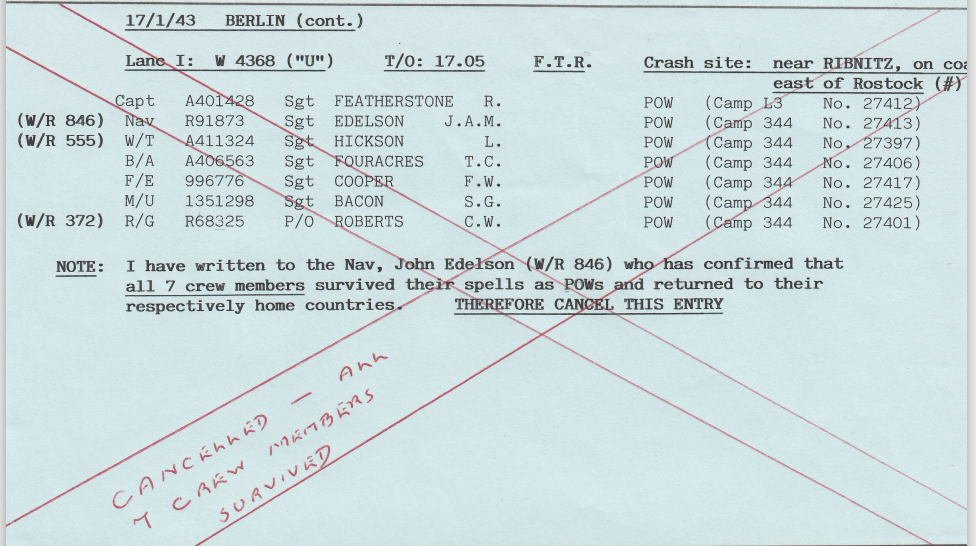
Extract from 12 Sqn Diary

4-10 January 1943

Overview

From November 1942 to January 1943, 12 Squadron had spent much of their time converting from Wellington bombers to Lancaster bombers and the missions below were some of the first flying the new type. They were the first squadron in 1 Group to convert.

These were typical missions for this period of the Second World War; La Rochelle was a large U-Boat base for the Germans and the HQ of their Naval Atlantic Command; Essen is in the Ruhr and was a major manufacturing base; Gardening was the euphemism for anti-shipping mine-laying, mostly on the coast of occupied Europe; the mines were known as “vegetables” by the RAF.

If an aircraft was lost or missing, it was the custom to only refer to the captain when describing losses, hence below it says “Sgt Marshall F.T.R.” although there were 6 other crew members:

  • Pilot (almost always the captain of the aircraft, regardless of rank)
  • Navigator
  • Bomb Aimer
  • Wireless Operator
  • Flight Engineer
  • Mid-Upper Gunner
  • Rear Gunner
12 Squadron operations

12 Squadron Operations

4/1/43 ESSEN 4 a/c nil casualties reported
8/1/43 GARDENING 10 a/c Sgt MARSHALL F.T.R.
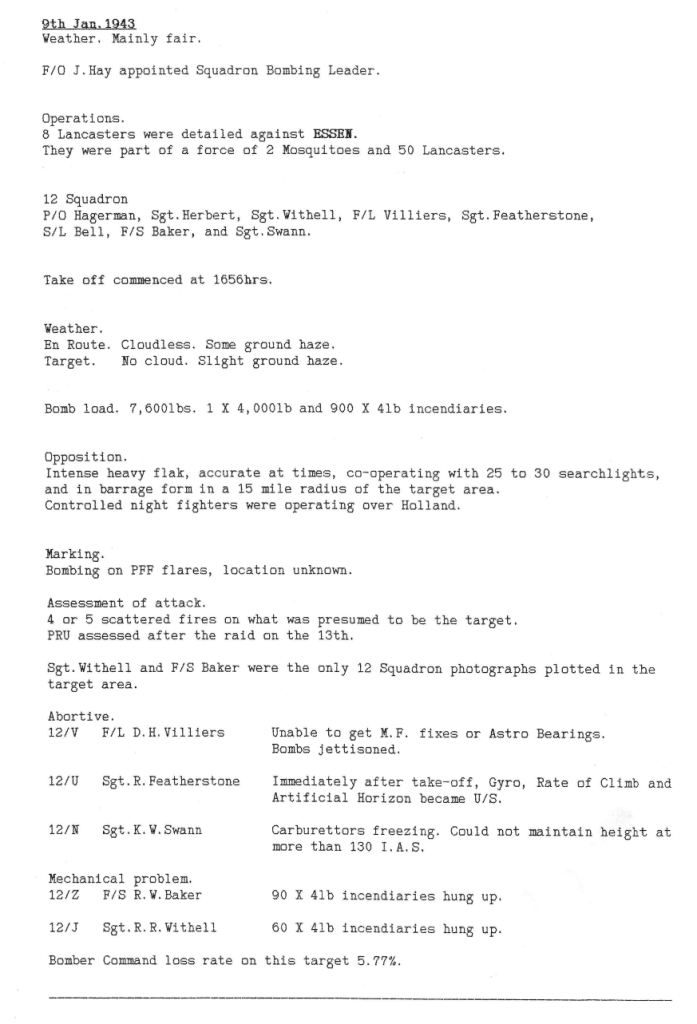
9/1/43 ESSEN 8 a/c nil casualties reported

  • a/c = aircraft
  • F.T.R. = Failed to Return
  • Gardening = mine-laying

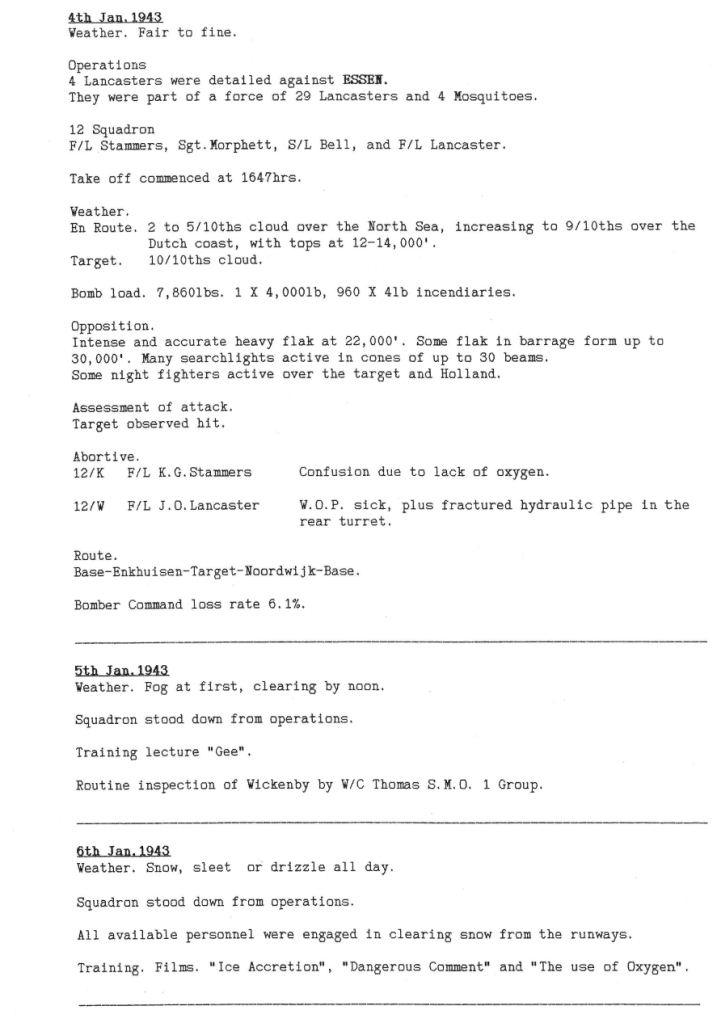
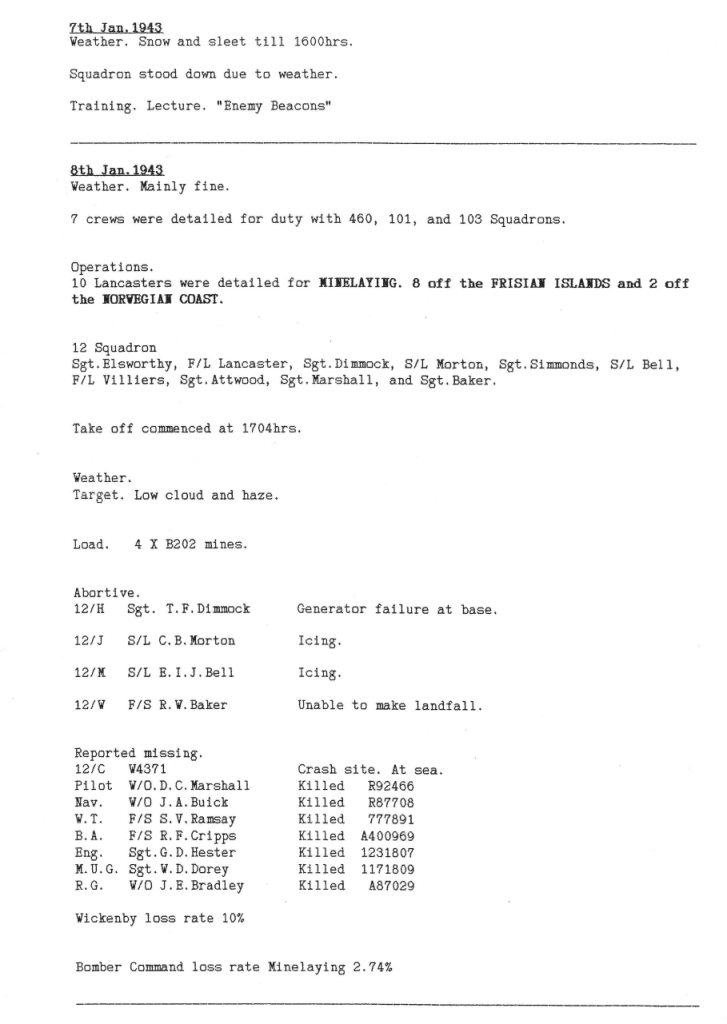
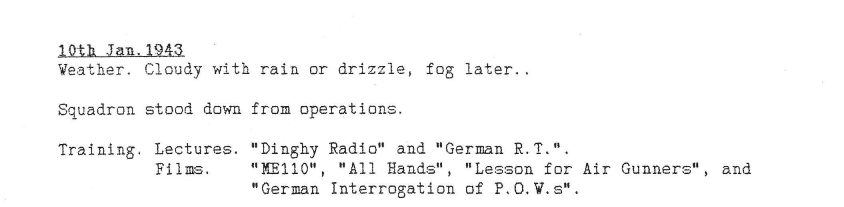
All of the information in the next section is taken from the Appendix to the Operational Record Book (RAF Form 541) compiled by 12 Sqn immediately after each mission. The further details recorded at the end were collated after the war by members of the Wickenby Register from information in the National Archives, the Public Records Office and from aircrew recollections. The Wickenby Register was an affiliation of ex-aircrew who served at Wickenby on 12 and 626 Squadrons – they had regular get-togethers at Wickenby every September until 2017, were responsible for the Icarus Memorial at the main entrance and issued a monthly newsletter.

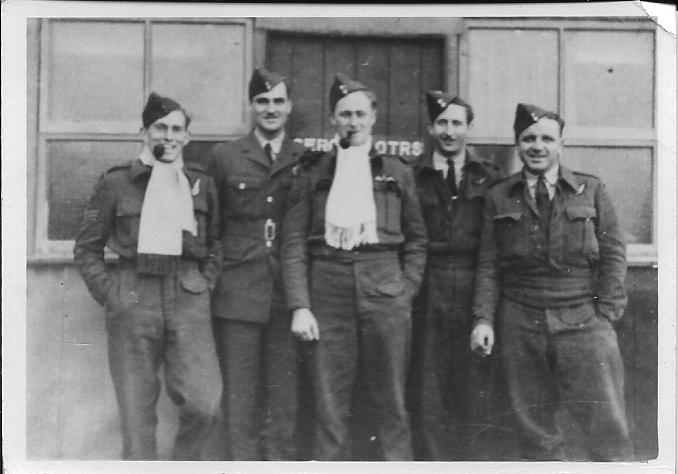
Warrant Officer Marshall (centre) and 4 members of his crew.
Warrant Officer John Buick, the Navigator is second left. All were killed on the night of 8/9 January 1943.

Warrant Officer John Buick, a Canadian, as was his pilot and 2 other crew members, became friendly with a local family from Market Rasen and the whole crew were invited to Christmas dinner 2 weeks before they were killed. Sgt Ramsay was from Halfway House , Transvaal, South Africa. This was the first crew to be reported missing, since the Squadron’s conversions to Lancasters.

Extract from 12 Sqn Diary