Overview
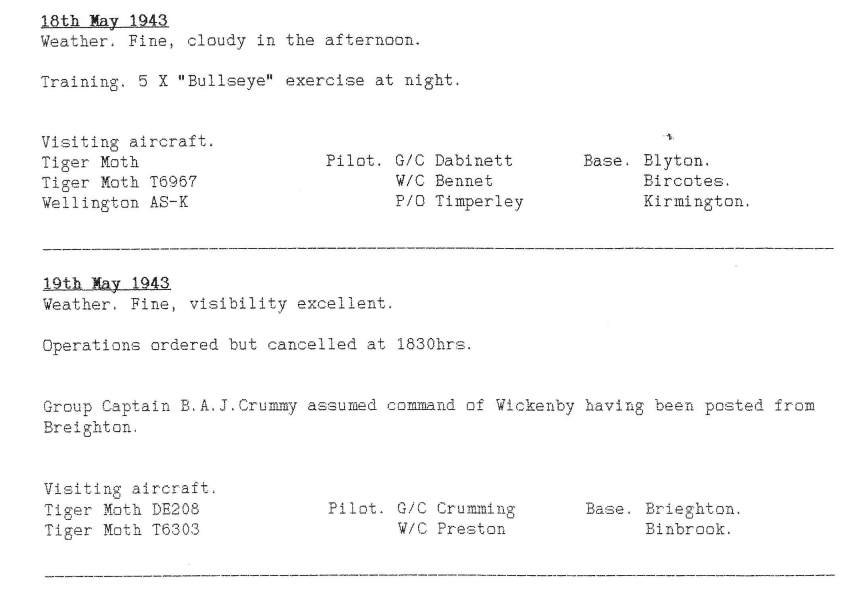
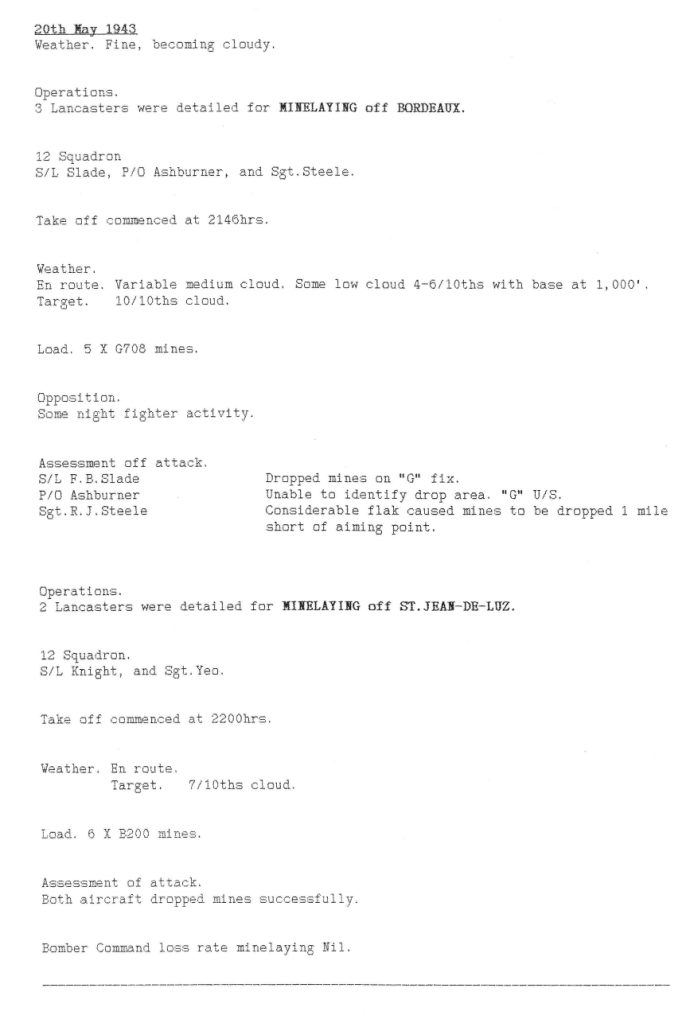
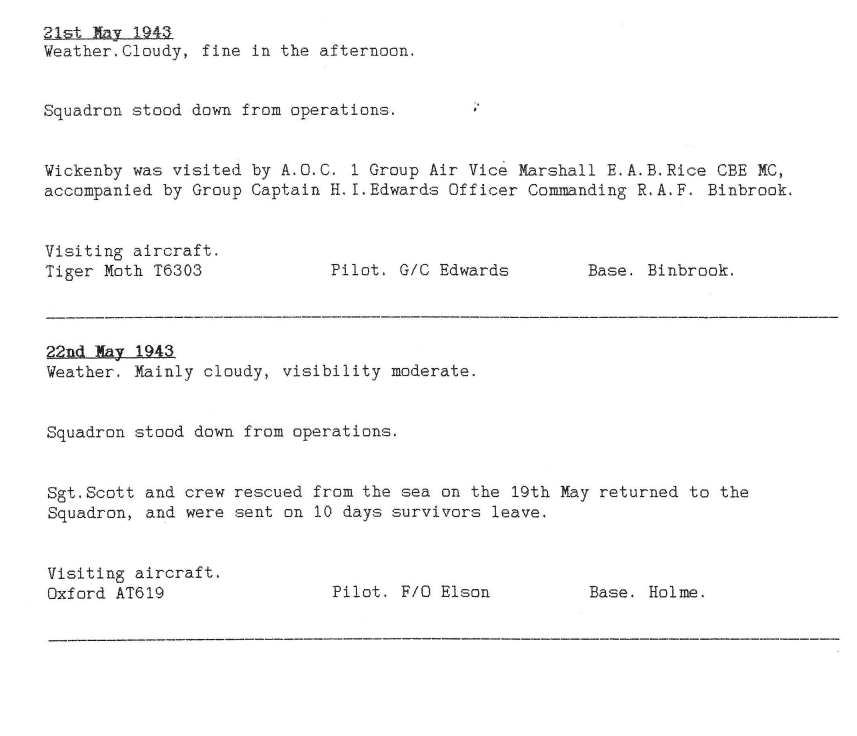
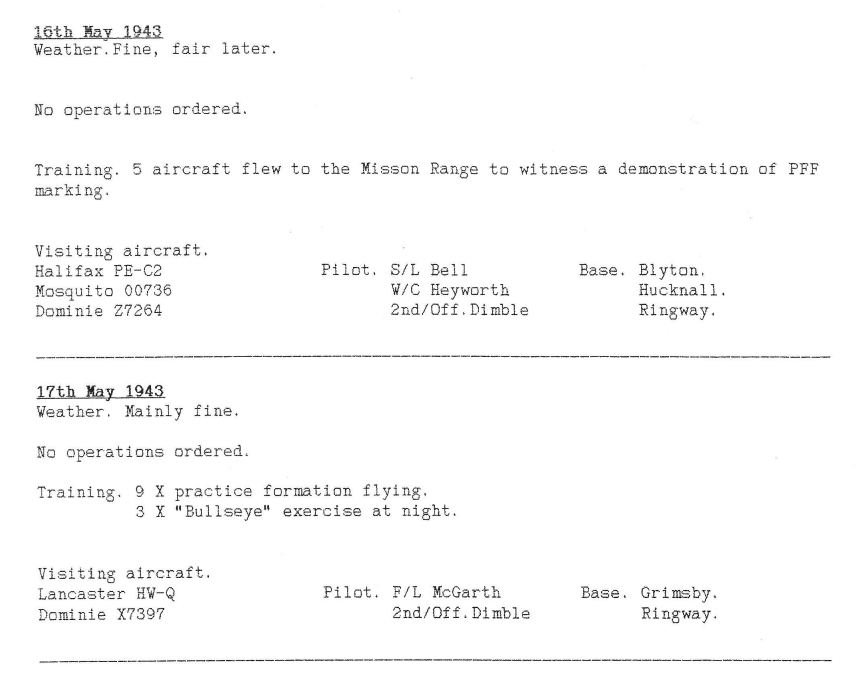
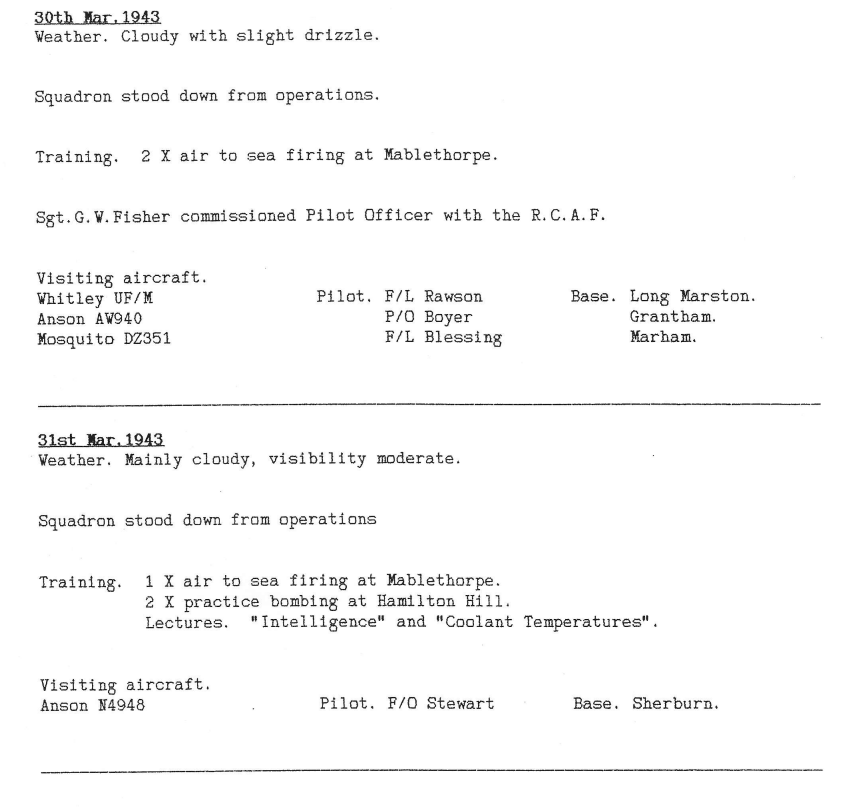
A quiet week for 12 Sqn, with no operations flown. It was also a quiet week for Bomber Command with just a few minelaying operations off the coast of France.
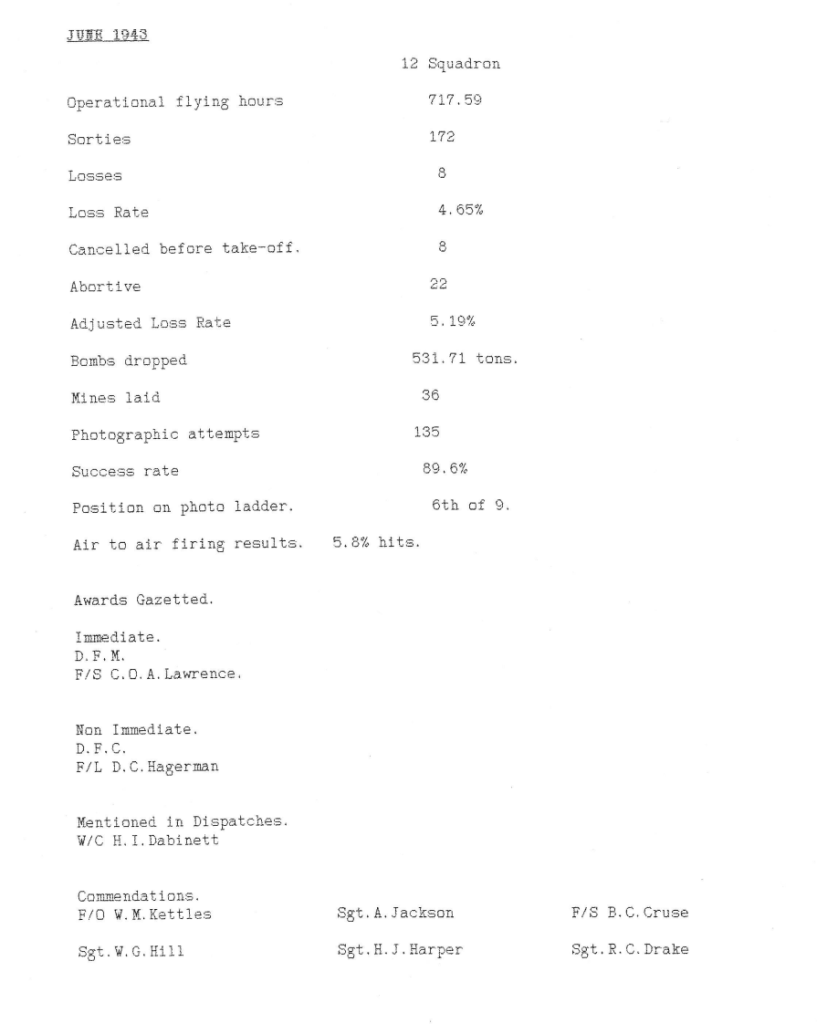
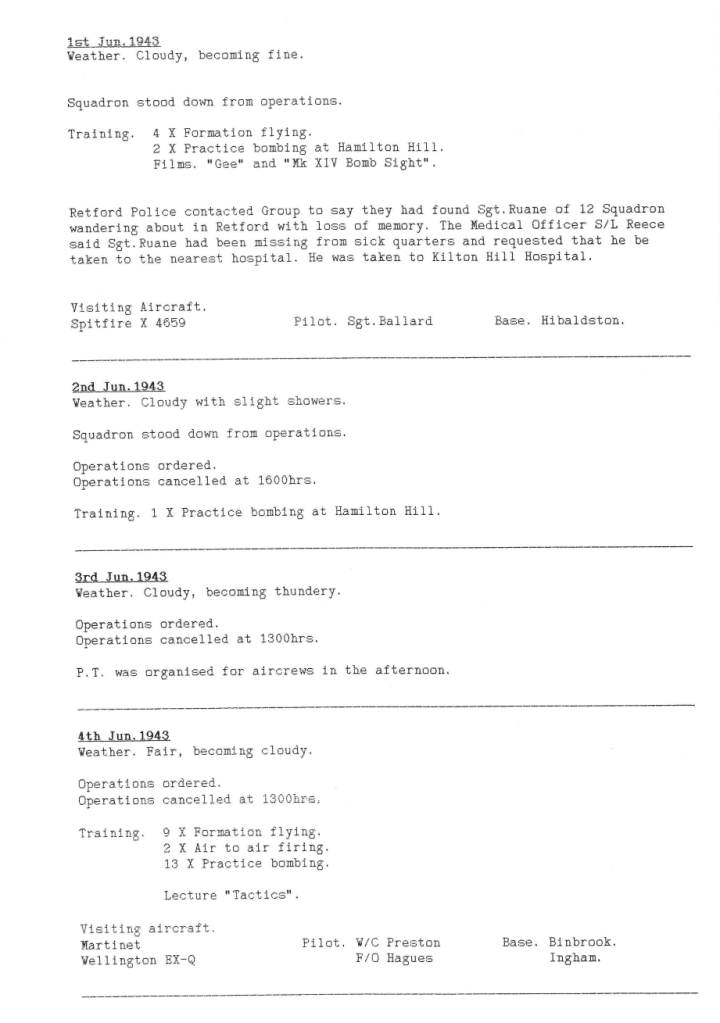
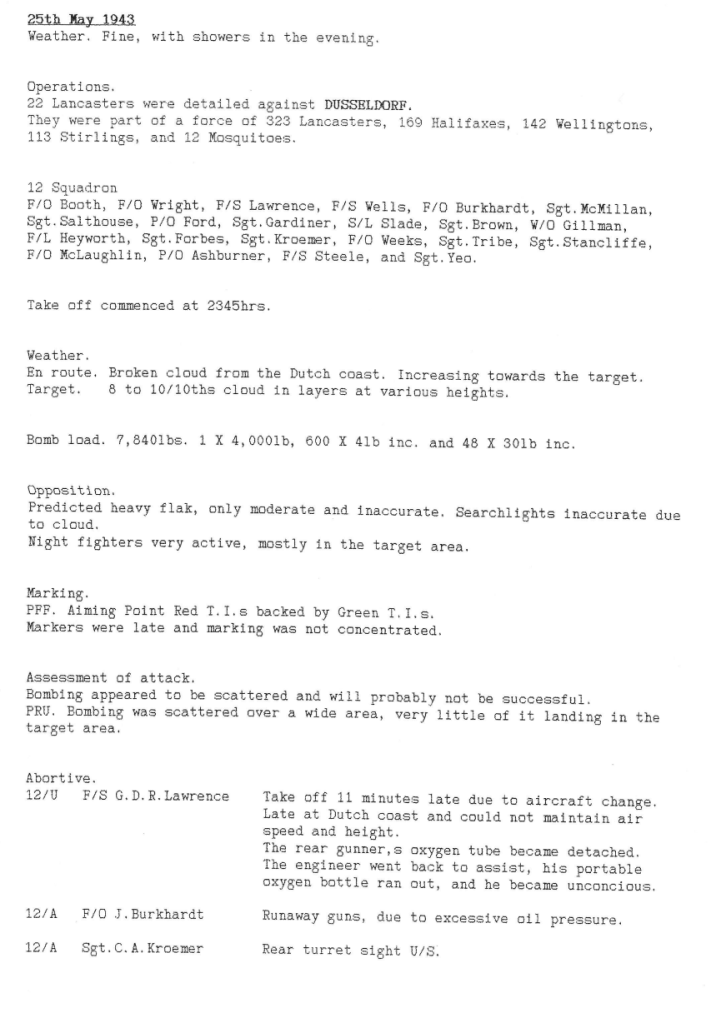
Extract from Station Diary


RAF Wickenby – This week in history – World War 2
RAF Wickenby history week by week during World War 2
A quiet week for 12 Sqn, with no operations flown. It was also a quiet week for Bomber Command with just a few minelaying operations off the coast of France.
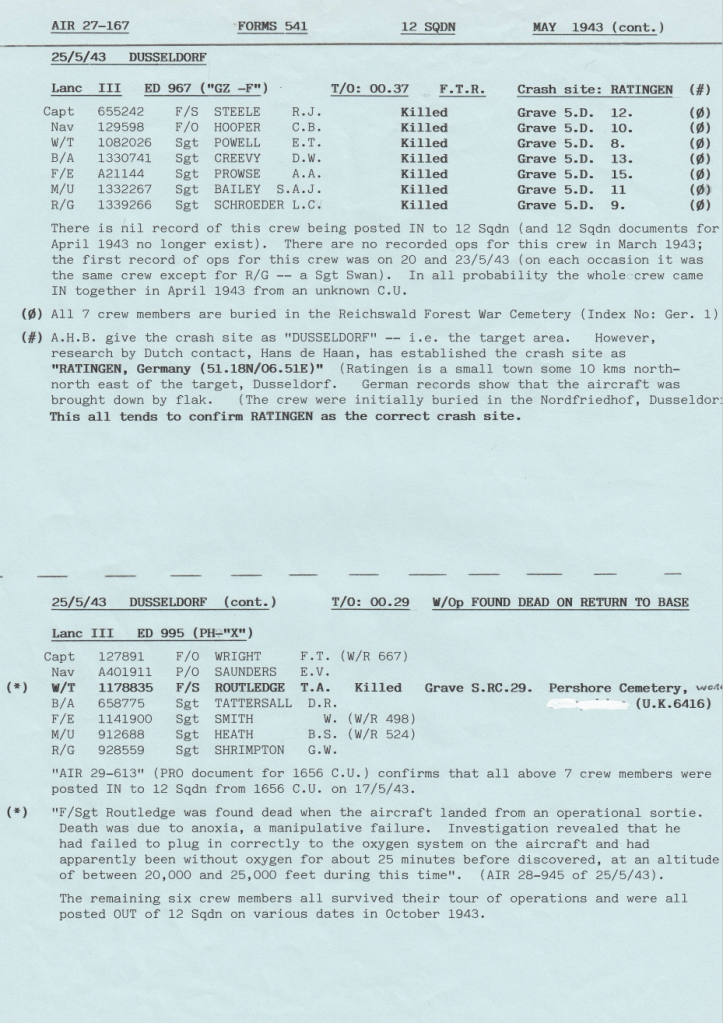
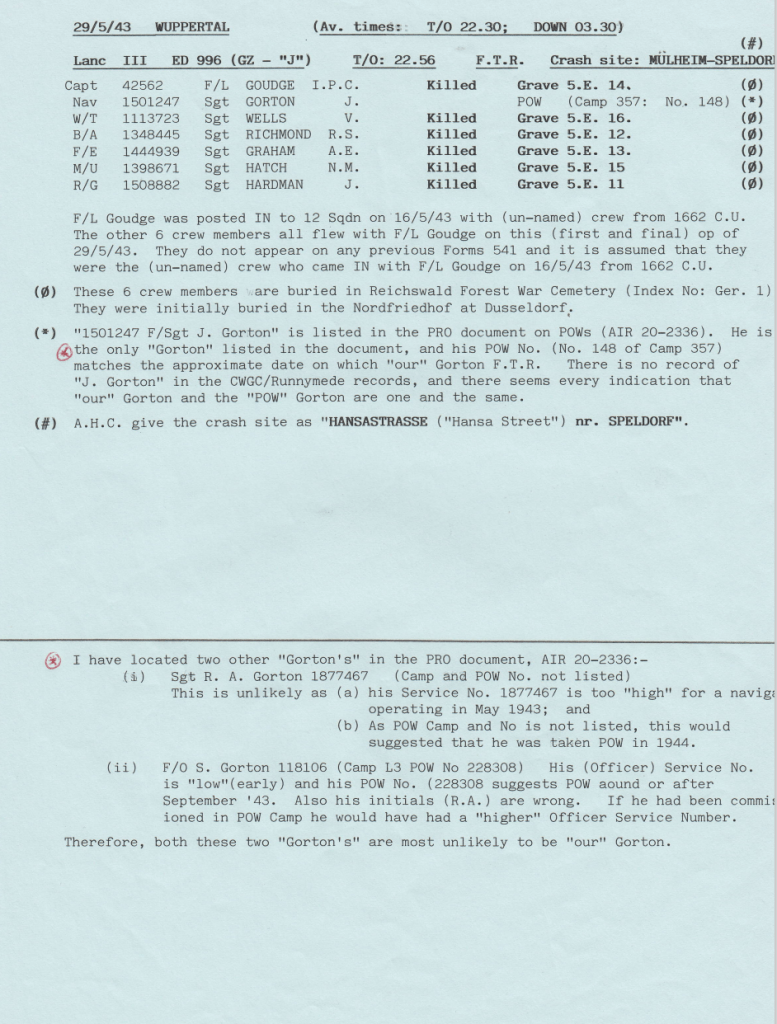
A busy week for 12 Sqn, with attacks on Dusseldorf, Essen and Wuppertal and loss of 2 aircraft and 13 aircrew in those aircraft.
There were a number of issues with oxygen supplies in aircraft during each of these operations, with one crew member dying due to anoxia, his death only being discovered on the aircraft landing; a rear gunner’s oxygen supply being cut off and the flight engineer, being sent to assist with a portable oxygen bottle, passed out when his supply ran out; 2 aircraft aborting their missions, one due to the pilot being asleep due to oxygen loss and the other due to the supply to the whole aircraft not working. Oxygen was needed above about 12,000 feet and the supply could be interrupted for a number of reasons as it flowed through pipes running throughout the aircraft. It was also the ground crew’s responsibility to fill the main oxygen tank and it was not unknown for this to be missed during preparation of the aircraft for missions, sometimes in a short time frame.
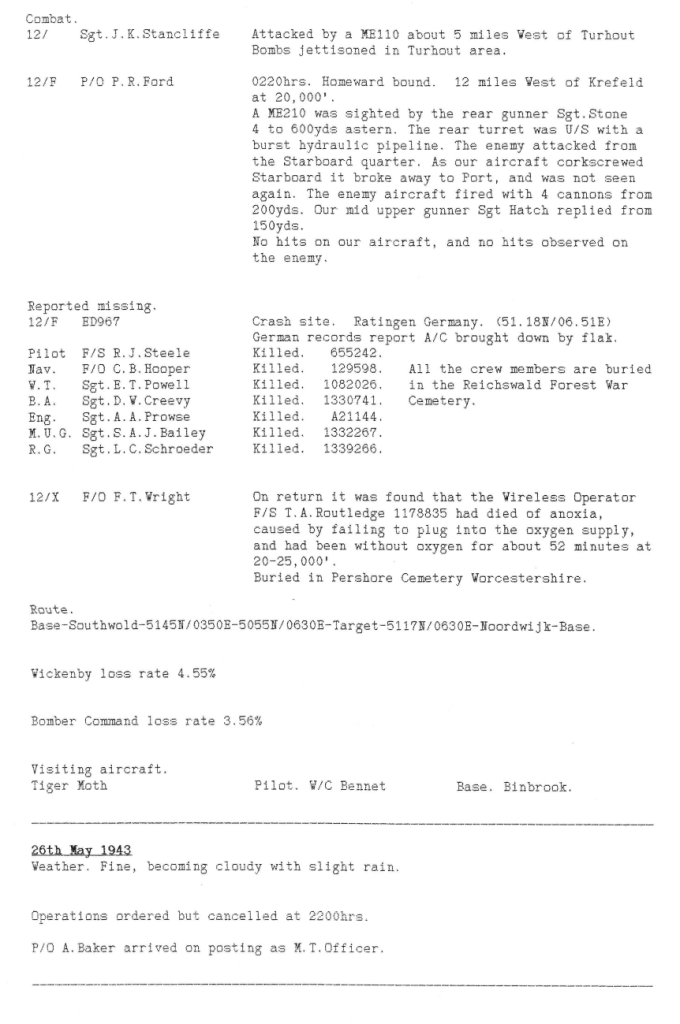
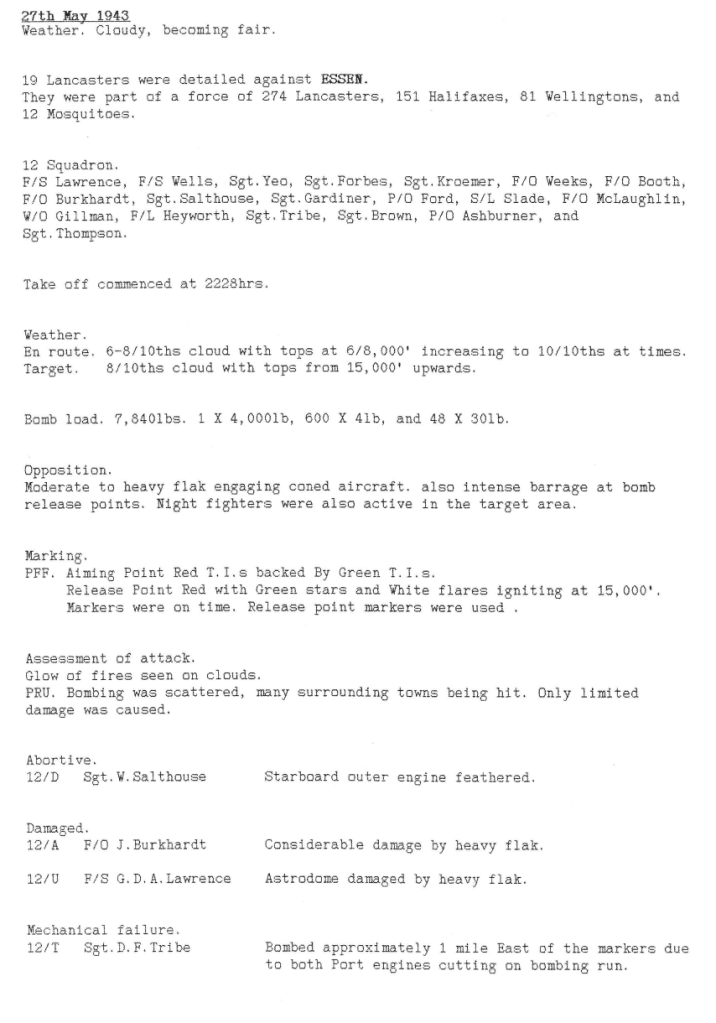
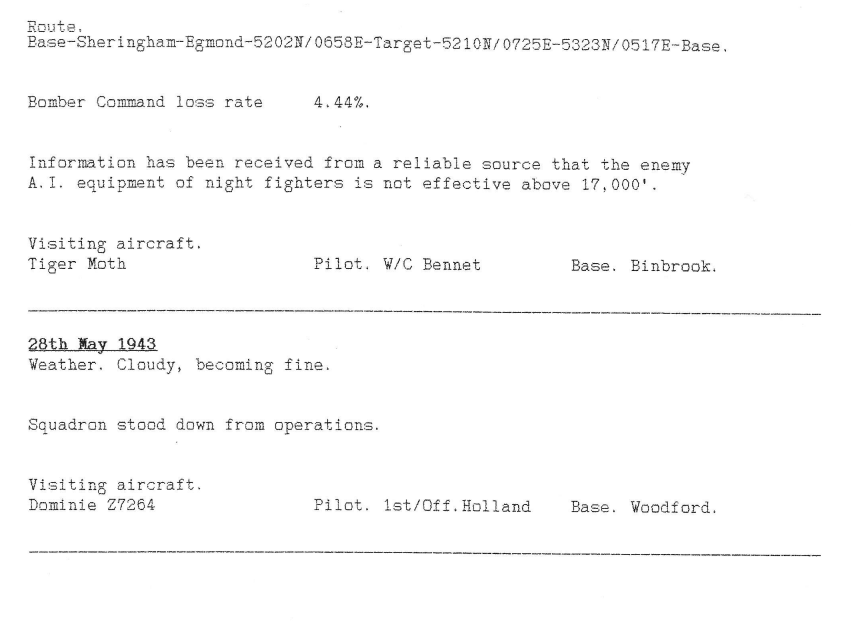

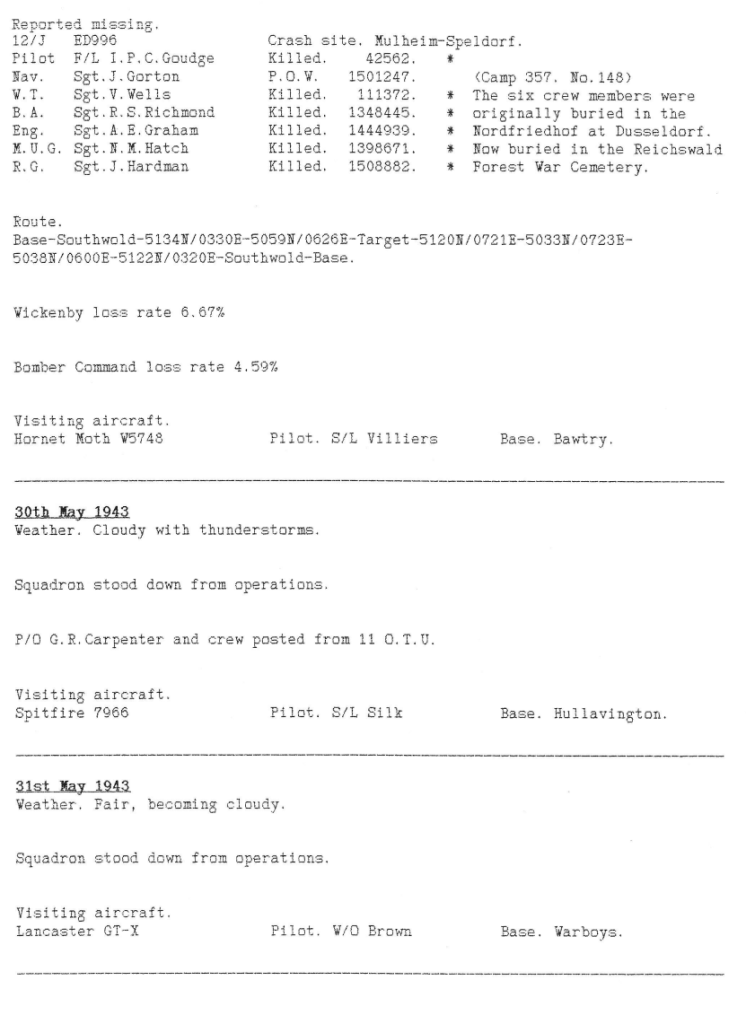
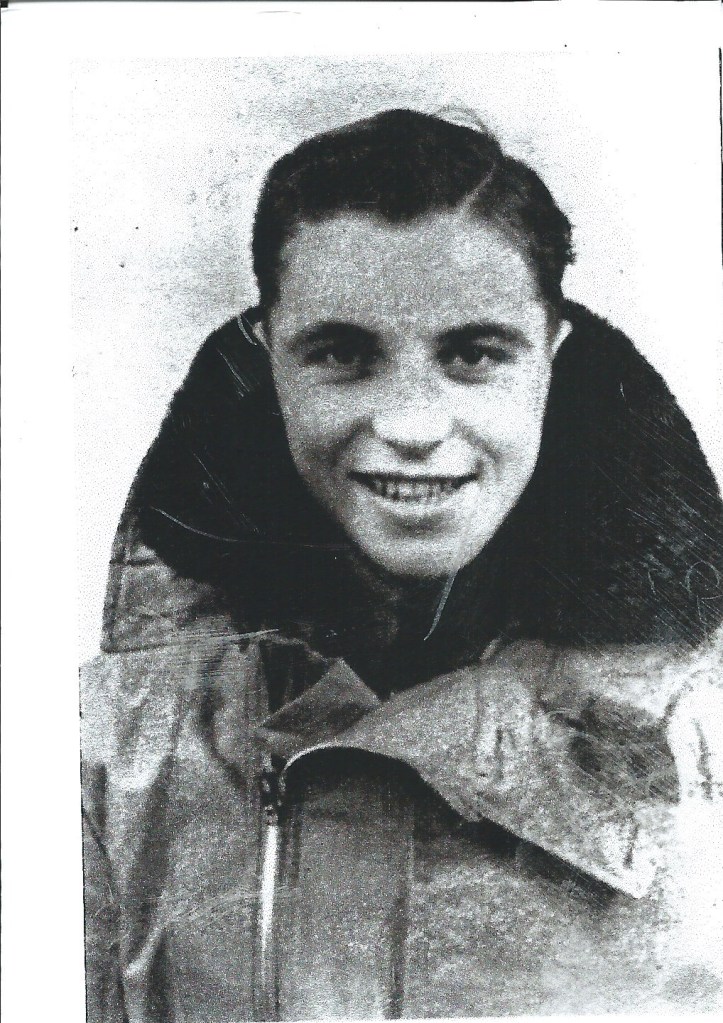
More information about the loss of Flt Lt Goudge’s aircraft and the crew can be found at the following website – https://aircrewremembered.com/goudge-ivor.html
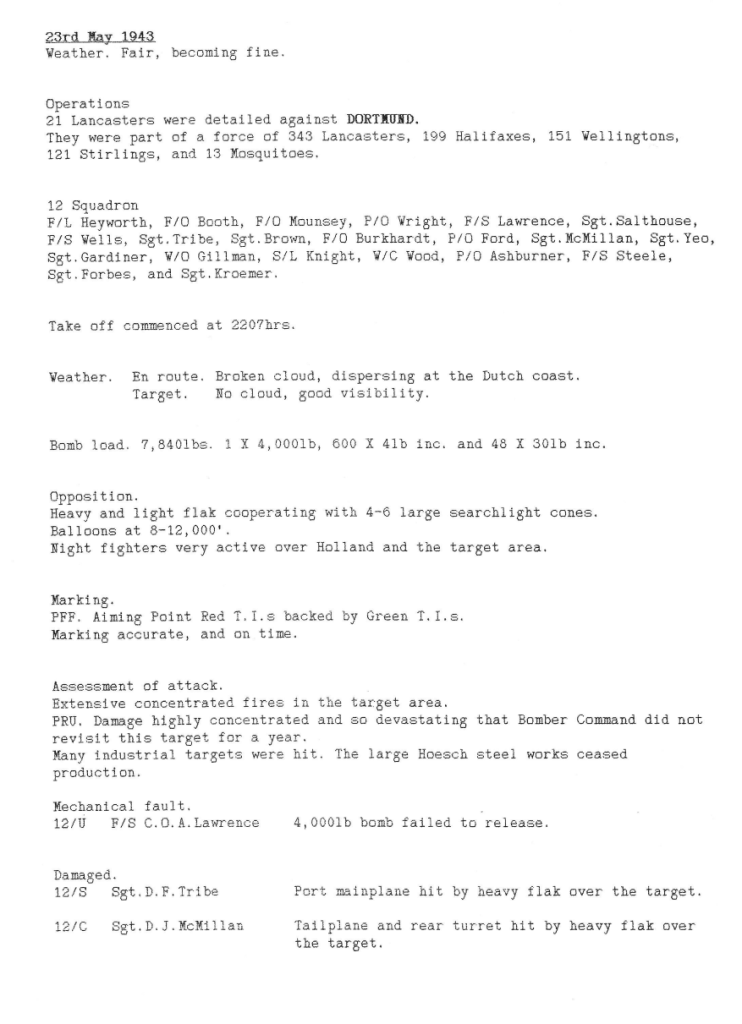
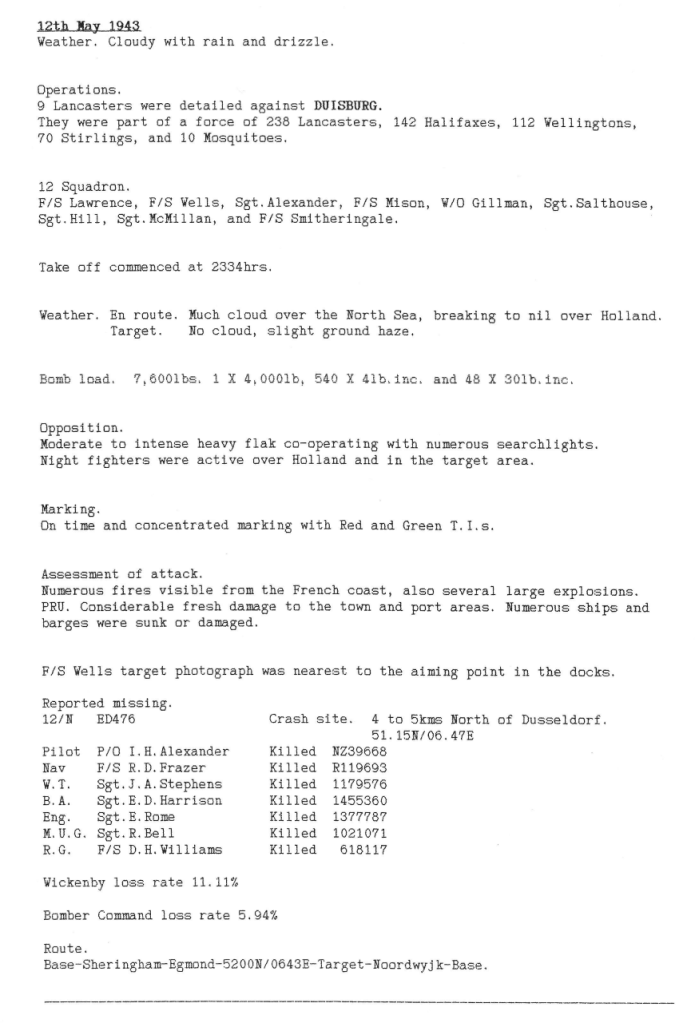
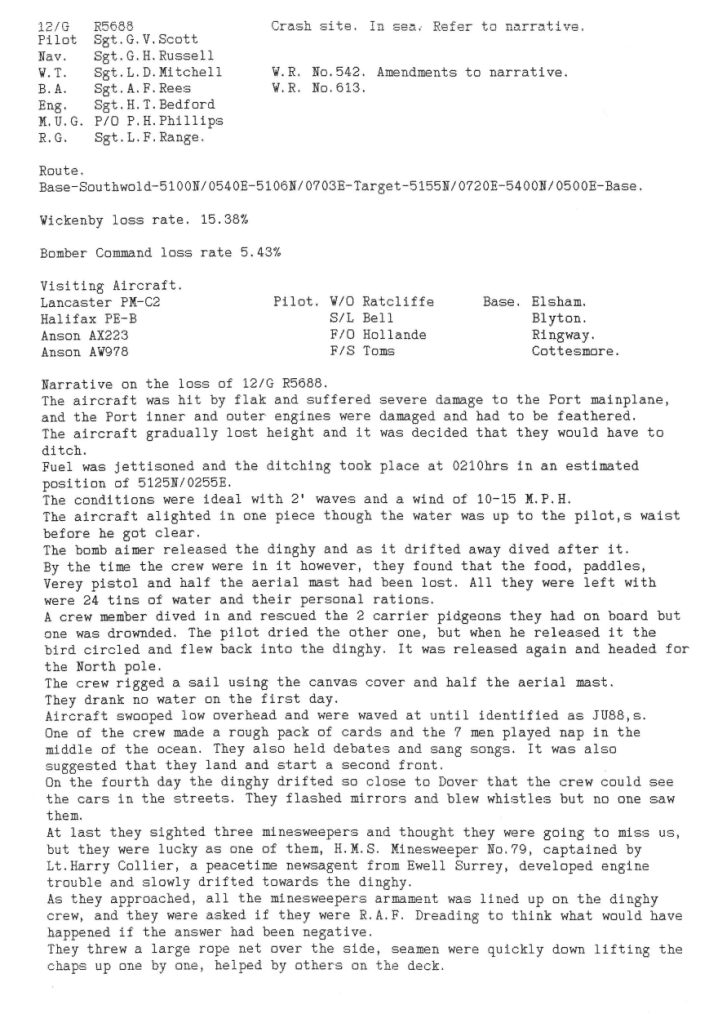
12 Sqn took part in 2 minelaying operations this week, and one main bombing attack on Dortmund. One aircraft and 5 crew members were lost. The crew of Fg Off Mounsey were on their first mission (see the account of the Bomb Aimer below).
The attack on Dortmund was the largest carried out by Bomber Command during the Battle of the Ruhr (826 aircraft dispatched) and the largest effort so far by 12 Sqn – 21 aircraft. It was a very successful raid and nearly 2000 buildings were destroyed, including the large Hoesch steelworks, which ceased production. 599 people were killed and 1.275 were injured.
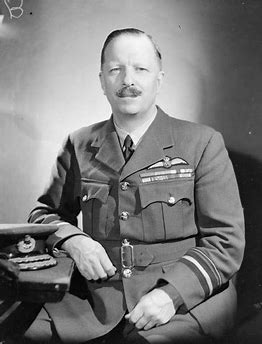
The unit was also visited, on 21st May, by the Air Officer Commanding 1 Group, Air Vice Marshall E.A.B. Rice CBE, MC.
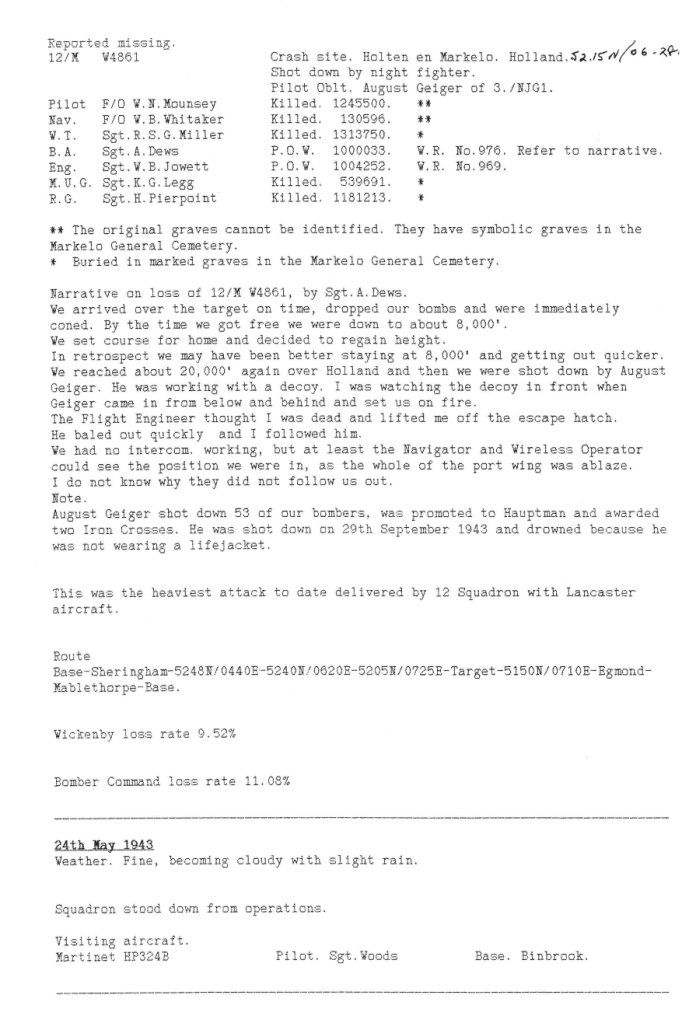
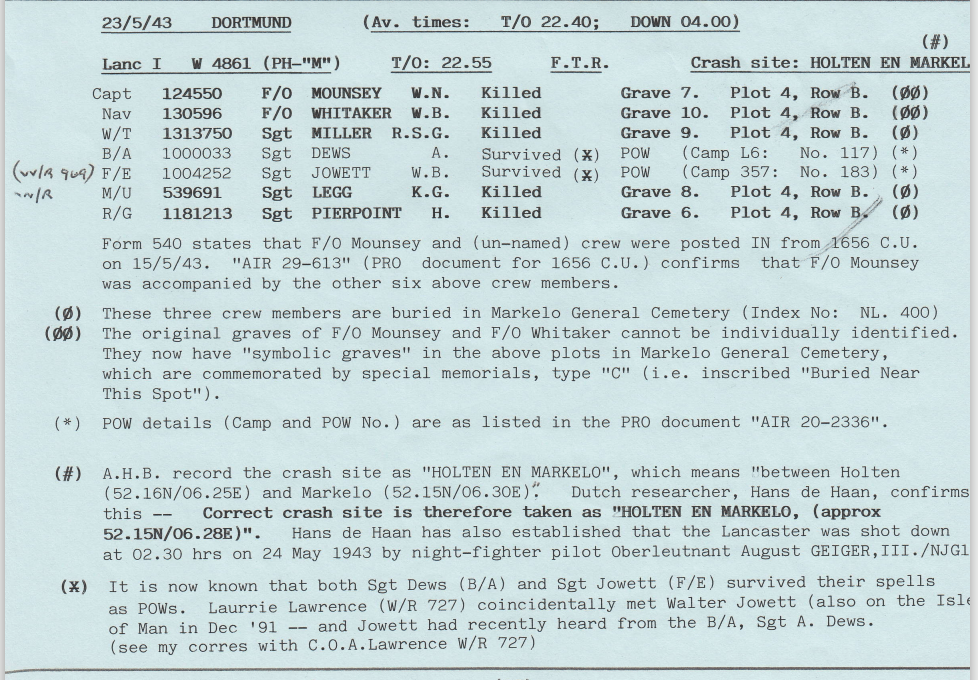
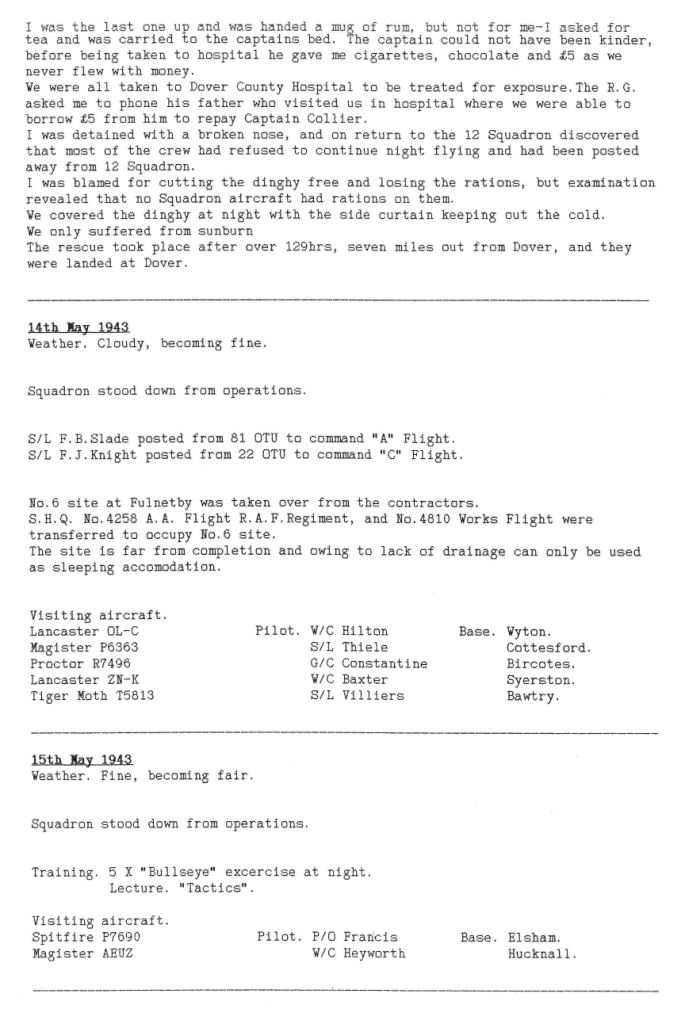
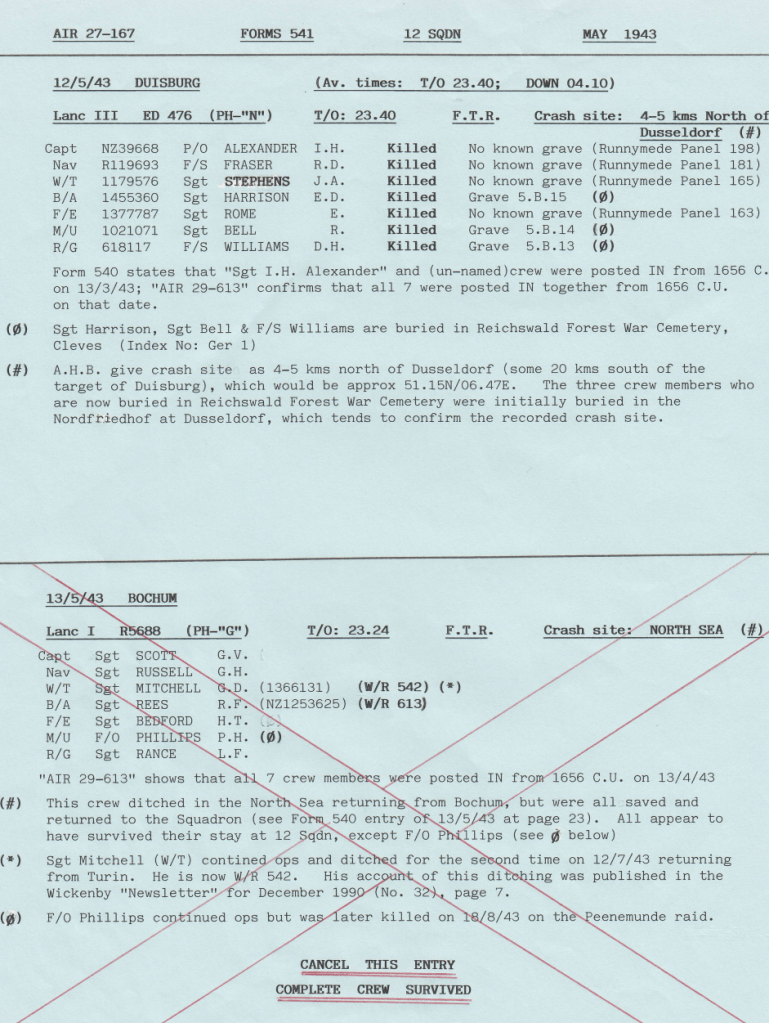
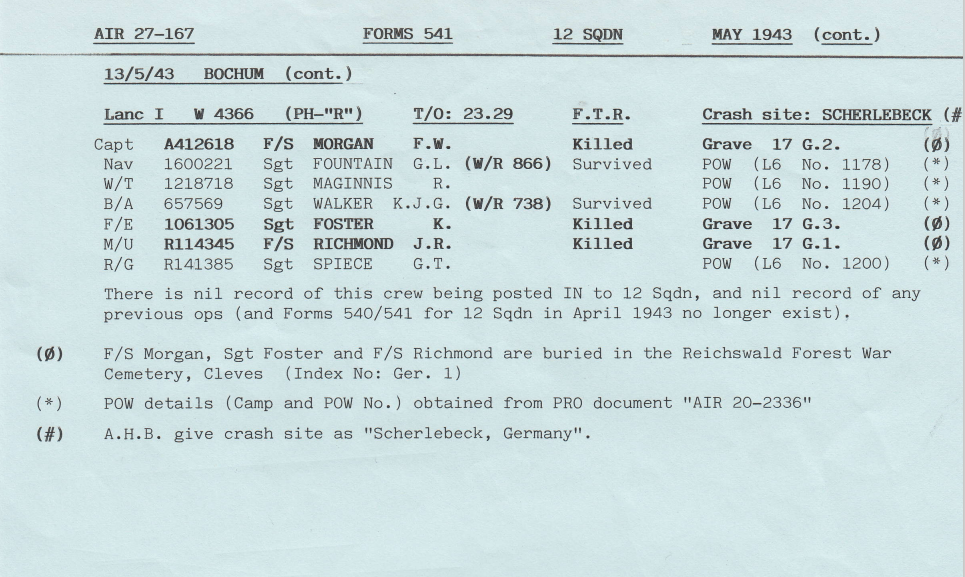
This was the week of the Dambusters Raid (Operation Chastise), but 12 Sqn carried out 2 operations, to Duisburg and Bochum and 3 aircraft were lost, one landing in the North Sea, with all the crew eventually being rescued after 129 hours in the aircraft dinghy (see first hand report below). You will also notice in the Station Diary entry for 13 May that Flt Lt J.O. Lancaster was posted following completion of his second tour – an unusual achievement – but he was also one of the original 617 Sqn pilots, but left during training and did not take part in the mission to the dams. He was also one of the aircrew interviewed on the Sky TV documentary “Lancaster”, released last year.



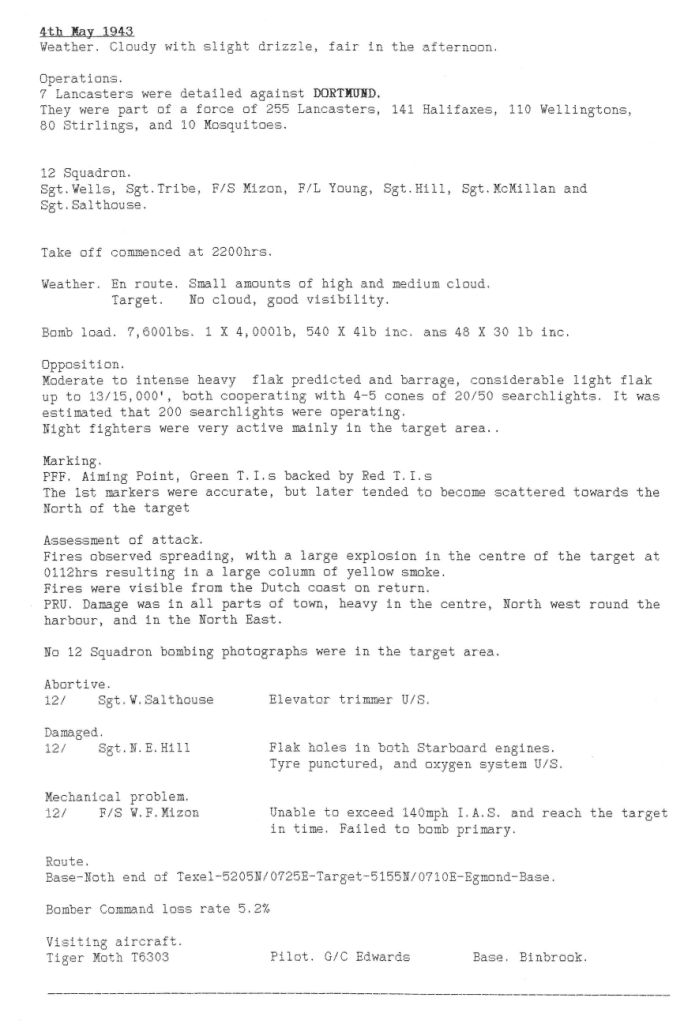
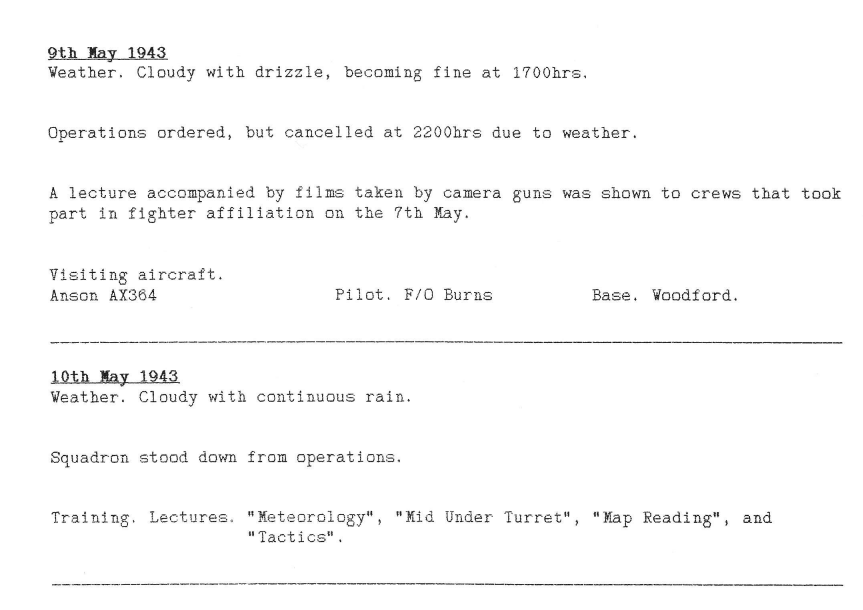
Following the heavy losses of the previous week, 12 Sqn only took part in one operation this week, to Dortmund, in the Ruhr, on 4/5 May – there were no losses. Apart from the “1000 bomber raid” on Cologne in 1942, this was the largest raid of the war so far, 596 aircraft and the first major attack on Dortmund. Pathfinder marking was accurate and the majority of the main force bombed within 3 miles of the target which resulted in severe damage in the central and northern parts of the city. 693 people were killed and 1,075 injured, another new record.

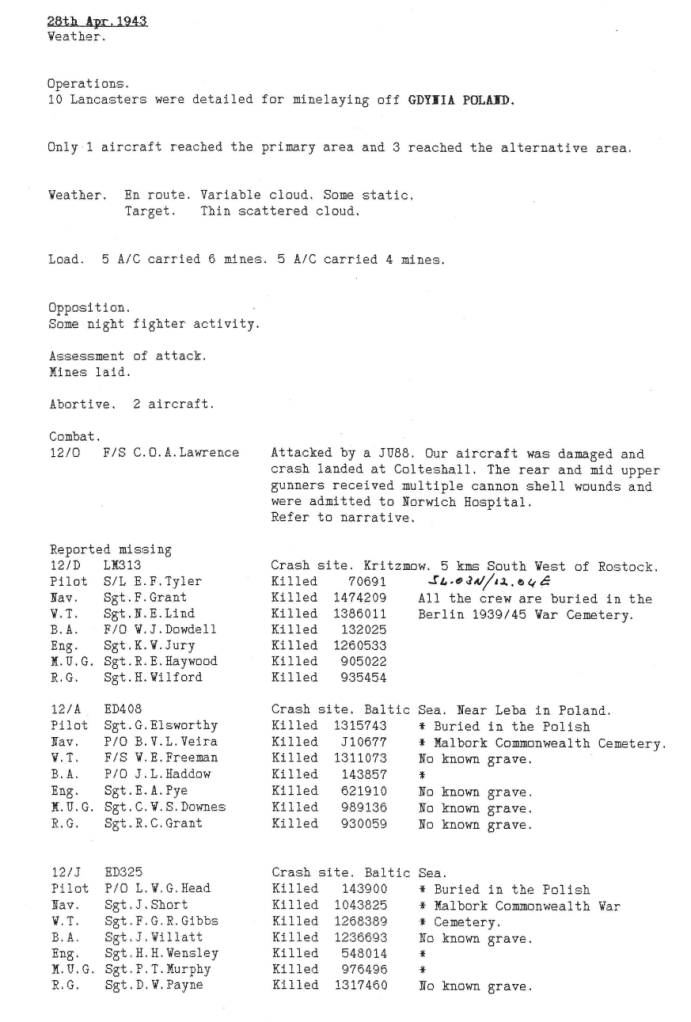
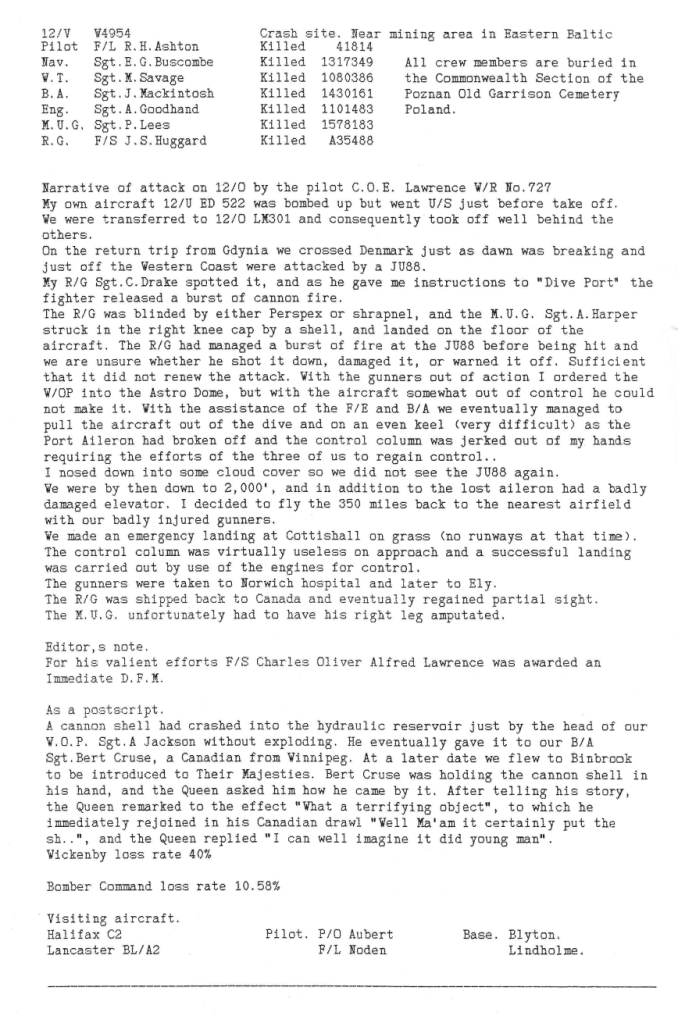
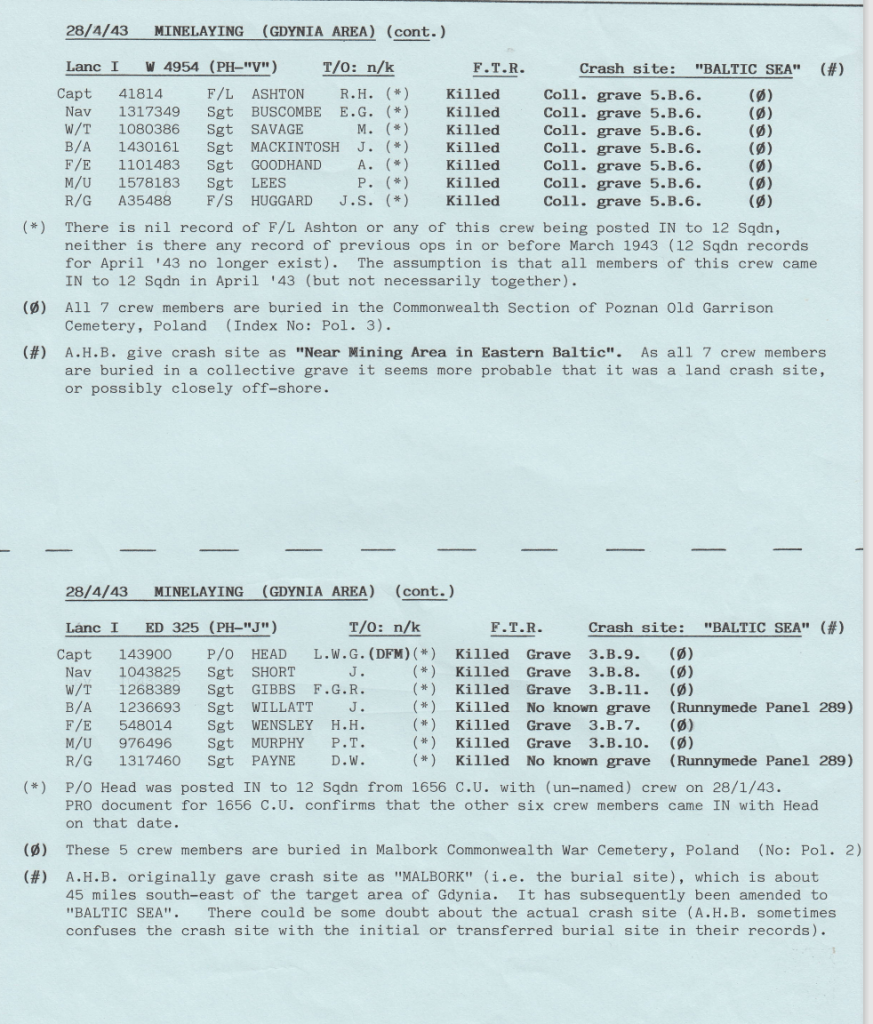
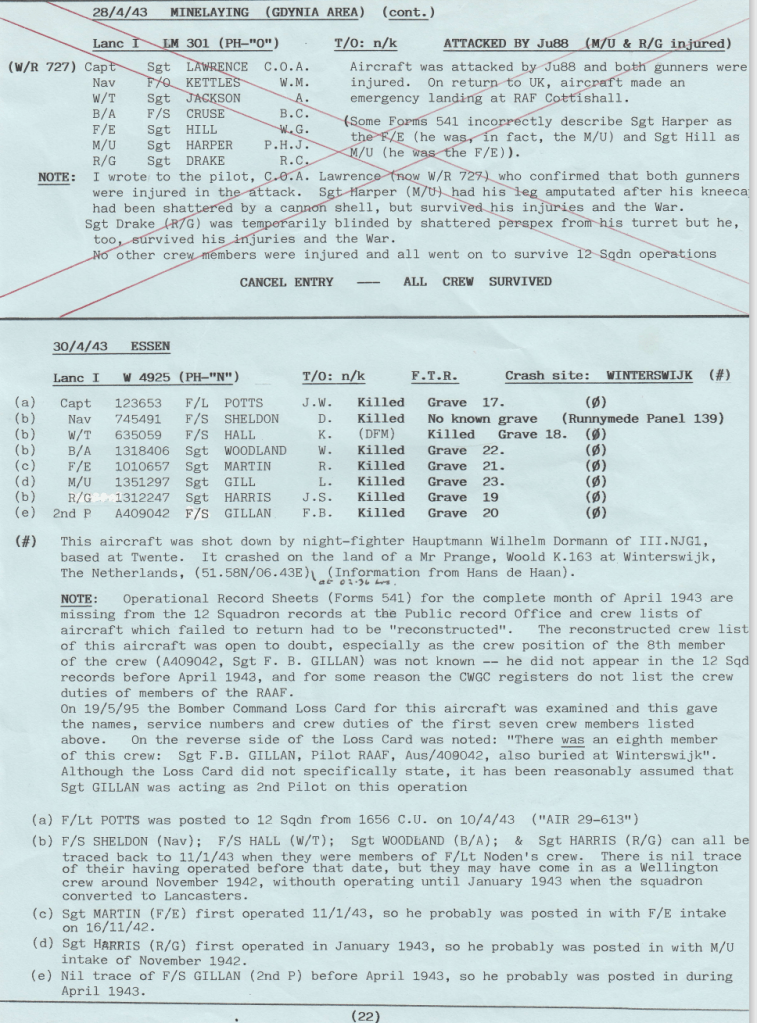
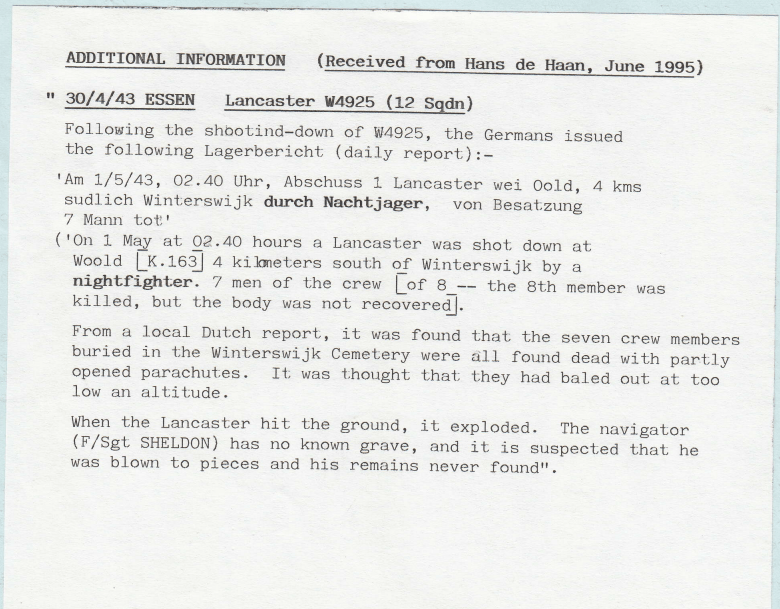
A terrible week for 12 Sqn, with 5 aircraft and all their crews being lost on operations, with a sixth so badly damaged it was scrapped on its return – 2 of its crew being so badly injured they played no further part in the war. These losses caused the disbandment of “C” Flight of 12 Sqn, at least for the time being. The minelaying operation on 28/29 April was the heaviest loss of aircraft for Bomber Command during the war, but the number of mines laid was the highest in one night.
Also of interest is the support given to RAF Wickenby by the local population, especially Market Rasen, only a few miles from the camp, who raised £59,000, a considerable sum in 1943 and certainly enough to pay for a Lancaster and training for some of her crew.

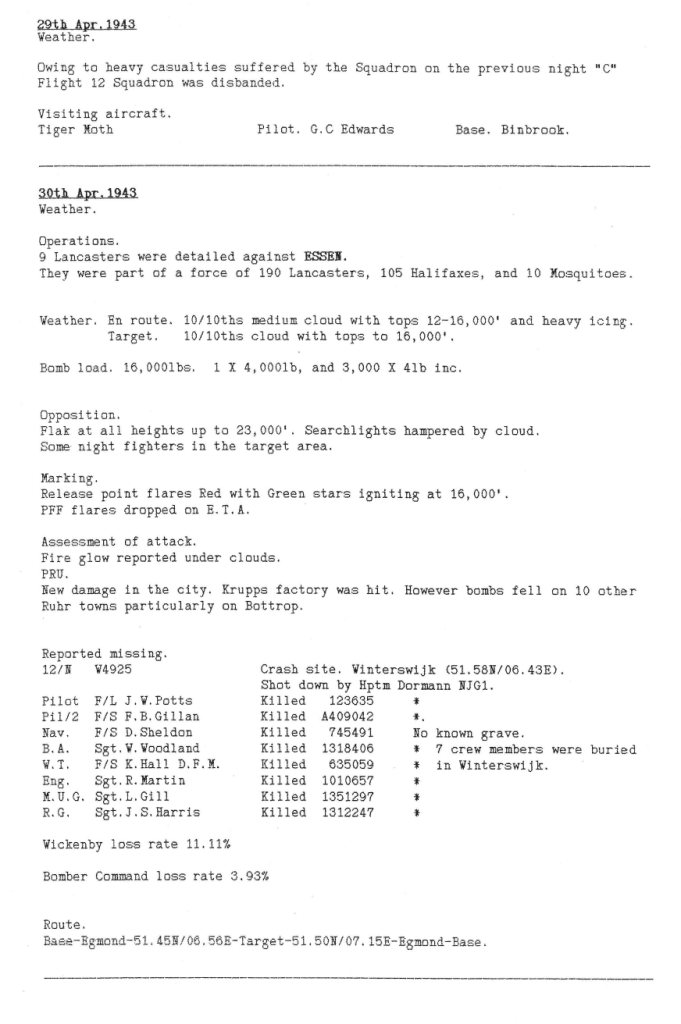
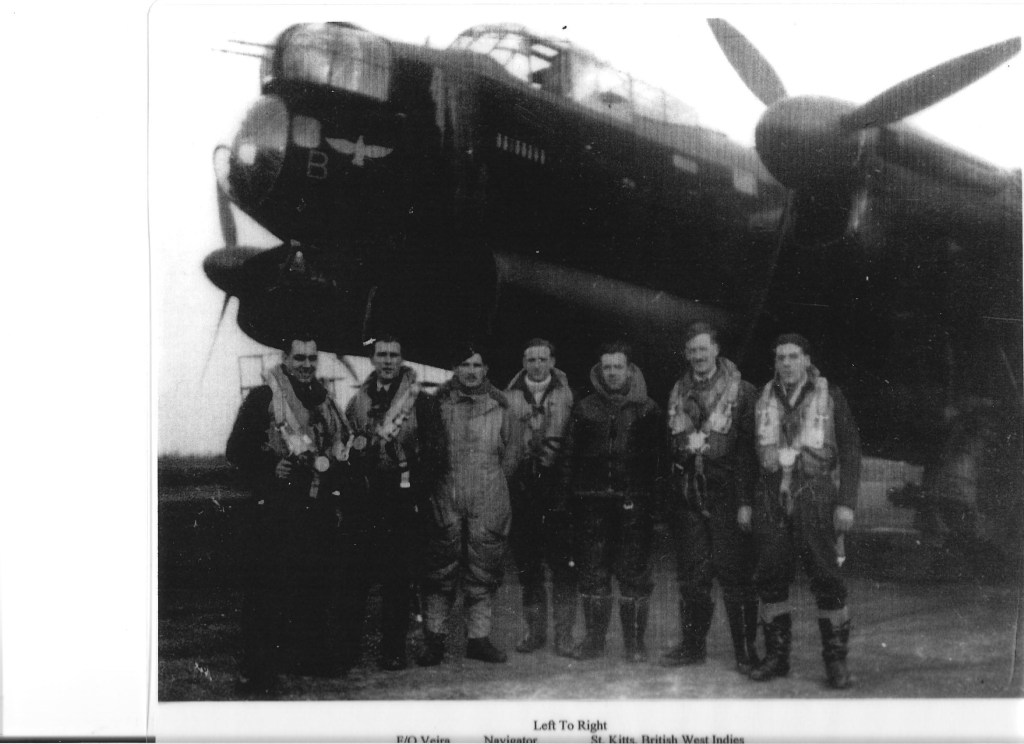
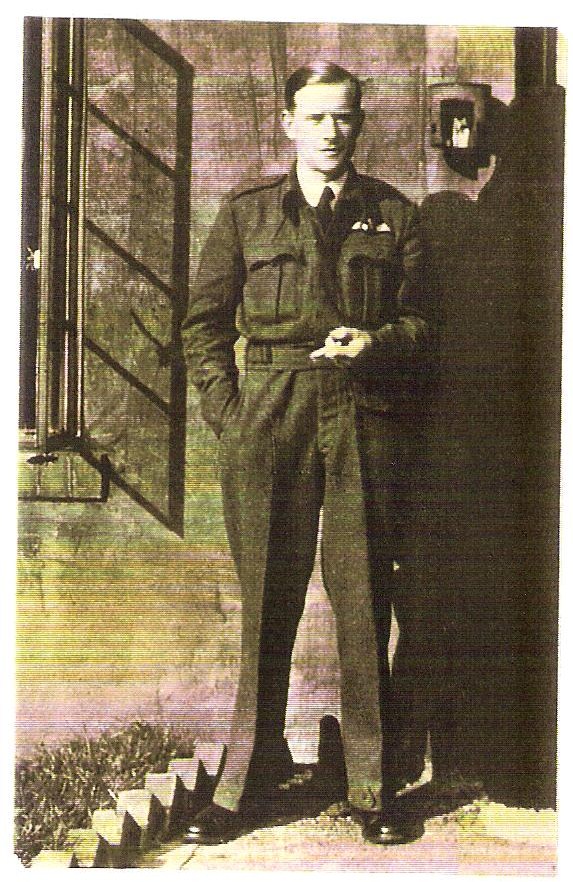
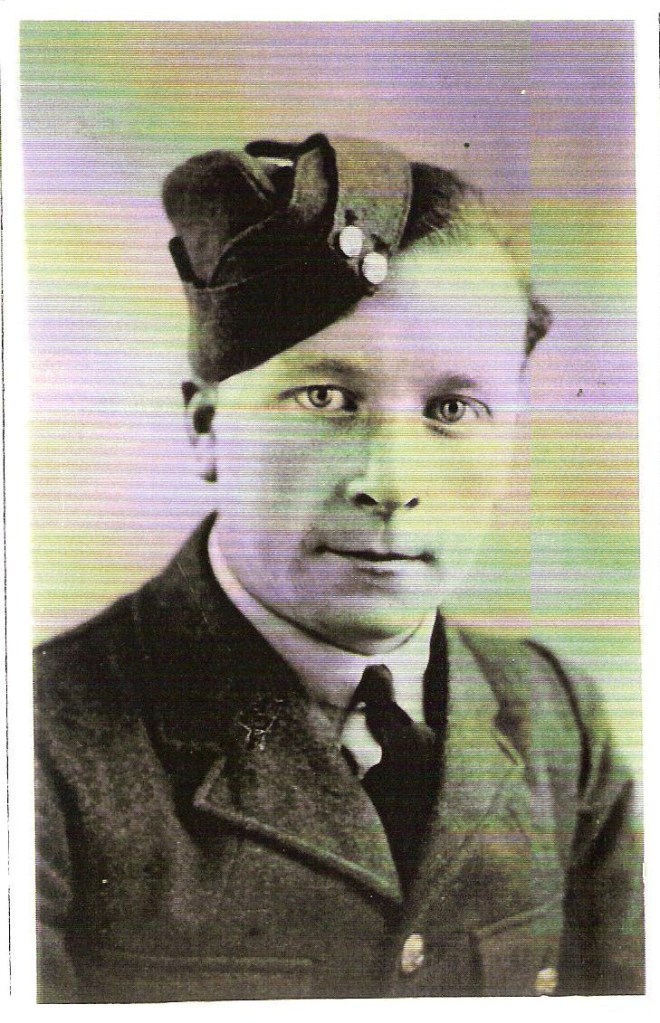
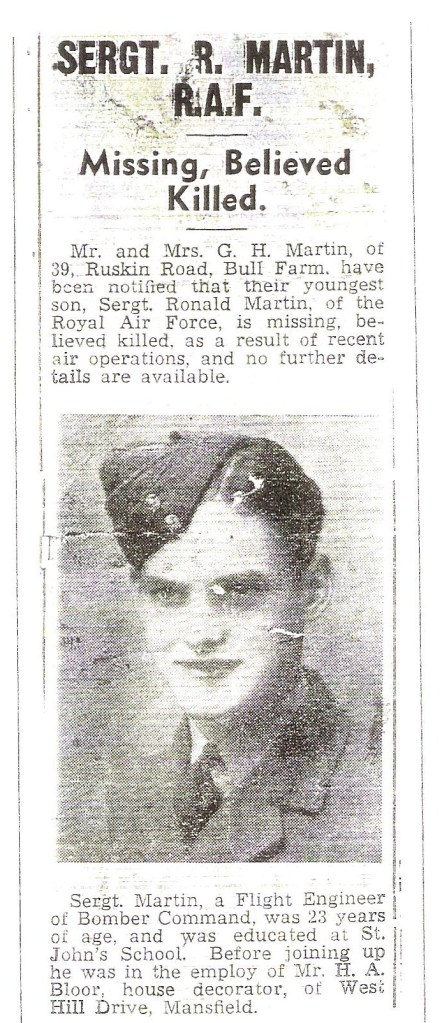
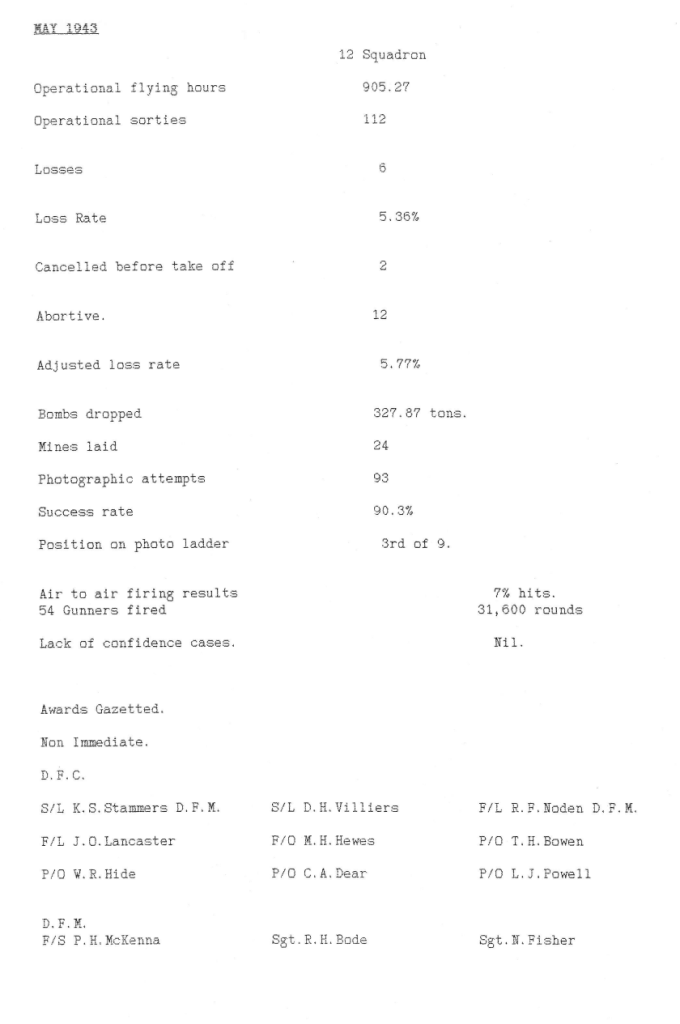
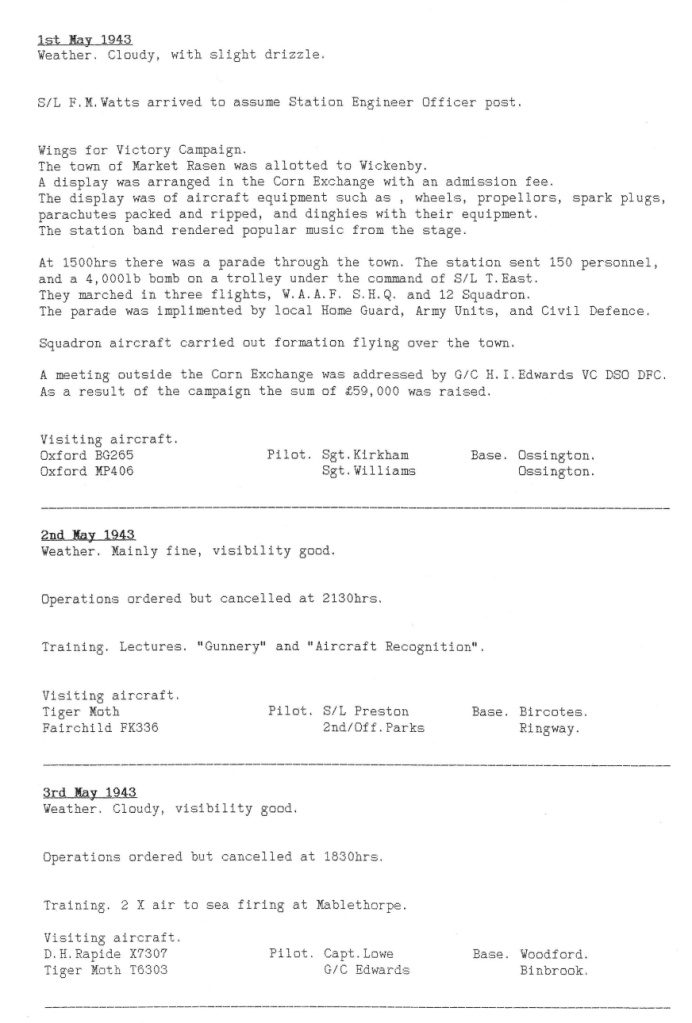
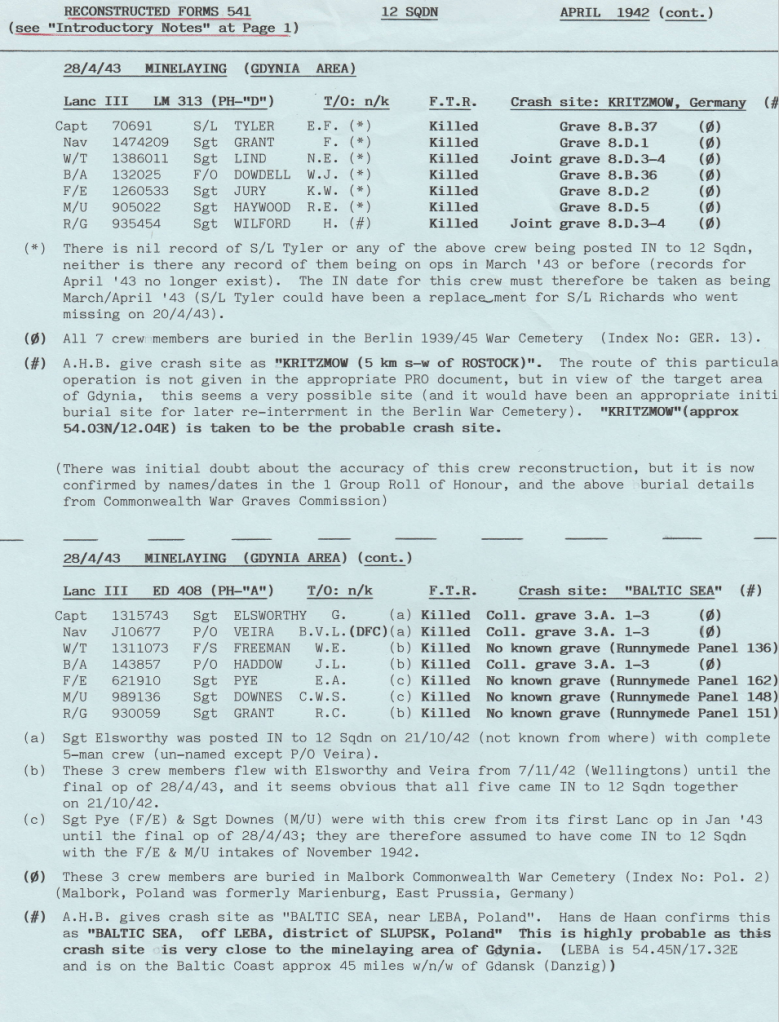
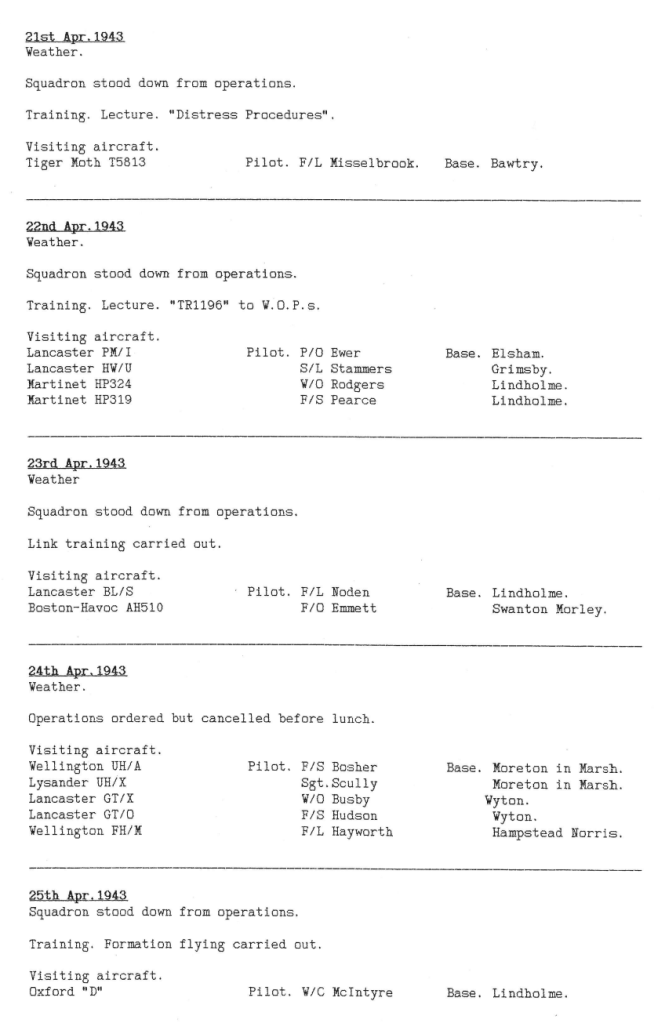
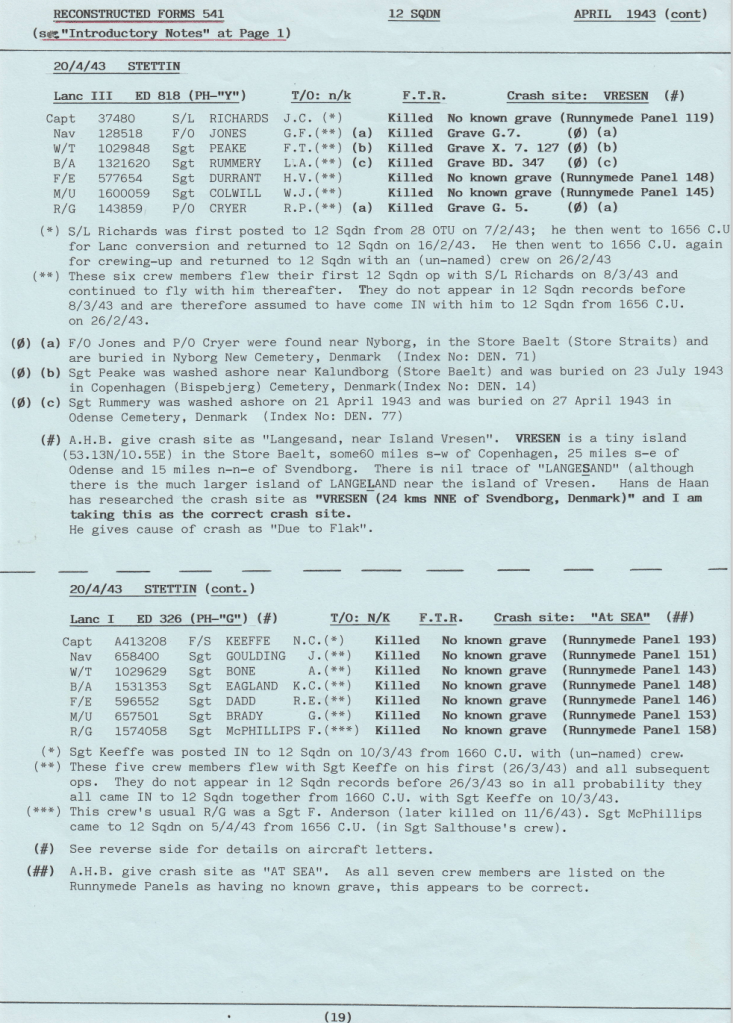
The Battle of the Ruhr was still in full swing and 12 Sqn took part in two large attacks in this week in 1943, to Stettin (now Szczecin) in what was then Germany but is now part of Poland and Duisburg, which is part of the Ruhr area of Germany. The raid on Stettin, more than 600 miles from England, was one of the most successful raids of the Battle of the Ruhr with the Pathfinders carrying out perfect marking on the aiming point. Over 100 acres of the centre were devastated.
Two aircraft and all their crews were lost on the Stettin attack. As you will see below, both these crews were killed on or before their 5th mission. This was considered to be the most dangerous time for new crews.



Sqn Ldr John Richards was an RAF regular who joined in December 1936. Prior to his posting to Wickenby he was a flying instructor in South Africa. He and his crew were killed on their 5th mission.
Flight Sergeant Norbert Keefe was 20 and was a member of the Royal Australian Air Force. He was the son of William Andrew & Elizabeth Colista Keefe of Kensington, New South Wales, Australia. He and his crew were killed on their 4th mission.

A week that demonstrates the variety of targets and locations attacked by Bomber Command – Stuttgart, La Spezia in Italy and the Skoda factory in Pilsen (Czech Republic). One aircraft and crew were lost in the operation to La Spezia and 3 aircrew bailed out from an aircraft during the attack on Pilsen, although the aircraft and the rest of the crew landed successfully at Wickenby – 2 evaded capture and made it to Gibraltar, the third became a POW due to a broken leg on landing. This crew were on their first mission and there was an order to bail out but it was later countermanded. Their stories are told in the annex to the Station Diary below.
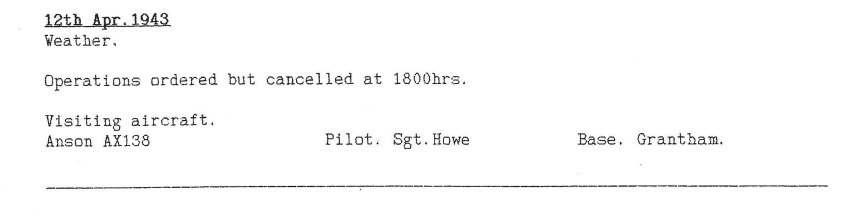
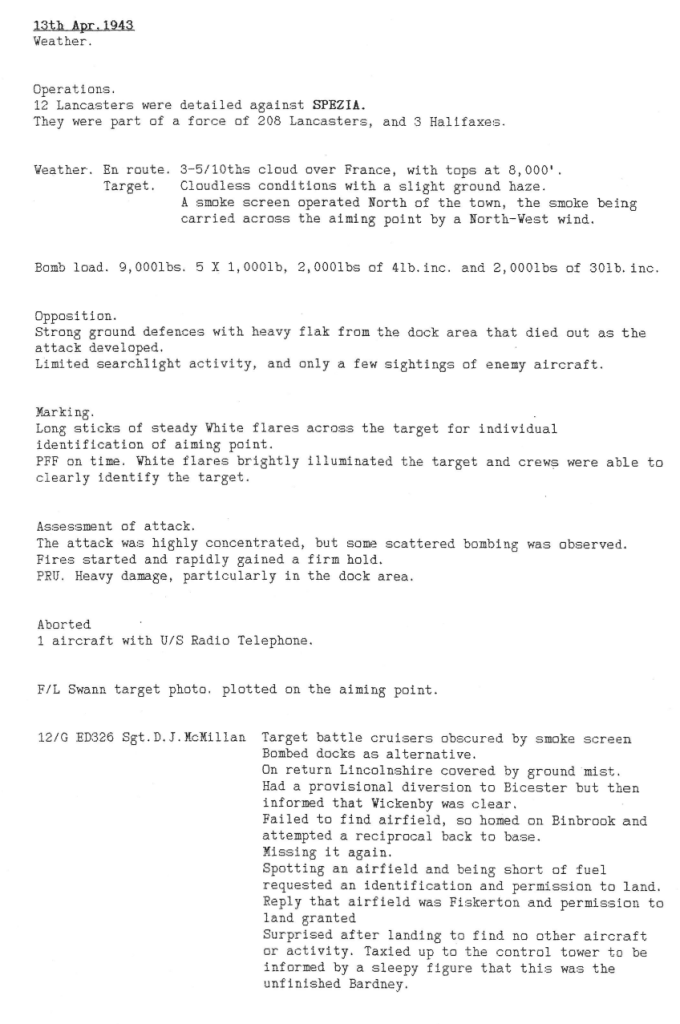
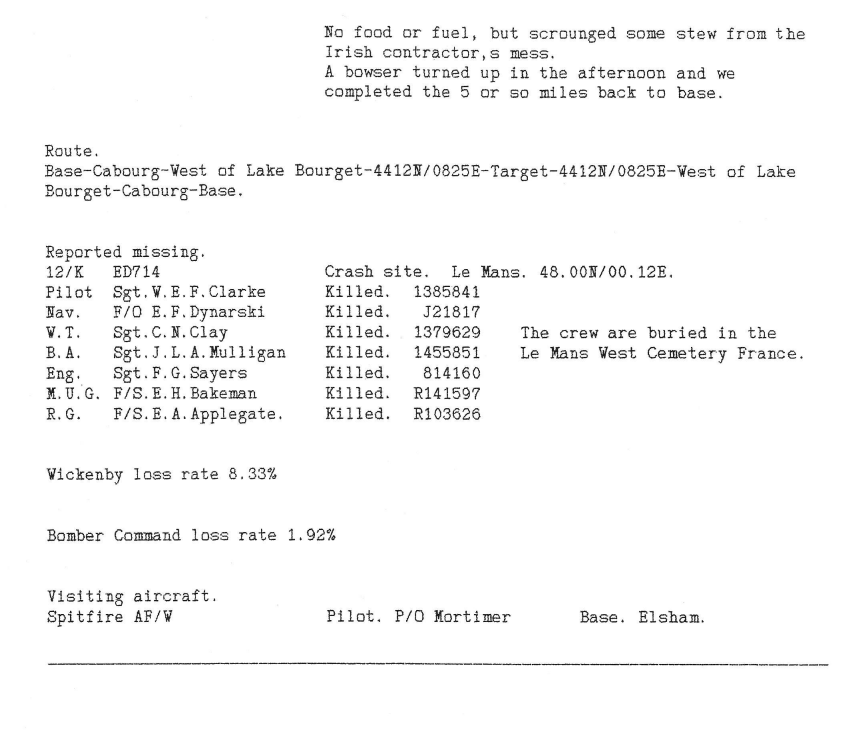
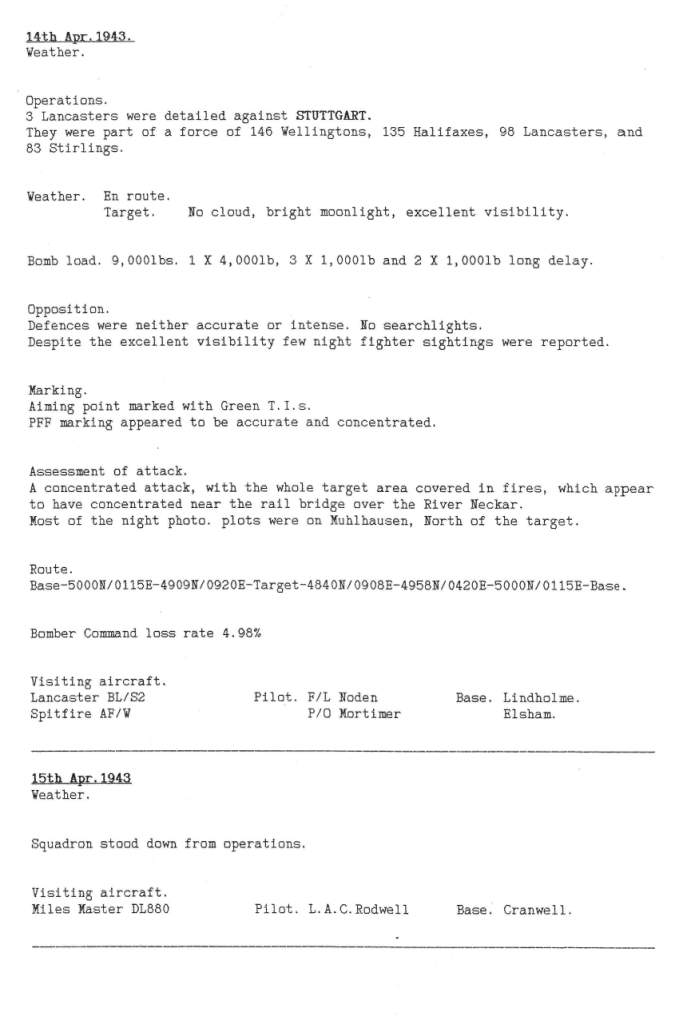
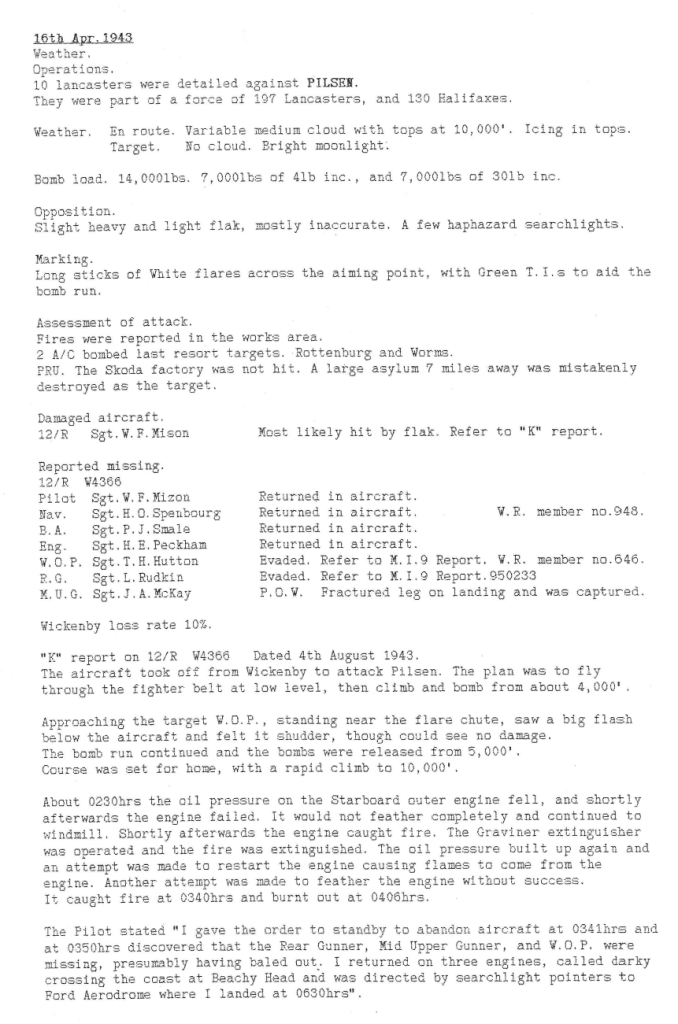
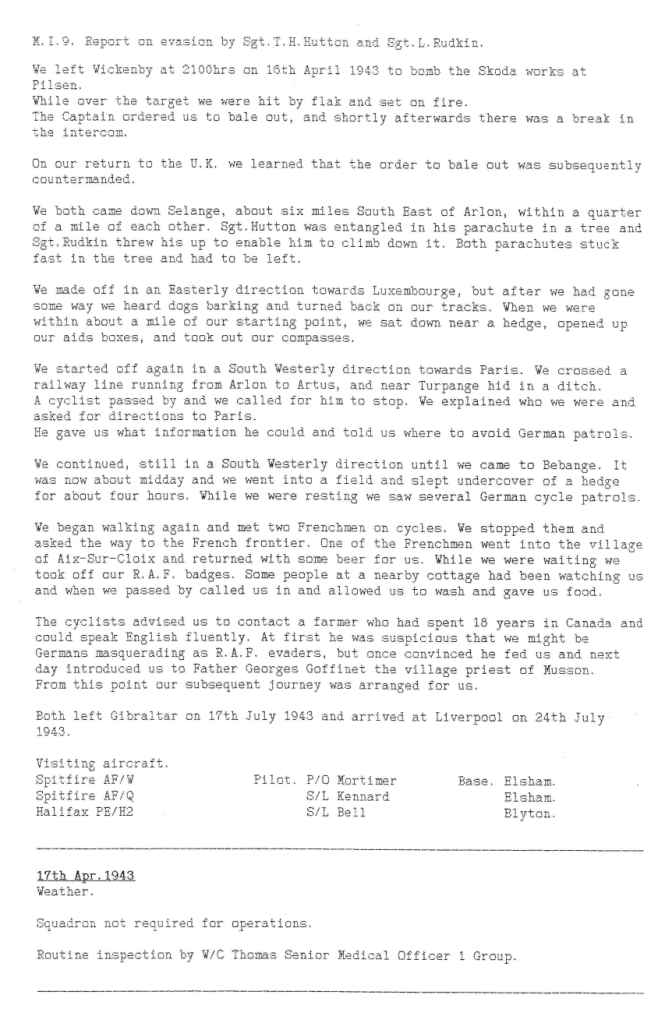
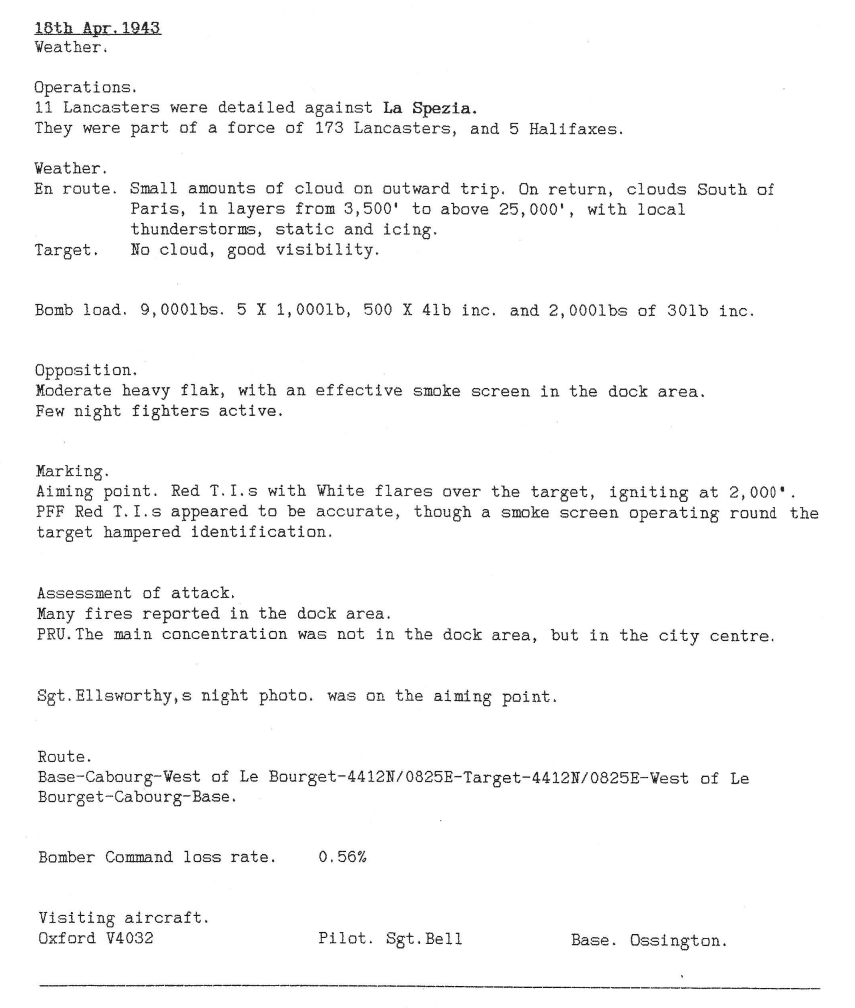
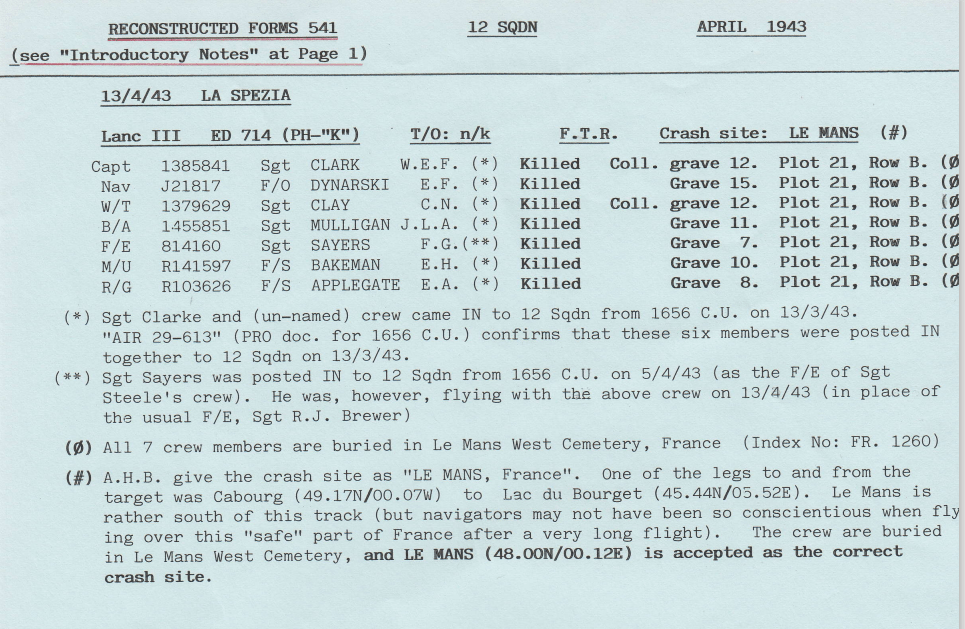
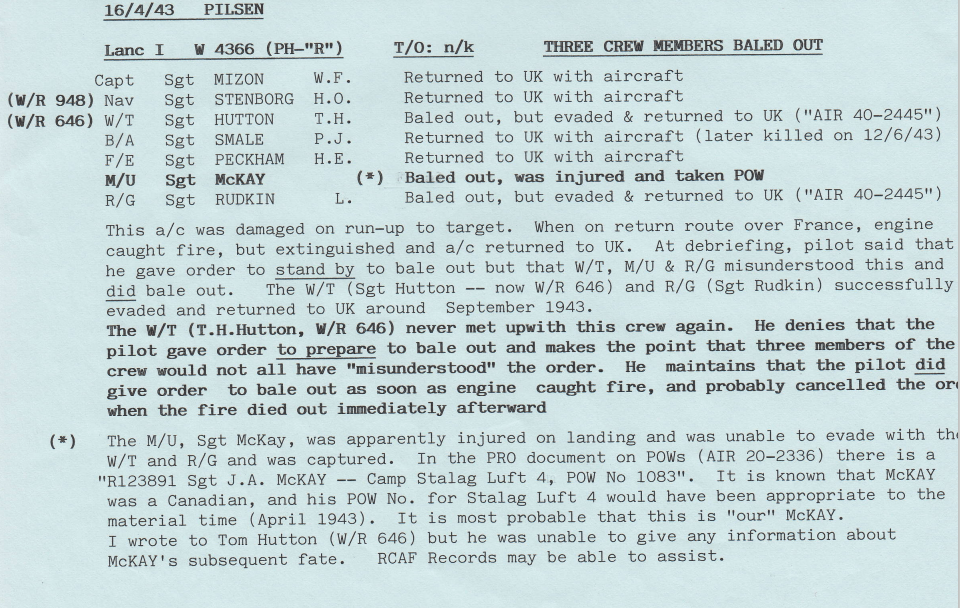
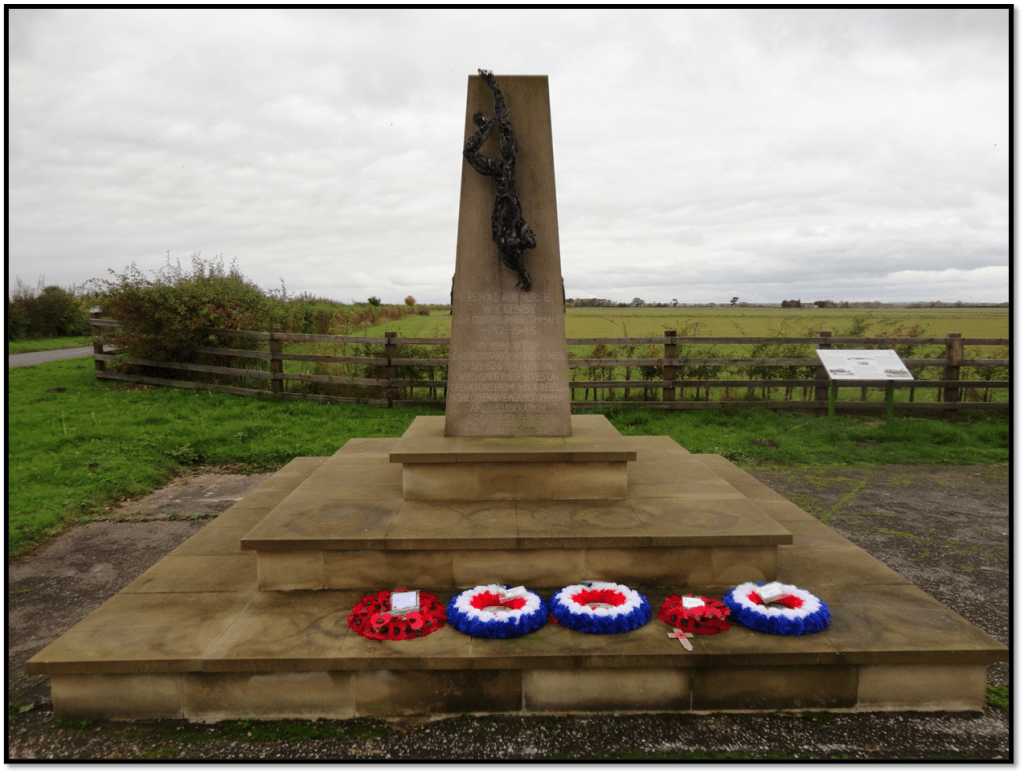
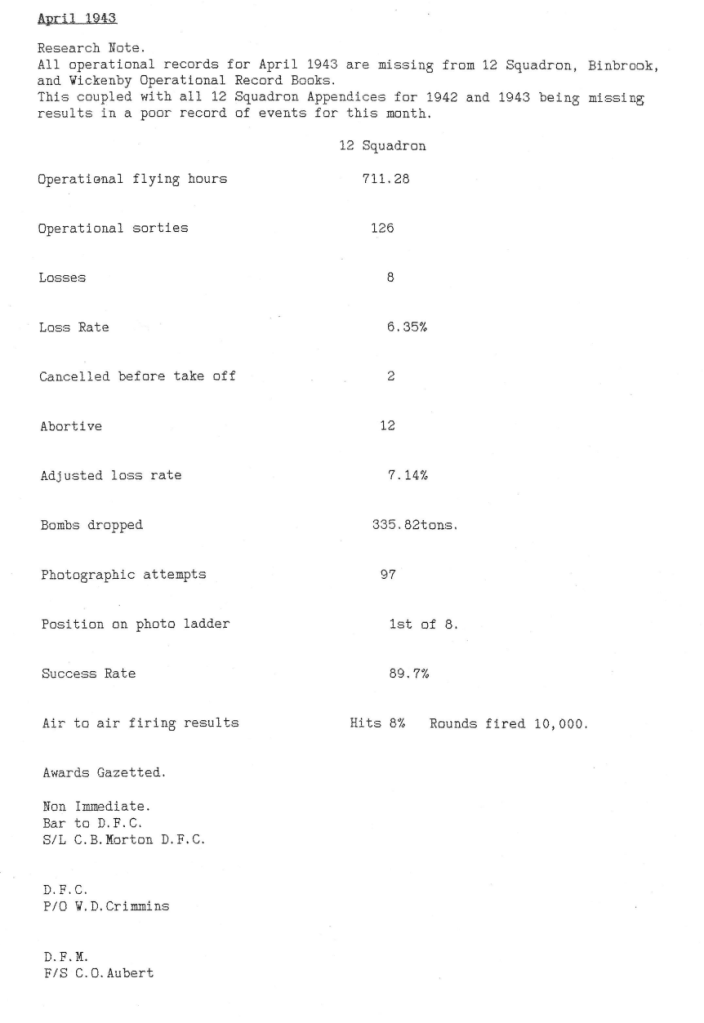
As stated previously, the records for 12 Sqn and RAF Wickenby for April 1943 are missing from the National Archives, so the information I will be showing for this month are not as comprehensive as we would wish. Those that do appear were put together by members of the Wickenby Register, an association of ex-aircrew who did research in the National Archives and spoke to surviving aircrew during the 1980’s. They had annual reunions and paid for the memorial at the main gate of Wickenby Aerodrome and paid for the book of remembrance that is kept in the museum and contains the names of all 12 and 626 Sqn personnel who died in WW2.
12 Sqn took part in 3 operation this week on three consecutive nights, 8,9 and 10th April, to Duisburg twice and then Frankfurt – there were no casualties. The attack on Frankfurt was through complete cloud cover and led to a failure. Bombing photos showed only cloud and Bomber Command had no idea where the bombs had fallen.
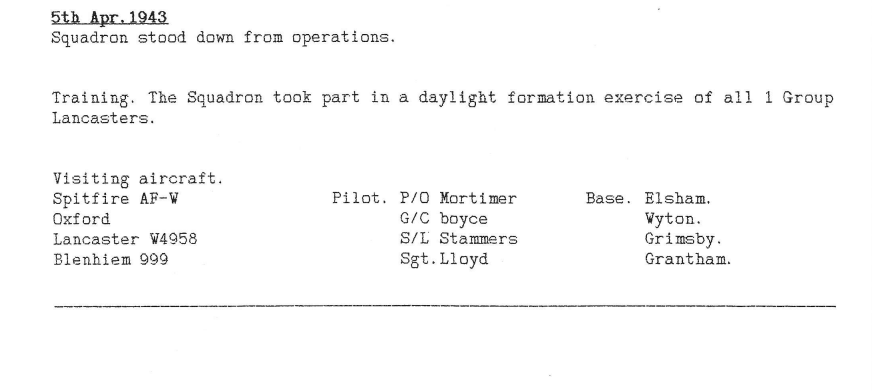
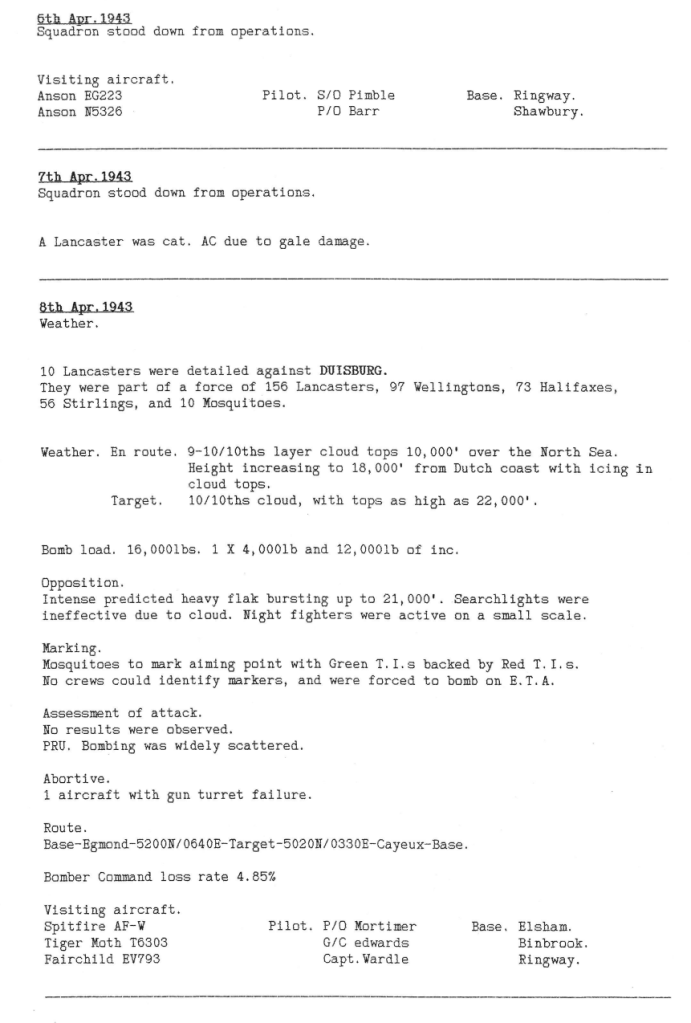
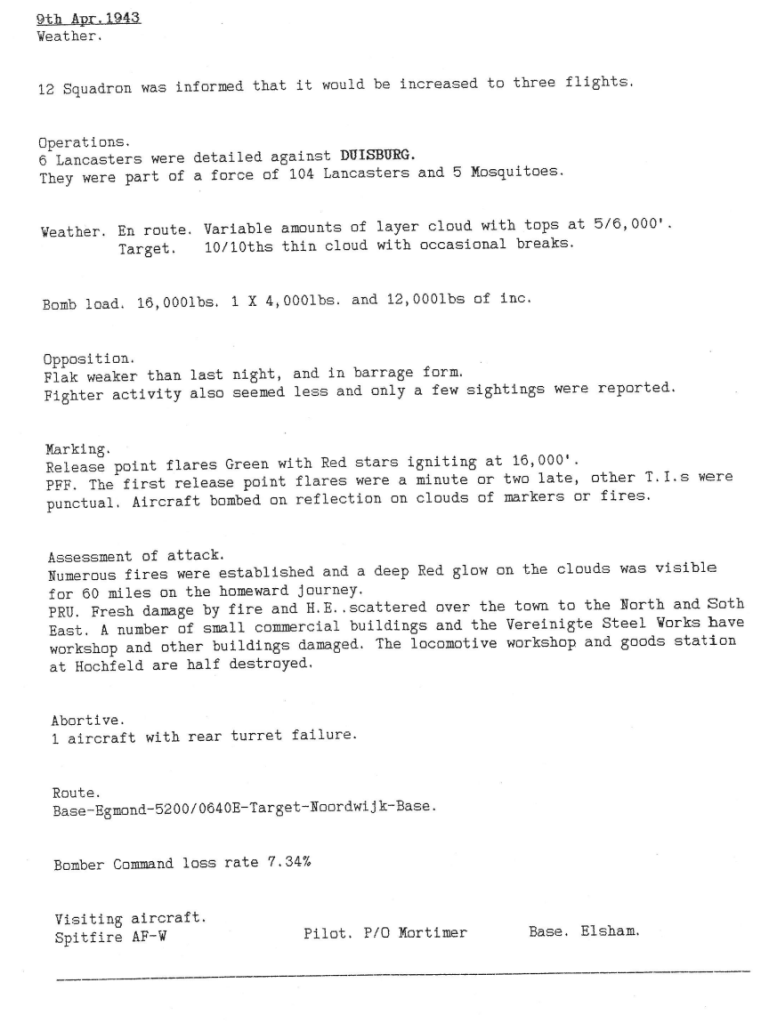
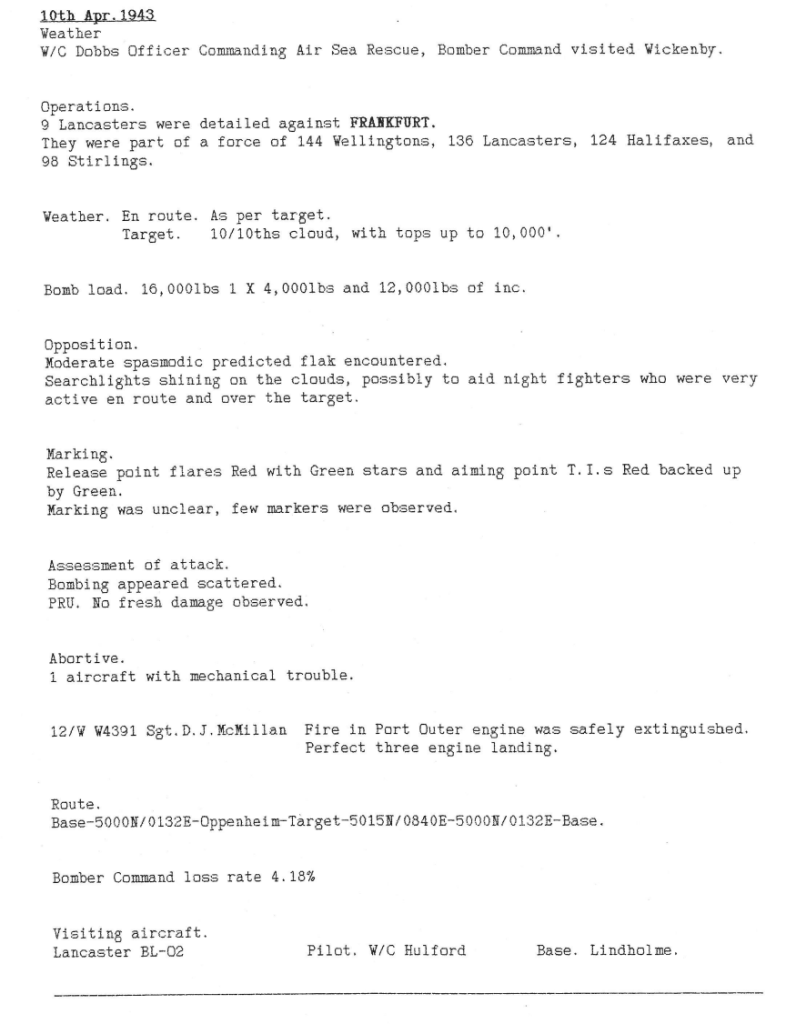
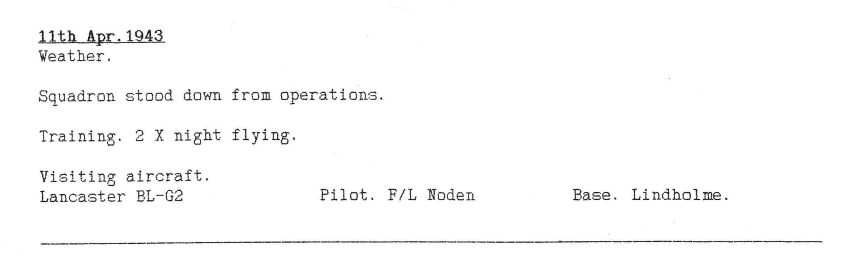
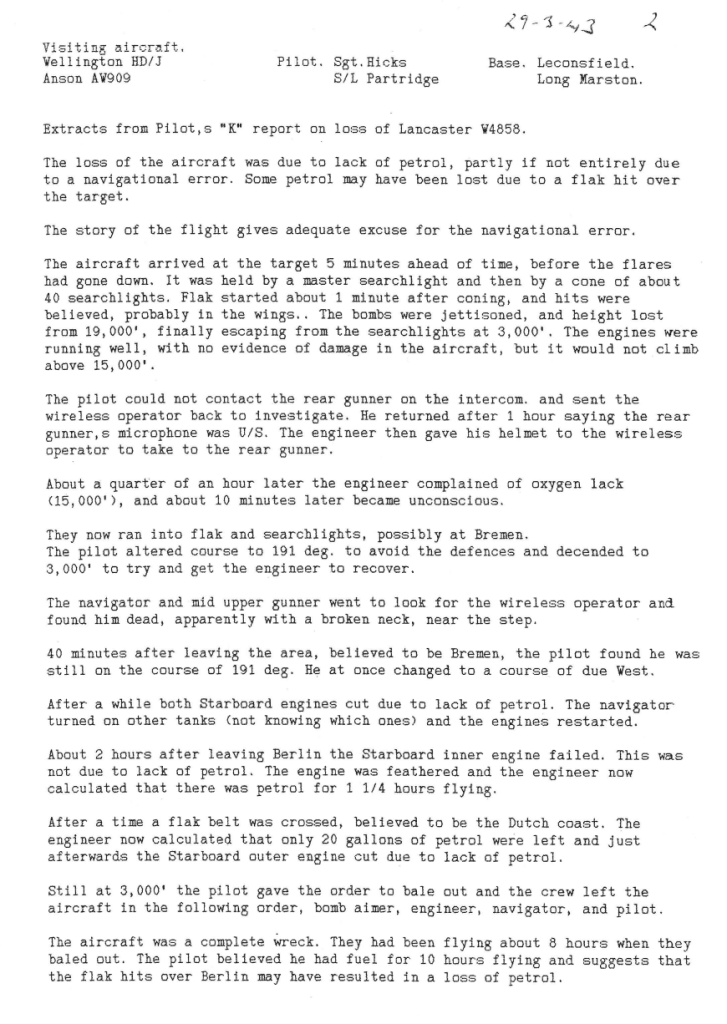
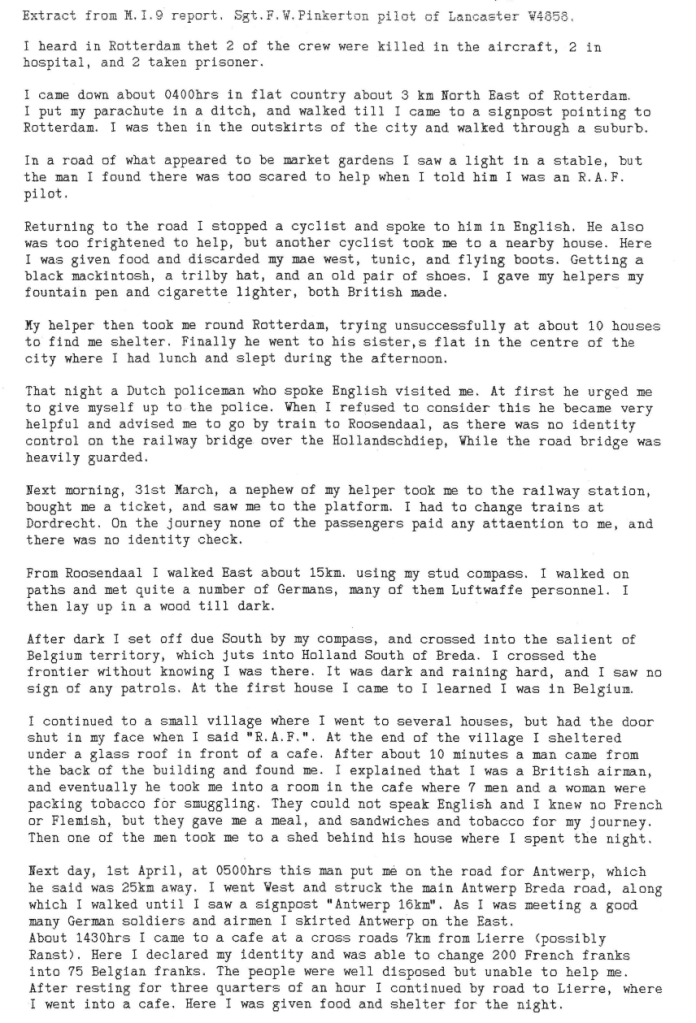
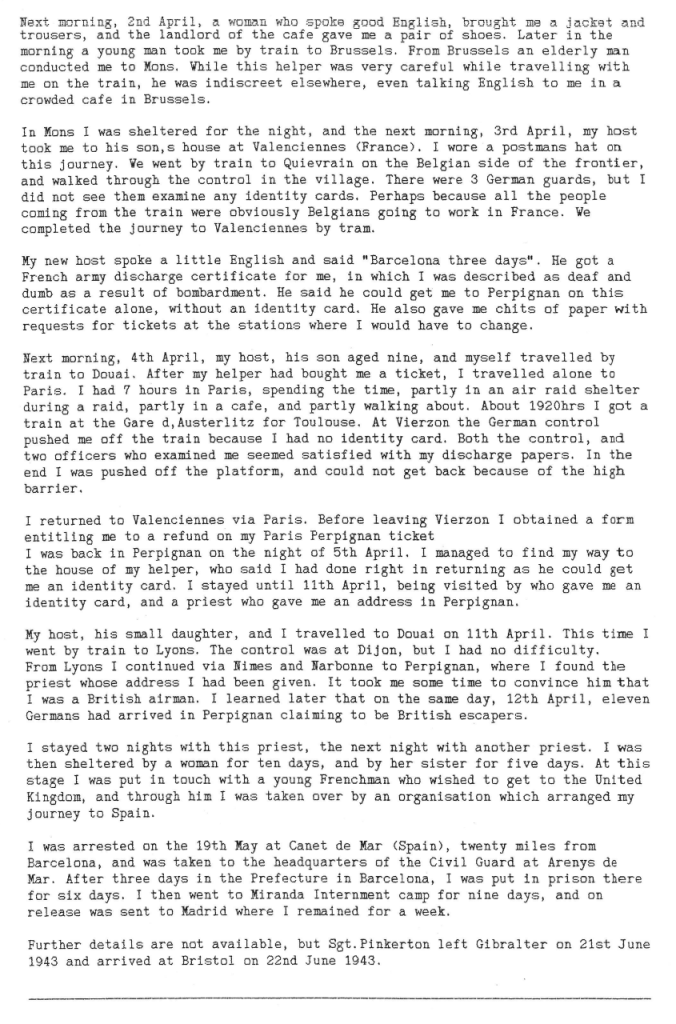
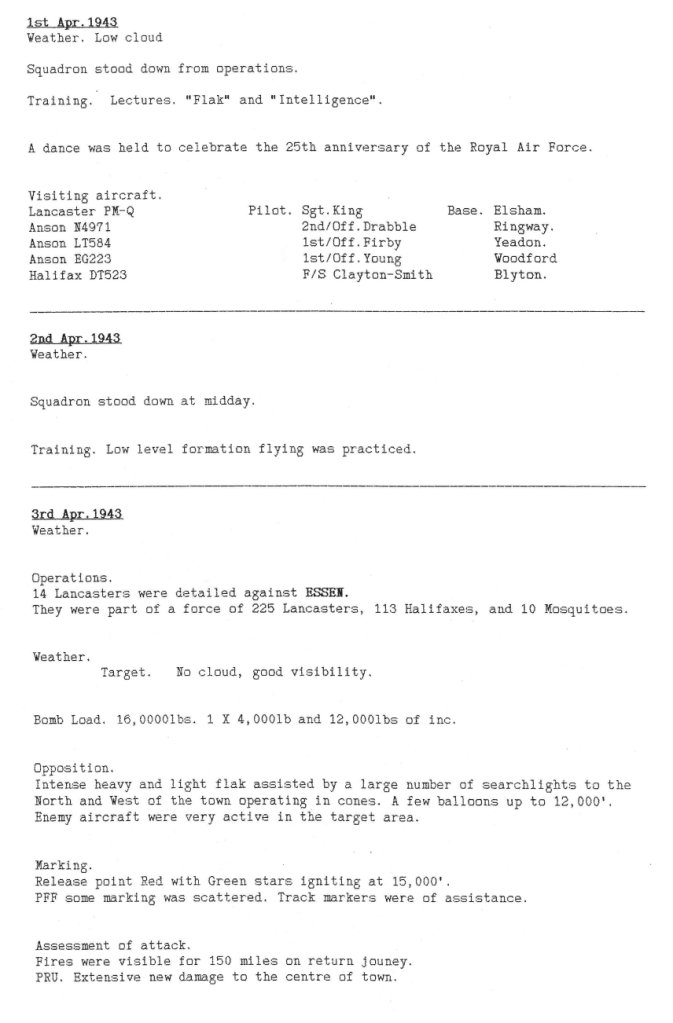
The Battle of the Ruhr was still in full swing and 12 Sqn took part in 3 operations this week, to Berlin, Essen and Kiel. One aircraft was lost in the attack on Berlin. The account written by Sgt Pinkerton, the pilot of the aircraft lost, who managed to evade capture and reach Gibraltar, not only shows the determination and character of Bomber Command aircrew, but also the courage and ingenuity of ordinary members of the public in the occupied countries of Western Europe at that time. Also of note is that the operational records for 12 Sqn for the month of April are missing from the National Archives therefore some of the information is sparse for that month.



 RAF Wickenby - This week in history - World War 2